
Repairing Masonry Window Sills: Top 3 Easy Hacks 2024

Repairing masonry window sills is a crucial task that every homeowner should be familiar with. Over time, elements like weather conditions and natural wear and tear can lead to significant damage such as cracks, spalling, and discoloration. Here’s a simple breakdown to assist you:
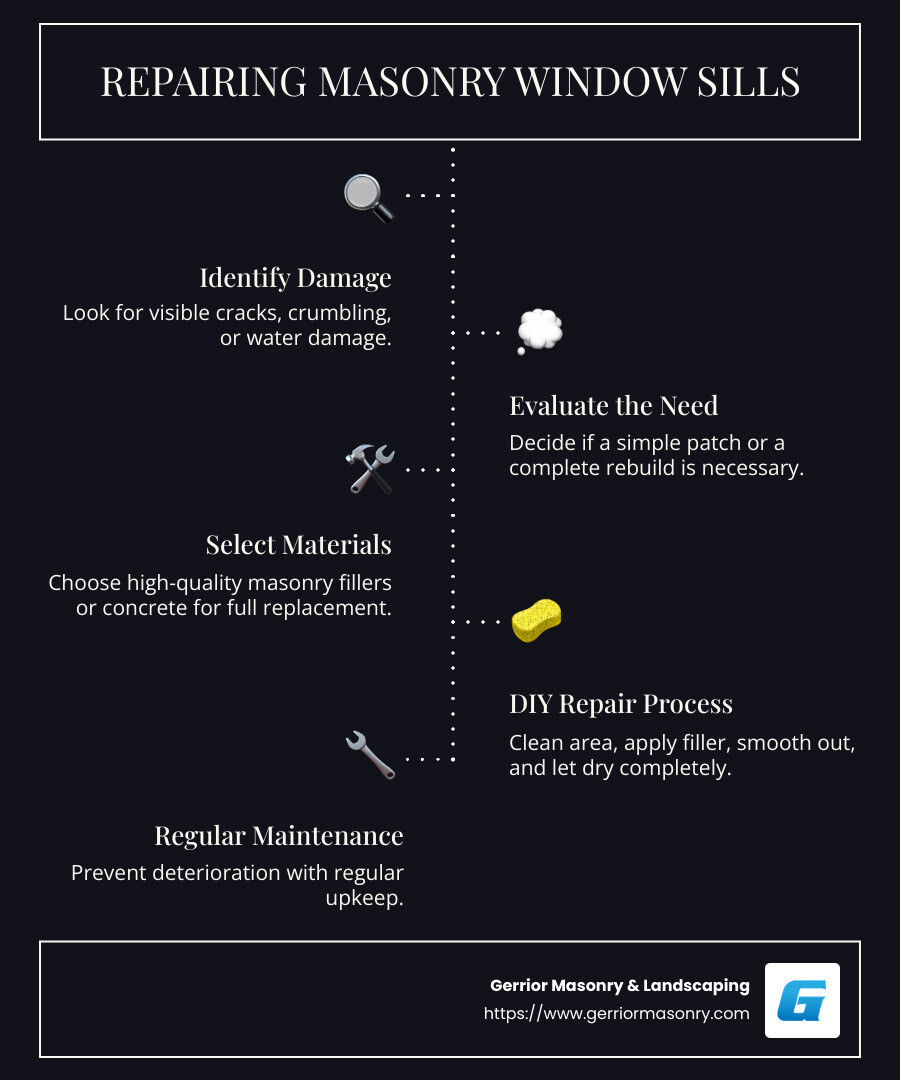
- Identify Damage: Look out for visible cracks, crumbling, or water damage.
- Evaluate the Need: Assess whether a simple patch or a complete rebuild is necessary.
- Select Materials: Use high-quality masonry fillers or consider concrete if a full replacement is required.
- DIY Repair Process: Clean the area, apply filler, smooth it out, and allow it to dry completely.
Regular maintenance helps prevent further deterioration and keeps your window sills functional and visually appealing. If you’re comfortable with DIY, repairing masonry window sills can be an effective way to save on costs while prolonging the lifespan of your home’s features.
My name is Joe Gerrior. With over 34 years in masonry and landscaping, I’ve learned that repairing masonry window sills not only improves curb appeal but also protects your home’s structural integrity. My team and I are dedicated to providing expert guidance and top-notch services to ensure your satisfaction.
Repairing masonry window sills glossary:
– brick masonry repair
– brick mortar repair
– repairing cracks in masonry walls
Understanding Masonry Window Sill Damage
Concrete window sills are often the first line of defense against the elements. Unfortunately, they are also the most exposed, making them susceptible to various types of damage. Let’s break down the common issues you might encounter and their causes.
Cracking
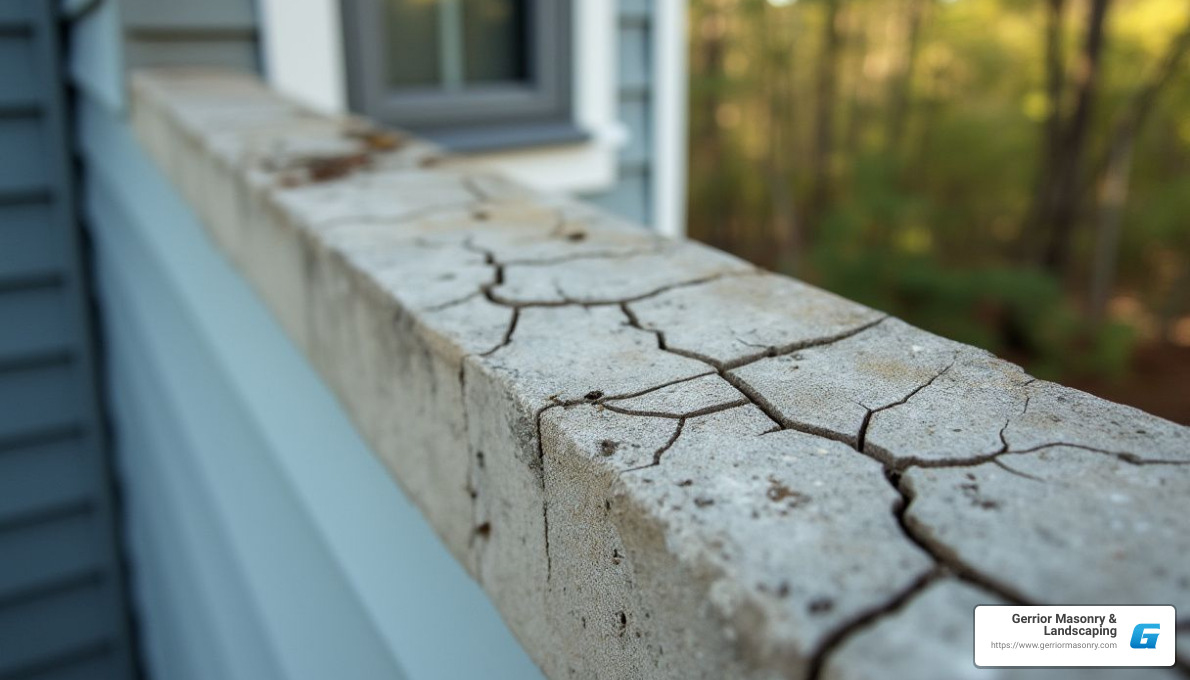
Cracking is a frequent issue in masonry window sills. While small cracks might seem harmless, they can grow over time due to thermal expansion. This process occurs when the concrete expands and contracts with temperature changes. Structural issues, such as settling foundations, can also lead to cracking.
Signs of cracking include visible lines on the surface of the sill. Larger, deeper cracks might indicate more severe underlying issues, requiring prompt attention.
Spalling
Spalling refers to the flaking or breaking off of the concrete surface. It’s often caused by water seepage. When water penetrates the concrete, it can lead to internal steel reinforcement corrosion. In colder climates, freeze-thaw cycles exacerbate this issue. Water inside the concrete freezes, expands, and causes the surface to peel away.
Look for signs of chipping or surface flaking. Spalling not only affects the appearance of your window sill but can also compromise its structural integrity.
Discoloration
Discoloration is another common problem. It often results from water damage or chemical reactions like efflorescence, where salts migrate to the surface. This can create unsightly white patches.
Mold growth can also cause discoloration, indicating persistent moisture problems. Keep an eye out for unusual color changes as they may signal underlying issues that need addressing.
Structural Issues
More severe damage includes bulging or warping, which suggests internal structural problems. These issues might arise from internal corrosion of reinforcement bars, causing them to expand and push against the concrete.
If your window sill appears misshapen or feels soft, it could indicate serious structural damage. This type of damage often requires professional assessment to determine the best course of action.
Understanding these types of damage can help you identify problems early, potentially saving you from more extensive repairs later on. By staying vigilant and addressing issues promptly, you can maintain the safety and aesthetics of your home.
Repairing Masonry Window Sills
Repairing masonry window sills is a crucial step in maintaining the structural integrity and aesthetic appeal of your home. Whether you’re dealing with small cracks, surface damage, or more extensive issues, understanding the repair process can help you tackle the task with confidence.
Small Crack Repairs
Tools and Materials Needed:
- Stiff brush
- Rough-grit sandpaper
- Masonry filler
- Putty knife
Step-by-Step Guide:
- Preparation: Begin by using a stiff brush to clean the damaged area. Remove loose debris and dust. Follow this by sanding the surface with rough-grit sandpaper to even out any rough patches.
- Filling Cracks: Apply masonry filler directly into the cracks using a putty knife. Overfill slightly to ensure a smooth finish once dried. Smooth the surface with the knife, removing any excess filler.
- Drying Time: Allow the filler to dry completely, following the manufacturer’s instructions for best results.
Resurfacing Techniques
Tools and Materials Needed:
- Concrete bonding agent
- Trowel
- New concrete mix
- Paintbrush
Step-by-Step Guide:
- Surface Preparation: After cleaning and sanding, apply a concrete bonding agent to the entire window sill using a paintbrush. This ensures good adhesion for the new concrete layer.
- Applying New Concrete: Mix your concrete according to the instructions, then apply a 3/8 inch thick layer over the sill with a trowel. Ensure an even application for a smooth finish.
- Curing: Allow the new concrete to dry for 1-2 days. It’s important to cure the surface for about 5 days to achieve maximum strength.
Complete Sill Rebuild
Tools and Materials Needed:
- Assessment tools (measuring tape, level)
- Replacement concrete or masonry materials
- Professional expertise (recommended)
Step-by-Step Guide:
- Assessment: Evaluate the extent of the damage. If the sill shows signs of bulging, warping, or severe cracking, a rebuild may be necessary. This step often requires professional assessment to determine the best approach.
- Removal: Carefully remove the damaged sections of the sill. This may involve cutting away old concrete or masonry.
- Replacement: Install new materials, ensuring they match the original design and structure. This process requires precision and expertise to ensure the sill’s stability and appearance.
- Finishing: Once installed, finish the new sill with appropriate surface treatments or paints to protect against future damage.
Repairing masonry window sills can range from simple DIY fixes to more complex rebuilds. By using the right tools and materials, you can effectively address damage and extend the life of your window sills. For more extensive repairs, consider seeking professional assistance to ensure a lasting solution.
Preventative Measures and Maintenance
Keeping your masonry window sills in top shape isn’t just about repairs. Preventative measures and regular maintenance can save you from future headaches and costly fixes. Let’s explore some key strategies.
Sealing
Sealing is your first line of defense against moisture, a major enemy of masonry. By applying a high-quality sealant, you create a barrier that helps prevent water seepage, which can lead to spalling and other types of damage.
- How Often? It’s generally recommended to reseal every 2-3 years, depending on your local climate and exposure conditions.
- Application Tips: Ensure the surface is clean and dry before applying. Use a brush or roller for even coverage.
Regular Inspections
Regular inspections are crucial for catching potential issues early. By routinely checking your window sills, you can spot signs of cracking, discoloration, or other damage before they escalate.
- What to Look For: Check for any visible cracks, bulging, or discoloration that might indicate underlying problems.
- Frequency: Aim for a quick inspection every few months, especially after extreme weather conditions like heavy rain or freezing temperatures.
Proper Sloping
Proper sloping ensures that water drains away from your window sills, reducing the risk of water pooling and subsequent damage.
- Ideal Slope: A slight downward angle away from the window is ideal. This encourages water runoff and minimizes exposure.
- Adjustment Tips: If your sills aren’t sloped properly, consider adding a thin layer of mortar or concrete to create the necessary angle.
Implementing these preventative measures and maintaining a regular schedule of inspections can significantly extend the lifespan of your masonry window sills. By taking proactive steps, you safeguard your home against the elements and preserve its aesthetic appeal.
Frequently Asked Questions about Repairing Masonry Window Sills
Can concrete window sills be repaired?
Absolutely, concrete window sills can be repaired, and it’s often a straightforward DIY project. For small cracks, you’ll need a stiff brush to remove any loose debris and sandpaper to smooth the surface. Apply a masonry filler to the cracks, ensuring it’s well-packed. Allow it to dry, then sand it smooth for a seamless finish. Most of these materials can be found at your local hardware store, making it convenient to get started.
How do you repair stone window sills?
Repairing stone window sills involves a bit more finesse. Start by cleaning the area with a brush to remove dirt and moss. Mix a mortar that matches the uniform gray of your stone. For a more robust repair, consider using a product like Apple Weld, which is specifically designed for stone. Apply the mixture carefully, ensuring it fills any gaps or cracks. Let it cure completely before any additional work.
What is the best way to repaint a repaired window sill?
Once repairs are complete, repainting your window sill can breathe new life into it. Use a high-quality masonry paint designed for exterior use, as it offers better weather resistance. Start with a clean, dry surface. Apply the first coat evenly and let it dry completely. For a durable finish, apply multiple coats—ideally two or three. This ensures the paint adheres well and provides long-lasting protection.
By following these steps, you can effectively tackle repairing masonry window sills and keep them looking great for years to come. Whether you’re dealing with concrete or stone, the right materials and techniques make all the difference.
Conclusion
Taking care of your masonry window sills is a long-term commitment that pays off in both aesthetics and structural integrity. Regular maintenance and timely repairs can significantly extend the life of your window sills, saving you from costly replacements down the road.
Long-Term Care
Regular inspections are key. Check for cracks, discoloration, or any signs of spalling. Address these issues promptly to prevent further damage. Sealing your window sills can also help protect them from water infiltration, a common cause of deterioration. Ensure proper sloping of the sill to direct water away from the building, minimizing the risk of water damage.
Professional Help
While many repairs can be tackled as DIY projects, there are times when calling in the experts is the best course of action. Complex issues like structural damage or complete sill rebuilds require a skilled hand to ensure safety and durability. At Gerrior Masonry & Landscaping, we bring over 30 years of experience to every project, ensuring high-quality results through skilled craftsmanship and owner oversight.
Gerrior Masonry & Landscaping
Based near Woburn, MA, we specialize in a range of masonry and hardscaping services, including repairing masonry window sills. Our team is committed to delivering excellence, whether it’s a small crack repair or a complete sill replacement. With our expertise, you can rest easy knowing your home is in capable hands.
Investing in professional masonry services not only improves the beauty of your home but also ensures its safety and longevity. For expert advice and service, reach out to us today—your home deserves the best care.
