
Chimney Rebuild: Top 5 Crucial Signs You Need One
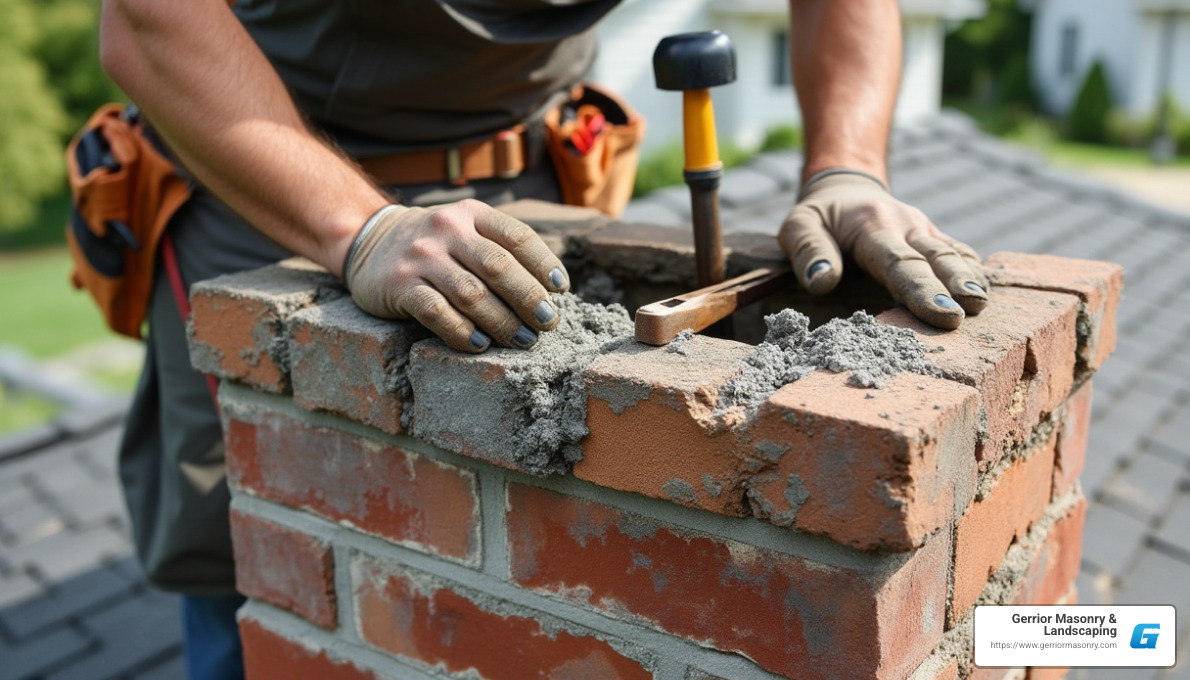
Chimney rebuild is a vital process to ensure the safety and longevity of your home’s fireplace system. Whether you’re struggling with water damage, cracked bricks, or deteriorating mortar, addressing these issues through a chimney rebuild can greatly improve your fireplace’s efficiency and safety. Here are some key benefits of ensuring a well-maintained chimney:
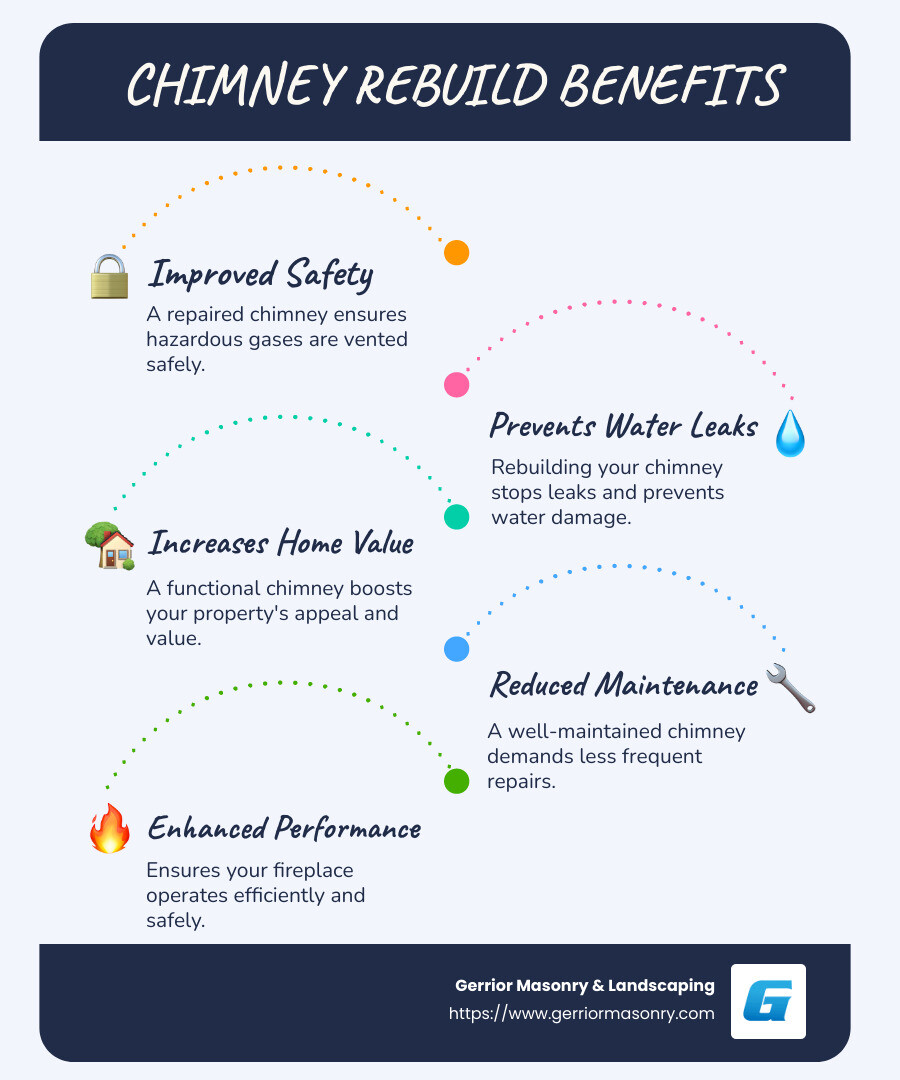
- Improved safety and performance: A sound chimney aids in safely venting hazardous gases.
- Prevention of water leaks: Rebuilding your chimney can stop leaks and subsequent water damage.
- Increased home value: A functional chimney adds appeal and value to your home.
- Reduced maintenance needs: A properly rebuilt chimney requires less frequent repairs.
Keeping these benefits in mind is crucial for homeowners considering this essential upgrade.
As Joe Gerrior, owner of Gerrior Masonry & Landscaping, I bring over 34 years of experience in chimney rebuild and masonry services. Our team specializes in robust masonry practices and is committed to delivering top-quality, aesthetically pleasing results for your home in Massachusetts. Next, we’ll discuss the signs that indicate when it’s time for a chimney rebuild.
Easy chimney rebuild glossary:
– brick chimney
– chimney pointing
– tuckpointing vs repointing
Signs You Need a Chimney Rebuild
Identifying the need for a chimney rebuild early can save you a lot of trouble and expense. Here are some common signs that your chimney may need significant repair or rebuilding:
Leaning Chimney
A leaning chimney is a clear red flag. If you notice your chimney is tilting or leaning to one side, it’s time to call in a professional. This could indicate serious foundational issues that need immediate attention to prevent potential collapse.
Water Damage
Water is a chimney’s worst enemy. Look for signs of water damage such as discoloration, mold growth, or rust on the damper. Water can seep into the mortar and bricks, causing them to weaken over time. Using a waterproofing sealant can help prevent this kind of damage, but if it’s already present, a rebuild might be necessary.
Cracked Bricks
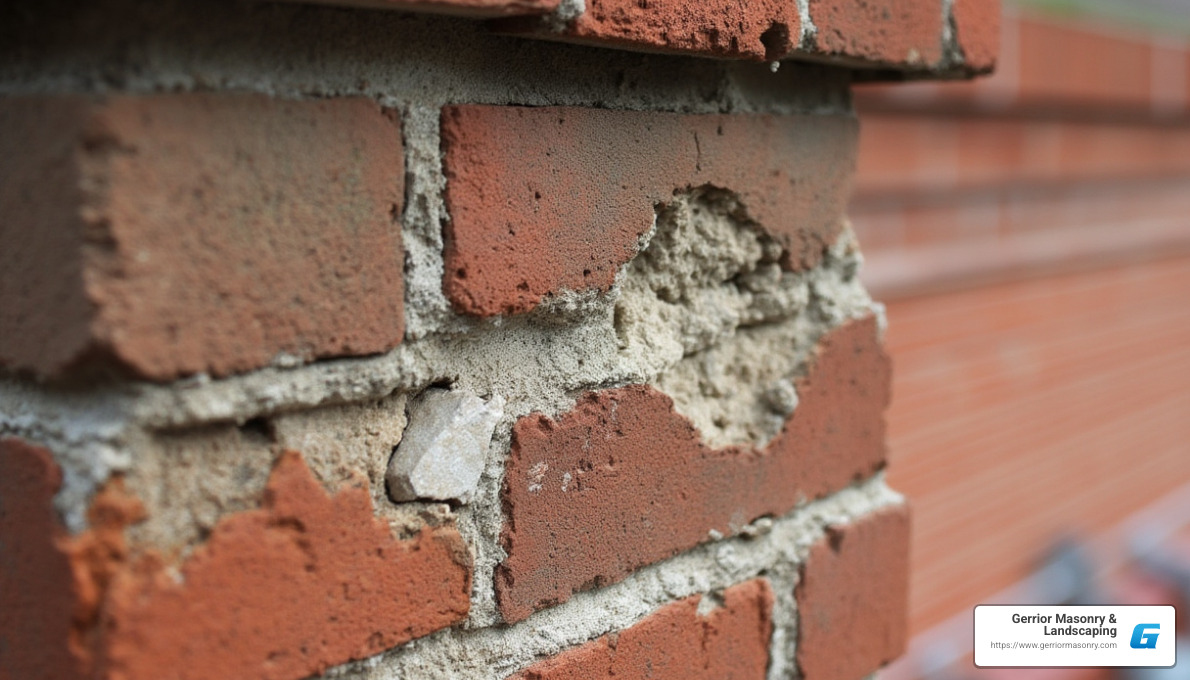
Cracked or spalling bricks are another indication that a chimney rebuild might be needed. These issues often arise due to freeze-thaw cycles, where water gets into the bricks and expands when frozen, causing them to crack. If you notice multiple cracked bricks, it’s time to consult with a masonry expert.
Damaged Mortar
Mortar holds your chimney together, so damaged or crumbling mortar is a serious concern. Over time, weather and natural wear can cause mortar joints to deteriorate. You might see gaps or chunks of missing mortar. In such cases, repointing might be a temporary fix, but if the damage is extensive, a rebuild could be the best solution.
If you observe any of these signs, it’s crucial to act promptly. Regular inspections can help catch these issues early, potentially saving you from a full chimney rebuild. Stay tuned as we explore the different types of chimney rebuilds and what they entail.
Types of Chimney Rebuilds
When it comes to addressing chimney issues, understanding the different types of chimney rebuilds is key. The type of rebuild needed depends on the severity of the damage and the specific problems your chimney is facing.
Partial Rebuild
A partial rebuild is often the best solution when the damage is more localized. This might be necessary if you notice spalling bricks, which are bricks whose surfaces are peeling or flaking. Missing bricks can also fall into this category. These issues are usually above the roofline and don’t require extensive work.
- Tuckpointing: This is a method used to repair the mortar joints between bricks. It’s ideal for fixing minor gaps and cracks without the need for a full rebuild. Tuckpointing restores the structural integrity of the chimney and improves its appearance.
Partial rebuilds are less invasive and cheaper than other options, making them a popular choice when the damage is minimal.
Roofline-Up Rebuild
If your chimney has more severe issues like brick spalling, vertical cracks, or mortar joint damage, a roofline-up rebuild might be necessary. This involves dismantling the chimney down to the roofline and rebuilding it.
- Brick Spalling: This is a more severe form of spalling that affects multiple bricks, weakening the chimney’s structure.
- Vertical Cracks: These can result from uneven settling or thermal expansion and require more extensive work to repair.
- Mortar Joint Damage: When mortar joints are extensively damaged, they compromise the entire chimney structure.
A roofline-up rebuild ensures that the visible parts of your chimney are safe and sound, while the interior remains intact.
Total Chimney Replacement
In cases of extreme spalling, a leaning chimney, or extensive mortar deterioration, a total chimney replacement is often the only viable option. This involves completely dismantling and rebuilding the chimney from the ground up.
- Extreme Spalling: When spalling affects large portions of the chimney, it can lead to structural failure.
- Leaning Chimney: This indicates foundational issues that require a complete rebuild to ensure safety.
- Extensive Mortar Deterioration: When mortar has deteriorated beyond repair, it can no longer support the structure, necessitating a full rebuild.
Total replacements are more labor-intensive and costly but ensure that your chimney is safe and functional for years to come.
Understanding these types of rebuilds will help you make informed decisions about your chimney’s needs. Regular inspections and maintenance can often prevent the need for a complete replacement, saving you time and money. Stay tuned as we dig into the chimney rebuild process and what it involves.
Chimney Rebuild Process
Rebuilding a chimney is a detailed process that requires careful attention to each component. Here’s what you need to know about the steps involved in a chimney rebuild.
Masonry Repair
The foundation of any chimney rebuild is solid masonry work. Skilled masons repair or replace damaged bricks and mortar to restore the chimney’s structural integrity. High-quality materials ensure longevity and aesthetic appeal.
Replace Bricks and Mortar
Replacing bricks is crucial when dealing with spalling or missing bricks. Each brick is carefully removed and replaced to maintain the chimney’s strength. Similarly, mortar plays a vital role in holding the structure together. Old or damaged mortar is removed, and new mortar is applied for a secure bond.
Repair Firebox and Replace Damper
The firebox is where the fire burns, and it must be in good condition to ensure safety and efficiency. Damaged fireboxes are repaired or rebuilt to prevent heat damage to surrounding structures. Replacing the damper is also important, as a faulty damper can lead to energy loss and inefficient burning.
Repair Flashing
Flashing prevents water from seeping into the chimney and causing damage. Proper flashing repair involves sealing gaps and replacing worn-out materials to create a watertight barrier.
Rebuild Crown
The crown is the topmost part of the chimney that shields it from weather elements. A well-constructed crown prevents water penetration and protects the chimney’s interior. Rebuilding the crown involves using durable materials like concrete for a long-lasting solution.
Replace Liner
A chimney liner is essential for directing smoke and gases out of your home safely. If the liner is cracked or damaged, it needs replacement to prevent dangerous leaks. High-quality liners not only improve safety but also improve your chimney’s efficiency.
Each step in the chimney rebuild process is vital for ensuring your chimney functions properly and safely. Regular maintenance and inspections can help catch issues early, reducing the need for extensive repairs. Next, we’ll explore how to prevent the need for a rebuild through proactive care and maintenance.
Preventing the Need for a Rebuild
Chimneys, like any part of your home, need regular care to stay in good shape. Here are some easy ways to prevent costly chimney rebuilds.
Regular Inspections
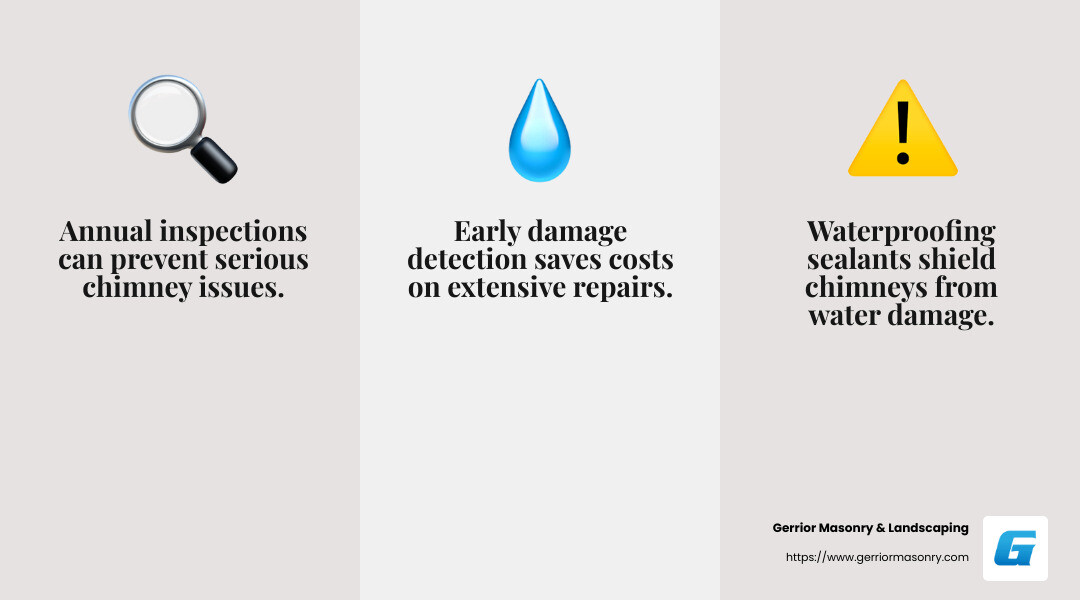
Getting your chimney inspected at least once a year is key. A certified professional can spot small issues before they turn into big problems. Regular inspections can catch things like cracked bricks or damaged mortar early. This helps avoid more serious damage that might require a full rebuild.
Waterproofing Sealant
Water is a chimney’s worst enemy. It can seep into bricks and mortar, causing them to weaken over time. Applying a waterproofing sealant can protect your chimney from water damage. These sealants let water vapor escape while keeping rain out. This keeps your chimney dry and strong.
Early Damage Detection
The sooner you find damage, the easier it is to fix. Look for signs like white stains on bricks (called efflorescence), crumbling mortar, or rust on your damper. If you notice any of these, call a professional right away. Fixing small issues quickly can save you from needing a full rebuild later on.
By taking these simple steps, you can keep your chimney in great condition and avoid the need for major repairs. Up next, we’ll answer some frequently asked questions about chimney rebuilds to help you understand more about the process and costs involved.
Frequently Asked Questions about Chimney Rebuilds
How much does it cost to rebuild a chimney top?
Rebuilding a chimney top can vary widely in cost. On the lower end, a partial rebuild might cost around $1,000. This is typically for smaller chimneys or when only the crown needs replacing. However, if your chimney has extensive damage, a full rebuild could cost up to $30,000. The price depends on several factors, including the size of your chimney, the materials used, and the complexity of the job. Always ensure you get a documented evaluation before agreeing to any work.
Do chimneys need to be rebuilt?
Not every chimney needs a rebuild, but some conditions make it necessary. Moisture problems are a common reason. Water can cause significant damage to the bricks and mortar, leading to structural issues. If your chimney is leaning, has large cracks, or shows signs of extensive water damage, a rebuild might be the safest option. Rebuilding ensures the chimney is up to code and prevents future problems, such as leaks or even fires.
Is it better to repoint or rebuild a chimney?
The decision to repoint or rebuild depends on the extent of the masonry damage. Repointing involves replacing the mortar between bricks and is ideal for minor damage. It’s a cost-effective way to maintain the chimney’s appearance and integrity. However, if the damage is severe—like when bricks are crumbling or the chimney is leaning—repointing becomes impractical. In such cases, a chimney rebuild is necessary to ensure structural safety and effectiveness.
Conclusion
At Gerrior Masonry & Landscaping, we understand that a chimney is more than just a functional part of your home—it’s a vital component that ensures safety and adds aesthetic value. With over 30 years of experience, our skilled team is committed to delivering high-quality results for every chimney repair service we undertake.
Our expertise in chimney rebuilds ensures that your chimney not only looks great but also functions safely and efficiently. We emphasize using the best materials and techniques, addressing issues like spalling bricks, damaged mortar, and structural instability. Our focus is on providing solutions that stand the test of time, enhancing both the beauty and safety of your home.
We believe in thorough evaluations and transparent communication. Before starting any project, our team conducts a detailed inspection to understand the specific needs of your chimney. This careful planning allows us to tailor our services to meet your unique requirements and budget, ensuring you receive the best value possible.
Investing in our chimney repair services means investing in peace of mind. Our commitment to excellence and attention to detail set us apart, making us the preferred choice for homeowners in Woburn, MA, and surrounding areas. Whether you need a partial rebuild, a roofline-up rebuild, or a total chimney replacement, you can trust us to get the job done right.
Ready to improve the safety and appearance of your chimney? Contact us today to schedule an inspection or learn more about our comprehensive chimney repair services. Your home deserves the best care, and we’re here to provide it.
