
how to install stepping stone walkway: 7 Proven Steps for Stunning Results 2025
The Beauty and Functionality of Stepping Stone Walkways
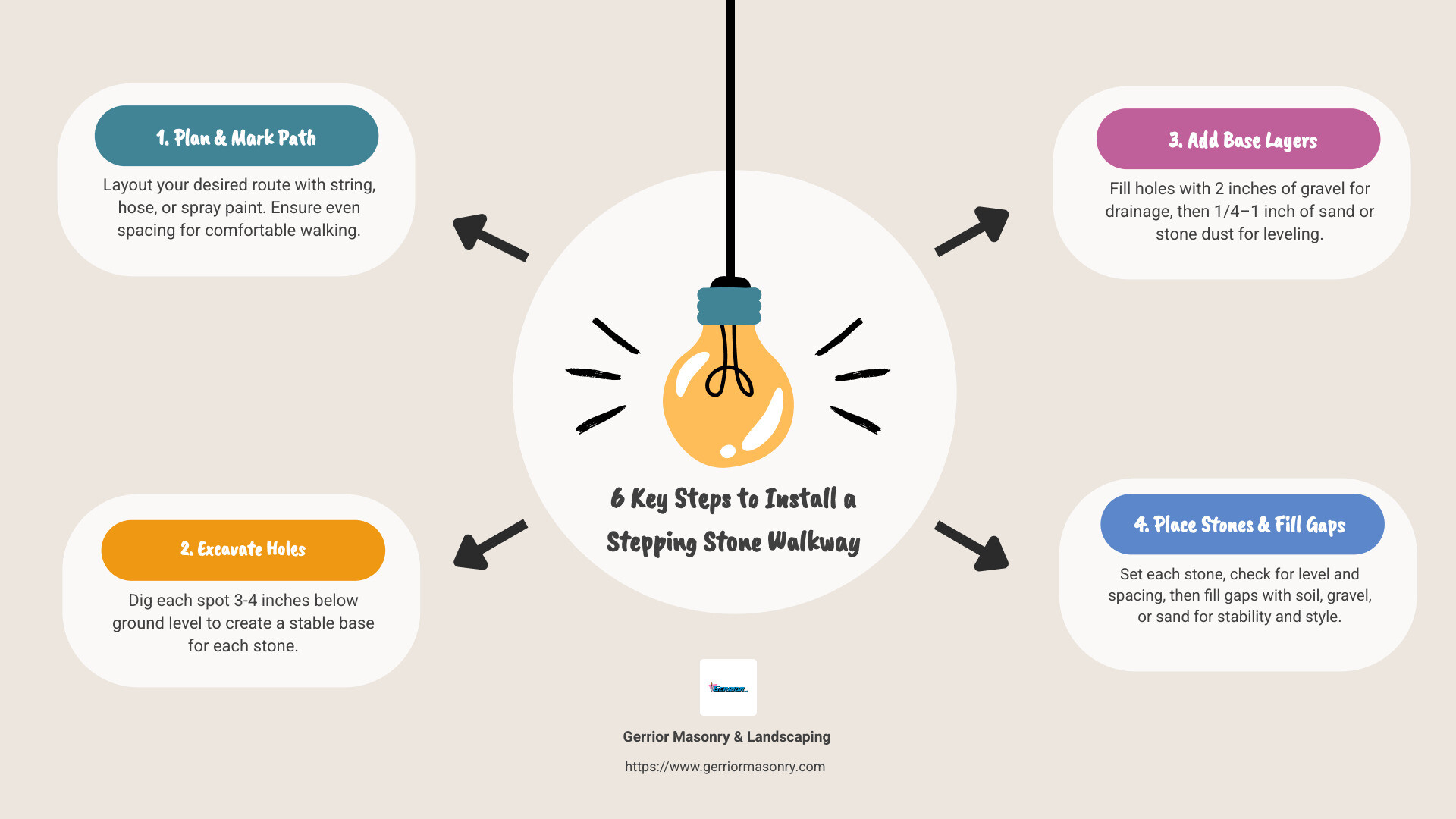
To how to install stepping stone walkway properly, follow these key steps:
- Plan and mark your path (using string, hose, or paint)
- Dig holes 3-4 inches below grade for each stone
- Add 2 inches of gravel for drainage
- Spread 1/4-1 inch of sand or stone dust
- Place and level each stone, ensuring proper spacing
- Fill gaps with your chosen material (soil, gravel, or sand)
A stepping stone walkway is a charming and practical addition to any landscape that combines beauty with function. Unlike full paver paths, stepping stones offer better drainage, protect your lawn from wear patterns, and can be installed in a single weekend. With average costs between $3-15 per square foot for DIY installation (or $600-$2,500+ for professional installation), this project delivers impressive value whether you’re creating a garden path, connecting outdoor spaces, or enhancing your home’s curb appeal.
I’m Joe Gerrior, owner of Gerrior Masonry & Landscape Construction Corp., and after installing countless stepping stone walkways over my 34+ years in the business, I’ve perfected the techniques to create paths that withstand New England’s harsh weather while maintaining their beauty for decades.
Why a Stepping Stone Walkway Beats a Full-Paver Path
There’s something magical about a stepping stone path winding through a garden or leading to your front door. But beyond their enchanting appearance, these pathways offer practical advantages that solid paver installations simply can’t match.
Superior drainage is perhaps the most compelling benefit for Massachusetts homeowners. While full paver paths can create runoff problems during our notorious New England downpours, stepping stones allow rainwater to naturally percolate between the stones. This means fewer puddles, less erosion, and healthier surrounding plants that benefit from the gentle distribution of water.
As landscape expert Steve Boehme wisely notes, “Stone construction is one of the most satisfying home-improvement projects you can do.” After three decades of installing these pathways, I can personally attest to the truth in these words. There’s a deep satisfaction in creating something beautiful that will serve families for generations.
Your wallet will thank you too. Budget-friendly stepping stone paths typically require 30-40% less material than continuous paver installations of the same length, while still delivering that high-end, timeless look you’re after. Who doesn’t love getting more bang for their buck?
For those proud of their lush lawns, stepping stones offer excellent lawn protection. Instead of creating a barren strip across your carefully tended grass, these pathways allow greenery to flourish between stones, maintaining your yard’s natural beauty while preventing worn dirt paths from forming.
Living in Massachusetts means dealing with frost heaving – that annoying seasonal shifting that can wreak havoc on hardscaping. The good news? Properly installed stepping stones with adequate drainage bases tend to resist frost movement better than continuous pathways, meaning less maintenance for you over the years.
Accessibility matters too. With thoughtful spacing and selection of flat-topped stones, these pathways can accommodate most users while providing better traction than smoother paver alternatives – especially important during our slippery New England winters.
Finally, let’s talk resale value. A well-designed stepping stone walkway significantly boosts curb appeal with its timeless aesthetic. These natural-looking paths complement virtually any architectural style, from colonial homes in Winchester to contemporary designs in Burlington.
When you consider all these benefits – better drainage, lawn preservation, cost savings, frost resistance, improved accessibility, and improved property value – it’s easy to see why stepping stone walkways remain a perennial favorite among Massachusetts homeowners.
More info about walkway designs
Planning Your Path Like a Pro
Before grabbing your shovel, proper planning will save you time, money, and backaches. Here’s how to approach your stepping stone project with professional precision:
Determining the Right Location and Flow
The secret to a successful path starts with watching how people naturally move through your yard. Those worn trails in your grass? They’re telling you exactly where your stepping stones belong. While straight paths work in some settings, I’ve found that gentle curves not only look more appealing but actually feel more natural to walk along.
For properties with slopes (common throughout Massachusetts), aim for a subtle grade of approximately ¼ inch per foot. This barely noticeable pitch ensures water flows away from your home’s foundation rather than pooling on your path. Your feet won’t notice the slight angle, but your basement will thank you during our New England downpours.
Stride Spacing and Width Guidelines
The comfort of your path comes down to proper spacing that matches a natural walking rhythm. After installing hundreds of paths, I’ve found that spacing stone centers about 24 inches apart matches most adults’ comfortable stride. This typically leaves about 6-10 inches between the actual edges of neighboring stones.
If you’re hoping to roll garden equipment along your path, consider placing stones closer together—sometimes just an inch apart—to prevent wheels from catching.
Width matters tremendously for daily comfort. A 36-inch wide path works for most garden walkways, but if this will be a main entrance or you’d like people to walk side-by-side, go for 48 inches. I always recommend the wider option for primary paths—you’ll never regret the extra space, especially when carrying groceries or garden supplies.
Marking Your Path
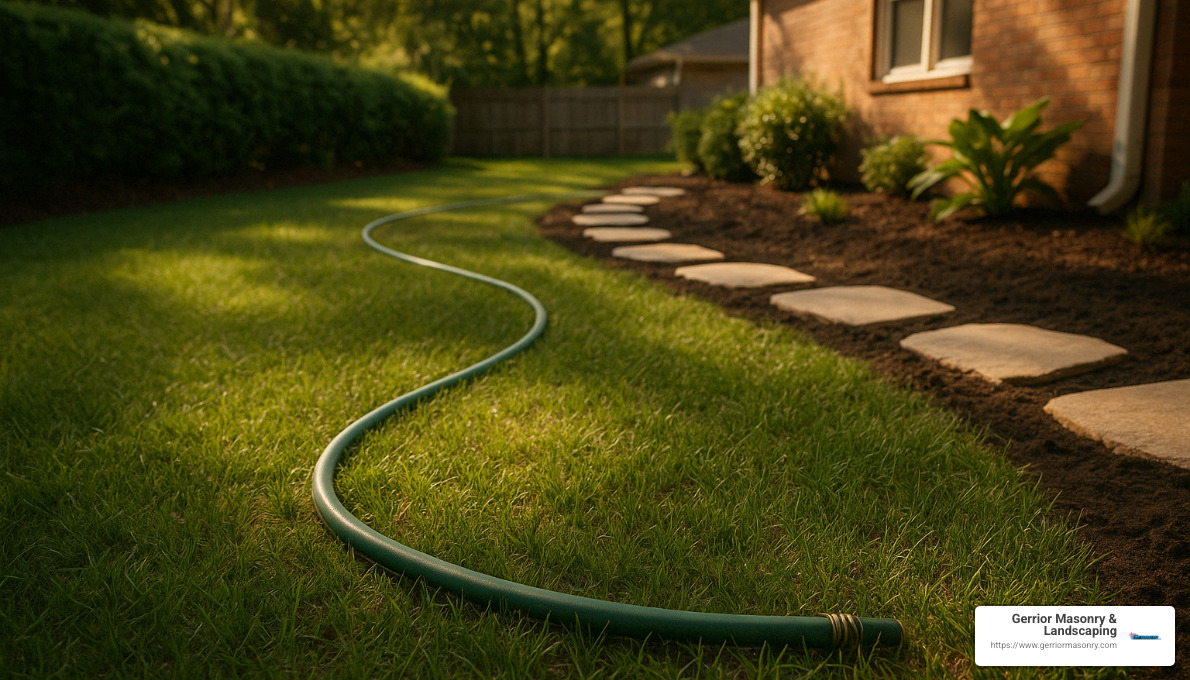
Here’s a pro trick we use at Gerrior Masonry: grab your garden hose and lay it out to outline curved paths. The hose’s natural flexibility lets you play with different curves until you find exactly the right flow. For straight sections, nothing beats builder’s string stretched between stakes for precision.
Once you’re satisfied with the layout, mark it with spray paint or chalk. Then do a test walk—several times—to make sure it feels natural before you start digging. Trust me, adjusting your design now is much easier than moving stones later!
Pro Tip: Always call 811 before digging to have underground utilities marked. This free service prevents potentially dangerous and costly accidents.
For more inspiration on walkway designs, visit our paver walkway designs page.
Choosing Stone & Base Materials
The stones you select will define your walkway’s character for decades. Here in Massachusetts, I’ve found these options work particularly well:
Natural Stone Options:
Bluestone has become a regional favorite with its beautiful blue-gray tones that perfectly complement New England architecture. Flagstone offers more irregular, rustic shapes in various earthy colors, while granite provides exceptional durability with its distinctive speckled appearance.
Manufactured Options:
Concrete pavers offer uniformity in size and thickness with countless color and texture options. Cast concrete stepping stones often mimic natural stone at a more budget-friendly price point.
Regardless of which material speaks to you, ensure your stones are at least 1.5-3 inches thick. For high-traffic areas like main entrances, I strongly recommend the thicker end of this range to prevent cracking under years of foot traffic.
Your base materials are just as important as the stones themselves. You’ll need ¾-inch crushed stone gravel for drainage and stability, plus stone dust or builder’s sand to create a level setting bed that allows for fine adjustments as you work.
One often overlooked consideration: color and heat. Very dark stones can become uncomfortably hot in direct summer sun—something to think about for barefoot areas near pools or patios. I’ve seen beautiful bluestone paths that become nearly unwalkable on July afternoons!
Budget & Time Estimates
Understanding what you’re getting into financially and time-wise helps set realistic expectations. Based on our decades of experience in Massachusetts, here’s what you can expect:
DIY Cost Ranges:
Natural stone typically runs $5-15 per square foot for materials alone, while concrete pavers range from $3-10 per square foot. You’ll also need about $50 per cubic yard for stone dust or sand as your base materials.
Professional Installation:
Small projects under 40 feet generally cost between $600-$1,800, medium projects range from $1,200-$3,600, and large or complex installations can run $2,500-$7,500+. These are average costs based on internet data and not actual costs for Gerrior Masonry services. The wide range reflects variations in material quality, site conditions, and design complexity.
Time Commitment:
If you’re tackling this as a DIY project, set aside a full weekend. Most homeowners spend about 6-8 hours of active work for a typical garden path. When we install professionally, we usually complete most residential paths in a single day.
For accurate pricing specific to your project, we’re happy to provide a detailed estimate based on your unique requirements.
Essential Tools, Safety Gear & Materials Checklist
Getting ready to install a stepping stone walkway is half the battle. With the right tools and materials at your fingertips, you’ll save yourself countless trips to the hardware store and ensure your project flows smoothly from start to finish.
Tools:
When I prepare for a stepping stone installation at Gerrior Masonry, I always make sure my truck is loaded with a reliable long-handled spade for the initial digging work. A quality half-moon edger makes all the difference when creating clean cuts along turf edges—those crisp lines really lift the professional look of your finished path.
Don’t underestimate the importance of compaction! Whether you’re using a hand tamper (perfect for smaller projects) or renting a plate compactor for larger areas, proper base compaction prevents future settling and shifting. I always keep a 4-foot carpenter’s level handy—this longer length spans across stones to ensure consistent height and proper drainage pitch.
A rubber mallet becomes your best friend when making final adjustments to stones, allowing you to tap them into place without cracking or chipping. And of course, a sturdy wheelbarrow saves your back when moving materials around your property.
For layout work, I find a simple garden hose creates the most natural-looking curves—much better than trying to force geometric shapes that often look out of place in natural settings. If you’re planning straight sections, builder’s string provides the precision you need.
Safety Gear:
I’ve learned the hard way that work gloves aren’t optional—they’re essential. Natural stone can have sharp edges, and a good pair of gloves prevents painful cuts and scrapes. Your knees will thank you for investing in quality knee pads, especially when you’re leveling and setting stones for hours.
When cutting stone (which sometimes becomes necessary for tight fits), safety glasses protect your eyes from flying chips and dust. I also recommend steel-toed boots when working with heavy materials—a dropped flagstone can cause serious injury to unprotected feet.
For those with back concerns, a supportive back brace provides extra protection during heavy lifting. At Gerrior Masonry we always encourage safe lifting techniques—bend at the knees, not the waist, and don’t hesitate to ask for help with particularly heavy pieces.
Materials:
The stars of your project are, of course, the stepping stones themselves. Whether you choose natural bluestone, granite, concrete pavers, or cast stepping stones, select materials that complement your home’s architecture and existing landscape.
For a foundation that will stand the test of time, you’ll need ¾-inch crushed stone for your base layer (plan for about 2 inches depth). This provides excellent drainage and stability. Above this, a layer of stone dust or builder’s sand (about 1 inch) creates the perfect setting bed for precise leveling of each stone.
I always recommend using landscape fabric beneath your base material. This simple addition prevents weeds from growing up between your stones and stops your base material from migrating into the soil below—a small investment that pays dividends in reduced maintenance.
Don’t forget marking paint or chalk for transferring your design onto the ground. If you’re creating a path through a garden bed, consider adding edging material to maintain clean lines between your path and surrounding plantings.
Base Material Comparison:
| Material | Benefits | Best For | Approximate Cost |
|---|---|---|---|
| Crushed Stone | Excellent drainage, stability | All installations | $50-70 per cubic yard |
| Stone Dust | Easy to level, compacts well | Setting bed over gravel | $50-60 per cubic yard |
| Builder’s Sand | Inexpensive, easy to work with | Budget projects, minor leveling | $40-50 per cubic yard |
At Gerrior Masonry, we’ve found that the most durable installations use a combination approach: crushed stone for the base layer topped with stone dust for the setting bed. This provides optimal drainage while allowing precise leveling of each stone. The stone dust nestles into the crushed stone, creating an interlocking effect that resists shifting over time—particularly important in our New England freeze-thaw cycles.
When estimating materials, it’s always better to order a bit extra—about 10% more than your calculated needs. There’s nothing more frustrating than being a few stones short of completion or running out of base material on a Sunday afternoon!
How to Install Stepping Stone Walkway: Step-by-Step
Now that you’ve planned your path and gathered materials, let’s roll up our sleeves and get to work! I’ve installed hundreds of these walkways over the years, and there’s something incredibly satisfying about seeing the change unfold. Here’s my tried-and-true process for creating a stepping stone path that will last for decades:
Step 1 – Layout & Marking
The secret to a comfortable walking path starts with proper layout. Begin by arranging your stones on the ground in your desired pattern without digging anything yet. This “dry run” lets you visualize the finished project and make adjustments while it’s still easy.
Walk along your proposed path several times, paying attention to how natural it feels. For most adults, stones placed about 24 inches center-to-center create the most comfortable stride. Once you’re happy with the arrangement, trace around each stone with spray paint or chalk, then remove the stones.
Pro Tip: For a truly personalized fit, try this trick I use with clients: stand at one end and walk naturally along your intended route, placing a stone at each footfall. Your body knows best where those stones should go!
Step 2 – Dig & Prepare the Base
This step might seem tedious, but it’s absolutely crucial for longevity. For each marked stone location, dig a hole about 3-4 inches deeper than your stone’s thickness. Make sure to remove all grass, roots, and loose soil—these organic materials will decompose over time and cause settling.
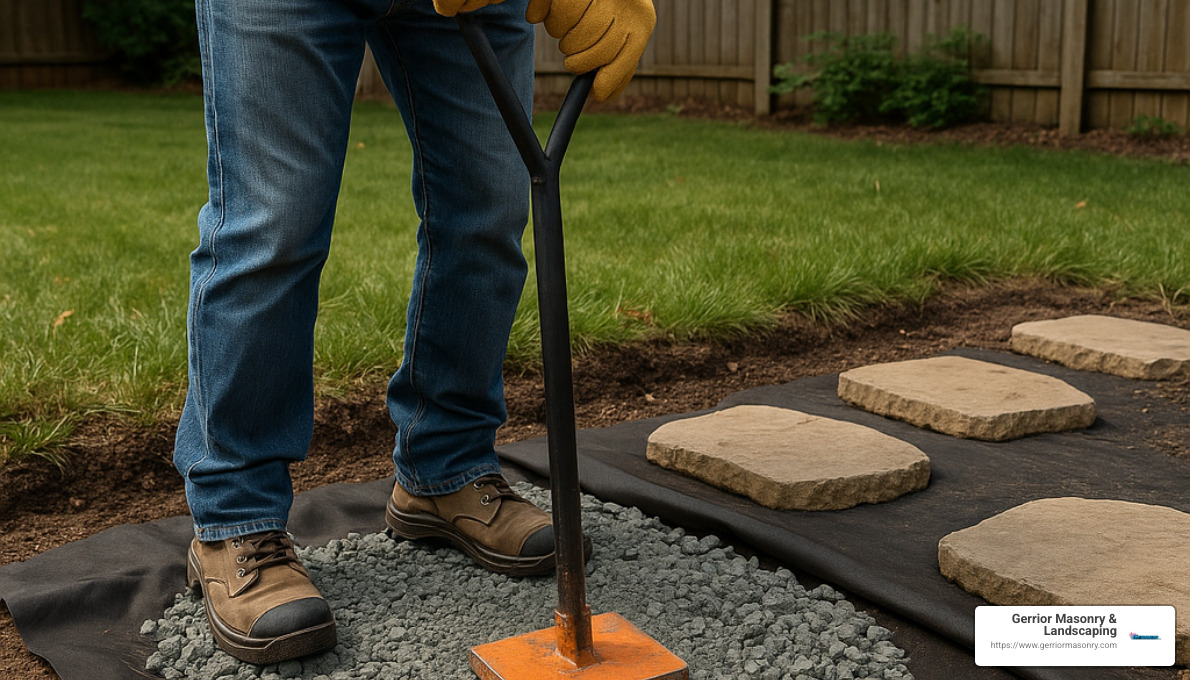
Next, compact the soil at the bottom of each hole using a hand tamper. This creates a solid foundation for everything that follows. Lay landscape fabric in each hole, extending beyond the edges to prevent future weed growth (your back will thank you later).
Add about 2 inches of crushed stone or gravel to each hole and compact this base layer thoroughly. I can’t stress this enough—proper compaction now prevents wobbling stones later. As landscape expert Steve Boehme wisely notes, “Respect rocks. They can hurt you badly in a careless moment.” Always lift with your legs, not your back, and don’t be shy about asking for help with larger stones.
Step 3 – Set, Level & Pitch Stones
Now for the fun part! Add a 1-inch layer of stone dust or sand over your compacted gravel. This creates a “setting bed” that allows for fine adjustments to each stone’s position and height.
Place each stone in its prepared hole, pressing it firmly into the sand or stone dust. Check each one with a level in both directions—side-to-side and front-to-back. For proper drainage, maintain a slight pitch (about ¼ inch per foot) away from any structures like your house or garage.
Use a rubber mallet to gently tap stones into place. Add or remove sand beneath stones as needed until they’re perfectly level and stable. Then walk on each stone to test for any wobbling. If you feel movement, lift the stone and adjust the base material until it’s rock-solid.
How to Install Stepping Stone Walkway in Lawns
When working in lawn areas, set your stones so their tops sit flush with or slightly below the turf line (about ¼ inch). This clever positioning allows your mower to glide right over them without blade damage.
Use a half-moon edger to cut clean edges around each stone—this professional touch makes a huge difference in the finished look. After setting your stones, fill any gaps between stone and soil with a mix of topsoil and grass seed, then water regularly until new grass establishes. The result is a seamless integration with your lawn that looks like it’s always been there.
How to Install Stepping Stone Walkway in Mulch Beds
For garden or mulched areas, I recommend setting stones about ½ inch above the finished mulch level. This slight elevation prevents mulch from washing onto the stones during heavy rain.
Consider installing metal or plastic edging around your path’s perimeter for a clean, defined look. Laying landscape fabric under and between stones before adding mulch dramatically reduces weeding chores later. After installation, refresh your mulch, keeping it slightly below the stone surface for a professional finish.
Step 4 – Fill Gaps & Lock Stones
What you choose to fill the spaces between your stepping stones affects both the look and maintenance of your path:
Soil and grass seed creates a lawn-like appearance but requires regular mowing. Pea gravel offers excellent drainage and a satisfying crunch underfoot. Polymeric sand hardens when wet to lock stones in place and prevent weeds (a favorite for low-maintenance installations). For shady spots, moss or ground cover plants provide a lush, magical feel.
Whichever material you choose, keep it slightly below the stone surface to highlight each step and eliminate tripping hazards. This subtle detail is what separates amateur paths from professional installations.
Step 5 – Final Inspection & Clean-Up
Before calling it a day, hose down your entire walkway. This serves two purposes: it settles base materials and reveals any areas that might collect water. Sweep excess sand or stone dust back into the joints for a tidy finish.
Take one more walk along your path, checking for any wobbling stones or uneven transitions. Make final adjustments as needed, then allow everything to settle overnight before heavy use.
According to research on slip resistance published by Lowe’s, natural stone typically provides excellent traction when wet, but you can improve safety by selecting stones with slightly textured surfaces rather than polished finishes.
With these steps complete, you’ll have a beautiful, functional walkway that improves your landscape for years to come. And there’s nothing quite like the satisfaction of looking at your finished path and thinking, “I built that!”
Finishing Touches & Design Inspiration
The right finishing touches transform a simple stepping stone path into a landscape feature that truly lifts your outdoor space. After installing your stepping stone walkway, these creative improvements can make all the difference between a basic path and a stunning garden feature that draws compliments from neighbors and guests alike.
Lighting Options
Nothing transforms an ordinary pathway quite like thoughtful lighting. Beyond just helping you steer safely after dark, well-placed lights create a magical atmosphere that extends your enjoyment of outdoor spaces well into the evening hours.
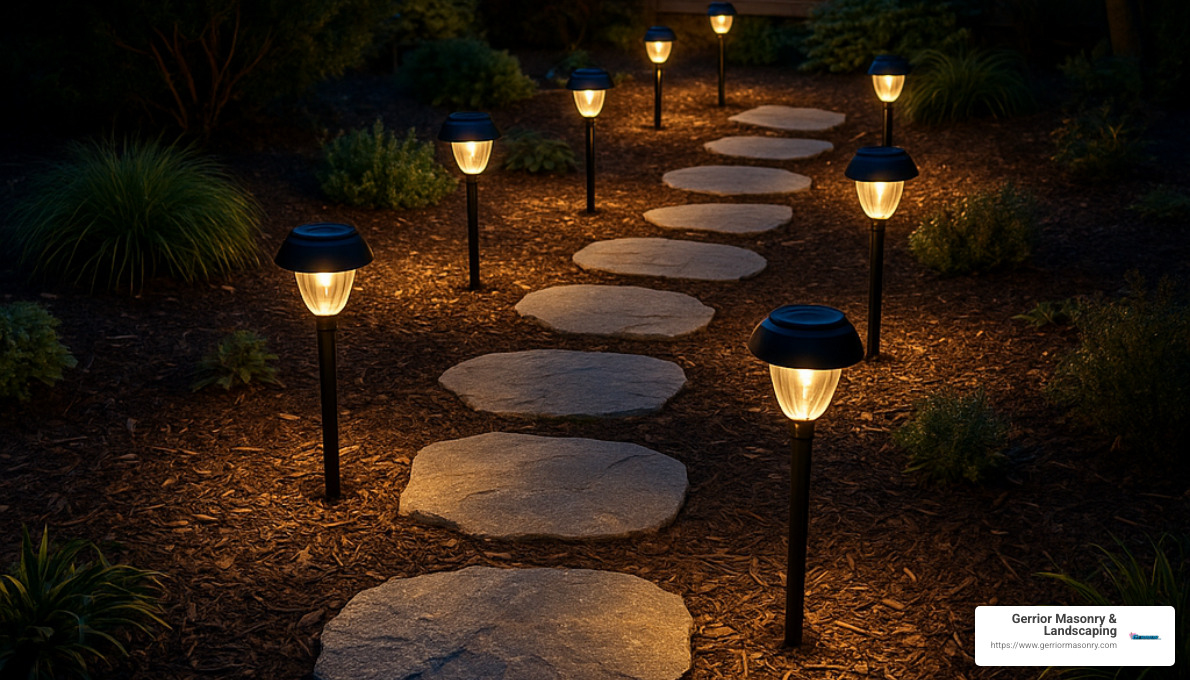
Solar stake lights are perfect for DIY enthusiasts—simply push them into the ground between stones, and let the sun do the charging work. No wiring, no electrician, no hassle! They create gentle pools of light that guide your steps while highlighting the natural beauty of your stones.
For a more sophisticated approach, recessed LED lights can be installed flush with your pathway or nestled between stones. While this requires a bit more planning and possibly professional installation for the electrical work, the sleek, modern look is worth the investment.
My personal favorite technique is downlighting from nearby trees or structures. By placing lights in trees or on the sides of buildings pointing downward, you create a natural moonlight effect that casts gentle shadows and highlights the texture of your stepping stones. It’s subtle yet dramatic—exactly what good landscape lighting should be.
Ground Covers and Plantings
Softening your pathway with appropriate plantings creates a cohesive landscape that looks like it’s been there forever, rather than freshly installed. The right plants can transform a utilitarian walkway into a garden feature that delights all the senses.
Creeping thyme is a perfect companion for stepping stone pathways. Not only does it fill the spaces between stones with lush greenery, but it releases a wonderful fragrance when stepped upon. Imagine walking through your garden and having each step release a subtle herbal scent—it’s an experience that engages more than just your eyes.
For homeowners concerned about drought resistance, various types of sedums offer colorful, low-growing options that require minimal water once established. Their fleshy leaves come in shades from silvery blue to deep burgundy, adding visual interest throughout the seasons.
In shadier spots, sweet woodruff creates a carpet of tiny white spring flowers against bright green foliage, while ajuga (also called bugleweed) offers deep purple-blue blooms and sometimes variegated foliage. Both spread readily to fill gaps between stones without becoming invasive troublemakers.
Creative Patterns and Borders
The pattern and arrangement of your stepping stones can lift a simple path into a work of art. Consider these design elements to add personality and visual interest:
Alternating stone colors creates a pleasing rhythm that draws the eye along the path. This works beautifully with both natural stone variations and manufactured pavers. For instance, alternating bluestone with a lighter granite creates a checkerboard effect that adds sophistication to even the simplest layout.
For truly personalized touches, consider incorporating small mosaic inlays into your design. A simple compass rose at a path intersection or your family initial at the entrance adds character and makes your walkway uniquely yours. I’ve seen homeowners embed everything from sea glass to special stones collected during family vacations.
Adding formal borders with contrasting materials provides definition and a finished look. A simple row of brick or smaller cobblestones along the edges of your stepping stone path creates a frame that makes the entire installation look more intentional and professionally designed.
Don’t forget to consider creating wider “landing pad” areas where paths intersect or at entrances to gardens or seating areas. These expanded sections provide natural gathering spots and visual focal points that improve the flow of your landscape design.
For even more creative inspiration that could transform your Massachusetts property, visit our paver walkway ideas page. You’ll find dozens of photos showcasing designs we’ve installed throughout Middlesex and Essex Counties that might be perfect for your home.
The finishing touches are where your personality really shines through in your landscape. Whether you prefer formal and structured or whimsical and natural, these improvements will make your stepping stone walkway a true reflection of your personal style—and a joy to walk along for years to come.
Maintenance, Troubleshooting & Safety Tips
Your beautiful stepping stone walkway is an investment worth protecting. With some simple care, your path will continue to improve your landscape for decades to come – something we’ve seen with installations we completed over 30 years ago that still look fantastic today.
Regular Maintenance
Think of your stepping stone walkway as a low-maintenance friend – it doesn’t ask for much, but a little attention goes a long way. Each spring, take a casual stroll along your path and check for any stones that might have shifted during winter’s freeze-thaw cycles. This annual inspection takes just minutes but prevents small issues from becoming bigger problems.
When you notice a stone that’s settled too low, don’t worry – it’s an easy fix! Simply lift the stone, add a bit more sand or stone dust underneath, and reset it. This releveling keeps your path safe and looking its best.
One of the few maintenance challenges you’ll face is weed control between stones. Rather than reaching for harsh chemicals, we recommend a more environmentally friendly approach. A simple solution of white vinegar sprayed between stones on sunny days works wonders. For stubborn weeds, carefully pouring boiling water over them provides instant results without harming your stonework or nearby plants.
Over time, you might notice some of the material between stones washing away, especially after heavy rains. Simply sweep some fresh sand, gravel, or your original filler material back into these joints to maintain the path’s integrity and appearance.
Troubleshooting Common Issues
Even the best-installed walkways can develop minor issues over time. The good news? Most problems have simple solutions.
When you notice a sinking stone, it’s usually because the base material beneath has compressed or washed away. The fix is straightforward: carefully remove the stone, add more base material, compact it thoroughly, and reset the stone at the proper height. Take time to compact the new material well – this is often where DIYers cut corners, leading to repeated problems.
Wobbling stones are not just annoying – they can be hazardous. If you find a rocking stone, lift it up, adjust the sand bed beneath for better support, and check it with a level before replacing it. Sometimes simply adding sand to one side is all that’s needed.
Here in Massachusetts, frost heave is a fact of life. Our freeze-thaw cycles can push stones upward during winter. For minor heaving, the stone will often settle back naturally in spring. For more significant displacement, you may need to reset the affected stones with a deeper gravel base that allows better drainage and less frost penetration.
Winter Care
Massachusetts winters present special challenges for hardscaping. Recent research on winter salt protection published in the Chillicothe Gazette confirms what we’ve observed for years – traditional road salt can seriously damage natural stone through a process called spalling, where the surface flakes off.
Instead of salt, we recommend using calcium magnesium acetate (CMA) or plain sand for traction. These alternatives provide safety without damaging your investment. When clearing snow, opt for plastic snow shovels rather than metal ones, which can chip or scratch stone surfaces.
For extra protection, especially for more porous stones like sandstone or limestone, consider applying a quality penetrating sealer before winter arrives. This creates an invisible barrier against moisture without changing the stone’s appearance or making it slippery.
Safety Considerations
Working with stone is rewarding but demands respect for both the material and your body. Always use proper lifting technique – bend at the knees, not the waist, and keep the load close to your body. Your back will thank you!
Don’t skimp on personal protective equipment. Gloves protect against scrapes and cuts, while safety glasses shield your eyes from flying chips when cutting or splitting stones. These simple precautions prevent the most common injuries we see on DIY projects.
For stones weighing more than 50 pounds, work with a partner. Not only is it safer, but an extra set of hands makes precise placement much easier. And remember to stay hydrated during installation, especially on hot days – stone work is more physically demanding than many homeowners anticipate.
By following these maintenance and safety guidelines, your stepping stone walkway will remain a beautiful, functional part of your landscape for generations. And if you ever need professional assistance with repairs or have questions about your path, Gerrior Masonry & Landscape Construction is just a phone call away, proudly serving Woburn and all of Middlesex & Essex County, MA.
Frequently Asked Questions about Stepping Stone Walkways
How thick should stones be for heavy foot traffic?
When it comes to busy pathways, thickness matters more than you might think. For areas where you’ll have regular foot traffic, I recommend choosing stones that are at least 2-3 inches thick. This isn’t just about durability – it’s about peace of mind.
Thinner stones might seem fine initially, but they’re far more likely to crack when exposed to our notorious New England freeze-thaw cycles. I’ve seen many beautiful but thin stones split right down the middle after just one harsh winter. Natural stone typically outperforms concrete alternatives in high-traffic areas, though quality concrete pavers can also perform well if properly installed.
What is the optimal spacing for comfortable walking?
Finding the right spacing for your stepping stones is all about creating a natural walking rhythm. The most comfortable arrangement typically matches an average adult stride – approximately 24 inches from center to center of each stone.
For edge-to-edge spacing between stones, 6-10 inches works wonderfully for most adults. If you’re creating a path primarily for children or want a more leisurely strolling pace, consider bringing the stones a bit closer together, around 18-20 inches between centers. I always recommend testing your spacing by actually walking the path before final installation – your body will tell you if something feels off!
Can I lay stones directly on grass without digging?
While placing stepping stones directly on grass might seem like a tempting shortcut, I strongly advise against it. I’ve seen many “quick and easy” paths become wobbly hazards within just a season.
Without proper preparation, stones will inevitably shift and become unstable as the ground beneath freezes, thaws, and settles. You’ll also create a mowing nightmare, constantly having to trim around raised stones. Water tends to pool under surface-laid stones, creating mosquito breeding grounds and accelerating deterioration. And in our Massachusetts climate, frost heave will almost certainly push surface-laid stones upward, creating tripping hazards.
The few hours of extra effort for proper installation will reward you with years – even decades – of stability and beauty. Trust me, your future self will thank you!
How do I ensure proper drainage under my stepping stones?
Proper drainage is absolutely essential for a long-lasting stepping stone pathway, especially in our New England climate. The key elements of good drainage include a minimum 2-inch gravel base under each stone, which allows water to flow through rather than pooling.
Always create a slight pitch (about ¼ inch per foot) away from your home or other structures – this subtle grade is barely noticeable when walking but makes a huge difference in directing water flow. The spacing between your stones is also important for drainage, as these gaps allow water to percolate into the ground rather than running across surfaces.
In areas prone to standing water, consider setting your stones slightly above grade to prevent submersion during heavy rains. These simple drainage strategies will dramatically extend the life of your pathway.
What’s the best stone choice for New England weather?
After decades of installing pathways throughout Massachusetts, I’ve learned which materials stand up to our challenging climate. For natural durability, I recommend dense, non-porous stones like granite or bluestone. These materials resist moisture absorption and stand up beautifully to our freeze-thaw cycles.
Softer stones like limestone or sandstone might look beautiful initially, but they tend to absorb water and can crack during winter freezes. If you prefer manufactured options, look specifically for concrete pavers rated for freeze-thaw conditions – not all products are created equal when it comes to cold weather performance.
The right stone choice means the difference between a pathway that lasts for decades and one that needs replacement after just a few seasons. At Gerrior Masonry & Landscape Construction, we’re happy to discuss which options would work best for your specific property conditions.
Gerrior Masonry & Landscape Construction is based in Woburn, MA, and proudly services Middlesex and Essex County, Massachusetts.
Conclusion & Next Steps
There’s something truly special about completing a stepping stone walkway with your own hands. As the dust settles and you step back to admire your work, you’ll realize you’ve created more than just a path—you’ve added lasting value, functionality, and charm to your home.
The beauty of stepping stone walkways lies in their perfect balance of form and function. They guide visitors through your landscape while protecting your lawn, they withstand New England’s harsh seasons while requiring minimal maintenance, and they improve your property’s curb appeal while potentially boosting its resale value.
Durability is perhaps the most satisfying aspect of a properly installed stepping stone path. When you follow the techniques we’ve shared—from proper base preparation to careful stone selection and placement—you’re creating a landscape feature that will serve your family for decades, not just seasons. Many of the stone paths I’ve installed for clients over 30 years ago still look beautiful today, having weathered countless freeze-thaw cycles with minimal maintenance.
The curb appeal boost is immediate and significant. There’s something inherently welcoming about a thoughtfully designed stone path that beckons visitors toward your door or guides them through your garden spaces. This simple addition can transform the entire feel of your outdoor living areas.
Perhaps most importantly, completing this project will give you genuine DIY confidence. If you can successfully install a stepping stone walkway, you’ve mastered skills that transfer to many other landscape projects. The satisfaction of creating something beautiful and functional with your own hands is truly incomparable.
If you’re inspired by this guide but feel that your project might benefit from professional expertise—whether due to challenging terrain, special design requirements, or simply a lack of time—we’re here to help. Our paver walkway installation services combine decades of experience with an unwavering commitment to quality craftsmanship.
How to install stepping stone walkway projects vary widely in complexity. Some homeowners find they can complete a simple garden path in a weekend, while others find that slope challenges or drainage issues make professional assistance worthwhile. Either way, the investment in proper installation techniques pays dividends in longevity and appearance.
Gerrior Masonry & Landscape Construction is based in Woburn, MA, and proudly services Middlesex and Essex County, Massachusetts. With over 30 years of experience creating beautiful, durable hardscapes, we’re here to help with all your masonry and landscaping needs.
