
DIY Catch Basin for French Drain: Easy 4-Step Guide
Why Your Yard Needs a French Drain and Catch Basin
Standing water in your yard isn’t just an unsightly, muddy mess—it’s a serious threat that can lead to basement flooding, foundation cracks, soil erosion, and other expensive structural damage. Beyond your home, it kills lawns, creates breeding grounds for mosquitoes, and can even cause retaining walls to fail. As one homeowner found, “Every time it rains, the water that collects in front of the garage actually runs into the garage.” A DIY catch basin for french drain installation is a powerful solution that actively captures and redirects this problem water, protecting your home’s foundation and reclaiming your outdoor space.
A properly installed system captures surface water before it causes problems and directs it safely away from your home. With the right tools and knowledge, most homeowners can tackle this project in a weekend. The typical cost for a DIY installation ranges from $100-$500 for materials, while professional installation can cost several thousand dollars.
I’m Joe Gerrior, and I’ve been helping Massachusetts homeowners solve drainage problems for over 34 years through Gerrior Masonry & Landscape Construction. My experience has shown me the key techniques that ensure long-lasting, effective water management.
What is a Drainage Catch Basin?
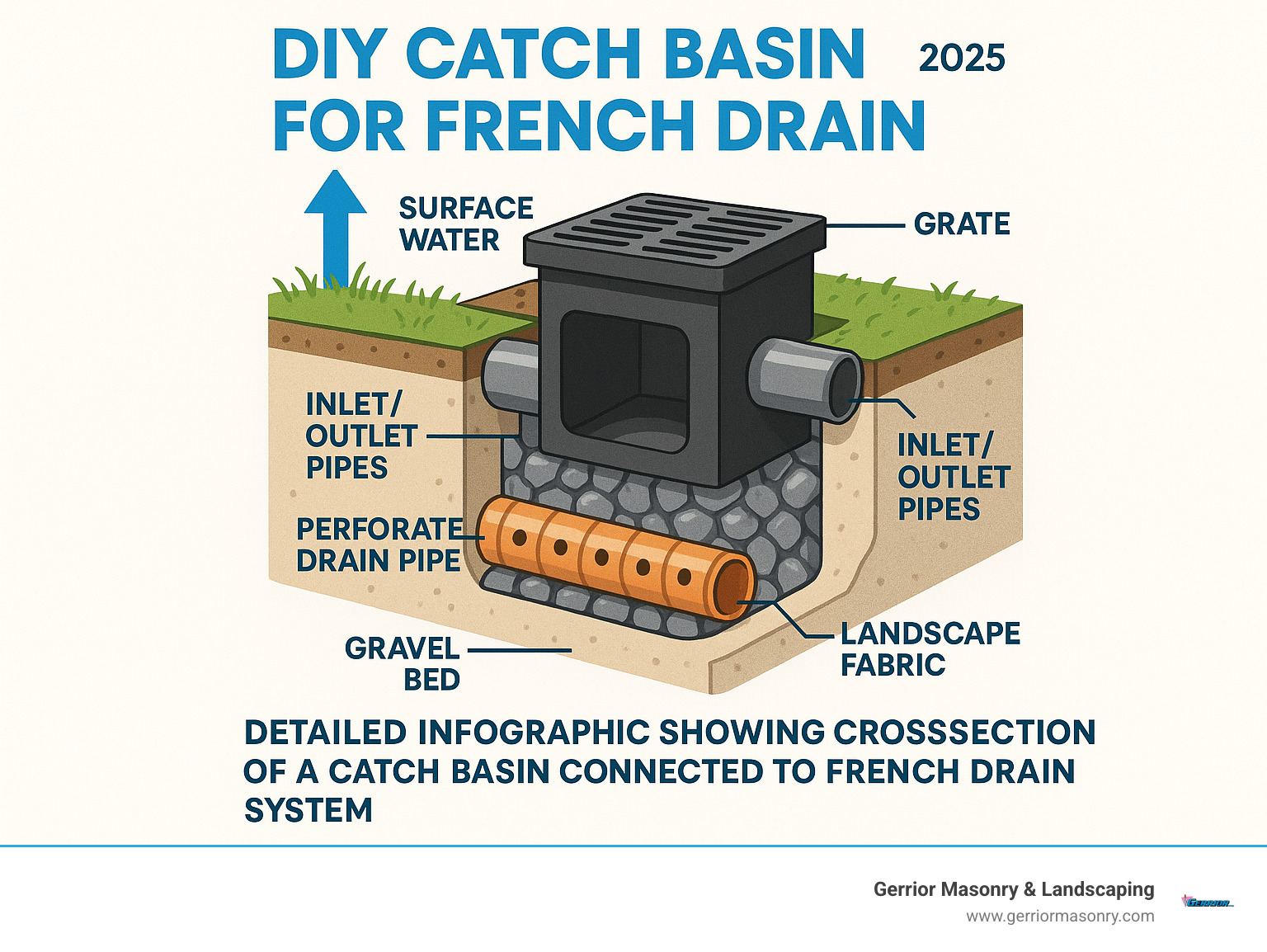
A drainage catch basin is an underground collection box designed to rapidly capture surface water from a specific area. Think of it as the storm drain for your yard. It’s a crucial component for managing heavy rain and precipitation and eliminating puddles before they can cause damage.
It’s important to understand how a catch basin differs from a French drain. A French drain is a perforated pipe in a gravel-filled trench designed to collect subsurface water over a large area, like a soggy lawn. A catch basin, on the other hand, tackles surface water in concentrated low spots—like at the bottom of a slope, under a downspout, or in a persistently puddled part of your driveway. It acts as an intake point and a pre-filter, protecting the entire drainage system from getting clogged with debris.
Key components include:
- The Grate: The visible top that allows water in while blocking large debris like leaves and twigs.
- The Sump Area: The bottom of the basin that traps smaller sediment and silt, preventing it from clogging the connected drain pipes.
- Inlet/Outlet Pipes: Openings that connect the basin to the French drain system, allowing water to flow away.
For more information, visit our page on drainage systems.
Tools and Materials You’ll Need
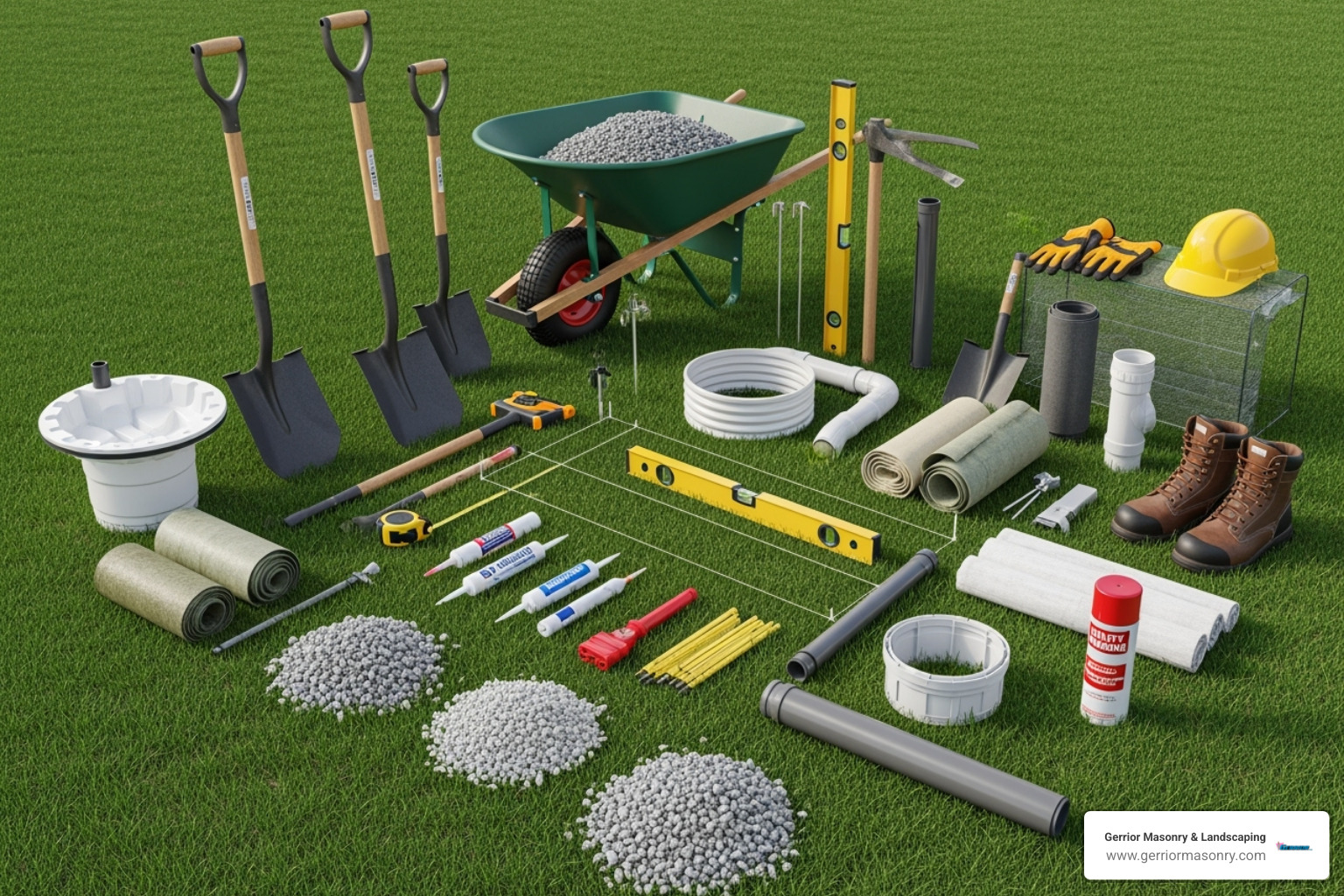
Gathering your tools and materials beforehand will make the installation process much smoother. Here’s what you’ll need for a DIY catch basin for French drain project:
- Digging Tools: Shovel, trenching spade, pickaxe (for hard soil), and a wheelbarrow.
- Measuring & Leveling: Tape measure, stakes, string line, and a line level or rotary laser level.
- Drainage Components:
- Catch Basin Kit: Available in various sizes (e.g., 6-inch, 9-inch, 12-inch). Choose a size based on the volume of water you need to manage.
- Perforated Drain Pipe: Typically 4-inch diameter. Flexible corrugated pipe is easier to work with on curves, while rigid PVC (Schedule 40) is more durable and crush-resistant.
- Solid Drain Pipe: Use this non-perforated pipe to carry water from the catch basin to the discharge point without letting it seep out along the way.
- Drainage Gravel: Use clean 3/4-inch drainage gravel (#57 stone). Avoid pea gravel, which is too small and will clog the system.
- Landscape Fabric: Use non-woven geotextile fabric. This is crucial for longevity, as it lets water pass through while blocking clog-causing silt and soil.
- Connection Materials: PVC primer and cement for rigid pipe connections, waterproof silicone caulk for sealing the pipe entry into the basin, and any necessary pipe fittings (couplers, wyes, elbows).
- Optional: Pop-up emitter for a clean discharge point, hardware cloth (1/4-inch mesh) to cover the pipe outlet and keep critters out, and essential safety gear (gloves, safety glasses, steel-toed boots).
A Step-by-Step Guide to Installing a DIY Catch Basin for French Drain
Installing a DIY catch basin for French drain is a manageable project that creates an underground highway for water, protecting your home for years. Careful planning and execution are the keys to success.
Step 1: Planning and Preparation
Proper planning is the most critical phase. Before digging, take these essential steps:
- Site Assessment: Identify the low spots in your yard where water consistently pools. This is the ideal location for your catch basin.
- Call 811: This is a non-negotiable safety step. A few days before you plan to dig, call 811 to have underground utility lines marked. This service is free and required by law.
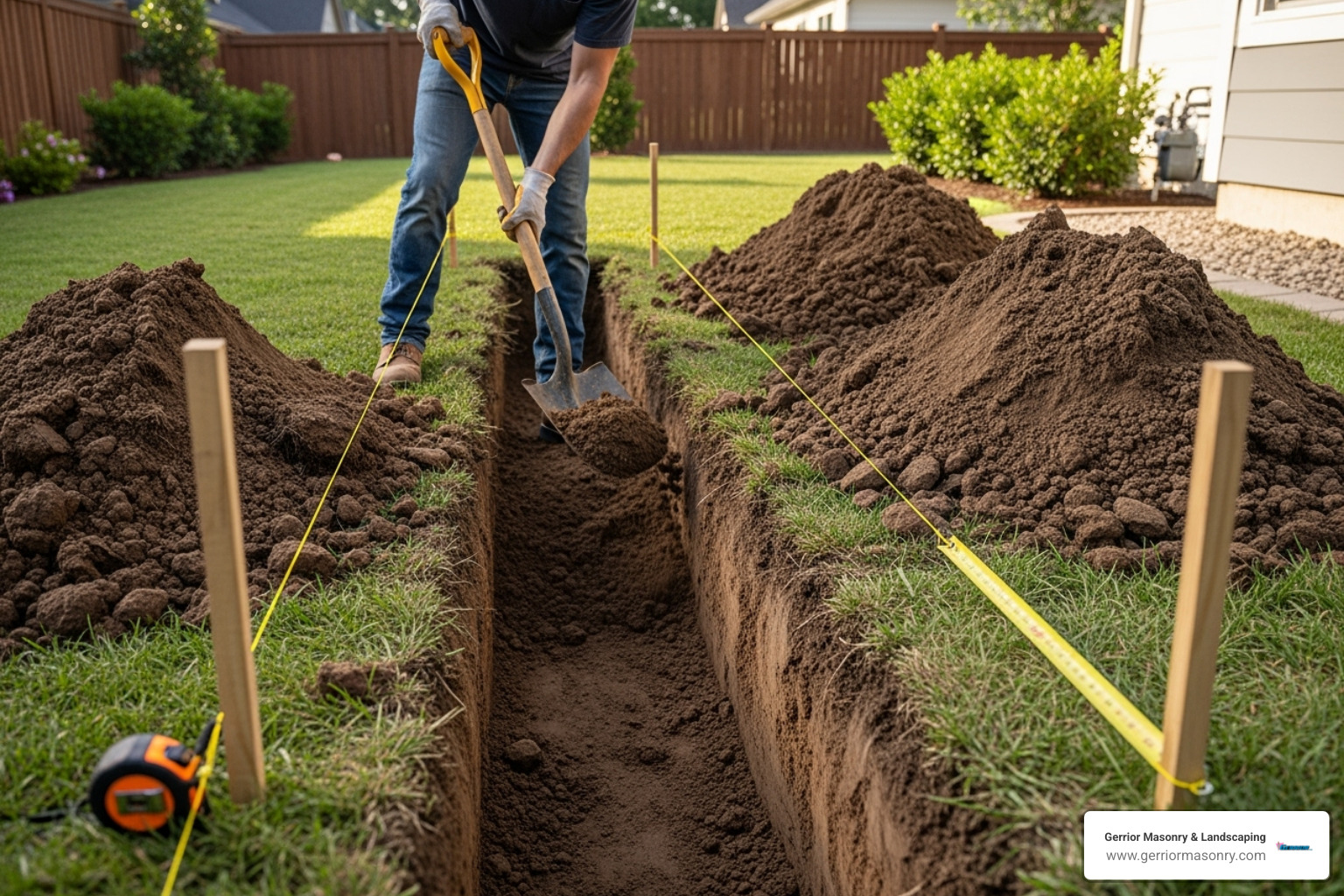
- Map Your Trench Path: Plan a path for your French drain that has a continuous downward slope away from the house. The gold standard is a 1% grade, which equals a 1-inch drop for every 8 feet of pipe. Use stakes and a string line tied to a line level or a rotary laser level to precisely map this slope before you dig. An incorrect slope is the number one reason DIY drainage systems fail.
- Choose a Discharge Point: All that water needs a safe place to go, at least 10 feet away from any foundation. Common options include:
- Daylighting: The simplest option, where the pipe ends on a natural downward slope, allowing water to drain onto the surface.
- Pop-up Emitter: A discreet option that sits flush with the lawn and pops up to discharge water when pressure builds.
- Dry Well: An underground pit filled with gravel that allows water to collect and slowly percolate into the surrounding soil. Ideal for properties without a natural slope.
- Storm Drain Connection: This may be an option, but you must check with your local municipality for regulations and permit requirements first.
To learn more about protecting your home, see our foundation repair page.
Step 2: Excavation and Installation
With your plan in place, it’s time to start digging.
- Dig the Basin Hole: At your designated low spot, excavate a hole that is wide enough to work around the basin and 6-12 inches deeper than the basin’s height. This extra depth is for the crucial gravel base. A pro tip: drill several 1/2-inch weep holes in the bottom of the basin itself. This prevents a small amount of stagnant water from sitting in the sump, which can attract mosquitoes.
- Excavate the Trench: Following your string line guide, dig a trench that is at least 9 inches wide and 18-24 inches deep. As you dig, separate the topsoil from the subsoil into different piles. This will make backfilling much cleaner. Use your level frequently to confirm you are maintaining the proper downward slope along the entire length of the trench.
- Install the Base and Liner: Pour and compact a 3-6 inch layer of drainage gravel into the bottom of the trench and the basin hole. This creates a stable, level base. Next, line the trench with non-woven landscape fabric, pressing it into the corners and leaving at least 12 inches of excess fabric on both sides to fold over later.
- Set the Basin: Place the catch basin firmly onto the gravel base in the hole. Use a level to ensure the top of the grate will sit level with or just slightly below the surrounding ground. This ensures water flows into it, not around it. Backfill around the outside of the basin with gravel to hold it securely in place.
Step 3: Connecting Pipes and Backfilling
Now it’s time to connect the system components.
- Connect Pipes to Basin: Securely attach the outlet pipe to the catch basin’s port. For a truly watertight seal, apply a bead of waterproof silicone caulk around the outside of the pipe before inserting it. The pipe should extend 3-4 inches into the basin. If using rigid PVC, be sure to use PVC primer and cement on all fittings for a permanent, leak-proof bond.
- Lay the Pipe: Place the perforated pipe in the trench with the perforation holes facing down (at the 5 and 7 o’clock positions). Water rises from the saturated gravel bed into the pipe, and this orientation prevents silt from clogging the holes from above. Ensure the pipe is fully supported by the gravel base to prevent sags or “bellies” where water can pool.
- Backfill with Gravel: Carefully surround and cover the pipe with another 3-5 inches of drainage gravel. The pipe should be completely encased in gravel. This gravel zone is the “French drain” portion of the system, creating a highly permeable channel for water to move freely into the pipe.
- Wrap with Fabric: Fold the excess landscape fabric over the top of the gravel, overlapping the edges by at least 6 inches. This “burrito wrap” is the most important step for ensuring a long-lasting, clog-free system. It prevents soil, silt, and roots from migrating into your gravel and pipe. Proper drainage is a key part of our hardscaping services, ensuring long-lasting results.
Step 4: Finishing Touches and Project Costs
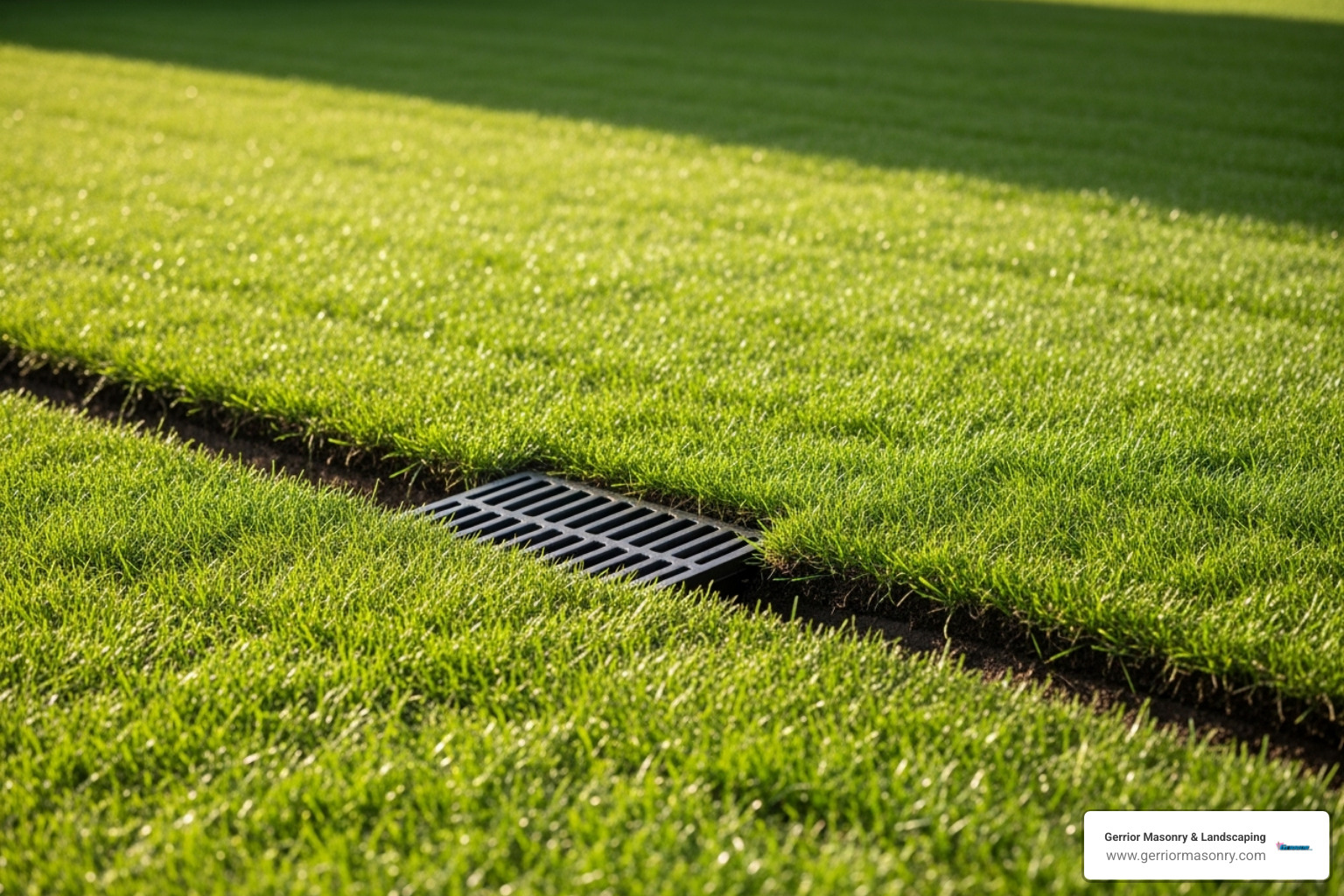
Complete the project by concealing your work.
- Final Backfill: Cover the fabric-wrapped trench with the topsoil you excavated earlier. You can then replace the original sod or use seed to grow new grass.
- Discharge Point: Consider installing a pop-up emitter at the end of your drain line. It stays closed to keep debris and critters out, then opens automatically when water flows through.
- Project Costs: DIY material costs for a typical project can range from $150 to over $500. In contrast, professional installation costs can range from a few thousand dollars to $10,000 or more, depending on the project’s complexity and scale.
Note on pricing: These are national averages based on internet data and not a direct quote for Gerrior Masonry services. Costs vary based on project scope and local pricing.
Gerrior Masonry & Landscape Construction is based in Woburn, MA, and proudly services Middlesex and Essex County, Massachusetts.
Troubleshooting and When to Call the Professionals
Even a well-installed DIY catch basin for French drain can encounter issues. Most are fixable with routine maintenance, but it’s important to know what to look for and when it’s time to call for expert help.
Common Problems and How to Avoid Them
Being proactive is the best way to ensure your drainage system has a long, effective life. Watch out for these common issues:
- Clogged Grates: Leaves, grass clippings, mulch, and other debris can quickly block the grate, preventing water from entering. Solution: Make it a habit to inspect and clear the grate before and after heavy rain, and especially during the fall when leaves are abundant. Consider a grate with smaller openings if fine debris is a constant issue.
- Silt Buildup: The sump is designed to trap sediment, but it will eventually fill up and reduce the basin’s capacity, potentially clogging the outlet pipe. Solution: Clean out the basin’s sump at least twice a year (spring and fall). Use a small trowel, a scoop, or a wet/dry shop vac to remove all the accumulated silt and debris.
- Improper Slope: If water isn’t draining away, it’s likely due to an incorrect or non-existent slope in the pipe. Solution: This major installation error is difficult to fix. Prevention is key: use a level carefully during installation. If the problem exists, the only real solution is to re-excavate the trench and re-lay the pipe at the correct grade.
- Incorrect Pipe Connections: Leaks at the basin or installing perforated pipe with the holes facing up will severely reduce effectiveness. Solution: During installation, double-check that all connections are sealed with caulk or PVC cement and that perforated pipe holes face down.
- Crushed Pipes: Driving heavy equipment, or even cars, over the drain line can crush the pipe, especially if it’s flexible corrugated pipe. Solution: Use durable, rigid Schedule 40 PVC pipe in any areas that might see traffic. Mark the location of your drain line to avoid accidentally driving over it in the future.
- Root Intrusion: Tree and shrub roots are naturally drawn to the water source in your drain and can infiltrate the pipe, causing complete blockages. Solution: Plan your drain path at least 10-15 feet away from large trees. If this is unavoidable, use solid, non-perforated pipe in those sections or install a dedicated root barrier alongside the trench.
Maintenance and Professional Help
Your drainage system requires minimal but crucial maintenance to function correctly for decades.
- Routine Maintenance (Monthly/After Storms):
- Visually inspect the catch basin grate and clear any surface debris.
- Check the discharge point to ensure it’s not blocked by grass, leaves, or soil.
- Semi-Annual Maintenance (Spring & Fall):
- Remove the grate and thoroughly clean out the sump area to remove accumulated silt.
- Use a garden hose to flush water through the system from the catch basin. This helps clear out minor sediment buildup in the pipe and confirms the system is flowing freely.
- Annual Inspection:
- Check the area around the trench for any signs of sinking or settling, which could indicate a problem below.
While a DIY approach is rewarding, some situations demand professional expertise.
When to Call a Pro:
- Persistent Water Issues: If your yard is still soggy after installation and maintenance, there may be a more complex issue like a high water table or widespread soil compaction that a simple system can’t solve.
- Large-Scale or Complex Projects: If you need to drain a very large area, deal with multiple water sources, or integrate the system with retaining walls and patios, a professional design is critical.
- Difficult Site Conditions: Extremely steep slopes, heavy clay or rocky soil, and navigating a dense network of underground utilities can make DIY installation risky and ineffective.
- Signs of Foundation Damage: If you see foundation cracks, basement dampness, or sticking doors and windows, call an expert immediately. Water issues may have already caused damage that needs professional assessment and repair.
At Gerrior Masonry & Landscape Construction, we bring over 30 years of experience to every drainage challenge. Our skilled team and owner oversight ensure high-quality, lasting solutions for your property. For professional drainage systems custom to your needs, contact us for expert drainage solutions.
Gerrior Masonry & Landscape Construction is based in Woburn, MA, and proudly services Middlesex and Essex County, Massachusetts.
