
Transform Your Living Space with a Stunning Stone Fireplace
Fireplace stone installation involves applying thin stone veneer over an existing fireplace to achieve a high-end look without the cost and weight of full masonry. Stone veneer weighs a fraction of traditional stone, requires no extra structural support, and is a cost-effective way to cover an outdated brick fireplace or create a new focal point.
Beyond its visual appeal, a stone fireplace adds significant value to your home. It creates a warm, inviting atmosphere that becomes the natural gathering spot for family and friends. This timeless feature not only enhances your daily living experience but can also be a major selling point, offering a high return on investment by boosting your property’s market value and appeal to potential buyers.
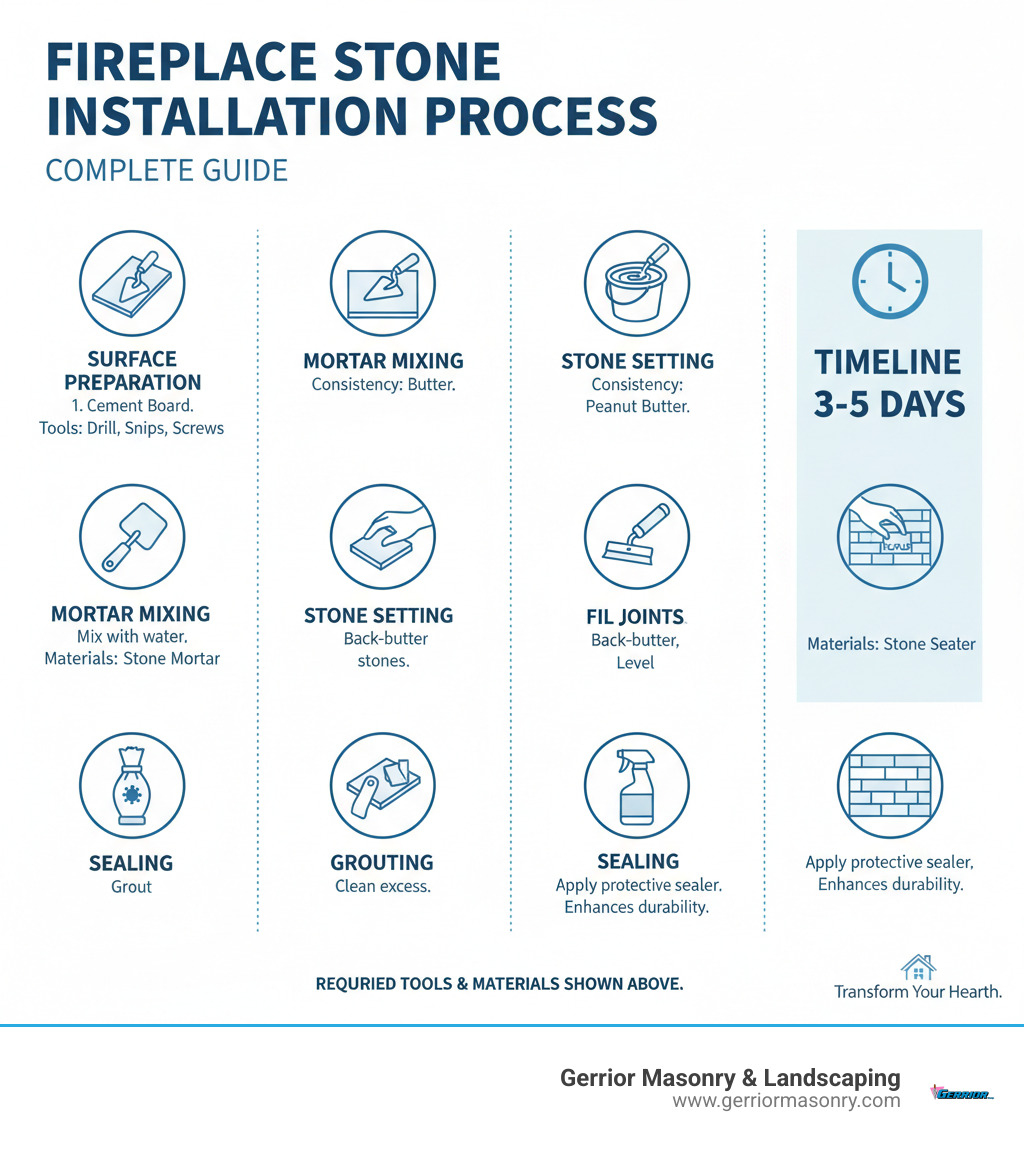
The basic process involves:
- Choosing Your Stone: Natural or manufactured stone veneer.
- Surface Prep: Installing cement board and metal lath.
- Application: Applying mortar and setting the stones from the bottom up.
- Finishing: Grouting the joints and sealing the stone.
While the results are stunning, be aware that this is a challenging DIY project. As one DIYer shared, “I need to make sure that people realize this wasn’t a cheap or quick or easy update. It was much more of a process than I expected.” Expect a 3-5 day timeline, sore hands, and a dusty house. However, the change is absolutely worth the effort, and proper installation is crucial for both safety and aesthetics.
I’m Joe Gerrior, owner of Gerrior Masonry & Landscape Construction Corp. Our team has been completing fireplace stone installation projects throughout Massachusetts for over 34 years, and we’veseen how a professionally installed stone fireplace can become the centerpiece of a home.
Planning and Preparation for Your Fireplace Stone Installation
Proper planning is the most critical phase of your project. It’s what separates a professional-looking result from a disappointing one. Here’s how to get started.
Choosing Your Stone and Style
Your first decision is the stone itself. You have two main options: natural thin stone veneer and manufactured stone veneer (MSV).
- Natural Thin Stone: This is real stone (quartzite, marble, slate) sliced thin. Each piece is unique in color and texture, offering an authentic, high-end appearance. It’s heavier and often more expensive than MSV.
- Manufactured Stone Veneer (MSV): Made from molded and colored concrete, MSV is lightweight, affordable, and consistent in shape and color. Some products are even available as mortarless, nailable panels, simplifying installation.
Here’s a quick comparison:
| Feature | Natural Thin Stone Veneer | Manufactured Stone Veneer (MSV) |
|---|---|---|
| Cost | Generally higher per square foot | Often more affordable per square foot |
| Weight | Lighter than full stone, but heavier than MSV | Very lightweight, minimal structural concerns |
| Installation | Requires mortar, can be more challenging to cut and fit | Usually easier to install, some are mortarless/nailable |
| Durability | Extremely durable, resists fading | Durable, but some brands may fade over time |
| Appearance | Unique, authentic, natural variations | Consistent patterns, can sometimes look less authentic |
| Maintenance | Low, but may require specific cleaners | Low, easy to clean |
The stone style sets the mood. Rustic looks use irregular shapes like fieldstone for a cozy feel. Modern styles favor clean lines and monochromatic colors, often with stacked stone panels. Traditional styles use uniform shapes and warm colors for a classic look. For inspiration, look at products like Eldorado Stone’s Filedledge stone.
Gathering Tools, Materials, and Understanding Costs
For a successful DIY project, have all your supplies ready. This includes your stone, veneer mortar, and grout. You’ll also need substrate materials like ½” cement board, 1 ⅝” self-tapping screws, mesh tape, builder’s felt, and metal lath. Key tools include a tile cutting wet saw, various trowels (notched, finishing, brick), a grout bag, and essential safety equipment.
Plan for about 15 hours of work over 3-5 days. Material costs can vary widely; based on internet data, stone veneer averages $10 to $35 per square foot. Remember to order 10-15% extra for cuts and waste. Shipping, mortar, and other supplies can add several hundred dollars or more. These are average costs and do not reflect actual prices for Gerrior Masonry services, which vary by project.
Safety, Codes, and Surface Preparation for Your Fireplace Stone Installation
Safety is paramount. Always wear safety glasses, gloves, and a dust mask, especially when cutting stone or mixing mortar. Before starting, check local fire and building codes for regulations on clearances—the minimum safe distance between the fireplace and any combustible materials like wood framing, drywall, or mantels. For wood-burning fireplaces, this is often 36 inches from the firebox opening, but codes vary by location and fireplace type.
Gas and electric fireplaces have less stringent requirements, but clearance rules still apply. Ignoring these codes is a serious fire hazard. Also, turn off power to any nearby outlets at the breaker and plan for electrical box extenders to bring them flush with the new stone surface.
Proper surface preparation is non-negotiable. If you have concerns about your chimney’s condition, get it inspected first. More info about chimney repairs is available on our site. The installation process is as follows:
- Substrate: Never apply stone veneer to regular drywall. You must use ½” cement board secured to the studs with 1 ⅝” self-tapping screws. Tape the seams with mesh tape. This article explains why drywall is unsuitable.
- Moisture Barrier: Cover the cement board with builder’s felt, overlapping pieces by 2 inches from the bottom up. Secure with a staple gun.
- Metal Lath: Nail metal lath over the felt, with the cups facing up.
- Scratch Coat: Apply a ½-inch layer of mortar over the lath, pressing firmly to ensure the mortar pushes through the lath and makes solid contact with the moisture barrier. This is called the ‘scratch coat,’ and it creates a strong, monolithic base for your stone. Once the surface is covered, rake horizontal grooves into the semi-dry mortar with a notched trowel or a scarifier rake. These grooves act as a mechanical key, providing a rough texture for the stone-setting mortar to grab onto, ensuring a permanent bond. Let this coat cure for at least 24-48 hours until it is hard to the touch.
If you plan to install a mantel or mount a TV, add structural supports between the studs before you begin.
Gerrior Masonry & Landscape Construction is based in Woburn, MA, and proudly serves Middlesex and Essex County, Massachusetts.
The Installation Process and Finishing Touches
With the prep work done, it’s time to install the stone. This is where your fireplace stone installation comes to life.
Applying Mortar and Setting the Stone
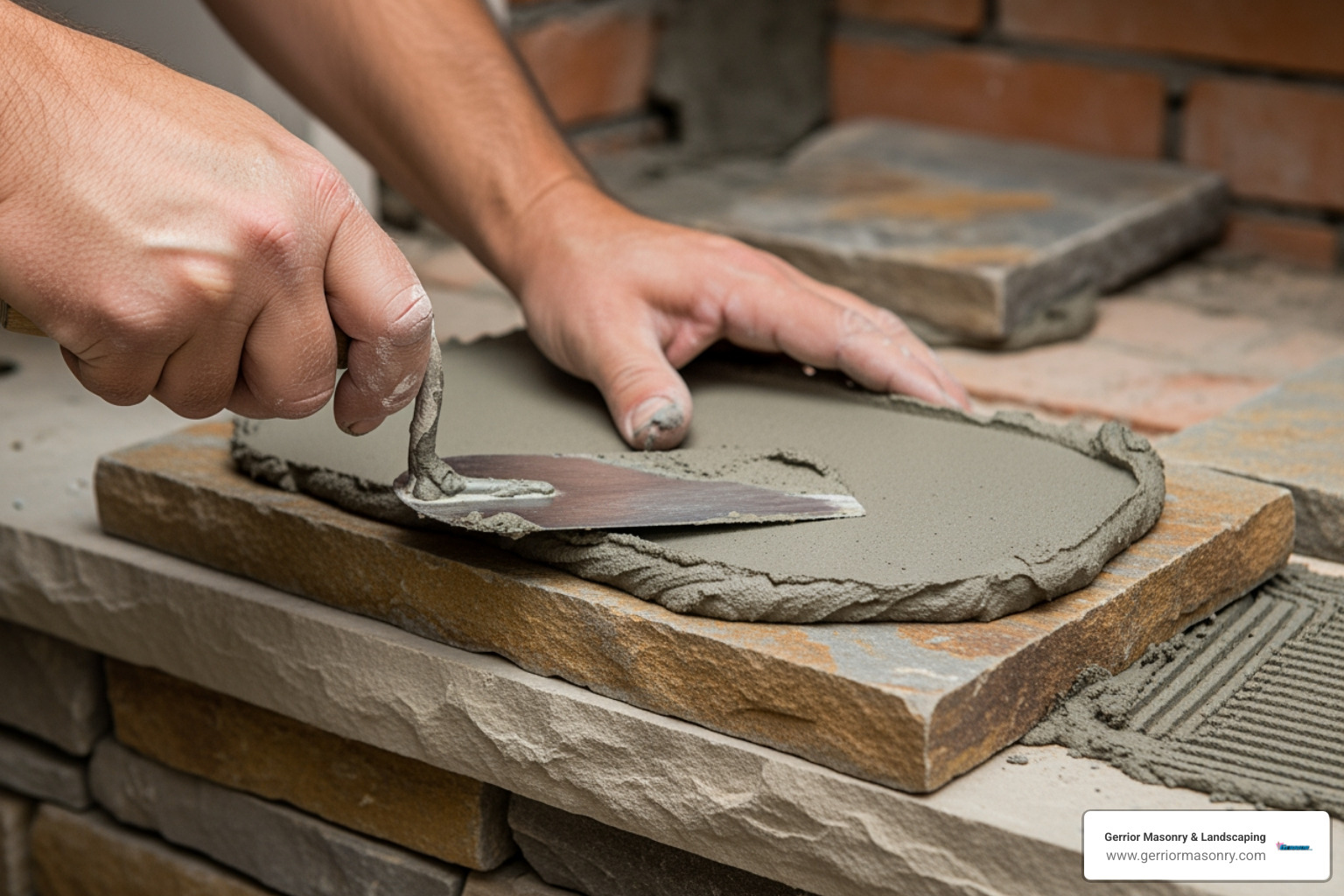
First, dry-fit your stones on the floor. Arrange them to create a pleasing pattern, mixing shapes, sizes, and colors. This helps you plan cuts and corner pieces.
Next, mix your mortar according to the manufacturer’s instructions to a thick, pudding-like consistency. A drill attachment for mortar will make this much easier. Mix in small batches to prevent it from drying out.
Always start at the bottom and work your way up to build a solid foundation. To set a stone:
- Lightly dampen the back of the stone with water.
- Using a trowel, back-butter the stone with a ½-inch layer of mortar.
- Create ridges in the mortar with a notched trowel to improve suction.
- Press the stone firmly onto the wall with a slight twisting motion until mortar squeezes out.
Maintain consistent ½-inch joint widths and check your work with a level frequently. For a visual guide, see a video of the stone laying process.
Cutting, Fitting, and Corner Techniques for Your Fireplace Stone Installation
You will need to cut stones to fit. A tile cutting wet saw with a diamond blade is best for clean, straight cuts, while a power grinder or brick hammer can be used for shaping. Always wear eye protection.
Corner pieces are key to an authentic look. Install pre-formed corners first, then fit the flat pieces against them. For outlets, use an electrical box extender and carefully cut the stone to fit around it.
Grouting, Finishing, and Long-Term Maintenance
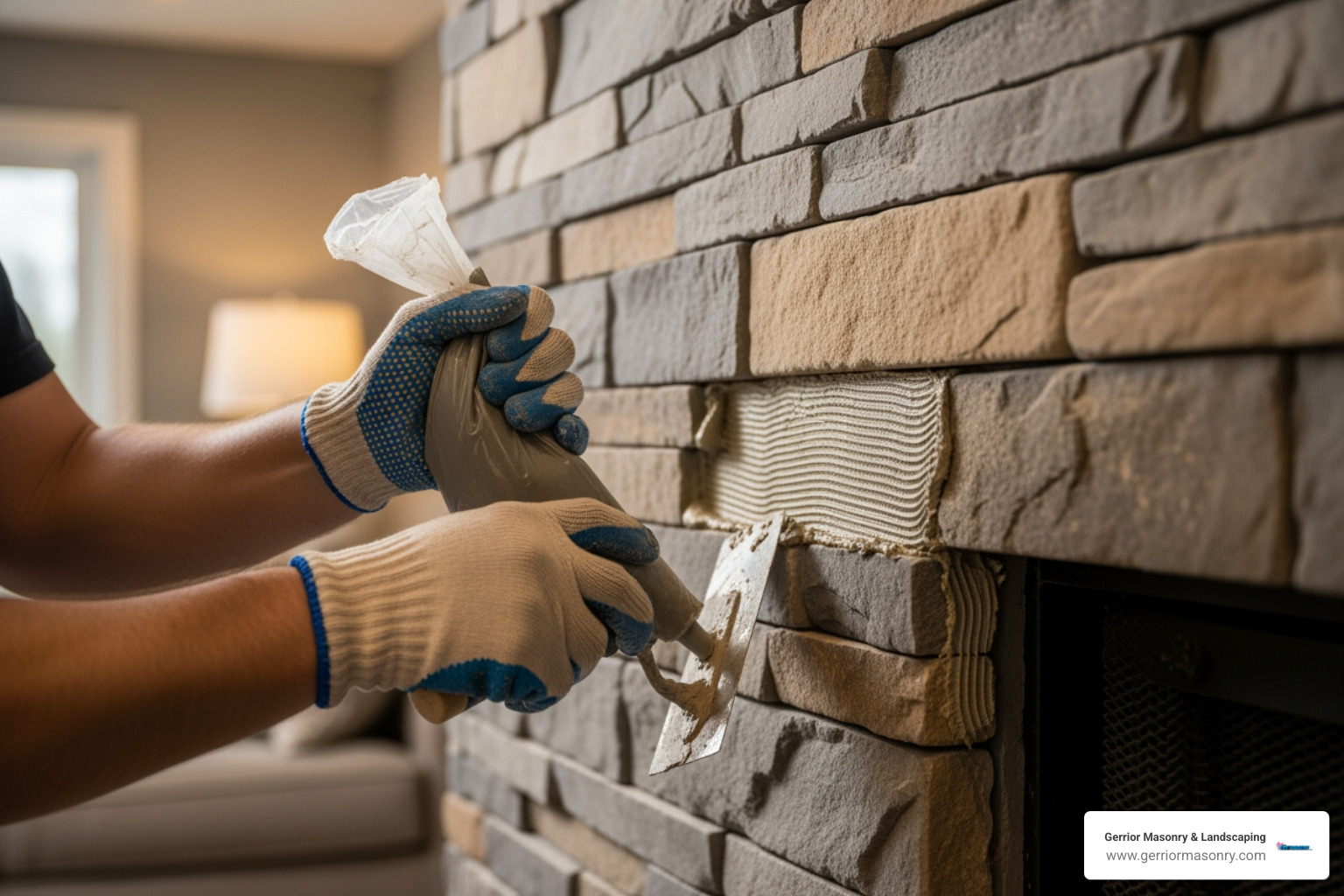
Let the mortar cure for at least 48 hours before grouting. Mix your grout and use a grout bag to pipe the mixture deep into the joints. Be careful not to smear grout on the stone faces. The style of your grout joint significantly impacts the final look. You can choose a raked joint, where the grout is recessed to emphasize the stone’s texture, or an overgrout (or flush) joint, where the grout is brought out to be level with the stone face for a more rustic, old-world appearance.
After applying the grout, wait 10-30 minutes for it to become ‘thumbprint’ dry. Then, use a striking tool or your finger to tool the joints to your desired depth and smoothness. Clean any excess grout from the stone faces with a stiff tile brush or whisk broom once it has set slightly.
After the grout cures for several days, apply color-matched caulk where the stone meets other surfaces. Sealing the stone is recommended to protect against stains and soot.
Long-term maintenance is simple: dust regularly and clean with mild soap and water. Avoid harsh chemicals. Common DIY mistakes can undermine the entire project. The most frequent errors include: skipping the essential scratch coat, which leads to adhesion failure; mixing mortar too thin (stones will slide) or too thick (poor bonding); not planning the stone layout, resulting in awkward patterns and cuts; and failing to clean grout off the stone face promptly, which can cause permanent staining. Another pitfall is not ordering enough stone, so always add that 10-15% extra for waste.
DIY vs. Professional Installation
If this process seems overwhelming, you’re not alone. A fireplace stone installation is a demanding project requiring time, precision, and physical effort. For a guaranteed professional result without the hassle, hiring an expert is often the smartest choice.
At Gerrior Masonry & Landscape Construction, our skilled team has completed countless fireplace projects across Massachusetts. With over 30 years of experience and owner oversight on every job, we ensure your fireplace becomes the stunning focal point you envision. We handle the complexities so you can enjoy the change.
Gerrior Masonry & Landscape Construction is based in Woburn, MA, and proudly serves Middlesex and Essex County, Massachusetts. Contact us for a complete guide to your fireplace veneer installation or to discuss your project.
