
Basement Door Replacement Cost: 10 Best Value Tips 2025
Understanding Basement Door Replacement Costs in 2024
If you’re looking for quick answers about basement door replacement cost, here’s what you need to know:
| Type of Basement Door | Materials Cost | Installation Cost | Total Average Cost |
|---|---|---|---|
| Steel Bulkhead | $800-$1,600 | $500-$3,000 | $1,300-$4,600 |
| Fiberglass | $1,000-$2,000 | $500-$3,000 | $1,500-$5,000 |
| Wood | $500-$1,500 | $500-$3,000 | $1,000-$4,500 |
| Vinyl | $1,000-$1,600 | $500-$3,000 | $1,500-$4,600 |
| Walkout Door | $2,000-$5,000 | $1,000-$5,000 | $3,000-$10,000 |
The basement door replacement cost typically ranges from $900 to $6,000 nationwide, with most homeowners spending around $1,750 for a standard installation. This price varies widely based on door material, size, installation complexity, and your location.
Why such a big range? Your final cost depends on several key factors:
- Door material (steel, wood, fiberglass, or vinyl)
- Size and type (standard vs. custom dimensions)
- Labor complexity (simple replacement vs. structural changes)
- Location (prices in Massachusetts differ from those in Texas)
- Additional features (waterproofing, insulation, smart locks)
I’m Joe Gerrior, owner of Gerrior Masonry & Landscape Construction Corp., and I’ve overseen hundreds of basement door replacements across Massachusetts over the past 34 years, giving me extensive insight into real-world basement door replacement cost factors that affect local homeowners. Our team specializes in ensuring your basement entrance is not only secure and weatherproof but also complements your home’s exterior.
What Is a Basement Door (Bulkhead/Cellar/Bilco/Walkout) and Why It Matters
Whether you call it a bulkhead, cellar door, Bilco (after the popular manufacturer), or walkout entrance, your basement door is far more than just an extra way to get into your home. As we’ve seen at Gerrior Masonry, these specialized entrances are critical components that protect your home’s foundation while providing essential access.
“I’ve replaced hundreds of basement doors over three decades, and homeowners are often surprised by how much these entrances actually do for their homes,” says Joe Gerrior, our founder. “They’re not just doors—they’re safety systems.”
Your basement door serves multiple vital functions that directly impact your home’s safety, value, and compliance with building regulations:
Building code compliance is perhaps the most important function—most local codes require basements to have emergency exits (egress points) separate from interior stairways. This isn’t just red tape; it’s about keeping your family safe.
Storm protection is another critical role, as a properly sealed basement door creates a barrier against rain, snow, and potential flooding. Here in Massachusetts, where we experience everything from nor’easters to summer downpours, this protection is invaluable.
Large-item access might seem obvious, but the practical benefit of moving furniture, appliances, or storage items directly into your basement without navigating tight interior stairs is something homeowners appreciate daily.
Ventilation opportunities are another advantage, especially in older homes where basement air quality can be a concern. A basement door provides options for fresh air circulation in below-grade spaces.
Security features of modern basement doors also provide an additional layer of protection for your home, with many newer models offering improved locking mechanisms and stronger materials to prevent unauthorized access.
Key Functions at a Glance
When we talk with homeowners about basement door replacement cost, we always emphasize the multifunctional nature of these entrances:
Emergency exit capabilities can literally be lifesaving—if interior stairways are blocked during a fire or other emergency, your basement door provides an alternate escape route. This is especially important if you have a finished basement where people spend time.
Weather sealing technology has improved dramatically in recent years. Today’s doors create substantially better protection against the elements than older models, preventing water infiltration that can lead to thousands in repair costs.
Property value improvement is another benefit many homeowners don’t consider. A well-maintained, attractive basement entrance contributes significantly to curb appeal and overall home value—something particularly important in competitive real estate markets like those in Middlesex and Essex Counties.
As one recent customer told us after their replacement: “I never realized how much that old rusted bulkhead was detracting from our home’s appearance until we saw the new one installed. It’s like a facelift for the whole property!”
The right basement door doesn’t just protect your home—it improves it, both functionally and aesthetically. And while the basement door replacement cost might seem significant upfront, the long-term value in terms of safety, energy efficiency, and property protection makes it one of the smartest investments you can make in your home’s exterior.
Basement Door Types & Average 2024-2025 Costs
When it comes to selecting a new basement door, you’ll find several options that balance durability, appearance, and basement door replacement cost. As a Massachusetts homeowner, your choice will affect not just your budget but also how well your basement entrance performs in our New England weather.
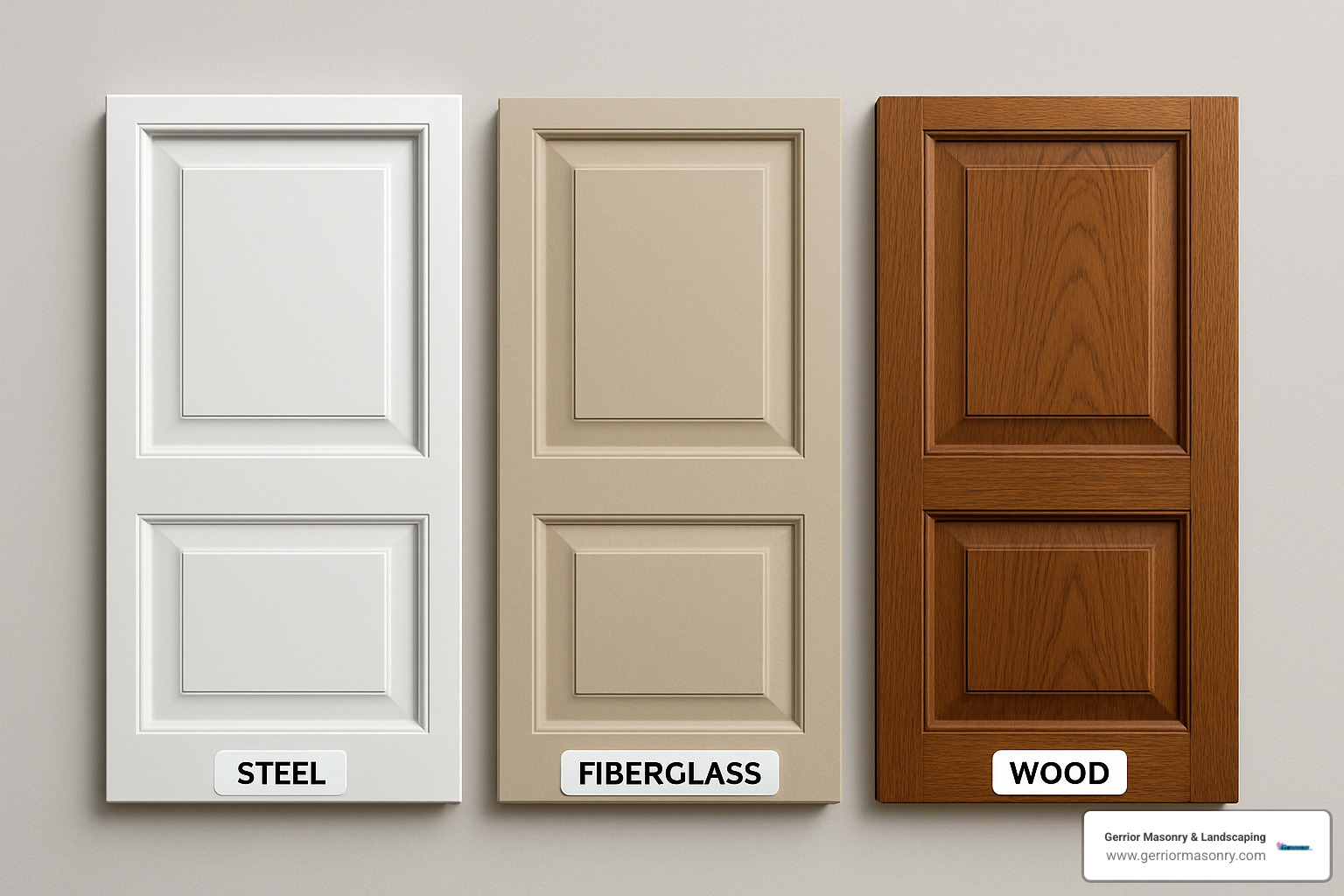
Material Price Ranges (Based on Internet Data)
Let’s look at what you can expect to pay for different materials, keeping in mind these are average costs based on internet data, not actual prices for Gerrior Masonry services.
Steel Doors ($900-$1,600)
Steel offers excellent security and stands up to our harsh Massachusetts winters. While they’re tough enough to last 15-20 years, they can develop rust in our humid summers if not properly maintained. Many of our Woburn clients appreciate steel’s fire-resistant properties, though they do conduct cold in winter.
Fiberglass Doors ($1,200-$1,750)
If you’re looking for longevity, fiberglass is hard to beat with its 30+ year lifespan. These doors provide superior insulation and weather resistance—perfect for those nor’easters that blow through Essex County. They cost more upfront but require almost no maintenance, making them popular with our busy homeowners.
Wood Doors ($800-$1,200)
There’s something timeless about wood doors that many of our clients in historic neighborhoods prefer. They offer natural insulation and can be customized to match your home’s character. The trade-off? You’ll need to maintain them regularly to prevent rot, especially with our snowy winters and humid summers. With proper care, expect 10-15 years of service.
Vinyl Doors ($1,000-$1,600)
Lightweight and virtually maintenance-free, vinyl doors have become increasingly popular in Middlesex County. They won’t corrode like metal and don’t need painting like wood. They can last 15-25 years, though extreme temperature swings can sometimes cause warping.
Don’t forget to budget for removal and disposal costs ($130-$400), which include disconnecting hardware, removing the old door and frame, and hauling everything away—a service we handle seamlessly for our clients.
| Door Material | Initial Cost | Lifespan (Years) | Maintenance Level | Energy Efficiency |
|---|---|---|---|---|
| Steel | $900-$1,600 | 15-20 | Medium | Medium |
| Fiberglass | $1,200-$1,750 | 30+ | Low | High |
| Wood | $800-$1,200 | 10-15 | High | Medium |
| Vinyl | $1,000-$1,600 | 15-25 | Low | Medium-High |
Standard vs. Custom Basement Door Replacement Cost
Your basement opening might determine whether you need a standard or custom solution:
Standard/Prefabricated Doors ($900-$2,500)
Most of the basement doors we install in Woburn homes are standard sizes, typically 48″-60″ wide. These ready-made units are more affordable and quicker to install, which means less disruption to your family. For straightforward replacements, prefab doors offer excellent value while still providing the protection your home needs.
Custom Doors ($2,500-$6,000+)
Some of our clients, particularly those with older homes in Essex County, have uniquely sized openings that require custom solutions. While these doors cost more and take longer to produce, they’re sometimes the only way to ensure a proper fit. A custom door isn’t just about aesthetics—it’s about creating a perfect seal against New England’s notorious weather.
In my 30+ years of installing basement doors throughout Massachusetts, I’ve found that investing in the right door for your specific situation pays dividends in longevity and performance. Whether you need a standard steel bulkhead or a custom wood solution, we can help you steer the options to find the perfect balance of durability, appearance, and basement door replacement cost.
For more details about specific options for your home, check out our page on Bulkhead Door Replacement Cost.
Factors Influencing Basement Door Replacement Cost
When planning your basement door project, understanding what drives basement door replacement cost helps you budget more accurately and spot potential savings opportunities. As we’ve seen with hundreds of Massachusetts installations, several key factors can significantly impact your final price.
Cost Breakdown: Materials vs. Labor vs. Extras
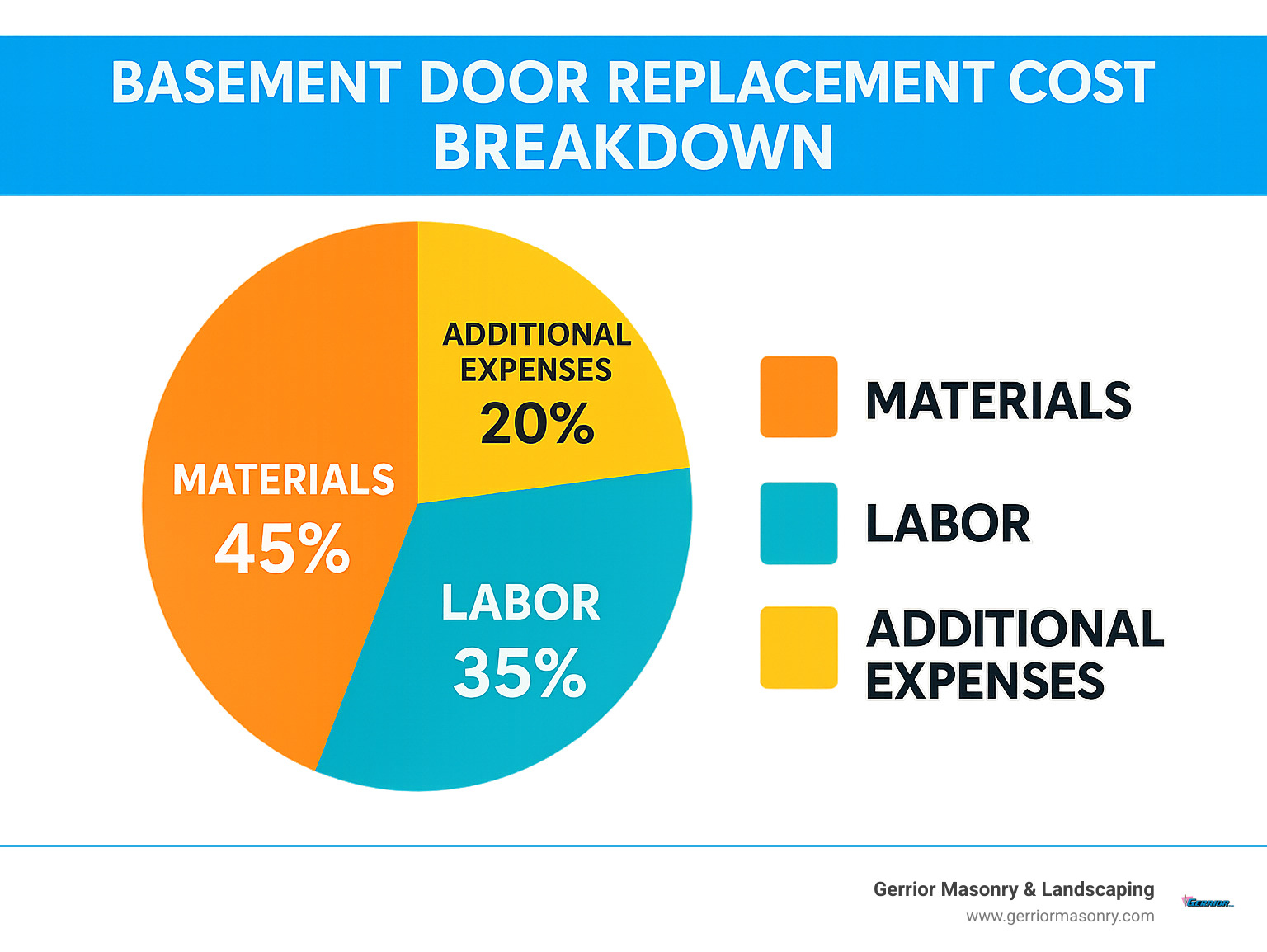
Your basement door project isn’t just about the door itself. Here’s how the typical costs break down:
The materials usually account for 40-60% of your total investment. This includes not just the door, but also framing materials, hardware, and sealants that ensure everything fits properly and stays watertight.
Labor costs make up another 30-50% of your budget, typically ranging from $300-$3,000 depending on complexity. Why such a wide range? Well, installing a standard steel door in an existing frame is much simpler than completely reconstructing a bulkhead entrance! Professional installers typically charge $50-$150 per hour, with most installations taking 6-12 hours to complete properly.
Don’t forget the extras that round out your project: disposal of old materials (5-10%), permits required by your town (2-5%), and crucial waterproofing measures (10-25%) that protect your basement from moisture damage.
As Joe from our team likes to say, “The door is just the beginning of the story—it’s the proper installation that writes the happy ending.”
Regional Price Swings Across the U.S.
Your zip code has a surprising impact on your basement door replacement cost. Based on our research of average costs across the country:
In Massachusetts, where we work, expect to pay $1,500-$3,500, while Californians typically shell out $1,800-$4,000. Down in Texas, the same project might cost $1,300-$2,900, and Georgia homeowners generally pay $1,200-$2,800.
Other regional averages include New York at $1,600-$3,800, Michigan at $1,100-$2,600, and Washington state at $1,700-$3,800.
These variations stem from differences in local labor rates, material availability, climate considerations, and building code requirements. Here in New England, our costs tend to run higher because we need doors that can withstand harsh winters, comply with strict building codes, and meet higher regional labor rates.
Additional Expenses Homeowners Forget
Many homeowners are surprised by necessary extras that weren’t in their initial budget. Don’t get caught off guard by these common additions:
Framing and structural work often adds $250-$800 if your existing frame is damaged or you’re changing door dimensions. Concrete modifications to steps or landings typically run $5-$10 per square foot, while addressing foundation cracks before installation can cost $250-$800 per crack (but saves thousands in potential water damage later).
Quality hardware upgrades ($50-$300) make a huge difference in daily use and security. Some homeowners are now opting for smart lock systems ($300-$800) that offer keyless entry or remote access capabilities.
Proper drainage improvements around your basement entrance ($40-$85 per linear foot) prevent flooding issues, while comprehensive waterproofing ($6-$15 per square foot) provides essential moisture protection. Don’t forget painting or finishing ($200-$500) for both appearance and weather resistance.
As we often tell our Massachusetts clients, proper water management around your bulkhead is just as important as the door itself. For more detailed information about installation considerations, check out our guide on Bulkhead Door Installation.
According to scientific research on door materials and insulation, proper installation and material selection can significantly impact your home’s energy efficiency and security—making the right choices worth every penny.
DIY vs. Professional Replacement & Project Timeline
One of the biggest decisions affecting your basement door replacement cost is whether to tackle the project yourself or hire professionals.
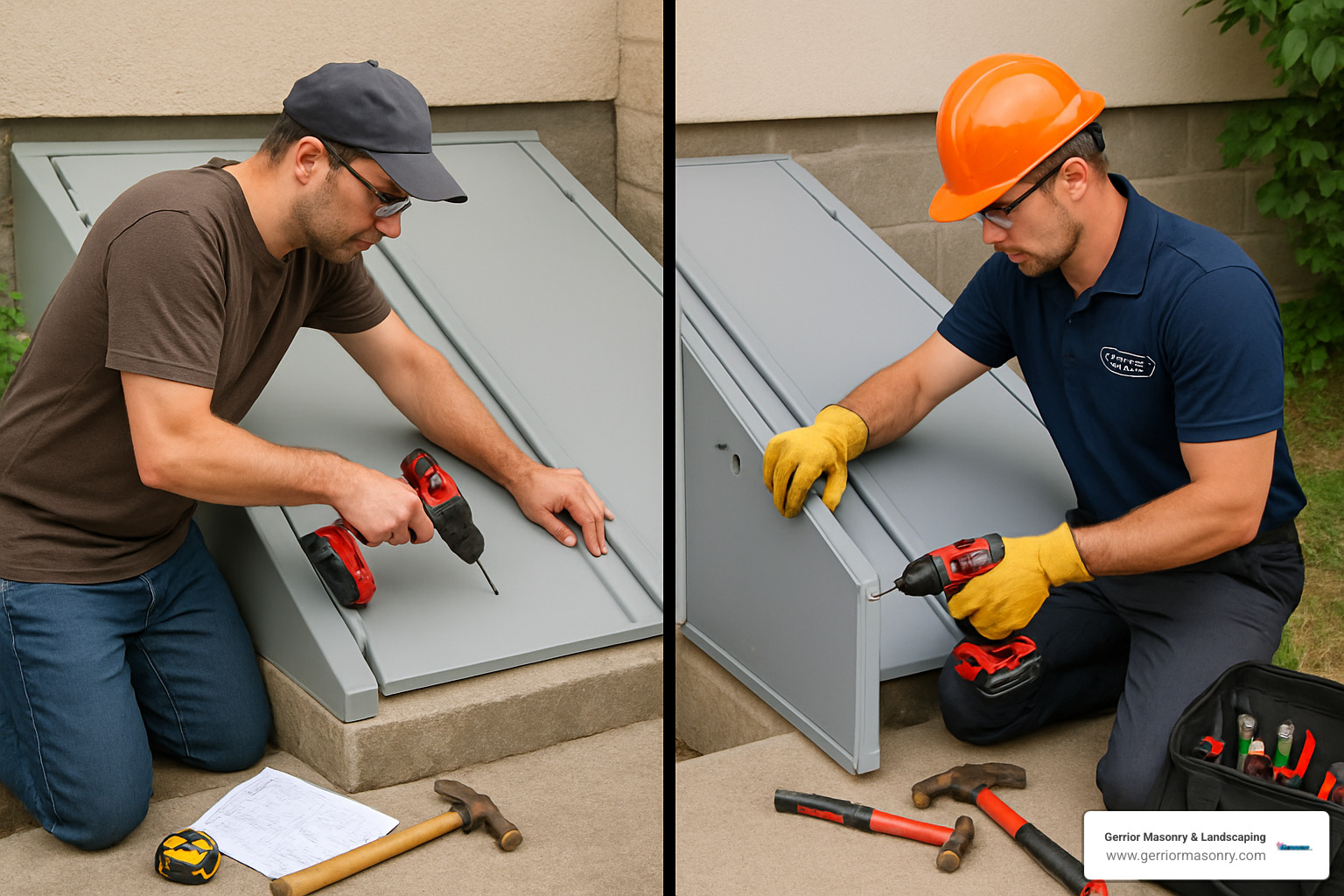
Pros and Cons of DIY on basement door replacement cost
That tempting 30-40% savings on your basement door replacement cost makes DIY installation appealing, doesn’t it? Many homeowners love the flexibility of working at their own pace and the satisfaction that comes from completing a home project themselves. I’ve seen the pride on homeowners’ faces when they finish a project with their own two hands.
But before you grab your tools, consider what you’re getting into. Basement doors aren’t lightweight—they often weigh between 100-300+ pounds, making them a real wrestling match for even the strongest DIYers. You’ll also need specialized tools that might cost more than you expect if you don’t already own them.
The trickiest part? Proper waterproofing. I can’t tell you how many “fixed” basement doors I’ve had to repair after DIY installations led to leaks and water damage. There’s a reason professionals train specifically for these installations—they’re more complex than they look.
Code compliance is another hidden challenge. Each municipality has specific requirements, and missing these can lead to failed inspections or even fines. Plus, most manufacturers won’t honor warranties on DIY installations if problems arise later.
If you’re considering the DIY route, it’s best suited for pre-hung doors in existing, properly-sized openings. For anything involving structural changes, concrete work, or custom doors, professional expertise typically pays for itself in the long run.
How Long Does a Replacement Take?
When homeowners ask me how long their basement door replacement will take, I always say, “It depends on whether you’re watching the clock or doing the work!”
For a professional installation, the timeline is quite predictable:
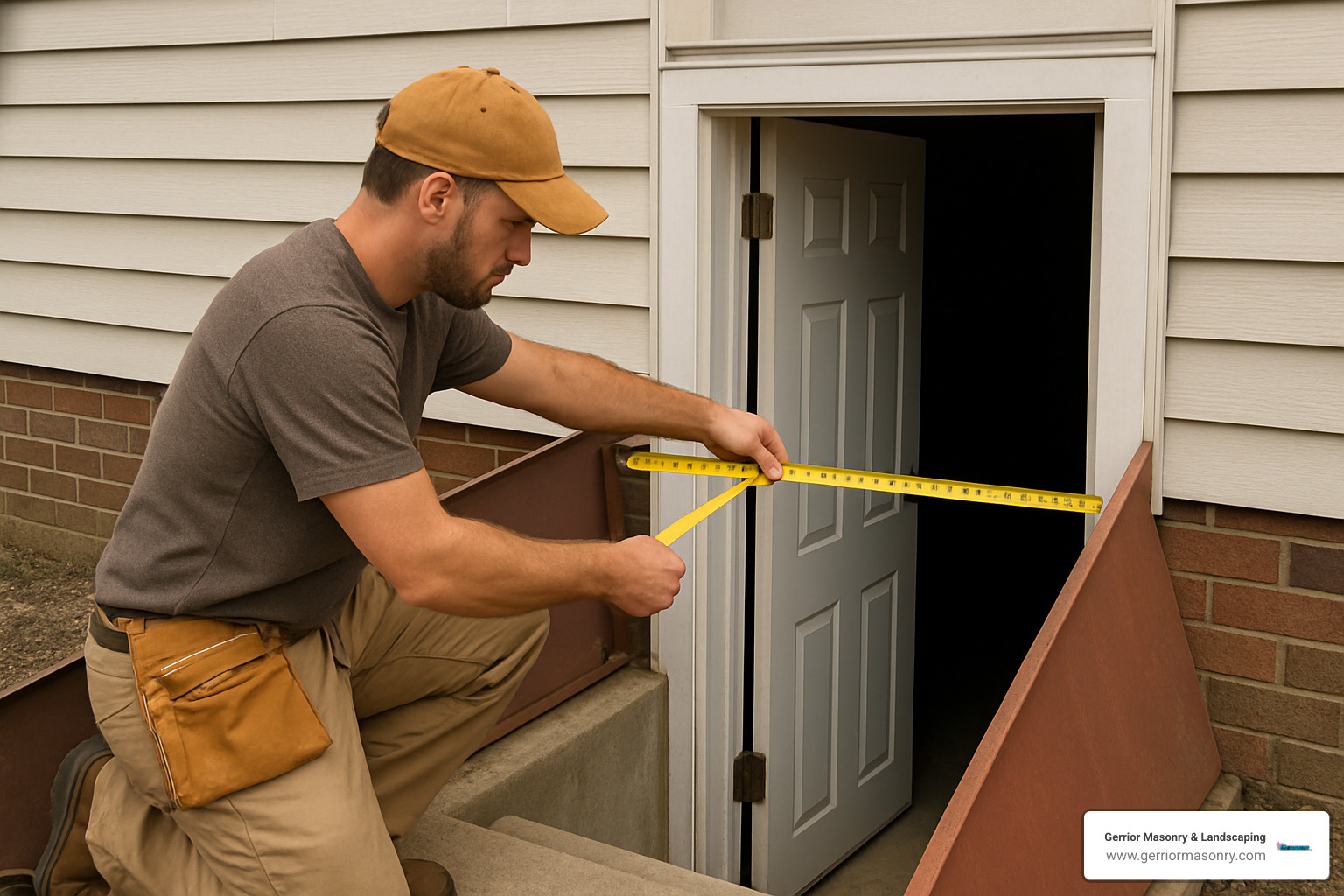
– Preparation: 2-4 hours for inspection, measurements, and removing the old door
– Installation: 4-8 hours depending on complexity
– Finishing touches: 1-2 hours for sealing, testing, and cleanup
Most of our professional installations at Gerrior Masonry & Landscape Construction are completed within a single day, minimizing disruption to your home and daily routine.
If you’re going the DIY route, plan for:
– Preparation: 4-6 hours (this includes multiple trips to the hardware store!)
– Installation: 8-16 hours, typically spread over several days
– Finishing touches: 2-4 hours for sealing and cleanup
– Curing time: Allow 24 hours for sealants and concrete work to properly set
Weather can throw a wrench in even the best-laid plans. Rain delays are common for exterior work, and extreme temperatures can affect how materials set and cure. Material delivery times (especially for custom doors) can extend your timeline, as can permit approval processes.
Sometimes the biggest delays come from surprises hiding behind that old door—rotted framing, water damage, or foundation issues that weren’t visible until removal. At Gerrior Masonry, we’ve seen it all, which is why we build a little flexibility into our scheduling.
Rushing a basement door installation often leads to problems down the road. Whether you DIY or hire professionals, allowing adequate time for proper installation will protect your investment and your home for years to come.
Gerrior Masonry & Landscape Construction is based in Woburn, MA, and services Middlesex and Essex County, Massachusetts.
Smart Ways to Save Money & Boost ROI
Looking to get the most value from your basement door replacement cost? You don’t have to break the bank to get a quality installation. With some strategic planning, you can maximize your investment while still getting a door that keeps your basement secure and dry for years to come.
5 Negotiation and Saving Tips
At Gerrior Masonry, we’ve helped hundreds of Massachusetts homeowners find smart ways to manage their replacement projects. Here are our top money-saving strategies:
Schedule during slower seasons to catch contractor discounts. In New England, late fall through winter typically sees lower demand, which can translate to 10-15% savings on your basement door replacement cost. As we often tell our customers, “The weather might be colder, but so are the prices!”
Bundle your projects for better value. If you’re also planning foundation repairs, walkway installation, or other masonry work, combining them with your basement door replacement often leads to package pricing. We frequently help homeowners save by coordinating multiple improvements in one visit.
Consider mid-range materials with expert installation rather than premium materials with basic installation. A well-installed mid-tier door often outperforms a top-of-the-line door that’s poorly fitted. As Joe Gerrior likes to say, “It’s not just what you install, but how you install it that matters.”
Check for energy efficiency rebates with your utility company. Many Massachusetts utilities offer incentives for weatherproofing improvements that reduce energy consumption. These rebates can offset 5-15% of your basement door replacement cost.
Reuse quality hardware where possible. If your existing hinges, locks, or handles are still in good condition, ask your contractor if they can be transferred to your new door. This small adjustment can save $50-$200 on your project.
Don’t forget to consult with your tax professional about potential home improvement deductions. Energy-efficient upgrades sometimes qualify for tax credits that can further reduce your effective costs.
Can a New Basement Door Increase Property Value?
Absolutely! When homeowners ask me if replacing their basement door is worth it, I point to several tangible returns:
Most homeowners recoup 60-90% of their basement door replacement cost in increased home value, especially when selling within a few years. This makes it one of the better exterior improvement investments you can make.
Beyond the financial return, you’ll enjoy lower utility bills thanks to improved insulation and weather sealing. Many of our customers report noticeably drier, warmer basements after we install properly sealed doors.
The curb appeal factor shouldn’t be underestimated either. As Massachusetts realtor Sarah Mitchell told me recently, “When I’m showing homes with finished basements, buyers always notice the basement entrance. A new, secure-looking door makes them feel the entire space has been well-maintained.”
Perhaps most importantly, a properly installed basement door prevents potentially thousands in water damage to your foundation and basement contents. That’s not just savings—it’s peace of mind during New England’s notorious rain and snow storms.
Basement Door Replacement Cost vs. Other Exterior Doors
To help you budget appropriately, here’s how basement door replacement cost compares to other exterior door projects based on national averages:
Your standard front entry door typically runs $500-$4,500 installed, while sliding patio doors average $500-$3,500. Neat French doors command $600-$5,800, and garage doors (with openers) generally cost $2,800-$6,500. By comparison, storm doors are relatively affordable at $100-$1,000, while security doors with advanced features range from $600-$5,000.
Basement doors usually fall in the middle of this spectrum, though walkout basement doors requiring significant structural modifications can approach the higher end. The investment makes sense when you consider that, unlike some doors that are primarily aesthetic, your basement entrance serves critical functional purposes—emergency egress, weather protection, and large item access.
For the most accurate estimate for your specific situation, we’re always happy to provide a no-obligation consultation. Every home is unique, and at Gerrior Masonry & Landscape Construction, we tailor our approach to your property’s specific needs. We proudly serve Woburn and all of Middlesex & Essex County, Massachusetts.
Frequently Asked Questions about Basement Door Replacement Cost
How often should a basement door be replaced?
Your basement door isn’t something you think about often—until it starts causing problems. Most basement doors will serve you faithfully for 15-30 years, though this timeline varies quite a bit depending on several factors.
Material quality plays a huge role in longevity. Those premium fiberglass doors might cost more upfront, but they’ll reward you with 30+ years of service. Steel doors typically last 15-20 years, while wood doors—though charming—might need replacement after just 10-15 years without diligent maintenance.
Where you live matters too. Here in Massachusetts, our basement doors face harsh winter conditions, freeze-thaw cycles, and occasionally, coastal salt exposure. These environmental factors can accelerate wear compared to milder climates.
“I’ve seen well-maintained fiberglass doors still performing beautifully after 25 years,” says Joe Gerrior, “while neglected steel doors can develop serious rust issues in less than a decade, especially near the coast.”
What are the signs it’s time to budget for basement door replacement cost?
Your basement door will usually give you plenty of warning signals before complete failure. Here are the telltale signs it’s time to start thinking about basement door replacement cost:
Water infiltration is the most serious red flag—if you’re finding puddles or dampness around your basement entrance after rain, your door is no longer providing proper protection. This moisture can lead to much more expensive foundation problems if ignored.
Physical deterioration is also obvious: rust spots on metal components, wood that’s soft to the touch, or cracks in fiberglass panels. When you notice these issues, they’ll only get worse with time.
Operational problems are another clear indicator—does your door require a shoulder check to open? Does it refuse to close properly? These aren’t just annoyances; they’re signs of structural issues.
Energy loss becomes apparent in colder months when you feel drafts or notice higher heating bills. Modern replacement doors offer significantly better insulation than older models.
Security concerns should never be ignored. If locks are compromised or the door itself feels flimsy, your home’s safety could be at risk.
Even purely aesthetic issues like peeling paint or an outdated appearance can be legitimate reasons for replacement, especially if you’re considering selling your home in the near future.
What warranties or guarantees come with new basement doors?
Understanding warranty coverage should be part of your basement door replacement cost calculations, as it protects your investment for years to come.
Manufacturer warranties vary significantly by material and brand. Steel doors typically come with 10-20 year material warranties, while premium fiberglass doors often boast impressive limited lifetime coverage. Vinyl doors generally include 10-25 year protection, and wood doors—being natural materials—usually carry shorter 1-10 year warranties.
The installation warranty is just as important as the product warranty. At Gerrior Masonry & Landscaping, we stand behind our workmanship with solid guarantees covering everything from proper operation to waterproofing integrity. This installation coverage is something you’ll typically miss out on with DIY projects.
Be aware that most warranties come with reasonable conditions—regular maintenance is typically required, and DIY installation often voids manufacturer protection entirely. Always keep your warranty documentation in a safe place, and check if the warranty can transfer to new owners if you sell your home.
“We always provide our customers with clear written warranties,” explains Joe Gerrior. “A quality basement door is an investment in your home’s protection, and that investment should come with peace of mind.”
One last tip: read the fine print before purchase. Some warranties look impressive at first glance but contain significant limitations in the details.
Gerrior Masonry & Landscape Construction proudly serves Woburn and all of Middlesex & Essex County, Massachusetts.
Conclusion
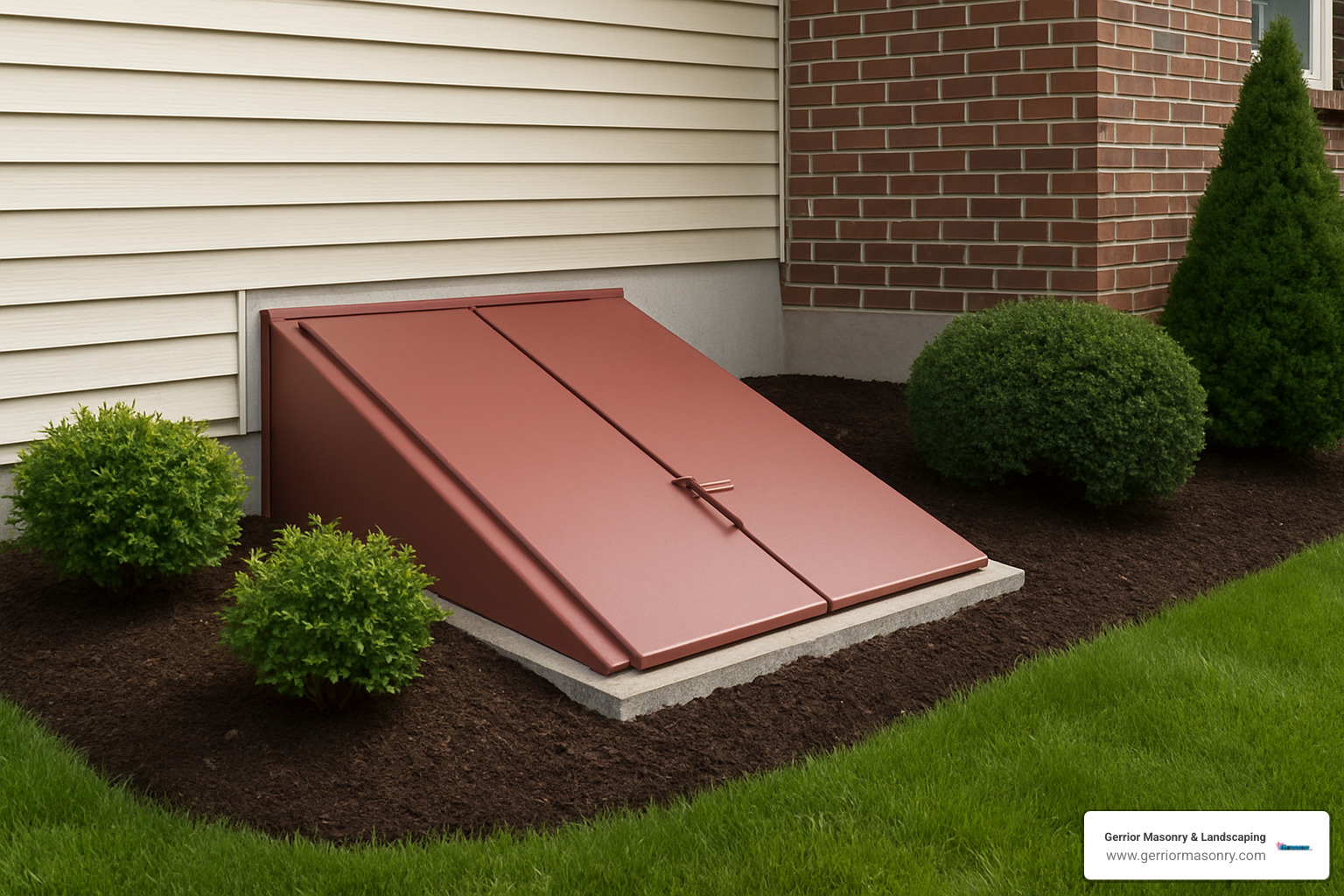
When it comes to basement door replacement cost, knowledge truly is power. Now that you understand the factors influencing prices—from materials and labor to regional variations—you’re equipped to make choices that balance your budget with long-term value.
Your basement entrance isn’t just a utility feature; it’s a critical component of your home’s safety, efficiency, and curb appeal. While the national average ranges from $900 to $6,000, investing in quality often pays dividends through extended lifespan and better protection.
Think beyond the door itself when budgeting. Those “hidden” costs—removal, disposal, structural adjustments, and weatherproofing—play crucial roles in the success of your project. And don’t forget that timing matters! Scheduling your replacement during slower seasons (typically late fall and winter here in Massachusetts) can lead to significant savings without sacrificing quality.
A properly installed basement door does so much more than provide access. It creates a reliable barrier against New England’s harsh weather, prevents costly water damage to your foundation, improves your home’s energy efficiency, and improves security. These benefits translate to both immediate comfort and long-term property value—with most homeowners recouping 60-90% of their investment when selling.
While DIY installation might seem tempting for the budget-conscious, professional installation offers peace of mind that’s often worth the additional expense. At Gerrior Masonry & Landscaping, we bring over three decades of local experience to every project. We understand Massachusetts building codes, regional weather challenges, and the specific structural considerations needed for a lasting installation.
Our approach is straightforward: we provide clear, detailed estimates that account for all aspects of your project—no surprise costs or hidden fees. From initial consultation to final cleanup, we handle every step with the care and attention to detail that’s made us a trusted name in Middlesex and Essex Counties.
Ready to explore your options for Bulkhead Replacement? We’d be happy to provide a personalized assessment of your basement entrance and discuss solutions custom to your home’s specific needs.
Gerrior Masonry & Landscape Construction is based in Woburn, MA, and services Middlesex and Essex County, Massachusetts. Our deep roots in the region mean we understand the unique challenges of New England homes and how to address them effectively.
