
Brick Paver Installation: Top 5 Trusted Experts 2024
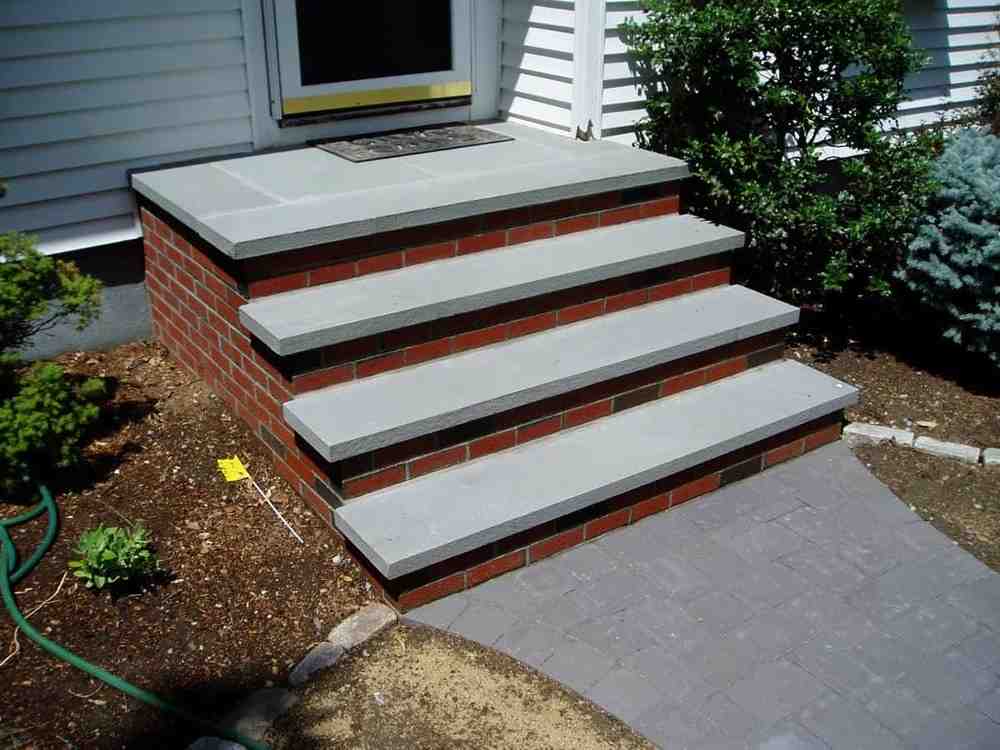
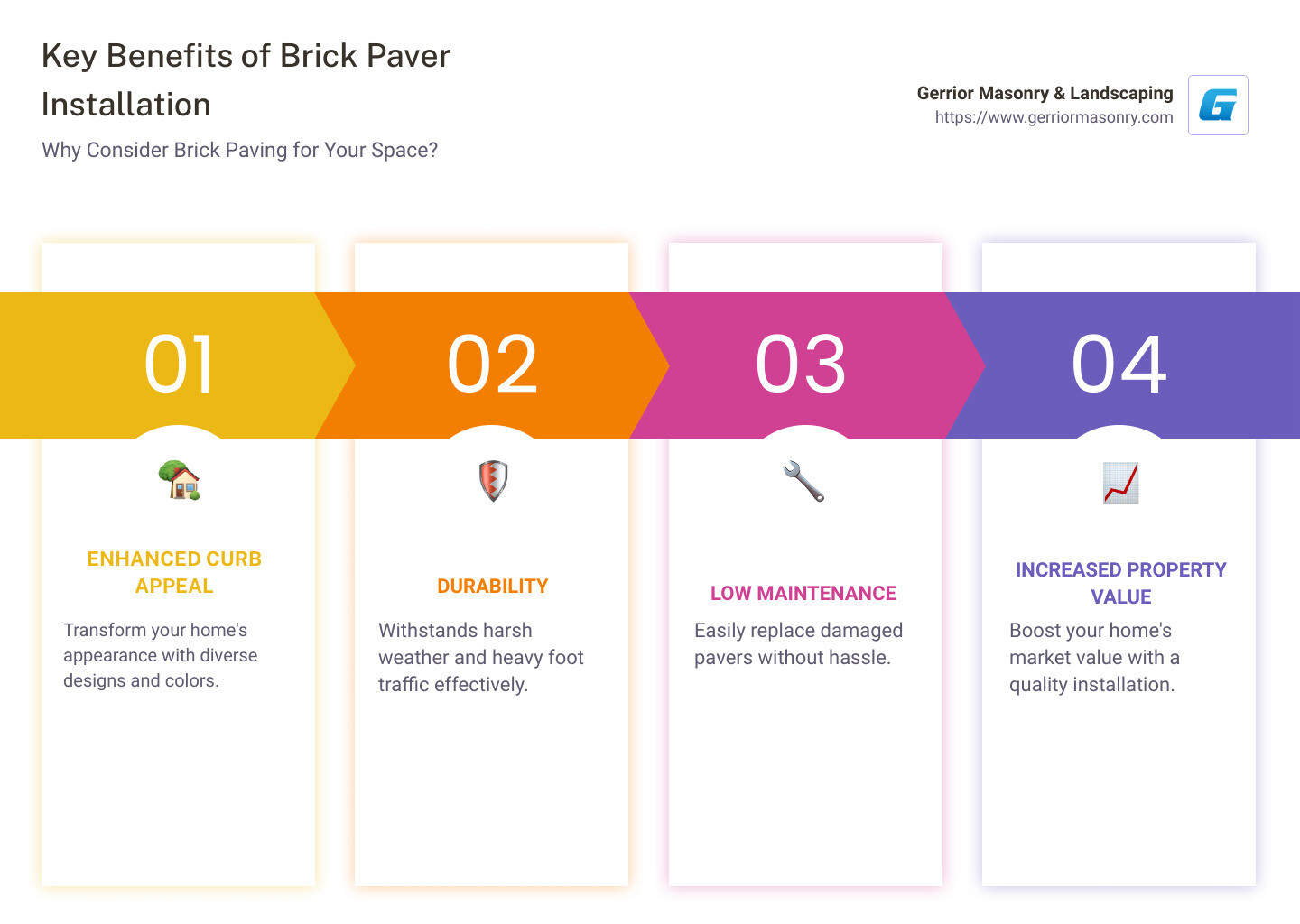
Brick paver installation transforms dull outdoor areas into aesthetic and functional spaces. Whether you are looking to create a patio, walkway, or driveway, brick pavers offer a versatile and durable solution. Here’s a quick rundown of what makes brick paver installation so appealing:
- Improved Curb Appeal: Boost your home’s visual impact with a variety of designs and colors.
- Durability: Brick pavers withstand harsh weather and heavy traffic.
- Low Maintenance: Easily replace individual pavers if damaged.
- Increased Property Value: A well-installed brick paver patio or driveway can add significant value to your home.
I’m Joe Gerrior, and with over 34 years of experience in the masonry and hardscaping industry, I understand the nuances of brick paver installation. As the owner of Gerrior Masonry & Landscape, I’ve transformed countless homes into beautiful, functional spaces. Now, let’s dig deeper into why choosing the right materials and contractor is crucial for your project.
Quick brick paver installation definitions:
- concrete patio installation contractors
- find contractors to install patio doors
- patio installation contractors
Understanding Brick Paver Installation
When it comes to brick paver installation, understanding the materials, process, tools, and planning is essential to ensure a successful project.
Materials
The first step is selecting the right materials. Brick pavers are popular due to their classic look and durability. They come in various colors, sizes, and textures, allowing for customization to match any home style. Besides the pavers themselves, you’ll need:
- Paver Base: Usually a 4-6 inch layer of gravel to provide a stable foundation.
- Paver Sand: A 1-inch layer of sand for leveling and setting the pavers.
- Joint Sand: Fills the gaps between pavers to lock them in place.
Process
The installation process involves several key steps:
- Planning: Measure the area and design the layout. This helps in calculating the number of pavers and amount of base materials needed.
- Excavation: Clear the area of grass, roots, and debris. Dig to a depth that accommodates the base and pavers.
- Base Preparation: Lay and compact the gravel base. Wetting the base can help in achieving a firm foundation.
- Laying Pavers: Place the pavers starting from one corner, ensuring they are aligned and evenly spaced.
- Joint Sanding: Spread sand over the pavers and sweep it into the joints to stabilize them.
Tools
Having the right tools can make the job easier and more efficient. Essential tools include:
- Tape Measure: For accurate measurements.
- Tamper or Plate Compactor: To compact the base materials.
- Level: Ensures the pavers are even.
- Rubber Mallet: For tapping pavers into place without damage.
Planning
Proper planning is crucial. Consider the following:
- Drainage: Ensure the paver surface slopes away from structures to prevent water pooling.
- Patterns: Decide on a pattern before starting, as some designs require specific paver cuts.
- Permits: Check local regulations; some areas require permits for outdoor installations.
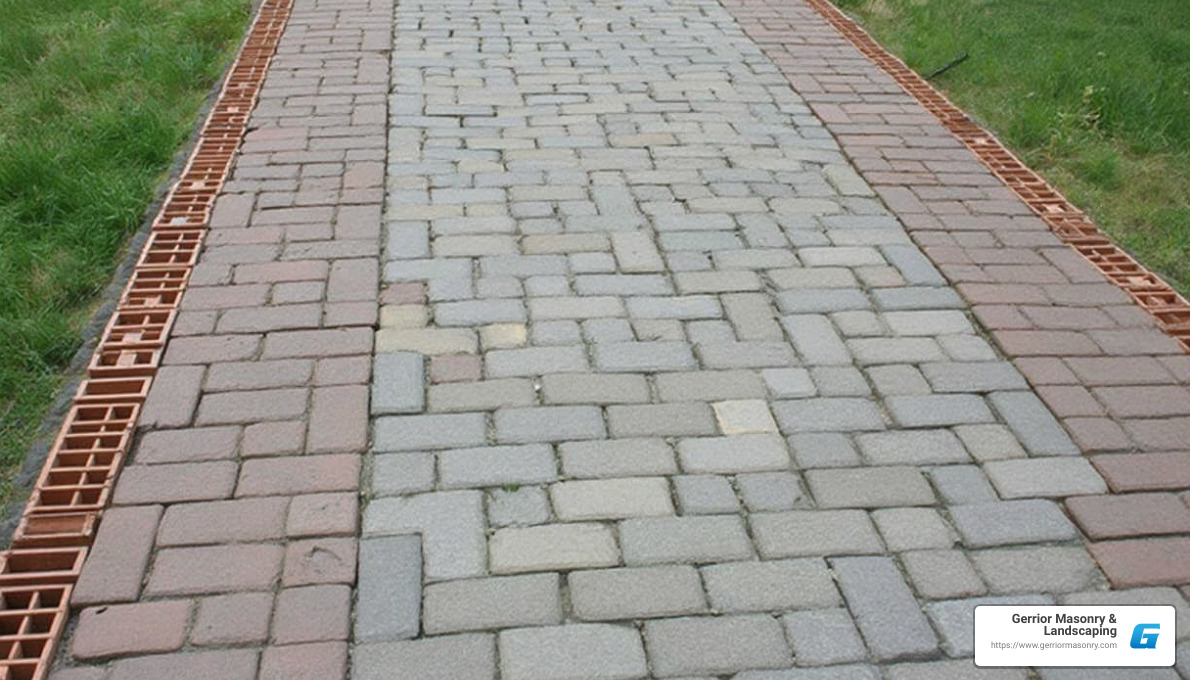
By understanding these aspects, you can tackle a brick paver installation project with confidence, ensuring it is both beautiful and long-lasting.
Choosing the Right Contractor
Selecting the right contractor for your brick paver installation is crucial for ensuring a high-quality, durable, and aesthetically pleasing outcome. Here’s what to consider:
Experience
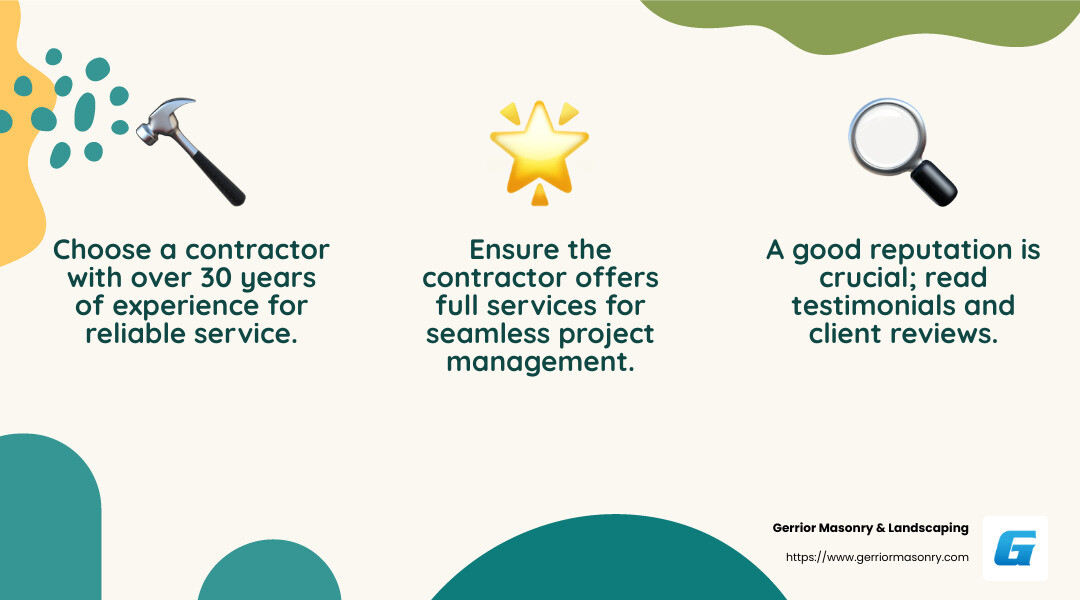
Experience matters. An experienced contractor has likely encountered and resolved various challenges in past projects. For instance, Gerrior Masonry & Landscaping boasts over 30 years in the business. This extensive experience means they can handle unexpected issues, ensuring your project runs smoothly and efficiently.
Reputation
A contractor’s reputation is a strong indicator of their reliability and quality of work. Look for companies with positive testimonials and client reviews. Many happy clients of Gerrior Masonry & Landscaping often share their satisfaction, saying things like, “We couldn’t be happier!” This kind of feedback is a testament to a contractor’s commitment to excellence.
Services
Ensure the contractor offers comprehensive services. This includes everything from site preparation and excavation to the final touches of joint sanding. A full-service contractor will manage all aspects of the project, reducing the need for multiple subcontractors and ensuring consistency in quality.
Quality Assurance
Quality assurance is about more than just using good materials. It’s about meticulous attention to detail at every stage of the installation process. Contractors like Gerrior Masonry & Landscaping prioritize quality by adhering to industry standards and using proven techniques. This commitment helps ensure a durable and visually appealing paver installation.
By considering these factors, you can confidently choose a contractor who will deliver a successful brick paver installation project, enhancing your outdoor space with both beauty and functionality.
The Installation Process
Installing brick pavers involves several key steps. Each step is crucial to ensure a sturdy and long-lasting patio or driveway. Let’s explore the process from start to finish.
Excavation
The first step is excavation. This involves clearing the area where the pavers will be laid. It’s important to dig deep enough to accommodate the layers of base material and the pavers themselves. Typically, you’ll need to excavate about 7-9 inches below the finished level. This depth helps create a solid foundation and allows for proper drainage.
Base Preparation
Once the area is excavated, it’s time for base preparation. This step involves laying a base layer of gravel. A 6-inch layer is common for most installations. The gravel base provides stability and aids in drainage. Use a tamper or plate compactor to compact the gravel tightly. This prevents future settling and ensures a level surface for the pavers.
Laying Pavers
Now comes the exciting part—laying the pavers. Start at one corner and work your way out, like you’re building a puzzle. Carefully place each paver, ensuring they are snug against each other. Use a rubber mallet to gently tap them into place if needed. Keep a consistent pattern and check for levelness as you go.
Edge Restraint
Edge restraint is essential to keep the pavers in place. Without it, the pavers might shift over time. Install edge restraints along the perimeter of the paved area. These can be made of plastic, metal, or concrete. Secure them with spikes to ensure they remain stable.
Joint Sanding
The final step is joint sanding. This involves spreading sand over the installed pavers and sweeping it into the joints. The sand helps lock the pavers in place and prevents weeds from growing between them. Use a broom to distribute the sand evenly, then mist the area with water to help the sand settle.
By following these steps, you can achieve a professional-looking brick paver installation that improves your outdoor space. Next, we’ll address some common questions about the materials and preparation needed for a successful project.
Frequently Asked Questions about Brick Paver Installation
What materials are used under pavers?
Underneath brick pavers, several materials work together to create a stable and durable surface. The most common materials include:
- Mortar: Often used to bond pavers, especially in vertical applications. It’s not as common for ground installations but can provide added stability.
- Sand: Essential for two layers. First, a sand sub-base helps create a smooth surface for laying pavers. Second, sand is used to fill joints between pavers, locking them in place.
- Bituminous Material: This can act as a binder, adding extra strength to the installation, particularly in high-traffic areas.
- Pedestals: These are used in raised installations, allowing for drainage and easy access to utilities beneath the paver surface.
How do you prepare the ground for pavers?
Proper ground preparation is crucial for a successful brick paver installation. Here’s how to do it:
- Root-Free and Rubble-Free: Start by clearing the area of any roots, rocks, or debris. This ensures a smooth foundation and prevents future shifting.
- Sand Sub-Base: Spread a layer of sand over the compacted gravel base. This layer should be even and about 1 inch thick, providing a cushion for the pavers.
- Compaction: Use a plate compactor to compress the sand and gravel layers. Compaction is key to preventing settling and maintaining a level surface for the pavers.
Can you lay brick pavers on dirt?
While it might be tempting to lay brick pavers directly on dirt, it’s not recommended for outdoor installations. Here’s why:
- Outdoor Installation: Dirt alone doesn’t provide the stability needed for pavers. It can lead to uneven surfaces and shifting over time. Always prepare a proper base with gravel and sand for outdoor projects.
- Indoor Installation: For indoor use, brick pavers can sometimes be laid on dirt if the subfloor is stable and compacted. However, it’s still best to follow recommended practices for longevity.
- Subfloor Requirements: Ensure the subfloor is solid and well-prepared. This might involve adding a layer of mortar or using a pedestal system for support, especially in areas with high moisture or temperature changes.
By understanding the materials and preparation required, you can ensure your brick paver installation is both beautiful and long-lasting. Up next, we’ll explore more about choosing the right contractor to bring your vision to life.
Conclusion
Choosing the right contractor for your brick paver installation can make all the difference in the success and longevity of your project. At Gerrior Masonry & Landscaping, we pride ourselves on delivering expertise and quality results every time.
With over 30 years of experience, our team is equipped to handle all aspects of masonry and hardscaping. From patios to walkways, our skilled professionals ensure each project is executed with precision and care. Owner oversight on all projects guarantees that our high standards are met consistently.
Our commitment to excellence means we don’t just complete a project; we create lasting spaces for relaxation and enjoyment. Clients often express their satisfaction and the value added to their homes through our services. One happy client shared, “You guys did such a great job on my driveway. So happy I chose Gerrior Masonry & Landscaping!”
We understand the importance of each step in the installation process and use only the best materials and techniques. This attention to detail ensures your outdoor space is not only beautiful but also stands the test of time.
Trust us to transform your vision into reality. Whether it’s a new patio or a stunning walkway, our expertise and dedication to quality make us the ideal partner for your next project. Contact us today to get started!
