
Brickwork Restoration: Top 6 Proven Techniques 2024
If you’re interested in brickwork restoration, you’re about to explore a field of preserving charm and strengthening your property’s structure.
Quick Answer: Brickwork restoration involves repairing and revitalizing brick structures. This can include tasks such as:
- Replacing loose or damaged bricks
- Repointing mortar joints
- Cleaning and color restoration
- Applying waterproof sealants
Brickwork restoration is not just about fixing what’s broken; it’s an opportunity to return your property to its original beauty while ensuring its durability for years to come.
Bricks have long been valued for their durability and timeless appeal in architectural design. However, time and the elements can erode their integrity, leading to the need for brickwork restoration. This process is an essential aspect of maintaining the aesthetic and structural integrity of your home or business. From reinvigorating the color of your bricks to fixing deteriorating mortar, professional restoration can extend the life of your brick structures.
My name is Joe Gerrior, and I have spent over 34 years perfecting the art of masonry and landscaping, including brickwork restoration. At Gerrior Masonry & Landscaping, we blend traditional craftsmanship with modern techniques to deliver outstanding, long-lasting results for our clients.
Brickwork restoration terms to know:
– commercial brickwork
– landscaping woburn ma
– masonry woburn ma
Understanding Brickwork Restoration
Bricks are more than just building blocks; they are the backbone of many architectural masterpieces. Brickwork restoration ensures these structures remain strong and beautiful over time. Let’s break down the key components of this process.
Brick Properties
Bricks are made primarily of clay, but they can also include materials like concrete or calcium silicate. The properties of brick vary depending on their composition and manufacturing process.
- Clay Bricks: Known for their durability and aesthetic appeal. Older clay bricks may have higher porosity and water absorption, while modern ones are often denser and stronger.
- Concrete Bricks: Typically less expensive and used in specific applications where strength is paramount.
Understanding these properties is crucial when choosing replacement bricks. A mismatch in properties can lead to further damage down the line.
Structural Integrity
The structural integrity of brickwork is vital for safety and longevity. Over time, exposure to elements like rain, wind, and temperature changes can weaken bricks and mortar.
Common Issues:
– Cracks and Spalling: Caused by stress or environmental factors, compromising the strength of the wall.
– Mortar Deterioration: Often due to weathering, leading to loose bricks and potential collapse.
Restoring structural integrity involves replacing damaged bricks and repointing mortar to ensure the structure remains sound.
Aesthetic Restoration
Restoring the aesthetic value of brickwork is just as important as maintaining its strength. Over time, bricks can lose their color and charm due to dirt, pollution, and UV exposure.
Aesthetic Techniques:
– Color Revitalization: Involves cleaning and staining bricks to bring back their original hue.
– Surface Cleaning: Removes dirt and debris, often using gentle methods to preserve the brick’s natural fireskin.
These techniques not only improve the visual appeal but also protect the bricks from further deterioration.
In summary, brickwork restoration is a blend of preserving the strength and beauty of brick structures. By understanding brick properties, focusing on structural integrity, and employing aesthetic restoration techniques, your property can retain its charm for generations.
Next, we’ll explore the specific steps involved in restoring brickwork, from safety gear to cleaning techniques.
Steps to Restore Brickwork
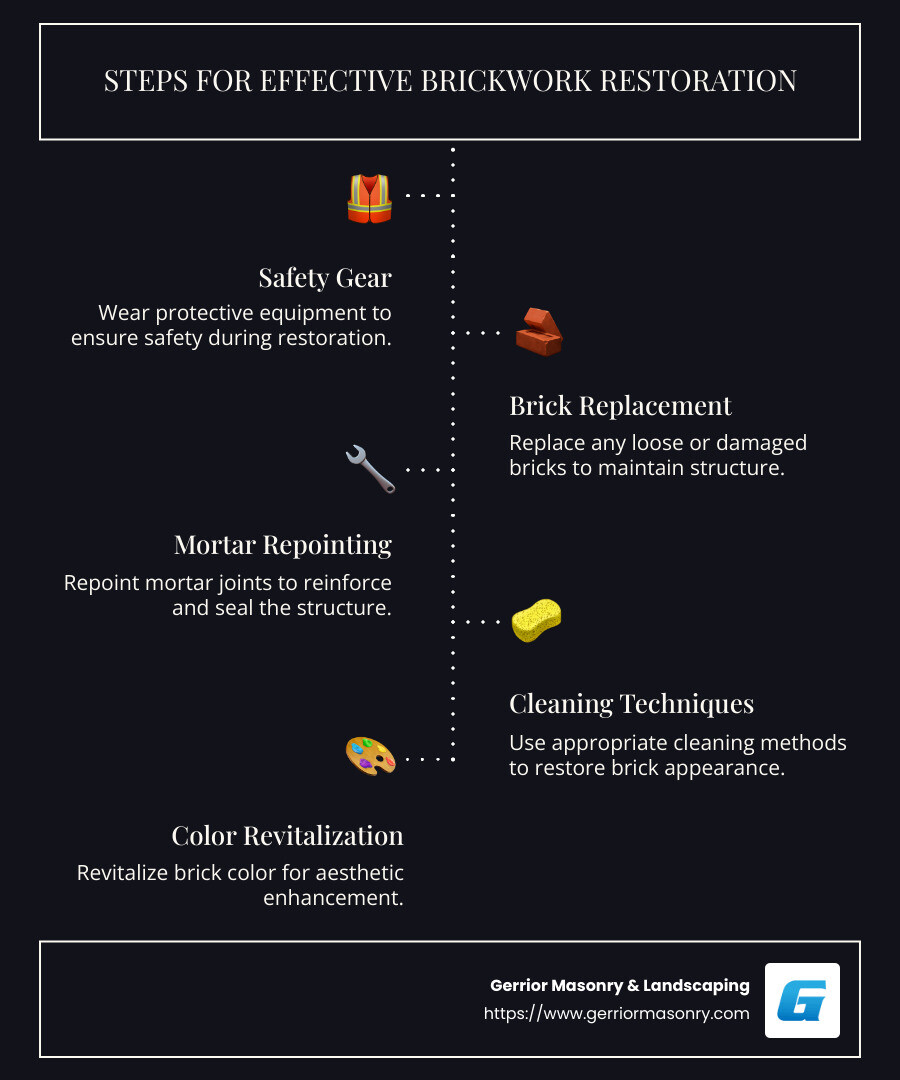
Restoring brickwork involves a series of crucial steps that ensure both the safety and aesthetic appeal of your property. Let’s walk through these steps, emphasizing safety gear, mortar application, and cleaning techniques.
Safety Gear
Before starting any restoration project, prioritize safety. Wearing appropriate safety gear is essential to protect yourself from dust, debris, and chemicals. Here’s what you need:
- Safety Glasses: Protects your eyes from flying debris and chemical splashes.
- Dust Mask: Essential for preventing inhalation of dust and particles, especially when dealing with old mortar and bricks.
- Gloves: Shields your hands from sharp edges and harsh chemicals.
Mortar Application
Mortar is the glue that holds your bricks together. Applying it correctly is key to a successful restoration.
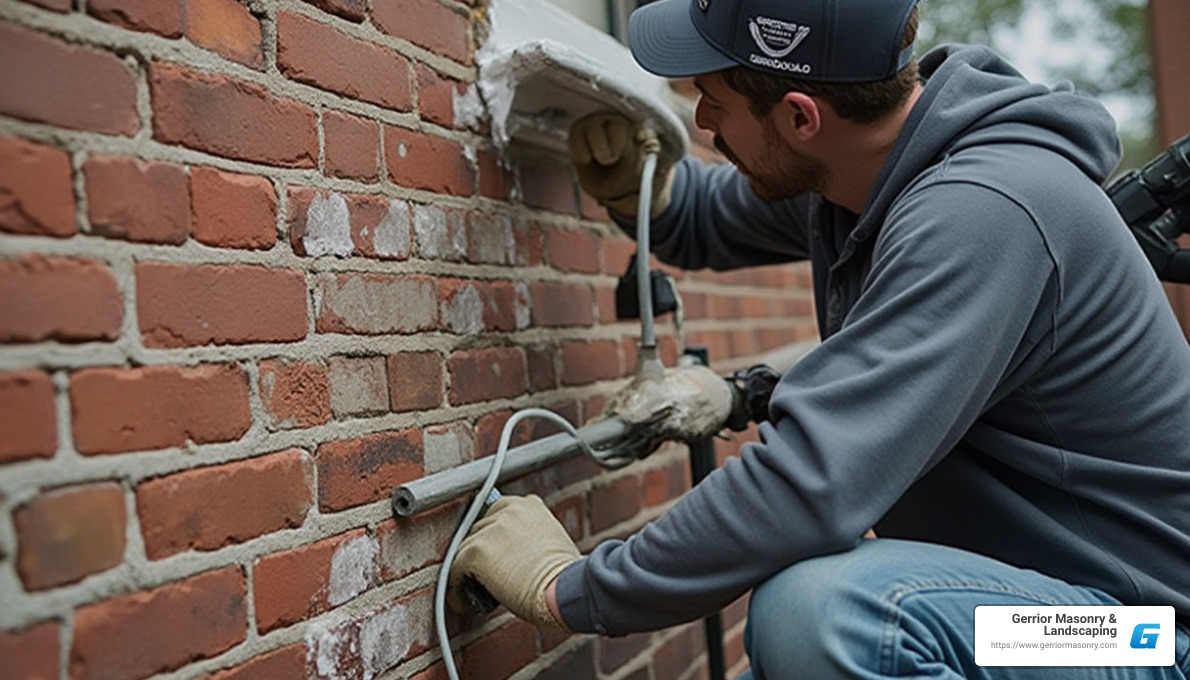
- Prep Repair Areas: Use a hammer and flat chisel to carefully remove any loose or damaged mortar. Take care not to damage the bricks.
- Mix and Apply Mortar: Follow the manufacturer’s instructions to mix the mortar. Use a brick trowel to insert it into the gaps between bricks. Ensure the mortar is packed tightly to avoid air pockets.
- Contour Mortar: Match the new mortar with the existing style using a contouring tool. Whether it’s a rounded or beveled joint, maintaining the original appearance is crucial for aesthetic continuity.
- Quality Check: After the mortar dries, inspect the work to ensure that all joints are filled and contoured correctly.
Cleaning Techniques
Cleaning is vital for both aesthetic and protective reasons. Proper cleaning can revive the color and appearance of your bricks.
- Initial Rinse: After the mortar dries, use a hose to spray water on the brick surface. This removes loose dirt and prepares the bricks for deeper cleaning.
- Apply Detergent: Use a brick or masonry detergent designed for removing stains, efflorescence, and residual mortar. Ensure the cleaner is suitable for your brick type.
- Scrub the Surface: With a natural bristle brush, gently scrub the detergent into the brick. Avoid using metal brushes, which can damage the surface.
- Rinse Thoroughly: After scrubbing, rinse the area thoroughly with water to remove any residue.
By following these steps, you ensure that your brickwork restoration not only improves the visual appeal of your property but also extends the life of the bricks.
In the next section, we’ll dig into common brick restoration techniques like brick replacement and color revitalization to further improve your property’s charm.
Common Brick Restoration Techniques
Restoring brickwork can breathe new life into your property, making it look fresh and well-maintained. Let’s explore three key techniques: brick replacement, color revitalization, and mortar repointing.
Brick Replacement
Over time, some bricks may become damaged or loose. Replacing these bricks is crucial to maintain the structural integrity of your wall. Here’s how it’s done:
- Identify Loose Bricks: Look for bricks that are cracked, spalled, or missing entirely.
- Remove Old Mortar: Carefully chisel away the old mortar around the damaged brick, ensuring not to disturb surrounding bricks.
- Replace the Brick: Insert a new or reclaimed brick that matches the original in size and color. Use fresh mortar to secure it in place.
- Finish with Mortar: Once the brick is in place, fill the joints with mortar, smoothing it to match the existing style.
This process should be done by a professional to avoid compromising the wall’s stability.
Color Revitalization
Bricks can fade over time due to weather exposure. Color revitalization helps restore their original vibrancy:
- Clean the Surface: Remove dirt and grime with a gentle scrub using a masonry cleaner.
- Apply Masonry Stain: Use a masonry stain to bring back the brick’s original color. This is more effective and longer-lasting than paint, which can trap moisture and cause damage.
- Seal the Surface: After staining, apply a waterproof sealant to protect the bricks from future fading and moisture absorption.
Color revitalization not only improves appearance but also adds a layer of protection.
Mortar Repointing
Mortar can deteriorate over time, leading to weakened joints. Repointing is the process of renewing these joints:
- Remove Old Mortar: Use a grinder or chisel to carefully remove the damaged mortar to a uniform depth.
- Prepare New Mortar: Mix a mortar that matches the original in color and composition.
- Apply and Shape: Insert the new mortar into the joints and shape it to match the existing style, ensuring a seamless blend.
Repointing is essential for maintaining the wall’s strength and appearance.
By employing these techniques, your brickwork restoration will not only improve the look of your property but also extend its lifespan. In the next section, we’ll discuss the importance of using proper materials in restoration projects.
Importance of Proper Materials
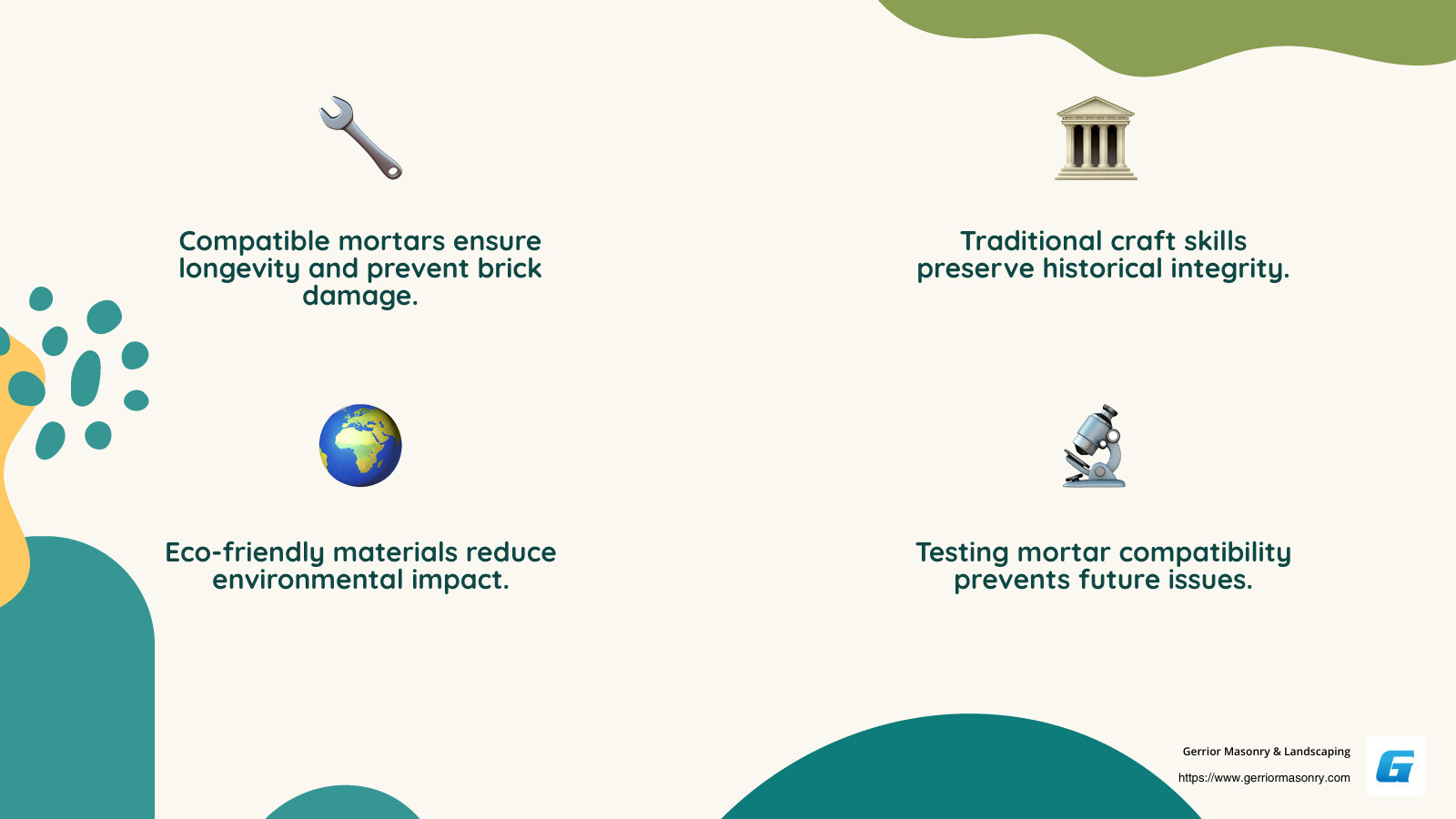
When it comes to brickwork restoration, using the right materials is key. The materials you choose can make or break the longevity and appearance of your restored brickwork. Let’s explore why using compatible mortars, traditional craft skills, and environmentally friendly practices is essential.
Compatible Mortars
Mortar isn’t just a filler. It’s a crucial component that holds everything together. Using a mortar that matches the original in composition and strength is vital. If the new mortar is too strong, it can damage the surrounding bricks, leading to future problems.
- Why Compatibility Matters: Old bricks often have different properties compared to new ones. Matching mortar properties ensures the new and old bricks work together, maintaining structural integrity.
- Testing for Compatibility: Before proceeding, test the new mortar in a small, inconspicuous area. This helps ensure it matches not just in strength, but also in color and texture.
Traditional Craft Skills
Restoring brickwork isn’t just about replacing materials. It’s about preserving history and craftsmanship. Traditional skills play a significant role in this process.
- Preserving Heritage: Techniques passed down through generations, like those used in the Jiankou section of the Great Wall, emphasize the importance of maintaining the original look and feel.
- Training and Expertise: Skilled artisans understand the nuances of historical techniques, ensuring that the restoration respects the original craftsmanship. This is crucial for maintaining the character of older buildings.
Environmental Protection
Restoration projects should also consider their environmental impact. Using sustainable practices protects both the building and the environment.
- Eco-friendly Materials: Choose materials that have a lower environmental footprint. For example, sourcing reclaimed bricks can reduce the need for new resources.
- Avoiding Harmful Treatments: Some cleaning and sealing products can be harsh on the environment. Opt for those that are effective yet gentle, ensuring they don’t harm the surrounding ecosystem.
Incorporating these elements ensures that your brickwork restoration is not only effective but also respectful of the building’s history and the environment. Next, we’ll address some frequently asked questions about restoring brickwork to help clear up any lingering doubts.
Frequently Asked Questions about Brickwork Restoration
Can you restore brickwork?
Absolutely, you can restore brickwork! Brickwork restoration involves a series of steps to bring back both the structural integrity and aesthetic appeal of your bricks.
One common method is mortar removal. Over time, mortar can deteriorate, compromising the stability of the structure. Skilled professionals carefully remove the old mortar to avoid damaging the bricks. This process is known as “repointing.”
Masonry replacement is another key aspect. Sometimes, bricks are too damaged to repair. In these cases, the damaged bricks are removed and replaced with new ones that match the original as closely as possible. This ensures that the overall look and strength of the wall are maintained.
What is brick restoration?
Brick restoration is the process of repairing and revitalizing bricks and mortar to improve both their structural integrity and appearance.
The goal is to preserve the original look while ensuring the building remains safe and sound. This often involves cleaning techniques to remove dirt and stains, as well as applying fresh mortar to strengthen the structure.
Restoration can also include appearance improvement through color revitalization. This process brings back the vibrant look of the bricks, making them appear almost new again.
How do you restore damaged bricks?
Restoring damaged bricks involves several careful steps. First, brick removal is necessary when bricks are cracked or crumbling. Professionals use precise tools to extract the damaged bricks without affecting the surrounding structure.
Next, the cavity is cleaned and prepared for a new brick. The new brick should closely match the original in size, color, and texture to maintain consistency.
Mortar filling is the final step. Fresh mortar is applied around the new brick to secure it in place. The mortar is contoured to match the existing style, ensuring a seamless finish.
These steps, when done correctly, not only restore the brickwork’s appearance but also reinforce its durability. This meticulous process helps preserve the charm and safety of your property for years to come.
Conclusion
At Gerrior Masonry & Landscaping, we understand the importance of maintaining the beauty and integrity of your property. With over 30 years of experience, our skilled team is committed to delivering high-quality results in every brickwork restoration project we undertake.
Our approach to brickwork restoration is rooted in a combination of traditional craft skills and contemporary techniques. This ensures that we not only preserve the historical and aesthetic value of your property but also improve its structural soundness. Our team is trained to handle everything from mortar repointing to brick replacement, ensuring that each project is completed with precision and care.
We pride ourselves on our attention to detail and owner oversight on every project. This means that you can expect personalized service and a seamless experience from start to finish. Whether it’s revitalizing the color of your bricks or ensuring the stability of your structure, we are dedicated to exceeding your expectations.
Investing in brickwork restoration with Gerrior Masonry & Landscaping not only improves the charm of your property but also extends its lifespan. We invite you to explore our masonry services to learn more about how we can transform your space.
Let us help you preserve and improve your property’s unique charm, one brick at a time.
