
Bulkhead Replacements: Top Guide for 2025 Success

When it comes to safeguarding your home and ensuring easy access to your basement, bulkhead replacements are vital for maintaining structural integrity. Aging or damaged bulkheads can lead to serious concerns like water seepage, rust, and rot, all of which threaten the foundation of your home. If you’re noticing signs of wear or planning a renovation, consider these essential replacement options:
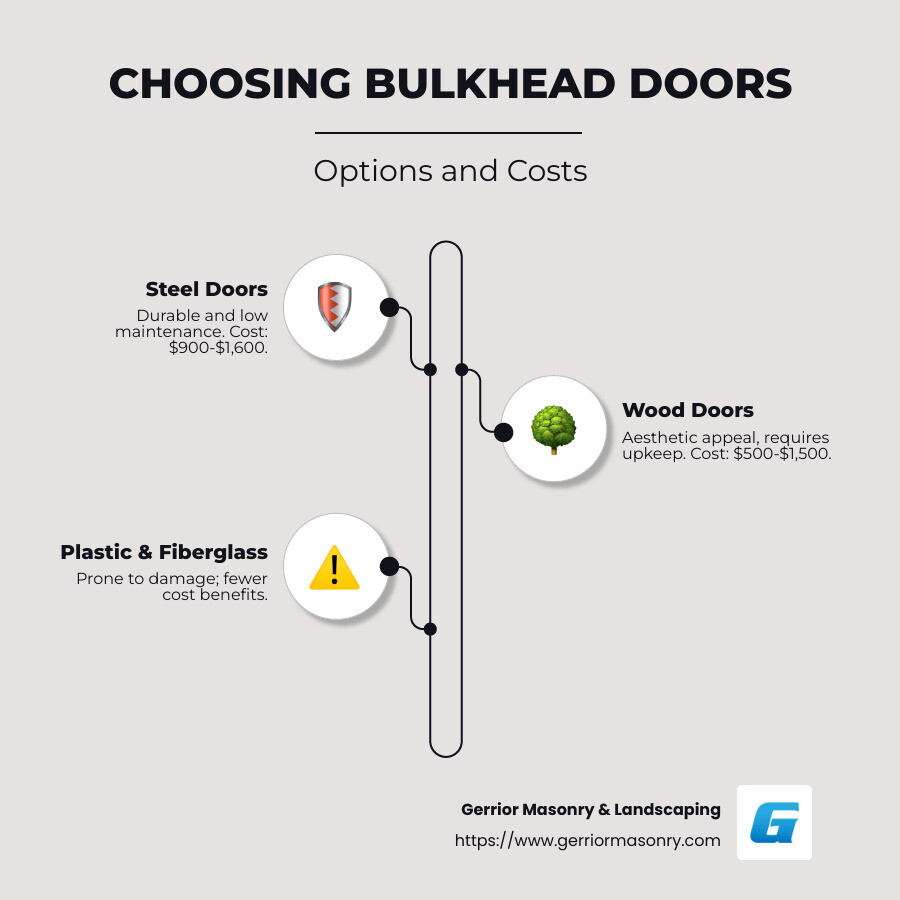
- Steel bulkhead doors: Known for durability and low maintenance, costing between $900 and $1,600.
- Wood bulkhead doors: Aesthetic appeal with prices ranging from $500 to $1,500, but they require more upkeep.
- Avoid plastic and fiberglass options: Prone to damage without significant cost benefits.
I’m Joe Gerrior, and I’ve spent over 34 years specializing in bulkhead replacement and related masonry services. Our team at Gerrior Masonry & Landscape in Massachusetts is committed to providing lasting and aesthetic solutions to keep your home secure and beautiful.
Handy bulkhead replacement terms:
– bulkhead repairs
– bulkhead structural integrity
– repairing bulkhead washouts
Signs It’s Time for Bulkhead Replacement
Spotting the early signs of bulkhead door deterioration can save you from costly repairs down the line. Here are the key indicators that it might be time for a bulkhead replacement:
Rust and Corrosion
Steel doors are strong, but they’re not invincible. Over time, exposure to moisture can lead to significant rust and corrosion. If you notice reddish-brown flakes or powder on your bulkhead doors, it’s a clear sign that rust is setting in. Rust not only weakens the doors but can also spread to the surrounding frame, compromising the structure. Replacing rusted doors promptly is crucial to prevent further damage.
Water Seepage
Water seepage is a major red flag. If you see water pooling around your bulkhead or notice damp spots inside your basement, it’s time to act. Water infiltration can lead to mold growth and damage your foundation. Bulkheads are meant to keep water out, so if they’re not doing their job, a replacement is necessary.
Warped Wood
Wood bulkhead doors can warp over time, especially if they’re not maintained properly. Warped doors may not close tightly, allowing pests and water to enter. If your wooden doors are difficult to latch or appear bent out of shape, it’s a sign that they’ve absorbed too much moisture. Consider replacing them with new wood or steel options that offer better durability.

In summary, keeping an eye out for these signs can help you decide when a bulkhead replacement is needed. Addressing issues like rust, water seepage, and warped wood early can protect your home’s structural integrity and save you from more extensive repairs in the future.
Choosing the Right Material for Bulkhead Replacement
Selecting the right material for your bulkhead replacement is crucial for ensuring durability and longevity. Let’s explore the pros and cons of the most common materials: steel, wood, plastic, and fiberglass.
Steel Doors
Steel doors are a top choice for many homeowners due to their strength and resilience. They are less likely to warp and can withstand harsh weather conditions. Pre-primed steel doors, like those installed by experts, offer excellent protection and require minimal maintenance. While they might be a bit pricier, ranging from $900 to $1,600, their durability makes them a worthwhile investment. Plus, they resist damage from fallen debris better than other materials.
Wood Doors
If you prefer a more traditional look, wood doors might be the way to go. Opt for tongue-and-groove cypress, cedar, or mahogany, as these woods are naturally resistant to decay and insects. Pressure-treated lumber is another viable option. Wood doors are generally more affordable, costing between $500 and $1,500. However, they require more maintenance to prevent warping and rotting. Ensure any wood in contact with stone or concrete is treated with a preservative to extend its lifespan.
Plastic and Fiberglass
While plastic and fiberglass doors might initially seem like convenient options, they come with significant downsides. Plastic doors are prone to breakage from fallen debris, and fiberglass can crack or warp after prolonged sun exposure. Despite these drawbacks, they aren’t cheaper than wood or steel, with plastic doors retailing for $1,200–$1,500 and fiberglass doors ranging from $1,000 to $2,000. Given these factors, we don’t recommend these materials for bulkhead replacements.

Choosing the right material is a key step in your bulkhead replacement journey. Whether you opt for the durability of steel or the classic appeal of wood, make sure your choice aligns with your needs and budget.
Step-by-Step Guide to Bulkhead Replacement
Replacing a bulkhead door involves several important steps. Let’s break it down into manageable parts: removing old doors, preparing the foundation, installing new sills, mounting the new frame, and finally, sealing and painting.
Removing Old Doors
Begin by carefully prying off the metal frame and removing the header along the top of the opening. It’s important to avoid disturbing the existing flashing, as you can trim and reuse it later. Once the old doors are removed, inspect the area for any signs of damage or decay that need addressing before proceeding.
Preparing the Foundation
Next, clean the exposed foundation thoroughly. Use a paintbrush to wet the edges to prevent the concrete from absorbing moisture from the new grout. Mix a batch of fast-setting grout and apply a layer over the foundation, leveling it with a trowel. Allow the grout to dry for about an hour. Check for any cracks or uneven areas that might interfere with the new doors fitting correctly.
Installing New Sills
Once the grout has cured, it’s time to cut and install pressure-treated 2×10 sills along the top of the foundation wall on either side of the door opening. Make sure they are parallel by measuring across the top and bottom of the door opening. Secure the sills to the house framing and foundation using masonry screws. Drill clearance holes through the 2x10s, then bore pilot holes into the concrete with a hammer drill. Drive 3-inch masonry screws into each pilot hole with a cordless drill. Install a 2×6 sill across the bottom of the bulkhead opening, ensuring it aligns with the side sills.
Mounting the New Frame
Set the bottom foundation plate across the opening and mark it to the proper length. Cut it with a grinder, then do the same for the side foundation plates. Apply a self-stick membrane to the top surfaces of the pressure-treated sills to prevent galvanic corrosion between the steel and wood. Apply a thick bead of silicone sealant along the flashing at the top of the opening. Slide the bulkhead’s metal header underneath the flashing and press it down into the sealant. Secure the door frame on top of the foundation plates using nuts and bolts. Drill pilot holes through the plates and secure the frame with sheet metal screws.
Sealing and Painting
Finally, apply silicone sealant around the inside and outside perimeter of each door, leaving the bottom of the foundation plate unsealed to allow for drainage. Spray primer onto exposed screw heads and apply a coat of exterior-grade oil-based paint to protect the installation. Regular painting helps maintain the doors and prevents rust and corrosion.
Following these steps ensures a successful bulkhead replacement, enhancing your home’s safety and accessibility. Next, we’ll dive into the costs associated with this process to help you budget effectively.
Cost Considerations for Bulkhead Replacement
When planning a bulkhead replacement, understanding the cost is crucial. Let’s break down the expenses involved so you can budget effectively.
Average Cost
On average, replacing a basement bulkhead door costs around $1,750. However, prices can vary significantly. The cost typically ranges from $900 to $2,600, depending on various factors such as materials and labor.
Material Costs
The type of material you choose for your bulkhead door greatly impacts the overall cost. Here’s a quick look at the options:
- Steel Doors: These are often a more affordable option, but they can be prone to corrosion over time. Prices for steel doors can be on the lower end of the spectrum, starting at around $900.
- Vinyl or Fiberglass Doors: These materials are more expensive upfront, ranging from $1,200 to $1,600. However, they offer better longevity and resistance to the elements.
- Wooden Doors: While they can provide a classic look, wooden doors are more susceptible to damage and may not be ideal for wet environments. Costs for wooden doors vary, but they tend to be less economical in the long run due to maintenance needs.
Labor Costs
Labor is another significant component of bulkhead replacement expenses. On average, labor can add $350 to $650 to your total cost, making up about 40% of the project price.
If your project involves more than just replacing the door—such as excavating, laying new foundations, or removing old concrete—the labor costs can exceed $1,000. This is especially true for more complex jobs that require additional time and expertise.
Removal of Old Fixtures
Don’t forget to account for the cost of removing old fixtures and debris. This can range from $130 to $400, depending on the size of the job and whether you handle the removal yourself or hire a service.
Understanding these cost components can help you plan your bulkhead replacement more effectively. In the next section, we’ll address some frequently asked questions to further clarify the process.
Frequently Asked Questions about Bulkhead Replacement
How much does it cost to replace a bulkhead?
Replacing a bulkhead door typically costs homeowners between $900 and $2,600. The average cost hovers around $1,750, but this can vary based on materials, labor, and the complexity of the project.
For example, if you choose a steel door, you’ll likely spend on the lower end of the spectrum. However, opting for more durable materials like vinyl or fiberglass could push your expenses higher, up to $1,600 or more. Labor costs, which can add $350 to $650 to the total, also play a significant role in the overall price.
When should I replace my bulkhead?
There are several signs indicating it’s time for a bulkhead replacement. Keep an eye out for rust and corrosion on steel doors, which can compromise their integrity over time. Water seepage is another red flag, as it can lead to more serious issues like mold and structural damage.
If you notice warped wood or other visible signs of wear, it’s wise to consider replacing your bulkhead. Addressing these issues promptly can prevent further damage and ensure your basement remains safe and dry.
How much does a water bulkhead cost?
For those considering a water bulkhead or residential seawall, the costs differ from basement bulkheads. Typically, these structures are priced per lineal foot. On average, you might expect to pay between $150 and $600 per lineal foot, depending on the materials and design complexity.
These bulkheads are essential for protecting properties from water damage and erosion, especially in coastal areas. While the upfront cost can be substantial, investing in a high-quality water bulkhead can save money in the long run by safeguarding your property.
Understanding these aspects of bulkhead replacement can help you make informed decisions about maintaining and protecting your home. In the next section, we’ll wrap up with some final thoughts and maintenance tips from Gerrior Masonry & Landscaping.
Conclusion: Bulkhead Replacements
Choosing the right time and approach for a bulkhead replacement can make a significant difference in maintaining your home’s integrity. At Gerrior Masonry & Landscaping, we understand the intricacies involved in bulkhead installation and repair, thanks to our over 30 years of experience in the field. Our skilled team and owner oversight ensure that every project is executed with precision and care, providing you with results that stand the test of time. Learn more about our bulkhead replacement services.
Maintenance Tips
To extend the life of your bulkhead doors, regular maintenance is key. Start by cleaning the doors and the surrounding areas to prevent debris buildup. This simple step can help avoid rust and corrosion, especially on metal doors. Lubricate hinges and other moving parts annually to keep them functioning smoothly. Additionally, inspect the doors for signs of wear or damage, particularly before and after harsh weather conditions.
If you notice any issues, such as weatherstripping that needs replacing or paint that requires touching up, address these promptly. This not only helps maintain a tight seal but also protects the material from further damage.
Regular Inspections
We recommend having your bulkhead doors professionally inspected from time to time. Regular inspections can catch potential problems early, saving you from costly repairs down the line. Our team at Gerrior Masonry & Landscaping is equipped to handle these inspections, ensuring your bulkhead remains secure and functional.
In conclusion, maintaining your bulkhead doors with regular cleaning, lubrication, and inspections can significantly improve their lifespan and performance. Trust the expertise of Gerrior Masonry & Landscaping to guide you through the process and ensure your home remains protected and in excellent condition.
