
Bulkheads Concrete: Top 5 Durable Choices in 2025
When it comes to understanding bulkheads concrete, there are a few key points to remember:
- Definition: Bulkheads are vertical structures used to retain soil or water.
- Materials: Typically made of concrete, stone, or timber to ensure durability.
- Function: Essential for preventing erosion and maintaining landscape integrity.
Concrete bulkheads are known for their structural strength and ability to withstand environmental pressures, making them a popular choice in both residential and commercial settings.
As an expert in masonry and landscaping, I’m Joe Gerrior. With over 34 years in the business, I’ve seen the importance of quality bulkheads concrete in enhancing property value. Our team specializes in installations that blend aesthetic appeal with lasting functionality.
Bulkheads concrete vocabulary:
– bulkhead structural integrity
– bulkhead repairs
– repairing bulkhead washouts
Understanding Bulkheads
Definition: Bulkheads are vertical structures designed to separate land from water. They are primarily used to retain soil or water and are essential components in the construction of marinas, ports, and shoreline developments. By creating a definitive boundary, bulkheads help manage and protect landscapes from erosion and water damage.
Purpose: The main purpose of a bulkhead is to retain fill and prevent land from sliding into water bodies. In protected environments, such as marina basins or along calm shorelines, bulkheads provide a stable separation between land and water. They are not primarily designed for heavy-duty erosion control but are effective in areas with moderate wave action.
Materials: Bulkheads can be made from various materials, including concrete, stone, steel, and timber. Concrete is a popular choice due to its durability and strength. It can be used to create both gravity walls and piled and anchored walls. Stone offers a natural aesthetic, while steel and timber provide flexibility and ease of installation in certain environments. Some designs also incorporate special mesh boxes filled with stones, known as gabions, for additional stability.
Concrete bulkheads are favored for their longevity and ability to withstand environmental pressures. This makes them an excellent choice for both residential and commercial applications, ensuring that landscapes remain intact and visually appealing.
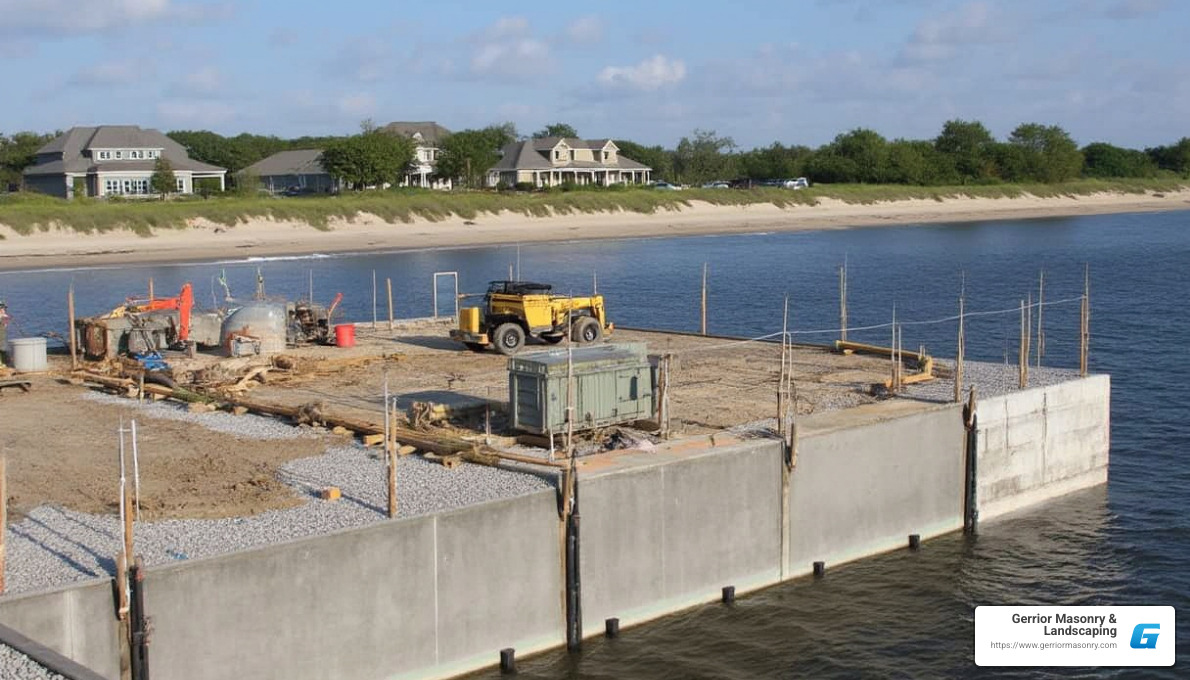
Bulkheads play a crucial role in maintaining the integrity of waterfront properties. By understanding their definition, purpose, and the materials used, homeowners and developers can make informed decisions that improve both the functionality and beauty of their landscapes.
Bulkheads Concrete: Key Considerations
When choosing bulkheads concrete, several key factors come into play: durability, lifespan, and maintenance. These elements are crucial for ensuring that your bulkhead effectively protects your property from erosion and water damage.
Durability
Concrete is renowned for its strength and resilience. This makes it an ideal material for bulkheads, which must withstand constant exposure to water and environmental elements. Concrete bulkheads are designed to endure moderate wave action and resist erosion over time. Their robust nature ensures that they remain structurally sound, providing reliable protection for your property.
Lifespan
The lifespan of a concrete bulkhead is significantly longer than other materials like timber or metal. On average, a well-constructed concrete bulkhead can last several decades, often exceeding 50 years with proper care. This longevity makes concrete a cost-effective choice in the long run, as it reduces the need for frequent replacements or extensive repairs.
Maintenance
While concrete bulkheads are durable, they still require some maintenance to maximize their lifespan. Regular inspections are essential to identify any cracks or signs of wear and tear early on. Sealing the concrete periodically helps protect it from water infiltration and freeze-thaw cycles, which can cause damage over time. Simple cleaning to remove debris and prevent moss or algae growth will also help maintain the bulkhead’s appearance and functionality.
In summary, bulkheads concrete offer a durable, long-lasting solution for protecting waterfront properties. With minimal maintenance, these structures can provide decades of reliable service, making them a wise investment for homeowners and developers alike.
Installation Process
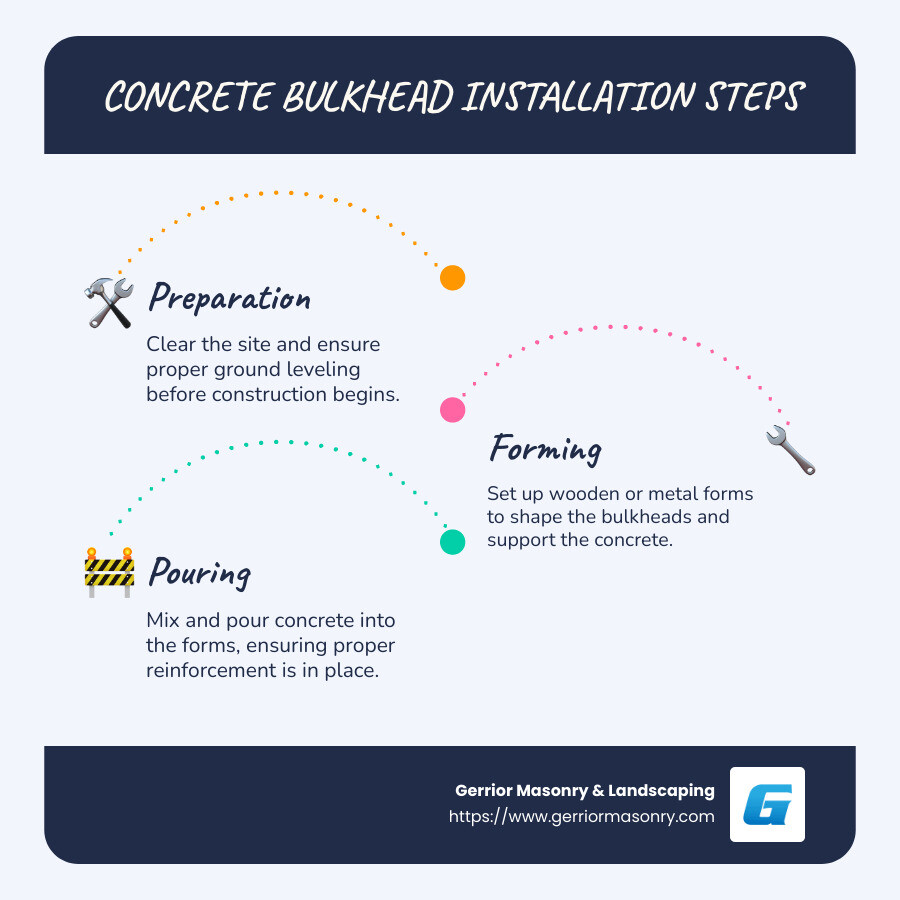
Installing bulkheads concrete involves several crucial steps: preparation, forming, and pouring. Each phase is vital to ensure the structural integrity and longevity of the bulkhead.
Preparation
Before any concrete is poured, thorough preparation of the site is necessary. This includes clearing the area of debris and vegetation and ensuring that the ground is stable. If the soil is unstable, additional support or stabilization techniques may be required. It’s also essential to assess the location for any potential drainage issues, as water accumulation can weaken the structure over time.
Forming
Forming is the process of creating a mold for the concrete. This involves setting up formwork, which is typically made from wood or metal. The formwork defines the shape and size of the bulkhead and holds the concrete in place while it sets. For segmented construction, bulkheads are used within the formwork to allow for sections to be poured individually. This method prevents the concrete from setting unevenly and ensures a continuous mass throughout each segment.
A crucial aspect of forming is reinforcing the concrete with steel rebar. The rebar provides additional strength and helps the concrete withstand environmental stresses. The reinforcement must pass through the bulkheads to tie the segments together, ensuring a cohesive structure.
Pouring
Once the formwork and reinforcement are in place, the concrete is ready to be poured. It’s essential to pour the concrete evenly and continuously to avoid any weak spots. For long walls, the concrete is poured in short segments, typically around 20 feet in length. This technique prevents the lower sections from hardening before the upper sections are poured, maintaining the integrity of the wall.
During pouring, it’s important to use vibration tools to eliminate air pockets and ensure the concrete fills every part of the formwork. This step is critical for the strength and durability of the bulkhead.
After pouring, the concrete needs time to cure. Curing is the process of maintaining adequate moisture, temperature, and time to allow the concrete to achieve its desired strength. Proper curing is essential to prevent cracking and ensure the longevity of the bulkhead.
By carefully following these steps—preparation, forming, and pouring—you can ensure that your bulkheads concrete installation is robust and long-lasting, providing effective protection for your property.
Advantages of Concrete Bulkheads
Concrete bulkheads offer several key benefits that make them a popular choice for retaining walls and coastal structures. Here’s why bulkheads concrete is often preferred:
Strength
Concrete is known for its exceptional strength, making it ideal for structures that need to withstand environmental pressures. When reinforced with steel rebar, concrete bulkheads can handle significant loads and resist impact from mild to moderate wave action. This strength ensures that the bulkhead remains intact and functional over time, even in challenging conditions.
Erosion Control
One of the primary purposes of a bulkhead is to prevent erosion. Concrete bulkheads are particularly effective in this role because they form a solid barrier between the land and water. By retaining soil and preventing it from washing away, concrete bulkheads help maintain the integrity of the shoreline or riverbank. This is crucial in areas where erosion could lead to property damage or loss of land.
Longevity
Concrete bulkheads are designed to last. With proper installation and maintenance, they can remain effective for decades. Concrete’s durability means it won’t easily degrade or require frequent repairs, making it a cost-effective solution in the long run. Furthermore, the use of high-quality materials and construction techniques ensures that concrete bulkheads can withstand harsh weather conditions and continue to provide protection year after year.
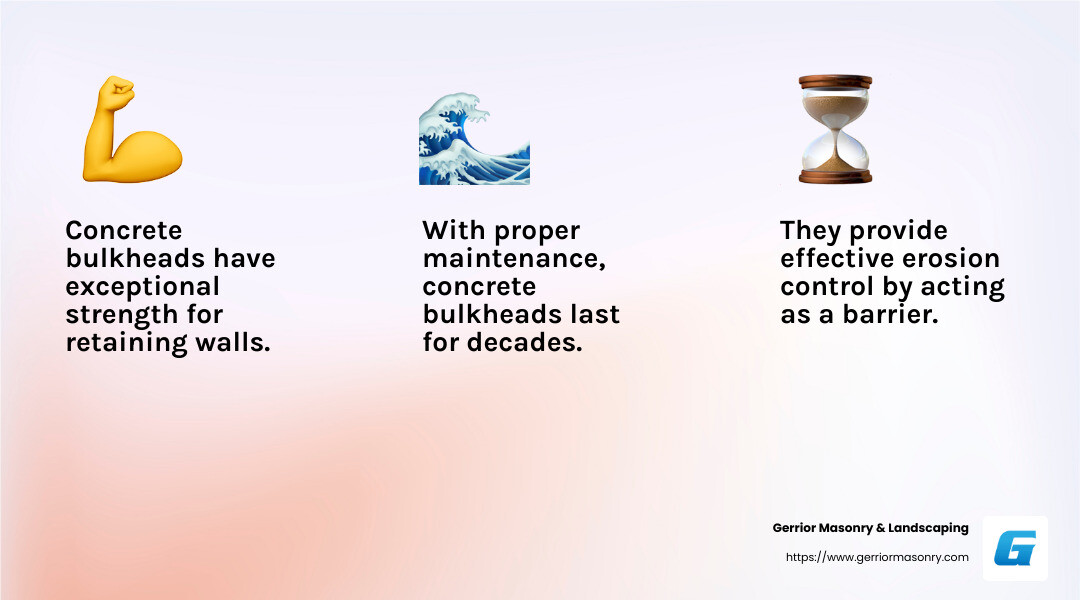
In summary, the strength, erosion control capabilities, and longevity of bulkheads concrete make them an excellent choice for protecting properties and maintaining shoreline stability. These advantages ensure that concrete bulkheads not only serve their immediate purpose but also provide long-term benefits for property owners.
Frequently Asked Questions about Bulkheads Concrete
What are bulkheads in concrete?
Bulkheads in concrete are vertical structures designed to separate land from water, often used in coastal areas or along riverbanks. They primarily serve to retain soil and prevent erosion, acting as a barrier to protect the land behind them. Constructed from materials like concrete, stone, or steel, bulkheads are robust and durable, making them well-suited for environments with mild to moderate wave action.
Concrete bulkheads are typically built using reinforced concrete, which involves pouring concrete into a form that contains steel rebar. This combination improves the structure’s strength and ensures it can withstand environmental pressures over time.
What is the purpose of a bulkhead?
The main purpose of a bulkhead is to function as a retaining wall. It holds back soil and prevents land from sliding or eroding into the water. This is especially important in areas where erosion could cause significant property damage or land loss.
Concrete bulkheads are also employed in creating a well-defined separation between land and sea, particularly in marina basins and protected shorelines. By providing erosion control, they help maintain the stability of the shoreline and protect valuable real estate from the effects of water encroachment.
How long does a concrete bulkhead last?
The lifespan of a concrete bulkhead can be quite extensive, often lasting several decades with proper care. The durability of concrete, especially when reinforced, means that these structures can withstand harsh weather conditions and resist degradation over time.
To maximize the lifespan of a concrete bulkhead, regular maintenance is crucial. This includes inspecting for cracks or damage, ensuring seals are intact, and addressing any issues promptly to prevent further deterioration. With consistent upkeep, a concrete bulkhead can continue to offer protection and stability for many years, making it a cost-effective solution for erosion control and land retention.
Conclusion
At Gerrior Masonry & Landscaping, we pride ourselves on our expertise in bulkheads concrete installations and repairs. With over 30 years of experience serving Woburn, MA, and surrounding areas, we have honed our skills to deliver high-quality results that stand the test of time.
Our skilled team ensures that every project receives meticulous attention, from planning to execution. We understand the importance of using durable materials and precise techniques to create concrete bulkheads that effectively protect your property from erosion and water damage.
Choosing us means choosing quality and reliability. We oversee each project with a hands-on approach, ensuring that our standards of excellence are met every step of the way. Our commitment to customer satisfaction and our track record of successful installations make us the preferred choice for bulkhead solutions.
Whether you need a new installation or a replacement, our bulkhead services are designed to meet your specific needs. We invite you to reach out to us for more information and to discuss how we can help improve the safety and longevity of your property with our concrete bulkhead expertise.
For more information on our services or to get started on your project, please visit our bulkhead replacement page.
