
Chimney Chase Cover Replacement Cost: 5 Essential Factors
Protecting Your Home from Water Damage: Understanding Chase Cover Costs
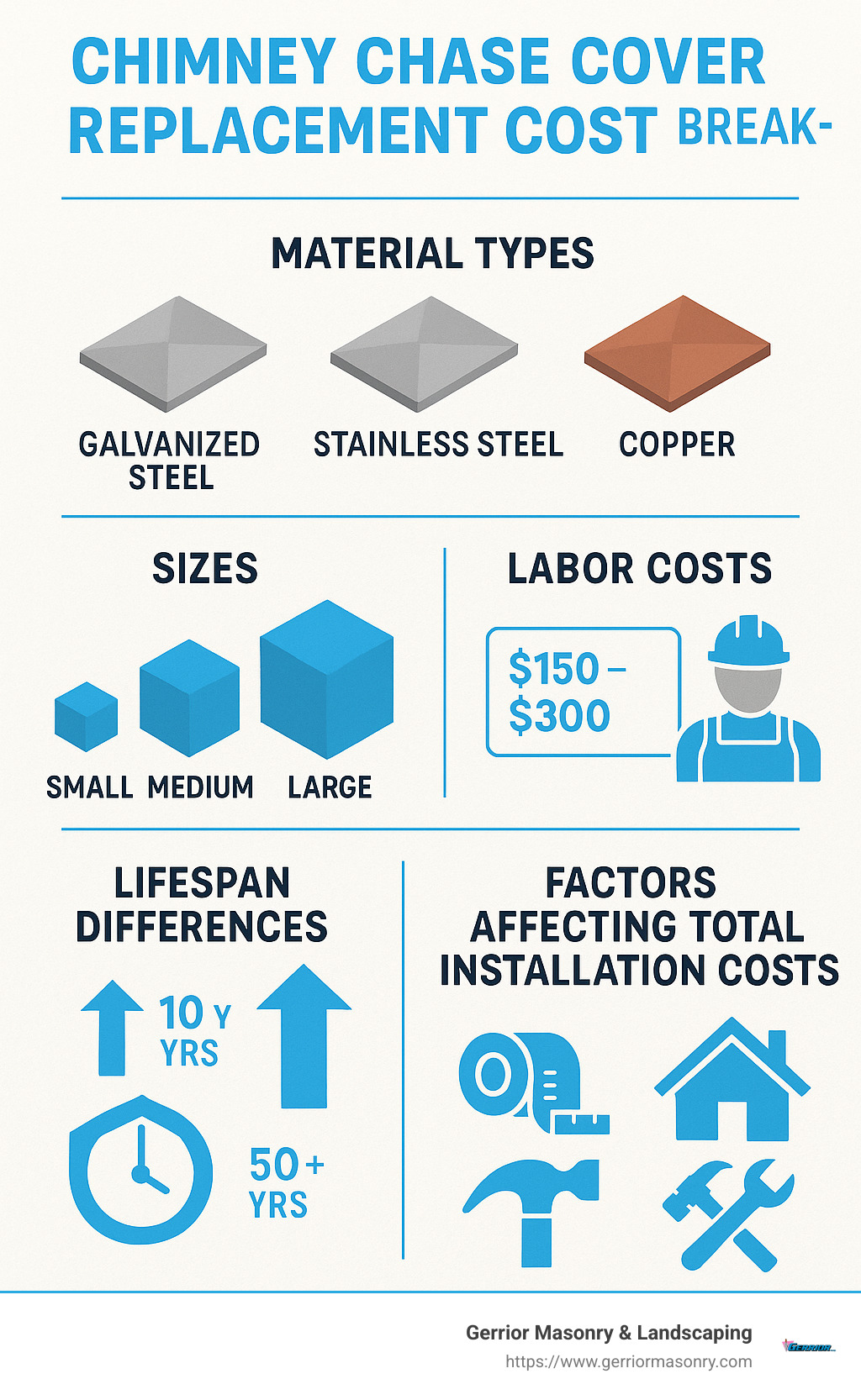
Chimney chase cover replacement cost typically ranges from $300 to $700 for standard sizes with installation, though costs can vary significantly based on materials and dimensions:
| Material | Average Cost Range (Including Installation) |
|---|---|
| Galvanized Steel | $200 – $450 |
| Stainless Steel | $400 – $1,200 |
| Copper | $600 – $3,800 |
Is your chimney chase cover rusting, leaking, or showing signs of deterioration? That metal cap sitting atop your chimney might seem insignificant, but it plays a crucial role in protecting your home from water damage and costly repairs.
When a chase cover fails, water can seep into your chimney structure, causing wood rot, mold growth, and even compromise your chimney’s structural integrity. This small investment can prevent thousands in future repairs.
I’m Joe Gerrior, owner of Gerrior Masonry & Landscape Construction Corp., and I’ve seen how proper chimney chase cover replacement cost planning can save homeowners from extensive water damage across my 34 years of experience in masonry and chimney repair throughout Massachusetts.
What Is a Chimney Chase Cover and Why Is It Important?
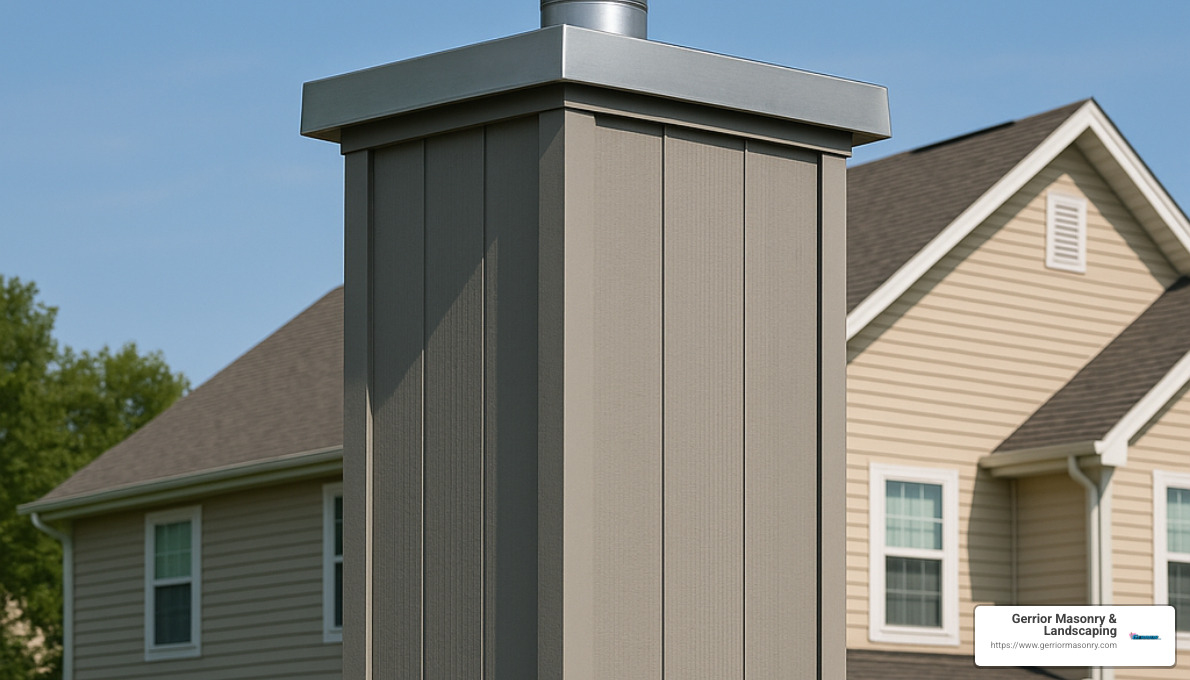
If you have a prefabricated or factory-built fireplace in your home, that box-like structure encasing your flue is called a chimney chase. Unlike traditional brick chimneys with concrete crowns, these modern chimney systems are topped with a metal sheet – your chimney chase cover.
Think of your chase cover as your chimney’s personal umbrella. It’s the first line of defense against Massachusetts’ unpredictable weather, from summer downpours to winter snowstorms.
I’ve repaired countless water-damaged chimneys over my years at Gerrior Masonry, and I can tell you that a functioning chase cover is worth its weight in gold. Here’s why this simple metal cap matters so much:
Water protection is the primary job of your chase cover. When properly installed, it directs rain and melting snow away from your chimney’s interior, preventing moisture from seeping into your home. Without this protection, water damage can quickly spiral into expensive repairs.
Structural preservation becomes a serious concern when water infiltrates your chimney chase. Most prefabricated chimney chases are constructed with wood framing, which can rot when repeatedly exposed to moisture. This compromises the entire structure supporting your chimney system.
Unwanted houseguests like birds, squirrels, and raccoons are always looking for shelter. A solid chase cover creates a barrier that keeps wildlife from turning your chimney into their new apartment complex.
Spark containment is another crucial safety function. Your chase cover works with your chimney cap to keep sparks and embers from escaping and potentially igniting nearby roofing materials or trees.
As one of my colleagues with over 30 years in chimney inspection puts it: “At the top of your chimney, you have a chase cover. The cover, combined with the chimney cap, keeps water out of your fireplace flue. Like a masonry chimney crown, except for a prefab, it’s made of sheet metal.”
The dangers of water infiltration go beyond structural concerns. When water mixes with creosote (that black substance that builds up in your chimney from burning wood), it creates a highly toxic compound. The U.S. Department of Health and Human Services has published serious health warnings about creosote exposure, linking it to respiratory issues and other health problems.
Signs Your Chimney Chase Cover Needs Replacement
After years of battling New England weather, even the best chase covers will eventually show signs of wear. Here’s how to know when it’s time for a chimney chase cover replacement:
Visible rust is often the first warning sign. Look for orange or brown streaks on the cover itself or running down the sides of your chimney. This indicates that your chase cover is actively deteriorating.
Water in your fireplace during or after rain is a clear indicator that your chase cover is no longer doing its job. This isn’t normal and should be addressed immediately.
Ceiling or wall stains near your chimney suggest that water is making its way into your home’s interior. These water marks won’t go away until the source of the leak is fixed.
Crumbling masonry or siding around your chimney can indicate that water is seeping behind these materials, causing them to deteriorate from the inside out.
Warped metal on your chase cover means it’s no longer providing a proper seal. Metal expands and contracts with temperature changes, and over time this can cause permanent deformation.
A dipping or concave cover is especially problematic because instead of shedding water, it’s now collecting it. This standing water accelerates rust and creates constant pressure on your chimney system.
In my experience with Chimney Repairs at Gerrior Masonry, homeowners often wait until they see obvious leaks before addressing chase cover issues. By then, significant damage may have already occurred to the internal structure, leading to more extensive and expensive repairs.
The average galvanized chase cover typically lasts only 7-9 years in our harsh Massachusetts climate. If yours is approaching or past this age, it’s wise to have it inspected even if you don’t see obvious deterioration yet. A small investment in chimney chase cover replacement cost now can save you thousands in water damage repairs later.
Understanding Chimney Chase Cover Replacement Cost Factors
When planning for a new chimney chase cover, several key factors will influence what you’ll pay. As a homeowner, understanding these variables helps you budget appropriately and avoid surprises when it’s time to write that check.
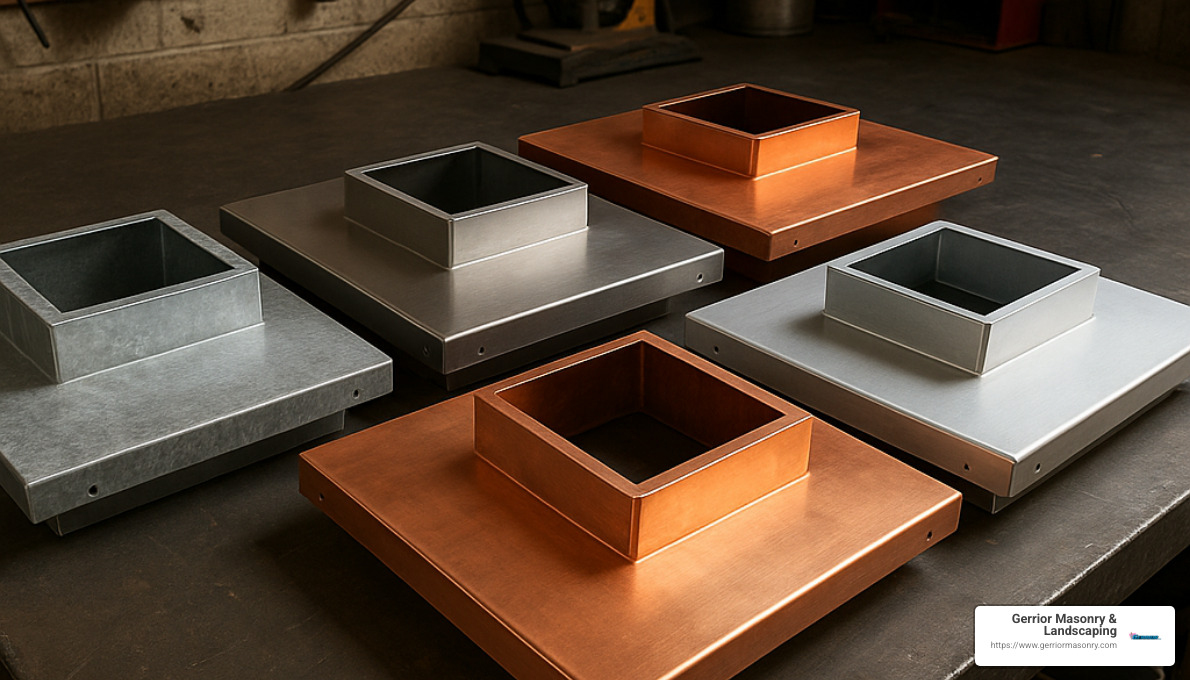
The material you choose makes the biggest impact on your chimney chase cover replacement cost. Think of it as buying a car – you can go economy, mid-range, or luxury, with prices and longevity to match. Galvanized steel offers the most budget-friendly option at around $200-$450 installed. Stainless steel sits comfortably in the middle at $400-$1,200, while copper provides premium protection at $600-$3,800. Some homeowners opt for aluminum ($300-$600), though it’s less common in our New England climate.
Size matters too – and bigger definitely means more expensive. A small 8″ x 8″ galvanized cap might only run $250-$285 installed, while a larger 17″ x 29″ version could jump to $590-$650. Those measurements matter because they determine how much material is needed and how complex the installation will be.
Speaking of complexity, is your chimney chase a simple square or rectangle? Great! You’ll pay standard rates. But if yours has an unusual shape – perhaps with multiple angles or curves – expect to pay 20-50% more for custom fabrication. I’ve seen some truly unique chimney designs in Massachusetts homes, and each one requires special attention.
Your roof itself plays a big role in the final price tag. When I’m climbing up to install a chase cover on a steep roof pitch, that requires extra safety equipment and time. The same goes for especially tall chimneys or those positioned far from roof access points. These factors can add 15-30% to your labor costs.
Average Chimney Chase Cover Replacement Cost Breakdown
Let’s talk dollars and cents. Based on internet data (not actual costs for our Gerrior Masonry services), here’s what you might expect to pay:
| Component | Cost Range |
|---|---|
| Materials (varies by type) | $50 – $800 |
| Labor | $125 – $350 |
| Removal of Old Cover | $50 – $150 |
| Total Average Cost | $200 – $3,800 |
For most homeowners getting a standard-sized stainless steel cover professionally installed, the sweet spot falls between $400 and $700. Labor typically accounts for about half the total cost, with installation taking anywhere from 30 minutes to 2 hours depending on the complexity.
Don’t forget about removing that old, damaged cover – that’ll add another $50-$150 to your bill. Sometimes those old covers come off easily, but others have rusted in place and require significant effort to remove without damaging the chimney structure.
Timing your replacement can save you money too. Spring and fall represent peak season for chimney work in Massachusetts, which often means higher rates. If you can schedule during summer, you might snag a better deal. Winter installations can be challenging due to our New England weather conditions, but sometimes offer competitive pricing during what’s traditionally a slower season.
Additional Costs That May Impact Your Project
In my 34 years of experience, I’ve rarely seen a chimney chase cover replacement that didn’t involve at least considering some related repairs. When water has been sneaking past your old cover, it often leaves damage in its wake.
Flashing repairs are common companions to chase cover replacements. If the metal flashing around your chimney is damaged, expect to add $200-$500 to your project. Think of flashing as your chimney’s first line of defense against water – it needs to be in good shape for your new cover to do its job properly.
Some chimneys have both a chase and a crown, and that crown might need work too. Crown repairs can range from $300 for minor patches to $3,000 for complete rebuilds. I’ve seen crowns so deteriorated that water was pouring directly into the chimney structure – not a situation you want to ignore!
The most expensive surprise can be structural repairs. If water has been infiltrating your chase for years, the wooden structure inside might be rotted or damaged. These repairs can start at $500 and climb well past $5,000 depending on the extent of damage. This is why I always tell homeowners not to delay chase cover replacement – that $500 cover might save you thousands in structural repairs.
Some Massachusetts towns require permits for chimney work, adding $20-$150 to your project. At Gerrior Masonry’s Chimney Masonry Repair, we always perform a thorough inspection before quoting a job. This helps identify any additional issues that might need addressing and prevents those unwelcome surprises after work has begun.
Chimney Chase Cover Materials: Cost vs. Durability Comparison
When it comes time to replace your chimney chase cover, the material you choose makes all the difference in how long it will last and how much protection it provides. I’ve seen homeowners struggle with this decision for years – balancing budget concerns against long-term value isn’t always straightforward.
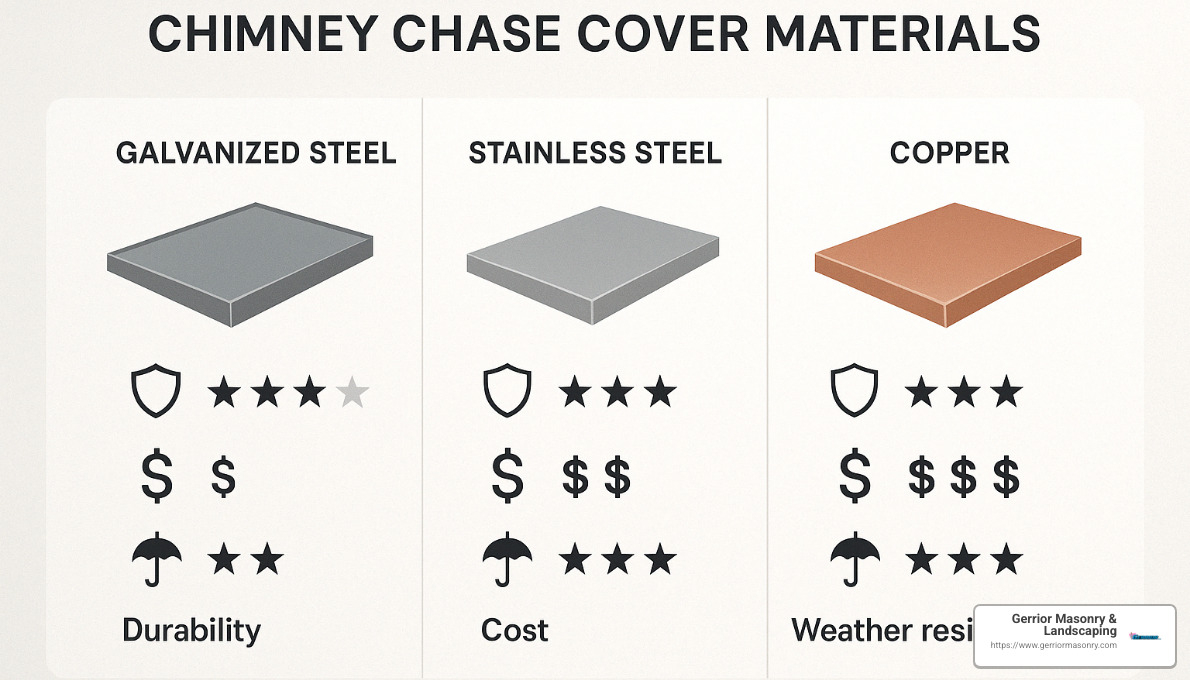
Let’s walk through your options together and see what makes the most sense for your home and budget.
Galvanized Steel Chase Covers: Budget-Friendly Option
Cost Range: $200-$450 installed
If you’re working with a tight budget, galvanized steel offers the most affordable entry point. These covers feature a protective zinc coating over steel that provides a basic level of protection against the elements.
The appeal of galvanized steel is obvious – it’s the least expensive option upfront. Most suppliers keep these in stock, and they’re straightforward for professionals to work with. For homeowners watching their spending, this material offers a functional solution.
The downside? Galvanized steel simply doesn’t last very long. In our New England climate, with harsh winters and damp springs, these covers typically begin showing rust spots within 5-8 years. Once rust takes hold, deterioration accelerates quickly.
You’ll need to stay vigilant with galvanized covers – annual inspections become crucial for catching rust early. Some homeowners try extending their life with rust-inhibiting paint, but this is merely a temporary fix. As one chimney professional told me, “A traditional galvanized chimney chase cover typically functions well for 7-9 years at most.” After that, you’re looking at another replacement.
Stainless Steel Chase Covers: The Popular Middle Ground
Cost Range: $400-$1,200 installed
Most of my customers ultimately choose stainless steel, and for good reason. The chromium in stainless steel forms an invisible protective layer that continuously renews itself when exposed to oxygen, making it remarkably resistant to corrosion.
The beauty of stainless steel is its balance of durability and affordability. While you’ll pay more upfront than galvanized steel, you’re looking at a lifespan of 15-25 years or more – potentially three times longer than the budget option. Many homeowners appreciate that manufacturers often back these covers with 10+ year warranties.
At Gerrior Masonry, we typically recommend 304-grade stainless steel for Massachusetts homes. This higher-grade stainless holds up exceptionally well to our coastal salt air and variable weather conditions. It’s practically maintenance-free once installed, which means no ongoing costs or worries.
The only real drawbacks? The higher initial investment and, for some homeowners, the utilitarian appearance compared to copper’s evolving patina. But for most homes, stainless steel’s clean, neutral finish complements virtually any architectural style.
Copper Chase Covers: Premium Long-Term Investment
Cost Range: $600-$3,800 installed
Nothing says “I’m never dealing with this again” quite like a copper chase cover. While the chimney chase cover replacement cost is highest with copper, it delivers best longevity and develops a character that actually improves with age.
Copper begins with a shiny penny-like appearance that gradually transforms into a stunning blue-green patina over the years. This natural aging process doesn’t damage the metal – in fact, the patina serves as an additional protective layer. Many of my customers specifically request copper for its distinctive look that signals quality craftsmanship.
The lifespan of copper is remarkable – often 30+ years and sometimes outlasting the home itself. I’ve removed copper chase covers from 50-year-old homes that were still functionally sound, just outdated in style. Many manufacturers offer lifetime warranties on copper, reflecting their confidence in the material.
As one industry expert points out, “The ROI period is about 2 years, with increased efficiency of 10-15% and safety for a lifetime.” When you consider that a copper chase cover might be the last one you ever purchase for your home, the premium price becomes easier to justify.
The only real disadvantage beyond the higher upfront cost is that copper requires skilled installation. Its value makes proper handling important, and its thermal properties require specific installation techniques to allow for expansion and contraction.
For homeowners planning to stay in their homes long-term, copper offers the satisfaction of knowing you’ve chosen the most durable, beautiful option available – and one that will likely never need replacement during your ownership.
Gerrior Masonry & Landscape Construction is based in Woburn, MA, and services Middlesex and Essex County, Massachusetts.
DIY vs. Professional Chimney Chase Cover Replacement
When it comes to replacing your chimney chase cover, you might be tempted to climb up on the roof and tackle it yourself. After all, how hard could it be to swap out a metal cap? Before you grab your ladder, let’s weigh the pros and cons of DIY versus hiring professionals for this important home protection project.
When to Consider DIY Installation
If you’re comfortable with heights and have some handyman skills, DIY installation might seem appealing. It makes the most sense when you have a simple, straightforward chase design that won’t require custom fabrication. Having an easily accessible roof with a gentle pitch also makes the job much safer – those steep roofs can be treacherous even for professionals!
You’ll need the proper safety equipment including sturdy ladders, safety harnesses, and appropriate tools for the job. And yes, doing it yourself can save you somewhere between $125-$350 in labor costs, which is nothing to sneeze at.
If you’re leaning toward DIY, accurate measurements are absolutely crucial. Measure the length and width of your chase, adding 1-2 inches for overhang on all sides. Don’t forget to measure any flue pipes (add ½ inch to the outer diameter) and note the height of existing raised edges. Even being off by half an inch can lead to a poorly fitting cover that allows water to seep in.
That said, I’ve seen too many DIY jobs that ended up costing homeowners far more than they saved. One Woburn homeowner tried installing his own galvanized steel cover last year. Six months later, we were replacing not just the cover (which had warped because it wasn’t properly secured), but also repairing water damage to his chase structure. The $175 he saved on installation ended up costing him over $1,200 in repairs.
That DIY installation typically voids manufacturer warranties. Is saving a few hundred dollars worth potentially thousands in repairs down the road?
Benefits of Professional Installation
At Gerrior Masonry, we’ve installed hundreds of chase covers across Middlesex and Essex Counties, and there’s a reason why professional installation remains the recommended approach for most homeowners.
Professional installation includes warranty protection that you simply won’t get with DIY. Many manufacturers only honor their warranties when the product is installed by certified professionals. We ensure proper sizing with perfect fits, appropriate overhangs, and water-shedding features that keep your home dry.
Our team provides expert assessment of your entire chimney system during installation. Just last month, we finded significant wood rot in a customer’s chase structure while replacing their cover – damage they had no idea existed. We were able to address it immediately, preventing what would have become a much costlier repair down the road.
The safety factor alone is worth considering. Chimney work can be dangerous, especially on steep or high roofs. Our technicians are trained, insured, and equipped with proper safety gear. We’ve had customers tell us they started DIY installation only to realize halfway through that they were in over their heads – literally and figuratively!
When we install your chase cover, we handle everything: removal and disposal of the old cover, inspection of the chase structure, custom fabrication if needed, proper sealing and flashing, and complete cleanup. For more complex chimney issues, you can learn more on our Fireplace and Chimney Repair Near Me page.
Your chimney chase cover replacement cost might be higher upfront with professional installation, but the peace of mind and long-term protection for your home make it a wise investment. As we like to tell our customers: “Do it right, or do it twice.”
Frequently Asked Questions About Chimney Chase Cover Replacement
Let’s tackle some of the most common questions homeowners ask me when they’re facing chimney issues. After three decades in the masonry business, I’ve heard them all!
How Often Should a Chimney Chase Cover Be Replaced?
The lifespan of your chimney chase cover largely depends on what it’s made of. Think of it like the roof over your chimney – different materials hold up differently over time.
If you have a galvanized steel cover, you’re looking at replacement every 5-8 years. These budget-friendly options simply don’t stand the test of time, especially in our harsh Massachusetts winters.
Aluminum covers (though less common for chase covers) typically need replacement even sooner – every 3-5 years at most.
Made the investment in stainless steel? You’re in much better shape, with these quality covers lasting 15-25 years or even longer with proper care.
And if you splurged on copper, congratulations! You may never need to replace it again, as copper covers can last 30+ years or even the lifetime of your home.
But here in New England, our weather throws everything at your chimney – freezing temperatures, thawing, snow, rain, and for coastal homes, salt air that accelerates corrosion. That’s why we always recommend annual chimney inspections, regardless of your cover’s age or material. The Chimney Safety Institute of America backs us up on this one – yearly inspections are your best defense against unexpected problems.
What Are the Risks of Delaying Chimney Chase Cover Replacement?
I’ve seen the consequences of postponed chimney maintenance firsthand, and they’re never pretty. When homeowners put off replacing a failing chase cover, they’re inviting serious trouble.
Water damage is the immediate concern. Once that protective cap starts failing, every rainstorm sends moisture directly into your chimney structure. This isn’t just a little dampness – it can lead to thousands in damage to your home’s framework, ceilings, and walls.
The structural deterioration happens surprisingly quickly. Water that penetrates the chase will rot wooden supports and rust metal components, potentially compromising your entire chimney’s stability.
One chimney safety expert I know puts it this way: “The cost to repair a chimney damaged by a cheap chase cover can range from $1,500 up to $10,000. In extreme cases, it could lead to rebuilding a burned-down home.”
There are serious safety hazards too. When water mixes with creosote (that black stuff that builds up from wood fires), it creates a highly corrosive substance that can damage your flue liner. A damaged liner can allow carbon monoxide – that silent killer – to seep into your living space.
And don’t forget about mold growth. Once moisture gets trapped inside your chase, it creates the perfect environment for mold, which poses its own health risks to your family.
As another expert bluntly states: “A cracked flue is dangerous and can leak hazardous gases into the home, causing carbon monoxide poisoning.” That’s simply not worth the risk of delaying a replacement.
Can I Install a Different Material Than My Original Chase Cover?
Absolutely! In fact, upgrading your chase cover material is one of the smartest moves you can make when replacement time comes around.
If your home came with a basic galvanized steel cover that’s now rusting through, upgrading to stainless steel gives you dramatically better protection and longevity. This is probably the most common upgrade we perform at Gerrior Masonry, and the math makes sense – pay a bit more now for something that lasts 3-4 times longer.
For those looking for the ultimate upgrade, copper is compatible with all chimney types. Yes, it carries a premium price tag, but many homeowners find the beautiful patina and lifetime durability worth every penny, especially on higher-end homes.
When considering an upgrade, you’ll want to ensure the new cover is properly sized for your chase. The weight difference between materials is rarely an issue, but the aesthetic impact on your home’s appearance is worth considering – especially with copper, which develops that distinctive greenish patina over time.
Here in Massachusetts, where we face everything from nor’easters to summer humidity, investing in better materials makes particular sense. At Gerrior Masonry, we typically recommend upgrading from galvanized to at least stainless steel. The modest increase in your chimney chase cover replacement cost pays for itself many times over in extended lifespan and peace of mind.
Conclusion: Investing in Your Home’s Protection
When you’re facing a chimney chase cover replacement cost, it might feel like just another expense on your never-ending homeowner to-do list. But I’ve seen how this relatively small investment can prevent catastrophic damage to homes across Massachusetts.
Think about it this way: spending a few hundred dollars now on a quality chase cover could save you thousands in water damage repairs down the road. That’s not just good home maintenance—it’s smart financial planning.
Here in New England, our weather doesn’t exactly go easy on our homes. Those frigid winters with freeze-thaw cycles, heavy snow loads that test every part of your roof system, and for those closer to the coast, that salt air that seems determined to corrode everything it touches—all these factors make having a properly functioning chase cover absolutely essential.
I’ve walked too many homeowners through extensive repair projects that could have been avoided with timely maintenance. By the time you notice water stains on your ceiling, the damage has already begun. Don’t wait for visible leaks before checking your chase cover—by then, you’re already playing catch-up with water damage.
When selecting materials, I always encourage homeowners to think long-term. Yes, galvanized steel comes with a lower price tag upfront, but when you consider that stainless steel might last three times longer with minimal maintenance, the math starts to make sense. And copper? While it represents a premium investment, it might be the last chase cover you’ll ever need to purchase for your home.
Professional installation matters too. A properly sized and correctly installed chase cover ensures water sheds away from your chimney structure as designed. Plus, manufacturer warranties typically require professional installation—protection that’s well worth the installation cost.
Make annual chimney inspections part of your home maintenance routine. Just like you change your smoke detector batteries and clean your gutters, this simple step can catch small issues before they become expensive problems.
At Gerrior Masonry & Landscape Construction, we’ve been protecting homes throughout Middlesex and Essex Counties for over three decades. Our team understands the unique challenges that Massachusetts weather presents, and we’re committed to helping you select the right chase cover solution for your specific situation.
For expert chimney services, including chase cover replacement, visit our Chimney Repair Near Me page to learn more about how we can help protect your home investment for years to come.
Gerrior Masonry & Landscape Construction is based in Woburn, MA, and services Middlesex and Essex County, Massachusetts. With our decades of experience in chimney repair and maintenance, we’re ready to help you protect your home with the right chimney chase cover solution.
