
Chimney Flue Replacement: 5 Top Picks for Amazing Results 2025
Why Your Chimney Flue Needs Attention
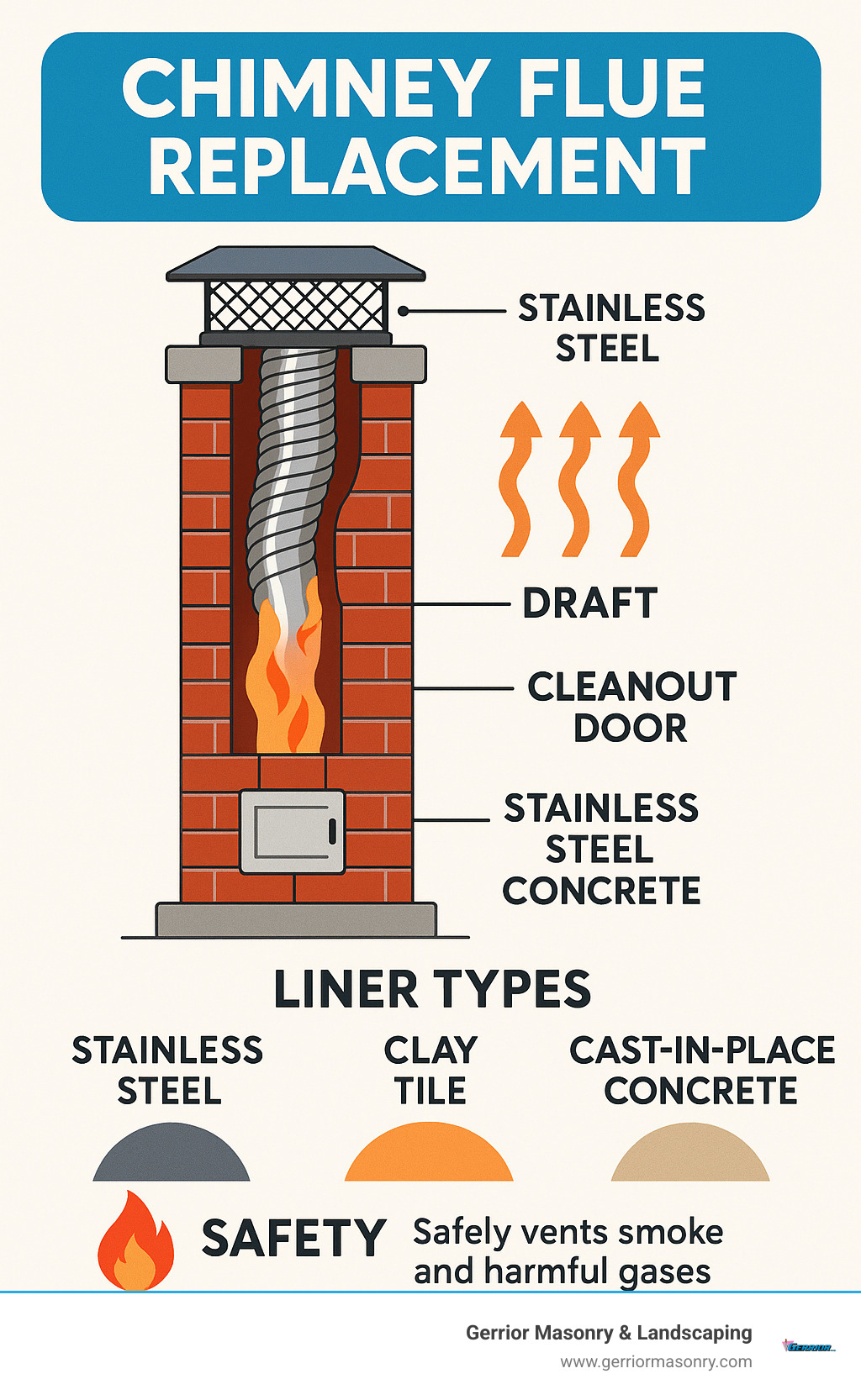
If you’re looking for information about chimney flue replacement, here’s what you need to know:
| Chimney Flue Replacement Basics | Details |
|---|---|
| Purpose | Safely vents smoke and harmful gases from your home |
| When to Replace | Cracked tiles, creosote buildup, water damage, poor draft |
| Cost Range | $900-$7,000 depending on materials and complexity |
| Common Materials | Stainless steel (flexible/rigid), clay tile, cast-in-place concrete |
| Professional vs. DIY | Professional installation recommended for safety |
Your chimney flue plays a critical role in your home’s safety system. A damaged or deteriorated flue can lead to serious problems including carbon monoxide poisoning, house fires, and reduced heating efficiency. Over time, the extreme temperature changes, moisture, and corrosive byproducts from combustion can deteriorate even the most durable flue liners.
When it’s time for a chimney flue replacement, you have several options to consider. The right choice depends on your chimney’s condition, the type of heating appliance you use, and your budget. Modern replacement options offer improved safety, better draft performance, and greater energy efficiency compared to older systems.
I’m Joe Gerrior, owner of Gerrior Masonry & Landscape Construction, with over 30 years of experience handling chimney flue replacement projects throughout Massachusetts. Our team specializes in evaluating chimney systems and recommending the most appropriate and cost-effective flue replacement solutions for your specific situation.
Essential chimney flue replacement terms:
– chimney chase cover replacement cost
– chimney chase cover replacement near me
– chimney flashing replacement
Why Chimney Flue Replacement Matters
Your chimney flue isn’t just a smoke channel—it’s the lifeline of your entire heating system and a critical safety feature in your home. When functioning properly, a chimney flue creates the perfect draft to escort dangerous combustion gases safely outside while preventing hazardous backdrafts that could silently introduce carbon monoxide into your living spaces.
“A chimney is one of the most important fire prevention measures in your house,” as one certified chimney safety expert puts it. “Improperly installed or sized flues can lead to carbon monoxide buildup—a silent killer that puts your entire family at risk.”
Throughout Massachusetts and nationwide, building codes strictly require chimney flues to be intact, correctly sized, and completely free of obstructions. This isn’t just red tape—a damaged flue not only violates these codes but could potentially invalidate your homeowner’s insurance if it contributes to a house fire. That’s a risk no homeowner should take.
When considering chimney flue replacement, understanding your material options is essential:
| Flue Material | Lifespan | Temperature Rating | Best For | Cost Range |
|---|---|---|---|---|
| Clay Tile | 50+ years | Up to 2,100°F | Traditional masonry, moderate use | $1,500-$5,000 |
| Stainless Steel | 15-25 years | Up to 2,100°F | All fuel types, retrofit | $900-$3,500 |
| Cast-in-Place | 50+ years | Up to 1,800°F | Structural reinforcement, older chimneys | $2,500-$7,000 |
“We’ve seen how a deteriorated flue can compromise an entire chimney system,” shares our senior mason at Gerrior Masonry. “Many homeowners don’t realize their chimney issues started with flue damage until we conduct a thorough inspection and show them the evidence.”
Key Signs You Need Chimney Flue Replacement
Recognizing when your chimney flue needs replacement can prevent dangerous situations and save you from more expensive repairs down the road. Keep an eye out for these warning signs:
Cracked or damaged flue tiles are often invisible to the naked eye but can be detected during a professional inspection. These cracks create dangerous pathways for heat, smoke, and carbon monoxide to escape into your home’s structure.
Spalling bricks or mortar is a red flag you shouldn’t ignore. If you notice pieces of tile, brick, or mortar in your fireplace or at the bottom of your chimney, your flue might be deteriorating from the inside out.
Smoke backing up into your living space isn’t just annoying—it’s a clear danger signal. When smoke can’t properly vent upward and out, it often indicates flue damage or blockage that requires immediate attention.
White staining or moisture on chimney walls, known as efflorescence, tells you that water is penetrating your chimney. Over time, this moisture can severely damage your flue liner and compromise structural integrity.
Evidence of animals or nests suggests your chimney is accessible to wildlife. Birds, squirrels, and other critters often find their way into damaged flues, creating dangerous blockages and fire hazards.
“During a recent inspection in Lexington, we found a chimney where the flue tiles had completely crumbled at several joints,” recalls our inspection specialist. “The homeowner had no idea until we showed them the camera footage—they were shocked at how close they’d come to a potential house fire.”
Average Costs & Timelines
When planning for a chimney flue replacement, costs can vary widely based on several factors including the height of your chimney, diameter needs, material choice, and complexity of installation. Based on internet research and industry averages, here’s what homeowners might expect:
A basic stainless steel liner installation typically runs $900-$2,500, while a mid-range relining with proper insulation might cost $2,000-$5,000. For premium cast-in-place solutions that provide structural reinforcement, expect to invest $3,500-$7,000. In cases requiring a complete chimney rebuild with a new flue, costs can range from $5,000-$15,000.
Most standard chimney flue replacement projects take just 1-2 days to complete, though more complex jobs naturally require additional time. Weather conditions play an important role too—proper curing of materials like mortar is essential for a safe, long-lasting installation.
Many local municipalities require permits for chimney work, especially when structural components are involved. When you work with professional chimney services, they’ll typically handle the permit process for you, ensuring your project meets all local building codes and requirements.
Please note that these are average costs based on internet data and not actual costs for Gerrior Masonry services. Your specific project may vary significantly based on your chimney’s condition and requirements.
1. Stainless Steel Flexible Liner Kits
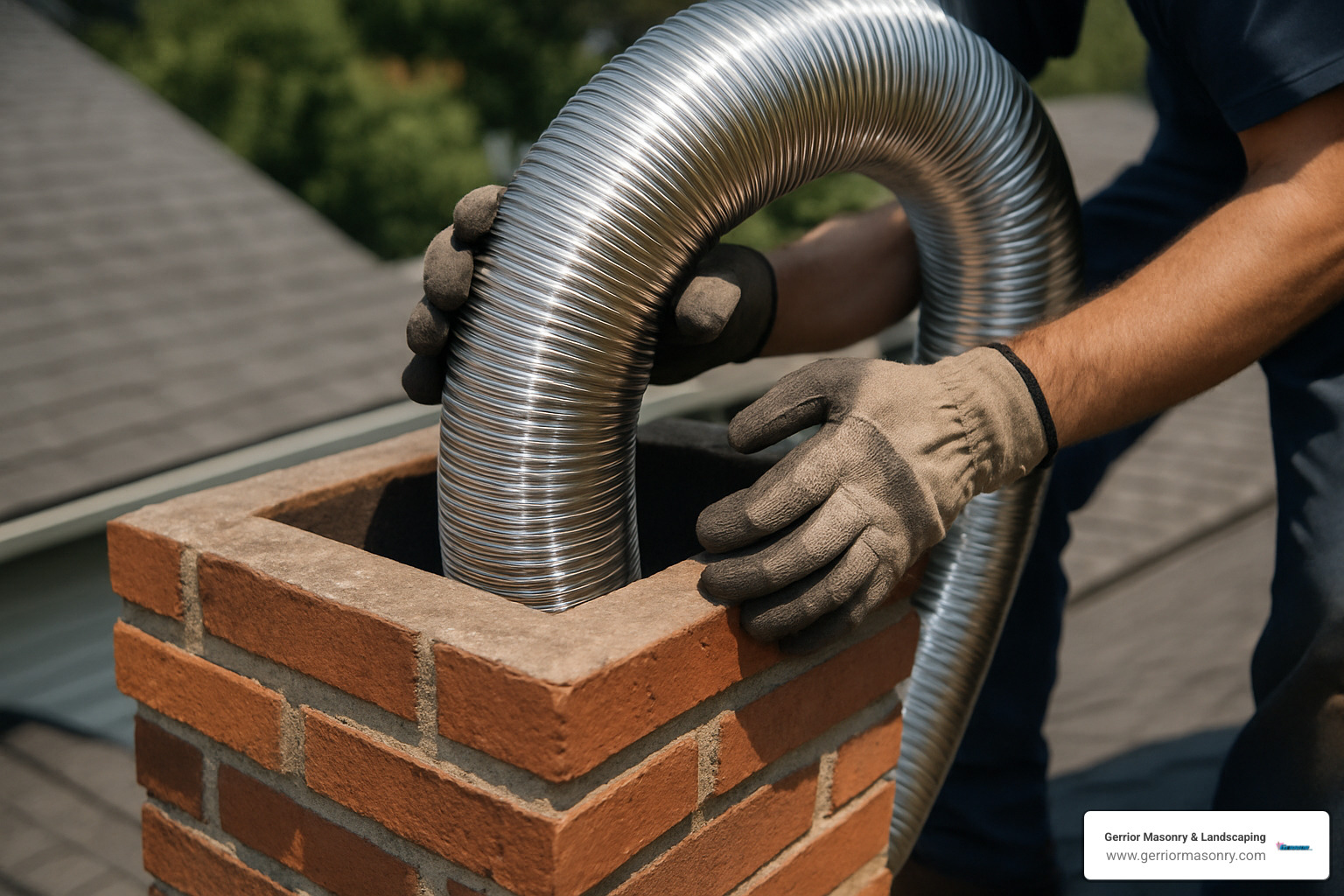
When it comes to chimney flue replacement, stainless steel flexible liners have earned their place as the gold standard in the industry. These remarkable liners offer a perfect blend of durability, versatility, and safety that’s hard to beat for almost any home.
“I remember installing a flexible liner for a family in Winchester last winter,” shares Joe Gerrior, our founder. “Their chimney had been smoking back into their living room for months. Once we slipped in that new liner, the difference was like night and day—warm fires without the worry.”
What makes these liners so special is their continuous, seamless design. Unlike traditional clay tiles with their numerous joints, a stainless steel flexible liner creates an unbroken passage that prevents dangerous gases like carbon monoxide from seeping into your home through deteriorating masonry.
The quality of stainless steel makes all the difference in how long your liner will last. Premium liners typically come in two grades: 316-grade stainless steel, which works beautifully for wood-burning applications, and 904-grade stainless steel, which offers superior protection against the corrosive effects of gas or oil appliances. Many manufacturers stand behind these products with lifetime warranties when they’re professionally installed—that’s confidence you can count on.
A typical flexible liner kit includes everything you need: the liner itself, top and bottom connecting plates, an appliance connector, and sometimes an insulation wrap (though this might be sold separately, we strongly recommend it for improved performance and safety).
These flexible marvels come in diameters ranging from 3 inches for small pellet stoves all the way up to 12 inches for large open fireplaces. Their flexibility is a game-changer for older homes with chimneys that twist and turn.
“We recently worked on a 1920s colonial in Lexington,” notes our senior technician. “That chimney had three separate offsets that would have made traditional relining impossible. The flexible liner steerd those turns beautifully, and now the family enjoys their fireplace without worry.”
For more comprehensive information about full chimney rebuilds, check out our detailed guide on Chimney Replacement.
Choosing the Right Diameter
Getting the diameter right is perhaps the most critical decision you’ll make for your chimney flue replacement. It’s a bit like Goldilocks—not too small, not too big, but just right.
An undersized liner creates poor draft, causing smoke to back up into your home and accelerating dangerous creosote buildup. On the flip side, an oversized liner allows flue gases to cool too quickly, creating condensation that can damage both the liner and your masonry over time.
The perfect size depends primarily on three factors:
First, consider your appliance’s BTU output. Higher BTU appliances produce more exhaust gases and need larger diameters to handle the volume. Your wood stove or fireplace insert should have a manufacturer’s recommendation for minimum flue size.
Second, factor in your chimney’s height. Taller chimneys naturally create stronger draft, but longer runs sometimes benefit from increasing the diameter by an inch over the minimum recommendation, especially for vertical runs over 15 feet.
Third, think about your fuel type. Wood-burning appliances typically need larger flues than gas appliances with similar BTU ratings due to the different combustion characteristics.
Here’s a helpful reference point: a standard wood stove usually requires a 6-8″ liner, while a gas fireplace might only need 4-6″. Pellet stoves can often work with even smaller 3-4″ liners, while large open fireplaces might require 8-12″ diameters.
I strongly recommend adding an insulation sleeve around your flexible liner. “It’s one of those upgrades that pays for itself,” explains our installation team leader. “Insulation keeps flue gases warmer, which improves draft, reduces creosote buildup, and extends the life of your liner by preventing damaging condensation.”
One of our Woburn customers called recently to thank us for insisting on the insulation sleeve with her liner. “My fires start easier, smoke less, and seem to burn hotter now,” she told us. “Plus, I’m using less wood than before!”
Gerrior Masonry & Landscape Construction is based in Woburn, MA, and services Middlesex and Essex County, Massachusetts. With decades of experience installing flexible chimney liners, we’d be happy to help determine the perfect size and configuration for your home.
2. Rigid Stainless Pipe Systems

When it comes to chimney flue replacement, rigid stainless steel pipe systems represent the Cadillac of options. Unlike their flexible cousins, these systems feature perfectly smooth interior walls that create a chimney sweeper’s dream – optimal draft conditions with minimal places for creosote to hide.
Think of rigid systems as building a smooth highway for smoke and gases, rather than a winding country road. These systems consist of interlocking sections (typically in 1-foot or 3-foot lengths) that create a straight pathway upward. Each joint is carefully sealed with high-temperature silicone or specialized locking bands to ensure exhaust gases stay exactly where they belong – inside the flue.
“The difference between a flexible liner and a rigid system is like comparing a garden hose to a drain pipe,” explains our lead technician. “Both work, but when you need consistent, powerful flow, the rigid option simply performs better.”
The benefits of choosing rigid stainless steel are substantial. Their superior draft performance means your wood stove or fireplace draws better, creating more efficient burns and less smoke in your living space. The straight sides make chimney sweeping more effective since brushes can make complete contact with every inch of the surface. Their heavy-gauge construction stands up to years of high temperatures without warping or deteriorating.
We recently installed a rigid system for a family in Lexington who had struggled with a smoky wood stove for years. “They called the next day absolutely amazed,” our installation team leader shares. “Their stove now reaches temperature in half the time, and they haven’t seen a wisp of smoke in the house since.”
Most quality rigid systems come in either 304-grade or 316-grade stainless steel, with the latter offering better protection against moisture and corrosive byproducts. While they do cost about 20-30% more than flexible liners, the performance advantages make them worth considering for serious wood-burners.
When Rigid Beats Flexible for Chimney Flue Replacement
While flexible liners are the go-to for most homes, there are specific situations where rigid stainless steel systems clearly shine brightest:
For straight chimneys without any bends or offsets, rigid systems offer best performance advantages. Without the need to steer turns, you might as well enjoy the superior draft and easier maintenance of a rigid system.
Commercial applications like restaurant kitchens, boilers, and industrial exhaust systems benefit tremendously from rigid systems’ strength and optimal airflow. We installed one for a popular wood-fired pizza restaurant in Burlington, and not only did it meet strict fire code requirements, but it helped their ovens maintain more consistent temperatures.
If you’ve invested in a high-efficiency wood stove (especially newer EPA-certified models), pairing it with a rigid flue system helps you get the most from your purchase. These stoves are designed to perform optimally with excellent draft conditions, which rigid systems excel at providing.
Homeowners in wildfire-prone areas often choose rigid systems for their superior heat resistance and structural integrity. When embers land on your roof during fire season, the extra protection of a heavy-duty rigid system provides invaluable peace of mind.
For extremely tall chimneys exceeding 30 feet, rigid systems maintain better structural integrity over time. The interlocking sections won’t stretch or sag like flexible liners might in very tall applications.
“We always present both options to our customers,” says our project manager. “But in certain situations, I’ll strongly recommend rigid systems because I know they’ll provide a better long-term solution. It’s like the difference between good and great – both work, but one clearly outperforms in the right circumstances.”
3. Cast-In-Place Poured Concrete Liners
For chimneys with structural issues or those in need of comprehensive restoration, cast-in-place concrete liners offer a solution that goes beyond simply relining the flue. This method creates a seamless, monolithic liner that reinforces the entire chimney structure while providing a safe, durable flue.
Cast-in-place liners are formed by pouring specialized refractory concrete around a temporarily inflated form inside your chimney. Once the concrete cures, the form is removed, leaving behind a smooth, seamless flue liner that’s perfectly sized for your chimney.
These systems offer impressive specifications:
– Temperature rating of up to 1,800°F
– Expected lifespan of 50+ years
– Ability to conform to irregular chimney interiors
– Structural reinforcement for aging masonry
“Cast-in-place liners are particularly valuable for historic homes,” notes our restoration specialist. “We recently completed a chimney flue replacement using this method for a 180-year-old Federal-style home in Concord. The system not only restored safe function but also helped preserve the historic masonry.”
This method is also ideal for earthquake retrofitting in older homes. The continuous concrete sleeve adds significant structural integrity to the chimney, helping it resist seismic forces that might otherwise cause catastrophic failure.
Pros & Cons for Chimney Flue Replacement
Pros of Cast-in-Place Liners:
– Creates a seamless, joint-free surface that eliminates the risk of exhaust leakage
– Adds structural strength to deteriorating masonry chimneys
– Conforms perfectly to irregular chimney interiors
– Excellent insulating properties improve draft and efficiency
– Exceptionally long service life (50+ years)
– Can be installed in chimneys with offsets or irregular shapes
Cons of Cast-in-Place Liners:
– Higher cost than stainless steel liners (typically $2,500-$7,000)
– Installation is more complex and time-consuming
– Cannot be easily removed or replaced if damaged
– Requires specialized equipment and expertise
– Not ideal for DIY installation
– May reduce flue diameter more than other options
“For a client in Winchester with a severely deteriorated chimney, we recommended a cast-in-place solution,” explains our senior mason. “The chimney had multiple cracks in the masonry and flue tiles. The poured liner not only restored safe function but also reinforced the structure, avoiding the need for a complete rebuild that would have cost thousands more.”
The decision to use a cast-in-place liner should be based on a thorough inspection of your chimney’s condition. While more expensive initially, this solution can be more cost-effective than major masonry repairs or complete chimney rebuilding when structural issues are present.
4. Chimney Flue Draft Stoppers & Plugs

Once you’ve invested in a chimney flue replacement, don’t overlook the importance of managing your chimney during its downtime. Those beautiful winter evenings by the fire are wonderful, but what about the other 99% of the time when your fireplace sits unused? That’s where chimney draft stoppers come in—your secret weapon against wasting energy.
Think of your chimney as a highway for your home’s heated air to escape. Without proper sealing, your hard-earned warmth simply travels up and out, while cold air rushes down to replace it. It’s like leaving a window wide open during winter!
The Flueblocker wool plug has become something of a homeowner favorite, boasting an impressive 4.4-star rating from over 1,200 reviews. Customers rave about the immediate difference they feel in rooms with fireplaces after installation. One Massachusetts homeowner told us, “It’s like someone finally closed that invisible window we didn’t know was open all winter.”
Draft stoppers come in several effective varieties. Wool chimney sheep conform beautifully to irregular flue shapes and last for years. Inflatable pillows create an airtight seal and adjust to various sizes but need occasional reinflation. Rigid foam plugs offer durability and excellent insulation, though they work best with standard-sized flues. Damper sealing kits improve existing dampers that often leave surprising gaps even when “closed.”
“I’ve seen countless homes where people are essentially heating their backyards through poorly sealed chimneys,” shares our energy efficiency specialist. “After completing a chimney flue replacement for a family in Reading, we installed a wool chimney sheep as the final touch. They called a week later amazed at how much less their heating system was running.”
Integrating Draft Stoppers After Chimney Flue Replacement
Adding a draft stopper is the perfect finishing touch to your chimney flue replacement project. The benefits are immediate and significant.
Reduced heating costs top the list—energy studies suggest an unsealed chimney can increase your heating bills by 10-20%. That’s potentially hundreds of dollars floating away each winter! By blocking that escape route, draft stoppers quickly pay for themselves.
Improved comfort is something our customers notice right away. Those mysterious cold spots and drafts that seemed to appear from nowhere? They often originate from your chimney pulling warm air up and out while allowing cold air to sink down into your living spaces.
Draft stoppers also provide excellent odor control, preventing outside smells, rain odors, and even barbecue smoke from neighboring homes from wafting into your living room. They create an effective pest barrier too, blocking the entry point for curious critters looking for a cozy new home.
Installation couldn’t be simpler. Measure your flue opening, select a stopper slightly larger than those dimensions, and insert it when your fireplace is completely cool. The most important safety step? Remembering to remove it before lighting your next fire! We always recommend attaching a visible reminder tag to your fireplace tools.
“One clever trick we recommend to our clients is taking a photo of your draft stopper installed, then printing it and taping it to your fireplace screen or tools,” suggests our safety specialist. “It’s a foolproof visual reminder to remove it before starting a fire.”
With most quality draft stoppers priced between $45-$65, they’re an affordable addition that delivers immediate comfort and energy savings. It’s the perfect final touch to your chimney flue replacement project that keeps on giving back year after year.
5. Chimney Caps & Rain Guards
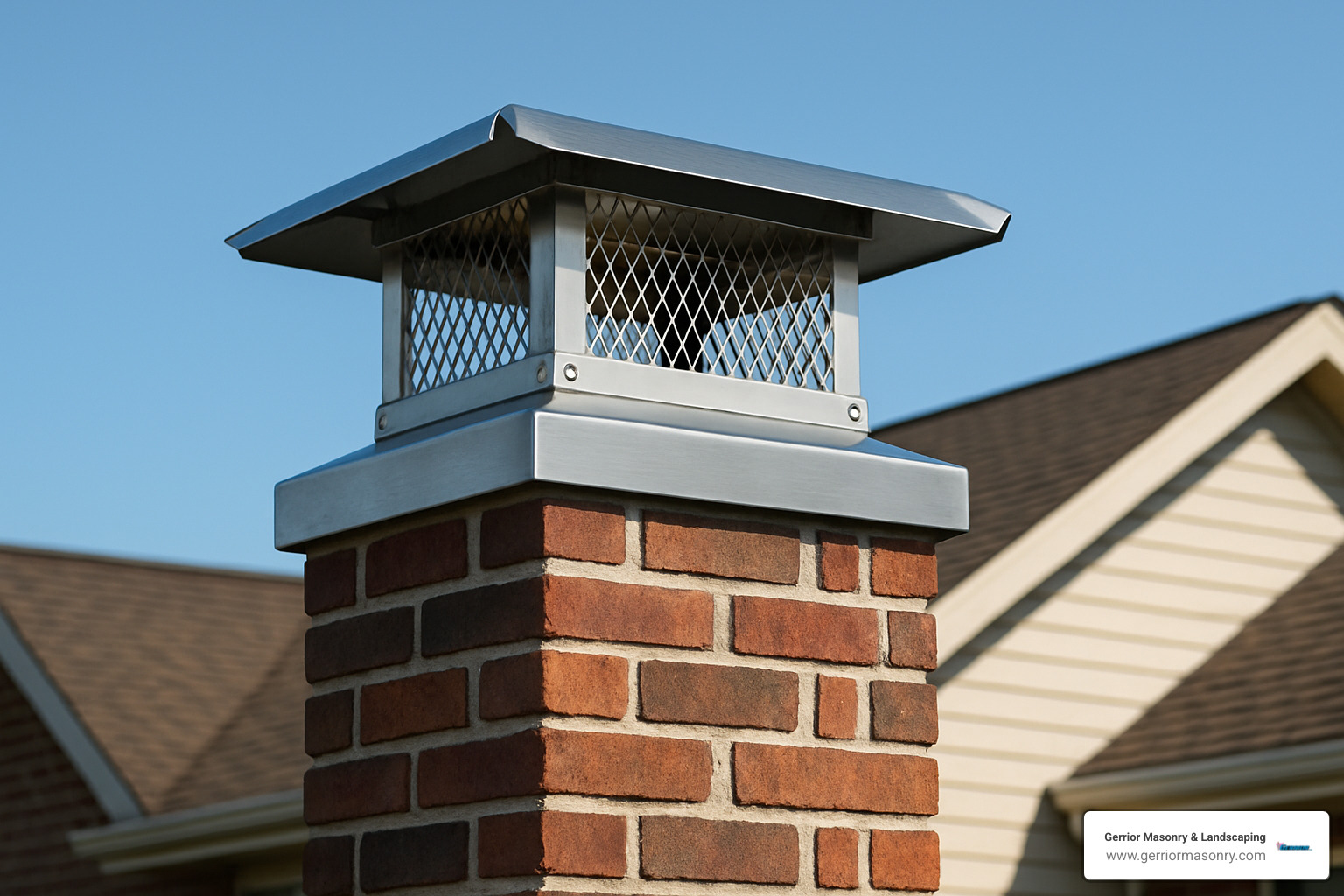
The finishing touch to any chimney flue replacement project isn’t just a nice-to-have—it’s a must-have. A quality chimney cap or rain guard serves as your new flue’s first line of defense against the elements, and skipping this step would be like buying a new car and parking it permanently in the rain.
Think of chimney caps as the umbrella for your chimney system. They typically feature a metal cover supported by legs or a cage, with mesh sides that allow smoke to escape while keeping rain, animals, and debris out. The design is simple but incredibly effective at protecting your investment.
When shopping for a chimney cap, you’ll find several material options to consider. Stainless steel caps are the gold standard, offering exceptional corrosion resistance even in harsh coastal environments. While they come with a higher price tag, their 15-25 year lifespan makes them worth every penny. For budget-conscious homeowners, galvanized steel caps provide decent protection at a lower cost, though they’ll typically need replacement after 5-10 years when rust begins to take hold.
For those looking to add a touch of elegance to their home, copper chimney caps are best in both beauty and longevity. They develop a gorgeous patina over time and can last 50+ years, making them a true lifetime investment. And for homes with complex chimney systems, multi-flue caps provide comprehensive coverage for chimneys with multiple flue openings.
“I’ll never forget the client in Winchester who insisted they didn’t need a cap after their chimney flue replacement,” shares our seasoned mason. “Six months later, we were back to clear out a raccoon family that had made themselves quite comfortable in their chimney. The cost of animal removal and cleanup was four times what a quality cap would have cost!”
Based on internet research, chimney caps typically range from $50 for basic models to $300+ for custom copper designs—a small price to pay for protecting your much larger flue replacement investment.
More info about Chimney Flashing Replacement
Must-Have Accessory Post-Chimney Flue Replacement
After investing in a chimney flue replacement, leaving your chimney without a cap is like buying a new smartphone without a case—unnecessarily risky. A quality chimney cap delivers benefits that far outweigh its modest cost.
Water protection is perhaps the most crucial benefit. Rain entering your chimney is the number one enemy of both masonry and metal components. Even stainless steel liners can develop corrosion at seams where water collects. A properly installed cap keeps your flue dry, potentially doubling the lifespan of your liner.
Your chimney’s draft performance actually improves with the right cap design. By preventing swirling winds from pushing down your chimney (downdrafts), caps help maintain the steady upward flow that’s essential for proper exhaust venting and efficient burning.
The wildlife barrier function of chimney caps can’t be overstated. Birds don’t just build nests—they bring twigs, debris, and parasites into your chimney system. Squirrels and raccoons can cause even more damage, tearing at liners and masonry in their nesting efforts. The mesh sides of a quality cap create an effective barrier while still allowing smoke to exit.
For those using wood-burning appliances, the spark arrestor feature (typically 3/4″ mesh openings) prevents live embers from landing on your roof or nearby trees—a critical safety feature, especially in dry conditions. This feature is so important that many local building codes now mandate spark arrestors, particularly in wildfire-prone areas.
“We recently completed a chimney flue replacement for a lovely colonial in Reading,” notes our project manager. “The homeowner opted for our recommended stainless steel cap with a lifetime warranty. During our first heavy rainstorm after installation, she called just to thank us—she could finally enjoy a rainy evening without the constant dripping sounds she’d endured for years.”
When selecting your cap, consider both function and aesthetics. The right cap not only protects your investment but can improve your home’s appearance. For secure installation, we recommend top-mounted models that bolt directly to the flue tile or crown, providing superior wind resistance compared to simpler slip-in designs.
Gerrior Masonry & Landscape Construction, based in Woburn, MA, provides expert chimney flue replacement services throughout Middlesex and Essex County, Massachusetts. Our experienced team can help you select and install the perfect chimney cap to protect your investment for years to come.
Frequently Asked Questions about Chimney Flue Replacement
How often should a flue be inspected after replacement?
After investing in a chimney flue replacement, regular maintenance becomes your best friend for long-term safety and performance. The National Fire Protection Association (NFPA) recommends annual inspections by a CSIA-certified chimney sweep, and we couldn’t agree more.
Think of your chimney like your car—regular check-ups prevent bigger problems down the road. For most homes, an annual inspection before winter hits is perfect timing. But if you’re a frequent fire enthusiast (burning more than three times weekly during cold months), consider bumping that up to twice yearly—once before the season starts and again midway through.
“I remember visiting a client in Burlington for a routine one-year follow-up,” shares our inspection specialist with a smile. “We finded their new stainless steel liner had a small separation at one connection point. Nothing major yet, but catching it early saved them from what could have become a serious safety headache down the road.”
Today’s inspections have gone high-tech, with specialized video cameras that can spot tiny issues invisible to the naked eye. These camera scans let us thoroughly check your system without tearing anything apart—giving you peace of mind that everything’s working exactly as it should.
Can I DIY a chimney flue replacement?
The question of DIY chimney flue replacement reminds me of that time my neighbor decided to replace his own car transmission after watching a YouTube video. Let’s just say his car didn’t move for months afterward!
While technically possible for those with serious home improvement skills, I generally recommend leaving flue replacement to the professionals. The stakes are simply too high—improper installation risks house fires, carbon monoxide poisoning, and structural damage.
That said, if you’re determined to tackle this yourself, here’s what you should know:
DIY is most feasible when you have a single-story home with a straight chimney and you’re installing a flexible liner. Rigid systems and cast-in-place liners require specialized equipment that most homeowners don’t have sitting in their garage.
Safety comes first—you’ll need proper gear including a respirator, eye protection, heavy gloves, knee pads, and a hard hat. For roof work, fall protection isn’t optional! You’ll also need to check local building codes and pull permits, as many towns require inspections even for DIY chimney work.
“We’ve unfortunately had to correct several DIY flue installations gone wrong,” our repair specialist notes with a sympathetic shake of his head. “In most cases, the homeowner ended up spending more on corrections than professional installation would have cost in the first place.”
If you’re still considering the DIY route, at least consult with a professional first. Many chimney experts offer consultation services that can help you avoid costly mistakes and keep your family safe.
Do new liners improve energy efficiency?
Absolutely! A proper chimney flue replacement can make a noticeable difference in your home’s energy efficiency—and you’ll likely feel it in both comfort and costs.
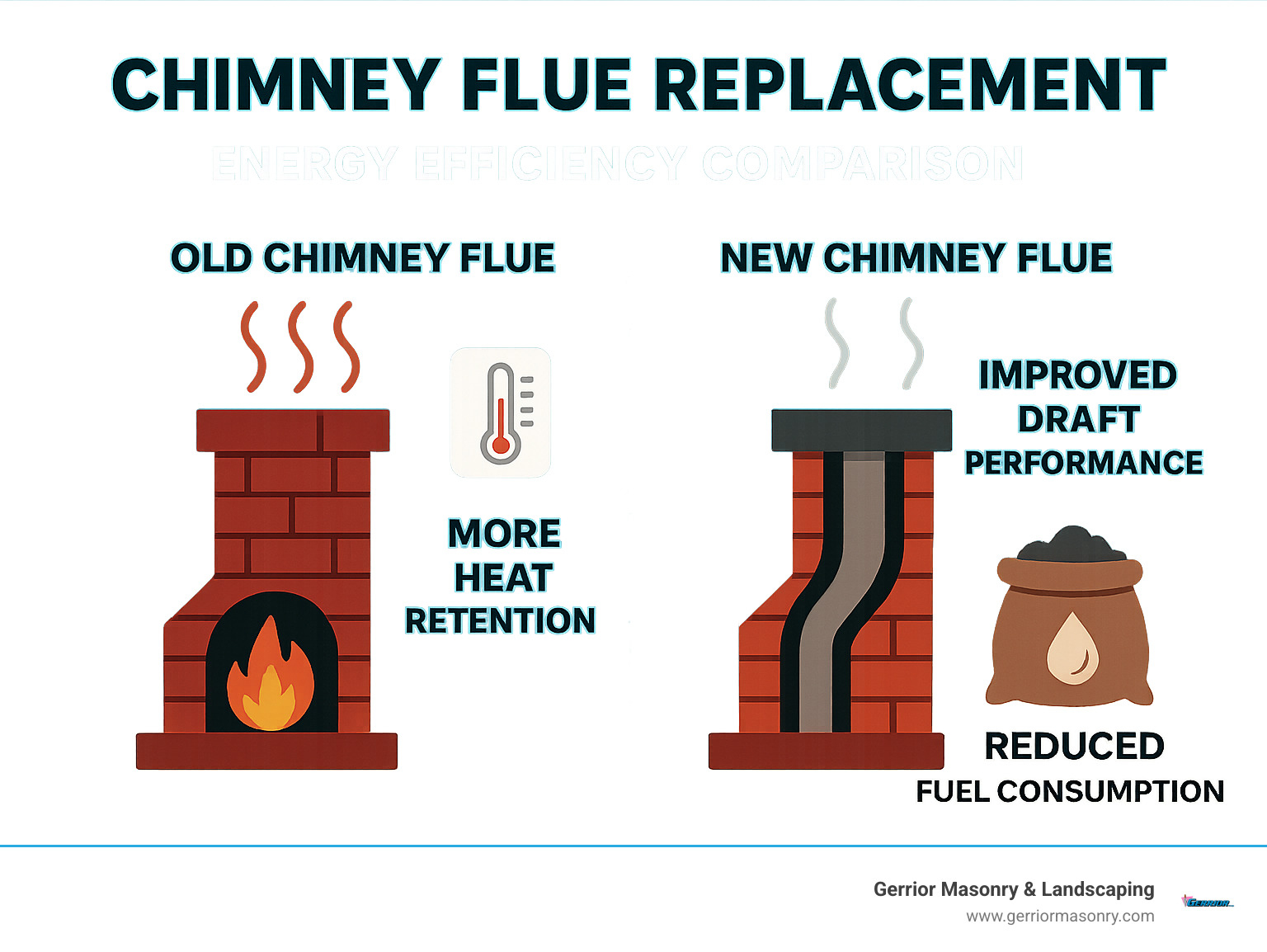
When we install a new liner, we’re essentially creating an optimized pathway for combustion gases. This improves draft performance, helping your heating appliance operate at its peak efficiency. Poor draft conditions cause incomplete combustion, which is basically throwing money up the chimney in the form of wasted fuel.
Modern liners, especially those with insulation, keep flue gases warmer as they rise. This creates stronger updraft while reducing the amount of your home’s heated air that gets pulled up the chimney. It’s like the difference between a well-fitted winter coat and one that’s two sizes too big—both might keep you warm, but one does it much more efficiently.
For wood-burning systems, better draft and higher flue temperatures reduce creosote buildup. Less creosote means a cleaner flue that maintains efficient operation longer between cleanings.
“I’ll never forget the call from our client in Winchester,” shares our energy efficiency specialist with a grin. “After we installed an insulated stainless steel liner, he was amazed that his wood stove was producing more heat while actually using less wood. His exact words were ‘My wife doesn’t need to wear two sweaters in the living room anymore!'”
For maximum efficiency, consider pairing your new flue with a quality draft stopper to use when the fireplace isn’t burning. This simple addition prevents warm air from escaping up the chimney during heating season—a small investment that pays dividends on cold winter nights.
Conclusion
Investing in a quality chimney flue replacement is one of the most important safety upgrades you can make for your home. Beyond keeping your family safe from carbon monoxide and preventing house fires, a properly functioning flue improves heating efficiency, extends the life of your heating appliance, and gives you valuable peace of mind during those cold winter months.
When the wind is howling outside and your fireplace is crackling with warmth, there’s comfort in knowing your chimney system is working exactly as it should. After helping hundreds of Massachusetts homeowners with their chimney needs, we’ve seen how the right flue replacement transforms both safety and comfort.
When selecting the right flue replacement for your home, consider these essential factors:
Your heating appliance needs different venting requirements depending on whether you’re using wood, gas, or pellets. The structural condition of your existing chimney matters too—some chimneys need the reinforcement that only cast-in-place liners can provide. While stainless steel and cast-in-place liners cost more initially, their durability often provides better long-term value for your investment.
Don’t forget the accessories that complete your chimney system. A quality chimney cap prevents water damage and keeps animals out, while draft stoppers significantly improve your home’s energy efficiency when the fireplace isn’t in use. These simple additions protect and improve your flue replacement investment.
“After completing hundreds of chimney flue replacements, I’ve seen how transformative proper venting can be,” says Joe Gerrior. “Not only do our clients enjoy greater safety, but many report their heating appliances performing better than ever before.”
At Gerrior Masonry & Landscape Construction, we’ve been helping homeowners throughout Middlesex and Essex Counties with their chimney flue replacement needs for over 30 years. Our experienced team provides thorough inspections, honest recommendations, and expert installation services to ensure your chimney system operates safely and efficiently for years to come.
For more information about chimney repairs and related services, please visit:
– More info about Chimney Repair Cost
Gerrior Masonry & Landscape Construction is based in Woburn, MA, and services Middlesex and Essex County, Massachusetts, including Arlington, Lexington, Winchester, Burlington, Bedford, and surrounding communities. Contact us today for expert chimney flue replacement and repairs.
