
Chimney Mortar Repair: Top Guide to Fix in 2025
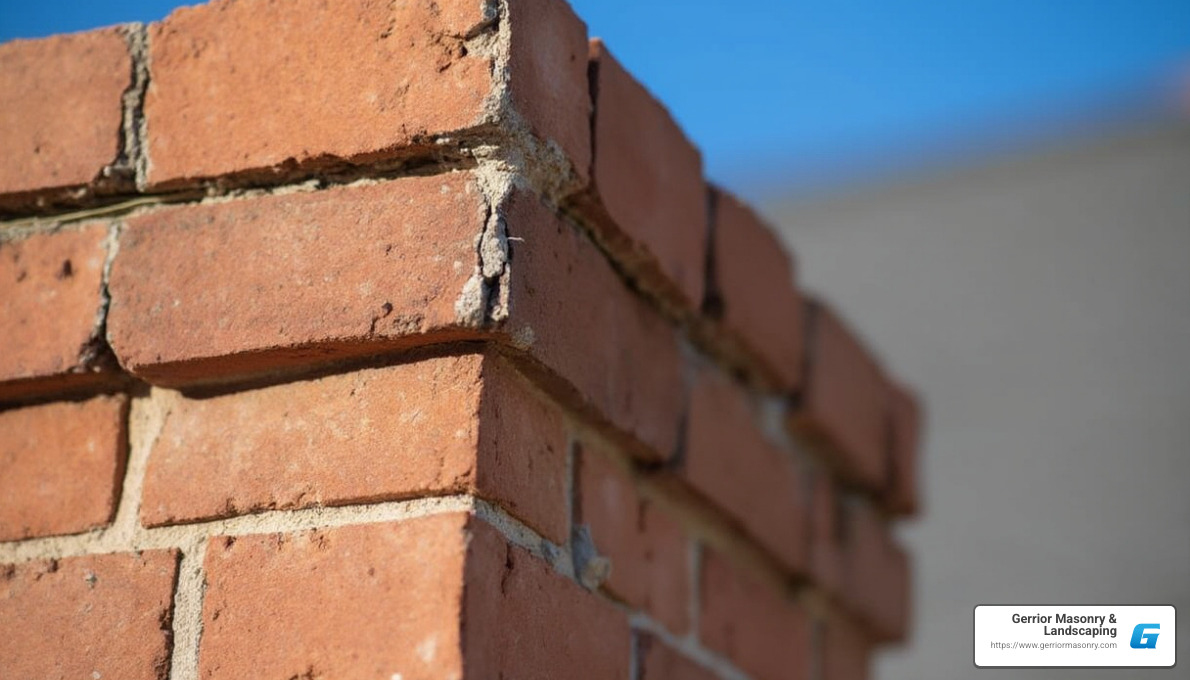
Chimney mortar repair is essential for maintaining both the structural integrity and safety of your home’s chimney. Without proper attention, chimney deterioration can lead to significant issues such as mortar damage, which not only affects the appearance of your chimney but also its functionality. Key factors to watch for include:
- Crumbling or falling bricks
- Visible cracks or gaps in mortar joints
- Water stains on walls or ceilings near the chimney
Attention to preventative maintenance can save homeowners time and money by avoiding larger repairs down the line. Regular inspections, performed at least once a year, are vital to catching minor issues before they worsen.
I’m Joe Gerrior, and with over 34 years of experience in masonry and landscape construction, I’ve seen the impact of neglecting chimney repairs. The team at Gerrior Masonry & Landscaping is dedicated to providing top-notch chimney mortar repair services across various locations in Massachusetts. We understand the importance of a functioning chimney, both for the safety and value it adds to your home.
Chimney mortar repair terms explained:
– chimney pointing
– chimney rebuild
– chimney tuckpointing
Understanding Chimney Mortar Deterioration
Chimney mortar plays a crucial role in keeping your chimney sturdy and safe. But over time, various factors can lead to its deterioration. Understanding these factors can help you maintain your chimney effectively.
Freeze-Thaw Cycles
One of the biggest culprits of chimney mortar deterioration is the freeze-thaw cycle. When water seeps into the mortar and freezes, it expands. This expansion causes the mortar to crack and crumble over time. In Massachusetts, where temperatures fluctuate, this cycle can be particularly damaging during the colder months.
Water Infiltration
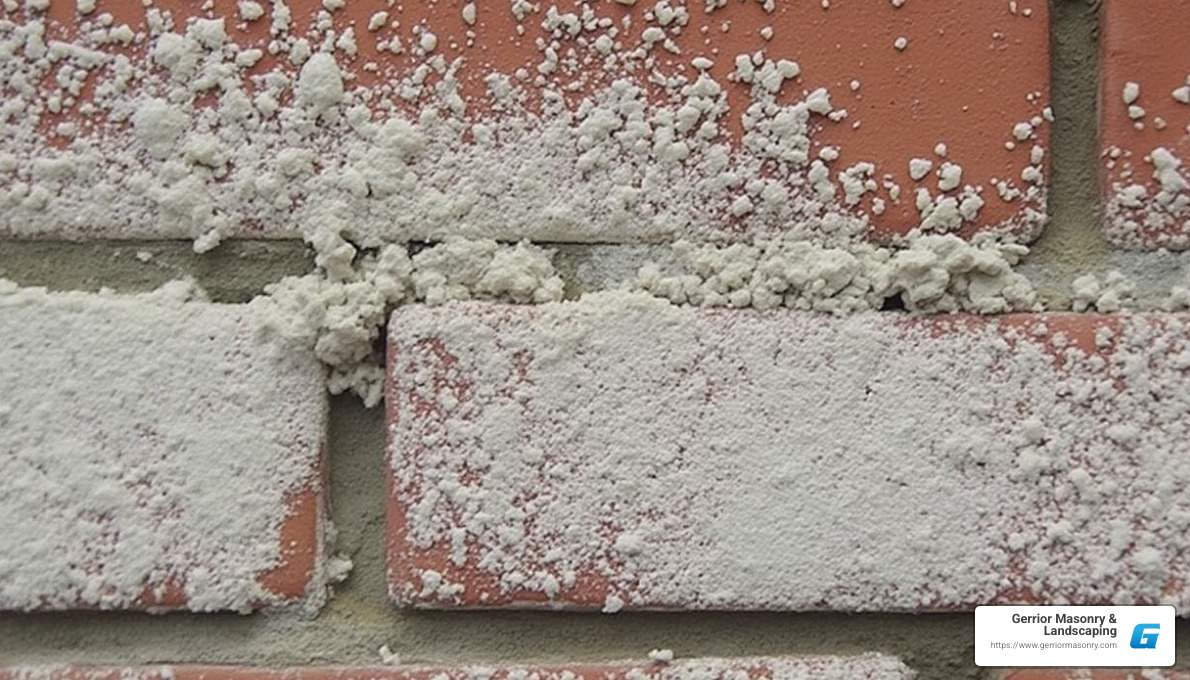
Water is another enemy of chimney mortar. It can seep into small cracks and gaps, leading to further deterioration. Over time, this water can cause efflorescence, which appears as white, powdery deposits on the chimney surface. If left unchecked, water infiltration can weaken the mortar and even damage the bricks themselves.
Structural Movement
As homes settle, structural movement can put stress on the chimney. This movement can lead to cracks in the mortar, affecting the chimney’s stability. Vertical cracks often appear due to uneven settling, while horizontal cracks might indicate pressure from within the chimney. Regular inspections can help catch these issues early before they lead to more severe problems.
Age and Weathering
Finally, simple age and exposure to the elements can cause chimney mortar to deteriorate. Over time, even the most well-built chimneys will show signs of wear. Weathering from rain, wind, and sun exposure can erode the mortar, making it less effective at holding the chimney together.
By understanding these factors, you can take proactive steps to maintain your chimney. Regular chimney mortar repair and maintenance can prevent minor issues from turning into major headaches. At Gerrior Masonry & Landscaping, we emphasize the importance of addressing these problems early to ensure the longevity and safety of your chimney.
Stay tuned as we dive into the Chimney Mortar Repair Process in the next section, where we will guide you through the steps to fix these common issues.
Chimney Mortar Repair Process
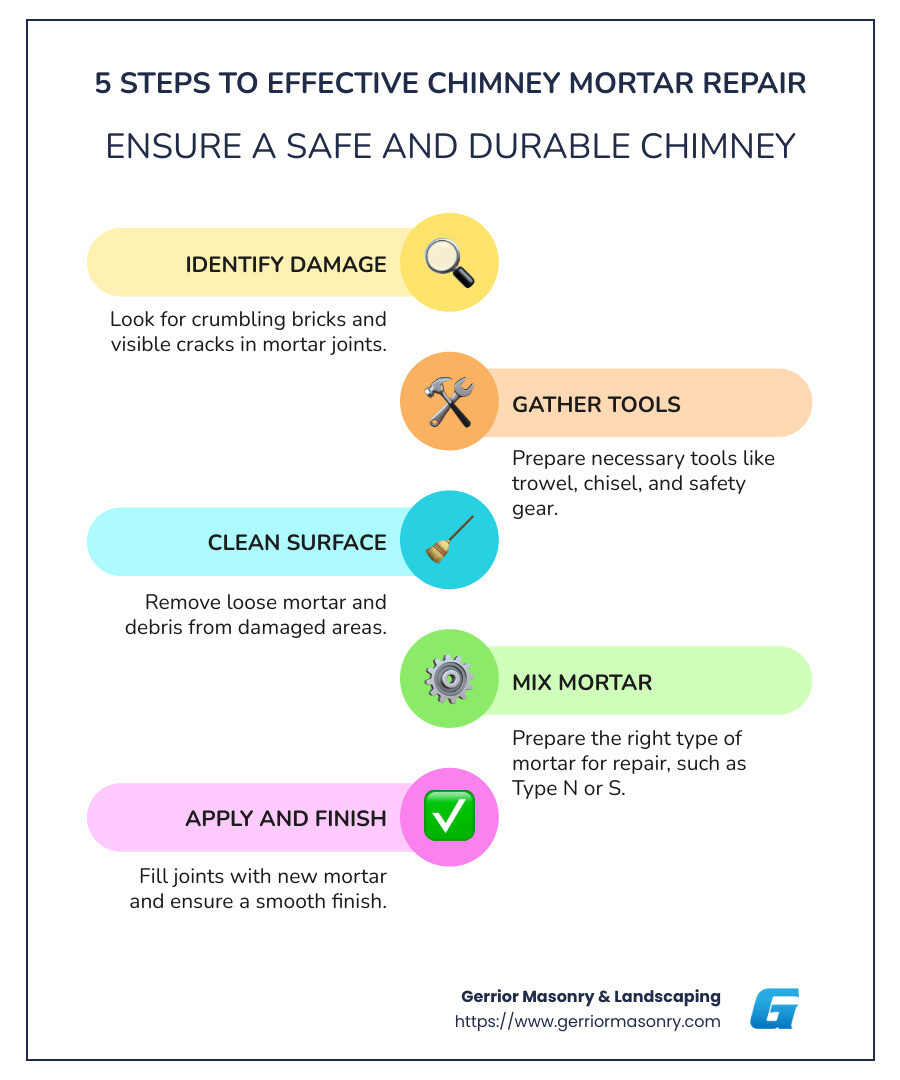
Repairing chimney mortar is essential to keep your chimney in top shape. Let’s walk through the chimney mortar repair process step-by-step, ensuring you have all the information you need to tackle this task effectively.
Preparing for Repair
Before diving into the repair process, gather the necessary tools and safety equipment. Here’s what you’ll need:
- Tools: Chisel, hammer, trowel, utility knife, caulk gun (if using sealant)
- Materials: Mortar mix or mortar joint sealant
- Safety Gear: Waterproof gloves, safety glasses
It’s crucial to consider the temperature before starting. Mortar and sealant work best when applied above 50 degrees Fahrenheit. This ensures proper adhesion and curing.
Step-by-Step Repair Guide
Surface Preparation
Start by preparing the surface. Use a hammer and chisel to widen any cracks to about 1/4 inch. This allows the new mortar or sealant to adhere better. Remove any damaged mortar and ensure the edges of the crack form an inverted V shape. Brush away loose debris for a clean surface.
Sealant Application
For minor repairs, a sealant might be the best option. Cut the nozzle of the sealant tube at an angle, matching the crack’s width. Load the tube into a caulk gun and apply a bead deep into the crack. Sealants can stretch up to 700% to accommodate wall movement, making them perfect for small repairs.
Mortar Mixing
For larger repairs, mixing traditional mortar is necessary. Follow the manufacturer’s instructions for mixing ratios. Gradually add water until you achieve a smooth, workable texture. Dampen the area slightly before applying the mortar to improve adhesion. Use a trowel to press the mortar firmly into the joint, ensuring there are no air pockets.
Finishing Touches
Once the mortar or sealant is applied, use your trowel to remove any excess material and match the surrounding texture. If using sealant, allow it to dry for at least two hours. Traditional mortar requires a few days to set, so keep the area damp and shielded from direct sunlight or extreme temperatures.
By following these steps, you can effectively repair your chimney mortar, ensuring your chimney remains safe and efficient. Up next, we’ll explore common chimney problems and solutions to help you maintain your chimney’s integrity.
Common Chimney Problems and Solutions
Chimneys are exposed to various elements and can develop several issues over time. Here, we’ll cover some common problems and their solutions to help you maintain a safe and efficient chimney.
Broken Mortar Joints
Problem: Mortar joints can crack and deteriorate due to weathering, age, or freeze-thaw cycles. This allows water to seep in, leading to further damage.
Solution: Repointing is the go-to fix. Remove the damaged mortar with a grinder, clean out the debris, and replace it with fresh mortar using a pointed trowel. This keeps the structure intact and watertight.
Flashing Damage
Problem: Flashing is the metal layer that seals the space between the chimney and roof. If it’s damaged, water can leak into your home, causing significant damage.
Solution: Remove any damaged flashing. Clean the area thoroughly and install new flashing, ensuring proper overlap. Seal the edges with high-quality caulk to prevent leaks.
Loose Aggregate in Mortar Joints
Problem: Over time, the aggregate in mortar joints can become loose, compromising the chimney’s structural integrity.
Solution: Similar to broken mortar joints, repointing is effective here. Replace the crumbling mortar to ensure a strong and stable chimney structure.
Poor Draft
Problem: A poor draft can occur due to obstructions or improper construction, affecting the chimney’s ability to vent smoke and gases efficiently.
Solution: Inspect the chimney for blockages like nests or debris. Ensure the flue is the correct size for your fireplace. If construction issues are the cause, consulting a professional might be necessary to redesign the chimney for optimal airflow.
By addressing these common issues promptly, you can extend the life of your chimney and prevent more costly repairs down the line. Next, we’ll answer some frequently asked questions about chimney mortar repair.
Frequently Asked Questions about Chimney Mortar Repair
What kind of mortar is best for chimney repair?
When it comes to chimney mortar repair, choosing the right type of mortar is crucial for durability and safety. Type N mortar is commonly used for above-grade, exterior walls and chimneys. It is a medium-strength mortar mix that offers good flexibility, making it ideal for handling weathering and thermal expansion.
On the other hand, Type S mortar is stronger and more suitable for below-grade applications. While it provides higher compressive strength, it’s typically used for structural walls and can be overkill for most chimney repairs unless extra strength is needed.
How do you fix crumbling chimney mortar?
Fixing crumbling mortar is essential to maintain your chimney’s structural integrity. Repointing is the process of removing old, deteriorated mortar and replacing it with new mortar. This involves using tools like a grinder to remove the damaged mortar, cleaning the joints, and then applying fresh mortar with a pointed trowel.
For a more detailed approach, tuckpointing might be used. This technique involves not only repointing the mortar but also creating a clean, finished look by applying a thin line of contrasting mortar to mimic brick joints. It improves both the strength and the appearance of the chimney.
How much does chimney mortar repair cost?
The cost of chimney mortar repair can vary widely based on several factors. Simple repointing jobs might cost a few hundred dollars, while more complex repairs involving extensive mortar replacement or tuckpointing could run into the thousands.
Factors affecting cost include:
- Extent of Damage: More damage means more labor and materials.
- Project Complexity: Tuckpointing or repairs in hard-to-reach areas can increase costs.
- Location: Prices can vary based on local labor rates and material costs.
For accurate estimates, it’s best to consult with a professional. They can assess the condition of your chimney and provide a detailed quote. Investing in proper repairs now can save you from more expensive fixes later.
By understanding these key aspects of chimney mortar repair, you can make informed decisions to maintain your chimney’s safety and efficiency. Next, we’ll wrap up with insights on when to call a professional and the importance of regular inspections.
Conclusion
When it comes to chimney mortar repair, knowing when to call a professional is crucial. While some minor repairs can be handled as DIY projects, there are situations where expert help is essential. If you encounter extensive damage, structural issues, or simply feel unsure about tackling the repair yourself, it’s time to contact professionals like us at Gerrior Masonry & Landscaping.
Why Choose Gerrior Masonry & Landscaping?
Based near Woburn, MA, we have over 30 years of experience in masonry and chimney repairs. Our skilled team, combined with owner oversight on projects, ensures high-quality results that stand the test of time. We serve many locations, including Andover, Arlington, Bedford, and more, providing reliable and efficient service.
The Importance of Regular Inspections
Regular chimney inspections are vital for catching minor issues before they become major problems. Just like routine car maintenance, chimney check-ups prevent costly repairs down the road. Annual inspections by certified professionals can identify hidden cracks, water damage, or deteriorating mortar that aren’t visible to the untrained eye.
Safety and Longevity
Our primary goal is to ensure your chimney’s safety and longevity. A well-maintained chimney not only improves your home’s efficiency but also protects against potential hazards like fires or carbon monoxide leaks. By addressing issues early, you can extend the life of your chimney and enjoy a safe, warm home.
For expert advice and service, reach out to us at Gerrior Masonry & Landscaping. Your home deserves the best care, and we’re here to provide it.
