
Chimney Repair Tuckpointing: Mastering Guide 2025
Why Your Chimney’s Mortar Matters
Your chimney does more than vent smoke—it protects your roof, walls, and your family’s safety from Massachusetts’ famous freeze-thaw cycles. While the bricks themselves can last a century, the mortar between them typically weathers away in 20–30 years. Once small cracks appear, rainwater seeps in, freezes, and expands, forcing the joints apart. What starts as a hairline gap can quickly become loose bricks, interior leaks, and expensive structural repairs. A little preventive maintenance today keeps your chimney’s structure—and your entire home—dry, secure, and looking sharp in every New England season. That is why Gerrior Masonry & Landscaping always recommends an annual inspection for homeowners in Woburn, Burlington, Lexington, and the rest of Middlesex and Essex Counties.
Understanding the Lingo: Tuckpointing vs. Repointing
Homeowners often mix up tuckpointing and repointing because both involve adding fresh mortar, yet their goals differ.
- Repointing is purely structural—masons remove failed mortar, insert fresh mortar of the same color, and seal water out.
- Tuckpointing adds a cosmetic twist. After repointing, masons carve a narrow groove and “tuck” in a thin, contrasting fillet so the joints look razor-fine. This 18th-century technique was developed to mimic high-end stonework without the price tag.
Both approaches can spare you from a full chimney rebuild when damage is still limited and the bricks remain sound. In a historic town such as Concord or Marblehead, matching the original façade is often just as important as restoring strength.
More on historic tuckpointing techniques
| Feature | Tuckpointing | Repointing |
|---|---|---|
| Purpose | Cosmetic + structural | Structural only |
| Mortar colors | Two | One |
| Visual result | Thin, crisp joint lines | Uniform joints |
| When used | You want restoration to look pristine | You just need strength and waterproofing |
More info about tuckpointing vs repointing
Signs Your Chimney Needs Mortar Repair
Act fast if you notice any of these:
- Loose or sandy mortar that scrapes out easily.
- Hairline or stair-step cracks in joints.
- Spalling bricks (faces popping off) or efflorescence.
- Cracked chimney crown or missing cap.
- Interior stains near the fireplace after rain.
Why Mortar Fails
Water is enemy number one in New England. Freeze-thaw cycles expand trapped moisture by about 10%, prying mortar apart. Age, acidic flue gases, and minor house settling speed up the process. Because bricks usually outlast mortar, timely repairs focus on the joints—not the whole chimney.
Tuckpointing or Rebuild?
Choose tuckpointing when damage is isolated and bricks remain solid. Opt for a rebuild if mortar is failing everywhere, the chimney leans, or bricks are crumbling below the roofline. Unsure? Schedule an expert inspection.
More info about chimney replacement
The Complete Guide to Chimney Repair Tuckpointing
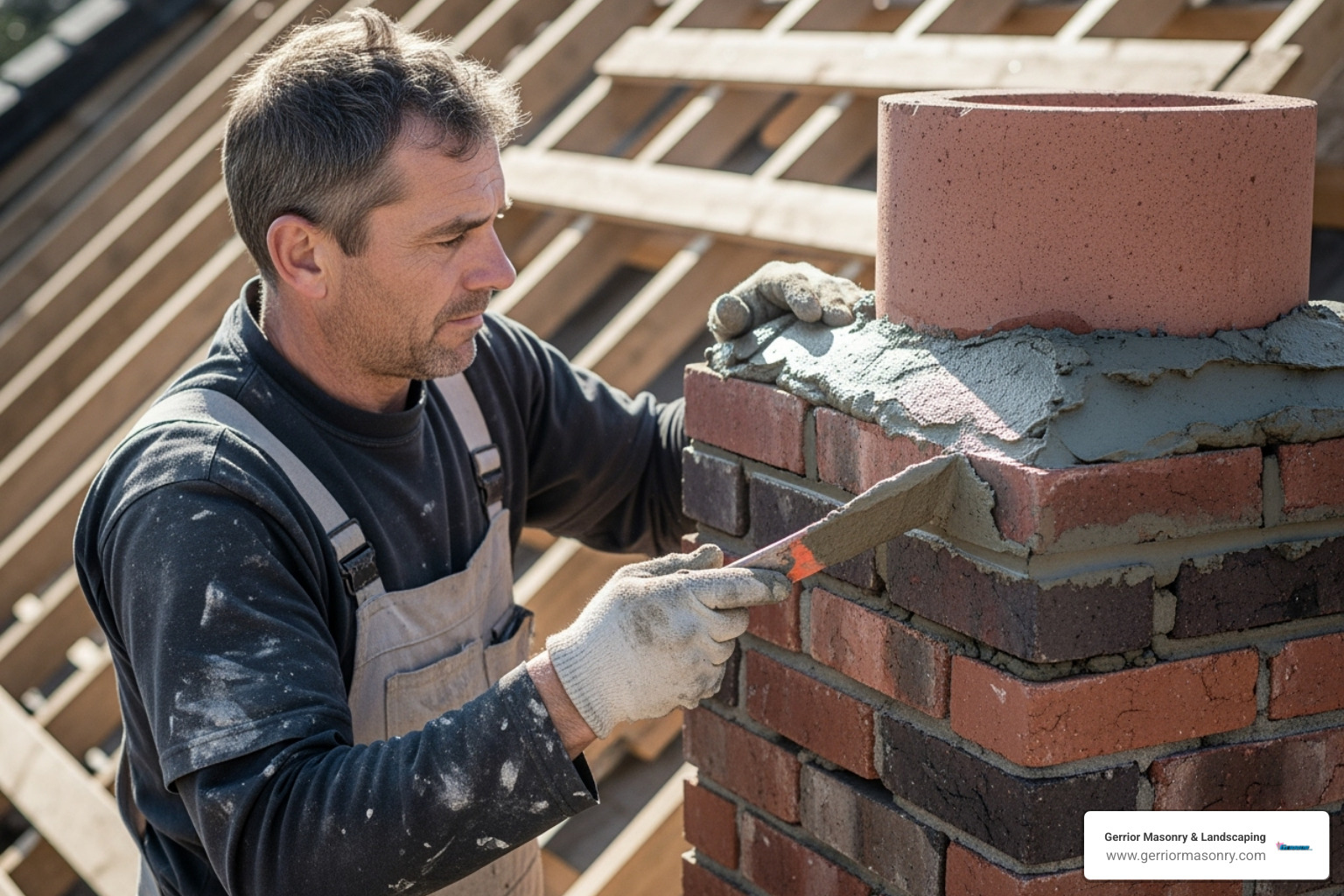
A professional crew will:
- Set safe staging and dust controls.
- Grind out deteriorated mortar 3–10 times the joint width.
- Press in fresh, compatible mortar matched for strength, color, and texture.
- For tuckpointing, carve a groove and insert a thin fillet of lighter mortar for that crisp look.
- Tool and cure the joints so they shed water.
DIY or Hire a Pro?
Working three stories up with power grinders is not a weekend hobby. Using the wrong mortar—often a hard Portland mix on old, soft brick—can accelerate spalling. Add the time, safety gear, and aesthetic match, and most homeowners quickly see the value of a qualified mason.
For historic homes, the NYC Landmarks Preservation Commission guide reminds us that matching original lime mortar is critical. Gerrior’s masons are trained to identify and blend these mixes so the repair disappears into the existing wall.
Benefits of Pro Tuckpointing
- Restores structural strength and stops leaks.
- Shields bricks from further weather damage.
- Boosts curb appeal and property value.
- Prevents a $10k-plus rebuild later.
More info about chimney masonry repair
Understanding the Cost of Chimney Repair Tuckpointing
One of the first questions homeowners often ask us is, “How much will chimney repair tuckpointing cost?” And it’s a completely fair question! While we’d love to give you a single, straightforward answer, the truth is, like many things in home repair, “it depends.” The cost can vary quite a bit based on several important factors, which is why getting a professional assessment is always the best way to get an accurate quote for your specific chimney.
Think of it this way: repairing a small crack in your driveway is very different from repaving the entire thing, right? The same goes for your chimney. The biggest factor influencing the cost of chimney repair tuckpointing is often the extent of the damage. Is it just a few crumbling joints near the very top of your chimney that need a little love, or does the entire structure, from the roofline all the way up, need a full overhaul? Naturally, the more mortar that needs to be carefully removed and expertly replaced, the more time, labor, and materials will be involved, which directly impacts the price.
Then there’s your chimney’s unique position. Its height and accessibility play a big role. Taller chimneys mean more time and specialized equipment, like extensive scaffolding, to ensure our team can work safely and effectively. If your chimney is tricky to reach due to a steep roof pitch, surrounding trees, or other structures, that can also add to the complexity and time needed for the job.
We also consider the type of brick and mortar your chimney is made of. Matching the existing brick and mortar isn’t just about aesthetics; it’s crucial for a repair that lasts. If your home is older or historic, it might require a specific, softer lime-based mortar that’s different from modern mixes. Sourcing these specific materials or ensuring the perfect color and consistency match takes expertise and sometimes specialized materials, which can subtly affect the cost.
Finally, like most services, geographic location and labor rates come into play. Here in Middlesex and Essex County, Massachusetts, our pricing reflects the local market conditions and the high level of skill and experience our masons bring to every job. We pride ourselves on the expertise our team offers for intricate masonry work like chimney repair tuckpointing.
What Do Real-World Numbers Look Like?
To give homeowners a general idea, the following figures represent average cost ranges based on publicly available internet data, not actual quotes from Gerrior Masonry & Landscaping. Your final cost will depend on the specific factors discussed above.
- Spot-tuckpointing of 10–20 linear feet of joints near the crown: $600–$1,800.
- Mid-level repair of the top third of a two-story chimney with safe roof access: $1,500–$5,000.
- Full tuckpointing from roofline to crown on a 30-foot stack that requires staging or a lift: $3,500–$11,000.
- Add-ons you may need — such as crown replacement, rain cap installation, or a waterproofing sealer — typically range from $150–$750 each, depending on materials and size.
These figures typically include labor, mortar, cleanup, and disposal, but they do not include major brick replacement or structural rebuilds. Permitting fees, if required by your town, are generally modest, yet they can add another $50–$150 to the total.
Remember: the lowest bid isn’t always the best value. A mason who skips grinding depths or uses an incompatible mortar can leave you with costly spalling down the road. At Gerrior Masonry & Landscaping, every proposal details the exact mortar mix, color matching process, joint depth, and curing method so you can compare apples to apples.
Curious where your chimney falls on the price spectrum? Schedule a no-pressure inspection, and we’ll walk you through a customized line-item estimate along with photos of any trouble spots. Transparency now prevents surprises later.
How to Ensure Your Chimney’s Longevity After Repair
Your new joints will last decades if you:
- Schedule yearly inspections to catch tiny cracks early and budget for spot repairs before winter.
- Install or maintain a concrete cap with proper overhang so water cannot dribble down the sides.
- Apply a breathable masonry sealer every 5–7 years. Modern silane/siloxane formulas keep water out while letting trapped moisture escape.
- Keep gutters clear so runoff is not dumping on the stack and eroding the mortar that was just replaced.
- Glance up after big storms and call for spot repairs fast. A single missing brick or cap can invite thousands of dollars in damage if ignored.
- Burn seasoned wood only to minimize acidic creosote that can attack mortar from the inside.
Taking these simple steps helps homeowners from Acton to Amesbury squeeze every possible year out of their investment.
More info about chimney cap installers
Conclusion: A Sound Chimney for a Secure Home
Deteriorated mortar may look small now, but it becomes expensive later. Professional tuckpointing fortifies your chimney, blocks moisture, and preserves your home’s character—all at a fraction of replacement cost.
Because every property is different, Gerrior Masonry & Landscaping approaches each project with the meticulous eye of craftsmen who live and work right here in Middlesex and Essex Counties. Whether you have a 1720 Colonial in Ipswich or a mid-century Cape in Burlington, our owner-supervised crew protects the original architecture while bringing the structure up to modern durability standards.
Still on the fence? Consider this:
- A minor tuckpointing job today often prevents a full tear-down tomorrow.
- Properly matched mortar keeps freeze-thaw damage from spreading into adjacent walls and the roof deck.
- A sharp-looking chimney boosts curb appeal, a key advantage if you plan to sell in competitive markets like Arlington or Winchester.
With more than 30 years of hands-on experience, state-of-the-art dust control, and a safety record we’re proud of, our team is ready to help you protect your investment. For an expert assessment and a detailed quote for your chimney repair needs, contact us today. Gerrior Masonry & Landscape Construction is based in Woburn, MA, and services Middlesex and Essex County, Massachusetts.
Contact us for your chimney masonry repair needs
