
Corporate Snow Removal: Top 5 Powerful Success Strategies
The Critical Impact of Corporate Snow Removal on Business Continuity
Corporate snow removal is the process of clearing snow and ice from commercial properties to ensure safety and operational continuity during winter months. For businesses, effective snow management is not just about convenience—it’s about survival.
Components of effective corporate snow removal:
- ✓ 24/7 emergency response services
- ✓ Proactive planning and site assessment
- ✓ Specialized equipment for different property needs
- ✓ De-icing and salt application management
- ✓ Snow hauling and relocation services
- ✓ Customized service contracts with defined trigger depths
Every year, businesses lose approximately $3 billion dollars to winter storms. According to FEMA, 40-60% of businesses affected by winter disasters never reopen. These sobering statistics highlight why snow and ice management isn’t optional for commercial properties—it’s essential for survival.
When snow accumulates on your commercial property, it creates immediate safety hazards for employees and customers. Beyond safety concerns, snow can completely halt operations, block deliveries, and prevent customers from accessing your business.
“By failing to prepare, you’re preparing to fail.”
This old adage perfectly captures the importance of having a comprehensive snow removal plan in place before winter arrives. Waiting until the first forecast can leave your business vulnerable to service shortages, higher prices, and potentially devastating operational disruptions.
I’m Joe Gerrior, owner of Gerrior Masonry & Landscape Construction Corp., and I’ve helped countless businesses develop effective corporate snow removal strategies that ensure their operations continue safely through even the harshest New England winters. Our specialized approach to corporate snow removal focuses on creating customized plans that address each property’s unique needs and priorities.
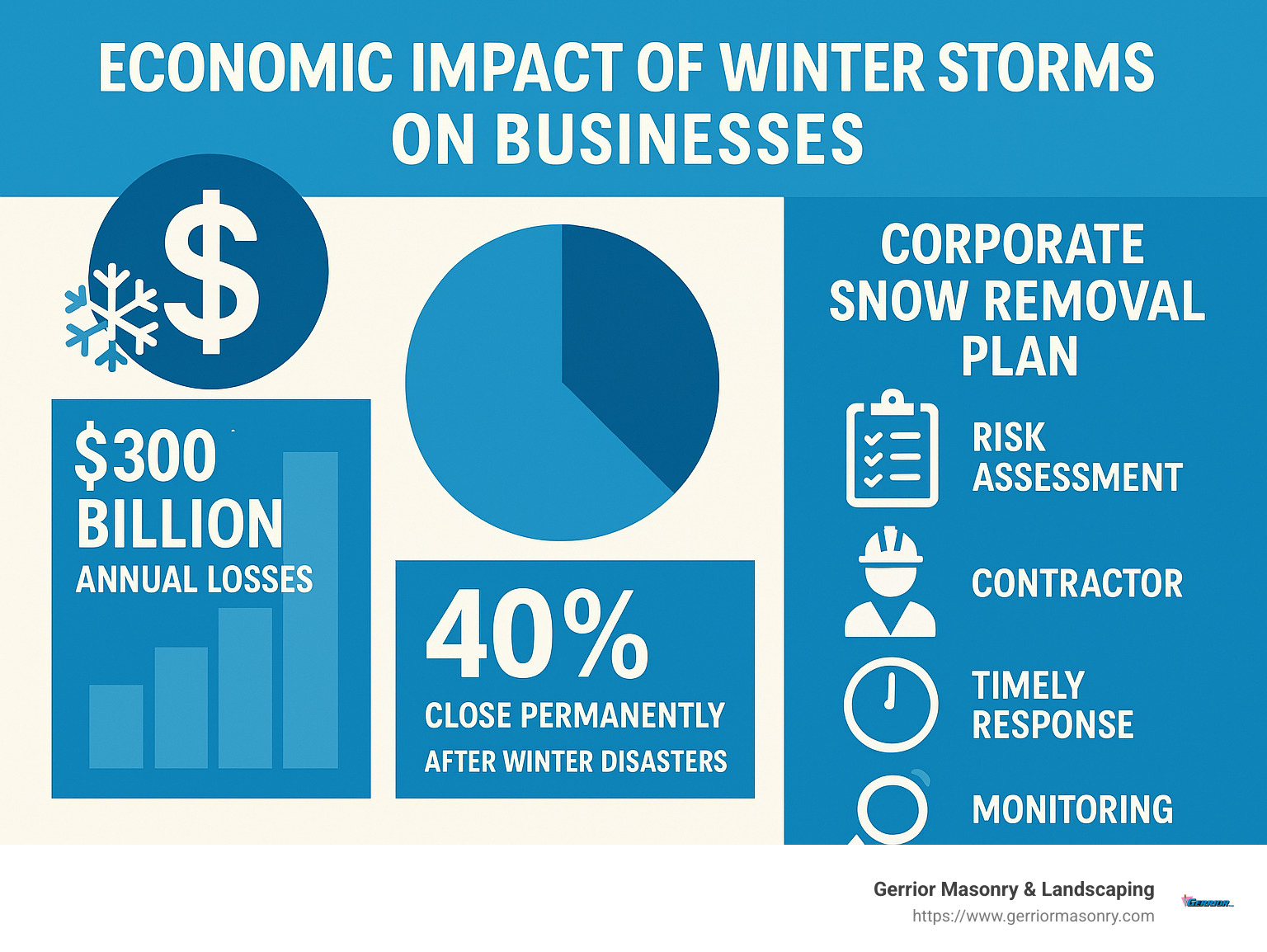
Essential corporate snow removal terms:
Understanding the Corporate Snow Removal Industry
The corporate snow removal industry isn’t just residential snow clearing on a larger scale—it’s an entirely different ballgame. Commercial properties have unique requirements, tighter schedules, and higher liability concerns that demand specialized attention and expertise.
Industry Overview
Corporate snow removal services are particularly crucial in regions like Massachusetts, where winter can deliver unpredictable and heavy snowfall. Businesses here understand all too well how quickly a surprise storm can disrupt their operations. Unlike residential snow removal, commercial properties don’t have the luxury of waiting things out—they need prompt, reliable service to keep their doors open and employees safe.
Successful corporate snow removal involves proactive pre-season planning, reliable active snow management, and thorough post-storm cleanup. Pre-season efforts typically include careful site assessments, detailed contract negotiations, and preparation work to ensure everyone is ready when winter hits. When the snow arrives, professional crews jump into action: plowing parking lots, clearing sidewalks, applying de-icing materials, and hauling snow piles away as necessary. Afterward, post-storm cleanup includes removing leftover piles, handling ice dams, and confirming safe access points are fully restored.
What makes the corporate snow removal business uniquely challenging (and exciting!) is the unpredictability. You can’t exactly schedule a snowstorm on your calendar. Crews need to be ready to spring into action at any given moment, often during the worst weather conditions. If you’re in this industry, flexibility, quick decision-making, and reliable equipment aren’t just nice-to-haves—they’re absolute must-haves.
Safety and Accessibility Requirements
Businesses face strict safety and accessibility regulations when it comes to snow and ice management. The Americans with Disabilities Act (ADA) requires commercial properties to keep entrances, parking spots, and walkways clear and accessible at all times—even during the harshest winter weather. Similarly, OSHA regulations emphasize the importance of maintaining safe working environments for employees.
The stakes are high here. A single slip-and-fall accident can quickly become a legal nightmare, leading to insurance claims, costly lawsuits, and damage to your business’s reputation. In fact, slip-and-fall claims related to snow and ice often range from tens of thousands of dollars to—brace yourself—millions. That’s why investing in professional corporate snow removal isn’t a luxury; it’s an essential protective measure.
Environmental Considerations
Let’s face it—traditional rock salt isn’t exactly gentle on the environment. It can damage concrete and asphalt surfaces, kill landscaping, contaminate waterways and groundwater, and even ruin interior flooring when tracked indoors. Modern businesses, increasingly aware of their environmental impact, are turning to eco-friendly alternatives for snow and ice management.
Forward-thinking corporate snow removal companies are responding to this demand by offering environmentally safe de-icing solutions. These newer products still provide effective ice control but significantly reduce the negative impact on the surrounding environment. Making environmentally conscious choices doesn’t just reflect positively on your company’s image—it helps preserve your property and protect the local ecosystem, too.
At Gerrior Masonry & Landscaping, we understand the corporate snow removal industry inside and out. With over 30 years of experience, our skilled team works closely with every client to develop customized plans custom to each property’s unique requirements. From proactive planning to rapid storm response—we’ve got your back through even the toughest New England winters.
Gerrior Masonry & Landscape Construction is based in Woburn, MA, and proudly services Middlesex and Essex County, Massachusetts.
Creating Your Corporate Snow Removal Business Plan
Starting a corporate snow removal business is an exciting yet challenging endeavor. It’s not just hooking a plow to your truck and waiting for snowflakes—there’s a surprising amount of strategic planning behind the scenes. To ensure your snow removal business thrives (rather than just survives), a solid business plan is essential. Let’s break down exactly what goes into building one that works.
Market Research and Analysis
First things first: it’s time to do your homework. Understanding the commercial snow removal market in your area sets the foundation for your success. For instance, here in Massachusetts—especially in Middlesex and Essex counties—winter weather can be unpredictable and intense, creating strong demand for reliable corporate snow removal services.
Take a close look at your local competition. Find out who they are, how they price their services, and what they offer. Pay special attention to gaps in the market—areas that are underserved or opportunities your competitors might have overlooked. Look at historical snowfall patterns to understand seasonal demand, and map out commercial neighborhoods where potential clients cluster.
Identifying Target Accounts
Not all commercial properties are created equal—especially when it comes to snow removal. Consider carefully what types of properties align best with your strengths, equipment, and team capabilities. Office complexes and corporate campuses may require meticulous clearing and rapid response. Retail centers and shopping malls often need extensive snow hauling and ice management. Healthcare facilities and educational institutions prioritize safety and accessibility above everything else. Industrial parks, warehouses, and HOAs might also offer steady, contract-based work.
As one veteran contractor humorously said, “Anyone with a pickup and a blade can push snow—but corporate snow removal takes real skill.” The secret sauce in successful snow removal is crafting customized solutions that meet specific client needs.
Developing a Winning Proposal Strategy
Commercial clients often select their snow removal providers through formal proposals. To win these contracts, your proposals need to clearly address each client’s unique concerns. Highlight how you’ll handle site-specific challenges, guarantee quick response times, and carefully organize communication throughout storms. Showcase your specialized equipment, highly-trained team, and robust insurance and liability coverage. And of course, explain your pricing clearly, offering contract options that match their seasonal needs.
Commercial clients value reliability above all else. So it’s worth the extra effort upfront in crafting a detailed, thoughtful proposal. As a wise industry source once said, “Taking your time to find the right snow removal partner now will save massive headaches once the snow starts flying.”
Cost Analysis and Pricing Strategies
Figuring out pricing is the trickiest part of any business—and snow removal is no exception. You’ll want pricing that’s attractive to clients yet profitable for you. Common pricing models include charging per service (per-push pricing), offering flat rates per storm (event pricing), fixed seasonal contracts, or hourly rates plus material costs (time and materials).
Each pricing model has its pros and cons. Seasonal contracts offer predictable income but require accurate snowfall forecasting. Per-push pricing can be profitable during snowy winters but risky in mild ones. Many successful snow removal businesses offer a blend of these models to balance risk and reward.
When estimating your costs, account for startup expenses like equipment purchases, leases, insurance premiums, marketing efforts, training your team, weather monitoring systems, and administrative setup. These startup costs are essential investments to position your business for long-term growth.
Legal Considerations and Insurance
Snow and ice management carries serious liability risks—you never want to slip up legally! Make sure you have robust general liability insurance (typically $1-5 million coverage) and commercial auto insurance for your plows and crew vehicles. Workers’ compensation insurance is mandatory for all employees.
Legal advice is highly recommended when developing your service agreements. Having clear, professionally-drafted contracts protects both you and your clients. And don’t forget to check local licensing requirements—getting proper permits and certifications ensures your company is fully compliant from day one.
Equipment and Technology Investment
In corporate snow removal, your equipment choices directly impact your capabilities. Quality equipment enables you to handle larger, more demanding properties effectively. At minimum, you’ll need reliable plow trucks, skid steers or loaders for snow relocation, vehicle-mounted salt spreaders, snow blowers for tight spaces, and hand tools like shovels and ice breakers.
Advanced technology is rapidly becoming essential too. GPS tracking systems help you optimize equipment routing and efficiency. Weather monitoring services offer early warning of storms. Mobile communication tools ensure your team remains coordinated in real-time, and client reporting platforms document your completed work accurately.
Of course, quality equipment doesn’t come cheap. For example, a well-outfitted plow truck can cost anywhere from $40,000 to over $80,000, and larger loaders or skid steers can easily surpass $100,000. While these figures might give you sticker shock, this initial investment positions you to reliably handle corporate properties and makes your business far more competitive.
Hiring and Training Your Team
Corporate snow removal is definitely a team sport. It’s labor-intensive and often involves braving harsh conditions in the middle of the night. Your business plan must include thoughtful strategies for recruiting reliable workers—especially for overnight and weekend shifts. Consider blending year-round core staff with seasonal workers to balance workforce stability with cost-effectiveness.
Training your team well is critical. Your crew will need to master equipment operation, snow clearing methods for different surfaces, proper de-icing application rates, safety protocols, emergency procedures, and customer service skills. Competitive pay, on-call incentives, and retention bonuses can help attract and keep quality employees season after season.
With a well-trained team in place, your customers will rest easier knowing they’re in capable hands—and you’ll sleep better knowing your business is prepared for New England’s unpredictable winter storms.
Gerrior Masonry & Landscape Construction is based in Woburn, MA, and proudly serves customers throughout Middlesex and Essex County, Massachusetts.
Implementing Effective Corporate Snow Removal Strategies
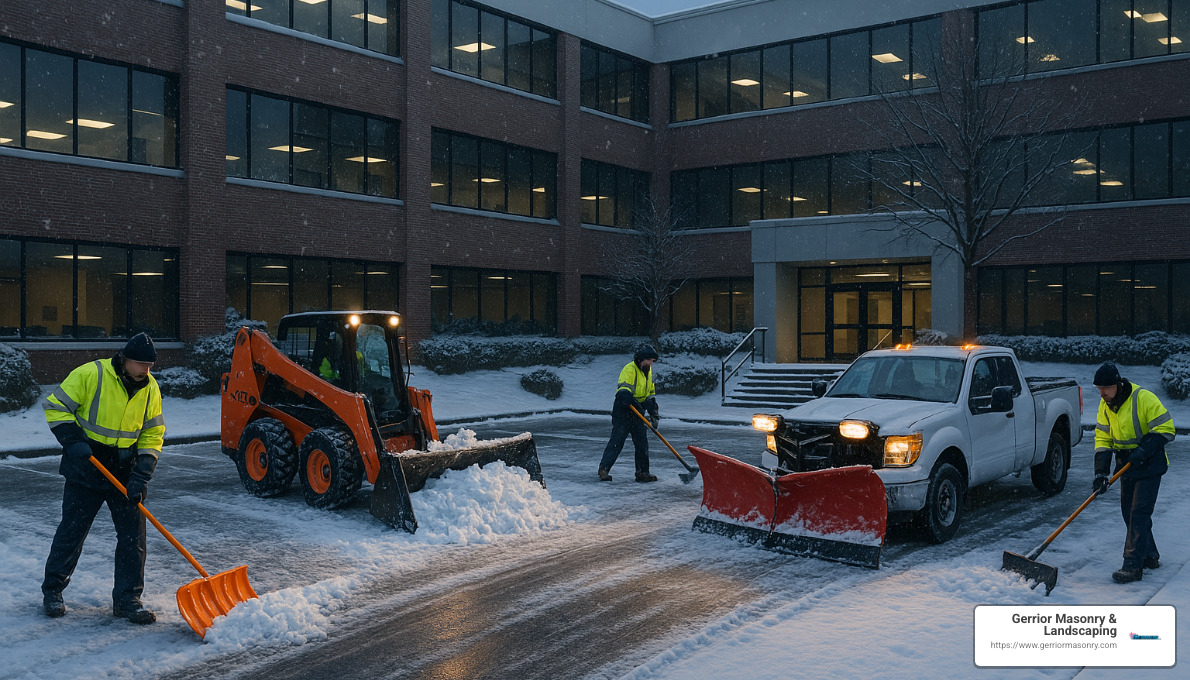
Successfully operating your corporate snow removal business takes more than just having trucks and hardworking crews. It means strategically planning every step—from customized service plans and advanced weather tracking, to using the right technology and continually communicating with your clients. Let’s walk through these important strategies together, step by step.
Developing Customized Snow Removal Plans
Just as no two snowflakes are the same, every commercial property has its own unique snow removal needs. Whether you’re working on a retail center, office complex, or healthcare facility, you’ll face different priorities and challenges. That’s why effective corporate snow removal always starts with customized service plans.
To create a solid plan, the first step is conducting a thorough site assessment long before the first snowfall. Walk the property with your client, noting traffic patterns, priority areas such as loading docks and entryways, and designated snow storage spots. Identify areas prone to drifting snow or ice build-up, and note drainage patterns that might cause icing issues. It’s even wise to take pictures documenting current property conditions to avoid disputes later on.
A properly custom snow removal plan clearly spells out response times and snow depth triggers—when your team will mobilize to clear snow. As industry experts often emphasize, “A well-developed commercial snow plowing program ensures your customers and employees stay safe and reduces liability risks.”
Proactive Planning and Weather Monitoring
You’ve heard the saying, “If you fail to plan, you plan to fail”—this couldn’t be truer in our unpredictable Massachusetts winters. Effective corporate snow removal means anticipating storms instead of simply reacting to them.
Investing in professional weather monitoring services can give you a crucial heads-up well before a storm hits. These advanced forecasts are far more accurate than generic weather reports. Consider installing on-site monitoring gear to provide highly localized data, allowing your team to make precision-based decisions on when and how to treat surfaces.
During storms, positioning your equipment and crews strategically reduces response time and keeps your clients happy. Pre-treating surfaces before the snow starts can also make your job easier and greatly reduce the risk of dangerous ice formation.
Leveraging Technology for Operational Efficiency
Technology isn’t just about shiny gadgets—it’s about working smarter, not harder. Today, progressive corporate snow removal teams rely on GPS fleet tracking systems to monitor equipment locations and optimize crew routing.
Mobile apps make it easy to document completed services with photos and timestamps, giving clients peace of mind and detailed reporting. Modern systems can even send automated notifications to customers, letting them know exactly when their property has been serviced in real-time.
Digital service verification is also a great tool, providing clear proof of your snow removal efforts. This builds trust and makes billing straightforward—clients appreciate transparency, especially when it comes to their safety and accessibility.
Real-Time Client Communication
Speaking of clients, keeping them informed is the heart of effective corporate snow removal. Nobody likes wondering whether their parking lot is clear at 3 a.m., so make communication a priority.
Set up automated text and email alerts to notify clients as soon as your crews are mobilized and when the work is completed. Offer easy-to-use online portals or apps where clients can check service statuses anytime. And of course, provide responsive 24/7 customer support—clients will sleep easier knowing you’re available to handle any concerns immediately.
Ensuring Safety and Accessibility
Your main responsibility is keeping clients’ properties safe and accessible. This means paying extra attention to slip and fall prevention. Clear walkways, entrances and parking areas completely, applying de-icer as needed. Keep an eye on transition areas like doorways and ramps, since they’re especially prone to icing.
Proper de-icing and salt management is key. Don’t just toss salt around—use measured, calibrated spreaders and apply the right amount based on pavement temperature, not just air temperature. Typically, minimal salt is needed when pavement temperatures are above 30°F. Below 15°F, salt alone is less effective, so consider alternative de-icing methods like liquid brine or organic products.
And speaking of salt—remember, traditional salt can harm landscaping, pavement, and local waterways. We’re finding more Massachusetts businesses prefer eco-friendly alternatives that effectively melt ice without the nasty side effects. Proper material storage and runoff containment measures also go a long way toward keeping your services environmentally responsible.
Managing Snow and Ice Removal Costs Effectively
Balancing high-quality service with profitability is crucial for any successful business. Start by optimizing your equipment—match your machinery to the specific needs of your typical clients. A small office building doesn’t require a massive loader, after all! Regular preventative maintenance keeps your equipment running smoothly, avoiding costly breakdowns during a snowstorm.
Buying de-icing materials in bulk before the season can save money, and careful inventory management ensures you have enough supplies without over-buying. Calibrating your spreaders prevents costly over-application, and exploring affordable alternative materials can reduce costs significantly.
Staff scheduling also impacts your bottom line. Balance adequate coverage with labor costs, train your team thoroughly to reduce costly mistakes and delays, and track your operational efficiency closely. A lean, well-managed operation ensures you provide reliable service at a fair price.
By following these strategies, your corporate snow removal business can thrive even in the toughest New England winters. At Gerrior Masonry & Landscape Construction, we know how important these details are when serving commercial clients throughout Middlesex and Essex County, Massachusetts.
Marketing and Growing Your Corporate Snow Removal Service
Building a thriving corporate snow removal business involves more than mastering snow removal itself. You need smart marketing that reaches your ideal clients and strategies to keep growing year after year. Here’s how to market effectively, create standout proposals, foster long-term client relationships, and avoid common pitfalls.
Effective Marketing Channels
Unlike residential clients who might call you after the first big snowstorm, commercial property managers typically start shopping for their snow removal service providers months before winter hits. Many begin looking in the spring or summer, making it essential to market your corporate snow removal services year-round.
Start with a professional website that clearly showcases your services, displays your equipment, and shares glowing client testimonials. To reach people actively searching online, invest in search engine optimization (SEO). Target keywords like “corporate snow removal,” “commercial snow management,” and other location-based phrases relevant to your service area.
Social media, especially a strong LinkedIn presence, can also be a valuable tool. Connect with local property managers, facility managers, and business owners who make snow removal decisions. Share helpful content like winter safety tips and industry insights to establish yourself as a local expert.
Traditional marketing still works wonders, too. Consider direct mail campaigns aimed specifically at commercial properties in your area. Attending networking events and joining industry associations can help you build personal connections with decision-makers. Finally, never underestimate the power of a solid referral program. Happy clients are often your best source of new business. Offer incentives to clients who recommend your services to others.
Creating Impactful Proposals
Commercial clients rarely hire snow removal contractors without a formal proposal. To win these contracts, your proposals need to stand out by clearly showing why your corporate snow removal service is the best choice.
Always customize your proposals to address the unique needs of each property. Clearly outline site-specific solutions, such as detailed snow storage plans, priority clearing areas, and specific safety measures you’ll take. Be transparent with your pricing structure—the clearer your pricing, the easier it is for clients to trust and choose you.
Highlight your service guarantees, such as specific response times or quality commitments. Emphasize your company’s strengths: extensive experience, highly trained crews, specialized equipment, and owner oversight. Including visual elements like property maps, equipment photos, and diagrams showing priority areas makes your proposals easier to understand and more impressive.
As industry insiders often joke, “Anyone with a pickup and a blade can plow snow.” Your proposals should clearly show potential clients that your corporate snow removal services offer much more than basic plowing—you’re providing reliability, efficiency, and peace of mind all winter long.
Building Long-Term Client Relationships
In the snow removal business, keeping clients happy season after season is key to sustainable growth. Building strong relationships takes more than just showing up when it snows—it’s about actively nurturing connections year-round.
Consider offering multi-year agreements to create stability for you and your clients. Include attractive incentives or discounts to encourage long-term commitments. Even during the off-season, maintain regular communication. Check-in occasionally and share helpful information, like property management tips or industry updates, to stay top of mind.
After each winter, conduct a post-season service review with your clients. Ask for feedback, address any concerns openly, and use their input to continuously improve your services. Offering value-added services, such as spring cleanups or landscape maintenance, can deepen your relationships and boost customer loyalty.
Proactively solving problems before they become issues goes a long way toward building trust. Clients appreciate a snow removal partner who anticipates challenges, communicates clearly, and genuinely cares about their property and safety.
Avoiding Common Mistakes in Corporate Snow Removal
When you’re growing your business, avoiding common pitfalls is just as important as doing things right. Here are some typical mistakes you want to steer clear of:
Poor Planning: Nothing can derail your success faster than poor planning. Avoid underestimating your equipment needs—running short during a major storm can severely damage your reputation. Ensure you hire and train enough staff before the season begins. Develop clear routes and service schedules in advance rather than reacting when the snow starts falling. Finally, always create backup systems to handle equipment breakdowns or staff shortages.
Mismanagement of Resources: Misusing resources can quickly eat away profits. Avoid over-applying salt and other materials by training employees in proper usage. Optimize route planning to reduce travel time and fuel costs. Match your equipment to each property’s specific needs—using oversized equipment for small areas wastes money and resources. Keep your crews trained and efficient, and monitor fuel use closely to reduce unnecessary idling.
Inadequate Client Communication: Poor communication is a major reason businesses lose clients. Clearly define service expectations upfront, including trigger depths and response times. Provide proactive updates to clients during storms, and document each service thoroughly. Regular, consistent reporting and rapid, proactive problem-solving help keep clients satisfied and loyal.
Insufficient Staff Training: Poorly trained employees lead to subpar service and costly liabilities. Train your staff thoroughly in safe equipment operation, proper de-icing techniques, safety protocols, and professional customer interaction. Properly documented training helps ensure a high level of service and reduces your risk of damaging incidents and unhappy customers.
By avoiding these common pitfalls, you’ll set your corporate snow removal business up for steady growth and long-term success.
Gerrior Masonry & Landscape Construction is based in Woburn, MA, and proudly serves commercial properties throughout Middlesex and Essex County, Massachusetts.
Frequently Asked Questions about Starting a Corporate Snow Removal Service
What are the essential components of a corporate snow removal plan?
When developing an effective corporate snow removal plan, it helps to think of each property as unique—almost like a snowflake (see what we did there?). No two commercial properties have exactly the same needs. That’s why a great snow removal plan starts with a site-specific assessment. This detailed property analysis maps out high-traffic areas, potential hazards, obstacles, and special client requirements.
Once you have a clear picture of the property, an effective plan clearly sets service triggers—conditions, usually snow depth, at which snow removal begins. It also outlines response time guarantees, ensuring your crew can deploy quickly after a snowfall begins.
Next, every property needs clearly defined equipment allocation and an organized staff deployment strategy. Knowing exactly which machines and team members are assigned to each site minimizes confusion and boosts efficiency.
Properly managing ice is just as important as snow removal. Effective plans include specific de-icing protocols, detailing the materials you’ll use, application methods, and how much is needed. Speaking of snow, where do you put it all? A clear snow storage plan designates safe and practical locations for piling or hauling snow away.
Let’s not forget client communication—always a top priority. A solid snow removal plan clearly explains communication procedures, detailing how and when clients will be updated about your team’s activity. Equally important is an effective system of service verification, providing proof of the work completed—your clients want peace of mind (and you want to get paid promptly!).
Lastly, always consider any special considerations unique to the property, such as loading docks, fire lanes, or ADA compliance. The most successful corporate snow removal companies develop these plans hand-in-hand with clients, ensuring everyone’s needs are met and expectations are crystal clear.
How can businesses manage snow and ice removal costs effectively?
Managing snow and ice removal costs effectively isn’t about cutting corners—it’s about working smarter. The first step is choosing the right contract structure for your business. Depending on historical snowfall patterns, you might pick per-push pricing, flat event pricing, seasonal contracts, or a time-and-materials model. Each has its strengths, so take a good look at snowfall history in your area to make the best choice.
One of the best ways to control costs is through equipment right-sizing. Match your equipment carefully to each property’s size and needs—don’t bring a monster-sized loader to clear a tiny parking lot (that’s like using a chainsaw to peel an apple—overkill!). Similarly, smart route optimization reduces fuel costs and saves time by minimizing travel between properties.
Another major cost-saver is proper material management—buying de-icing materials in bulk before winter hits saves money, and applying only what’s necessary keeps material expenses in check. Training your team on proper application rates and methods is essential to this.
Efficient staff scheduling is crucial too—balancing adequate coverage without excess labor hours saves significant money. Preventative equipment maintenance also helps reduce expensive breakdowns (the last thing you want during a midnight snowstorm is a broken-down plow!).
Technology plays a big role in keeping costs down. Using GPS tracking and routing software streamlines operations and helps you deploy resources efficiently. Clear agreements and solid communication with subcontractors also save money and headaches.
Finally, consider entering multi-year agreements with your clients. This stabilizes your revenue, allowing you to forecast accurately and control costs over the long term. By implementing these strategies, many businesses save between 15-30% on snow removal expenses while still delivering top-notch service.
What are the environmental considerations in corporate snow removal?
The days of simply throwing down buckets of rock salt without a thought are long gone. Modern corporate snow removal businesses must balance safety with environmental responsibility. It starts with choosing the right de-icing materials—opting for products that minimize harm to soil, plants, and waterways.
Proper application rate optimization is just as important. Using calibrated spreaders ensures you’re applying just the right amount of material, reducing waste and environmental damage. Moderation isn’t just good advice for eating donuts—it applies to salt too.
Managing runoff carefully prevents contamination of local water systems and protects aquatic life. Equally important is vegetation protection, which means applying de-icing materials carefully around landscaping and sensitive natural areas.
Keeping your equipment well-maintained isn’t only good for your wallet—it also reduces harmful equipment emissions and improves fuel efficiency. Optimizing routes and minimizing idle time makes your operation both cost-effective and eco-friendly.
Exploring environmentally friendly alternatives is becoming increasingly popular. Alternative methods such as brine pre-treatment, mechanical ice removal, and organic de-icers help reduce reliance on traditional rock salt. Educating your team on these responsible practices is key. Likewise, educating clients on environmental trade-offs helps them understand your efforts in sustainability and often builds stronger, long-term relationships.
Above all, following local regulatory compliance and best practices shows your business’s commitment to environmental stewardship—increasingly important to today’s conscious consumers and corporate clients alike.
As one industry expert notes, “Road salt, widely used for ice management, can negatively affect groundwater, lakes, rivers, and wildlife habitats if misused over years.” Responsible corporate snow removal companies understand this and take steps—like calibrated spreaders, organic materials, and containment measures—to minimize their environmental footprint without sacrificing effectiveness.
Gerrior Masonry & Landscape Construction is based in Woburn, MA, and proudly serves commercial clients throughout Middlesex and Essex County, Massachusetts.
Conclusion
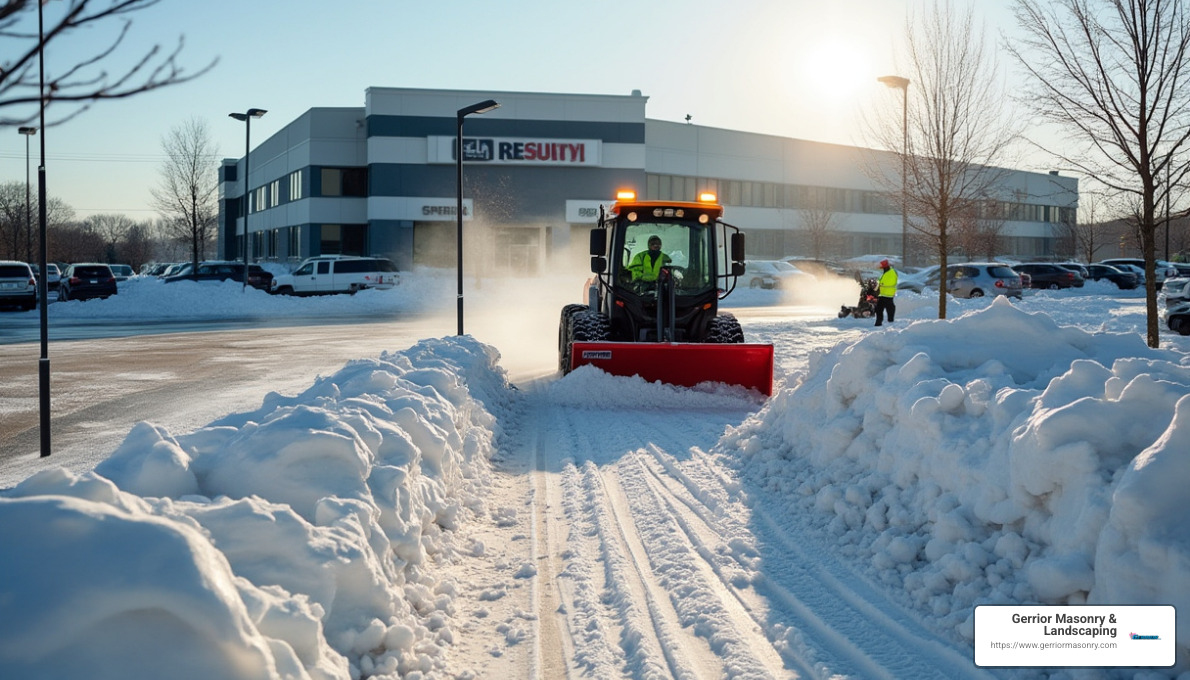
Launching a corporate snow removal business can be highly rewarding—but it’s not for the faint of heart. It takes careful planning, a significant upfront investment, and strategic thinking. However, if you’re willing to put in the work, the payoff can be substantial, offering steady revenue and growth opportunities year after year.
The secret sauce for success in corporate snow removal boils down to one fundamental understanding: commercial clients have very different needs compared to residential customers. They’re looking for reliable partners who provide guaranteed response times, comprehensive property coverage, clear documentation, proactive communication, and meticulous risk management. In short, they’re entrusting you not just with snow clearing, but with their business continuity and safety during harsh winter months.
To thrive in this industry, you’ll want to develop a solid business plan covering every detail, from market research and competitive analysis, to investments in equipment and technology, to hiring and training a skilled, reliable team. The seasonal and unpredictable nature of snow removal means your success depends on your ability to respond quickly and effectively, even during the toughest winter conditions.
Your service is not just about plowing snow—it’s about safeguarding your clients’ businesses. Every hour they can’t open due to snow or ice means lost revenue, frustrated customers, and potential safety risks. By positioning your corporate snow removal service as an essential solution for keeping businesses running smoothly throughout winter, you’ll deliver real, tangible value that clients will appreciate—and recommend.
At Gerrior Masonry & Landscaping, we’ve seen how much businesses appreciate dependable, professional snow management. Our team combines decades of experience with cutting-edge equipment and a proactive approach, helping commercial clients in Middlesex and Essex County stay safe and operational, even during New England’s most brutal winters.
If you’re a business owner or facility manager searching for reliable Commercial Snow Removal Services Near Me, we’re here to help. From customized snow management plans to expert execution, our goal is to become your trusted winter partner. Whether you need Commercial Snow Removal Wakefield, MA or reliable service anywhere throughout Middlesex and Essex County, our seasoned team is ready and waiting.
As you set out on your journey in corporate snow removal, always remember: reliability, responsiveness, and consistently outstanding results are what will separate your service from the rest. By building a reputation for excellence, you’ll ensure your clients keep coming back, winter after winter.
Gerrior Masonry & Landscape Construction is based in Woburn, MA, and services Middlesex and Essex County, Massachusetts.
