
Drain on Side of House: Top 5 Effective Solutions 2025

Drain on side of house is something most of us don’t think about until we face unpleasant water issues. These issues can range from unsightly standing water to potential foundation damage if left unchecked. Effectively managing water drainage is crucial to maintaining both the beauty and structural safety of your home. If you’re struggling with drainage problems, paying attention to where water accumulates and flows on your property can help you manage these issues better. Here’s a quick answer for those noticing a drain on the side of their house:
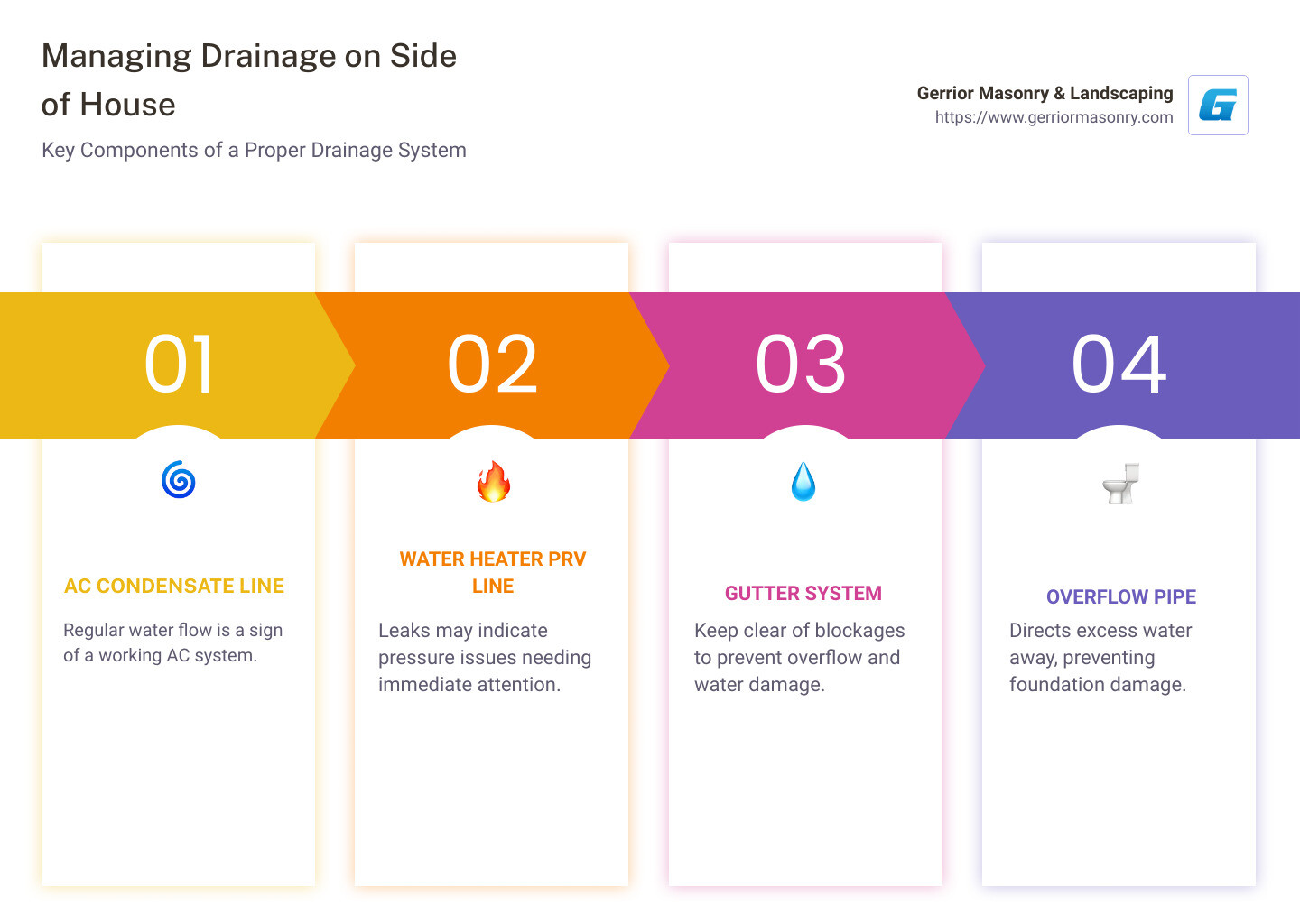
- Identify the Source: It could be an air conditioning (AC) condensate drain, a water heater pressure relief valve (PRV) line, or a gutter system.
- AC Condensate Line: If water drips from this pipe, it’s usually a sign that your AC is working correctly.
- PRV Line: Water leaking here might indicate an issue with your water heater that needs immediate attention.
- Regular Maintenance: Ensure your drainage systems are clear of blockages to prevent leaks.
Ensuring proper drainage not only resolves immediate issues but also safeguards the longevity of your home’s structure and landscape. I’m Joe Gerrior, owner of Gerrior Masonry & Landscaping, with over 34 years of experience helping homeowners tackle water drainage challenges. At our company, we specialize in diagnosing and optimizing drainage systems to improve the functionality and aesthetics of residential properties.
Understanding the Drain on Side of House
When you notice a drain on the side of your house, understand its purpose and functionality. These drains play crucial roles in managing water flow and preventing damage to your home. Let’s break down the main types of pipes you might encounter:
AC Drain Line
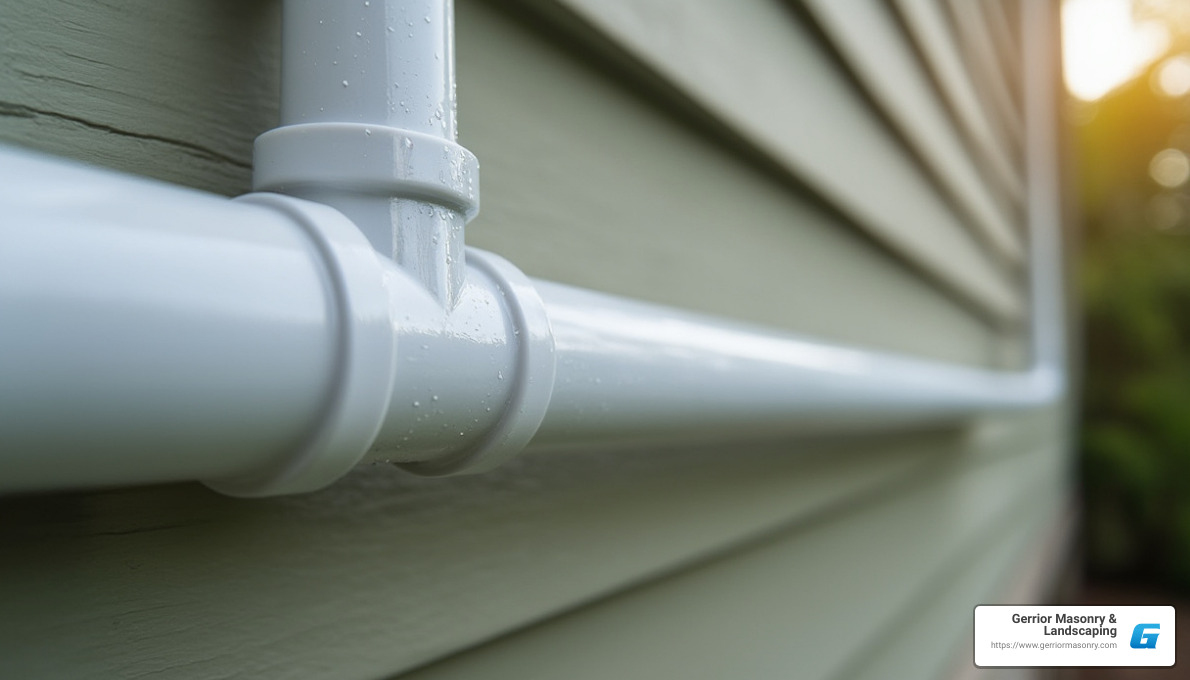
The air conditioning (AC) condensate line is a common sight on the side of many homes. This pipe is responsible for removing moisture that your AC system extracts from the air inside your house. Here’s what you need to know:
- Normal Operation: If you see water dripping from the AC drain line, it’s typically a good sign. It means your AC is working efficiently and the drain line is clear.
- PVC Material: This line is usually made from PVC, a durable and lightweight plastic. It’s about as thick as the circle you make when touching your thumb and index finger together.
PRV Drain Line
The pressure relief valve (PRV) line is another crucial pipe you might find. This line is connected to your water heater and serves a safety function:
- Safety Mechanism: The PRV line releases water if the pressure inside your water heater becomes too high. This prevents potential damage or explosions.
- Immediate Attention: Unlike the AC drain line, water leaking from the PRV line can indicate a problem with your water heater. It’s a signal to call a plumber immediately to inspect and resolve any issues.
Overflow Pipe
An overflow pipe is designed as a backup to handle excess water when the primary systems are overwhelmed:
- Emergency Use: This pipe is often connected to a shallow pan beneath your air handler. It kicks in when your main AC drain line is clogged.
- Temporary Solution: The overflow pipe is not meant for regular use. If you notice water coming from it, it’s time to schedule AC service to prevent further issues.
Understanding these pipes and their functions can help you quickly identify any issues and take appropriate action. Regular maintenance and inspections are key to ensuring these systems work effectively and prevent water-related damage to your home.
Effective Drainage Solutions
When it comes to managing water effectively around your home, there are several solutions that stand out. Let’s explore some of the most effective methods: French drains, rain gardens, sump pumps, and grading improvements.
French Drains
A French drain is a simple yet highly effective solution for redirecting water away from your home. It involves a trench filled with gravel and a perforated pipe that helps guide water away from trouble spots.
- Installation: Typically installed along the perimeter of a home or in areas where water tends to pool.
- Benefits: Helps prevent basement flooding and soil erosion by channeling water away efficiently.
- Maintenance: Requires occasional cleaning to prevent clogs from debris buildup.
Rain Gardens
A rain garden is a beautiful and eco-friendly way to manage stormwater runoff. These gardens are strategically placed to absorb rainwater from roofs, driveways, and other impervious surfaces.
- Design: Composed of native plants and grasses that thrive in wet conditions.
- Functionality: Helps reduce water runoff and improve local water quality by filtering pollutants.
- Aesthetic Appeal: Adds a natural and attractive element to your landscape while serving a practical purpose.
Sump Pumps
A sump pump is essential for homes with basements prone to flooding. It collects and pumps out water that accumulates in a sump basin, typically found in the basement.
- Operation: Automatically activates when water reaches a certain level in the basin.
- Protection: Provides peace of mind during heavy rains or high water table situations.
- Maintenance: Regular checks and cleaning are crucial to ensure it operates effectively when needed.
Grading Improvements
Proper grading is crucial for effective water drainage. It involves shaping the land around your home to direct water away from the foundation.
- Techniques: Adjusting the slope of your yard to ensure water flows away rather than pooling near your house.
- Long-term Benefits: Prevents water damage to your foundation and reduces the risk of basement leaks.
- Professional Assessment: It’s wise to consult with experts to determine the best grading approach for your property.
By implementing these solutions, you can effectively manage water around your home, preventing potential damage and maintaining the integrity of your property. Each method offers unique benefits and can be custom to suit the specific needs of your landscape.
Identifying Common Drainage Problems
Water drainage issues can lead to a host of problems around your home, particularly if they’re not addressed promptly. Let’s explore some common drainage problems you may encounter and how to identify them.
Water Pooling
Water pooling is a frequent issue that occurs when water collects and stagnates in certain areas around your home. This can happen due to improper grading, clogged drains, or inadequate drainage systems. Pooling water not only poses a risk to your home’s foundation but can also lead to mosquito infestations and other nuisances.
- Signs: Look for visible puddles that linger for hours or days after a rainstorm. Check areas near your home’s foundation, driveways, and walkways.
- Causes: Poor landscaping, blocked gutters, or compacted soil that doesn’t allow water to seep through.
Blocked Vents
Another common problem is blocked vents, which can cause moisture buildup and lead to a musty smell inside your home. Vents are crucial for proper air circulation and moisture control, especially in basements and crawl spaces.
- Signs: Check for obstructions like mud, leaves, or debris around vents. Ventilation issues can also manifest as condensation on windows or walls.
- Causes: Accumulated debris, improper installation, or landscaping that blocks airflow.
Musty Smell
A musty smell in your home often indicates moisture problems. This can be a result of poor drainage, blocked vents, or water leaks. A musty odor is not just unpleasant; it can also signal the presence of mold or mildew, which can have health implications.
- Signs: A persistent damp or earthy smell, particularly in basements, kitchens, or bathrooms.
- Causes: Water pooling, blocked vents, or leaks in plumbing or roofing.
Addressing these common drainage problems promptly is essential to maintaining a healthy and safe home environment. Identifying the root cause of these issues is the first step in finding an effective solution. Whether it’s improving grading, clearing blocked vents, or installing a French drain, taking action can prevent more significant problems down the line.
How to Fix Drainage Issues
Addressing drainage issues around your home is crucial to prevent damage and maintain a safe environment. Here are some effective solutions to tackle common problems like clean gutters, extend downspouts, and seal driveways.
Clean Gutters
Keeping your gutters clean is a simple yet vital step in managing water drainage. Gutters direct rainwater away from your home, protecting the foundation and preventing water from pooling around the house.
- Benefits: Clean gutters reduce the risk of water overflow, which can lead to erosion and foundation damage.
- How to Clean: Regularly remove leaves, twigs, and debris from gutters. Consider installing gutter guards to minimize buildup.
Extend Downspouts
Extending downspouts is another effective way to ensure water is directed away from your home. This simple adjustment can prevent water from pooling near the foundation and causing damage.
- Why Extend: Short downspouts discharge water too close to the house, increasing the risk of basement leaks and foundation issues.
- How to Extend: Use downspout extenders or splash blocks to direct water at least 6 feet away from the foundation.
Seal Driveway
A well-sealed driveway can prevent water from seeping into the ground and causing erosion or damage to the foundation. Sealing your driveway creates a water-resistant barrier, helping to manage surface water runoff effectively.
- Benefits: Protects against cracks, potholes, and water damage. A sealed driveway also improves the appearance of your property.
- How to Seal: Clean the driveway thoroughly, fill any cracks, and apply a high-quality sealant to create a protective layer.
By implementing these solutions, you can significantly improve the drainage around your home. Regular maintenance, such as cleaning gutters and extending downspouts, combined with preventive measures like sealing your driveway, can help avoid costly repairs and keep your home safe from water damage.
Next, we’ll explore some frequently asked questions about managing drainage issues around your home.
Frequently Asked Questions about Drain on Side of House
What is the purpose of the pipes on the side of my house?
The pipes you see on the side of your house often serve crucial roles in managing water drainage. Two common types include the AC condensate line and the water heater pressure relief valve (PRV) line.
- AC Condensate Line: This pipe drains the moisture that your air conditioning system removes from the air inside your home. It’s completely normal to see water dripping from this pipe, especially during humid weather. However, if you notice water leaking from a higher pipe near the attic, it might indicate a clogged primary line, and you should contact an AC service professional.
- Water Heater PRV Line: This line acts as a safety feature, releasing water if the pressure inside your water heater becomes too high. If you see water leaking from this pipe, it could be a sign of a malfunction, and you should consider calling a plumber.
How can I prevent water from pooling next to my house?
Water pooling near your home can lead to serious problems, including foundation damage and basement flooding. Here are some strategies to prevent this:
- Grading: Ensure the ground around your home slopes away from the foundation. This helps direct rainwater away from the house, reducing the risk of pooling.
- French Drain: Installing a French drain is a great solution for areas where water tends to collect. This underground drainage system redirects water away from your home, preventing pooling and potential damage.
What should I do if water is leaking from a pipe on the side of my house?
If you notice water leaking from a pipe on the side of your house, it’s important to determine the source and act accordingly:
- AC Service: If the leak is from the AC condensate line and it’s the higher pipe near the attic, this indicates a clogged primary line. Contact an AC service professional immediately to prevent water damage.
- Plumber: If the leak is from the water heater PRV line, it could be a sign of high pressure or a malfunction. In this case, it’s best to call a plumber to assess and fix the issue.
By understanding these common questions and their solutions, you can better manage drainage around your home and prevent potential issues. Next, we’ll dig into the conclusion, where we highlight the expertise of Gerrior Masonry & Landscaping in providing high-quality drainage solutions.
Conclusion
At Gerrior Masonry & Landscaping, we understand the importance of effective water management for your home. Our expertise in drainage solutions ensures that your property remains safe and well-protected from water-related issues. With over 30 years of experience in the industry, we have honed our skills to provide high-quality results that stand the test of time.
Our team specializes in designing and installing custom drainage systems custom to your property’s unique needs. Whether it’s a French drain for redirecting water away from your foundation or a sump pump to prevent basement flooding, we have the knowledge and tools to address your concerns. We also offer grading improvements to ensure water flows away from your home, reducing the risk of water pooling and potential damage.
One of our key advantages is the personal oversight of every project by our owner, ensuring that each job is completed to the highest standards. Our skilled team uses only the best materials and techniques, guaranteeing durable and aesthetically pleasing outcomes.
If you’re experiencing issues with the drain on the side of your house, or if you want to prevent future problems, reach out to us. We are committed to providing you with comprehensive solutions and peace of mind. For more information on our services, visit our drainage systems page.
By choosing Gerrior Masonry & Landscaping, you’re not just investing in a solution—you’re investing in the long-term health and safety of your property. Let us help you maintain the beauty and integrity of your home with our expert drainage services.
