
Driveway Drainage Pavers: Ultimate Eco-Friendly 2025
Why Driveway Drainage Problems Need Professional Solutions
Heavy rain can turn a beautiful driveway into a miniature lake, causing water damage to your landscape, foundation, and local waterways. Traditional asphalt and concrete surfaces are impermeable, forcing rainwater to run off, carrying pollutants with it. Driveway drainage pavers offer a modern, eco-friendly solution to this common problem.
Permeable paver systems, like those from TRUEGRID, are designed to allow water to pass through the surface and into the ground below, mimicking natural filtration. This innovative approach not only prevents flooding and erosion but also helps recharge groundwater supplies. Key benefits include:
- Superior Drainage: Prevents standing water and ice formation.
- Environmental Protection: Filters pollutants and reduces strain on storm drains.
- Durability: Built to withstand heavy vehicle traffic and harsh weather.
- Aesthetic Appeal: Available in various styles, including gravel and grass-filled options.
At Gerrior Masonry & Landscape Construction, we have over 30 years of experience installing high-performance drainage solutions for homeowners throughout Massachusetts. We specialize in creating driveways that are not only beautiful but also functional and sustainable.

What Are Permeable Pavers and How Do They Work?
Unlike traditional solid surfaces, permeable pavers feature wider joints filled with a special aggregate. This design allows rainwater to flow directly through the surface instead of pooling or running off. Beneath the pavers, a carefully engineered base of various-sized stones acts as a natural filtration system. This sub-base cleans the water as it seeps back into the ground, replenishing the water table and preventing pollutants from entering our waterways.
Systems like TRUEGRID permeable pavers are so efficient they can handle over 1,000 inches of rain per hour, virtually eliminating runoff from your property. This not only protects your home and landscape but also contributes to a healthier local environment. Our expert installation ensures this system functions flawlessly, providing a durable and beautiful driveway for decades.
The Complete Guide to Driveway Drainage Pavers
Key Benefits of Using Driveway Drainage Pavers
Choosing driveway drainage pavers offers significant advantages for your property and the environment. These systems are a smart, long-term investment in managing water effectively.
- Flood and Puddle Prevention: By allowing rainwater to drain directly into the ground, permeable pavers prevent water from pooling on your driveway. This not only protects your home’s foundation from the constant threat of water damage and hydrostatic pressure but also eliminates unsightly, hazardous puddles that can be slipping risks or breeding grounds for mosquitoes.
- Erosion Control: Uncontrolled stormwater runoff can wash away topsoil and damage your landscaping. By capturing rainfall where it lands, these systems prevent topsoil and landscape mulch from being washed into storm drains, which protects local streams and ponds from sediment pollution that harms aquatic life.
- Reduced Strain on Storm Drains: Many municipal storm drains are overwhelmed during heavy rain, leading to local flooding and water pollution. Permeable systems reduce the volume of water entering these drains, which is a key principle of modern stormwater management.
- Improved Water Quality: The aggregate layers beneath permeable pavers act as a natural filter, trapping oil, gasoline, antifreeze, heavy metals from brake dust, and other pollutants from vehicles before they can reach groundwater or local streams. This helps protect our natural water resources.
- Reduced Ice Buildup: In cold climates like Massachusetts, standing water on driveways quickly turns to ice. Because permeable pavers drain so efficiently, there is less surface water to freeze, creating a safer surface during winter and reducing damage from the destructive freeze-thaw cycles that cause cracks, heaving, and potholes in traditional asphalt and concrete surfaces. For more information on how we handle water issues, explore our drainage system solutions.
- Enhanced Curb Appeal and Property Value: A professionally installed permeable paver driveway is a high-end feature that significantly boosts curb appeal. Its combination of sophisticated aesthetics, eco-friendly functionality, and long-term durability makes it an attractive selling point that can increase your overall property value.
Types, Materials, and Design Options
Gone are the days when a functional driveway had to be boring. Modern driveway drainage pavers offer a wide array of styles to match any home’s aesthetic.
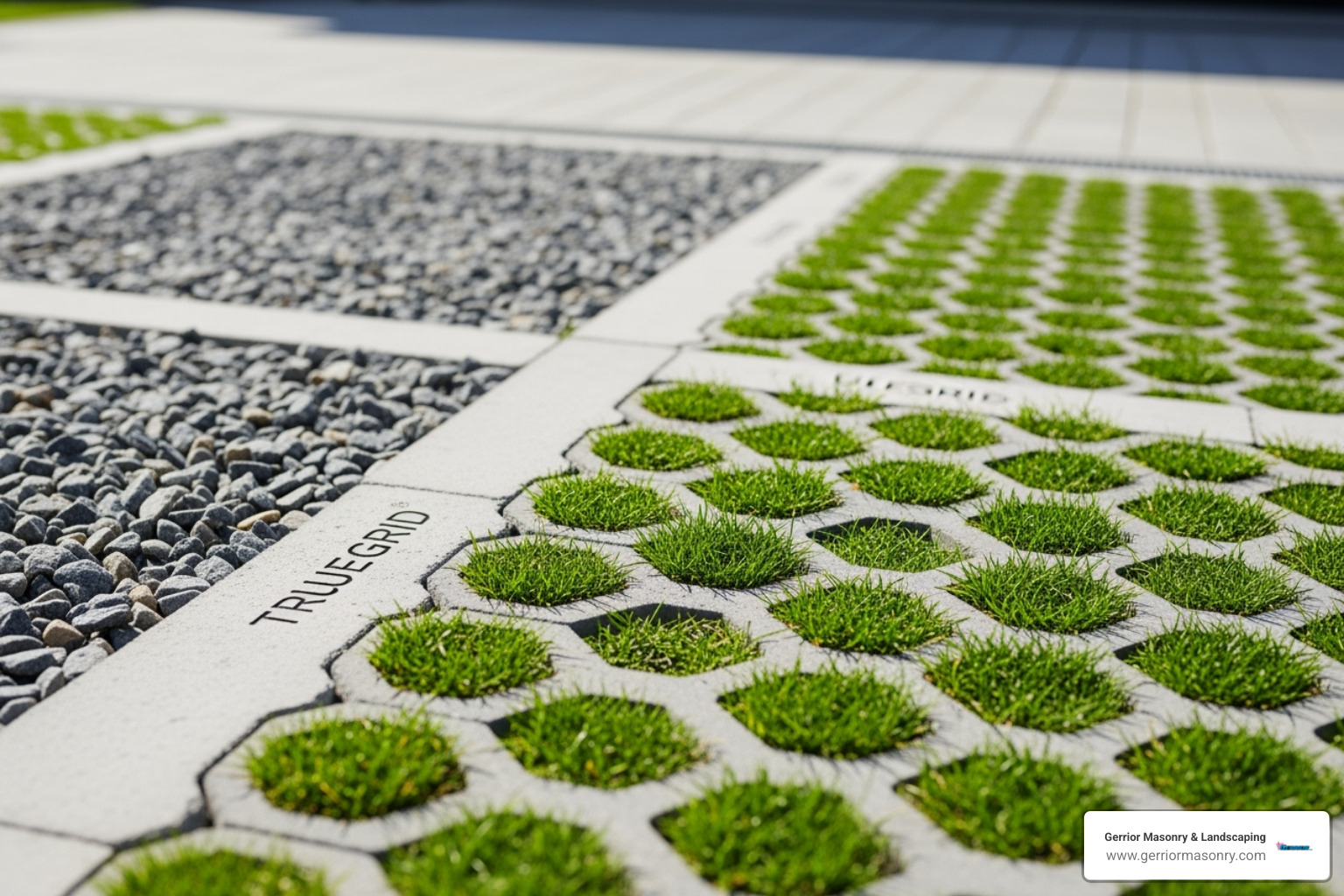
The most popular systems are Permeable Interlocking Concrete Pavements (PICP) and plastic grid systems. PICP systems use solid concrete pavers manufactured with built-in spacer bars that create wide, uniform joints. These joints are then filled with small, clean aggregate to allow for drainage. Alternatively, innovative systems like TRUEGRID use high-strength grids made from 100% recycled plastic. These grids provide the structure, and the entire surface—the grid cells themselves—is filled with a permeable material, offering exceptional durability and environmental benefits.
These grid systems can be filled with different materials to achieve your desired look:
- Gravel Fill: For a classic, clean appearance, the grids are filled with angular gravel. This creates a stable, highly permeable surface that stays put and looks great.
- Grass Fill: For a greener, more natural aesthetic, grass can be grown within the paver cells. This creates a living driveway that supports vehicle weight while blending seamlessly with your lawn.
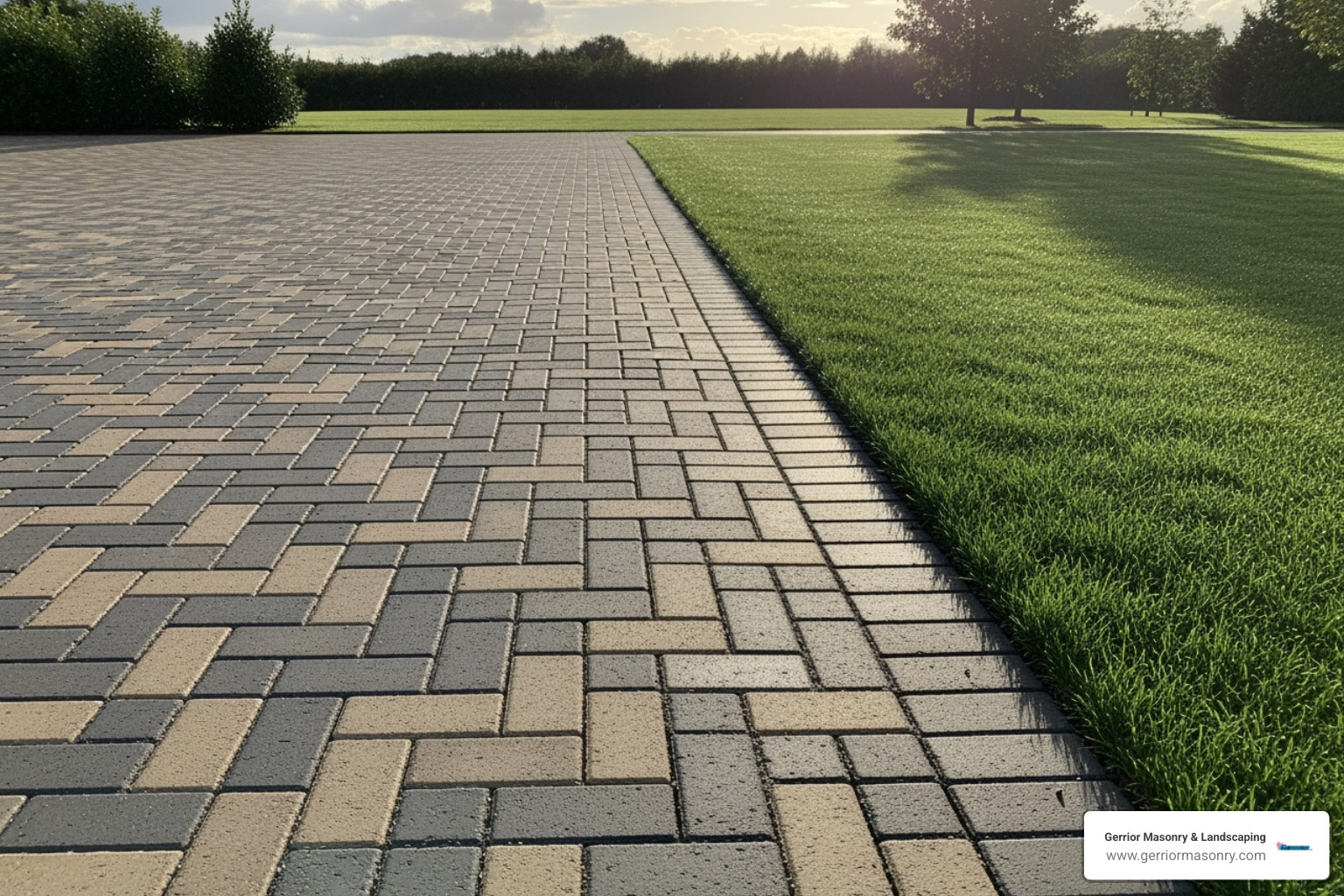
With so many colors, textures, and patterns—such as classic running bond, elegant herringbone, or intricate basketweave—available, we can help you design a custom driveway. Adding contrasting paver borders or accents can further define the space and create a truly unique look that is both beautiful and highly functional. Explore some of our driveway design work to see the possibilities.
Installation and Maintenance for Driveway Drainage Pavers
A permeable paver system is only as good as its installation. A proper build is crucial for long-term performance and durability.
The Installation Process:
- Excavation: We begin by excavating the area to a specific depth, which is carefully calculated based on soil type, local climate, and the expected vehicle load. For clay soils or heavy rainfall areas, a deeper base is required.
- Geotextile Fabric: A special non-woven geotextile fabric is laid down to separate the native subgrade soil from the new aggregate base. This is a critical step that prevents mixing and clogging while allowing water to pass through freely.
- Aggregate Base: We install and compact multiple layers of open-graded stone. This base typically consists of a thick layer of larger, clean-crushed stone (e.g., ASTM No. 2) for structural support and water storage, followed by a thinner “choker” course of smaller stone (e.g., ASTM No. 57) to create a level bed for the pavers.
- Edge Restraints: Before laying the pavers, sturdy edge restraints are installed around the perimeter to lock the system in place and prevent any lateral shifting of the pavers over time.
- Paver Installation: The chosen pavers are laid in the desired pattern, and the joints are carefully filled with a small, clean aggregate (e.g., ASTM No. 8 or 9 stone) to allow for maximum water flow.
Professional installation is key to ensuring every layer is correctly graded and compacted. Our experienced team at Gerrior Masonry & Landscaping has the expertise to build a permeable driveway that lasts. Learn more about our hardscaping services.
Long-Term Maintenance:
Permeable pavers are low-maintenance, not no-maintenance. To keep them functioning optimally, simply:
- Keep the surface clear of leaves, dirt, and organic debris to prevent the joints from clogging. Regular sweeping or using a leaf blower is usually sufficient.
- Remove any occasional weeds that may appear in the joints by hand. Avoid using herbicides that could contaminate the groundwater below.
- Periodically, you may need to replenish the joint aggregate if it settles over time. This is a simple process of sweeping new aggregate into the joints.
To maintain permeability, it’s crucial to avoid using sand as a joint filler or applying any surface sealants, as these will block water flow. If the surface becomes heavily clogged with fine sediment over time, professional cleaning with a regenerative air sweeper can restore its function.
With this minimal care, your permeable paver driveway can last for 20-30 years or more.
Cost, Durability, and Limitations
When considering a new driveway, it’s important to weigh the initial investment against the long-term value and performance.
Cost Comparison and ROI:
While the upfront cost of driveway drainage pavers can be higher than traditional options, they provide a significant return on investment over time. Permeable systems often eliminate the need for separate, costly drainage infrastructure like French drains, catch basins, or underground piping, saving thousands on installation. The table below provides a general cost comparison using averages compiled from public internet sources; these figures are not actual prices for Gerrior Masonry & Landscape Construction. For an accurate estimate, contact us for a consultation.
Typical internet-reported averages (your project may differ): permeable grid systems (e.g., TRUEGRID) ~ $15/sq ft; traditional concrete ~ $10/sq ft; asphalt ~ $5/sq ft. To reflect project complexity and upgrades, the ranges below extend to at least 3x those averages.
| Paving Type | Average Cost per Square Foot* |
|---|---|
| TRUEGRID Permeable Pavers | $8 – $50+ |
| Traditional Concrete | $5 – $35+ |
| Asphalt | $2 – $20+ |
These are broad average ranges gathered from internet sources and are not quotes for Gerrior Masonry & Landscape Construction. Actual costs vary based on site conditions, design, base depth, drainage needs, and finishes.
Durability and Lifespan:
Permeable paver systems are incredibly durable. Unlike monolithic concrete slabs that are prone to cracking under stress, the interlocking nature of pavers allows them to flex with ground movement and temperature changes. This prevents the large, unsightly cracks that plague traditional driveways. Furthermore, if a paver is ever stained or damaged, it can be individually replaced, a far simpler and more cost-effective repair than patching asphalt or resurfacing an entire concrete driveway. With a typical lifespan of 20-30 years or more, they are a long-lasting investment that can prevent far more expensive problems, such as water damage to your home’s foundation. If you’re already facing such issues, we also offer expert foundation repair services.
Limitations and Considerations:
- Soil Type: In areas with heavy, poorly-draining clay soil, the system design must be more robust, potentially requiring a deeper base or an underdrain system to help manage and discharge excess water. A percolation test of the soil is often recommended during the planning phase.
- Slope: Permeable paver systems perform best on relatively flat surfaces or gentle slopes (typically under 5%). For steeper driveways, special engineering techniques like terracing or check dams within the base layer are required to slow water flow and prevent erosion of the sub-base.
- Clogging: Over time, fine sediment can accumulate in the joints if the driveway is not maintained. Regular sweeping helps prevent this, and a professional cleaning can restore permeability if needed.
- Regulations: Many towns in Massachusetts are encouraging or even mandating permeable surfaces to manage stormwater. Check with your local municipality, as you may be eligible for incentives, tax credits, or rebates for choosing an eco-friendly option.
Gerrior Masonry & Landscape Construction is based in Woburn, MA, and services Middlesex and Essex County, Massachusetts.
