
Fireplace Caulking: Ultimate Safe Guide 2025
Why Fireplace Caulking Matters for Your Home
Fireplace caulking is the process of sealing gaps around your fireplace with specialized high-temperature sealants. If you see cracks where heat and soot escape, it’s time to seal them.
Quick Answer: How to Apply Fireplace Caulk
- Choose a high-temperature sealant rated for your fireplace’s heat exposure.
- Clean the surface by removing old caulk, dust, and debris.
- Apply the sealant with a caulking gun in a steady bead.
- Smooth the joint with a wet finger or tool.
- Cure according to the manufacturer’s instructions before use.
Proper fireplace caulking is crucial for safety and efficiency. It prevents dangerous smoke and carbon monoxide (CO) leaks into your living space, a critical safety measure as CO is a highly toxic, odorless gas. A complete seal ensures all combustion byproducts are vented safely up the chimney. Furthermore, caulking stops heat loss from drafts around the fireplace, which improves your home’s energy efficiency and can lower heating bills. It also keeps your walls and mantel free from the unsightly soot stains that escaping smoke can cause. The key is using a sealant specifically designed for extreme temperatures, as standard caulk will quickly fail, crack, or even become a fire hazard when exposed to heat.
Beyond safety, caulking also improves your hearth’s appearance by creating clean, finished lines and filling unsightly gaps. This is a manageable DIY project if you use the right materials.
I’m Joe Gerrior, owner of Gerrior Masonry & Landscape Construction Corp. With over 34 years of experience, I’ve seen how proper caulking protects homes. Understanding the right approach ensures your fireplace remains both safe and stylish.

Fireplace caulking terms to remember:
A Step-by-Step Guide to Fireplace Caulking
Choosing the Right Sealant
Selecting the correct sealant is critical for safety and durability. Unlike regular caulk, fireplace sealants (or high-temperature caulks) are formulated to withstand intense heat.
The two primary types are silicone-based and silicate-based.
- High-Temperature Silicone Sealants: Best for areas with significant heat but no direct flame contact, like around glass doors or metal surrounds. They remain flexible to accommodate material expansion and contraction, adhering well to non-porous surfaces like metal and glass. They are typically rated up to 650°F (343°C).
- Silicate-Based Sealants: Essential for areas with direct flame exposure or extreme heat, such as inside the firebox. These can resist temperatures up to 2732°F (1500°C). They cure to a hard, durable finish and bond exceptionally well to porous surfaces like brick and stone.
Here’s a quick comparison:
| Feature | High-Temperature Silicone Sealant | Silicate-Based Sealant |
|---|---|---|
| Temperature Rating | Up to 650°F (343°C) | Up to 2732°F (1500°C) |
| Direct Flame Exposure | Not recommended | Can handle direct flame exposure |
| Flexibility | Flexible, accommodates movement | Cures hard, less flexible |
| Primary Use | Gaps around surrounds, glass doors, metal inserts | Cracks in fireboxes, fire bricks, areas with direct flame contact |
| Adhesion | Good on non-porous surfaces (metal, glass) | Excellent on porous surfaces (brick, stone) |
Using the wrong sealant is hazardous. Standard caulk can melt, catch fire, or release toxic fumes when heated. Always check the product’s temperature rating and recommended use to ensure it’s safe for your fireplace.
Mortar vs. Sealant: What’s the Difference?
It’s important to know whether your repair needs mortar or sealant.
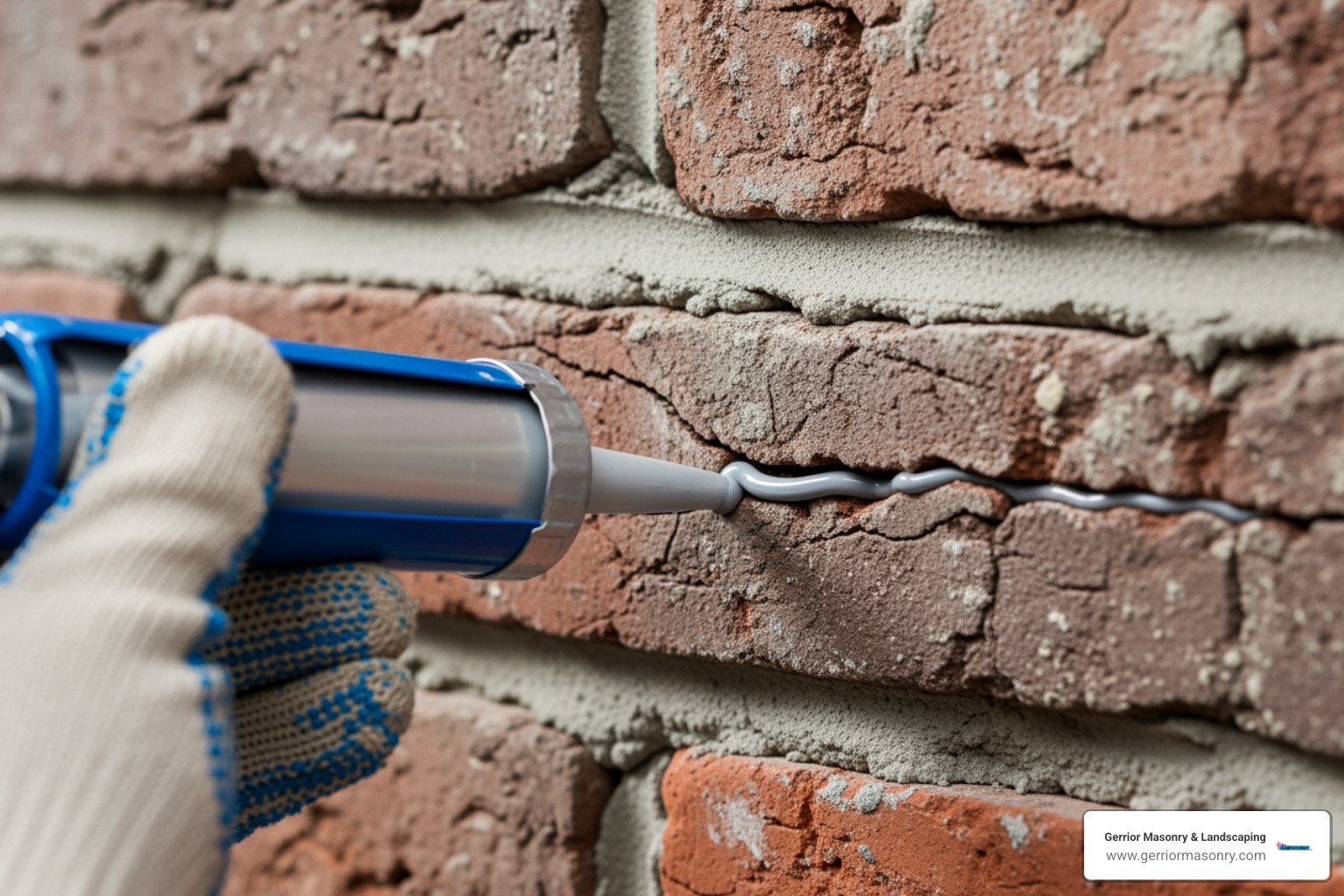
- Fireplace Mortar (Refractory Cement): This is a rigid, structural material used for building and repairing the firebox itself. It bonds firebricks together and fills large, crumbling joints. It is not flexible and is designed for direct contact with extreme heat.
- Fireplace Sealant (High-Temperature Caulk): This is a flexible, non-structural material used to seal smaller gaps and cracks where movement from thermal expansion is expected. It creates an airtight seal to prevent smoke leaks and heat loss around inserts, doors, and decorative surrounds.
Key Differences Summarized:
| Feature | Fireplace Mortar (Refractory Cement) | Fireplace Sealant (High-Temperature Caulk) |
|---|---|---|
| Purpose | Structural repairs, bonding firebricks | Non-structural sealing of gaps and cracks |
| Flexibility | Rigid, sets hard | Flexible, accommodates thermal expansion/contraction |
| Application | Large gaps, deteriorated mortar joints, re-laying bricks | Small cracks, joints around inserts, glass doors, surrounds |
In short: use mortar for structural firebox repairs and sealant for smaller, non-structural gaps. For significant damage, consulting a masonry expert is the safest choice.
Surface Preparation for a Lasting Seal
Proper preparation is the most critical step for a durable, long-lasting seal. A clean, dry surface ensures the new sealant achieves maximum adhesion, and rushing this stage often leads to failure.
- Safety First: Ensure the fireplace is completely cool (wait at least 24 hours). Protect your floor and nearby furniture with drop cloths and wear safety glasses and gloves.
- Remove Debris: Use a fireplace brush and a shop vacuum to remove all ash, soot, and loose particles from the joints you plan to seal. A vacuum is key for pulling fine dust from porous surfaces.
- Scrape Out Old Material: With a putty knife or utility knife, carefully scrape away old, failing caulk or crumbling mortar. For stubborn material, a small chisel can be used gently. The goal is a clean, stable channel for the new sealant.
- Clean the Joints: Use a wire brush to scrub away any remaining residue from porous surfaces like brick. For non-porous surfaces like metal or glass, wipe them with a solvent like rubbing alcohol. Ensure all surfaces are completely dry before proceeding.
- Mask for Clean Lines (Optional): Apply painter’s tape along the edges of the joint for a professional finish. Remove the tape right after smoothing the new sealant, before it forms a skin.
How to Apply Fireplace Caulking
With a prepared surface, you’re ready to apply the sealant. A steady hand is key.
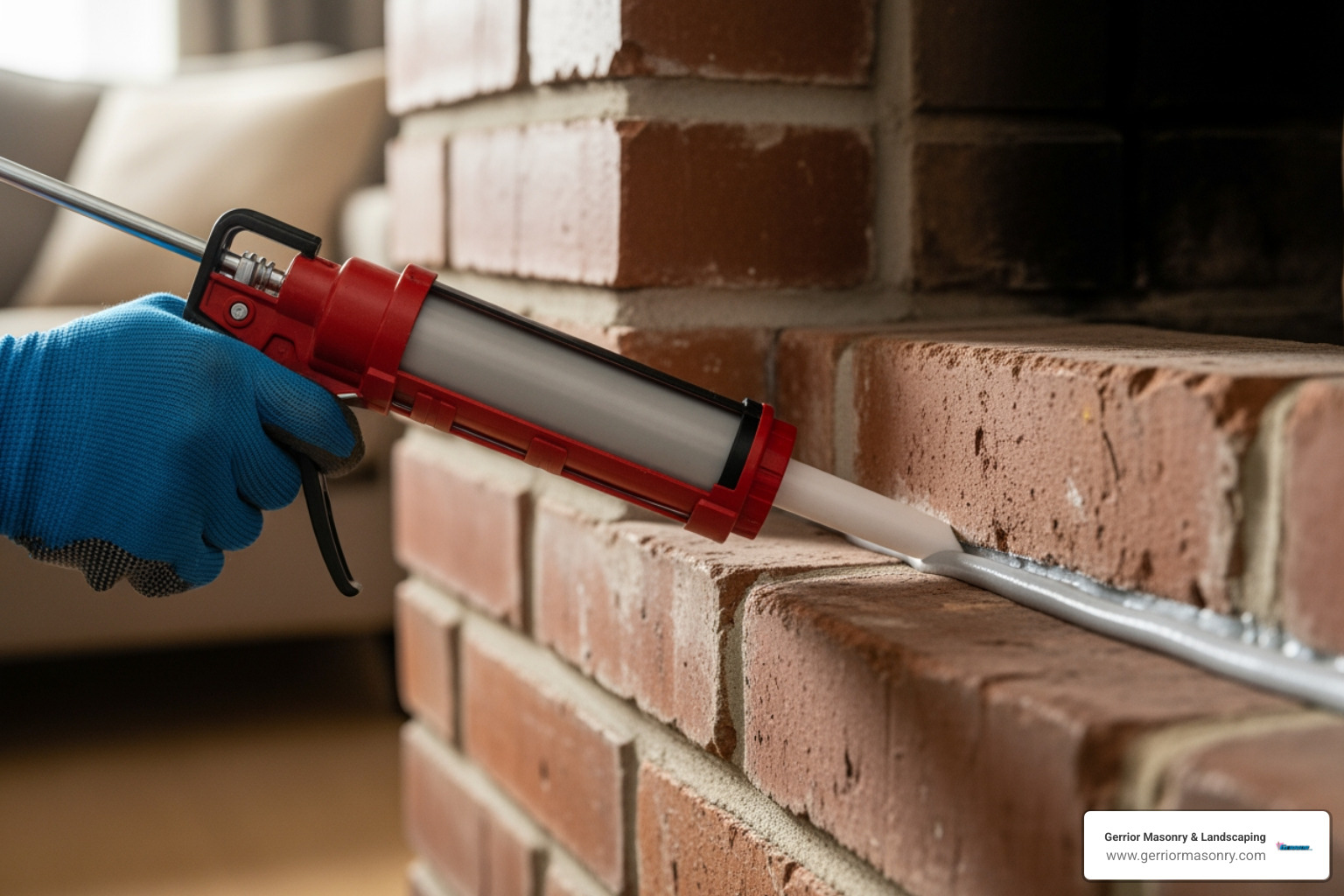
Tools You’ll Need:
- Caulking Gun
- High-Temperature Sealant
- Utility Knife
- Smoothing Tool or Glove
- Damp Cloths
Step-by-Step Application:
- Prepare the Tube: Cut the nozzle of the sealant tube at a 45-degree angle to match the gap size. Puncture the inner seal with a long nail or the tool on the caulking gun.
- Load the Gun: Place the tube in the caulking gun and squeeze the trigger until sealant appears at the tip.
- Apply the Sealant: Hold the gun at a 45-degree angle and apply steady pressure to lay a continuous bead of sealant that completely fills the gap. Work from the bottom up on vertical joints. Release the trigger pressure to stop the flow.
- Tool the Joint: Immediately after applying, smooth the bead with a wet, gloved finger or a caulk tool. Press firmly to ensure the sealant makes good contact with both sides of the joint.
- Clean Up: If you used painter’s tape, remove it carefully while the caulk is still wet. Wipe away any excess sealant with a damp cloth.
Applying fireplace caulk correctly ensures a durable, professional-looking seal. For more complex repairs, especially those involving the structural integrity of your chimney, we recommend consulting professionals. You can find more information about our services here: More info about chimney repair services.
Finishing Touches and Important FAQs
Curing Time and Safety
Once your fireplace caulking is applied, you must let it cure. Curing is the process where the sealant hardens and gains its heat-resistant properties. This is not instant.
- Curing Time: The time required for a full cure varies widely by product, temperature, and humidity. It can range from 24 hours to several days. Some silicate-based products require exposure to a fire to fully harden. Always follow the manufacturer’s instructions on the packaging and wait for the full cure time before using your fireplace.
- Safety Risks: Using the wrong type of sealant is a serious hazard. Standard household caulk is not designed for high temperatures and can melt, ignite, or release toxic fumes when heated. This poses a fire risk and a health hazard. Always use a product specifically labeled as “high-temperature,” “fireplace,” or “refractory” sealant.
Common Mistakes to Avoid
Avoiding a few common errors will ensure a safe and durable seal.
- Using the Wrong Product: This is the most dangerous mistake. Never use standard acrylic or silicone caulk not rated for high heat. They can melt, release toxic fumes, or ignite. Always use a sealant explicitly labeled for fireplace or high-temperature use.
- Inadequate Surface Preparation: Applying sealant over dust, soot, or old, crumbling material will cause it to fail. The new bead won’t adhere properly and will quickly peel or crack. Take the time to thoroughly clean the joint.
- Applying the Wrong Amount: Too little sealant won’t fill the gap, compromising the seal. Too much is wasteful and messy. Apply a bead slightly larger than the gap, then tool it to a smooth finish.
- Forgetting to Tool the Joint: Tooling (smoothing) the bead with a wet finger or tool is essential. It presses the sealant into the joint for a strong, airtight bond and creates a clean, professional look.
- Ignoring the Cure Time: Using the fireplace before the sealant has fully cured can ruin the bond. Heat can cause it to bubble or crack. Some products require a specific heat-curing schedule. Always follow the manufacturer’s instructions.
Finding and Budgeting for Your Project
Now that you know the process, here’s where to find materials and what to budget.
Where to Purchase Fireplace Sealants:
Specialized fireplace sealants are available at most large hardware stores, local masonry supply stores, and online retailers. Look for reputable brands known for high-temperature products like Rutland, DAP, or 3M.
Price Ranges:
Please remember that these are average costs based on internet data and not actual costs for Gerrior Masonry services. Prices can vary significantly based on brand, product type, and temperature rating.
- Sealant Tubes (10.1-10.3 fl. oz. cartridge): You can expect to pay anywhere from $10 to $50 or more per tube, with highly specialized fire-blocking sealants at the upper end of this range.
- Caulking Guns: A basic caulking gun can cost $10-$20, while a more heavy-duty gun might range from $30-$50+.
- Other Tools: Utility knives, wire brushes, and smoothing tools are generally inexpensive, often costing $5-$15 each.
For an example of detailed technical specifications for a high-temperature sealant, you can refer to the Kraken Bond product page: Kraken Bond Fireplace Sealant Specs.
While many minor fireplace caulking repairs can be a rewarding DIY project, some situations call for professional expertise. If you’re dealing with extensive mortar damage, structural concerns, or are simply unsure about the best approach, it’s always wise to consult with experienced masonry professionals.
We at Gerrior Masonry & Landscape Construction specialize in a wide range of masonry services, including chimney repairs and fireplace maintenance. With over 30 years of experience, our skilled team and owner oversight ensure high-quality results for our clients.
Gerrior Masonry & Landscape Construction is based in Woburn, MA, and proudly services Middlesex and Essex County, Massachusetts.
