
Fireplace surround repair: Win with 5 Easy Steps
Restoring the Heart of Your Home
Fireplace surround repair is essential for maintaining the safety, functionality, and beauty of your home’s focal point. A fireplace is often the centerpiece of a living room, a gathering spot for family and friends that provides warmth and ambiance. It’s more than just a heat source; it’s a key architectural feature that adds significant value and appeal to your property. A well-maintained fireplace can increase your home’s resale value, while a damaged one can be a safety hazard and a major deterrent to potential buyers.
Over time, the constant cycle of heating and cooling, accidental impacts from firewood or tools, and the insidious effects of moisture can lead to visible damage. You might notice cracks spidering across the stone, chips missing from the mantel, or mortar crumbling between the bricks. While many of these minor issues are perfect for a determined DIYer, knowing how to perform the repair correctly is crucial to ensure a lasting and safe result.
Quick Answer: Repairing Your Fireplace Surround
- Assess the damage: Inspect for cracks, chips, loose pieces, or crumbling mortar. Note the location and severity.
- Gather materials: Get safety gear, cleaning supplies, and the correct repair compound for your surround’s material (epoxy, caulk, or mortar).
- Clean the area: Thoroughly remove all dust and debris from the damaged section for proper adhesion.
- Apply repair compound: Use the appropriate filler according to product directions, pressing it firmly into the damage.
- Smooth and cure: Level the repair and let it dry completely as specified, usually 24-48 hours.
- Know when to call a pro: For large structural cracks or extensive damage, professional help is required for safety.
I’m Joe Gerrior, owner of Gerrior Masonry & Landscape Construction Corp. With over 34 years of experience in Fireplace surround repair across Massachusetts, I’m here to share which fixes you can tackle and when to call in an expert.
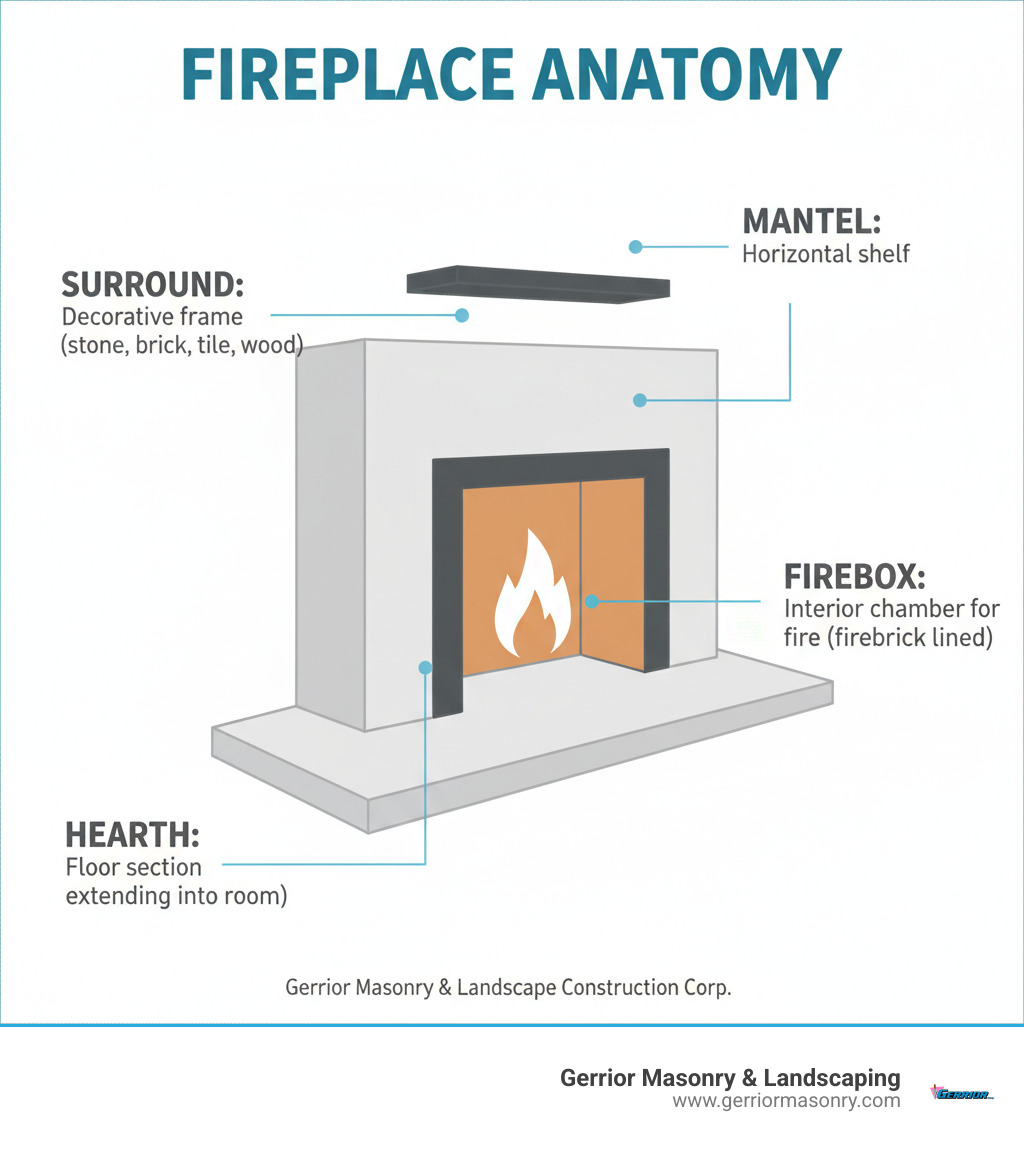
Your Step-by-Step Guide to Fireplace Surround Repair
Most minor fireplace surround issues are fixable with a few hours of work. Understanding the problem and the right approach is the key to a successful DIY project.
Signs Your Fireplace Surround Needs Repair
Catching damage early saves money and prevents small issues from becoming structural nightmares. Here’s what to look for:
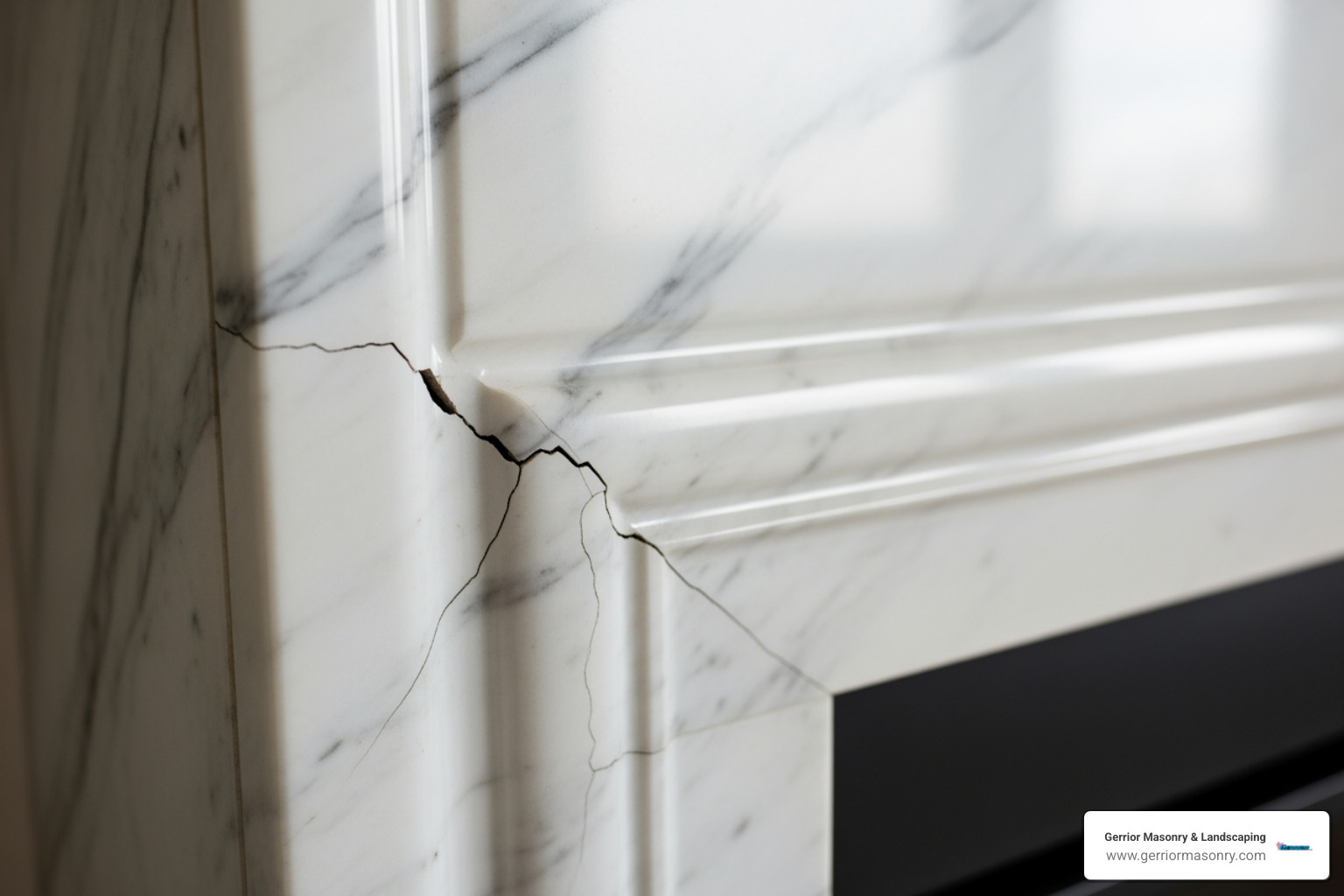
- Visible Cracks: Hairline fractures from heat stress can widen over time, trapping soot and leading to bigger breaks. They should be sealed promptly to prevent further damage.
- Chips and Spalling: Chips from impacts are cosmetic, but spalling (flaking surfaces) indicates moisture damage. Water freezes and expands inside the masonry, forcing the face to pop off and weakening the material.
- Discoloration or Stains: Persistent stains are clues. Black soot suggests drafting issues. White powder (efflorescence) means water is moving through the masonry. Brown stains can point to rust from failing metal components.
- Crumbling Mortar Joints: Deteriorating mortar is a serious issue. It weakens the entire structure, loosening bricks or stones and compromising the integrity of the surround.
- Loose Pieces: Any wobbly brick, tile, or stone is an immediate safety hazard. It could fall and cause injury or damage and indicates a failure in the bonding material that must be addressed.
For more information on maintaining your entire fireplace system, check out our resources on fireplace repairs.
Common Surround Materials and Damage Types
The material of your surround dictates the type of damage and the repair method.
- Stone (Marble, Granite, Limestone): Prone to hairline cracks from heat, as well as chips and scratches from impacts.
- Brick: Commonly suffers from crumbling mortar joints, spalling (flaking), and chipped bricks due to moisture and heat cycles.
- Tile (Ceramic, Porcelain): Can experience cracked or loose tiles, chips, and deteriorating grout lines.
- Wood (Mantels and Trim): While beautiful, wood is combustible and vulnerable to cracks, dents, scratches, and discoloration from radiant heat. It is critical that all wood components adhere to strict clearance requirements from the firebox opening, as specified by the National Fire Protection Association (NFPA) 211 standards. Insufficient clearance can lead to pyrolysis, a process where wood slowly degrades from heat until it can auto-ignite at a much lower temperature, creating a serious fire hazard.
All materials are susceptible to heat damage from expansion/contraction and impact damage from accidents. For more details on stone, visit our page on stonework repairs.
Tools and Materials for the Job
Having the right tools and materials is key to a successful fireplace surround repair.

Essential Supplies:
- Safety Gear: Always wear safety glasses, gloves, and a dust mask.
- Cleaning Supplies: A stiff brush, shop vacuum, and clean cloths are necessary for preparing the surface.
- Application Tools: Putty knife, trowel, and a caulking gun.
- Repair Compounds: The right compound is critical.
- Epoxy Repair Kit: For stone and marble, choose a two-part epoxy with a coloring kit to match your stone.
- Mortar: The type of mortar is critical. For general brick surround repair (outside the firebox), Type N mortar is typically used, as it has a good balance of strength and flexibility suitable for most exterior and interior masonry. For any repairs inside the firebox where materials are exposed to direct flame and extreme temperatures, you must use refractory mortar. This is a high-temperature cement specifically designed to withstand thermal shock and temperatures exceeding 2000°F, unlike standard mortar which would crack and fail.
- Refractory Caulk: This high-temperature sealant is for filling small cracks and gaps in high-heat areas like the firebox or around an insert. It is not for large gaps or structural repairs. For more details, see this discussion on fireplace mortar repair.
DIY Fireplace Surround Repair: Cracks and Chips
With patience and the right materials, you can fix minor cracks and chips in a stone or marble surround.
- Clean the Area: A pristine surface is non-negotiable for a lasting repair. For smooth stone like marble or granite, use a pH-neutral stone cleaner and a soft cloth. For brick or rougher stone, a stiff-bristled brush (not wire, which can scratch) can help dislodge debris. Use a shop vacuum with a crevice tool to meticulously remove every speck of dust from inside the crack or chip. Any remaining debris will compromise the bond of the filler.
- Prepare the Filler: Mix a two-part stone epoxy according to the product’s instructions. Use the included tinting pigments to carefully match your stone’s color, testing on an inconspicuous spot first.
- Apply the Epoxy: Using a putty knife or razor blade, press the mixed epoxy into the crack or chip. Slightly overfill the damaged area to account for sanding.
- Cure and Smooth: Allow the epoxy to cure completely (a few hours to overnight). Once hardened, carefully scrape the excess material off with a razor blade held at a low angle.
- Finish and Polish: Wet-sand the repair with fine-grit sandpaper (400-grit and up) until it is flush and smooth with the surrounding stone. For a high-gloss finish, you may need to use a grinder with polishing pads.
Repairing Stone vs. Brick Surrounds
Repairing stone and brick surrounds requires different approaches.
Stone Repair:
- Focus: Aesthetics and precision. The goal is an invisible repair.
- Process: Filling cracks and chips with color-matched epoxy, followed by careful sanding and polishing to blend with the natural stone.
Brick Repair:
- Focus: Structural integrity. The priority is sound bricks and mortar joints.
- Process: The core of brick repair is repointing. This involves removing old mortar to a depth of about 3/4 inch, cleaning the joint, and then packing fresh Type N mortar firmly into the space. The new mortar is applied in layers and then “tooled” to create a smooth, concave surface that matches the other joints. This process restores the structural bond and seals out moisture. Severely damaged bricks may need to be chiseled out and replaced entirely.
While stone repair is about seamless cosmetic fixes, brick repair often addresses the structural bonding of the masonry. If you’re dealing with brick fireplace problems, our detailed guide on brick fireplace repair can provide more specific guidance.
Prevention and When to Call a Professional
A few simple habits can prevent damage and save you from costly repairs down the road.
Preventing Future Damage
- Clean Regularly: Use gentle cleaners appropriate for your surround’s material to remove soot and dust. Avoid harsh chemicals.
- Use a Fireplace Screen: A screen protects your surround from sparks and accidental impacts from rolling logs or fireplace tools.
- Control Moisture: Address any signs of dampness or water stains immediately, as moisture is a primary cause of masonry deterioration.
- Inspect Periodically: Check for new cracks, chips, or loose pieces at the beginning of each season. Early detection makes repairs easier.
- Schedule Annual Inspections: Have a certified chimney sweep inspect your entire fireplace and chimney system annually. They can spot hidden issues within the flue or chimney structure that you can’t see, preventing major problems before they start.
Knowing When to Hire an Expert
While DIY is great for minor fixes, some issues require a professional to ensure safety and prevent further damage.
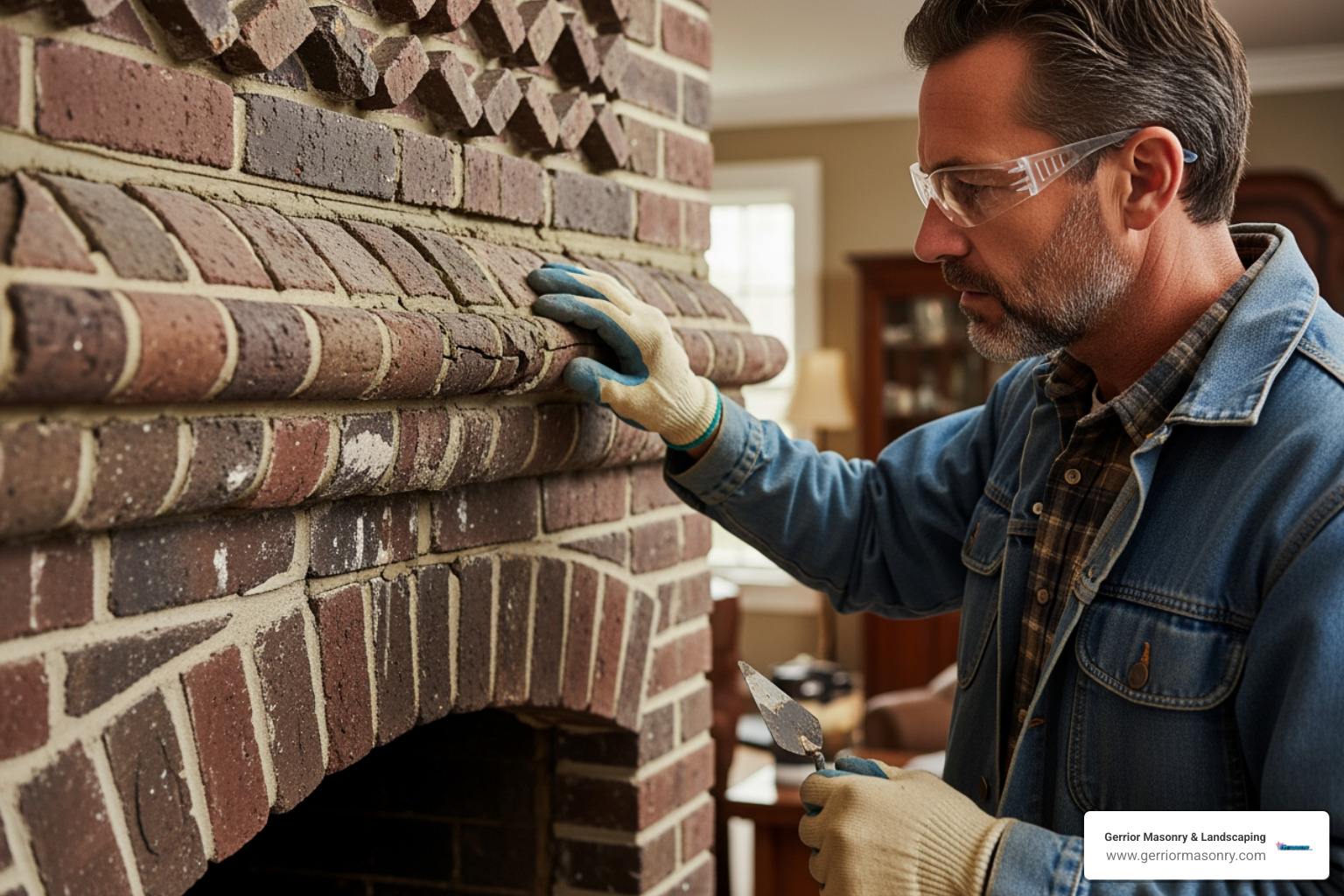
Call a professional if you see:
- Large Structural Cracks: A crack wider than a quarter-inch, or one that zig-zags through multiple bricks and mortar joints, is a red flag for a potential foundational or structural issue with the chimney mass or even your home’s foundation. This is far beyond a cosmetic fix and requires an expert structural assessment.
- Firebox Damage: The firebox is your primary line of defense. Severely cracked firebricks or crumbling refractory mortar joints create direct pathways for intense heat and embers to reach the combustible framework of your home. This is one of the most significant fire hazards in a fireplace system and must be repaired by a professional using the correct high-temperature materials.
- Loose Mantel or Hearth: A wobbly mantel or rocking hearth slab is a safety risk that needs to be properly secured by a professional.
- Widespread Mortar Deterioration: If large sections of mortar are crumbling, it may point to a systemic moisture or structural issue.
- Smoke in the Room: If smoke is entering your room instead of going up the chimney, stop using the fireplace immediately. This indicates a serious drafting problem, which could be caused by a flue blockage (like animal nests or creosote buildup), or a damaged flue liner. This not only poses a fire risk but also exposes your family to dangerous carbon monoxide.
Based on industry data, the cost for professional fireplace surround repair varies widely. Minor cosmetic fixes like filling small cracks might cost $250 to $750. More significant repairs, like replacing bricks or resetting a hearthstone, could range from $800 to $2,000. Major structural work often exceeds $3,000. If you’re uncertain about a repair, it’s always safest to consult an expert for an accurate quote.
At Gerrior Masonry & Landscaping, we bring over 30 years of expertise to every project. Our skilled team and direct owner oversight ensure that your fireplace surround repair is done with lasting craftsmanship. If you’re looking for a complete change, learn more in our Explore our Fireplace Veneer Installation Complete Guide.
Gerrior Masonry & Landscape Construction Corp. is based in Woburn, MA, and proudly services Middlesex and Essex County, Massachusetts. When your fireplace needs more than a DIY fix, we’re here to restore the heart of your home.
