
Fireplace veneer installation: Ultimate 2025 Guide
Transform Your Living Space with Professional Fireplace Veneer Installation
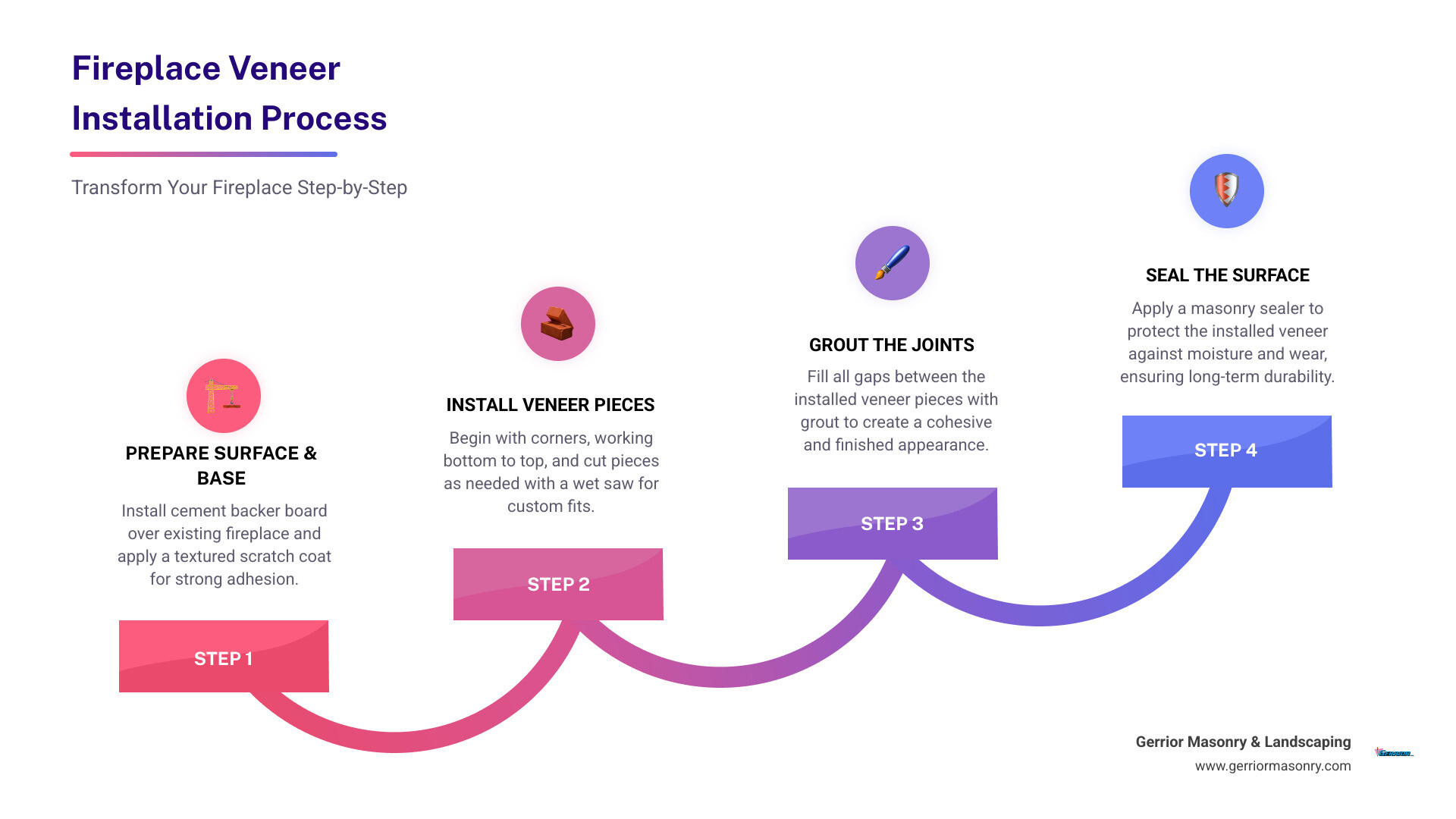
Fireplace veneer installation is the process of applying thin stone or brick slices over an existing fireplace to create the look of full masonry without the cost, weight, or structural changes of a complete rebuild.
Quick Installation Overview:
- Prepare the surface – Install cement backer board over the existing fireplace.
- Apply scratch coat – Create a textured mortar base for adhesion.
- Install veneer pieces – Start with corners, working from the bottom up.
- Cut pieces as needed – Use a wet saw for custom fits.
- Grout the joints – Fill gaps between stones for a finished look.
- Seal the surface – Protect against moisture and wear.
Thin stone veneers are natural stones cut to be about ¾ to 1¼ inch thick. They are mortared onto a fireplace to cover materials like brick or concrete. As one expert noted, “The number one reason people choose thin stone veneer is to update the interior of their house. Brick fireplaces just aren’t in style anymore.”
Material costs range from $3-$30 per square foot, with manufactured options being more affordable. A standard installation takes 4-8 hours, but curing time extends the project over several days.
Why Choose Veneer Over Full Masonry?
- Up to 75% lighter than real stone
- No additional structural support needed
- Can be applied directly to most prepared surfaces
- Significant cost savings compared to a full rebuild
I’m Joe Gerrior, owner of Gerrior Masonry & Landscape Construction Corp. For over 34 years, my team has helped Massachusetts homeowners with fireplace veneer installation and other masonry projects, transforming outdated fireplaces into stunning focal points.
Relevant articles related to Fireplace veneer installation:
Getting Started: Planning Your Fireplace Change
Proper planning is the most critical step in your fireplace veneer installation. A well-planned project transforms your living space by turning a dated fireplace into a beautiful focal point, while skipping this phase leads to costly mistakes.
Veneer is incredibly versatile, offering styles from rustic fieldstone to sleek modern panels without the weight restrictions or structural concerns of a full masonry rebuild.
Understanding the differences between veneer materials will save you money and headaches.
- Natural Stone Veneer: Offers authentic texture and color variations that only nature can provide.
- Manufactured Stone Veneer: A lighter, budget-friendly alternative that offers consistent sizing and a wide variety of styles.
- Thin Brick Veneer: Perfect for achieving a classic brick look without the weight and expense of full brick construction.
A fireplace makeover is an investment in your home’s value. During planning, consider how the new fireplace will complement your existing décor. Will a bold pattern overwhelm a cozy room or create a needed focal point? Making these decisions upfront ensures your fireplace veneer installation becomes the centerpiece you’ve always wanted.
The Ultimate Guide to Fireplace Veneer Installation
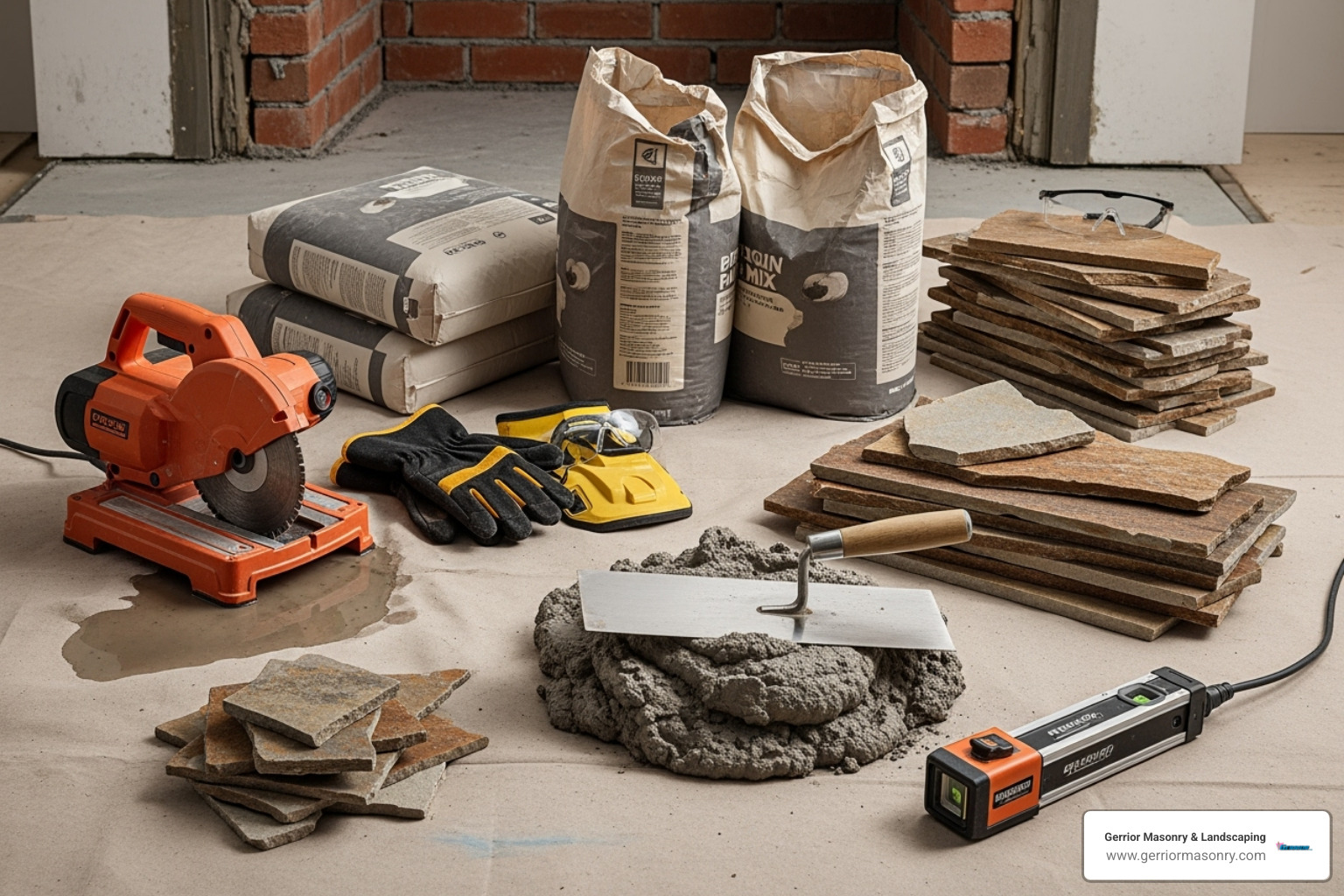
Success in a fireplace veneer installation project comes down to choosing the right material, using the proper tools, and following proven techniques.
Choosing Your Material: Stone vs. Brick Veneer
Your material choice affects the installation process, final look, and cost. Natural stone veneer offers genuine stone character with unique colors and textures. It’s heavier and costs more, but the authentic beauty is often worth it. Manufactured stone veneer is made from concrete and aggregates, making it about 75% lighter than real stone and easier to handle. It comes in many styles and is more budget-friendly. Thin brick veneer provides a classic look without the weight of full masonry and is typically the most affordable and straightforward option to install.
For detailed specifications, you can review these veneer options and specifications.
| Feature | Natural Stone Veneer | Manufactured Stone Veneer | Thin Brick Veneer |
|---|---|---|---|
| Weight | Heavier (but still lighter than full stone) | Very lightweight (75% lighter than real stone) | Lightweight |
| Authenticity | 100% natural, unique variations | Mimics natural stone, consistent sizing | Authentic brick look |
| Cost | Higher | Mid-range | Lower |
| Durability | Excellent, long-lasting | Good, suitable for various applications | Good, durable |
| Installation | Requires more skill, heavier mortar applications | Easier to handle, often quicker to install | Relatively simple installation process |
| Aesthetics | Organic, rustic, unique | Wide range of styles, colors, textures | Classic, traditional, industrial |
Gathering Your Tools and Prepping the Surface
Having the right equipment is essential. You’ll need safety glasses, a level, trowels, a wet tile saw with a diamond blade, and a mortar mixer or drill with a paddle attachment. For materials, gather cement backer board, metal lath (if needed), polymer-modified mortar, screws, and protective coverings for your floors.
Surface preparation is where many projects fail. Remove any old mantel and thoroughly clean the surface of dust or loose paint. The substrate must be structurally sound. Installing cement backer board over the existing surface creates the solid, moisture-resistant foundation your veneer needs to last for decades.
The Art of Layout: Planning Your Veneer Design
Creating a natural, visually appealing pattern requires planning. Start by dry-fitting your stones on the floor. Mix pieces from different boxes to ensure a consistent color blend and avoid obvious blocks of color. Arrange the stones to avoid predictable patterns or long, uninterrupted seams. Plan your corner pieces carefully, alternating short and long ends for a professional, woven look. Use a level and chalk lines to mark guidelines on the wall to keep your courses straight as you work.
A Step-by-Step Guide to Your Fireplace Veneer Installation
With your planning complete, it’s time to install.
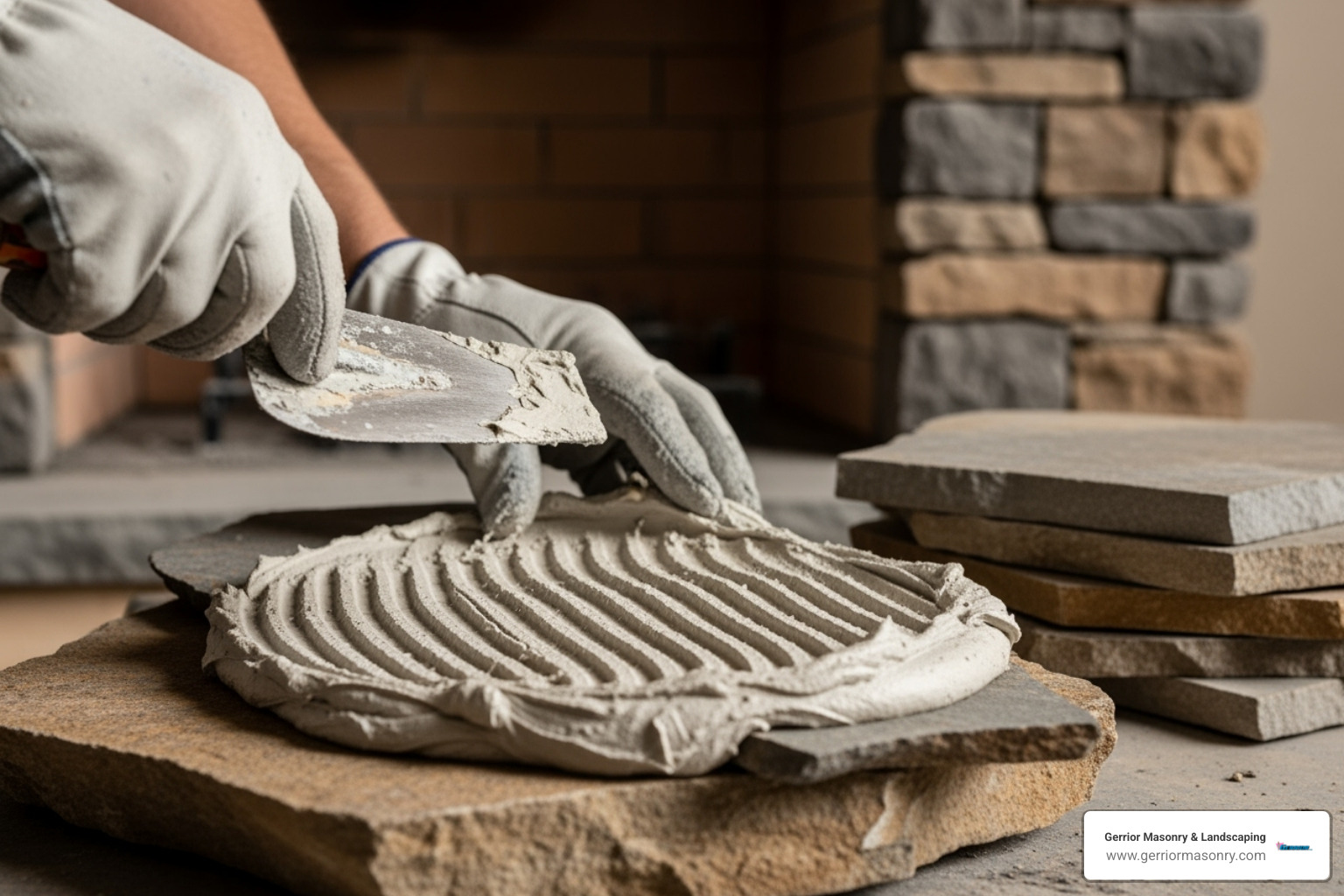
- Mix Mortar: Mix your mortar to a thick, peanut-butter-like consistency. Only mix what you can use in about 30 minutes.
- Apply Scratch Coat (If Needed): If working over metal lath, apply a ½-inch thick base layer of mortar, raking it with horizontal grooves. Let it cure for at least 24 hours.
- Install Veneer: Always work from the bottom up, starting with corner pieces. Use the “back-buttering” technique: apply a generous layer of mortar to the entire back of each stone. Press the piece firmly onto the wall with a slight twisting motion until mortar squeezes out around the edges. Use your level constantly and maintain consistent joint spacing (ideally ½ inch or less).
- Make Cuts: Use your wet saw for cuts around edges and openings. After cutting, chip the visible edges with a chisel to create a more natural appearance.
For comprehensive masonry services and professional expertise, explore more info about our masonry services.
Finishing Touches: Grouting and Sealing Your Veneer
After the veneer has cured for 24-48 hours, it’s time to grout. Mix grout in small batches and apply it with a grout bag. You can choose a flush “standard” joint or a rustic “overgrouted” look. Wait 15-30 minutes for the grout to firm up, then use a stiff masonry brush to remove excess from the stone faces. Once the grout has fully cured (24-72 hours), apply a penetrating sealer to protect your investment from moisture and stains. Always test the sealer on a spare piece first.
Gerrior Masonry & Landscape Construction is based in Woburn, MA, and proudly serves Middlesex and Essex County, Massachusetts with professional masonry and landscaping services.
After the Install: Maintenance and Professional Advice
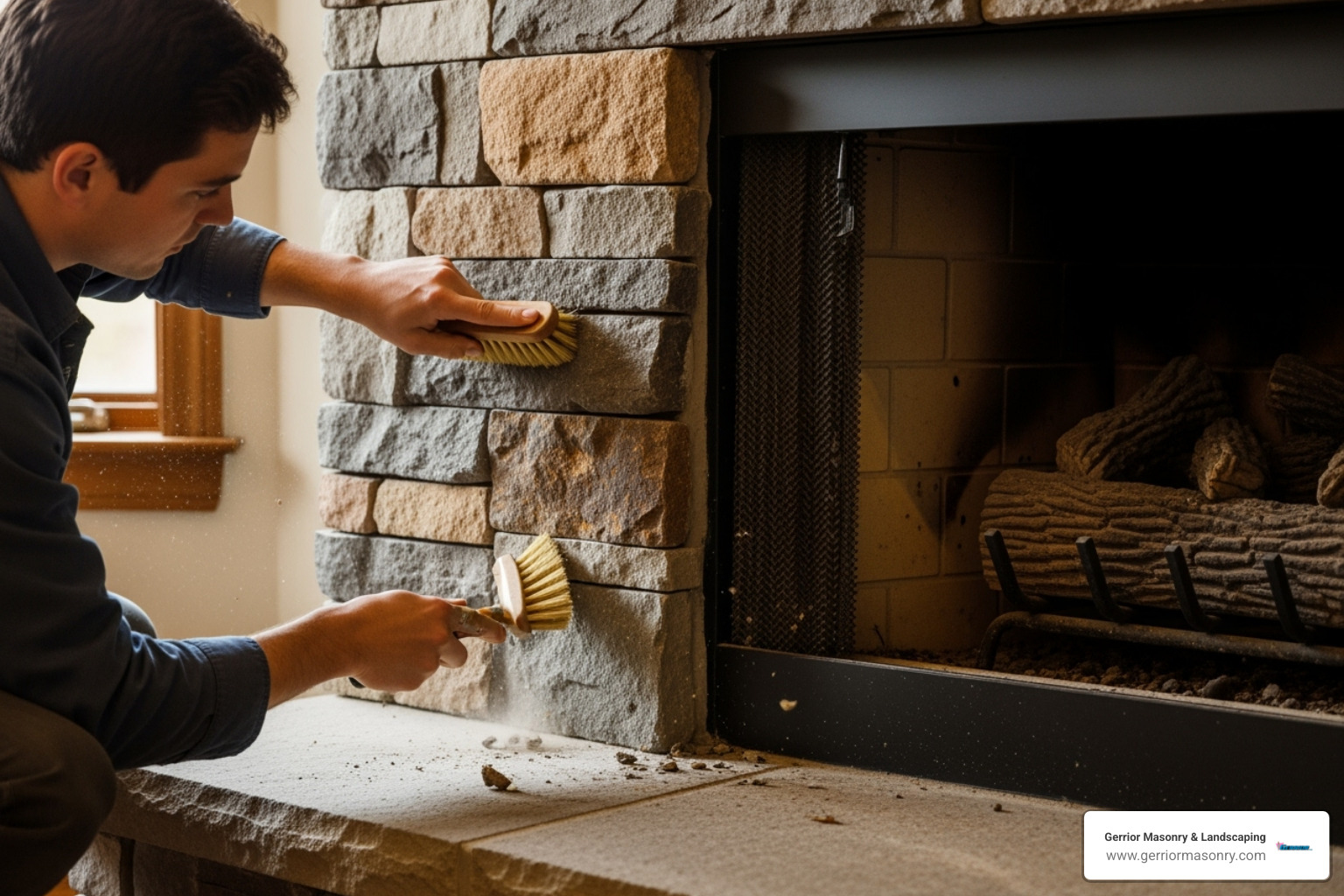
Your fireplace veneer installation is complete, but proper care is needed to keep it looking its best. Understanding common mistakes and maintenance will help you enjoy your new fireplace for years to come.
Common Mistakes, Maintenance, and When to Call a Pro
Even well-planned projects can have issues. Here are the most common mistakes to avoid and how to care for your finished work.
Critical DIY Mistakes
- Improper Surface Preparation: Regular drywall cannot support veneer stone. Skipping the cement board and proper cleaning will lead to failure.
- Uneven Mortar Application: Too little mortar creates a weak bond, while runny mortar will cause stones to sag and slide, resulting in an unprofessional finish.
- Poor Layout Planning: Rushing the dry-fit process can result in awkward patterns or obvious color blocks.
- Rushing Curing Times: Each step (scratch coat, stone setting, grouting) requires adequate time to cure. Rushing this process compromises the longevity of the installation.
Keeping Your Veneer Looking Beautiful
- Regular Cleaning: Use a soft brush or vacuum attachment to prevent dirt buildup.
- Spot Cleaning: Use a damp cloth and mild, non-abrasive soap. Avoid harsh chemicals or pressure washers.
- Annual Inspection: Check for loose pieces or cracked mortar once a year and address any issues promptly.
- Re-sealing: Re-apply a quality penetrating sealer every 3-5 years to maintain protection against moisture and stains.
When to Call the Professionals
While a DIY fireplace veneer installation can be rewarding, there’s no shame in calling a professional.
- Scope and Skill Level: Industry sources rate this as a “Hard” (5 out of 5) skill level project. Complex designs with intricate cuts are best left to professionals.
- Time Commitment: A pro can often complete in days what might take a DIYer weeks, once prep, installation, and curing times are factored in.
- Structural Concerns: If you have any doubts about your fireplace’s ability to support the added weight, consult a professional immediately.
- Cost Considerations: Material costs for fireplace veneer installation typically range from $3-$10 per square foot for manufactured stone and $14-$30+ for natural stone. Please note, these are average costs based on internet data and not actual costs for Gerrior Masonry services. When you factor in tools and your time, professional installation often provides better overall value.
- Finish Quality: Professionals have the experience and specialized tools to create a seamless, high-quality finish.
If you’re uncertain about any aspect of your project, a professional consultation can save you time and frustration. For complex structural issues, get an expert opinion on your chimney and fireplace project.
Gerrior Masonry & Landscape Construction is based in Woburn, MA, and services Middlesex and Essex County, Massachusetts.
