
Sidewalk Drainage Solutions: Top 3 Vital Drains
Why Proper Sidewalk Drainage is Non-Negotiable
Sidewalk drainage solutions are essential systems designed to prevent water from pooling on walkways and pedestrian paths. Whether you’re dealing with standing water after a rainstorm or icy patches in winter, the right drainage system protects both your property and the people who use it.
Quick Overview of Common Sidewalk Drainage Solutions:
| Solution Type | Best For | Key Benefit |
|---|---|---|
| Trench Drains | Driveways and high-traffic areas | Rapid surface water collection |
| Slot Drains | Modern installations | No grate needed, ADA-compliant options |
| French Drains | Subsurface water issues | Manages water below the surface |
| Catch Basins | Large volume runoff | Collects and redirects significant water flow |
| Channel Drains | Along building foundations | Prevents water from reaching structures |
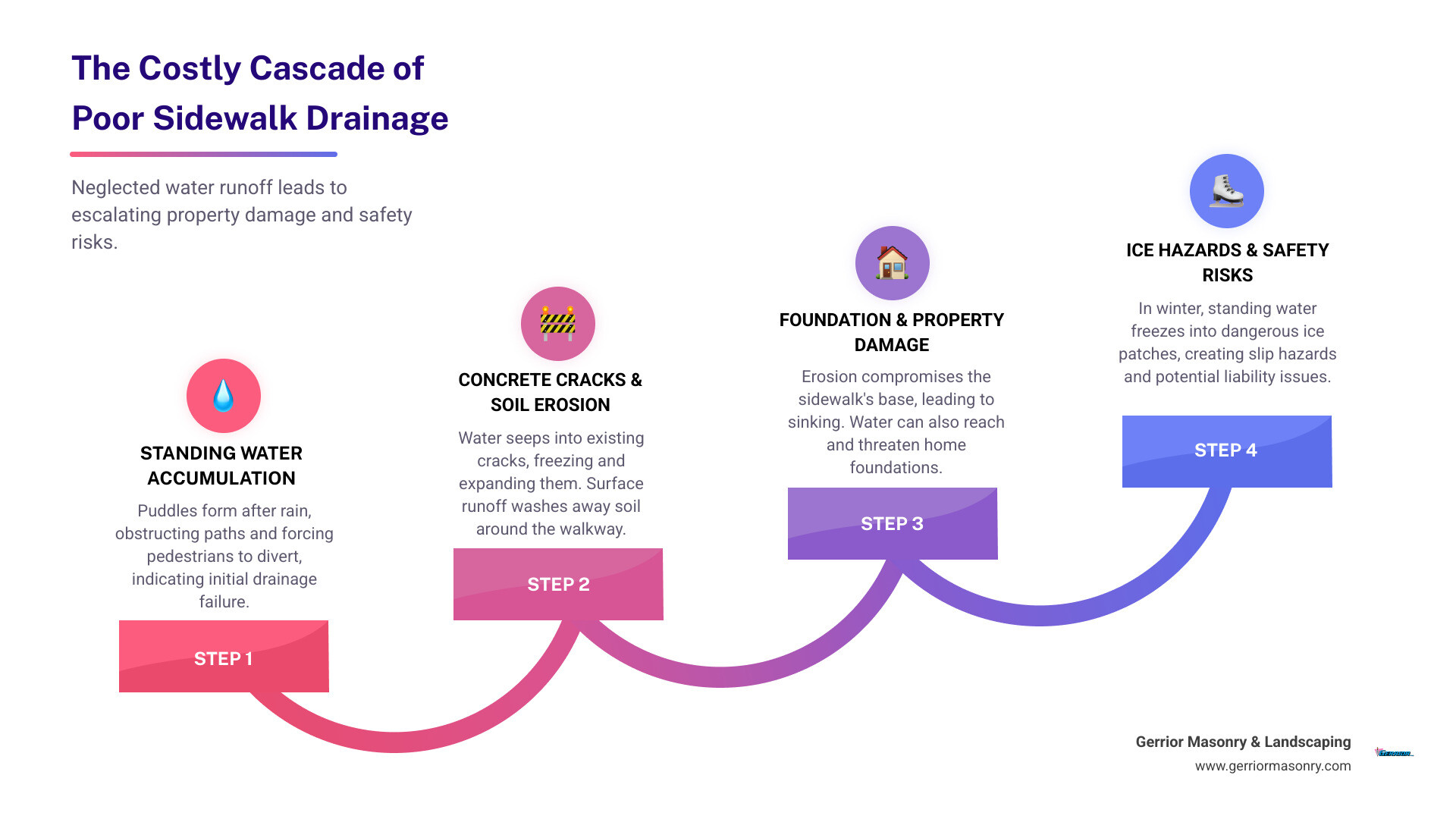
Without proper drainage, sidewalks become hazards. Standing water creates slip-and-fall risks, especially for children and the elderly, and can obscure uneven surfaces. In winter, this water freezes into treacherous ice patches. Puddles may also force pedestrians into the street, creating a dangerous workaround.
Beyond safety, poor drainage causes significant property damage. Water seeps into concrete cracks, expanding them as it freezes and thaws, leading to potholes and accelerated deterioration. This moisture can undermine the sidewalk’s foundation, causing it to sink or crack. If water pools around the walkway, it can erode surrounding soil, damaging landscaping and, more critically, penetrating your home’s foundation. This can lead to a wet basement, mold growth, and costly structural repairs.
I’m Joe Gerrior, owner of Gerrior Masonry & Landscape Construction Corp. With over 34 years of experience, I’ve helped hundreds of Massachusetts homeowners implement effective sidewalk drainage solutions. This guide will walk you through the best options to keep your walkways dry and protect your property.
Handy sidewalk drainage solutions terms:
By implementing effective sidewalk drainage solutions, we safeguard pedestrian safety, preserve property value, and prevent expensive structural damage. It’s an investment in the longevity and functionality of our outdoor spaces.
A Deep Dive into Sidewalk Drainage Solutions
Water pooling on your sidewalk is a sign that you need a better drainage strategy. The good news is there are several proven methods to keep your walkways dry and safe. Let’s explore the most effective drainage options based on our three decades of experience.
Common Types of Drains and Their Components
Trench drains are the workhorses of surface drainage. These long, grated channels are installed flush with the surface to collect large volumes of water quickly, making them ideal for driveways and high-traffic areas. The grates come in various materials, from plastic to decorative cast iron, but they require regular cleaning to prevent clogs from leaves and debris.
Grate materials range from plastic and galvanized steel for residential use to heavy-duty cast iron or ductile iron for areas with vehicle traffic. It’s crucial to select a grate with the appropriate load class (e.g., Class A for pedestrian-only areas, Class B or C for driveways) to ensure safety and durability. They are particularly effective when installed across a driveway in front of a garage or along the edge of a patio.
Slot drains offer a modern, minimalist alternative. Instead of a wide grate, they use a narrow, discreet slot that is nearly invisible once installed. This design prevents large debris from entering and is popular for patios and architectural landscapes. Many models are ADA-compliant and can handle high water volumes, but their installation requires precision.
The narrow opening, often just 1/2 to 1 inch wide, makes them exceptionally safe for pedestrian traffic and compliant with the Americans with Disabilities Act (ADA), as it eliminates tripping hazards and won’t catch wheelchair casters or cane tips. The internal channel is often sloped or V-shaped to increase water velocity, creating a self-scouring effect that helps keep the drain clear of fine sediment.
French drains work unseen beneath the surface. This system uses a perforated pipe buried in a gravel-filled trench to collect and channel away subsurface water. It’s highly effective for preventing soggy lawns and protecting foundations. Installation is labor-intensive, and while filter fabric helps, improperly installed systems can eventually clog with roots or sediment. A typical French drain consists of a perforated pipe (rigid PVC is often preferred for its durability over flexible corrugated pipe) laid at the bottom of a trench.
The trench is backfilled with coarse gravel or crushed stone, which allows water to flow freely to the pipe. The entire trench, including the pipe and gravel, is wrapped in a non-woven geotextile filter fabric. This fabric is the system’s most critical component, as it prevents soil, silt, and roots from entering and clogging the gravel and pipe, ensuring long-term functionality. The collected water is then discharged to a suitable location, such as a ‘daylight’ exit on a slope, a dry well, or a municipal storm drain.
Catch basins are box-like structures with a grate on top, placed at low points in your yard to handle large, rapid water accumulation. They contain a sump area that traps sediment, preventing clogs in the main drainage lines. However, this sump needs to be cleaned out periodically to remain effective. These are essentially junction boxes for your drainage system, often used in conjunction with trench or French drains. The sump, a space at the bottom of the basin below the outlet pipe, is designed to collect heavy debris like sand and leaves.
As water flows into the basin, the debris settles in the sump while the cleaner water exits through the outlet pipe. The size of the basin and sump should be chosen based on the amount of runoff and expected debris load. They are available in various materials, including high-density plastic and precast concrete.
Grates are the visible covers for trench drains and catch basins. They must be durable enough for the expected traffic (pedestrian or vehicle) and sit flush with the surface to prevent tripping hazards. They come in many materials and styles but require regular cleaning.
For more information about various hardscaping projects that might require drainage solutions, visit our hardscaping services page.
| Feature | Trench Drain | Slot Drain | French Drain |
|---|---|---|---|
| Cost | Moderate to High (installation dependent) | Moderate to High (installation dependent) | Low to Moderate (DIY friendly) |
| Aesthetics | Visible grate, can be decorative | Highly discreet, minimalist slot | Invisible (subsurface) |
| Maintenance | Grate cleaning, channel flushing | Slot cleaning, channel flushing | Outlet/inlet cleaning, potential for clogs |
| Effectiveness | Excellent for surface runoff, high flow rate | Excellent for surface runoff, discreet | Excellent for subsurface water, prevents pooling |
| Primary Use | Large paved areas, commercial zones | Architectural landscapes, high-end residential | Soggy lawns, foundation protection |
Choosing the Right Sidewalk Drainage Solution
Picking the right sidewalk drainage solution depends on your property’s layout, soil, and local weather. Here’s what to consider:
- Property Assessment: Start by identifying where water pools. Observe your property during a rainstorm to see how water flows. The ideal grading directs water away from your home’s foundation and toward a designated drainage point.
- Water Volume and Sources: Your system must handle runoff from all sources, including downspouts, driveways, and large roof areas. For areas with rapid water accumulation, trench or channel drains are effective. Slot drains also handle high flow rates with a sleeker look.
- Soil Type: Dense clay soil drains much slower than sandy soil. This impacts whether a subsurface solution like a French drain will be effective. Coarse-grained soil is often a better backfill for chronically wet areas.
- Budget and Aesthetics: Costs vary widely. While many DIY methods are budget-friendly, professional installation ensures long-term reliability. For aesthetics, discreet slot drains or decorative trench drain grates can blend seamlessly into your landscape. As a general reference, professional French drain installation might range from $10 to $100 per linear foot, while channel drains could be $30 to $150 per linear foot. These are average costs based on internet data and not actual costs for Gerrior Masonry services.
- Installation Factors: Consider accessibility needs, like ADA-compliant options, and traffic loads. Drains must be rated for expected use (pedestrian vs. vehicle) and may need to connect to municipal storm drain systems.
When planning new walkway and stair construction, a professional assessment can ensure your drainage system is integrated correctly from the start.
DIY vs. Professional Installation
Some drainage fixes are simple weekend projects, while others require professional expertise.
DIY-friendly solutions for minor issues include caulking cracks with concrete caulk to stop water seepage, regrading small areas to improve slope, and managing gutter downspouts to direct water away from the foundation. A simple DIY French drain can also be effective if you’re prepared to dig a trench and ensure at least a one percent slope.
Call professionals for complex grading issues, installing underground systems like trench or slot drains, or if drainage issues threaten your home’s foundation. Professionals have the specialized equipment for proper excavation and leveling. They also handle necessary permits for connecting to municipal systems and can diagnose persistent water problems that temporary fixes won’t solve. Poor drainage can lead to expensive foundation repair, making a professional installation a wise investment.
System Maintenance and Longevity
Installing a sidewalk drainage solution is just the first step. Regular maintenance is key to its longevity and effectiveness.
- Regular Cleaning: Clear grates, inlets, and catch basin sumps of leaves, dirt, and sediment. This is especially important after storms.
- Flushing: Periodically flush trench and slot drain channels with a hose to clear out fine sediment that builds up over time.
- Visual Inspections: A few times a year, walk your property to check for standing water near drains, visible damage, or blockages at inlet and outlet points.
- Professional Inspections: An annual professional inspection can catch issues like developing clogs or wear and tear before they become major problems. A well-designed system accounts for lifetime maintenance, and consistent care will prolong its life.
By following a regular maintenance schedule, your drainage system will continue to protect your property for years. For help with maintenance or upgrading your drainage systems and dry wells, our team is ready to assist.
Secure Your Property with Expert Drainage Solutions
Now that you understand the risks of poor drainage and the available solutions, it’s time to take action. While some fixes are DIY-friendly, a professional assessment is the best way to ensure a lasting solution custom to your property’s unique slopes, soil, and water flow.
At Gerrior Masonry & Landscaping, we bring over 30 years of experience to Massachusetts drainage challenges. What sets us apart is owner oversight on every project. We create custom solutions that address current problems and prevent future issues, from discreet slot drains to complex French drain systems. Our focus is on getting the job right the first time to protect your sidewalks, foundation, and landscaping, giving you peace of mind every time it rains.
Based in Woburn, MA, we proudly serve residential and commercial clients throughout Middlesex and Essex County, Massachusetts. If you’re ready to protect your property with a drainage solution that stands the test of time, contact us for your drainage solution needs. Let’s work together to keep your property safe, dry, and beautiful.
