
Steps and walkways: Inspiring Ideas 2025
The Art and Function of Outdoor Pathways
Steps and walkways guide movement through your property and create visual connections between different outdoor spaces. Whether you’re planning a simple garden path or formal entrance stairs, these hardscape features significantly impact both functionality and curb appeal.
Key Functions of Steps and Walkways:
- Guide traffic flow – Direct guests and family members along intended routes
- Connect landscape zones – Link patios, gardens, and entrances seamlessly
- Improve safety – Provide stable, slip-resistant surfaces for navigation
- Add visual interest – Create focal points and architectural elements
- Increase property value – Well-designed pathways boost home appeal and market value
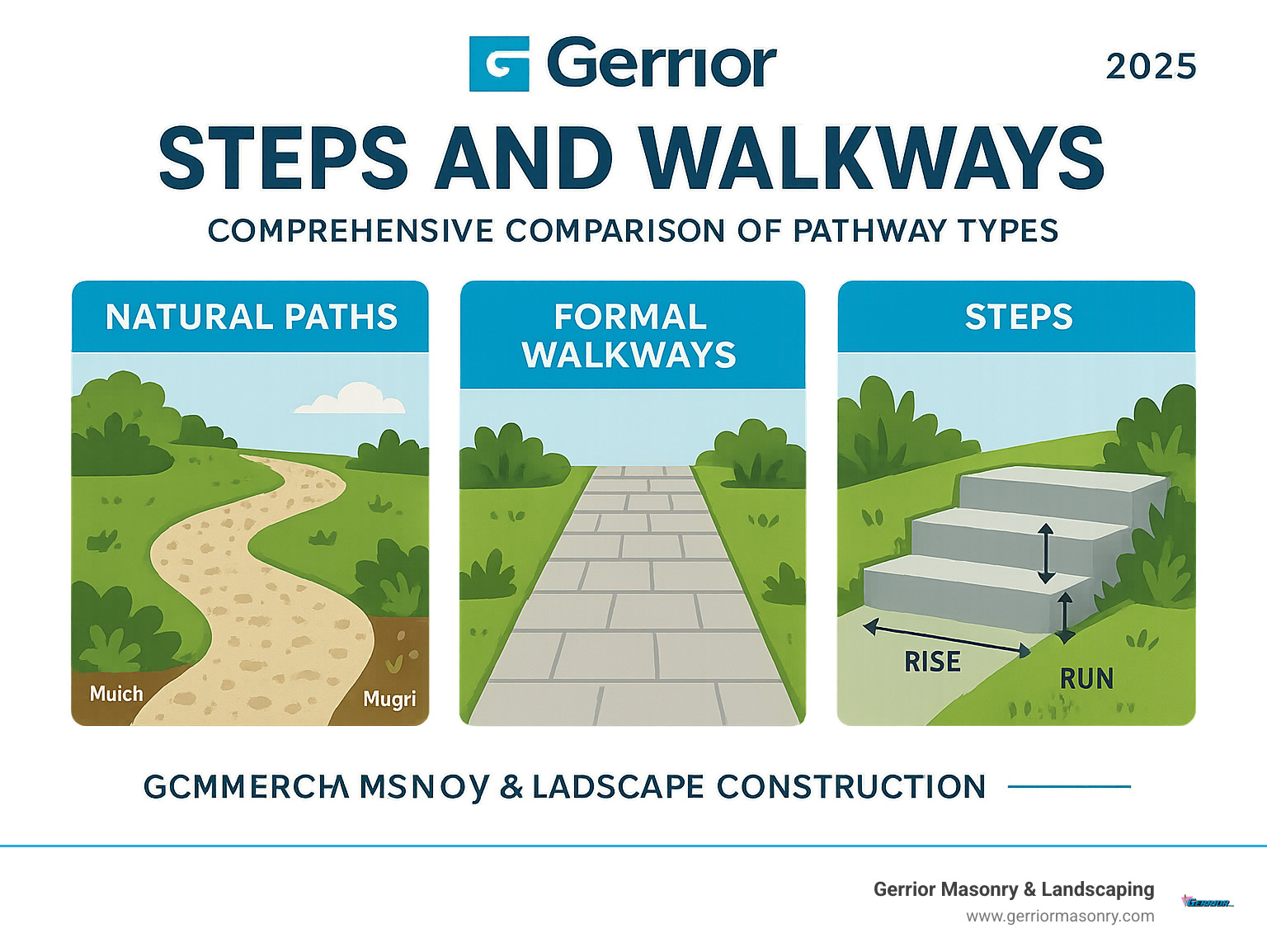
Paths, walkways, and steps differ in formality and materials. Paths often use natural materials like gravel, following organic curves. Walkways use stable hardscapes like pavers or stone for formal, high-traffic routes. Steps use durable materials to safely manage elevation changes.
With over 34 years of experience designing and installing custom steps and walkways in Massachusetts, I’ve seen how the right pathway transforms outdoor spaces. At Gerrior Masonry & Landscape Construction, we understand that every property has unique challenges and opportunities for creating memorable outdoor journeys.
Designing and Building Your Perfect Steps and Walkways
Now that we’ve established the vital role of steps and walkways, let’s dive into designing and building your perfect outdoor pathways. We’ll explore the critical choices that transform a simple path into a stunning and durable hardscape feature, from the best materials for the New England climate to the design principles that ensure safety and longevity.
Choosing Your Materials: A Comparison of Durability and Style
Selecting the right material is paramount for both the aesthetics and longevity of your steps and walkways. The choice impacts the look, durability, maintenance, and safety of your outdoor space. We consider several popular and robust options, each with unique advantages.
Natural Stone: Natural stone offers timeless elegance and unparalleled durability. Its unique textures and colors add character to any landscape, and its resilience makes it ideal for New England weather. The natural texture also provides excellent slip resistance, a key safety feature in wet or icy conditions.
Some of the best natural stone options include:
- Bluestone: Popular for its blue-gray hues and textured surface that provides excellent traction.
- Flagstone: Offers a rustic look ideal for garden paths and stepping stones.
- Limestone: Provides a clean, contemporary appearance and can be a cost-effective option.
- Sandstone: Affordable and available in a wide variety of colors, lasting for decades.
- Granite: Extremely durable and strong, highly recommended for high-traffic outdoor use.
- Slate: Beautiful but can be slippery when wet, requiring a textured finish.
For more insights into material choices, you can explore various options in [Five Walkway Materials to Consider](https://blessingland.com/blog/five-walkway-materials-to-consider/).
Concrete Pavers: Concrete pavers are a versatile and practical alternative, offering extensive customization in size, shape, and color. They are lower maintenance than solid concrete, as individual pavers can be easily replaced if cracked or chipped. This makes repairs simple and cost-effective. They offer durability and design flexibility, with some styles mimicking the look of natural stone.
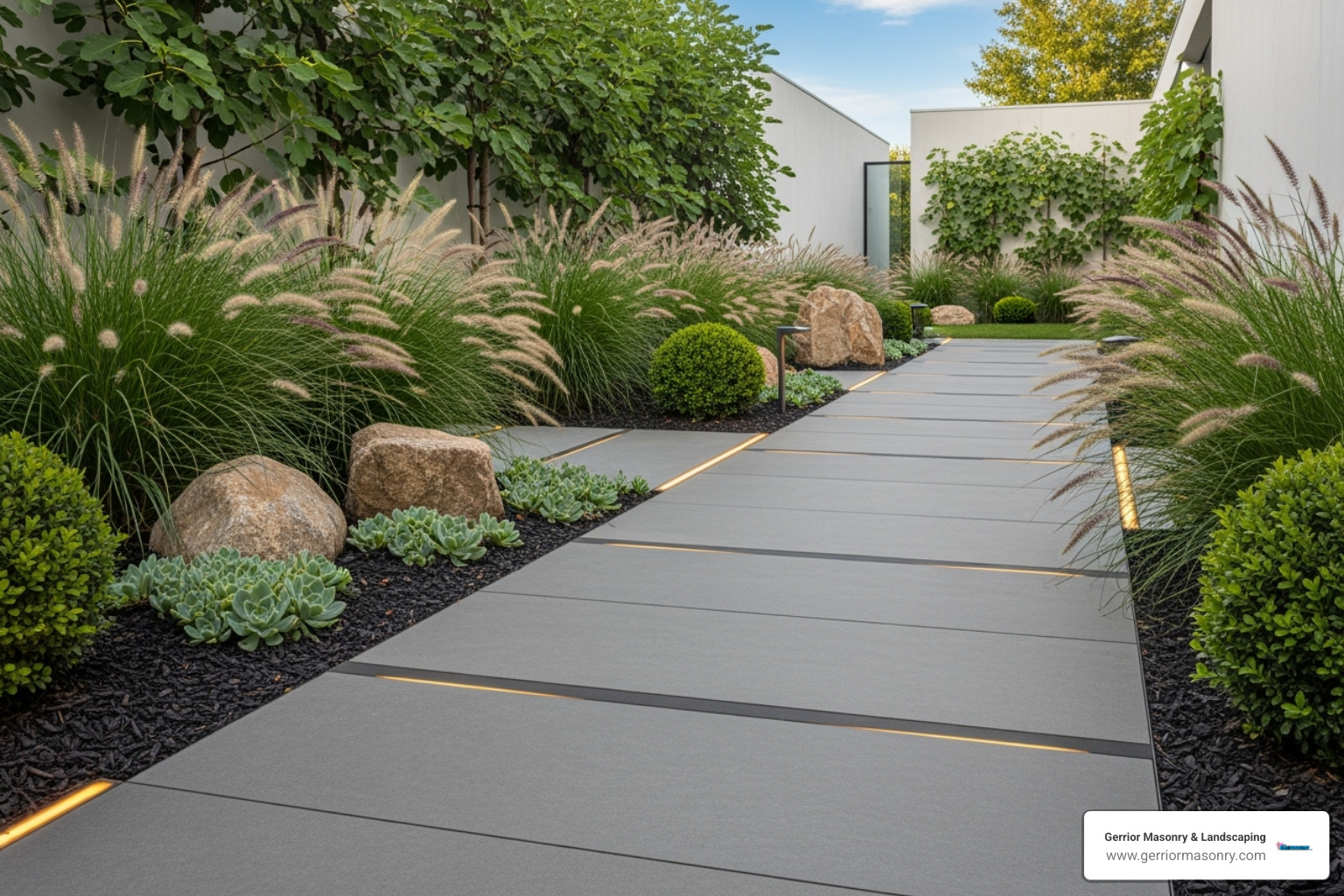
Architectural & Porcelain Slabs: These larger format pavers create a sleek, modern look perfect for contemporary landscapes. Architectural and porcelain slabs are highly durable, low maintenance, and designed to be slip-proof and stain-resistant, making them a safe choice for all seasons.
Clay Brick Pavers: For a classic, charming appeal, clay brick pavers are an excellent choice. They offer rustic colors and a large selection of installation patterns. Permeable recycled clay bricks can even be used for driveways, offering both aesthetic appeal and practical drainage.
Here’s a quick comparison of some popular materials:
| Material Type | Aesthetics | Durability | Maintenance | Slip Resistance |
|---|---|---|---|---|
| Natural Stone | Timeless, organic, unique colors/textures | High (weather-resistant, long-lasting) | Moderate (sweeping, occasional sealing/cleaning) | Excellent (natural texture) |
| Concrete Pavers | Versatile, modern to rustic, many options | High (durable, easy individual repair) | Low (periodic cleaning, easy replacement) | Good (textured surfaces available) |
| Porcelain Slabs | Sleek, modern, large format | High (durable, weather/stain-resistant) | Low (easy to clean, minimal upkeep) | Excellent (often slip-proof) |
| Clay Brick Pavers | Traditional, rustic, classic patterns | High (long-lasting, withstands traffic) | Moderate (periodic cleaning, sand joint refill) | Good (natural texture) |
Our expertise in hardscaping services allows us to guide you through these choices, ensuring your selection aligns with your vision and the demands of the New England climate. Learn more about our comprehensive [More info about hardscaping services](https://gerriormasonry.com/hardscaping-services/).
Essential Design and Structural Considerations for Steps and Walkways
Beyond material, the design and structural integrity of your steps and walkways are crucial for safety and functionality.
Walkway Width and Shape: A walkway’s usability depends on its width; we recommend at least four feet to allow two people to walk side-by-side comfortably. For the shape, rounded corners encourage a more natural flow than sharp 90-degree angles, preventing shortcuts across the lawn. For more ideas on planning your pathways, consider these [Tips for Planning Walkways and Pathways](https://www.thespruce.com/walkways-and-pathways-2132017).
Modern landscaping sometimes favors large square or rectangular pavers in aligned or staggered patterns. This minimalist approach often incorporates “floating steps” that appear to hover above the ground, creating an intriguing visual. You can explore these [Midcentury Modern Landscaping Concepts - Floating Steps and Walkways Ideas](https://www.kglandscape.com/floating-steps-walkways).
Step Dimensions (Rise, Run, Depth, Count): Designing comfortable, safe steps requires precise measurements. For outdoor stone steps, a thickness of 6-7 inches is standard, with a depth of 12-18 inches for a secure footing. For comfortable travel, the rise (height) of each step should be 6-8 inches, and the run (depth) should be 10-12 inches. A useful rule is that twice the rise plus the run should equal 25-27 inches. It’s also crucial to give each step a slight forward tilt (2-5% outslope) to ensure proper water drainage and prevent ice hazards. The National Park Service even publishes guidelines on [National Park Service: Trail Steps](https://npshistory.com/publications/park_structures_facilities/secd.htm) for natural settings. For detailed instructions on building stone steps, you can refer to [How to Build Stone Steps on a Garden Slope?](https://stonecenters.com/blog/how-to-build-stone-steps-in-your-garden-area).
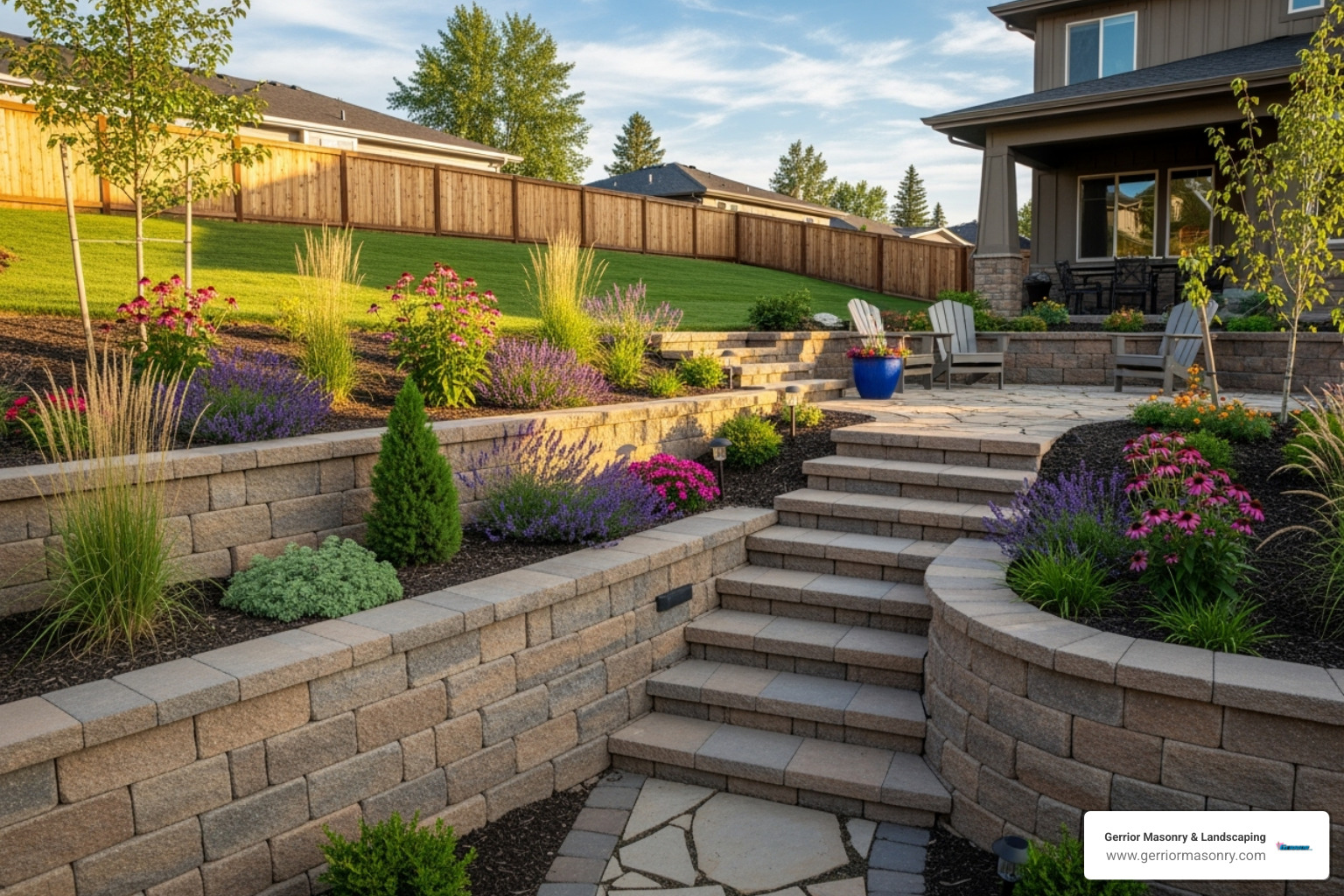
Retaining Wall Integration and Slopes: Retaining walls are fundamental in managing elevation changes and creating stable, multi-level outdoor spaces. They can be used to border a path, creating a clean edge and preventing erosion. More importantly, they can be seamlessly integrated with steps to form cohesive transitions between different landscape zones, using materials that match or complement the steps and walls. This thoughtful integration helps in [Transitioning your Landscape Spaces with Steps and Walkways](https://www.rockwaterfarm.com/blog/transitioning-landscape-spaces-with-steps-walkways) effectively. Our expertise extends to all types of [More info about landscape walls](https://gerriormasonry.com/landscape-walls/).
Finishing Touches: Lighting, Costs, and Maintenance for Your Steps and Walkways
Once the foundational elements are in place, the details truly bring your steps and walkways to life.
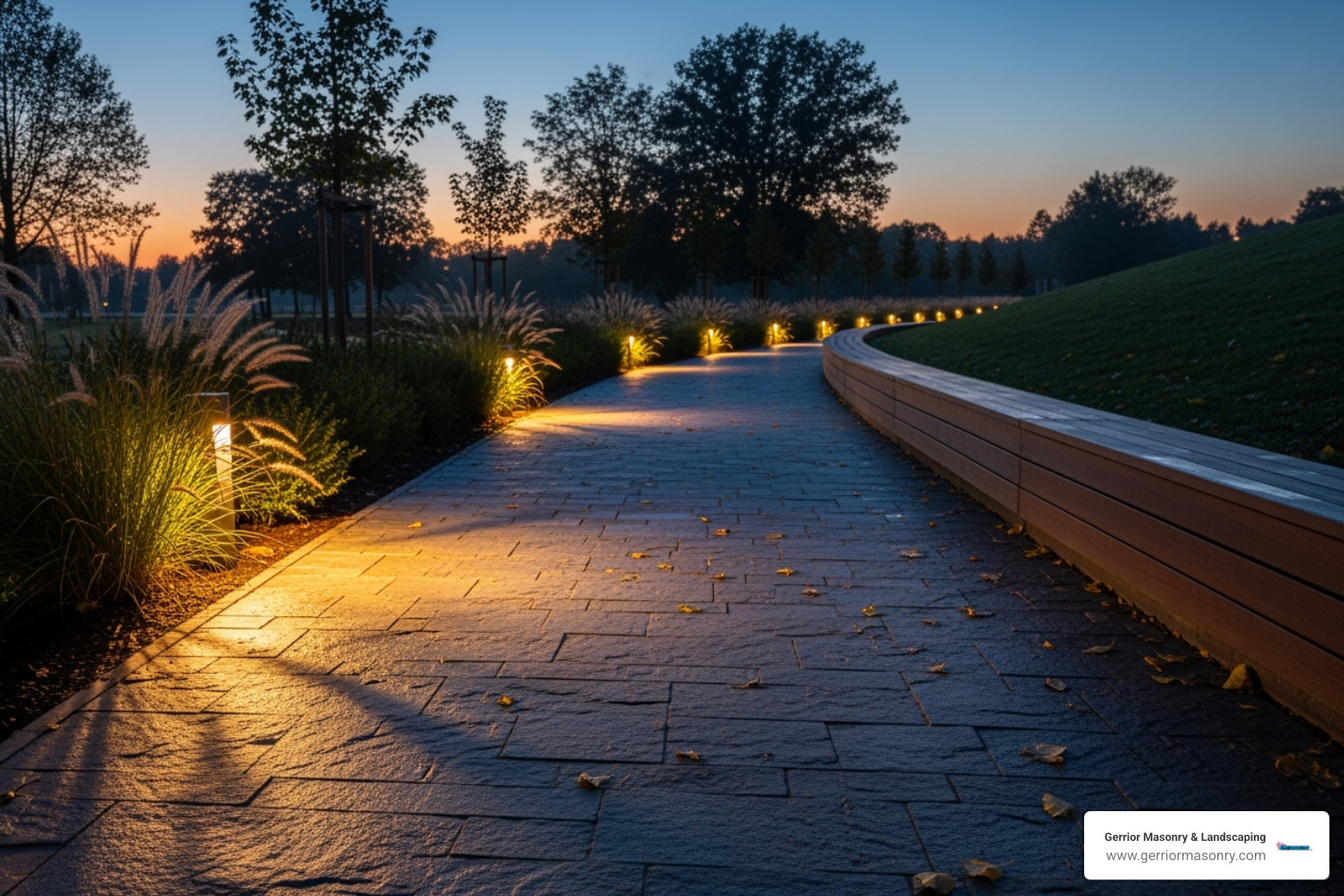
Lighting for Safety and Ambiance: Integrating lighting is paramount for nighttime safety and ambiance. Proper landscape lighting is critical on walkways and especially on steps to prevent trip and fall hazards. Beyond safety, lighting can dramatically improve aesthetic appeal, creating a warm, inviting atmosphere with options like built-in stair lights, pathlights, or downlighting.
Cost Considerations: When planning your project, understanding potential costs is crucial. These are average costs based on internet data and not actual costs for Gerrior Masonry services. Prices vary based on material, project complexity, and site conditions.
Here are some average cost ranges for different materials, per square foot:
- Poured Concrete: Generally ranges from $8 to $25+ per square foot.
- Pavers (Concrete & Clay Brick): Typically range from $15 to $50+ per square foot.
- Natural Stone: Can range from $25 to $75+ per square foot, depending on the type of stone.
- Architectural & Porcelain Slabs: Often fall into the higher ranges of natural stone or custom paver installations.
The timeline for installation can vary from a few days to a couple of weeks, depending on project size and conditions.
Maintenance Requirements: Different materials have varying maintenance needs.
- Concrete Installations: Require periodic cleaning, sealing, and prompt crack repair to ensure longevity.
- Concrete Pavers: Low-maintenance; regular sweeping is usually sufficient, and individual pavers are easy to replace if damaged.
- Natural Stone: Needs regular sweeping, rinsing to remove dirt, and periodic sealing to protect against stains and weather.
- Slate: A durable, low-maintenance material where individual tiles can be repaired if damaged.
Create a Lasting Impression with Professional Masonry
Your steps and walkways are more than just functional paths; they are the first impression of your home. A thoughtfully designed walkway or staircase improves curb appeal, increases property value, and creates a welcoming sense of arrival that makes every homecoming special.
Whether you’re drawn to the timeless elegance of natural stone or the versatile appeal of concrete pavers, the right choice depends on your personal style, budget, and landscape needs. From the classic New England look of bluestone to the sleek lines of porcelain slabs, there is a material for every aesthetic.
Creating durable, beautiful steps and walkways requires more than good materials; it demands expert craftsmanship. Understanding how materials perform in New England winters, managing drainage, and integrating retaining walls are details that ensure a project’s longevity. This expertise makes the difference between a path that lasts a few years and one that remains stunning for decades.
At Gerrior Masonry & Landscaping, we’ve been perfecting the art of hardscape construction for over 30 years. What sets us apart is our commitment to combining expert craftsmanship with durable, high-quality materials, all while maintaining owner oversight on every single project. We understand that your outdoor spaces are an extension of your home and deserve the highest attention to detail.
From the initial consultation to the final inspection, our skilled team takes pride in changing ordinary yards into extraordinary outdoor experiences. We create everything from grand entrance walkways that welcome guests with style to floating steps that seem to hover above your garden.
Based near Woburn, MA, we proudly serve homeowners throughout Middlesex and Essex County, Massachusetts. We’ve helped families in Andover, Lexington, Concord, Beverly, Medford, and many other surrounding communities create stunning and functional hardscapes.
Ready to transform your outdoor spaces with beautiful and functional steps and walkways? Contact us for hardscaping services and let’s discuss how we can bring your vision to life with the quality and craftsmanship that only comes from three decades of dedication to the art of masonry.
Like us on Facebook!
