
24×24 Concrete Pavers: Ultimate 2025 Guide
Why Choose Large Format Pavers?
24×24 concrete pavers are transforming outdoor living by offering a powerful combination of modern aesthetics and practical advantages. Homeowners are increasingly choosing these large-format pavers to create a sleek, expansive, and contemporary atmosphere. The minimal joint lines produce an uncluttered, high-end look that can make smaller patios or walkways feel more spacious and open. This clean visual field is a hallmark of sophisticated landscape design and requires significantly less installation time compared to smaller, more intricate paver patterns.
Quick Overview: 24×24 Concrete Paver Essentials
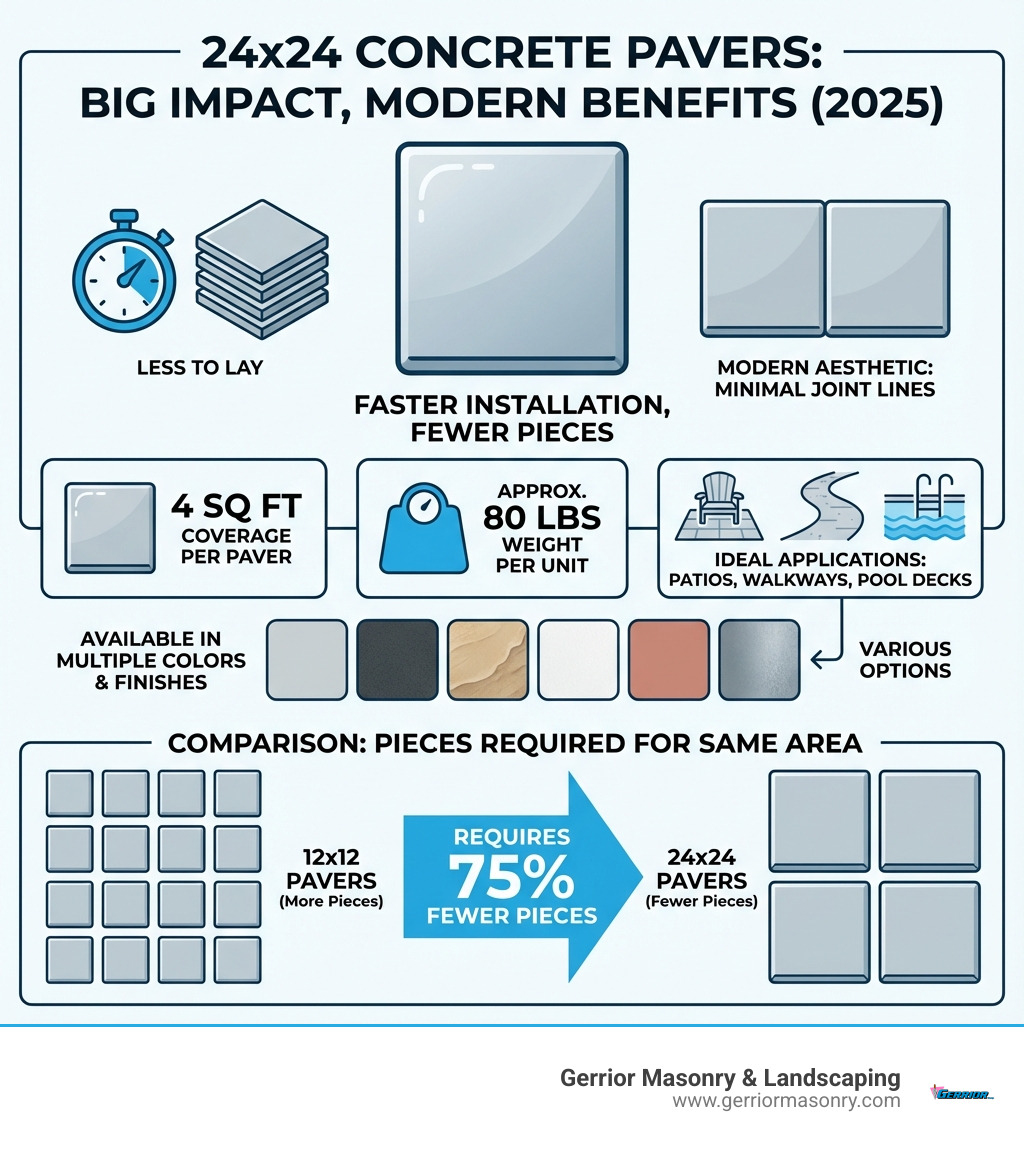
- Dimensions: 24″ x 24″ x 2″ (nominal)
- Weight: ~80 lbs per paver
- Coverage: 4 sq ft per paver
- Price Range: $15 to $45+ per paver (average internet pricing, not Gerrior Masonry rates)
- Common Colors: Gray, Pewter, Sandstone, White, Aztec
- Best For: Patios, walkways, pool decks, modern outdoor living spaces
- Key Benefits: Fewer joints, faster installation, contemporary look
The grand scale of these pavers establishes an open, luxurious feel that is perfectly suited for modern, minimalist, and even transitional landscape designs. However, their substantial size and weight demand meticulous base preparation to prevent any settling or shifting, as even minor imperfections in the foundation can become noticeable. Proper handling is also a key safety and installation consideration.
I’m Joe Gerrior, owner of Gerrior Masonry & Landscape Construction Corp. With over 34 years of hands-on experience in Massachusetts, my team and I have designed and installed countless patios, walkways, and pool decks using 24×24 concrete pavers. I’ve seen firsthand how they can elevate a property, and I’m here to guide you through what makes them such a compelling choice for your next project.
Understanding the Basics of 24×24 Pavers
24×24 concrete pavers are manufactured to nominal dimensions. This means their actual, or dimensional, size is often slightly smaller (e.g., 23.6″ x 23.6″). This subtle difference is intentional, as it accommodates the space needed for jointing sand, ensuring a uniform and secure installation. Their typical 2-inch thickness and 80-pound weight provide the necessary mass and stability for high-traffic pedestrian areas like patios and walkways.
Their design versatility is a major draw. They are available in a wide spectrum of colors, from cool, neutral Grays and Pewters that complement modern architecture to warm Sandstones and earth tones that create a more organic feel. Finishes range from perfectly smooth for a sleek, indoor-tile look to textured or flagged surfaces that provide added slip resistance and a more natural stone appearance. This variety allows them to integrate seamlessly into diverse design styles, especially the modern and minimalist aesthetics popular throughout Middlesex and Essex County. For more inspiration, explore our Paver Ideas and find More info about paver options and services.
Comparing 24×24 Concrete Pavers: Cost and Materials
When planning your hardscape project, understanding how 24×24 concrete pavers compare to other common materials is essential for making an informed decision.
| Feature | 24×24 Concrete Pavers | Smaller Concrete Pavers (e.g., 12×12, 12×24) | Natural Stone (e.g., Flagstone, Bluestone) |
|---|---|---|---|
| Cost (per sq ft) | $3.75 – $11.25+ (average internet pricing) | $3 – $15+ (average internet pricing) | $5 – $25+ (per sq ft, depending on type and thickness) |
| Installation Speed | Faster overall due to fewer pieces, but requires careful handling or equipment for the heavy units. | Slower due to a higher number of individual pieces and more joint lines to fill. | Variable; can be very slow due to irregular shapes, weight, and the need for custom cutting. |
| Durability | Very durable, consistent strength, and engineered for freeze-thaw cycles. | Very durable, consistent strength, and good for freeze-thaw cycles. | Highly durable, but certain types can be prone to spalling (flaking) or chipping over time. |
| Aesthetic | Modern, minimalist, expansive, and uniform. | Traditional, allows for intricate patterns (herringbone, basketweave), versatile. | Organic, rustic, and unique, with natural variations in color and texture. |
Please note: The prices listed are average costs based on internet data and are not actual costs for Gerrior Masonry services. Actual pricing will vary based on manufacturer, product, and local market conditions.
24×24 concrete pavers are typically made from high-density, dry-cast concrete. This manufacturing process results in a product with extremely low water absorption and high compressive strength, making it exceptionally durable and resistant to the damaging freeze-thaw cycles common in Massachusetts. While natural stone offers a one-of-a-kind, rustic beauty, its performance can be less predictable. Concrete pavers provide engineered uniformity, consistent color, and reliable performance year after year. For more on project costs, see our guide on Driveway Pavers Cost.
Popular Laying Patterns and Designs
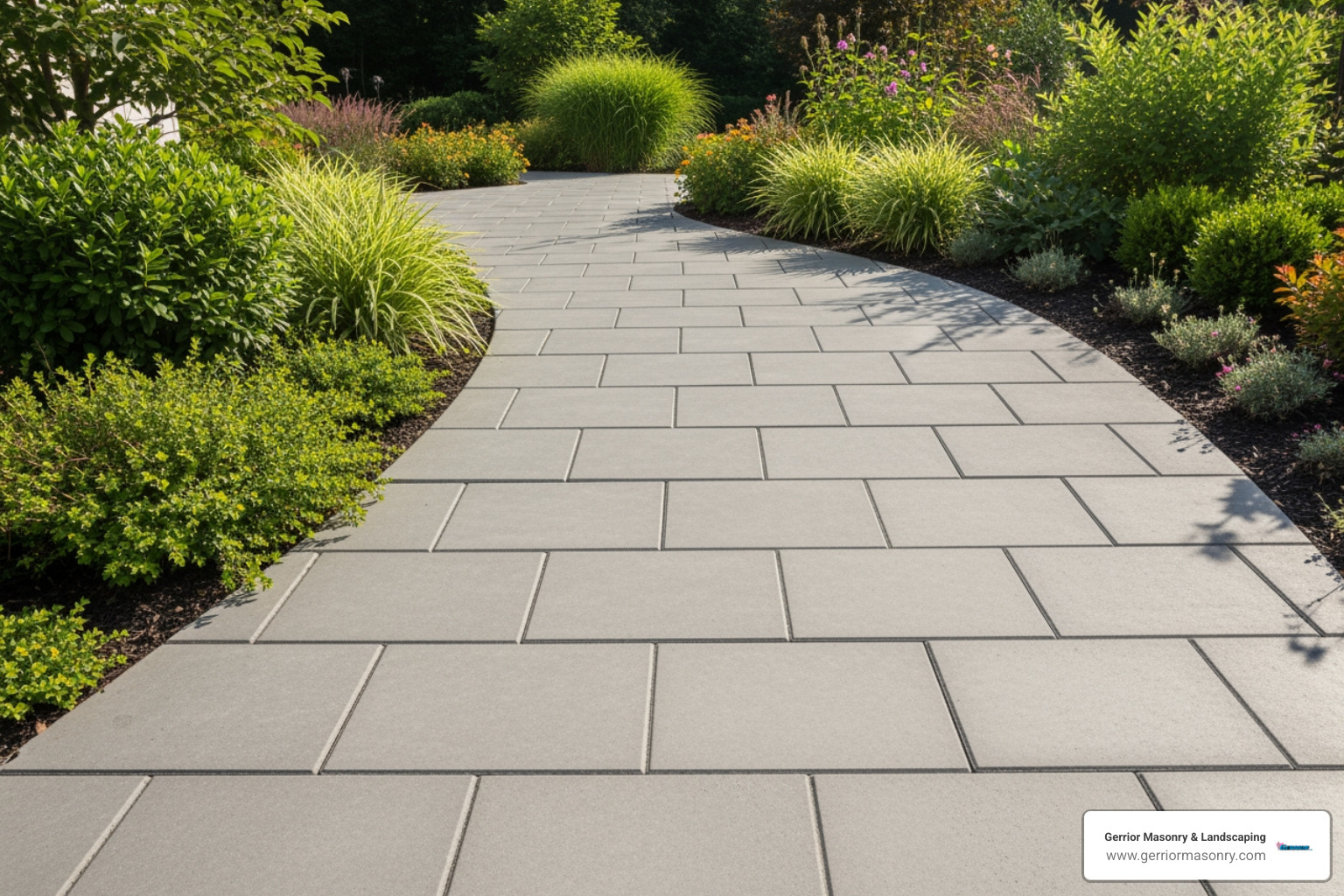
The large format of 24×24 concrete pavers is best showcased with simple, bold patterns that enhance modern landscape designs.
- Stack Bond (Grid) Pattern: Pavers are aligned in straight, continuous grid lines. This minimalist pattern strongly emphasizes the paver’s large size and clean geometry, making it ideal for contemporary patios and walkways where simplicity is key.
- Running Bond (Offset) Pattern: Each row is offset by half a paver’s width, creating a staggered look similar to a classic brick pattern. This is a structurally strong pattern that adds a subtle sense of movement and visual interest, making it slightly less formal than a stack bond.
- Checkerboard Pattern: By alternating two different colors or finishes of 24×24 concrete pavers, you can create a bold, graphic effect. This pattern is excellent for creating a designated focal point, such as an outdoor dining area or a feature landing.
- Diagonal Pattern: A variation of the stack bond, this pattern involves laying the pavers in a grid that is rotated 45 degrees to the surrounding edges. This can make a space feel wider and more dynamic, adding a sophisticated twist to the design.
These patterns are designed to leverage the paver’s impressive scale for maximum visual impact. For more design inspiration, see our guides on Creative Ways to Use Pavers in Your Landscaping Design and Paver Walkway Designs.
How to Install Your 24×24 Concrete Pavers
Installing 24×24 concrete pavers can be a highly rewarding DIY project, but it’s a labor-intensive process where success hinges on meticulous preparation. The size and 80-pound weight of these units demand careful handling and a perfectly constructed base. Here are the essential steps for a professional-quality installation.

Step 1: Base Preparation and Foundation
A robust, unyielding foundation is the single most critical element for a durable paver installation. With 24×24 concrete pavers, their large surface area will magnify any imperfections or settling in the base below, leading to rocking pavers and an uneven surface. Proper preparation is non-negotiable.
- Planning and Excavation: Mark the project perimeter with stakes and string. Before any digging, call 811 (Dig Safe in Massachusetts) to have underground utility lines marked. Excavate 6-8 inches of soil, plus the paver’s height. Crucially, you must establish a slight slope of about ¼-inch per foot, directing water away from your home’s foundation.
- Geotextile Fabric: Lay a high-quality, non-woven geotextile fabric over the excavated subsoil. This layer acts as a separator, preventing the gravel base from mixing with the soil below, which enhances stability and prevents long-term settling.
- Gravel Base (4-6 inches): Add a 4- to 6-inch layer of ¾-inch dense-grade crushed stone or processed gravel. This is the structural heart of your foundation. Spread the gravel and compact it thoroughly with a heavy-duty plate compactor. This must be done in 2- to 3-inch lifts (layers) to ensure maximum density and stability.
- Sand Setting Bed (1 inch): Spread a uniform 1-inch layer of coarse, washed concrete sand over the compacted gravel. This sand bed is what you will set the pavers into; it is not a structural layer and should not be compacted before laying the pavers.
- Screeding: Place two 1-inch outside-diameter pipes on the gravel base as rails. Drag a straight 2×4 (a screed board) across the pipes to level the sand perfectly. This process creates the smooth, flat plane necessary for setting the large pavers.
A professional-grade base is the key to a project that lasts for decades. Our Hardscape Construction Service ensures this critical stage is executed flawlessly.
Step 2: Laying, Jointing, and Sealing
With the sand bed perfectly screeded, you can begin the precise work of laying the pavers.
- Paver Placement: Start from a hard edge, like the foundation of your house, and work outwards. Due to the 80-pound weight, use vacuum paver lifters or specialized clamps to handle each paver safely and place it gently onto the sand bed. Do not slide them. Use 1/8″ to 1/4″ paver spacers to ensure consistent, uniform joint lines, which are essential for both aesthetics and structural interlock.
- Edge Restraints: Once all pavers are laid, install rigid edge restraints around the entire perimeter. These are typically made of heavy-duty plastic or aluminum and are secured into the gravel base with 10-inch steel spikes. This step is vital to prevent the pavers from shifting or spreading over time.
- Jointing with Polymeric Sand: Ensure the paver surface is completely dry. Sweep polymeric sand across the surface, allowing it to fall into the joints. This specialized sand contains polymers that harden when activated, locking the pavers together and significantly inhibiting weed growth.
- Compaction and Activation: Use a plate compactor with a protective rubber mat to vibrate the pavers, settling them into the sand bed and helping the polymeric sand fill the joints completely. Blow off ALL excess sand from the paver surfaces to prevent a permanent haze. Finally, gently mist the surface with a hose on a ‘shower’ setting to activate the polymers in the sand. Follow the manufacturer’s specific instructions for watering.
- Sealing for Protection: For enhanced color and stain resistance, consider sealing the pavers. Sealers come in different types, such as penetrating (which soaks in) or film-forming (which creates a surface layer), and offer finishes from natural-look to a high-gloss ‘wet look’. Sealing makes cleaning easier and protects your investment, but it does require reapplication every few years.
For detailed guidelines, you can refer to manufacturer resources like these technical specifications for pavers. For a guaranteed professional finish, consider our expert Paver Walkways Installation services.
Maintenance and Professional Installation
Once your beautiful new patio or walkway featuring 24×24 concrete pavers is installed, a simple and consistent maintenance routine will preserve its beauty, safety, and functionality for decades.
Maintenance Tips for Your 24×24 Concrete Pavers
Maintaining the pristine look of your 24×24 concrete pavers is straightforward. By incorporating these tips into your seasonal property care, you can ensure your outdoor space remains a stunning asset.
- Regular Sweeping: Frequently sweep away leaves, dirt, and other organic debris. This simple step prevents decomposition, which can lead to unsightly stains and provide a medium for weed seeds to germinate in the joints.
- Gentle Washing: Periodically wash the surface with a garden hose and a pH-neutral paver cleaner. It is critical to avoid using a high-pressure washer, as the intense spray can erode the jointing sand and even etch the paver surface itself.
- Prompt Stain Removal: Address spills like oil, grease, or wine as quickly as possible. Use a cleaner specifically formulated for concrete pavers and always test it on an inconspicuous area first to ensure it doesn’t alter the color.
- Weed Control: While polymeric sand is an excellent weed deterrent, a few persistent weeds may occasionally appear. Pull them by hand before they can establish deep roots. Avoid using harsh chemical weed killers that could discolor the pavers.
- Joint Sand Maintenance: Annually inspect the joints for any low spots where sand may have settled or washed away. Top up these areas with the same type of polymeric sand to maintain the integrity of the paver interlock.
- Sealer Reapplication: If you chose to seal your pavers, they will need reapplication every 2-5 years, depending on the product and traffic levels. A good indicator is when water no longer beads on the surface. This maintains protection against stains and UV fading.
- Winter Care: In Massachusetts, proper winter care is crucial. Never use rock salt (sodium chloride) on concrete pavers, as it can cause surface damage and deterioration. Opt for calcium chloride-based de-icers or simply use sand for traction. Use a plastic shovel to clear snow to avoid scratching or chipping the pavers.
Why Hire a Professional for Your Paver Project?
While a DIY installation is tempting, the sheer weight and scale of 24×24 concrete pavers make professional installation a wise and valuable investment. At Gerrior Masonry & Landscape Construction, our 34+ years of specialized experience ensure your project is executed to the highest standards of safety and durability.
A professional installer guarantees a meticulously prepared base with proper compaction and grading, which is the only way to prevent future issues like settling, heaving, and cracking. Our crews possess the specialized equipment, such as vacuum lifts and heavy-duty compactors, required to handle these 80-pound pavers safely and efficiently, preventing property damage and personal injury.
Here’s what to look for when hiring a contractor:
- Experience and Portfolio: Ask to see examples of similar large-format paver projects they have completed.
- Certifications: Look for certifications from organizations like the Interlocking Concrete Pavement Institute (ICPI), which indicates a commitment to industry best practices.
- Insurance: Always verify they carry both general liability and worker’s compensation insurance to protect you and your property.
- Warranty: We stand behind our work with a comprehensive workmanship warranty, giving you peace of mind that your investment is protected against installation defects.
With owner oversight on every project, we deliver superior results engineered to withstand the harsh New England climate. For complex designs or to ensure a flawless, long-lasting outdoor space, trust our expert hardscaping services. We’re ready to bring your vision to life.
Gerrior Masonry & Landscape Construction is based in Woburn, MA, and proudly services Middlesex and Essex County, Massachusetts.
