
How to Replace Bulkhead: Top 3 Proven Steps 2025

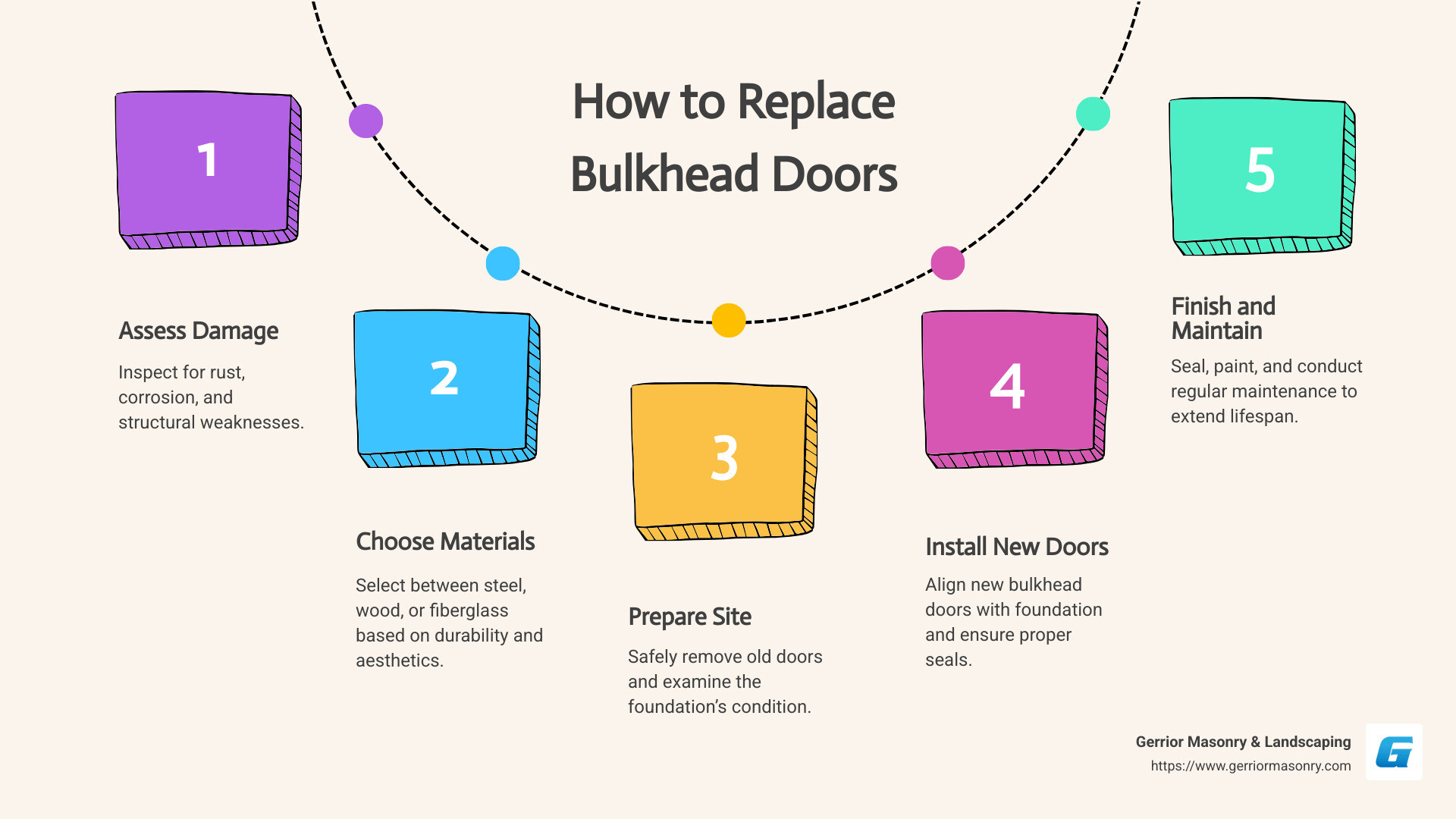
How to replace bulkhead doors can seem daunting, especially if you’re unsure where to start. For those looking for quick guidance, here’s a streamlined process:
- Assess Damage: Check for signs of rust, corrosion, and structural weaknesses.
- Choose Materials: Decide between steel, wood, or fiberglass based on durability and aesthetics.
- Prepare Site: Remove existing doors safely and evaluate the foundation’s condition.
- Install New Doors: Align the new bulkhead with the foundation ensuring proper seals.
- Finish and Maintain: Seal, paint, and complete regular maintenance to extend the door’s lifespan.
Basement bulkheads, often called cellar doors or hatchways, play a crucial role in your home’s overall functionality. They provide essential exterior access to your basement, making it more convenient to move heavy items in and out, while also promoting ventilation and natural light flow. Moreover, a well-maintained bulkhead improves the structural integrity of your home by preventing water infiltration and ensuring security.
I’m Joe Gerrior, the voice behind these insights on how to replace bulkhead doors. With over 34 years leading Gerrior Masonry & Landscaping, I’ve dedicated my career to ensuring that our clients enjoy top-notch craftsmanship and functional solutions custom to their needs.
Relevant articles related to how to replace bulkhead:
– bulkhead repair
– bulkhead stair replacement
– bulkhead door replacement parts
Signs It’s Time to Replace Your Bulkhead
Knowing when to replace your bulkhead is crucial to maintaining your home’s integrity. Here are key signs to watch for:
Rust and Corrosion
If your bulkhead is made of metal, rust is a common enemy. Over time, exposure to moisture can lead to corrosion, weakening the structure and compromising its ability to protect your basement from water and pests. Rust spots are not just unsightly; they indicate that the metal is deteriorating and may soon fail.
Water Seepage
Water stains or dampness around the bulkhead are clear indicators of a problem. Water seepage can lead to more serious water damage and mold growth if not addressed promptly. If you notice puddles or consistent dampness, it’s likely time to consider a replacement. Leaks are a sign that the door is not sealing properly, allowing water to enter.
Warped Wood
For wooden bulkheads, warping is a significant issue. Wood is particularly vulnerable to moisture, which can cause it to swell, warp, and eventually rot. If the door is difficult to open or close, or if you see visible signs of warping, it might be time for a change. Rot and mold can quickly take hold, reducing the door’s lifespan and effectiveness.
Structural Damage
Over time, wear and tear can lead to structural damage. This might include cracks, splits, or other forms of deterioration. Such damage not only affects the bulkhead’s functionality but also poses safety risks. Structural integrity is vital, and ignoring these signs can lead to more extensive repairs down the line.
Regular inspections can help catch these issues early, allowing for timely replacement before more severe problems occur. Keeping an eye out for these signs ensures that your basement remains dry, secure, and accessible.
How to Replace Bulkhead
Replacing a bulkhead door involves several structured steps. Here’s a simple guide to help you through the process.
Removing the Old Bulkhead
Safety First: Always wear appropriate safety gear. This includes gloves, safety goggles, and a dust mask to protect against debris and dust.
Tools Needed: A grinder tool is essential for cutting through the metal hinges and screw heads. This allows you to remove the bulkhead door safely and efficiently.
Frame Removal: After detaching the door, the next step is to carefully pull apart the metal frame. This process might require some force, but ensure not to damage the existing flashing, as it can be reused.
Preparing the Foundation
Foundation Inspection: Before installing a new bulkhead, inspect the foundation for any cracks or weaknesses. Addressing these issues early can prevent future problems.
Grout Application: Mix a batch of grout using a mixing paddle and a ½ inch drill. Wet the concrete around the bulkhead opening to prevent it from absorbing moisture from the grout. Apply the grout evenly using a pointed brick trowel, filling any gaps or cracks.
Pressure-Treated Sills: Install 2×10 pressure-treated sills on top of the foundation wall. These sills serve as a sturdy base for the new bulkhead. Fasten them securely with masonry screws.
Installing the New Bulkhead
Material Selection: Choose materials that suit your environment and needs. Steel doors are durable but may rust, while wood can warp if not treated properly. Fiberglass is a long-lasting option resistant to most forms of degradation.
Metal Primer and Sealant: Apply a metal primer to the fresh-cut ends of the foundation plates to prevent rust. Use a thick coat of silicone sealant along the flashing to ensure a watertight seal.
Door Frame Alignment: Set the door frame on top of the foundation plates. Align it carefully to ensure the doors fit snugly and function smoothly. Secure the frame with nuts and sheet metal screws, drilling pilot holes through the foundation plates for stability.
By following these steps, you can effectively replace your bulkhead door, ensuring your basement remains secure and accessible. Proper preparation and installation are key to a successful replacement.
Choosing the Right Material for Your Bulkhead
Choosing the right material is crucial when replacing your bulkhead. Each material has its pros and cons, and the best choice depends on your specific needs and environment.
Steel Doors
Durability and Security: Steel bulkhead doors are popular for their strength and security. They can withstand harsh weather and provide excellent protection against intruders.
Maintenance Needs: However, steel doors require regular maintenance to prevent rust, especially in damp or coastal areas. Applying a protective coating can help extend their lifespan.
Lifespan: With proper care, steel doors can last between 20 to 30 years. They are a solid choice if you prioritize security and don’t mind occasional upkeep.
Wood Doors
Aesthetic Appeal: Wood doors offer a classic look that can complement traditional homes. They are often chosen for their aesthetic value.
Vulnerability: Unfortunately, wood is prone to rot, warping, and pest damage. It requires regular maintenance, such as sealing and painting, to protect against moisture and decay.
Lifespan: Typically, wood bulkhead doors last around 10 to 15 years. They are best for those who value appearance and are willing to commit to regular maintenance.
Fiberglass Options
Superior Durability: Fiberglass doors, like the ClamDoor, are known for their exceptional durability. They resist rust, rot, and pests, making them virtually maintenance-free.
Energy Efficiency: These doors are also energy-efficient, helping to keep your basement insulated against temperature changes.
Lifespan: Fiberglass doors can last 30 to 50 years or more. They are an ideal long-term investment for homeowners seeking minimal maintenance and maximum durability.
In summary, choosing the right material for your bulkhead depends on your priorities. Steel offers security, wood provides charm, and fiberglass delivers durability with minimal upkeep. Consider your local climate, budget, and aesthetic preferences when making your selection.
Cost Breakdown of Bulkhead Replacement
Understanding the costs involved in replacing a bulkhead is essential for budgeting and planning. Here’s a straightforward breakdown of what to expect in terms of material costs, labor fees, and installation expenses.
Material Costs
The cost of materials varies significantly based on the type of bulkhead door you choose. Here’s a quick comparison:
- Steel Doors: Typically range from $500 to $1,200. They are a budget-friendly option but require periodic maintenance to prevent rust.
- Wood Doors: Generally cost between $800 and $1,500. While they provide a traditional look, they need regular upkeep to combat rot and warping.
- Fiberglass Doors: Prices usually start at $1,200 and can go up to $2,500. These doors are more expensive upfront but offer superior durability and minimal maintenance.
Labor Fees
Professional installation is crucial for ensuring your bulkhead functions properly and lasts long. Labor fees can vary based on your location and the complexity of the installation. On average, expect to pay between $500 and $1,500 for labor.
- Simple Replacements: If your existing bulkhead is easy to access and doesn’t require structural changes, labor costs will be on the lower end.
- Complex Installations: If the project involves significant structural reinforcement or customization, labor fees will be higher.
Installation Expenses
Beyond materials and labor, there are additional expenses to consider:
- Site Preparation: This includes clearing debris and preparing the foundation, which can add $100 to $300 to the total cost.
- Permits and Inspections: Depending on local regulations, you may need permits, adding another $50 to $200.
- Additional Features: Custom designs or added features like insulation or specialized locking mechanisms can increase costs by $200 to $500.
In summary, the total cost of replacing a bulkhead can range from $1,200 to $5,700 or more, depending on the choices you make. It’s important to gather multiple quotes from professionals to ensure you’re getting the best value for your investment. This will help you make an informed decision that aligns with your budget and needs.
Frequently Asked Questions about Bulkhead Replacement
When should I replace my bulkhead?
Replacing your bulkhead is crucial when you notice signs of structural damage. Look for visible rust on steel doors, which can weaken the structure. Warped wood is another red flag, as it can compromise the door’s ability to seal properly, leading to water seepage and potential mold issues.
If you experience difficulty opening or closing the bulkhead door, or notice leaks during heavy rainfall, it’s time to consider a replacement. These issues indicate that your bulkhead is no longer providing the protection and functionality it should.
How much does it cost to replace a bulkhead?
The cost of replacing a bulkhead can vary widely based on material choice, labor, and installation specifics. Here’s a simple breakdown:
- Material Costs:
- Steel Doors: $500 to $1,200
- Wood Doors: $800 to $1,500
- Fiberglass Doors: $1,200 to $2,500
- Labor Fees: Typically range from $500 to $1,500, depending on the complexity of the installation and your location.
- Installation Expenses: Additional costs for site preparation, permits, and optional features can add $350 to $1,000.
In total, expect to spend anywhere from $1,200 to $5,700 or more, depending on your choices and needs.
Can I replace a bulkhead myself?
Replacing a bulkhead is a complex task that involves assessing the foundation, removing the old door, and ensuring the new installation is secure and watertight. While some homeowners with advanced DIY skills might attempt this, it’s generally recommended to seek professional help.
Safety considerations are also essential. Removing and installing heavy doors requires proper tools and techniques to avoid injury. Professionals have the experience and equipment necessary to handle these tasks safely and effectively.
In conclusion, while DIY can save on labor costs, hiring a professional ensures a high-quality, safe installation that will stand the test of time.
Conclusion
Replacing a bulkhead door is a significant investment in your home’s safety, energy efficiency, and overall value. At Gerrior Masonry & Landscaping, we bring over 30 years of expertise to ensure your bulkhead replacement is smooth and successful. Our skilled team and commitment to quality make us a trusted choice for homeowners in Woburn, MA, and surrounding areas.
Long-term Benefits
Investing in a new bulkhead door offers several long-term benefits:
- Improved Security: Modern bulkhead doors deter unauthorized access, keeping your home safe.
- Improved Insulation: With better insulation, your basement stays warmer in the winter and cooler in the summer, reducing energy costs.
- Waterproofing: High-quality doors prevent water infiltration, protecting your basement from flooding and moisture damage.
- Increased Home Value: A durable, aesthetically pleasing bulkhead door boosts your home’s curb appeal and resale value.
- Low Maintenance: Materials like fiberglass and PVC require minimal upkeep, saving you time and money.
Maintenance Tips
To ensure your bulkhead door remains in great condition, regular maintenance is key:
- Clean Regularly: Keep the door and surrounding area free from debris to prevent damage.
- Inspect for Damage: Check for rust, wear, or damage, especially before and after winter.
- Lubricate Hinges: Annually lubricate hinges and moving parts to ensure smooth operation.
- Replace Weatherstripping: If needed, replace weatherstripping to maintain a tight seal.
Regular inspections can help you spot potential issues early, extending the lifespan of your bulkhead door.
Choose Gerrior Masonry & Landscaping
When it comes to bulkhead replacement, choosing a professional service like Gerrior Masonry & Landscaping ensures a high-quality result. Our comprehensive service includes everything from the initial assessment to the final installation, providing a seamless, stress-free experience.
By trusting us with your bulkhead replacement, you’re not just getting a new door; you’re investing in the long-term health, safety, and value of your home. Contact us today to learn more about our services and how we can help improve your home.
