
Chimney flashing repair: 1st Easy Defense
Your First Line of Defense Against Roof Leaks
Chimney flashing repair is critical for preventing water damage, as chimneys are a primary cause of roof leaks. Flashing acts like weatherstripping, sealing the gap where your chimney meets the roof. When it fails, water can seep into your roof structure, causing expensive damage to wood, insulation, and interior walls.
Quick Chimney Flashing Repair Overview:
- Cost: DIY repairs: $65-$185 | Professional repairs: $300-$800+
- Common signs: Water stains on ceilings, rust on flashing, cracked sealant
- Main components: Base flashing, step flashing, counter flashing
- When to call pros: Extensive damage, steep roofs, structural concerns
- Prevention: Annual inspections, prompt repairs
Most homeowners only notice flashing issues when water stains appear on the ceiling. By then, damage may have already spread to the roof decking or home’s structure. The good news is that many minor flashing issues can be spotted early and repaired before they become major headaches. While some simple fixes are DIY-friendly, complex problems require professional expertise.
I’m Joe Gerrior, owner of Gerrior Masonry & Landscape Construction Corp. With over 34 years of experience in chimney flashing repair and masonry in Massachusetts, my team has seen it all. I’ll share our knowledge to help you save thousands in water damage repairs.
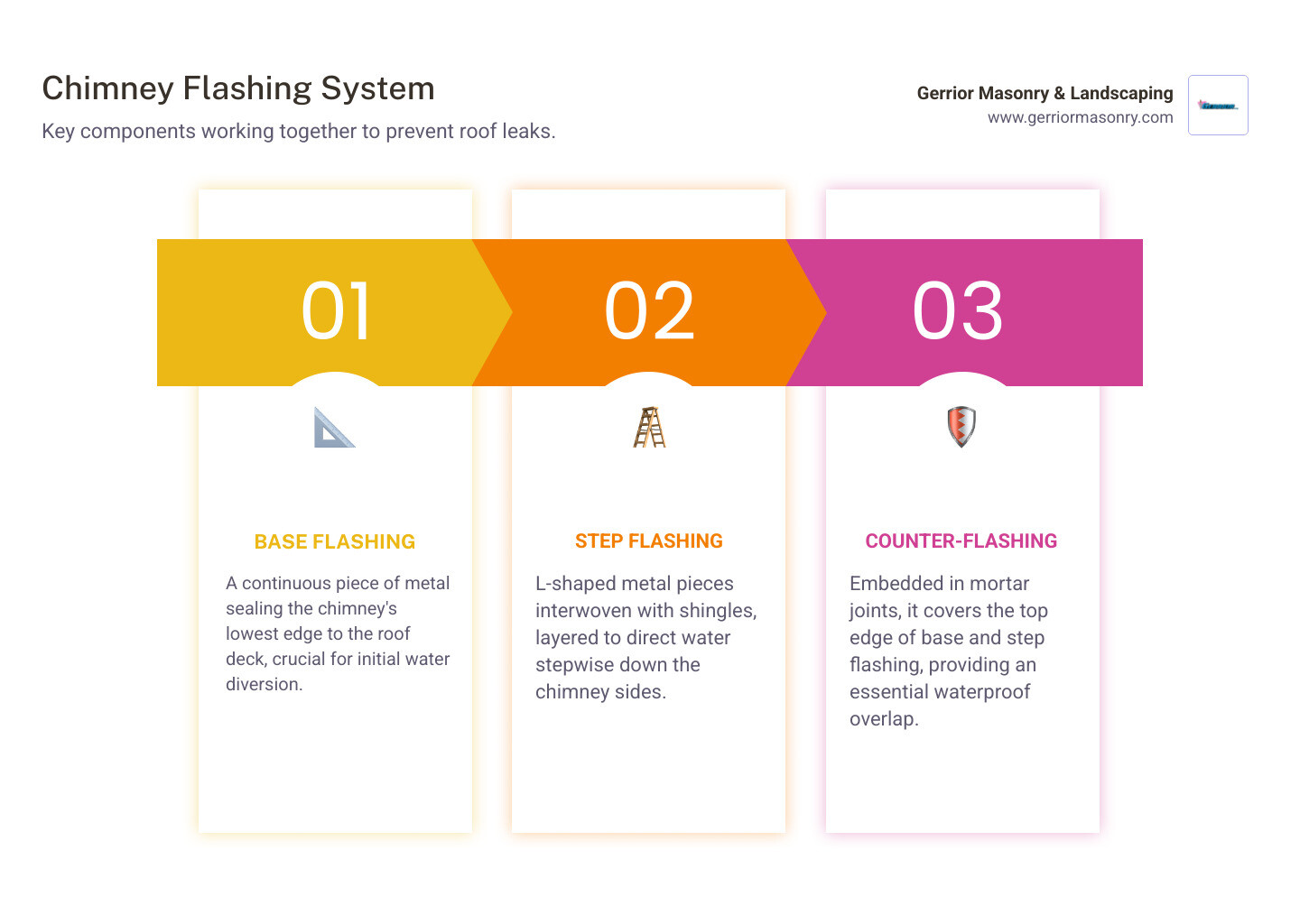
Simple Chimney flashing repair word guide:
Identifying and Understanding Chimney Flashing Issues
Chimney flashing is a weatherproofing system of metal pieces that creates a watertight seal where the chimney and roof meet. The choice of material—typically galvanized steel, aluminum, or copper—plays a significant role in durability and cost. Galvanized steel is a common, budget-friendly choice, but its protective zinc coating can wear down, leading to rust. Aluminum offers superior rust resistance and is lightweight, but it’s softer and can be more susceptible to damage from harsh weather or impact.
Copper is the premium option, prized for its exceptional longevity (often lasting 80+ years) and aesthetic appeal, though it comes with a higher initial investment. Regardless of the material, the system is a coordinated effort of base flashing (around the bottom), step flashing (interwoven with shingles up the sides), and counter flashing (the final piece embedded into the chimney’s mortar joints). Together, these components form a multi-layered barrier that directs water safely off your roof. Without this crucial protection, your home is vulnerable to rain, snow, and wind.
Common Signs That Chimney Flashing Repair is Needed
The earlier you catch flashing problems, the less expensive the repairs will be. Here are the key signs to look for:
- Water stains on ceilings or walls: Discoloration or damp spots near your chimney are the most common red flags. Failing flashing is a leading cause of roof leaks.
- Visible rust or corrosion: Reddish-brown stains on the metal flashing indicate its integrity is breaking down, creating potential entry points for water.
- Cracked or missing sealant: Roofing cement and caulk degrade over time. When they fail, they leave gaps for water to seep in.
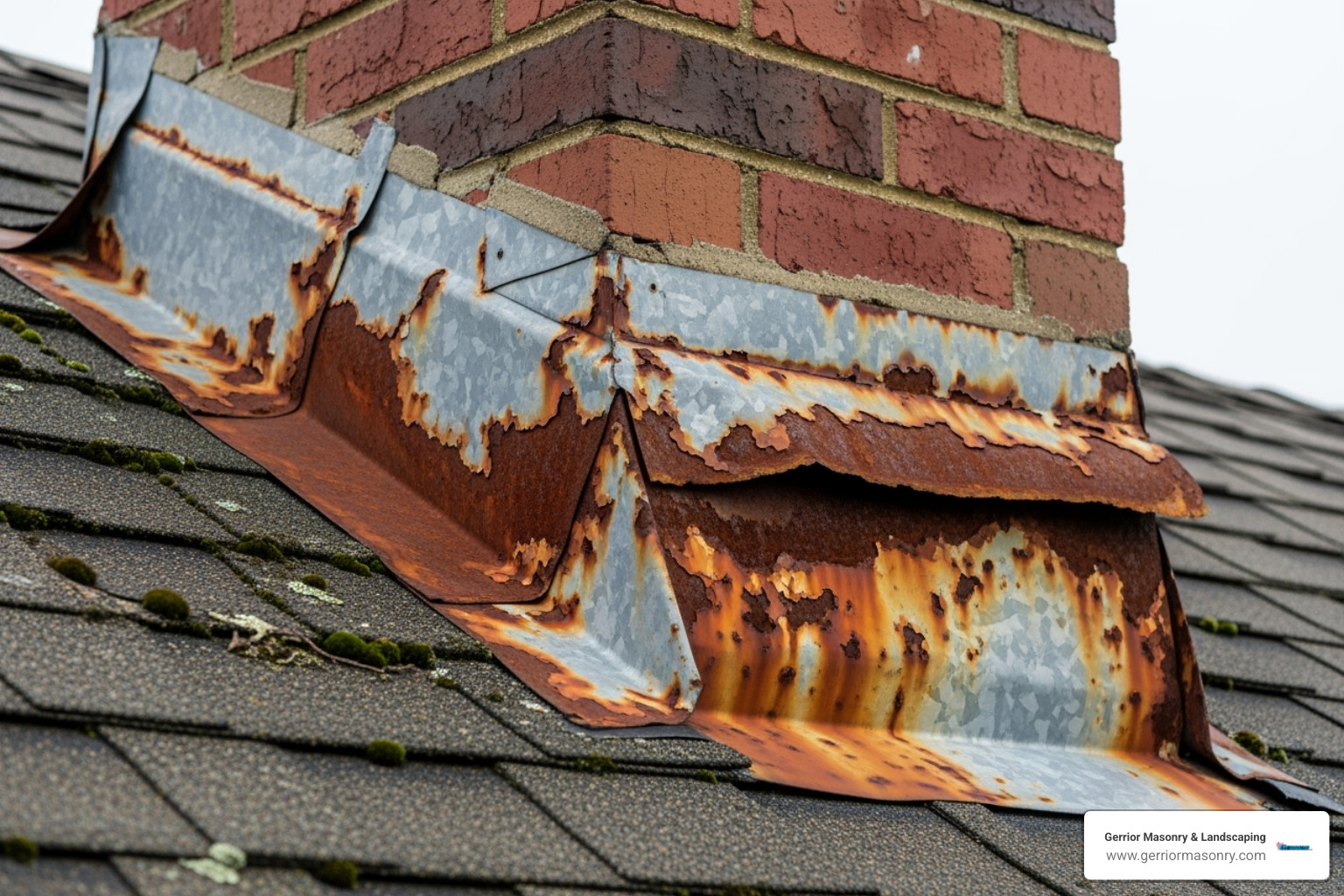
- Loose or missing flashing: High winds or ice dams can pull flashing sections away from the chimney or roof.
- Crumbling bricks or mortar: This can signal long-term water damage from failed flashing that has compromised the masonry. Our team at Chimney Masonry Repair Near Me can address these structural issues.
- Mold or algae growth: Growth around the chimney indicates persistent moisture, often due to faulty flashing.
We recommend checking your chimney flashing twice a year and after severe weather.
The Risks of Damaged Flashing and Benefits of Maintenance
Ignoring damaged flashing can lead to severe consequences. The primary risks include:
- Water Damage: Spreads from ceiling stains to peeling paint and ruined drywall.
- Wood Rot: Compromises the structural stability of your roof’s rafters and sheathing.
- Mold and Mildew: Creates health hazards like allergies and respiratory issues.
- Structural Damage: Weakens the entire roof system, damages insulation, and can create electrical hazards.
The benefits of timely chimney flashing repair and regular maintenance are clear. Proactive repairs save money by preventing catastrophic water damage that can cost thousands to fix. A well-maintained flashing system improves home durability by protecting the roof deck and structural timbers from rot, and it can even enhance energy efficiency by preventing moisture from degrading insulation. Furthermore, it protects your property value, as a leaky roof is a major red flag for potential buyers. Most importantly, it provides peace of mind knowing your home is secure during the next heavy storm.
For more information, check out The Importance of a Properly Flashed Chimney. If you have broader chimney issues, our comprehensive Chimney Repair services can help.
DIY vs. Professional Chimney Flashing Repair Costs
The decision to DIY or hire a professional depends on the extent of the damage, your skill level, and your comfort with working on a roof.
Here’s a general cost comparison:
| Type of Repair | Estimated Cost Range |
|---|---|
| DIY Repair | $65 to $250+ |
| Professional Repair | $300 to $1,500+ |
Important note: These are average costs based on internet data and not actual costs for Gerrior Masonry services. Actual pricing may vary based on your specific project details.
DIY repairs are suitable for minor tasks like re-sealing small areas. Material costs are low, but consider the value of your time and the safety risks involved.
Professional repairs cover skilled labor, quality materials, safety equipment, and warranties. Costs can increase due to factors like extensive damage (requiring full replacement or wood rot repair), difficult roof access (steep pitches), premium materials (like copper), and specific local building code requirements.
For more pricing details, visit our Chimney Repair Cost page. Investing in proper chimney flashing repair now is always more cost-effective than addressing extensive water damage later.
Gerrior Masonry & Landscape Construction is based in Woburn, MA, and proudly serves Middlesex and Essex County, Massachusetts.
How to Tackle Chimney Flashing Repair and Maintenance
Understanding the chimney flashing repair process helps you make smart decisions, whether you plan a DIY fix or hire a professional. Here’s a look at the tools, steps for minor repairs, and when to call for reinforcements.
Tools and Materials for the Job
Proper preparation is key to a safe and effective repair. After 34 years in the business, I can’t stress safety enough.
Essential Tools & Materials:
- Safety Gear: A sturdy ladder, safety harness (for pitched roofs), non-slip shoes, work gloves, and safety goggles are non-negotiable.
- Removal & Prep Tools: Pry bar, utility knife, wire brush, chisel, hammer, and tape measure.
- Repair Materials: New metal flashing (aluminum, galvanized steel, or copper), roofing cement, a caulk gun with polyurethane roof caulk, and masonry nails or screws.
- Optional: An ice and water shield provides an extra waterproofing layer, which is beneficial in Massachusetts winters.
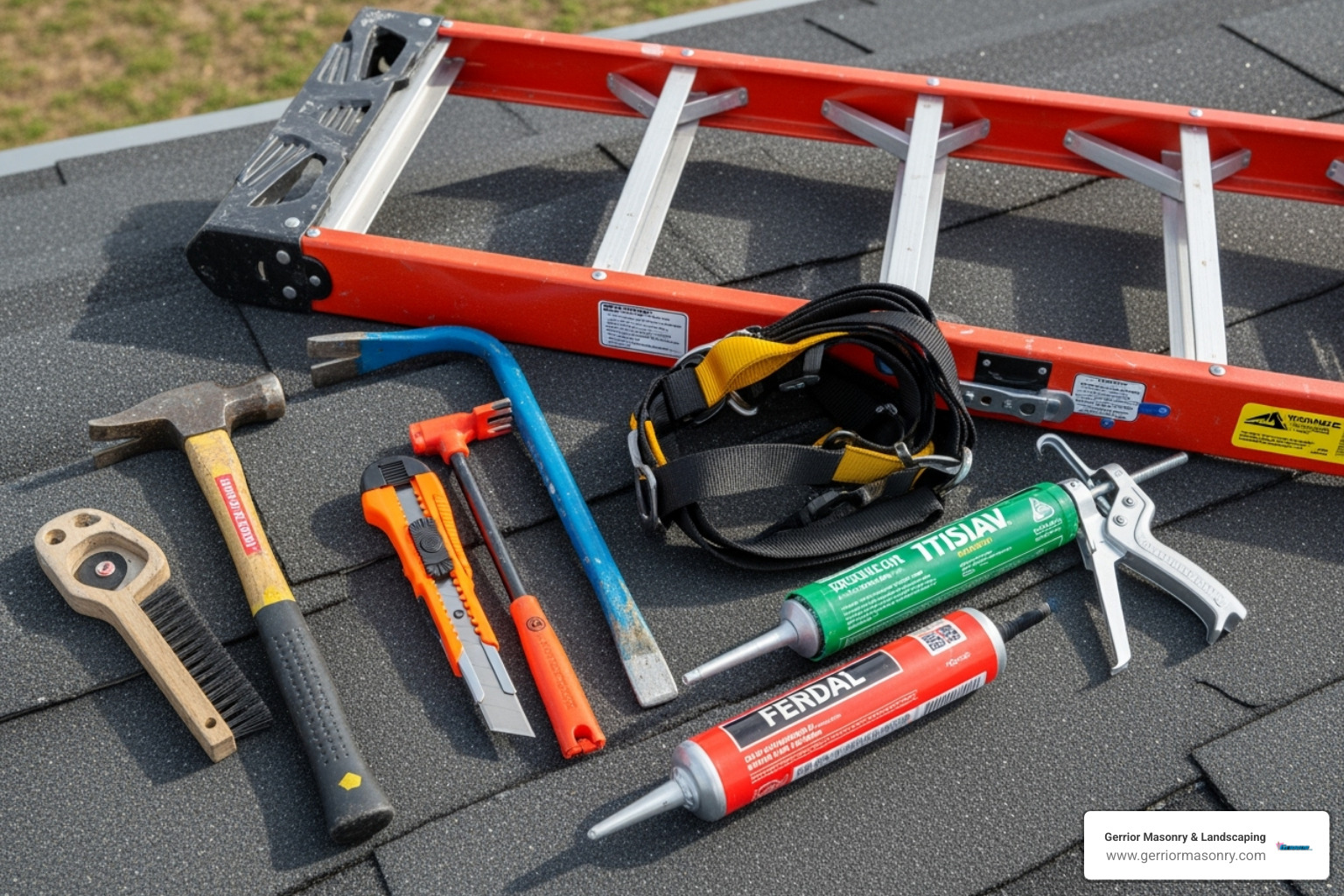
A Step-by-Step Guide for Minor Chimney Flashing Repair
This guide is for minor repairs only, like re-sealing a loose edge or fixing small sealant cracks. For extensive damage, call a professional.
- Prioritize Safety: Work only on a dry roof in good weather. Use a secured ladder and proper safety gear. If you’re uncomfortable with heights or have a steep roof, hire a pro.
- Inspect Carefully: Check the entire flashing system for loose sections, cracks, rust, or gaps.
- Clean the Area: This step is critical for proper adhesion. Remove all leaves, pine needles, and other debris from the roof area around the chimney. Use a pry bar or stiff putty knife to remove the bulk of the old, failed sealant. Then, use a wire brush to aggressively scrape away any remaining caulk, roofing cement, and rust from both the flashing and the chimney masonry until the surfaces are completely clean and bare. A clean, dry surface is non-negotiable for a lasting bond.
- Repair or Replace: Gently bend loose flashing back into place. If replacing a small section, cut new metal to size, ensuring it overlaps with existing flashing.
- Apply Roofing Cement: Using a caulk gun or putty knife, apply a generous, continuous bead of roofing cement behind the flashing where it meets the chimney and under any lifted edges of the step or base flashing. Press the flashing firmly into the cement to create a tight seal and squeeze out any trapped air. If you had to remove a section, secure the new piece with masonry nails at the top edges only—never drive a nail through the face of the flashing, as this creates a new hole for water to enter.
- Seal All Edges: Apply a final bead of roofing cement along the top edge where flashing meets brick. Cover all nail heads with cement. Smooth the sealant with a putty knife for a clean finish.
When to Call a Professional and How to Prevent Future Issues
Knowing when to call a professional is crucial for avoiding costly mistakes and ensuring a lasting repair.
Call a professional if you encounter:
- Extensive Damage: Severely rusted flashing, large holes, or multiple missing sections.
- Steep Roofs or Safety Concerns: Don’t risk injury. Professionals have the right safety equipment.
- Structural Issues: Suspected damage to roof decking or chimney masonry requires an expert eye.
- Lack of Experience: Proper flashing installation is a technical skill. Mistakes like improper overlapping or nailing through the flashing face can make leaks worse.
- Persistent Leaks: If a DIY fix fails, it’s time for a professional diagnosis.
Professionals also ensure work complies with local building codes and often provide warranties.
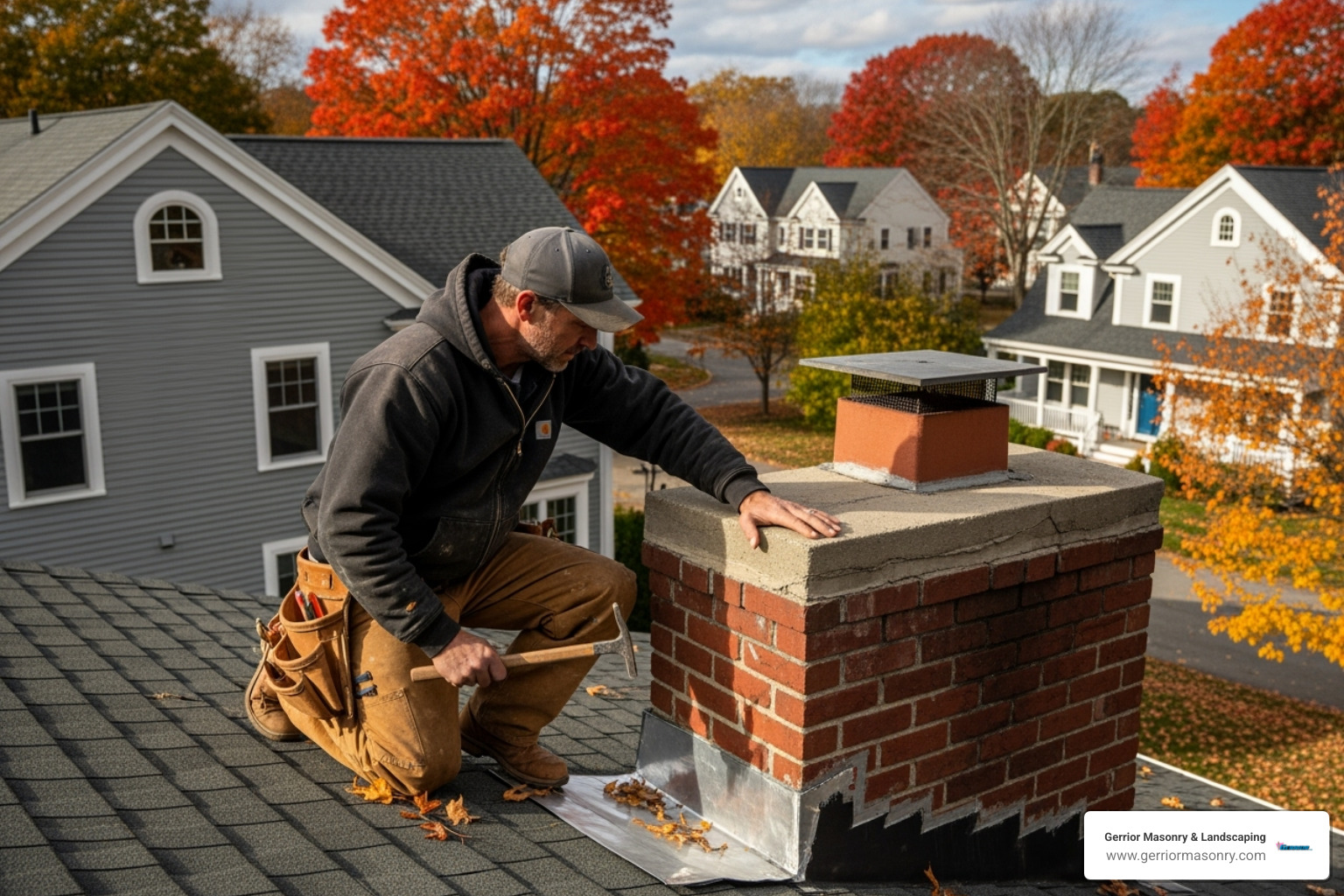
How to Prevent Future Issues
Prevention is the best strategy for chimney flashing repair.
- Schedule Annual Inspections: The best defense is a good offense. Have a certified roofer or mason inspect your chimney and flashing every fall before the wet season begins. They can spot and fix minor issues before they escalate.
- Keep it Clean: Debris like leaves, pine needles, and branches can pile up around the base of your chimney. This traps moisture against the flashing and masonry, accelerating corrosion and decay. Clean this area at least twice a year.
- Maintain Masonry Health: The chimney structure itself is part of the system. Address any cracked bricks or deteriorating mortar joints promptly through a process called tuckpointing. This prevents water from seeping behind the counter flashing and compromising the entire seal.
- Consider a Cricket for Wide Chimneys: If your chimney is more than 30 inches wide, building codes often require a “cricket” or “saddle.” This is a small, peaked structure built on the high side of the chimney that diverts water and snow around it, preventing pooling and reducing stress on the flashing.
- Invest in Quality Installation: The number one cause of flashing failure is improper installation. Ensure you hire a reputable professional who understands the complex layering of step and counter flashing. A quality job using durable materials will protect your home for decades.
The effectiveness of flashing depends entirely on proper installation. By staying on top of maintenance and knowing when to call for help, you can protect your home from serious water damage. When the job calls for expertise, our team is here to help. For a comprehensive inspection and professional masonry services, trust the experts.
Gerrior Masonry & Landscape Construction is based in Woburn, MA, and proudly serves Middlesex and Essex County, Massachusetts.
