

Chimney repair and rebuildsin Woburn, MA
Crumbling mortar, cracked or loose brick, a chimney damaged by weather or one that needs to come down and go back up. We repair, repoint, restore and rebuild brick chimneys around Woburn and greater Boston, build new chimneys, and the estimate is free.
Find where the water gets in, then fix that.
A chimney is the most exposed masonry on a house. It stands above the roof in wind, rain and snow, heats up and cools down every time the fireplace or boiler runs, and in a Massachusetts winter it freezes and thaws over and over. Most chimney repair comes back to water: it gets in through failed mortar joints, a cracked crown or the joint where the chimney meets the roof, and every freeze pushes the brick a little further apart.
Gerrior Masonry & Landscape Construction has been repairing, repointing, restoring and rebuilding chimneys from Woburn for over 30 years, and building new ones. We're family-owned, fully insured, and the work is guaranteed. If a few courses of brick need resetting, we'll say so. If the stack above the roof has to come down and go back up, we'll show you why.
See finished work in our chimney projects gallery.
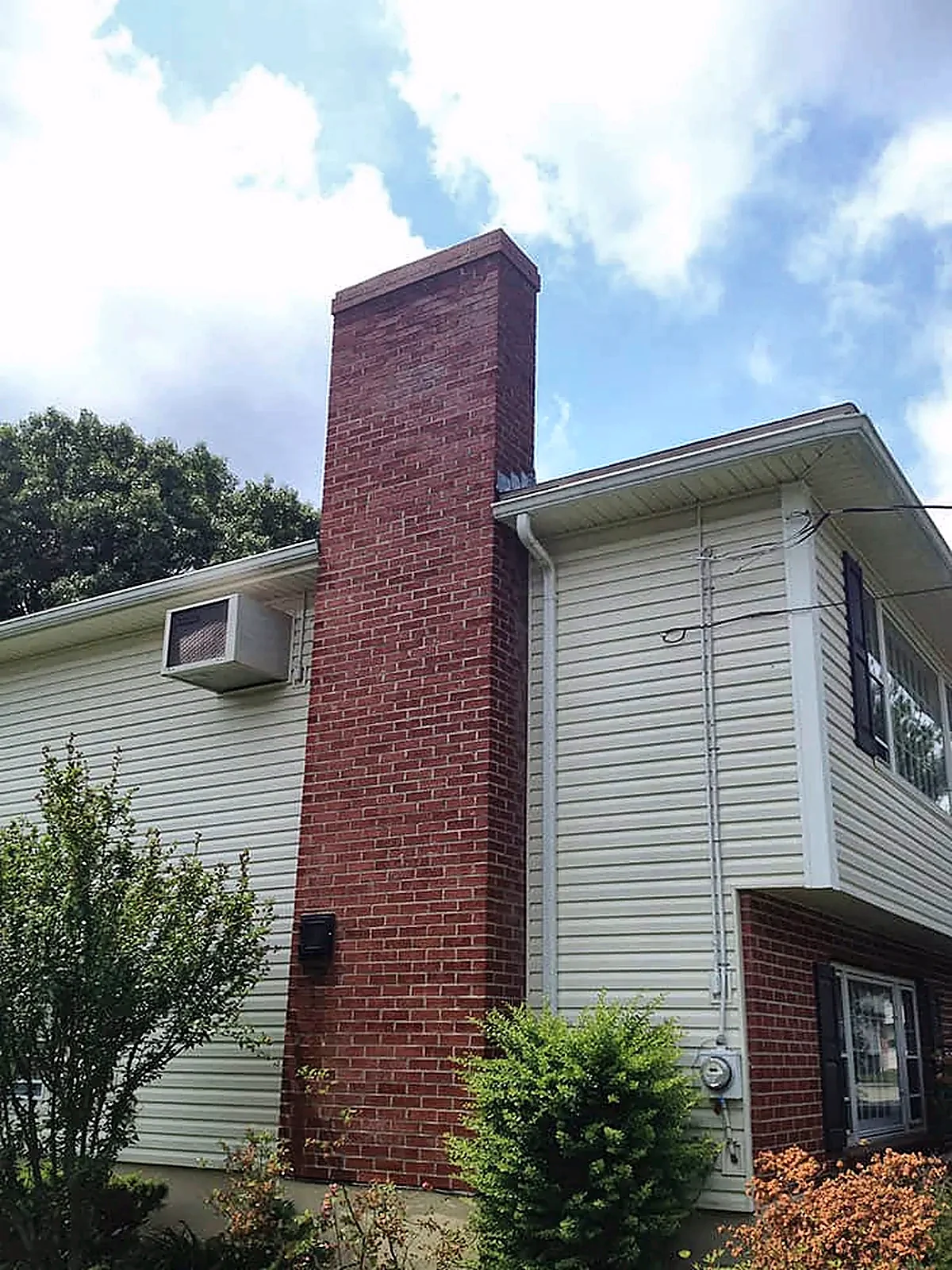
Chimney repair services
Failed mortar joints on the stack raked out and repointed with mortar matched to the brick.
How repointing worksCracked and spalled bricks cut out and replaced with brick that matches the old.
The stack taken down to sound brick, often at or below the roofline, and rebuilt plumb.
Weathered, stained and deteriorated chimney brickwork restored so the stack is sound and looks right again.
Need a new masonry chimney built? We build those too, with the height above the roof worked out to code.
Chimneys damaged by wind, ice or years of weather repaired, or taken down to sound brick and rebuilt.
Signs, causes and what the fix usually is
How to read what your chimney is telling you, what each problem usually needs, and what sets the price, so you can go into an estimate knowing the right questions to ask.
Signs your chimney needs repair
- Crumbling or recessed mortar joints on the stack.
- White staining (efflorescence): salt left on the brick by water moving through the masonry.
- Spalling: brick faces flaking or popping off, often with pieces landing on the roof or in the gutter.
- A cracked or crumbling crown at the top.
- Loose bricks or a lean in the top courses.
- Water stains on the ceiling or wall beside the chimney, or dampness and a musty smell at the fireplace.
- Gaps or rust where the metal flashing meets the brick.
From the ground, binoculars or your phone's zoom will show most of this. You don't need to climb onto the roof to know it's time for a closer look.
Repoint, repair, rebuild or build new?
Repointing is the fix when the bricks are sound and only the joints have failed. The old mortar is raked out to a consistent depth and new mortar, matched to the brick, is packed in. Our brick repointing guide explains the method and why the mortar has to be softer than the brick.
Partial repair handles spalled or cracked bricks scattered through an otherwise sound stack. Those bricks are cut out and replaced one at a time with matching brick, and the joints around them are repointed.
A chimney rebuild is needed when the top of the stack is loose, leaning or so spalled that there isn't enough sound brick left to hold mortar. The chimney is taken down to solid brick, often at or just below the roofline, and rebuilt plumb with a new crown. A rebuild is also the time to check height. The residential building code used in Massachusetts, based on the International Residential Code, requires a masonry chimney to rise at least 3 feet above the point where it passes through the roof and at least 2 feet higher than any part of the building within 10 feet.
A new chimney is a build from the ground up. We build new masonry chimneys as well as repairing old ones, and the same height rules apply.
The crown: the chimney's roof
The crown is the slab across the top of the chimney around the flue. Many older chimneys only have a thin, flat wash of mortar there, which cracks within a few winters and lets water run down into the stack. A proper crown is thicker, slopes away from the flue, and overhangs the brick with a drip edge so water falls clear instead of running down the face. If the crown is cracked but the brick below is sound, replacing the crown can stop a leak that repointing alone wouldn't. A chimney cap is different: it's the screened cover over the flue opening that keeps out rain, animals and debris. It helps, but it doesn't do the crown's job.
Leaks at the roofline
Where the chimney passes through the roof, metal flashing seals the gap. On a brick chimney the upper piece, the counterflashing, is tucked into a mortar joint. When that joint fails, water runs behind the flashing and into the house, and it often looks like a roof leak. So a roofline leak can be partly a roofing problem and partly a masonry one. The flashing itself is metal and is often a roofer's job, while failed mortar and loose brick around it are masonry. A roofer or chimney sweep can tell you whether the flashing needs replacing. Water can also travel down inside the brick, so the stain on your ceiling isn't always right under the problem.
Chase covers versus crowns
A chase cover is the metal top on a framed chimney chase: the boxed-in, sided chimney common on newer homes with prefabricated fireplaces. Galvanized covers rust and can leak into the chase, which is why stainless steel replacements are popular. Chase covers are metal work, usually handled by a chimney sweep or roofer. A brick chimney has a masonry crown instead.
A note on fireboxes
Inside the fireplace, the firebox is lined with firebrick laid in refractory mortar, a heat-setting mortar made to take direct flame. Ordinary mortar breaks down under that heat, so open or crumbling firebox joints need refractory mortar, and the residential code calls for firebrick laid in medium-duty refractory mortar (ASTM C199). The heat-resistant "fire cement" or "furnace cement" sold in tubes is fine for sealing a stove pipe joint or a hairline gap. It isn't meant to rebuild firebox joints or reset loose firebrick. A chimney sweep or fireplace specialist is usually the right person to inspect a firebox and tell you what it needs.
Chimney safety and inspections
A chimney carries smoke and carbon monoxide out of the house. Cracked flue tiles or open mortar joints can let heat reach the wood framing around the chimney, or let exhaust leak where it shouldn't. The fire code standard for chimneys, NFPA 211, calls for chimneys, fireplaces and vents to be inspected once a year, and every home with a fireplace or fuel-burning appliance should have working carbon monoxide detectors on each floor and near sleeping areas. An annual sweep and inspection covers the flue. When it turns up failed mortar, loose brick or a stack that needs rebuilding, that's where a masonry contractor comes in.
How chimney repair is priced
We don't quote chimney work sight unseen or publish price ranges, because "chimney repair" can mean repointing a few joints, rebuilding the whole stack or building a new chimney. What sets the price: how many courses or how much area of brick is failing; whether it's a repair, a rebuild or a new build; the height of the chimney and the pitch of the roof, which decide the staging and safety setup; and whether matching brick has to be found. The look and the estimate are free.
Chimney repair around Woburn
From our Woburn office we repair chimneys in towns including Andover, Burlington, North Reading, Reading, Stoneham, Winchester and Woburn. Not sure we cover your town? Check our service area or just call. For other brick, stone and step work, see our masonry services.
How a chimney repair goes
A leak, loose brick, staining or a crown you can see cracking from the yard. Call (781) 933-4157 or send an estimate request.
We check the brick, the mortar joints and the top of the stack. If part of the problem belongs to a roofer or chimney sweep, we'll tell you.
You get our recommendation, the reason for it, and an estimate before any work starts.
The repair is done with brick and mortar matched to your chimney, the site is cleaned up, and the work is guaranteed.
Just a note to thank you for the new beautiful walk, and now we can light our fireplace this winter also.Betty Ann, Winchester, MARead more reviews
Chimney repair, answered
01How do I know if my chimney needs repair?
Look for crumbling joints, white staining, flaking brick, pieces of brick on the roof, a cracked crown, or water stains near the chimney inside. Any one of them means water is getting into the masonry, and it's worth a free look before another winter.
02Should I repoint or rebuild my chimney?
Repoint when the bricks are solid and only the mortar has failed. Rebuild when the top is loose, leaning or so spalled the brick can't hold mortar. Many chimneys need a mix: the top few courses rebuilt and the rest of the stack repointed.
03Why does my chimney leak when it rains?
The usual causes are a cracked crown, mortar joints that soak up water, and failed flashing where the chimney meets the roof. Water can travel down inside the masonry, so the stain inside isn't always directly under the problem. Flashing is often a roofer's job; the brick and mortar are masonry.
04What's the difference between a chimney crown and a chimney cap?
The crown is the masonry slab that covers the top of the chimney around the flue and sheds water off the brick. The cap is the screened cover that sits over the flue opening to keep out rain and animals. A chimney needs a sound crown whether or not it has a cap.
05Can I fix my fireplace with fire cement?
Tube fire cement is fine for small gaps and stove pipe joints. Loose firebrick and open firebox joints should be repaired with refractory mortar, which is made to set and hold under direct heat.
06Do you build new chimneys?
Yes. Along with chimney repairs and rebuilds, we build new masonry chimneys. Tell us about the house and what the chimney will serve, and we'll go over it at the free estimate.
07Do I need a permit to rebuild a chimney?
Rebuilding a chimney is structural work, and in Massachusetts it generally needs a building permit from your town. Repointing and small repairs often don't. Your town's building department has the final word, and we'll go over it with you at the estimate.
08How much does chimney repair cost?
It depends on how much brick and mortar is failing, whether it's a repair, a rebuild or a new chimney, the chimney's height and the roof pitch, and how hard the brick is to match. We price it after an on-site look, and the estimate is free.
Woburn and the towns around it.
Our office is at 245 Salem Street in Woburn, and we work across the towns north and west of Boston, from Acton to Lynnfield.

Chimney leaking or crumbling? Start with a free estimate.
- Office
- 245 Salem St, Woburn, MA
- Hours
- Mon–Fri 7am–5pm
- Family-owned
- Over 30 years
- Coverage
- Fully insured