
The Foundation of a Flawless Flagstone Path
A base for flagstone walkway is the single most important factor determining whether your stone path will last for decades or fail within a few years. Here’s what you need to know:
Quick Answer: Best Base for Flagstone Walkways
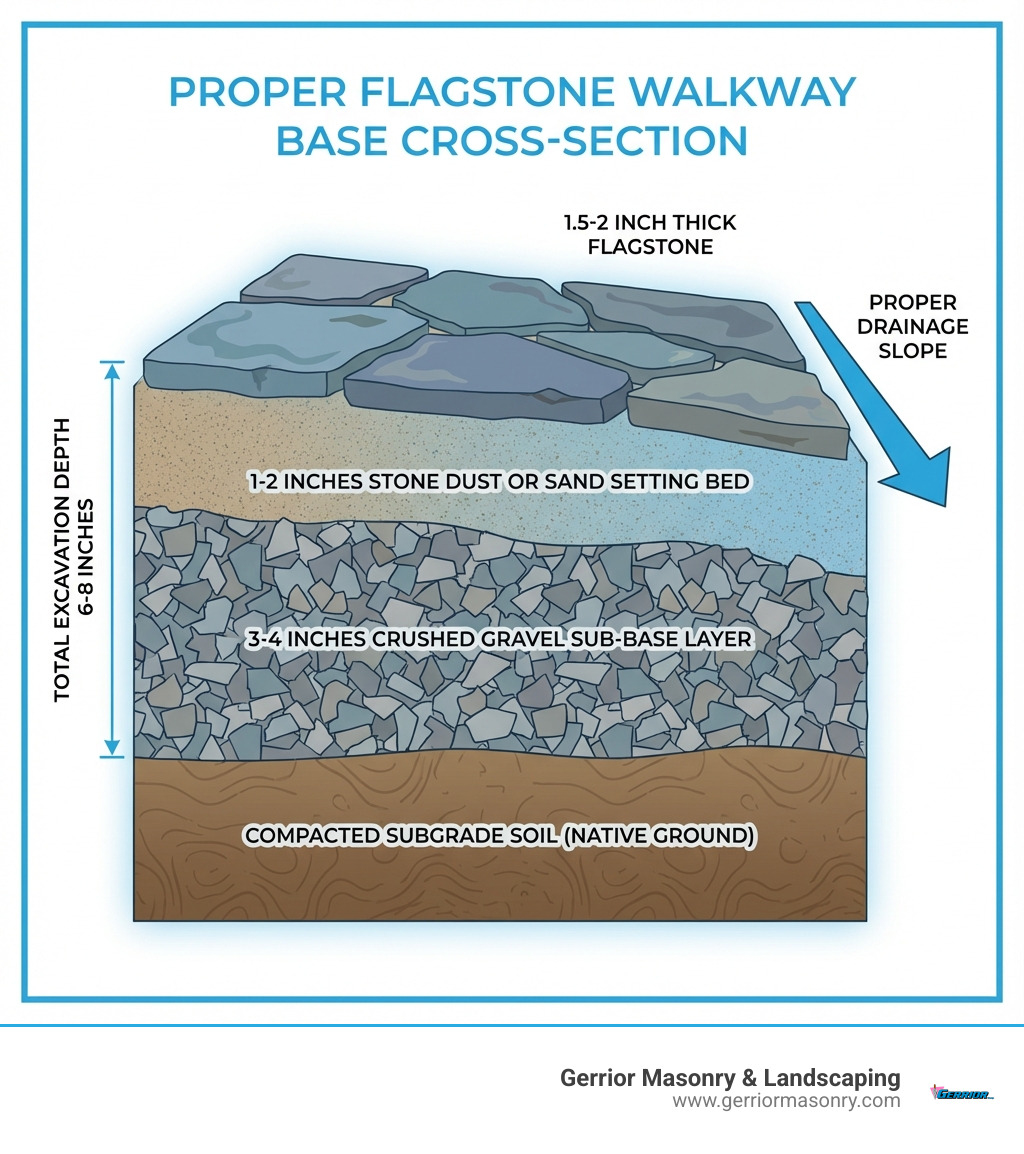
- Recommended System: 3-4 inches of compacted crushed gravel (sub-base) + 1-2 inches of stone dust (setting bed).
- Total Excavation Depth: 6-8 inches below finished grade.
- Best Materials: Crushed stone for drainage and stability; stone dust for setting irregular flagstone.
- Critical Step: Proper compaction of each layer to prevent settling.
Many homeowners overlook what lies beneath their beautiful stone path. A flagstone walkway is only as stable as its foundation. Without a properly prepared base, stones will shift, settle, and crack—especially in Massachusetts, where freeze-thaw cycles test every outdoor installation.
A strong, stable base is crucial. Native soil alone won’t provide the stability needed to resist frost heave and prevent settling. The solution is a multi-layered system that promotes drainage and keeps your stones level year after year.
I’m Joe Gerrior, owner of Gerrior Masonry & Landscape Construction Corp. With over 34 years of experience installing flagstone walkways throughout Massachusetts, I’ve learned which methods stand the test of time. A proper foundation isn’t just about following steps—it’s about understanding why each layer matters, especially in our region’s climate.
Step-by-Step: Building the Perfect Base for a Flagstone Walkway
Building a flagstone walkway is a rewarding project, but its longevity depends almost entirely on the quality of its base for flagstone walkway. Think of it as the invisible hero of your hardscaping project.
Site Preparation and Excavation
The journey to a durable flagstone walkway begins with meticulous site preparation. This phase sets the stage for a stable, long-lasting path, especially in the challenging climate of Middlesex and Essex County, Massachusetts.
Marking the Path
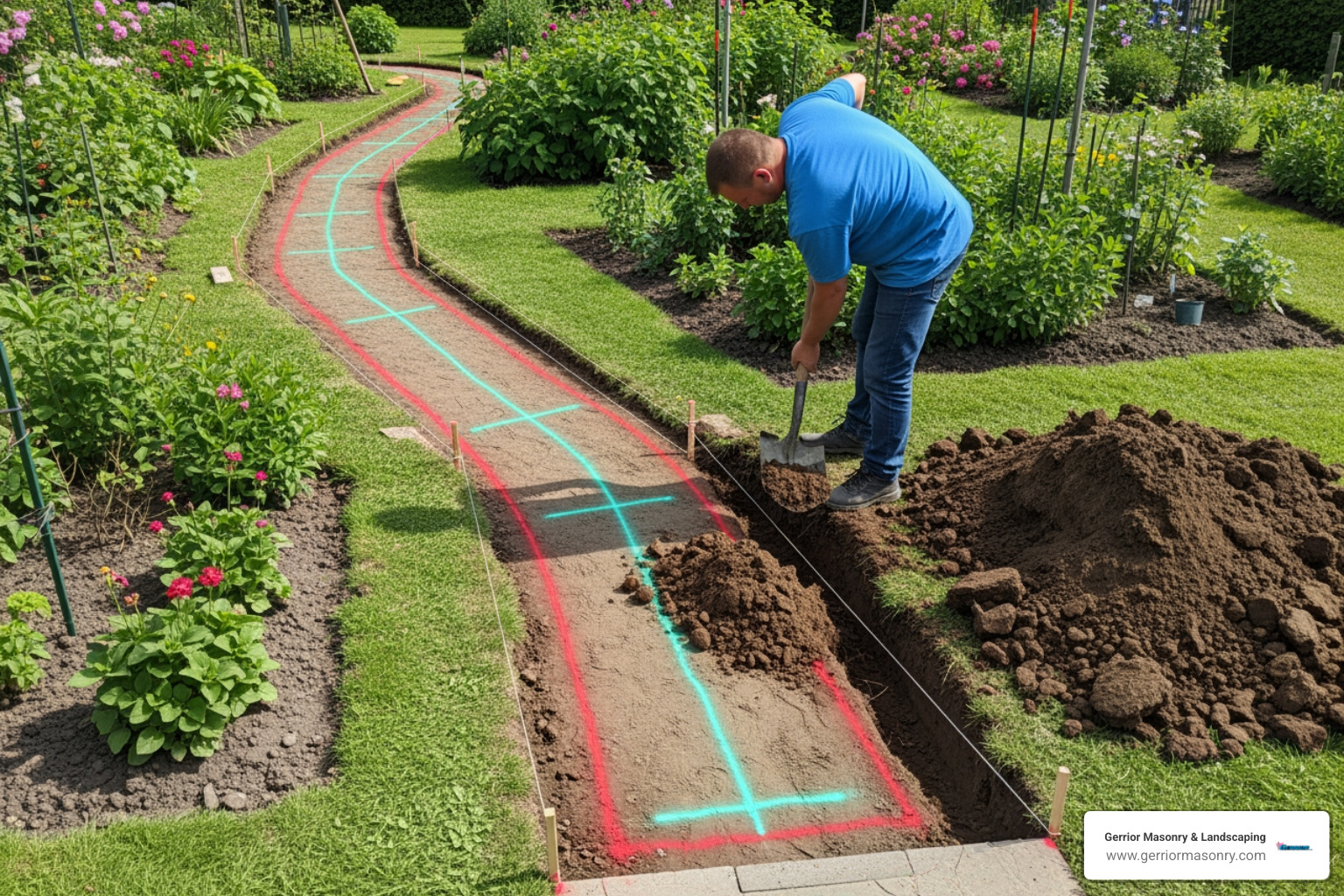
First, plan the layout, considering foot traffic and landscape integration. A garden hose or stakes and string can help visualize the path. We recommend a width of at least two feet for a single person and three feet for two people or moving garden equipment.
Calculating Excavation Depth (6-8 inches total)
A common question is, “How deep do I dig?” The answer is 6 to 8 inches below the final grade. This depth accommodates the sub-base, the setting bed, and the flagstone itself. For durability, use flagstones that are at least 1.5 to 2 inches thick and factor this into your total depth.
Soil Conditions and Drainage
The native soil in areas like Woburn, MA, impacts base preparation.
- Clay Soil: Holds water, increasing the risk of frost heave. Deeper excavation or extra drainage may be needed. As experts at Fine Homebuilding note, proper drainage is key to preventing heaving.
- Sandy Soil: Drains well but can be less stable, making thorough compaction essential.
The goal is to remove all loose topsoil and reach a hard-packed subgrade.
Ensuring a Proper Slope
Water is the enemy of hardscaping. A flat walkway invites pooling, erosion, and instability. We always build a slight slope (or pitch) of about 1/4 inch per foot, directing water away from structures. For more on water management, see our guide on The Importance of Proper Drainage in Hardscaping and Masonry Projects.
Why Native Soil is Not a Suitable Base
Relying on native soil alone will lead to settling, weed growth, poor drainage, and pest infestations. The expansion and contraction from moisture and freeze-thaw cycles will quickly ruin your walkway. That’s why a robust, engineered base system is non-negotiable.
Choosing Materials for Your Flagstone Walkway Base
The right materials are critical for a base that can withstand New England’s climate. We select materials for excellent drainage, compaction, and a firm foundation.
Gravel (Crushed Stone) for the Sub-Base
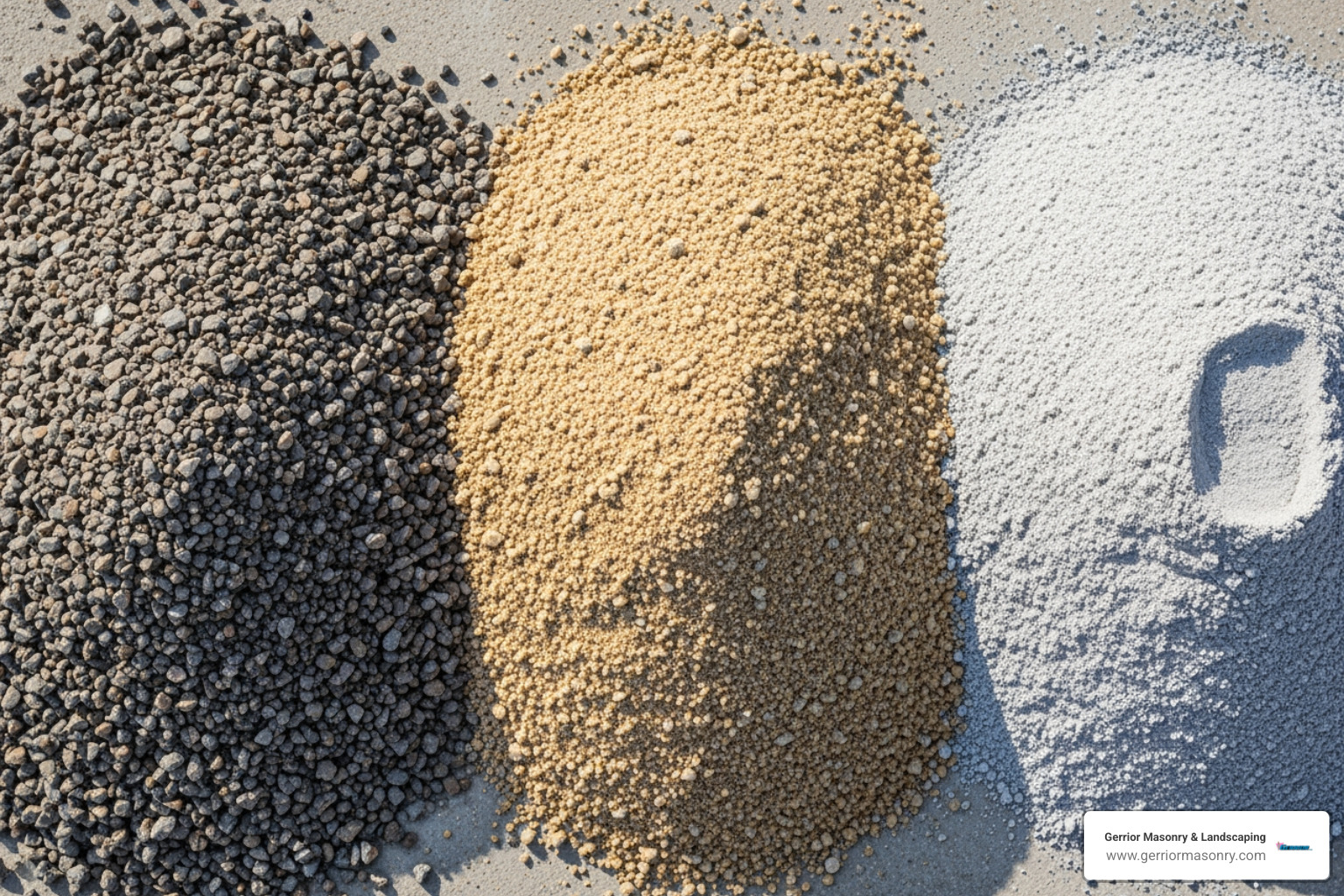
Crushed stone is the workhorse of a flagstone walkway base. We use 3/4-inch crushed stone with fines (crusher run) for the sub-base layer.
- Pros: The angular pieces interlock when compacted, creating a stable, load-bearing layer. It also provides excellent drainage, which is vital for preventing frost heave during Massachusetts winters. A gravel base is flexible, allowing it to accommodate slight ground movement without the catastrophic cracking seen in rigid systems.
- Cons: It must be thoroughly compacted in layers to achieve stability. Avoid rounded pea gravel, as it doesn’t lock together.
Sand vs. Stone Dust for the Setting Bed
The setting bed is the 1-2 inch layer directly beneath the flagstones.
- Sand: While easy to level, sand has significant drawbacks. It can be washed away by rain, provides an inviting home for ants, and can lead to settling over time, especially with irregular flagstones.
- Stone Dust (Quarry Screenings): We strongly recommend stone dust for the setting bed. When wet and compacted, its fine particles bind together almost like a natural cement, creating a much firmer bed than sand. It resists washout, deters ants, and is ideal for leveling flagstones of varying thicknesses.
Cement/Mortar-Set Base: A Word of Caution
While setting flagstone in concrete or mortar provides initial stability, we generally advise against it for walkways in our climate.
- Pros: Creates a rigid, uniform surface.
- Cons: The biggest drawback is the risk of cracking. In a region with freeze-thaw cycles, a rigid concrete base is almost guaranteed to crack over time. Repairs are difficult and expensive. A dry-laid system with a gravel sub-base and stone dust setting bed offers superior long-term performance and easier maintenance for most residential projects. Our team at Gerrior Masonry & Landscaping is expert in all types of Hardscaping and can help you choose the best approach for your needs.
Installation and Leveling: Setting the Base for a Flagstone Walkway
With the area excavated and materials chosen, the construction begins. Precision in this phase ensures the stability of your finished walkway.
Installing the Sub-Base (3-4 inches of gravel)
First, lay a high-quality landscape fabric over the excavated subgrade to block weeds and prevent the gravel from mixing with the soil. Next, spread a 3 to 4-inch layer of crushed gravel evenly across the area.
The Critical Role of Compaction
Compaction is the most vital step for a long-lasting base. Without it, materials will settle, and your walkway will become uneven. We apply gravel in 2-inch “lifts” (layers), compacting each one thoroughly before adding the next. For small paths, a hand tamper is sufficient; for larger projects, a plate compactor is more efficient. The goal is a firm surface you can walk on without leaving deep footprints.
Adding the Setting Bed (1-2 inches of stone dust)
On top of the compacted gravel, spread a 1 to 2-inch layer of stone dust. This is the bed where your flagstones will rest. Use a straight 2×4 to screed (level) the surface, maintaining the drainage pitch you established during excavation.
Leveling Individual Stones with a Rubber Mallet
This is where the artistry comes in.
- Placement: Lay the flagstones, flattest side up, fitting them together like a puzzle with consistent joint spaces (about 1/2 to 1 inch).
- Leveling: Place a stone on the setting bed and use a long level to check it.
- Adjustment: If a stone is too high, gently tap it down with a rubber mallet. If it’s too low, lift it, add a small amount of stone dust underneath, and reset it. This process is repeated for every stone to create a stable, even surface.
For a simpler stepping stone path, the process is similar but less extensive. Learn more in our guide on How to Install Stepping Stone Walkway.
Finishing Touches: Joints and Edging
The final steps lock your flagstones in place and give the walkway a polished look.
Joint Filler Options
The material between your stones is crucial for stability.
- Stone Dust (Recommended): Our preferred choice for both the setting bed and joints. It compacts tightly, resists washout, deters ants, and prevents weeds. To apply, sweep the dust into the joints, gently water to settle it, and add more if needed after it dries.
- Sand: Prone to washing out, attracting ants, and allowing weed growth. We generally advise against it for wider, irregular flagstone joints.
- Polymeric Sand: We do not recommend polymeric sand for most flagstone applications. While it hardens to resist weeds, it is a rigid material that often cracks and fails in our freeze-thaw climate. Repairs are difficult, and it can stain the surface of your flagstones. The flexible stability of stone dust is a far better long-term solution.
Preventing Weeds and Ants
Our two-pronged attack against pests and weeds is the combination of landscape fabric underneath the base and densely compacted stone dust in the joints. The fabric provides a physical barrier from below, while the stone dust creates a hostile environment for germination and nesting on the surface.
Installing Proper Stone Walkway Edging
Edging is not just aesthetic; it’s a critical structural component that contains the base materials and prevents stones from shifting. Options include steel, plastic, or a border of stones set in a deeper trench. Proper Stone Walkway Edging is essential for locking the entire system together.
Conclusion: Build a Walkway That Lasts a Lifetime
Crafting an enduring flagstone walkway comes down to the quality of its base for flagstone walkway. A well-built base is a long-term investment in your property’s beauty and functionality.
The key takeaways are:
- Excavate Deeply: A 6-8 inch depth is required for a proper base.
- Prioritize Drainage: A slight slope and permeable materials are crucial to combat freeze-thaw cycles.
- Choose the Right Materials: Use crushed gravel for the sub-base and stone dust for the setting bed and joints for superior stability.
- Compact Diligently: Thoroughly compact every layer to prevent settling.
- Finish Strong: Use proper joint filler and edging to protect your investment.
While DIY can be rewarding, achieving a professional finish that withstands the Massachusetts climate requires experience. At Gerrior Masonry & Landscape Construction, we pride ourselves on building hardscaping that lasts. With over 30 years of experience and owner oversight on every project, our team ensures your walkway is a source of pride for decades.
Whether you’re envisioning a winding garden path or a stately entrance, explore our services for Walkways & Stairs and let us create a masterpiece for your property.
Gerrior Masonry & Landscape Construction is based in Woburn, MA, and services Middlesex and Essex County, Massachusetts.
