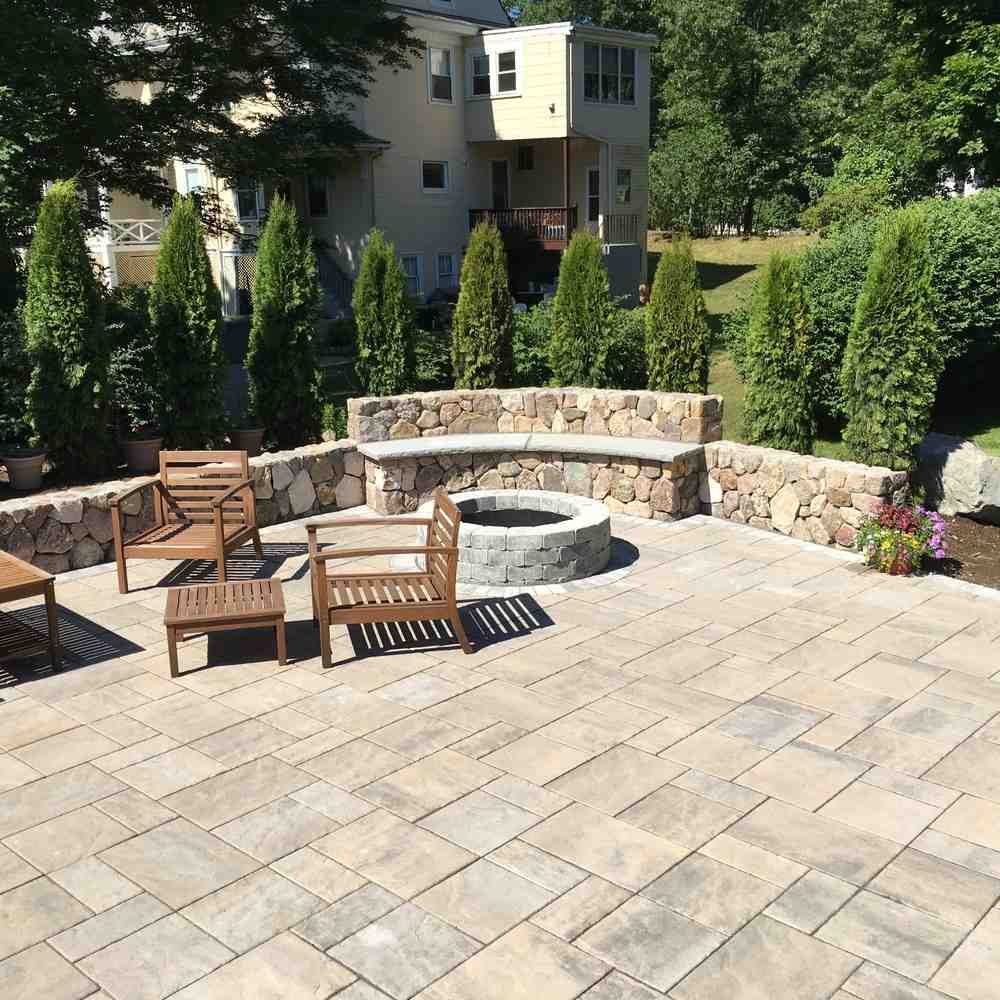
Why Hardscape Landscaping Transforms Your Outdoor Space
Hardscape landscaping refers to the non-living, structural elements of your yard—like patios, walkways, and retaining walls—that provide the foundation for your outdoor space. While softscape consists of plants and grass, hardscape uses durable materials like stone, brick, and pavers to create functional areas that require less maintenance and add year-round structure.
Key elements of hardscape landscaping include:
- Patios and decks – Outdoor living and entertainment areas
- Walkways and paths – Safe, defined routes through your yard
- Retaining walls – Erosion control and terraced garden beds
- Driveways – Functional and attractive vehicle access
- Fire pits and outdoor kitchens – Gathering spaces for family and friends
- Water features – Fountains, ponds, and decorative elements
Primary benefits:
- Increased property value – Well-designed hardscaping can significantly boost your home’s worth.
- Expanded usable space – Transform unused areas into functional outdoor rooms.
- Reduced maintenance – Less lawn to mow, water, and fertilize.
- Improved drainage – Proper grading and permeable materials prevent water problems.
- Year-round appeal – Hardscape provides visual interest even in winter.
Hardscape elements serve as the backbone of your landscape, providing definition and order while complementing the living elements around them. A well-designed stone patio becomes the anchor for outdoor gatherings, while a thoughtfully placed retaining wall can solve a drainage problem and create visual interest. The key is finding the right balance between hardscape and softscape. Too much hardscaping can feel cold, while too little can leave a yard without structure. Getting this balance right transforms a basic backyard into a cohesive outdoor living area.
I’m Joe Gerrior, owner of Gerrior Masonry & Landscape Construction, and for over 34 years, I’ve helped Massachusetts homeowners master hardscape landscaping to create stunning, functional outdoor spaces. Our team combines artistic vision with meticulous craftsmanship to turn your ideas into reality.
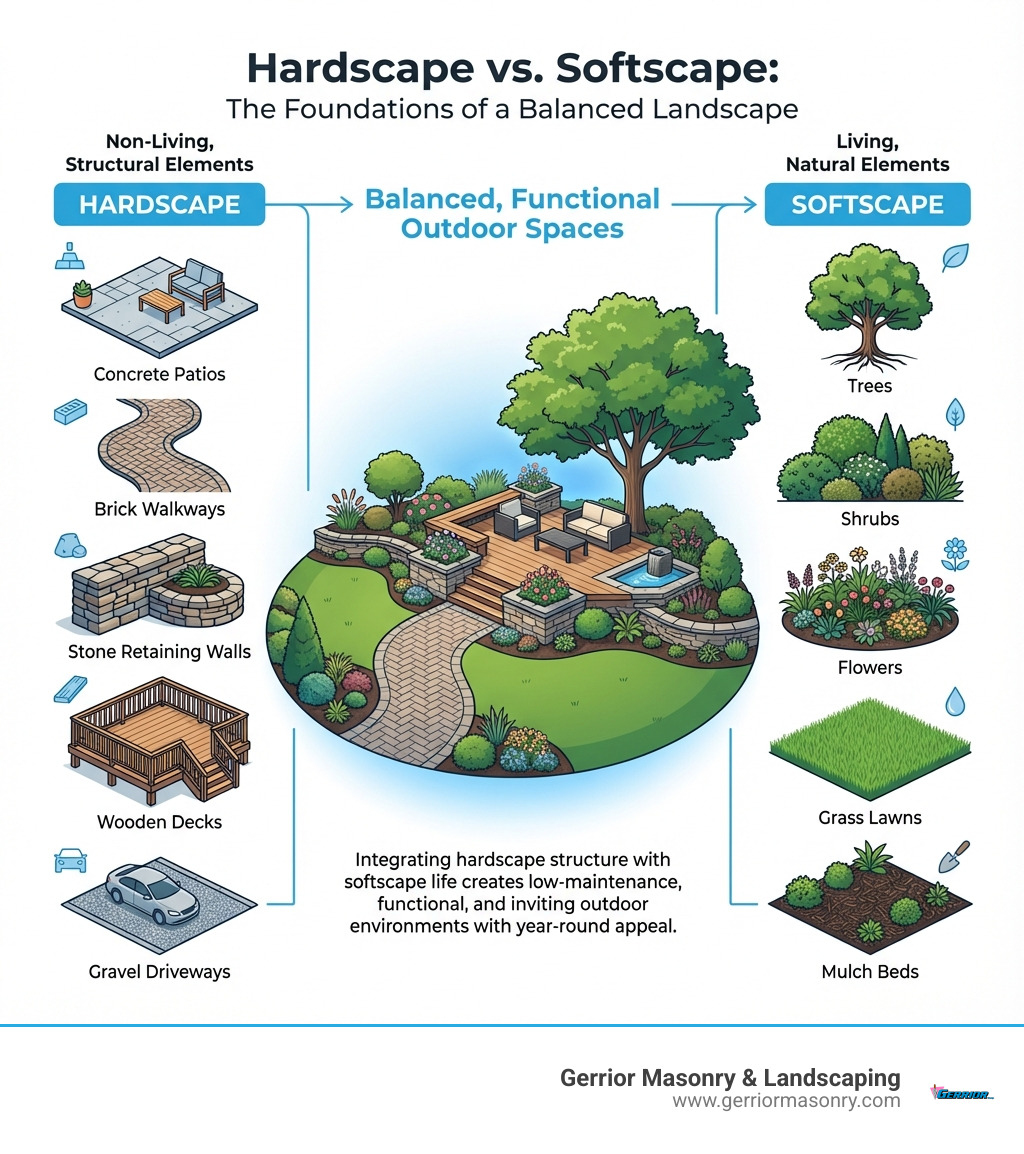
Simple hardscape landscaping glossary:
The Building Blocks of Hardscape Landscaping
This section explores the common elements, materials, and design principles that form the backbone of any successful hardscape landscaping project.
Common Hardscape Elements and Materials
The beauty of hardscape landscaping lies in its versatility. Each element serves a unique purpose, contributing to both the function and aesthetic of your space.
- Patios: As extensions of your indoor living space, patios provide a stable surface for outdoor furniture, dining, and entertaining. You can find more info about patio services on our website.
- Walkways and Pathways: Essential for guiding movement, walkways protect your lawn from foot traffic and ensure safe navigation through your property.
- Retaining Walls: Crucial for sloped terrains, retaining walls prevent soil erosion and can be used to create terraced gardens or add sculptural interest. We can help you with more info about landscape walls.
- Driveways: A key part of your home’s curb appeal, driveways provide vehicle access and can double as play areas.
- Outdoor Kitchens: These bring culinary activities outdoors, perfect for entertaining with features like grills, countertops, and storage.
- Fire Pits and Fireplaces: These features extend the use of your outdoor areas into cooler months, creating a warm, inviting gathering spot.
- Water Features: Fountains and waterfalls add calming sounds, reduce noise, and improve the tranquility of your space.
Choosing the right materials is paramount for durability and style. Popular choices include:
- Concrete: A versatile and durable option that can be stained or stamped. It’s often one of the least expensive hardscape materials.
- Pavers (Brick and Concrete): Modular units ideal for creating patterns in patios and walkways. They offer excellent durability and a classic look.
- Natural Stone (Flagstone, Granite, Bluestone): Offers best natural beauty and durability. While a higher investment, natural stone provides a timeless appeal.
- Brick: A classic, traditional material that is excellent for patios, walkways, and outdoor kitchen structures.
- Wood: Commonly used for decks and pergolas, wood offers warmth and a natural feel.
- Gravel: A cost-effective material for informal paths and driveways, providing good drainage. It’s often considered one of the least expensive hardscape options.

Key Considerations for Your Hardscape Design Project
A successful hardscape landscaping project requires careful planning. We consider several key factors to ensure your vision comes to life.
- Budgeting: Understanding the financial scope is crucial.
- Please note: The following average costs are based on internet data from various sources and are not actual costs for Gerrior Masonry & Landscape Construction services. Actual project costs will vary significantly based on material choices, project complexity, and site conditions. We provide a detailed quote for your unique project.
- Paver Patios: Average costs might range from $10 to $25 per square foot, but can exceed $75 per square foot for intricate designs with high-end materials.
- Concrete Patios: Basic concrete can start around $6-$15 per square foot, while decorative stamped concrete might be $15-$30 per square foot or more.
- Retaining Walls: Can range from $30-$150 per linear foot for basic block, but large, engineered stone walls can climb to $300+ per linear foot.
- Outdoor Kitchens: A basic setup might start around $5,000, but a fully equipped, custom kitchen can easily exceed $30,000 to $50,000+.
- Design Style: Your hardscape should complement your home’s architecture and your personal taste, whether it’s a rustic flagstone terrace or a classic brick paver patio. The key is to ensure all materials work together cohesively.
- Climate and Drainage: Proper drainage is the foundation of a great landscape, especially in Massachusetts. Patios should have a slight slope for water runoff, and permeable pavers can help reduce runoff and recharge groundwater. For more insights, refer to Hardscaping: What You Should Know.
- Long-term Maintenance: Consider the upkeep required for your chosen materials. Some stones need sealing, while pavers might need joint sand replenishment. We discuss the care requirements of each material to protect your investment.
- Functionality: How do you want to use your space? A patio for entertaining has different needs than a quiet meditation garden. We plan elements that improve your daily life.
Bringing Your Hardscape Vision to Life
From innovative trends to finding the right professionals, this final section covers the essential steps to successfully execute your hardscape landscaping project.
Innovative Trends and Environmental Choices in Hardscape Landscaping
The world of hardscape landscaping is continually evolving, with new trends focusing on sustainability and improved functionality.
- Outdoor Living Rooms: Homeowners are extending their living space outdoors by creating defined “rooms” for seating, dining, and cooking. Multi-level patios add architectural interest and create distinct zones for different activities.
- Integrated Lighting: Thoughtful lighting transforms outdoor spaces for evening use. Integrated LEDs can highlight steps, paths, and features, improving safety and creating a magical atmosphere.
- Sustainable Materials and Practices: Environmental consciousness is a major driver in modern hardscaping.
- Permeable Pavers: These allow rainwater to filter into the ground, reducing stormwater runoff and replenishing groundwater. They are an excellent choice for driveways and patios in areas like Middlesex and Essex County.
- Drought-Tolerant Landscaping (Xeriscaping): Using materials like rocks and gravel reduces the need for watering and maintenance, offering an eco-friendly, low-maintenance solution.
- Reusing Materials: Incorporating existing bricks or stones can add unique character and a sense of history to your landscape.
We understand that walkways and stairs are fundamental to enjoying these spaces. You can learn more info about walkways and stairs on our website.
Choosing a Contractor and Maintaining Your Investment
The success of your project hinges on selecting the right contractor and committing to proper maintenance.
Choosing the Right Contractor
For complex projects, professional consultation is invaluable. The process begins with an initial meeting to discuss your goals and assess the site. From there, our designers create a plan, often with 3D visuals, for your feedback. Once the design is finalized, we provide a comprehensive quote.
When vetting contractors, look for experience, proper licenses, and insurance. Reviewing a portfolio is a great way to gauge their quality and style. At Gerrior Masonry & Landscape Construction, our unique selling point is our skilled team and owner oversight on all projects. With over 30 years of experience, we have a track record of outstanding quality that keeps clients returning. Learn more about our process and how we approach each project with dedication.
Maintaining Your Hardscape Investment
Proper maintenance is key to ensuring your hardscape’s longevity and beauty.
- Regular Cleaning: Sweep or blow off debris to prevent stains and weed growth. Occasional power washing can restore surfaces.
- Sealing Surfaces: Applying a sealant to materials like concrete and some natural stones protects them from weathering and staining.
- Weed Prevention: Use polymeric sand in paver joints and remove weeds regularly to keep surfaces clean.
- Timely Repairs: Address any cracks or loose stones promptly to prevent minor issues from becoming major problems.
- Drainage Checks: Ensure drainage systems are clear of debris to prevent water from pooling and causing damage.
By following these tips, your hardscape landscaping will improve your outdoor living space for years to come. For expert hardscape design and installation, explore our hardscaping services.
Gerrior Masonry & Landscape Construction is based in Woburn, MA, and proudly serves communities throughout Middlesex and Essex County, Massachusetts.