
Brick fireplace refacing: 4 Easy Steps
Why Your Brick Fireplace Deserves a Modern Update
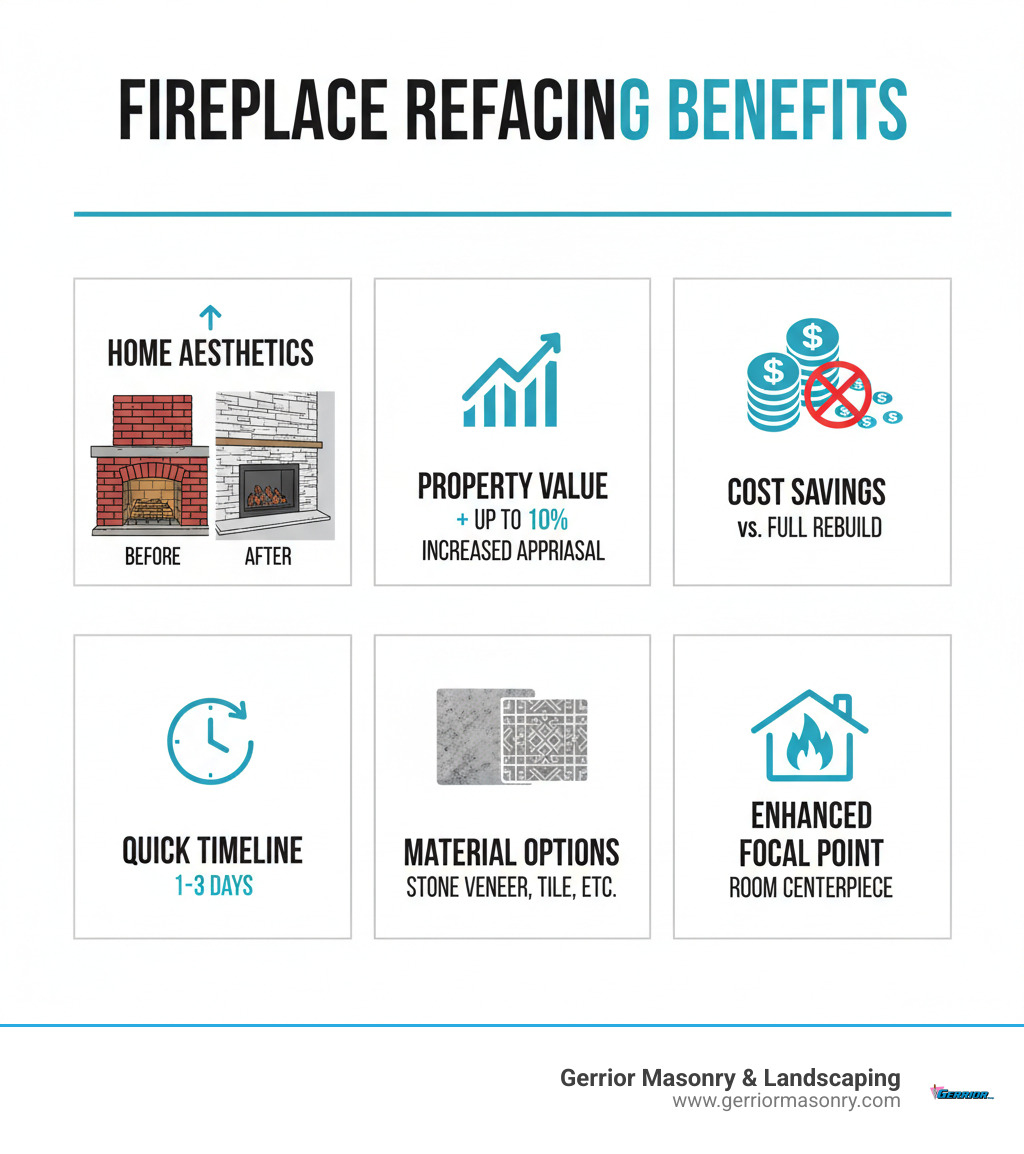
Brick fireplace refacing is the process of covering your existing brick with new materials like stone veneer or tile to update its look without the cost and mess of a full demolition.
Quick Overview:
- What it is: Applying new materials over existing brick.
- Cost: $500-$10,000+ depending on materials and scope (based on internet averages, not actual Gerrior Masonry pricing).
- Time: 1-3 days for most projects.
- Best for: Updating dated brick, matching new decor, increasing home value.
- Materials: Stone veneer, tile, paint, or German schmear.
A fireplace is the focal point of any room, but a dated red brick fireplace can be an eyesore. Chipped bricks and stained hearths can make a beautiful gathering space feel tired.
The good news is you don’t need to tear it out. Refacing your brick fireplace offers a bold, modern change at a fraction of the cost of rebuilding. Whether you want sleek stone veneer or classic painted brick, refacing is an accessible way to transform your space.
The process involves preparing the brick surface and installing your chosen finish. Done correctly, a refaced fireplace can last for decades and add significant value to your home.
I’m Joe Gerrior, owner of Gerrior Masonry & Landscape Construction. With over 34 years in the business, I’ve helped countless Massachusetts homeowners transform their fireplaces through brick fireplace refacing. This guide will walk you through the project from planning to the final touches.
The Complete How-To Guide for Brick Fireplace Refacing
Step 1: Planning Your Brick Fireplace Refacing Project
Proper planning is key to a successful brick fireplace refacing project. Taking time to choose materials and gather tools will prevent costly mistakes.
Your most important decision is the stone veneer. Natural stone veneer is real stone cut thin. It offers unique character and is highly durable but is heavier and more expensive. Manufactured stone veneer is a lighter, more affordable concrete-based alternative that mimics natural stone and comes in consistent colors and shapes.
When selecting your stone, consider your room’s style. A modern space may suit sleek, linear cladding, while a traditional interior might shine with a textured, stacked stone look. For instance, large format tiles or smooth slate panels create a minimalist, contemporary feel. For a rustic or farmhouse aesthetic, consider irregular, fieldstone-style veneers with deep grout lines.
The color palette is also crucial; cool grays and whites lend themselves to modern designs, while warm earth tones like beige, brown, and gold create a cozier, more traditional atmosphere. Don’t forget to consider the existing elements in your room, such as flooring, wall color, and furniture, to ensure a cohesive design.
Next, gather your tools and materials. You’ll need:
- Safety Gear: Safety goggles, a dust mask, and protective gloves.
- Tools: A tile wet saw, notched trowel, measuring tape, level, mixing buckets, and a grout bag.
- Materials: Cement board, polymer-modified thin-set mortar, stone veneer, sanded grout, dowel rods for spacers, and brick sealer.
Safety is non-negotiable. Always wear eye and ear protection when using power tools, and use a dust mask to avoid inhaling masonry dust. Protect your floors with heavy-duty paper and hardboard. If you need professional design guidance, check out more info about our Custom Fireplace Builders services.
Step 2: Prepare the Brick Surface for a Lasting Bond
Surface preparation is the most critical step for your brick fireplace refacing project. A poor bond will cause your new veneer to fail.
First, check the structural soundness of your fireplace. Look for significant cracks and tap bricks to check for looseness. If you find major structural damage or heavy creosote buildup in the chimney, stop and call professionals for brick and masonry repair before proceeding.
Protect your space by covering floors and furniture with rosin paper and hardboard. If you’re replacing the mantel or hearth, remove them now. Removing an old hearth is labor-intensive and may require a demolition hammer.
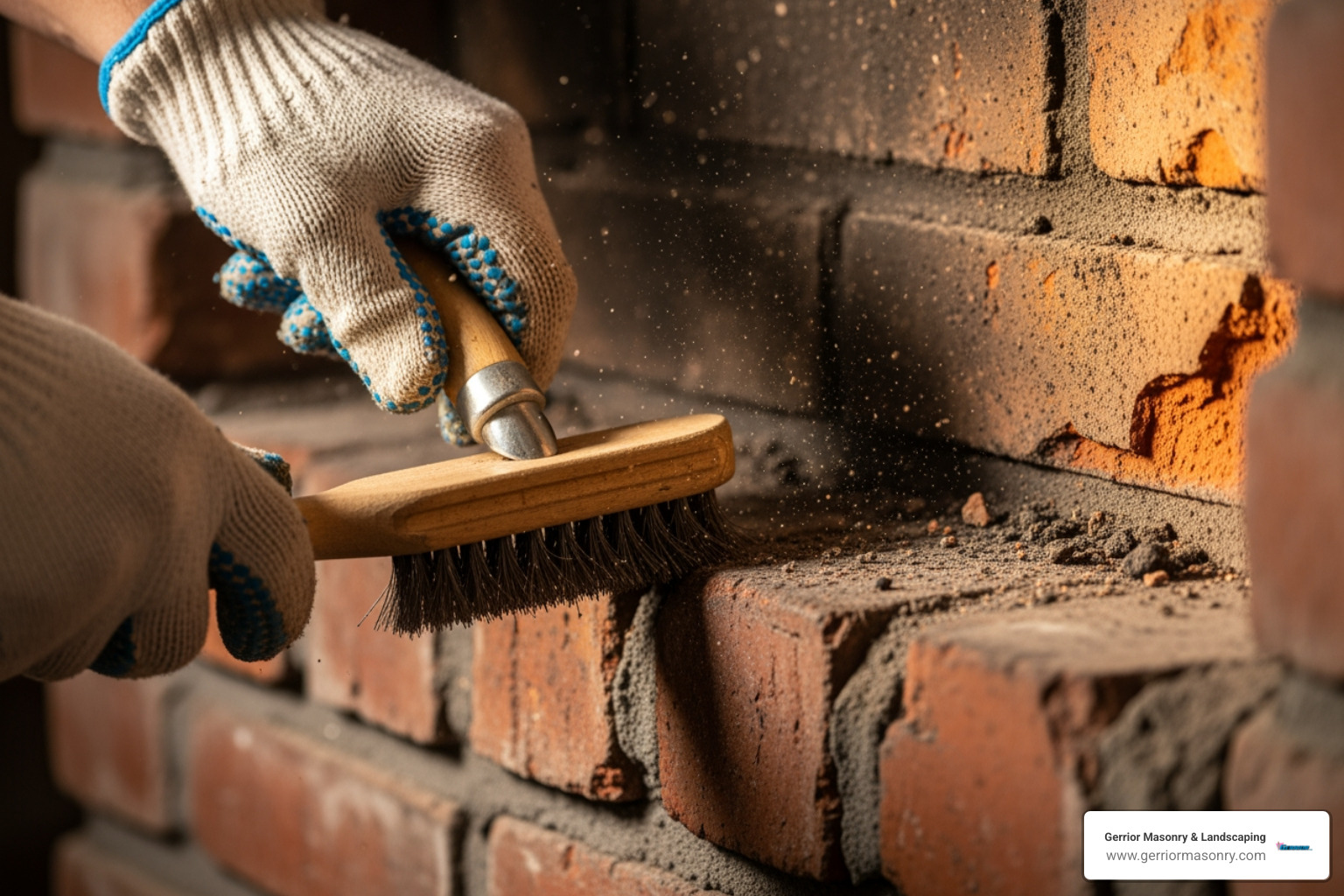
Next, deep clean the brick to ensure optimal adhesion for the new veneer. Your goal is a clean, stable surface free of any contaminants. Start by using a stiff wire brush to scrub away all loose debris, dirt, and soot. For more stubborn grime, a TSP (trisodium phosphate) solution can be effective. When using TSP, mix it according to the manufacturer’s directions and wear appropriate safety gear, as it is a powerful cleaner.
Apply it with a scrub brush, working in small, manageable sections from top to bottom. After scrubbing, rinse the brick multiple times with clean water and a sponge to remove all chemical residue, as any leftover TSP can interfere with mortar adhesion. Allow the brick to dry completely for at least 24-48 hours. Finally, patch any remaining cracks with masonry repair compound before proceeding. For more details on surface prep, see this Step-by-Step Guide to Fireplace Refacing.
Step 3: Cutting and Setting Your Stone Veneer
This is where your vision comes to life, but it requires precision. Rushing here will show in the final result.
Measure your fireplace, calculate the total square footage, and add 10-15% extra material for cuts and waste. Before mixing any mortar, lay out your stone pieces on the floor in a dry fit. This helps you visualize the pattern, plan cuts, and create a balanced appearance. This step is crucial for avoiding awkward-looking small pieces at the edges or corners.
Try to arrange the stones so that you can use full pieces as much as possible, planning your cuts to fall in less conspicuous areas. Mix stones from different boxes to ensure a natural blend of color and texture, as manufactured stone can have slight variations from batch to batch. Take a photo of your final layout for reference once you begin installation.
For cutting, a tile wet saw provides the cleanest, most precise cuts with minimal dust. Always wear safety glasses and gloves. Mix your polymer-modified thin-set mortar to a thick, peanut-butter-like consistency. Only mix as much as you can use within its 30-60 minute pot life.
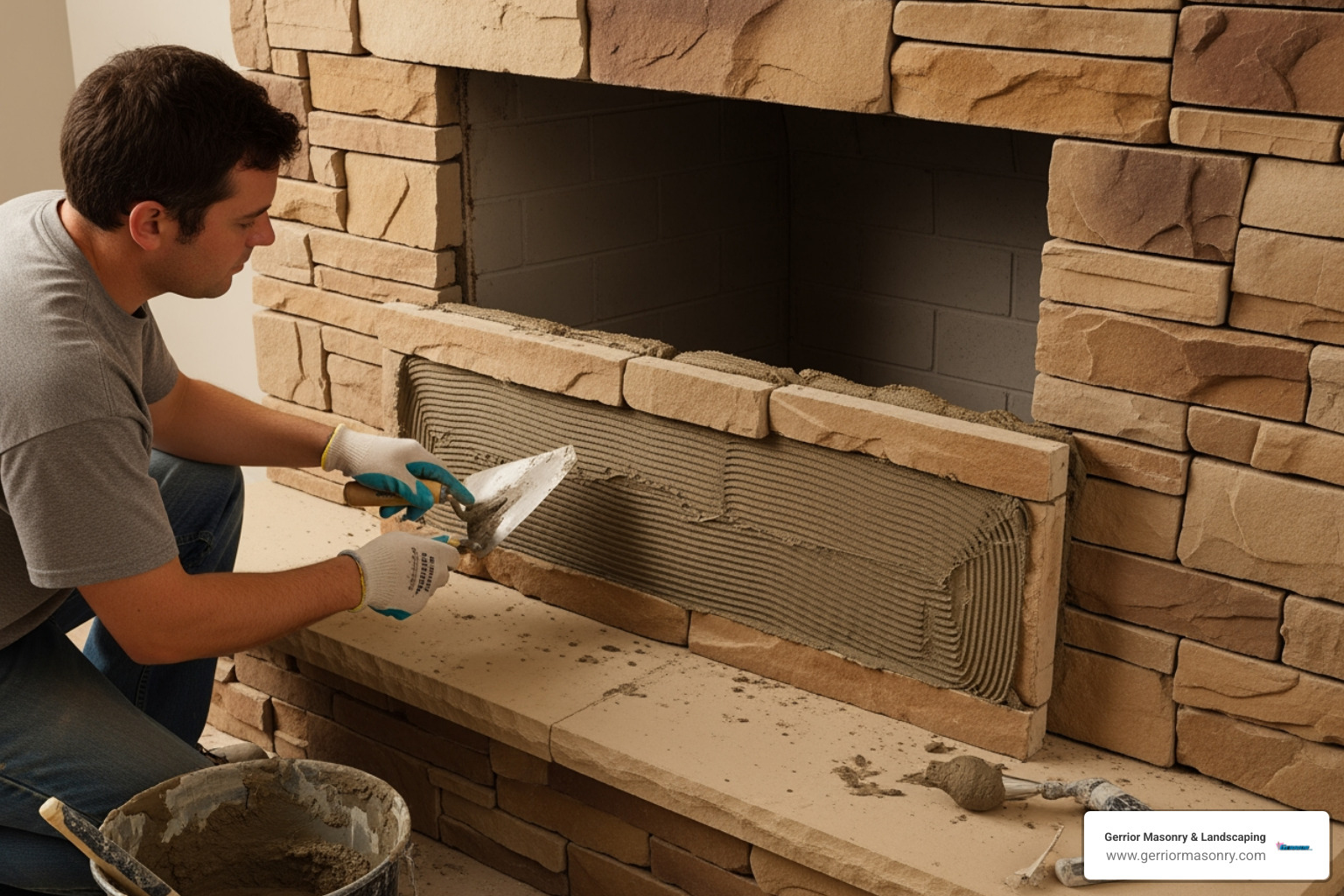
Start setting stone from the bottom up. Apply mortar to the back of each piece (known as “back-buttering”) and press it firmly onto the brick with a slight twisting motion. Use dowel rods or tile spacers to maintain consistent grout lines. Regularly check your work with a level, both horizontally and vertically, and adjust stones before the mortar sets. Allow the mortar to cure overnight before moving on to grouting.
Step 4: Grouting, Cleaning, and Sealing for a Professional Look
These final steps will protect your new fireplace and give it a polished, professional finish.
Mix your sanded grout and load it into a vinyl grout bag. Squeeze the grout into all the joints, ensuring every gap is filled. Once the grout begins to firm up, use a brick jointer to smooth and compact the grout lines for a clean, uniform look.
Before the grout fully hardens, use a damp sponge to carefully wipe away any excess from the stone faces. For any remaining haze after drying, a 50/50 mix of vinegar and water can work, but test it on an inconspicuous area first.
I highly recommend sealing your stone veneer. A quality brick sealer, applied with a cheap paint brush, improves the stone’s color and protects it from soot and stains. Follow the manufacturer’s instructions for application and drying times.
For safety, always use non-combustible materials for your refacing project and maintain required clearances to combustibles (like wood framing) as specified by local building codes. If you have any concerns about your fireplace’s integrity, consult with experts in stonework repairs.
Finishing Touches and Important Considerations
Common Mistakes in Brick Fireplace Refacing
Being aware of common pitfalls during your brick fireplace refacing project will save you headaches later. Here are the key mistakes to avoid:
- Improper Surface Prep: Failing to clean the brick or repair loose mortar will cause your new veneer to fail.
- Using the Wrong Mortar: You need a polymer-modified, fiber-reinforced thin-set. Standard mortar can sag or fail to bond properly near a heat source.
- Inconsistent Spacing: Eyeballing the gaps between stones looks amateur. Use spacers for a professional result.
- Skipping the Dry Layout: Laying out stones on the floor first prevents awkward cuts and ensures a balanced design.
- Poor Cuts: Rushed measurements and improper tools lead to jagged, misaligned edges. Measure twice, cut once.
- Forgetting Safety Gear: Stone dust and flying debris are serious hazards. Always wear goggles, a dust mask, and gloves.
- Ignoring Structural Problems: Covering up significant cracks or loose bricks is a dangerous mistake that will only get worse. For major concerns, seek professional help for Chimney Masonry Repair Near Me.
- Ignoring Clearances: Flammable materials like a wood mantel must be a safe distance from the firebox opening to prevent fires. Always follow building codes.
Costs, Alternatives, and Maintenance
The investment for brick fireplace refacing can vary widely.
The Investment You’re Making:
Based on internet averages, a fireplace refacing project can range from $500 to $10,000+.
- Budget-friendly ($500-$2,000): Projects like painting with heat-rated paint or adding a simple tile surround.
- Mid-range ($2,000-$7,000+): Typically involves installing manufactured or natural stone veneer.
- High-end ($7,000-$10,000+): May include custom mantels, large natural stone slabs, or floor-to-ceiling installations.
(These are average costs based on internet data and not actual costs for Gerrior Masonry services. Request an estimate for your fireplace project to get accurate pricing.)
Other Ways to Transform Your Fireplace:
- Painting: The quickest, most budget-friendly option. Use heat-rated paint for a modern farmhouse or contemporary look.
- German Schmear: Applying a thin layer of mortar and wiping some away creates a rustic, old-world aesthetic.
- Skim Coat: Using limewash or concrete creates a smooth, minimalist finish for modern designs.
- Tile: Offers endless design possibilities, from classic subway tiles to decorative mosaics.
| Feature | Stone Veneer | Paint |
|---|---|---|
| Cost | Mid-to-High ($2,000-$7,000+) | Low ($50-$500) |
| Durability | High (long-lasting, heat-resistant) | Medium (may chip, require touch-ups) |
| DIY-Friendliness | Intermediate to Advanced | Easy |
| Aesthetic | Natural, textured, rustic to modern | Clean, modern, versatile |
Keeping Your New Fireplace Looking Great:
Maintenance is straightforward. For regular cleaning, use a soft brush and mild cleaner. Avoid harsh chemicals. Reapply sealant every few years as recommended by the manufacturer. Promptly repair any cracked grout lines to prevent moisture damage. Finally, don’t forget regular chimney inspections and cleaning for safety. Learn more about what’s involved with Chimney Repair Cost.
Wrapping Up: DIY or Call in the Pros?
While brick fireplace refacing can be a rewarding DIY project, it’s wise to call a professional for structural concerns, complex designs, or if you’re unsure about safety and code compliance. Hiring an expert ensures the job is done right, safely, and efficiently.
For a flawless, professional finish, trust the experts at Gerrior Masonry & Landscaping. Our skilled team has over 30 years of experience changing fireplaces throughout Massachusetts. Request an estimate for your fireplace project today, and let’s bring your vision to life.
Gerrior Masonry & Landscape Construction is based in Woburn, MA, and proudly services Middlesex and Essex County, Massachusetts.
