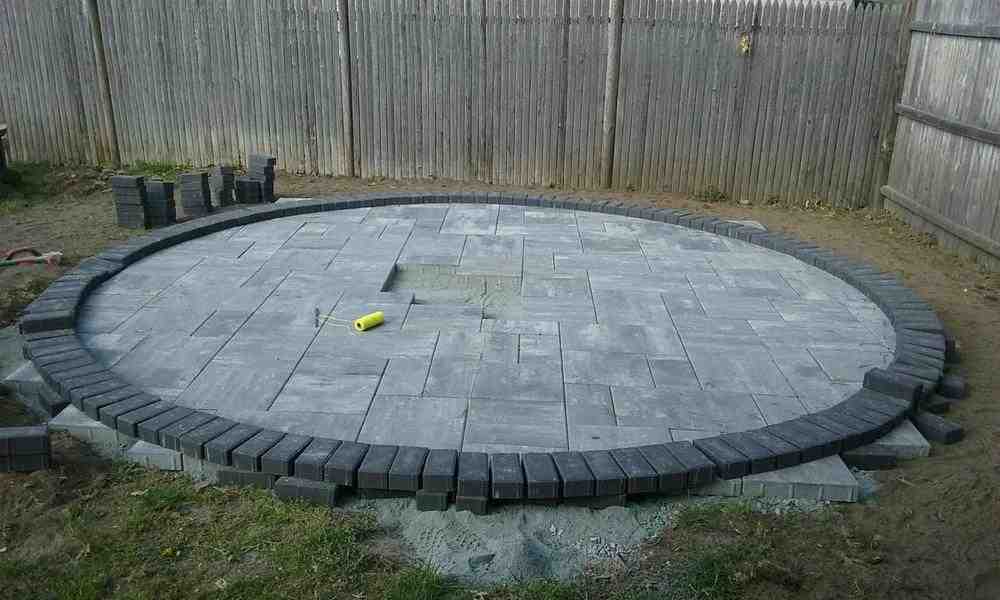
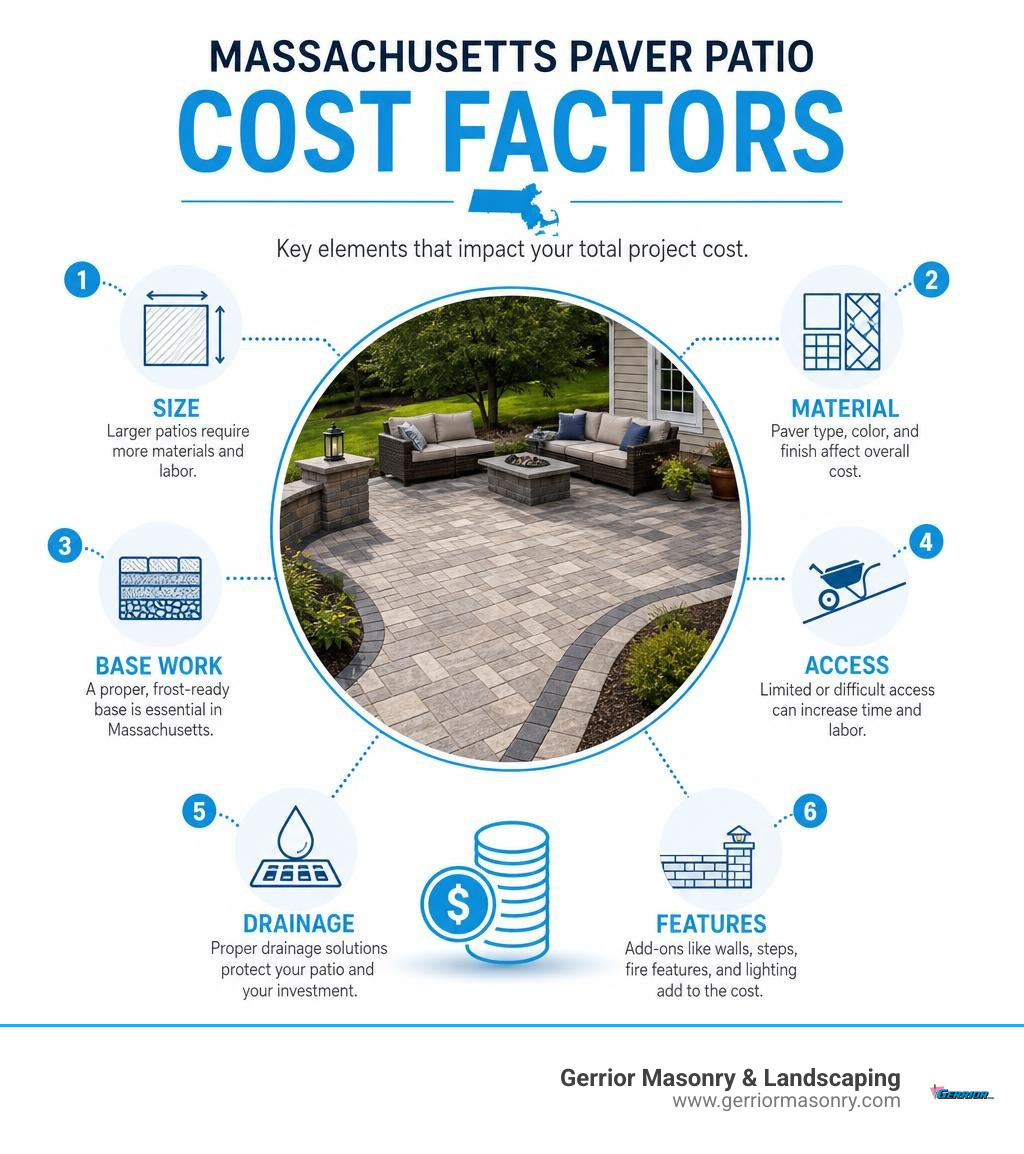
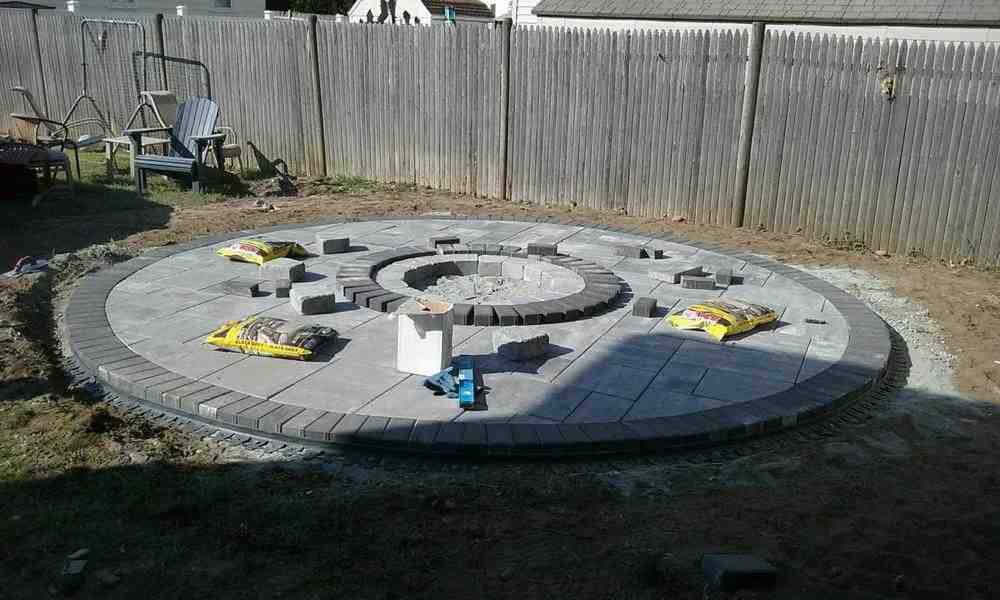
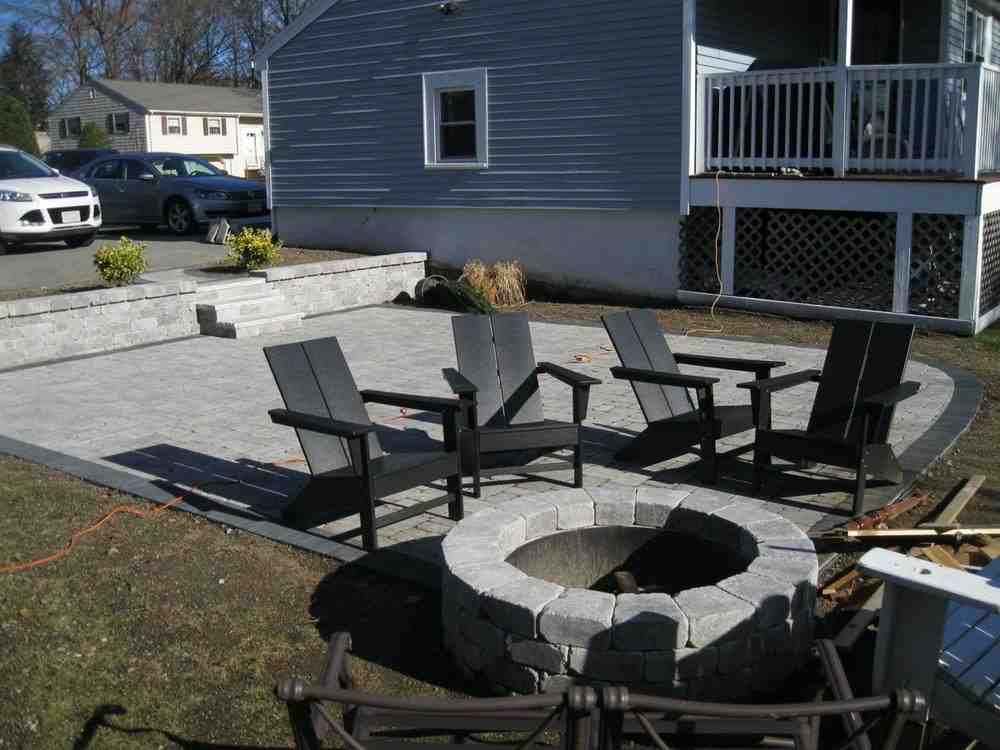
The cost of paver patio installation in Massachusetts typically ranges from $15,600 to $39,000, with an average project near $7,800. Most professionally installed patios cost about $12 to $35 per square foot, but local labor rates, frost-ready base work, material choice, access, drainage, and layout can move the final price up or down depending on specific property conditions across the Commonwealth.
Massachusetts paver patio estimate
Typical cost
Small, simple patio
$15,600 to $20,000
Standard project baseline
Around $7,800
Large or feature-rich patio
$25,000 to $39,000+
Typical installed price
$12 to $35 per sq. ft.
Pricing can differ noticeably between Woburn, Winchester, Burlington, Lexington, and nearby communities because every site features unique soil composition, elevation changes, machinery access limits, and surface drainage challenges. In Massachusetts, a long-lasting outdoor living surface requires a deep, heavily compacted foundation engineered specifically to withstand rigorous annual freeze-thaw weather patterns. Consequently, the subterranean structural preparation is just as critical to your overall project budget as the surface pavers you select for your outdoor space.
Gerrior Masonry & Landscaping is a family-owned masonry and hardscaping company serving Massachusetts property owners with more than 30 years of hands-on experience in patio installation, walkways, walls, foundation repair, bulkhead replacement, chimney repair, and commercial snow removal. Our team’s owner oversight and local construction experience help provide clear, realistic transparency regarding the actual cost of paver patio construction long before any excavation work commences on your property.
Understanding the true investment involved in a custom outdoor living project means evaluating how base preparation, excavation depth, paver style, and hardscape features work together. Whether you are adding a functional gathering space or expanding your property grounds, thorough planning ensures your investment delivers lasting beauty, functional value, and exceptional structural durability for years to come.
Understanding Key Factors that Drive the Cost of Paver Patio Construction
Calculating the overall cost of paver patio installations requires looking far beyond basic surface square footage. In local Massachusetts communities, detailed site conditions dictate a significant portion of the total financial investment.
(Please note: All financial figures and pricing estimations mentioned throughout this guide represent general average costs sourced from publicly available internet data and historical industry benchmarks. They do not represent actual fixed quotes or rate guarantees from Gerrior Masonry & Landscaping.)
A thorough professional site evaluation includes assessing native soil types, property line setbacks, slope adjustments, underground utility lines, municipal permit requirements, and heavy machinery accessibility. A level site featuring loose, well-draining dirt permits quick and straightforward excavation. Conversely, properties encumbered by heavy blue clay, large subsurface glacial boulders, high water tables, or steep grade changes require extensive excavation, customized retaining structures, and structural soil stabilization. Property decision-makers evaluating initial preliminary figures often consult online industry cost calculators to establish basic square-footage baseline ranges prior to scheduling an in-person site consultation.
Material Selection and the Cost of Paver Patio Materials per Square Foot
The specific unit material you select directly influences both the initial aesthetic character and base material pricing. Publicly available local industry datasets outline typical installed material ranges per square foot across Massachusetts properties:
Paver Material Type
Average Installed Cost Range (per sq. ft.)
Primary Characteristics & Benefits
Concrete Interlocking Pavers
$12 – $20
Exceptional freeze-thaw resistance, wide variety of colors/shapes
Clay Brick Pavers
$14 – $25
Kiln-fired color retention, classic Massachusetts traditional aesthetic
Architectural Porcelain Pavers
$18 – $30
Extremely low water absorption (<0.5%), highly stain-resistant
Material selection typically represents approximately 20% to 30% of the total hardscaping project budget. Sub-surface excavation, crushed stone aggregate base installation, geotextile fabric installation, edge restraints, and skilled trade labor constitute the remaining 70% to 80% of total expenses.
Size, Layout Complexity, and Base Excavation Rates
Square footage dictates raw material quantities, but geometric complexity directly controls overall labor density. Larger, open patio layouts benefit from modest economies of scale regarding crew mobilization and equipment transportation. However, intricate geometric shapes, curved soldier courses, embedded border highlights, inlaid patterns, or diagonal herringbone laying patterns increase diamond-blade saw cutting labor and elevate overall material waste factors from a standard 5% up to 15% or 25%.
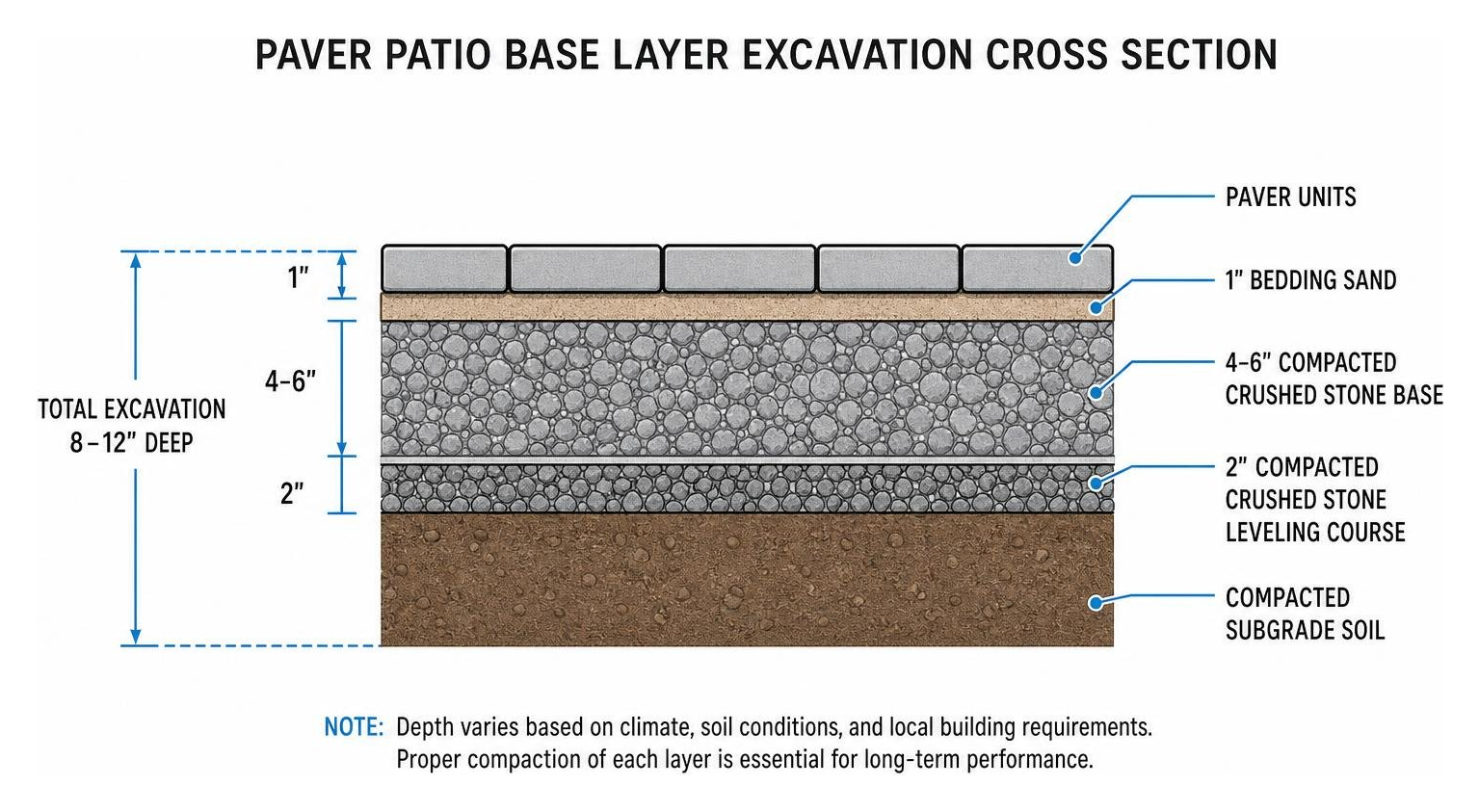
In Massachusetts, proper excavation depth is absolutely non-negotiable due to severe winter frost cycles. To safeguard long-term structural integrity against severe winter frost heave cycles, native sub-grade soil must be excavated 8 to 12 inches deep, or even deeper in areas with heavy clay or moisture retention. This creates space for a thick, thoroughly compacted layer of dense, crushed-stone dense-grade aggregate base beneath a smooth 1-inch coarse bedding sand layer.
Labor Rates and Regional Site Prep in MA Towns
Local skilled labor rates in Massachusetts reflect strict regional trade licensing standards, comprehensive equipment insurance, fuel requirements, local permit fees, and specialized heavy machinery operational expenses.
In historic or established properties throughout Woburn, Winchester, Burlington, and Lexington, narrow lot lines, mature tree root systems, and restricted side access frequently prohibit standard full-sized excavation machinery. When crews must transport bulk aggregates manually with motorized wheelbarrows or compact mini-track loaders, active labor hours increase. Comprehensive local resources like our Backyard Patio Cost Guide explore these site-access dynamics and equipment logistics in extensive detail.
How Added Features Impact the Total Cost of Paver Patio Buildouts
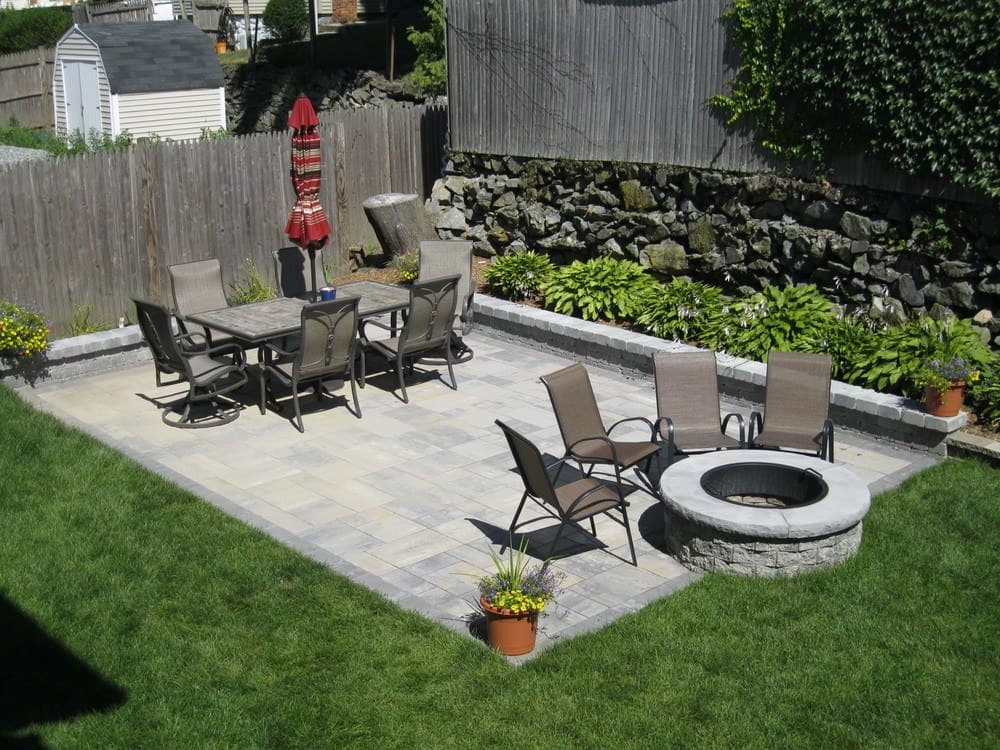
Integrating functional custom elements transforms a standard flat surface into a multi-use outdoor living environment, though each addition adjusts the final project scope. According to publicly available industry averages, typical add-on cost ranges include:
Built-in Fire Pits: $2,000 to $5,000+ depending on stone veneer choice and gas plumbing vs. classic wood-burning setup.
Seat Walls & Retaining Structures: $3,000 to $8,000+ addition, essential for managing sloped elevation transitions or establishing permanent perimeter seating.
Integrated Stone Steps & Transitions: $1,000 to $4,000+ per riser set, seamlessly connecting patio surfaces to building doorways or elevated lawn sections.
Low-Voltage LED Landscape Lighting: $1,500 to $3,500+ for accentuating steps, seat walls, and perimeter borders for nighttime ambiance and safety.
Long-Term Value, Maintenance, and Choosing a Local Hardscape Partner
Investing in a professionally designed hardscape structure enhances daily outdoor functionality while providing robust long-term asset value for your property. Real estate statistics across Massachusetts indicate that professionally installed stone and paver hardscapes routinely recover 40% to 60% of their initial installation cost upon property resale. Property decision-makers evaluating multi-year investments against alternative patio materials frequently utilize publicly available online cost estimator tools to project clear long-term financial comparisons.
Structural Base Integrity and Common Costly Mistakes
Structural hardscaping demands rigorous physical exertion, specialized heavy machinery, and precise technical engineering. Skipping proper sub-grade excavation depth or utilizing lightweight, inadequate plate compaction equipment remains the single most common cause of premature hardscape failure in Massachusetts.
Without a minimum 8-inch heavily compacted gravel crushed-stone sub-base paired with non-woven geotextile soil stabilization fabric, severe annual freeze-thaw cycles cause subsoils to expand and shift. This leads to deep surface rutting, hazardous uneven pavers, low spots, and standing water pooling within 1 to 3 years. Correcting a collapsed foundation requires a complete, costly structural tear-out that far exceeds the initial investment. Reviewing core construction principles in our Paver Patio Perfection Handbook illustrates the exact engineering rigor needed beneath the surface.
Lifetime Maintenance, Sealing, and Hiring Local Experts
Maintaining a high-quality paver hardscape is remarkably manageable compared to repairing cracked poured concrete slabs:
Polymeric Sand Joint Stabilization: Locks individual units together, preventing invasive weed growth and insect tunneling between joint gaps while remaining flexible during thermal expansion.
Periodic Power Washing & Sealing: Based on publicly available industry averages, applying a high-grade breathable protective sealer every 2 to 3 years ($2 to $6 per sq. ft.) safeguards concrete and natural stone pavers against harsh winter de-icing salts, oil leaks, leaf tannins, and stubborn organic staining.
Drainage Management & Grading Checks: Ensuring downspouts and surrounding turf grades divert runoff away from the hardscape foundation prolongs subterranean base stability.
At Gerrior Masonry & Landscaping, our skilled masonry and hardscaping team brings more than three decades of hands-on expertise serving property owners across Woburn, Winchester, Burlington, and Lexington. We manage every critical phase, from initial site excavation and subterranean drainage routing to precise paver placement and final joint stabilization, with direct owner supervision on every project.
To discuss your outdoor project goals and receive an accurate, itemized cost estimate tailored specifically to your Massachusetts property, call Gerrior Masonry & Landscaping directly at +781-713-1225 or submit an online quote request via our Request an Estimate form. You can also explore our complete scope of specialized outdoor construction services by visiting our dedicated Paver Patio Contractor Services page.
Essential Steps for Professional Paver Patio Installation
A successful paver patio installation depends on strict execution of every foundational phase by a qualified hardscaping team. Before excavation begins, the entire patio footprint should be professionally laid out using stake lines, mason string, or high-visibility marking paint. This layout phase verifies accurate dimensions, accounts for yard access and equipment navigation, evaluates site drainage, and helps refine material calculations.
Contacting 811 to locate and clear underground utility lines is a non-negotiable step prior to breaking ground. Striking buried electrical, gas, water, or telecom conduits is extremely hazardous and costly. High-level hardscaping demands rigorous physical labor, strict compaction standards, accurate elevation grading, and detailed installation precision. In Massachusetts communities such as Lexington, Concord, and Woburn, heavy clay content, dense rocky soil, and severe winter freeze-thaw cycles make professional site preparation especially critical. Hiring experts for Patio Installation Services or contacting our specialists at +781-713-1225 helps ensure your residential or commercial project receives direct owner oversight and seasoned craftsmanship.
Site Preparation and Excavation Requirements for Paver Patio Installation
Calculating accurate excavation depth is critical to building a hardscape that stands the test of time. Professional excavation depth is determined by combining the thickness of the pavers, the bedding sand layer, and the fully compacted gravel base aggregate. A typical residential paver assembly consists of pavers measuring approximately 2-3/8 inches thick, a 1-inch uniform bedding sand layer, and a dense gravel base of at least 6 inches. In region-specific areas subject to Massachusetts winter conditions, increasing the base to 8 inches or more is often recommended to resist soil movement. Consequently, total excavation depth usually ranges from 9 to 12 inches below final finished grade into native soil.
Subgrade soil compaction, precise slope control, and geotextile separation are vital for long-term structural integrity. Once all native topsoil and organic material are excavated, the underlying subgrade soil must be compacted with a heavy mechanical plate compactor to eliminate settling pockets. The finished surface of the patio must be pitched sloped away from house foundations and surrounding structures at a rate of approximately 1/4 inch per linear foot (or about 1 inch of drop across every 4 to 8 feet). Installing high-grade woven geotextile fabric directly over the raw compacted soil helps prevent native subgrade clay and silt from mixing into the gravel base while still permitting proper sub-surface moisture drainage. This layer stabilizes soft native soils, as discussed in this comprehensive resource on How to Install a Paver Patio (Step-by-Step + Cost Guide) DIY Guide. For homeowners in Massachusetts, taking these structural steps ensures high durability against seasonal ground shift.
Base Construction and Sand Screeding Techniques
The aggregate gravel base forms the structural core of any long-lasting patio installation. Professional hardscape installers typically utilize 3/4-inch crushed dense-grade processed aggregate (often referred to as crusher run or dense grade). The aggregate is spread evenly and compacted in controlled lifts no thicker than 2 inches at a time. Each lift undergoes multiple mechanical plate compactor passes in perpendicular directions, frequently dampened lightly with water to achieve optimum soil compaction density.
Once the aggregate base reaches the exact thickness and required slope, coarse concrete sand is screeded evenly across the surface to form a flat, uniform setting bed. Fine masonry sand, stone dust, and rock dust are strictly avoided as bedding layers because they absorb excessive moisture, freeze easily, and wash out over time.
Key professional tools and materials required for effective sand screeding include:
Clean, coarse ASTM-C33 concrete sand for a consistent 1-inch bedding layer
Screed pipes or rails, typically 1-inch outer-diameter PVC or steel pipes
A rigid aluminum screed board or straight wooden 2×4 board
Heavy-duty mechanical plate compactor with a rubber protective mat
Mason line, line levels, laser levels, and steel pins for slope verification
The goal of screeding is to produce a smooth, uncompacted 1-inch bed of sand. Installers must carefully remove the screed rails and fill in any leftover voids with sand without stepping on or disturbing the prepared bedding plane.
Setting Pavers, Edge Restraints, and Polymeric Sand
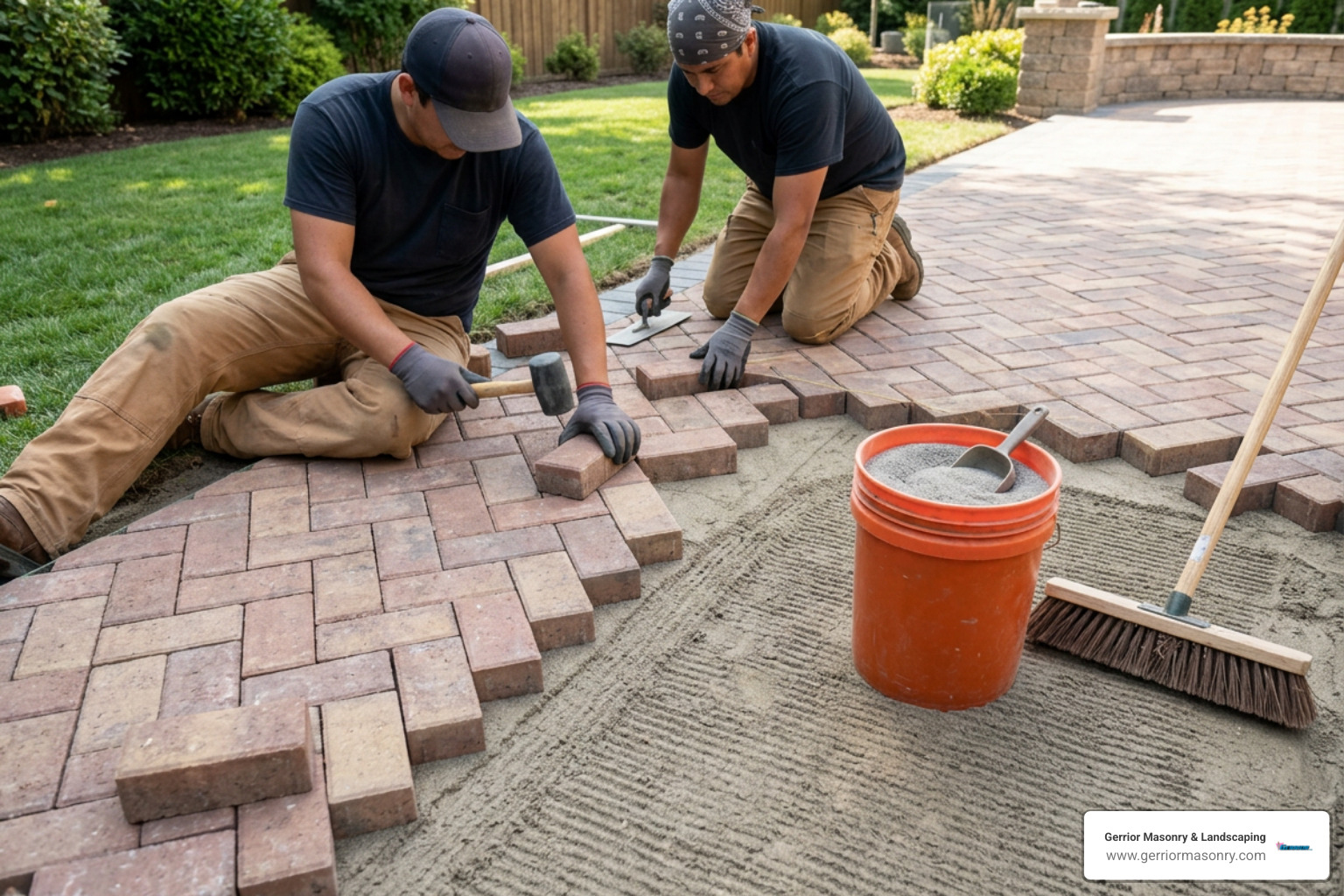
Pavers are systematically set starting from a fixed 90-degree corner or straight edge, such as a foundation wall or established border line. Crews lay pavers in selected bond patterns, working outward while kneeling on the newly laid pavers rather than disturbing the sand bed. Popular layout patterns include running bond, basketweave, and herringbone patterns. A 45-degree herringbone layout offers exceptional structural interlocking capabilities, distributing point loads evenly across driveways, walkways, and high-traffic residential or commercial patio spaces.
Perimeter cuts are executed using heavy-duty masonry saws, such as wet diamond saws or angle grinders equipped with diamond blades, accompanied by dust suppression and safety gear. Once edge units are placed, industrial plastic or aluminum edge restraints are positioned flush against the outer perimeter and firmly anchored into the base aggregate with 10-inch to 12-inch heavy steel landscape spikes spaced every 12 inches.
To lock the pavers into a unified slab, polymeric joint sand is swept thoroughly into all joints. A mechanical plate compactor outfitted with a rubber pad is run over the patio surface to settle the pavers and force sand deep into every seam. After sweeping off excess surface sand and blowing away fine dust, the polymeric sand is misted with water according to specific manufacturer guidelines to activate the chemical binding agents. For fundamental layout tips and construction techniques, consult How To Build a Paver Patio or explore our custom Paver Patios design solutions.
Planning, Costs, and Professional Maintenance for Long-Lasting Patios
A custom-built paver patio dramatically enhances outdoor living space and increases property value, but achieving lasting satisfaction depends on thorough advance planning, transparent budgeting, and consistent post-installation maintenance. Throughout Massachusetts communities like Lexington, Concord, and Woburn, severe winter frost heave conditions exert substantial hydraulic pressure on exterior stonework and hardscapes. Investing in quality materials and professional installation methods protects your investment against sub-zero freezes, thawing cycles, and heavy summer rainfall.
Evaluating Costs and Material Calculations for Paver Patio Installation
Accurate material estimation prevents costly project delays and unexpected budget overruns. To determine accurate requirements, calculate the total square footage of your intended patio area and include a 5% to 10% waste contingency factor. This extra material accounts for custom edge cuts, border trimming, angle adjustments, and potential transit breakage.
To assist homeowners and commercial property managers in planning project budgets, review these regional industry benchmarks. Note: All pricing mentioned below reflects average industry costs sourced from publicly available internet data and does not represent actual rates from Gerrior Corp.
Project Option
Material & Equipment Cost
Professional Installation Cost
Expected Lifespan
DIY Installation
$2,400 – $7,200
N/A (Owner Labor)
10 – 25 Years (Varies by prep)
Professional Contracting
Included
$10,000 – $25,000+
30 – 50+ Years
Industry averages sourced from publicly available market data indicate that turn-key professional hardscaping ranges between $20 and $125 per square foot installed. Total costs fluctuate based on site topography, soil conditions, excavation access, retainage requirements, and choice of materials (such as standard concrete pavers, clay brick, or natural stone slabs). In eastern Massachusetts markets, standard patio installations average $10,000 to $25,000, while multi-tiered outdoor living spaces with integrated steps, seating walls, and fire features often range from $25,000 to well over $35,000. To examine comprehensive material pricing considerations, consult our detailed Pricing Guide How Much Does A Patio Actually Cost.
Long-Term Maintenance, Seasonal Care, and Hiring a Professional
Maintaining a paver patio in peak condition requires routine care and seasonal upkeep. Regularly sweep away fallen leaves, organic debris, and pine needles to prevent natural tannin staining. For deeper surface cleaning, pressure wash the patio using a wide fan tip nozzle at low pressure (under 1,500 psi) to clean dirty surfaces without dislodging polymeric joint sand.
Winter snow removal requires careful handling: use plastic-edged shovels or snowblower shoes rather than sharp steel blades that can scratch paver surfaces. Avoid aggressive de-icing chemicals or rock salts; instead, use calcium chloride or safe traction sand to prevent surface spalling. Applying a breathable, penetrating water-based paver sealer every 3 to 5 years protects stone colors from UV fading, prevents oil penetration, and resists salt damage.
Effective surface and sub-surface water management prevents soil erosion, low spots, and foundation dampness. In yards with dense soil or slope challenges, integrating catch basins, channel drains, dry wells, or French drains directs heavy rainwater safely away from building foundations.
While minor DIY repair tasks are manageable, excavating tons of dense earth, hauling aggregate materials, operating heavy compaction equipment, and mastering complex geometry requires intensive physical effort and specialized tools. At Gerrior Masonry & Landscaping, based near Woburn, MA, our expert hardscaping team brings over 30 years of specialized masonry expertise to every project, providing direct owner oversight for top-quality results.
Whether your property is located in Woburn, Lexington, or Concord, our dedicated team is ready to design and construct your custom outdoor oasis. Visit our comprehensive Hardscaping Services page, explore options with a premier Paver Patio Contractor, or request a free project review by filling out our convenient online estimate form today!
Diagnosing Hardscape Failure & Hiring Paver Patio Repair Companies Near Me
When evaluating outdoor living space failure, surface symptoms almost always trace back to underlying structural issues within the sub-base and soil layers beneath the pavers. The dynamic Massachusetts climate creates particularly challenging conditions for residential and commercial hardscapes. Severe seasonal climate shifts, heavy snowfall, and summer rains cause sub-surface base materials to expand, contract, and erode over time through intense frost heave cycles. When groundwater freezes during cold winters, soil expands upward, exerting severe force against hardscape foundations. As temperatures rise in spring, ice thaws, causing soft spots and unlevel settling.
When searching for paver patio repair companies near me, identifying the primary root cause of damage ensures the long-term success of any structural repair rather than providing a short-term cosmetic fix. Simply releveling top pavers without repairing compromised sub-soil layers leads to rapid failure within one or two seasons. For Massachusetts properties that need professional evaluation, Gerrior Masonry & Landscaping can be reached at +781-713-1225 for project scheduling and hardscape assessment support.
Common Signs of Hardscape Damage and Sub-Base Failure
Recognizing early warning signs prevents isolated issues from spreading across the entire surface and causing widespread hardscape failure. Properties throughout Woburn, Lexington, and surrounding communities often experience shifting due to varied subsoil conditions ranging from dense clay to loose fill sand. Key indicators that warrant a professional inspection include:
Pooling Water and Poor Drainage: Persistent puddles or depressions on the patio surface hold rainwater, indicating localized bedding sand loss, compacted subsoil issues, or crushed stone base settlement. Over time, standing water saturates the aggregate base, stripping away structural stability and accelerating sub-surface erosion.
Tripping Hazards and Elevation Changes: Individual pavers or entire sections lifting or sinking create dangerous uneven walkways, patio thresholds, and steps. These shifts frequently result from dynamic freeze-thaw expansion or inadequate sub-grade compaction during initial installation.
Weed Intrusion and Sand Loss: Heavy rainfall and wind wash out joint sand, allowing organic debris to collect and nuisance weeds to sprout between pavers. Unsealed joints allow surface runoff to penetrate straight into the aggregate base below.
Shifting Perimeter Borders: When edge restraints crack, rot, or break loose, perimeter pavers drift outward into adjacent lawns or gardens – a structural phenomenon known as horizontal creep. Without solid border containment, the internal interlock mechanism of the entire paver system unravels.
Prompt intervention by fast paver repair professionals stabilizes the foundation before adjacent pavers lose structural lateral support and suffer irreversible structural displacement.
How Paver Patio Repair Companies Near Me Fix Sinking and Shifting
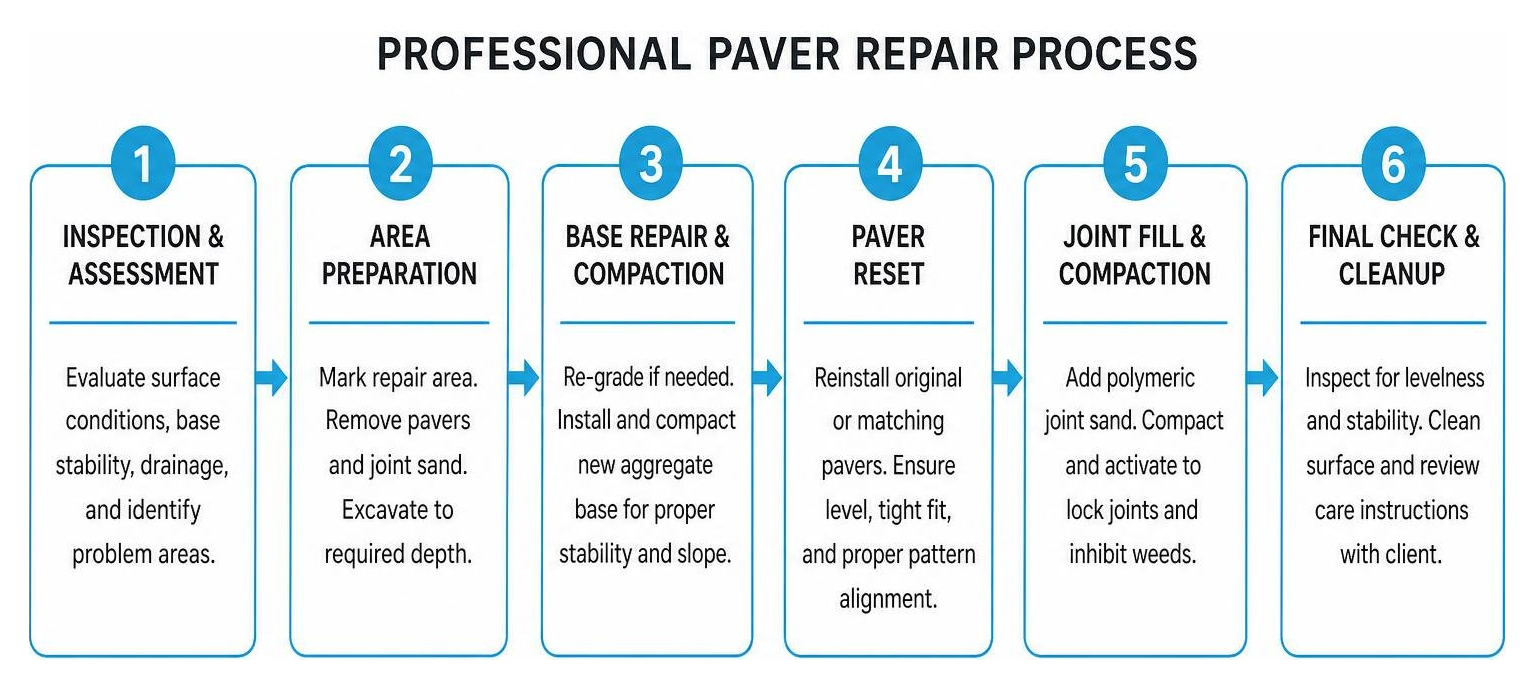
Restoring a sunken, rutted, or shifting patio requires a methodical, structural approach to reset the base materials properly:
Paver Extraction: Skilled technicians carefully extract the affected individual pavers using dedicated extraction tools without damaging surrounding stone units or disrupting adjacent stable sections.
Base Excavation and Subsoil Inspection: The existing bedding sand layer and crushed aggregate base are excavated to assess subterranean water accumulation, soil erosion, or organic clay expansion. Technicians inspect whether geotextile fabric installation is required to separate native subsoil from structural base stone.
Sub-Base Reinforcement and Mechanical Compaction: Fresh dense-grade aggregate, such as 3/4-inch processed gravel or crushed stone, is added in 2-inch lifts and compacted using heavy-duty mechanical plate compactors to build a solid, dense base that resists future settling.
Bedding Sand Reset: A precise 1-inch layer of clean, sharp, coarse concrete sand is screeded level over the compacted aggregate bed to provide a smooth, stable setting bed. Fine masonry sand or rounded beach sand must never be used as a bedding layer.
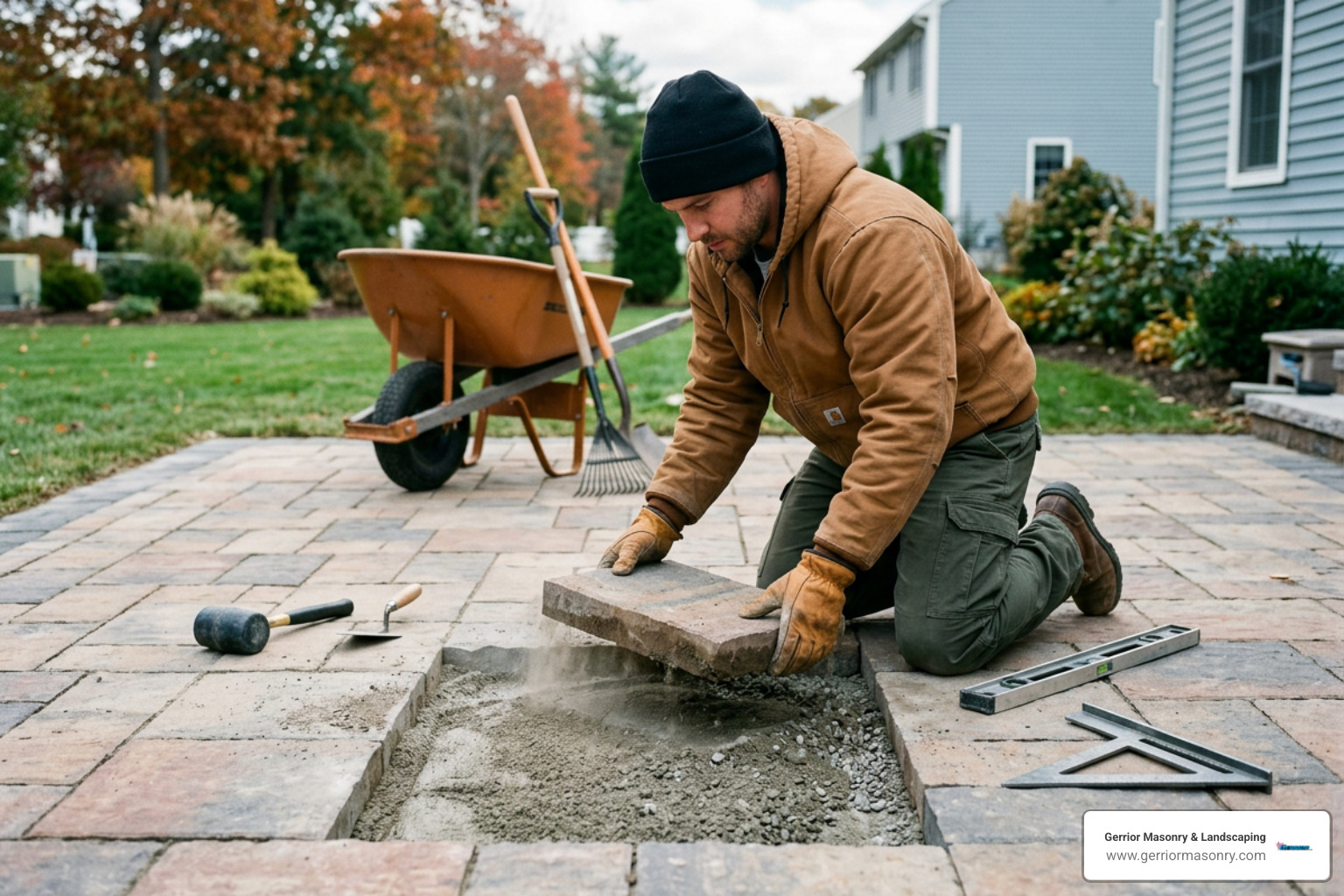
Paver Re-Installation and Leveling: Original stone or concrete pavers are re-set tightly back into position, ensuring seamless pattern integration, appropriate slope grade for water runoff, and consistent joint spacing across the patio surface.
Proper compaction and slope correction resolve deep sub-surface failure mechanisms caused by freeze-thaw cycles. Property owners looking for local hardscape construction or repair in Andover or Winchester can turn to experienced Patio Paver Installers Near Me for specialized sub-base restoration and hardscape rebuilds.
How to Choose Reliable Paver Patio Repair Companies Near Me
Selecting the right hardscape contractor ensures high-quality execution, proper safety protocols, and long-lasting results. Consider these essential qualifications when evaluating potential contractors:
Licensing and Comprehensive Insurance: Verify active general liability insurance and state contractor registration to protect your property and project investment during construction.
Local Massachusetts Experience: Contractors working in towns like Winchester, Newton, Lexington, and Woburn understand local soil characteristics, harsh winter weather patterns, and municipal building guidelines.
Comprehensive Structural Warranties: Reputable masonry and hardscape companies back their structural workmanship with written guarantees on base corrections and surface leveling.
Verified Reviews and Completed Portfolios: Review recent project galleries, client feedback, and local references to assess craftsmanship, communication, and project timeline reliability.
For expert structural restoration and paver stabilization, consult trusted local masonry professionals specializing in Masonry Repair Near Me.
The Professional Paver Repair Process, Cost Factors, and Long-Term Maintenance
Maintaining high standards across commercial and residential hardscapes requires selecting the appropriate scope of work – whether targeted spot repair, full surface restoration, or complete structural replacement. Experienced contractors analyze site drainage, soil density, traffic load requirements, and surface wear before recommending a tailored repair solution.
Repair vs. Full Replacement and Restoration Differences
Understanding the difference between service levels helps commercial property managers and homeowners invest wisely in their outdoor living spaces:
Service Category
Primary Focus
Best Used For
Typical Scope
Spot Repair
Structural re-leveling & base fix
Sunken areas, tripping hazards, edge spreading
Extracting local pavers, compacting base, re-setting original stones
Paver Restoration
Surface refresh & joint locking
Faded pavers, weed growth, loose joint sand
Deep pressure washing, joint sanding, polymeric joint locking, sealer application
Full Replacement
Complete tear-out & rebuild
Severe, total structural failure or complete design redesign
When individual pavers are severely cracked or stained beyond recovery, specialized techniques like paver harvesting – sourcing original matching pavers from low-visibility perimeter zones or garden edges – preserve visual continuity across the entire patio surface. Proper restoration work restores joint sand integrity, stabilizes loose units, and enhances total outdoor aesthetic appeal. Learn more about customized hardscape designs, paver selections, and masonry repairs by visiting our Pavers Patios page.
Professional Repair Process, Costs, and Warranties
The professional repair sequence follows a precise engineering standard to guarantee longevity:
Cost Overview: Based on average industry data sourced from publicly available online information, project costs for paver patio repairs in the Massachusetts area typically range from $1,200 to $7,500, depending heavily on total square footage, depth of sub-base excavation, drainage system requirements, and material selection. Factors such as tight backyard accessibility, steep slope grading, heavy machinery requirements, and specialized stone matching also influence final pricing estimates. Note: These figures represent broad market averages and do not reflect specific pricing or guarantees from Gerrior Masonry & Landscaping.
Structural Warranties: Professional contractors back structural repair work with clear written warranties covering base stability, joint sand retention, and surface levelness against abnormal settling. Warranties provide property owners peace of mind knowing the structural base will resist dynamic seasonal shifting.
Long-Term Prevention and Maintenance for Massachusetts Hardscapes
At Gerrior Masonry & Landscaping, our skilled team provides direct owner oversight on every project, bringing over 30 years of hardscaping and masonry experience to properties throughout Woburn, Andover, Lexington, Newton, and Winchester.
Preventing future paver displacement and base deterioration requires proactive hardscape protection methods:
Heavy-Duty Edge Restraints: Anchor patio perimeters securely with heavy-duty PVC or metal edge restraints driven by industrial steel spikes or backed with concrete shoulder edging to prevent horizontal drift and perimeter breakdown.
Integrated Drainage Solutions: Install subsurface drainage systems or dry wells to channel water runoff safely away from hardscape bases and building foundations, preventing subsoil washouts and water pooling.
Polymeric Sand Maintenance: Sweep high-grade polymeric sand into joints and activate with clean water misting to lock pavers, block water infiltration, prevent weed growth, and deter burrowing insects.
Protective Sealing: Apply high-quality, breathability-rated hardscape sealers every 3-5 years to protect stone surfaces from road salt, ice melt products, chemical stains, and UV fading while enhancing stone coloration.
Protect your hardscape investment with local industry experts. You can request an estimate online today. Connect directly with an experienced Patio Contractor Near Me for long-lasting patio repair, stone masonry, and outdoor living solutions.
What Custom Retaining Wall Builders Do — and How to Choose the Right One
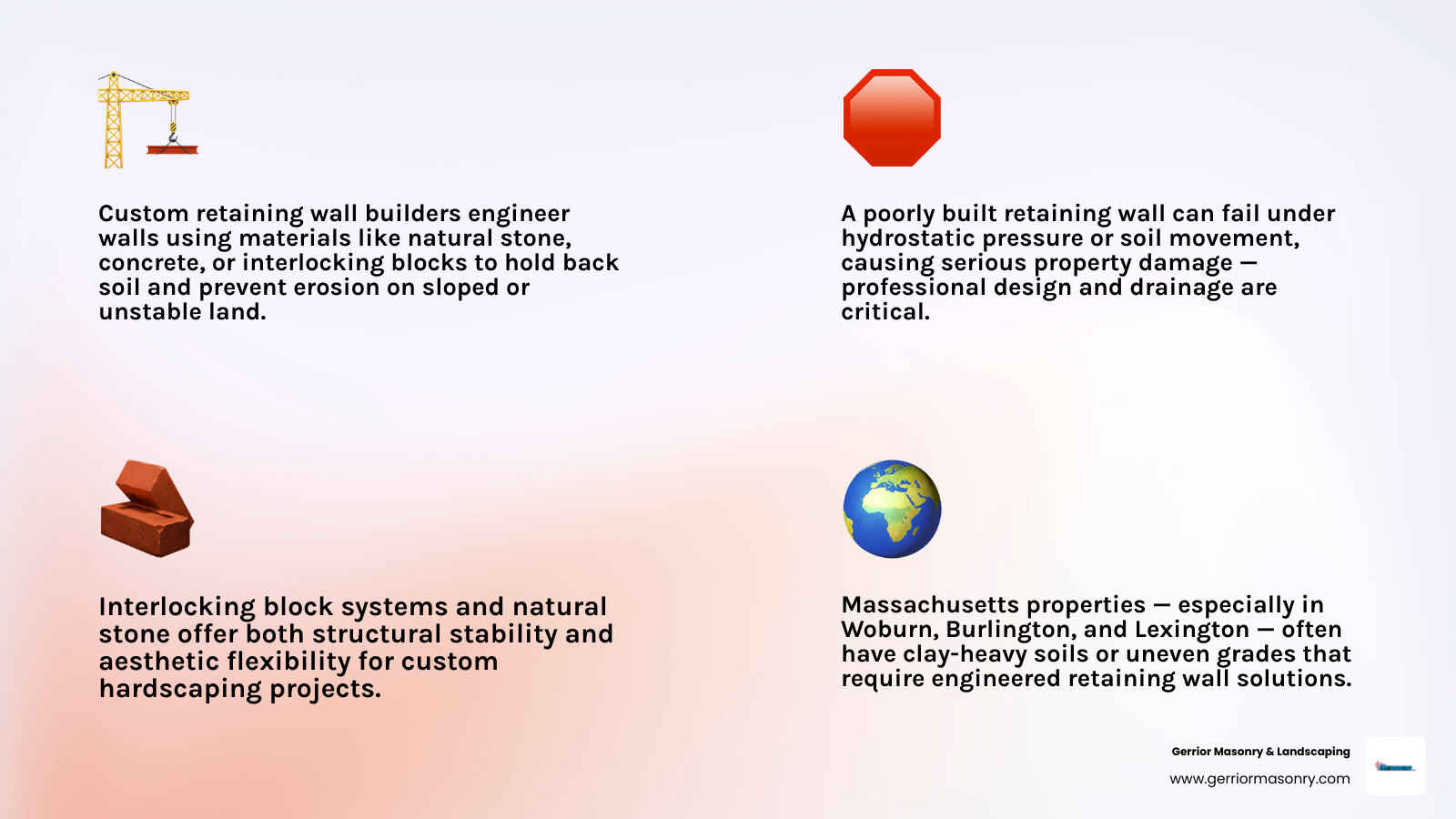
Custom retaining wall builders design and construct walls that hold back soil, prevent erosion, and transform sloped or unstable land into usable outdoor space. Here’s a quick summary of what they offer and when you need one:
What they do: Engineer and install walls using materials like natural stone, concrete, or interlocking blocks — sized and styled for your specific property
When you need one: Sloped yards, eroding hillsides, unstable foundations, or when you want to add terraced outdoor living space
Why hire a pro: Retaining walls are structural — a poorly built wall can fail and cause serious property damage
What to look for: Experience with local soil and slope conditions, proper licensing, a clear process, and a written warranty
Massachusetts context: In towns like Woburn and Burlington, properties with uneven grades or clay-heavy soils are especially common candidates for a professionally engineered retaining wall
Whether your yard needs a small decorative garden wall or a large structural system to protect your home’s foundation, getting the details right — materials, drainage, engineering, and local permits — makes all the difference.
I’m Joe Gerrior, owner of Gerrior Masonry & Landscape Construction Corp., a family-owned business based in Woburn, Massachusetts, with over 34 years of experience building and installing custom retaining walls for residential and commercial clients across the state. In this guide, I’ll walk you through everything you need to know — from choosing the right materials to understanding the full construction process.
Selecting Materials and Hiring Custom Retaining Wall Builders
Choosing to install a retaining wall is a major investment in your property’s longevity, safety, and visual appeal. Before breaking ground, you must make two critical decisions: who will build the wall, and what materials will best suit your landscape’s unique engineering demands.
Why Hire Professional Custom Retaining Wall Builders vs. DIY?
It is easy to look at a weekend home-improvement show and think that building a retaining wall is as simple as stacking a few blocks in a row. However, retaining walls are highly complex structural systems designed to resist immense lateral soil pressure.
When homeowners attempt a DIY installation, they often overlook crucial elements like soil compaction, correct base depth, and proper drainage. This frequently results in structural failure, bowing, or complete collapse after the first heavy Massachusetts freeze-and-thaw cycle. Professional builders understand how local soil types, such as the heavy clay found throughout Middlesex County, expand and contract with temperature shifts. They design the wall’s footing and backfill to accommodate these specific pressures, ensuring the structure remains stable year after year.
Rebuilding a failed wall is twice as expensive as doing it right the first time. Professional custom retaining wall builders bring heavy equipment, specialized transit levels, and decades of experience to the job site. In communities like Woburn and Winchester, where rolling hills and dense soils are common, professional engineering is essential.
The right material for your custom wall depends on your property’s slope, soil type, and aesthetic goals. Here are the most common options used by professional builders:
Poured Concrete: Exceptional for maximum structural strength, especially on steep slopes with high soil pressure. Poured concrete can be finished with various textures or covered with stone veneer.
Interlocking Blocks: Segmental block systems are highly popular because they are engineered to fit together seamlessly. They allow for flexible, curving designs and excellent built-in structural stability.
Natural Stone: Offers unmatched, timeless beauty. A hand-dressed natural stone retaining wall blends perfectly into Massachusetts landscapes, gaining character as it ages.
Pin Pile Walls: A highly specialized solution used for steep, unstable slopes or tight-access areas where traditional gravity walls cannot be built.
When selecting materials, it is also important to consider how they complement your home’s existing architectural style. A cohesive design that matches your patio, driveway, or front walkway will significantly boost your property’s curb appeal and overall market value.
How Custom Retaining Wall Builders Balance Function and Aesthetics
A masterfully constructed wall does more than just hold back the earth; it enhances the overall flow of your landscape. Experienced builders use retaining walls to solve functional grading issues while simultaneously creating beautiful, multi-level garden terraces, built-in seating, or elegant transitions to patios and walkways.
Sustainability is also becoming a core focus in modern hardscaping. Leading builders incorporate eco-friendly practices, such as utilizing recycled concrete aggregates for stable base layers or reclaiming local stone to reduce landfill waste. This approach ensures that your outdoor space in Reading or Lexington is both environmentally responsible and visually striking. If you want to explore more creative design possibilities, check out these unlock your yards potential creative brick retaining wall ideas.
The Professional Construction Process and Structural Engineering
Building a custom retaining wall requires a highly structured, systematic approach to ensure the final product stands strong for decades.
Overcoming Drainage, Soil, and Slope Challenges
Water is the single greatest enemy of any retaining wall. When water accumulates in the soil behind a wall, it creates immense hydrostatic pressure. Without proper drainage, this pressure will eventually push the wall forward, causing cracks, tilting, or complete collapse.
Professional builders address this by installing a dedicated drainage zone directly behind the wall face. This typically includes a perforated pipe wrapped in geotextile fabric, surrounded by clean, crushed stone. This system directs water away from the structure before pressure can build up.
Permitting, Lifespan, and Warranties for Masonry Walls
In Massachusetts, local building codes generally require a building permit and a structural engineer’s stamp for any retaining wall that exceeds 4 feet in height. Navigating these municipal regulations is a key part of what professional builders handle for you.
A professionally engineered masonry wall built with high-quality materials can easily last 50 to 100 years. To give property owners peace of mind, reputable contractors offer strong warranties — often a 5-year limited warranty on both materials and workmanship.
According to general online data and industry averages, the cost for custom retaining wall construction in Massachusetts can range from $12,000 to $60,000 or more, depending on wall height, excavation needs, materials, and site accessibility. Please note that these prices are average costs sourced from publicly available internet data and are not the actual prices of Gerrior Corp.
Work with Massachusetts’ Premier Hardscaping Specialists
At Gerrior Masonry & Landscaping, we have spent more than three decades perfecting the art of stone and concrete construction. Based in Woburn, MA, we provide homeowners and commercial properties with unmatched craftsmanship, premium materials, and direct owner oversight on every single project.
Whether you want to stabilize a sloping backyard, install a gorgeous new patio, or build durable landscape walls, our expert team is ready to bring your vision to life. We specialize in comprehensive custom retaining walls and a full suite of professional hardscaping services.
Ready to transform your property? Give us a call today at +781-713-1225 or click the button below to request your free estimate.
Why Natural Stone Patio Installation Is Worth Doing Right
Natural stone patio installation is one of the highest-value outdoor improvements a Massachusetts homeowner can make — but only when it’s done correctly, from the ground up.
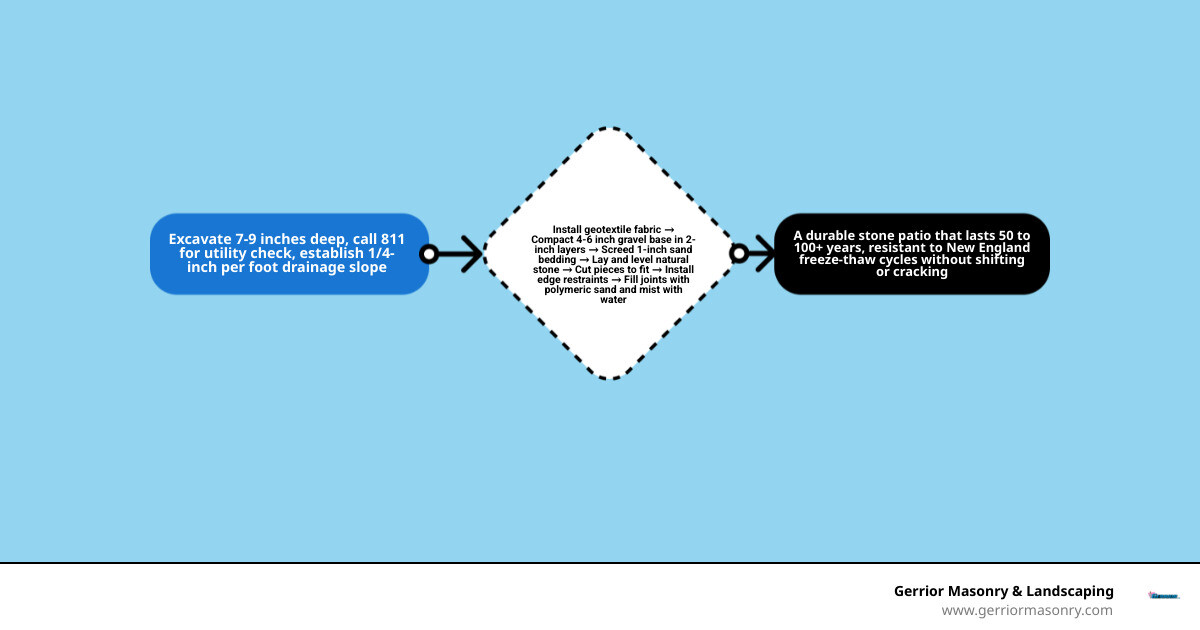
Here’s what a successful natural stone patio installation involves:
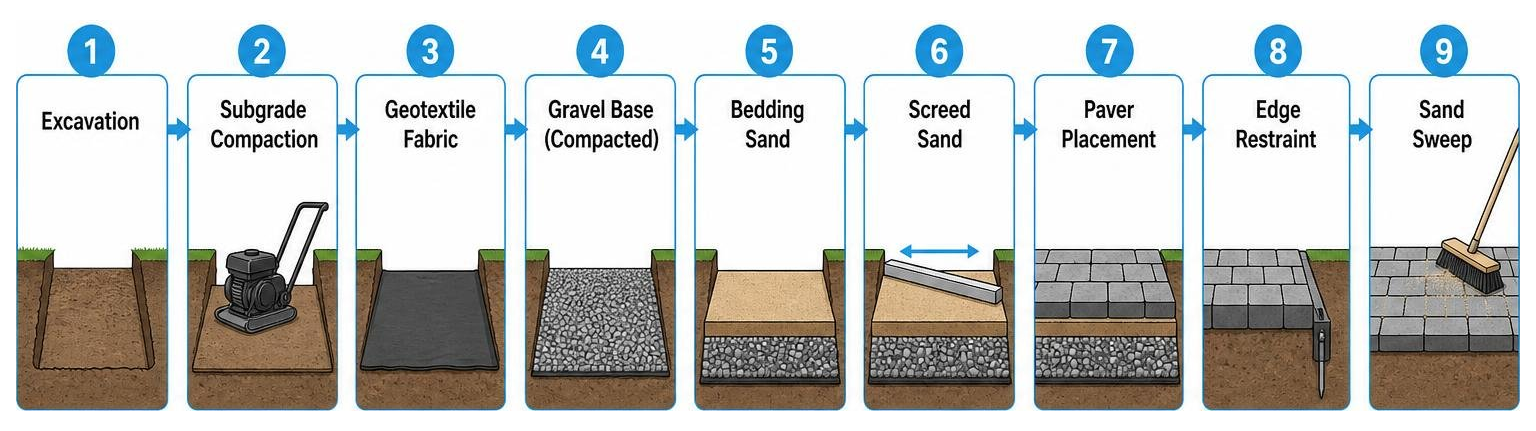
Plan and mark the patio area, check for underground utilities (call 811), and establish proper drainage slope
Excavate 7–9 inches below the desired finished height
Install geotextile fabric to separate native soil from the base material
Compact a 4–6 inch gravel base in 2-inch layers using a plate compactor
Screed a 1-inch sand bedding layer over the compacted gravel
Lay and level the natural stone, cutting pieces to fit as needed
Install edge restraints to lock the perimeter in place
Fill joints with polymeric sand and mist with water to activate and seal
Done right, a natural stone patio can last 50 to 100 years or more. Done wrong — with a weak base, poor drainage, or the wrong stone for a Massachusetts freeze-thaw climate — it can shift, crack, and fail within a few seasons. Homeowners in Woburn, Winchester, and Lexington know this after watching poorly installed patios heave through a single harsh Massachusetts winter.
The stone you see is only a fraction of the work. What’s underground determines whether it lasts.
I’m Joe Gerrior, owner of Gerrior Masonry & Landscaping, and I’ve spent over 34 years overseeing natural stone patio installation projects across Massachusetts for both residential and commercial clients. In this guide, I’ll walk you through exactly how a professional-grade stone patio gets built — and what separates a patio that lasts from one that doesn’t.
The Value of Professional Natural Stone Patio Installation
When planning a new outdoor living space, many homeowners debate between natural stone and manufactured concrete pavers. While concrete pavers are highly uniform and easier to install, they simply cannot match the organic texture, timeless beauty, and incredible longevity of genuine stone.
Natural stone resists chipping, cracking, and fading far better than concrete. Over decades of exposure to Massachusetts’ harsh climate, concrete pavers can begin to show aggregate wear and lose their color. Natural stone, on the other hand, weathers beautifully, developing a rich patina that actually enhances your home’s curb appeal and long-term resale value.
Feature
Natural Stone Patios
Concrete Pavers
Average Lifespan
50 to 100+ Years
15 to 25 Years
Aesthetic Appeal
Unique, organic, and elegant
Manufactured, repetitive patterns
Color Longevity
Permanent (will not fade)
Can fade over time from UV exposure
Value Addition
High long-term return on investment
Moderate property value increase
Slip Resistance
Excellent (natural cleft textures)
Varies by surface texture
Whether you are looking for a rustic flagstone look or a clean, modern bluestone patio installation, choosing natural stone is a permanent investment in your property. When seamlessly integrated with professional hardscaping and landscaping, it transforms a simple backyard into a luxurious outdoor retreat.
Selecting the Right Stone for Massachusetts Climates
The extreme freeze-thaw cycles of Massachusetts require careful material selection. In towns like Burlington, MA and Reading, MA, winter temperatures plummet, causing water trapped in porous stones to freeze, expand, and crack the material from within.
Bluestone: A highly dense sandstone known for its exceptional durability. Its natural cleft finish provides excellent traction, and its low porosity makes it incredibly resilient against winter frost.
Granite: Boasting an exceptionally low water absorption rate (typically under 0.5%), granite is virtually immune to frost damage and has a very high Mohs hardness rating.
Quartzite: An exceptionally durable metamorphic rock with a Mohs hardness of 7+ and near-zero water absorption, making it highly resistant to freeze-thaw cycles.
Limestone and Travertine: While beautiful, highly porous varieties of limestone or travertine should be avoided in cold climates unless extreme drainage precautions and specialty sealers are utilized.
Why Hire a Professional for Natural Stone Patio Installation
While a simple, small garden path can be a rewarding weekend project, a full-scale natural stone patio installation is a highly demanding engineering task. Natural stone is incredibly heavy, with individual slabs often weighing between 50 and 200 pounds. Moving, cutting, and placing these stones requires specialized heavy machinery, commercial-grade plate compactors, and wet-cutting diamond saws.
Furthermore, natural stone slabs have irregular thicknesses. Unlike concrete pavers, which are perfectly uniform, a mason must individually adjust the sand bedding under each stone slab to ensure the final surface is completely flush. Skipping proper compaction or failing to calculate the correct excavation depth will inevitably lead to a shifting, unstable surface.
According to average online industry data, a professional natural stone patio installation in the Massachusetts area typically ranges in cost from $8,000 to $60,000, depending on the stone variety, size, grading requirements, and site accessibility.
Disclaimer: Please note that these are estimated average costs sourced from publicly available internet data and do not reflect the actual rates or project guarantees of Gerrior Corp.
For homeowners in Woburn, MA and Winchester, MA, partnering with trusted stone patio contractors near me ensures that your investment is protected by expert craftsmanship and proper structural design.
Step-by-Step Guide to a Flawless Stone Patio
Achieving a flawless, long-lasting surface requires a meticulous approach to site preparation, base construction, and stone setting. For a complete look at the design process, see the complete guide to patio design and installation.
Essential Site Preparation and Drainage Engineering
Before a single shovel touches the dirt, safety and drainage must be addressed. In Massachusetts, you must call 811 at least three business days before digging to have underground utility lines marked.
Once utilities are cleared, we calculate the drainage slope. Standing water is the enemy of any hardscape. To ensure rainwater runs safely away from your home’s foundation, the patio must slope at a pitch of 1/4-inch per linear foot (or roughly a 2.5-inch drop across a 10-foot span).
In towns like Lexington, MA and Burlington, MA, where clay-heavy soils are common, we excavate 7 to 9 inches below the desired finished patio height. This deep trench is necessary to accommodate the structural base layers that prevent shifting.
Executing the Natural Stone Patio Installation Base
The secret to a patio that lasts for decades is a rock-solid, well-compacted base.
Once excavation is complete, we follow these steps:
Geotextile Fabric: We lay down a high-quality geotextile landscape fabric across the excavated soil. This barrier prevents the clean gravel base from sinking into the soft native soil over time—a common cause of settled corners.
Gravel Base: We add 3/4-inch clean, angular crushed stone (dense-grade aggregate) in 2-inch layers (lifts). We run a heavy plate compactor over each lift in perpendicular directions. Never dump the entire 4-to-6-inch gravel layer and attempt to compact it all at once; this leaves deep air pockets that will eventually settle.
Bedding Sand: We place 1/2-inch steel pipes as screed guides and spread a flat, uniform 1-inch layer of coarse washed sand (or Mason sand). We pull a straight 2×4 board across the pipes to create a perfectly flat bed. As detailed in the How To Install-Natural Flagstone December (3) 2022 FINAL guide, keeping this bedding layer uniform is critical for preventing stone movement.
Precision Stone Laying, Finishing, and Maintenance
With the base prepared, we begin laying the stones.
Because natural stone varies in thickness, we lay the thickest stones first. For thinner pieces, we gently lift the stone and pack extra bedding sand underneath to bring it flush with the surrounding surface.
To fit stones tightly along borders, we cut them using a wet masonry saw equipped with a diamond blade. Because cutting stone releases hazardous crystalline silica dust, our crew always wears professional-grade respirators and safety gear.
Once the stones are laid, we complete the installation:
Edge Restraints: We install heavy-duty aluminum or rigid plastic edge restraints along the outer perimeter, securing them with 10-inch steel spikes driven every 12 inches to prevent the stones from spreading outward.
Polymeric Sand: We sweep polymeric sand into the joints. We use a leaf blower on a low setting to clear all sand residue from the stone surfaces before lightly misting the joints with water to activate the binding polymers. This locks the stones in place and prevents weed growth.
Sealing: We highly recommend applying a breathable, water-based penetrating sealer 30 days after installation. This protects against oil stains and organic growth without creating an artificial, slippery plastic film.
Partnering with Gerrior Masonry & Landscaping for Your Patio
For over 30 years, Gerrior Masonry & Landscaping has been the premier choice for high-quality masonry, landscaping, and hardscaping services near Woburn, MA. Our unique advantage is our highly skilled team and direct owner oversight on every single project, ensuring that your natural stone patio installation is executed to the highest professional standards.
Whether you are located in Winchester, MA, Reading, MA, or any of our other Massachusetts service locations, we are here to bring your outdoor vision to life.
Ready to transform your backyard? Contact us today to schedule your consultation.
What Does It Cost to Install a Stone Patio in Massachusetts?
The cost to install a stone patio in Massachusetts typically falls between $7,500 and $15,600 for an average residential project, though costs vary widely based on size, materials, and site conditions.
Here’s a quick snapshot of what Massachusetts homeowners can expect:
Patio Size
Estimated Installed Cost (MA)
Small (100 sq ft)
$3,900 – $7,000
Medium (250 sq ft)
$7,500 – $15,600
Large (500 sq ft)
$15,000 – $35,000+
These figures are general industry averages sourced from publicly available online data. They do not represent Gerrior Masonry & Landscaping rates or guarantees. Actual costs vary significantly by project.
Stone patios are one of the most rewarding investments you can make in your home. They add beauty, function, and lasting value to your outdoor space. But the price tag can feel like a mystery — especially when every contractor quote looks different.
The truth is, several factors drive the final number. Material choice, excavation depth, drainage needs, and Massachusetts’ notorious freeze-thaw cycles all play a role. Homeowners in towns like Woburn, Winchester, and Lexington face unique site challenges that can push costs higher than national averages suggest.
This guide breaks it all down in plain language — so you can plan your project with confidence, not guesswork.
I’m Joe Gerrior, owner of Gerrior Masonry & Landscape Construction Corp., a family-owned business based in Woburn, Massachusetts, with over 34 years of experience managing the true cost to install stone patio projects across the region. I’ve seen every variable that drives a budget up or keeps it on track — and I’ll share what I know throughout this guide.
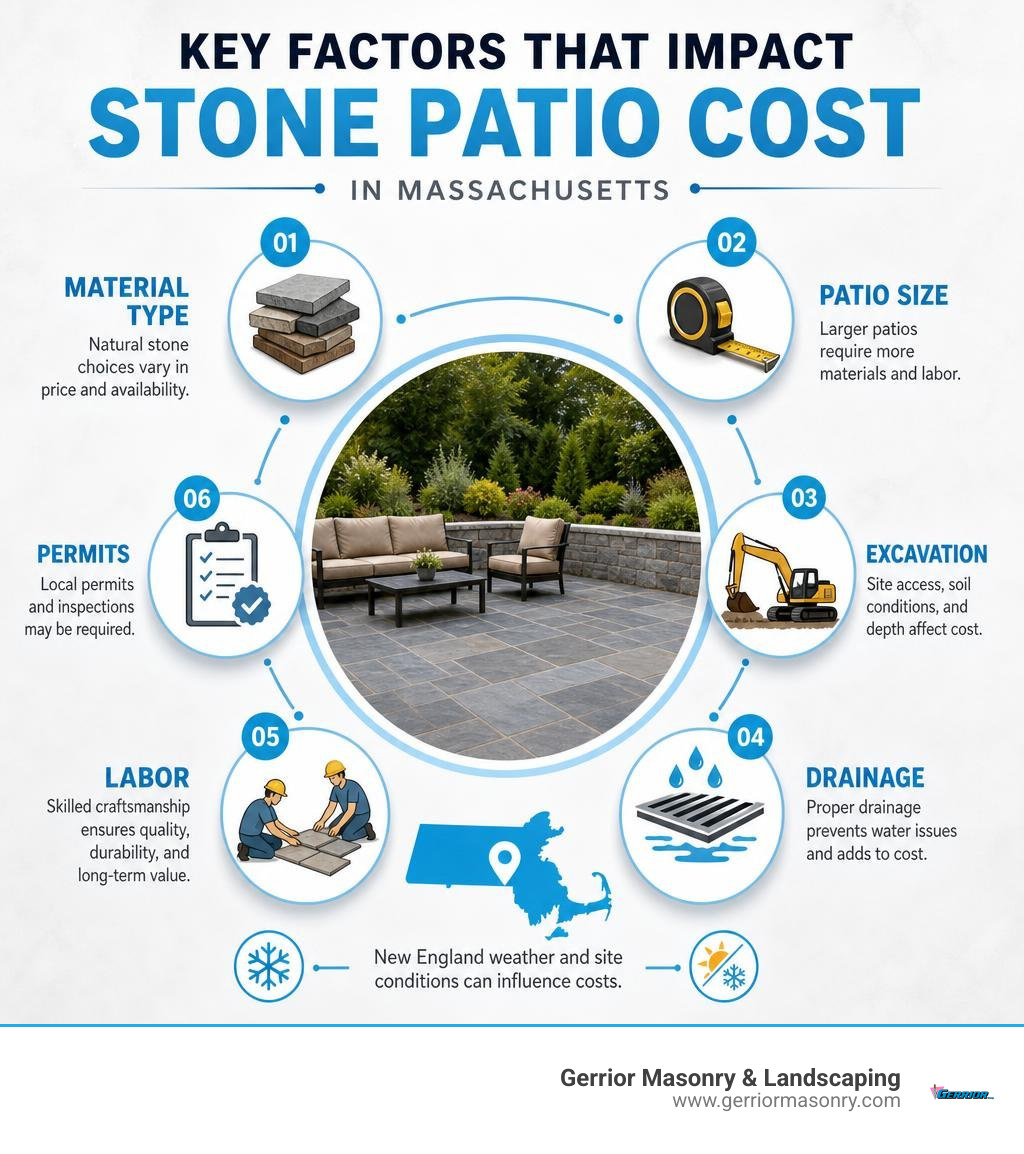
Understanding the Cost to Install Stone Patio Features
However, general online data often fails to capture the unique realities of working with Massachusetts’ challenging soils and climate. Across our service areas in Woburn and Winchester, we find that the actual cost to design and install a high-end, durable natural stone patio typically ranges from $50 to $250 per square foot.
This wide pricing spectrum is highly variable. The low end of this range is roughly twice as high as standard national averages to account for the premium labor, deep excavation, and heavy-duty base materials required in Massachusetts. Meanwhile, the high end of the range is at least five times higher than basic national baselines to account for premium stone types, intricate custom masonry patterns, and complex site access.
Please note: All prices and cost ranges mentioned in this article are average figures sourced from general online data and industry publications. They do not reflect the actual rates, pricing structures, or guarantees of Gerrior Masonry & Landscaping.
Material Selection and the Cost to Install Stone Patio Slabs
The specific stone you select plays a massive role in both the aesthetics and the longevity of your outdoor living area. When researching Patio Design Installation options, you will find that different natural stones carry vastly different price tags and physical properties. To help you budget, here is a closer look at the typical material costs you will encounter in Massachusetts:
Bluestone: Expect to pay $15 to $32 per square foot for premium thermal or natural cleft bluestone. A beloved Massachusetts classic, its deep blue-gray hues look stunning next to traditional colonial homes in Winchester and Lexington. Bluestone is highly dense and slip-resistant, making it excellent for pool decks and main dining areas.
Flagstone: Typically ranges from $18 to $30 per square foot. Known for its irregular, organic shapes, flagstone provides a rustic, naturalistic look, but requires a highly skilled mason to piece the puzzle together cleanly.
Granite: Ranging from $28 to $50+ per square foot, granite is the gold standard of durability. Granite is virtually impervious to weather, scratching, and staining, making it a lifetime investment for homeowners who want zero-maintenance luxury.
Slate & Limestone: Averaging $16 to $34 per square foot, these stones offer gorgeous textures and unique earthy colors. However, some varieties of slate can delaminate over time if exposed to severe freeze-thaw cycles, so sourcing high-quality, dense slabs is critical.
Because material choices dictate both the raw product cost and the difficulty of the installation, we always recommend consulting experienced Stone Patio Contractors Near Me to select a stone that matches your style and can handle our harsh winters.
Labor, Excavation, and Regional Cost to Install Stone Patio Hardscapes
Labor is the single largest component of any high-quality hardscaping quote. When you hire professionals for Patio Installations, you are paying for the technical precision required to ensure your patio doesn’t shift, sink, or puddle.
In towns like Lexington and Woburn, proper base preparation is the most labor-intensive phase of the project. Massachusetts soils are notorious for containing heavy clay, glacial till, and large buried boulders. This challenging subterranean landscape requires specialized machinery and extra labor hours to clear. A standard professional installation requires:
Deep Excavation: Digging down 8 to 12 inches to remove unstable topsoil, clay, and frost-susceptible soils.
Soil Compaction: Running heavy plate compactors over the subgrade to prevent future settling.
Geotextile Fabric: Laying a commercial-grade geotextile fabric to separate the subgrade from the gravel base, preventing soil migration.
Aggregate Base: Laying 4 to 6 inches of crushed gravel, compacted in thin layers, followed by a smooth bedding layer of sand or stone dust.
Without this meticulous foundation work, Massachusetts’ dramatic seasonal temperature swings will cause the ground to heave, destroying your beautiful stonework in just a few seasons. This is why working with qualified Stone Patio Contractors Near Me is so essential for protecting your investment.
Comparing Natural Stone to Concrete and Brick Pavers
Many homeowners debate whether to choose natural stone, concrete pavers, or a poured concrete slab. While a concrete slab has the lowest upfront cost, it is highly prone to cracking under Massachusetts’ freeze-thaw cycles, and matching repairs is nearly impossible.
Brick and concrete pavers are highly versatile and durable, as detailed in our Brick Patio Installation Cost Guide. However, natural stone remains the premium choice for homeowners seeking unmatched longevity, organic beauty, and maximum property value.
When evaluating these options, Massachusetts homeowners must also consider long-term resale value. A professionally installed natural stone patio can yield an ROI (return on investment) of up to 80%, significantly higher than basic poured concrete, which buyers often view as utilitarian and prone to unsightly cracking.
Here is a quick comparison of how these materials stack up:
When budgeting the cost to install stone patio features, it is easy to overlook the ancillary expenses that keep a project running smoothly.
Drainage Solutions: Water is the enemy of masonry. If your yard slopes toward your house, we must integrate proper grading, yard drains, or even install Drainage Systems Dry Wells to divert runoff safely away from your foundation.
Grading & Site Prep: Heavily sloped yards in Winchester may require retaining walls or extensive Excavation Services to create a flat, usable building site.
Utility Lines: Before any shovel hits the dirt, underground gas, water, and electric lines must be marked. Relocating these lines can add unexpected costs to a project.
Local Permits: Most municipalities in Massachusetts require building or zoning permits for hardscape structures over a certain size. Permit fees and HOA approvals must be factored into your timeline and budget.
Conservation Filings: In Massachusetts, local conservation commissions often regulate hardscape projects near wetlands or water bodies. If your property in Winchester or Woburn is near a stream or pond, you may need additional environmental filings, which can add $500 to $1,500 in engineering and permit fees.
Professional Installation vs. High-Risk DIY
With material costs rising, the temptation to tackle a stone patio as a weekend DIY project is understandable. However, natural stone is incredibly unforgiving for amateurs.
According to The Complete Guide to Patio Design and Installation, a typical 300-square-foot patio requires moving over 50 tons of soil, gravel, sand, and stone. Doing this by hand without specialized skid-steers, commercial plate compactors, and wet-cutting diamond saws is a recipe for physical exhaustion and structural failure.
Common DIY mistakes include improper slope (leading to water flooding your basement), inadequate base compaction (causing the stone to sag and shift within two years), and poor joint spacing. Fixing a failed DIY patio often costs twice as much as hiring a professional crew in Lexington from the start, as the entire structure must be demolished and rebuilt.
Conclusion: Partnering with a Professional Massachusetts Mason
Investing in a natural stone patio is one of the best ways to transform your backyard into a functional, luxurious extension of your home. By understanding the variables that influence the cost to install stone patio features, you can make smart decisions about materials, layout, and site preparation.
At Gerrior Masonry & Landscaping, we bring over three decades of specialized experience to every project. Based right near Woburn, MA, our close-knit, highly skilled team handles everything from initial design to final joint sealing with unmatched precision. With direct owner oversight on every job, we ensure your hardscaping investment is built to last a lifetime.