
Patios Designs: 6 Stunning Ideas for Amazing Yards 2025
Transform Your Outdoor Space with Stunning Patios Designs
Looking for inspiration to create a beautiful outdoor living area? Here are the key elements of successful patios designs:
- Consider your lifestyle needs – entertaining, relaxing, or dining
- Choose appropriate materials – concrete, flagstone, pavers, tile, or gravel
- Plan for climate factors – drainage, sun exposure, and seasonal changes
- Add shade elements – pergolas, umbrellas, or awnings
- Incorporate focal points – fire pits, water features, or outdoor kitchens
Patios designs are more than just aesthetic choices—they’re changes that extend your living space outdoors while potentially increasing your home’s value by 8-10%. Whether you’re dreaming of a cozy intimate retreat or an expansive entertainment area, the right patio can become your favorite spot to enjoy morning coffee, host evening gatherings, or simply relax under the open sky.
Creating a patio that feels like a natural extension of your home requires thoughtful planning. The material you select forms the foundation of your design—concrete offers versatility at $8-25 per square foot, while flagstone provides natural beauty at $15-30 per square foot. Budget-conscious homeowners might consider gravel options at under $2 per square foot for DIY installation.
Beyond materials, consider how your patio will function throughout the seasons. Will you need shade for hot summer days? Would a fire pit extend your outdoor enjoyment into cooler months? How will furniture arrangement and landscaping improve the atmosphere you want to create?
I’m Joe Gerrior, owner of Gerrior Masonry & Landscape Construction, and I’ve transformed countless outdoor spaces with custom patios designs over my 34 years in the industry. My team specializes in creating patios that perfectly balance beauty, functionality, and durability for Massachusetts homeowners.
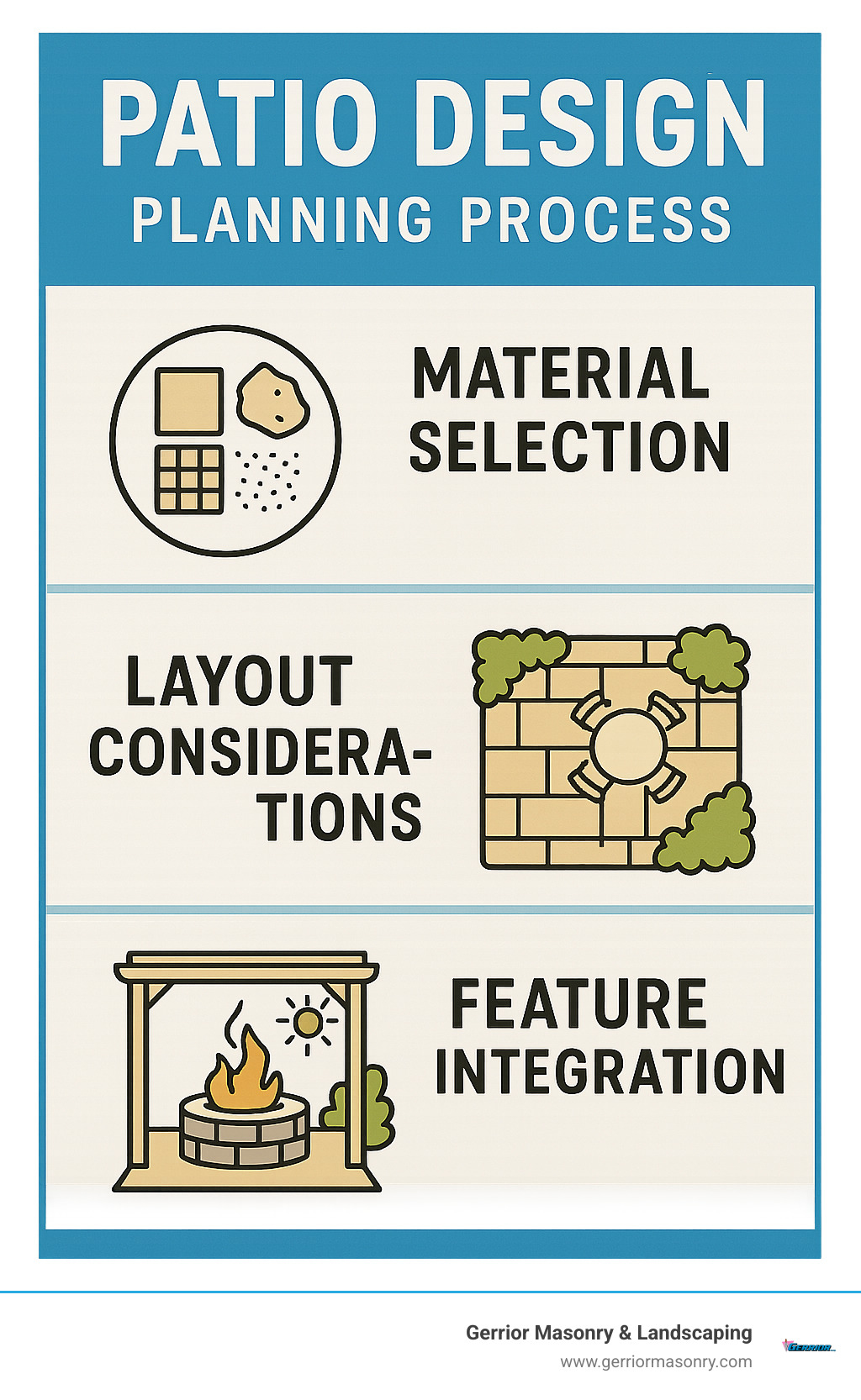
Patios designs terms to know:
– backyard garden design
– landscape planning
– modern landscape design
1. Concrete Chic: Modern Minimalist Slabs
Concrete has shed its old “gray slab” reputation and is now a star player in patios designs for modern homes. If you’re after those crisp lines and a clean, contemporary look, concrete is hard to beat—it’s like a blank canvas for your backyard dreams.
As Joe Gerrior puts it, “Concrete is often the least expensive and most versatile patio material. Most folks don’t realize how many ways we can customize it—shapes, colors, patterns, you name it.” With concrete, you’re not limited to the standard sidewalk look. We can pour it into nearly any shape, so whether your yard is a perfect square or full of curves, concrete adapts.
What really sets concrete apart in patios designs is its versatility in both style and finish. You can go for clean, geometric shapes that echo modern architecture, or add a subtle splash of personality with integral color dyes baked right into the mix—so your patio has gentle earth tones or even bold modern colors throughout. Prefer the look of natural stone or tile? Stamped concrete can mimic high-end materials, while polished or exposed aggregate finishes add texture and interest.
Take, for example, a recent project we completed in Lexington. The homeowners wanted a mid-century modern vibe, so we poured a smooth concrete patio tinted with an earth-toned dye. To give it a designer touch, we scored geometric lines to mimic oversized tiles—no grout to fuss over, just sleek style that holds up beautifully over time.

Why Choose Concrete for Your Patio?
Choosing concrete for your patios designs is often about balancing budget, looks, and low-fuss maintenance. On average, internet sources show concrete patios cost between $8 and $25 per square foot installed (remember, this is not specific to Gerrior Masonry’s pricing!). For that investment, you get a material that’s strong enough to last 30 years or more in our Massachusetts climate—with the right prep and reinforcement, of course.
Concrete is also surprisingly easy to care for. Just sweep off the leaves and maybe give it a power wash now and then. Thanks to broom finishes or textured stamping, your patio will also be safer to walk on when wet.
Design-wise, concrete offers flexibility that other materials can’t match—you can pour it to fit any yard, big or small, curvy or straight-edged. And if you’re worried about it feeling too industrial, that’s where you can let your creativity shine: add container gardens, toss on an outdoor rug, or pick furniture with soft, warm colors.
Joe always stresses, “The key to a concrete patio that lasts is starting with the right foundation—good drainage, solid reinforcement, and control joints to keep cracks in check. These behind-the-scenes details matter.”
So, if you’re dreaming of patios designs that look neat, go easy on your wallet, and stand up to New England weather, concrete just might be the perfect fit.
Gerrior Masonry & Landscaping is based in Woburn, MA, and proudly serves homeowners throughout Middlesex and Essex County, Massachusetts.
2. Flagstone Charm: Rustic Retreats & Fire Pits
There’s something special about a flagstone patio—it just feels like it belongs in your yard, as if it grew there all by itself. Thanks to its natural look and inviting texture, flagstone has become one of the most beloved choices for patios designs that bring warmth and character to any outdoor space. If your dream patio is more about cozy gatherings and less about straight lines, flagstone could be the perfect fit.
Flagstone sets itself apart with irregular, organic shapes that flow together like a natural puzzle. The rich colors—ranging from cool blues and grays to rusty reds and golden tans—add depth and personality. Plus, the textured stone surface isn’t just pretty; it also helps prevent slipping, which is great in our New England weather. Those natural edges make it easy to blend your patio with garden beds or lawns, creating that easy transition from home to nature.
As Joe Gerrior says, “Flagstone is always a top pick for anyone craving a rustic, authentic look. We try to source local stone when possible, which helps with both budget and that true regional feel.”
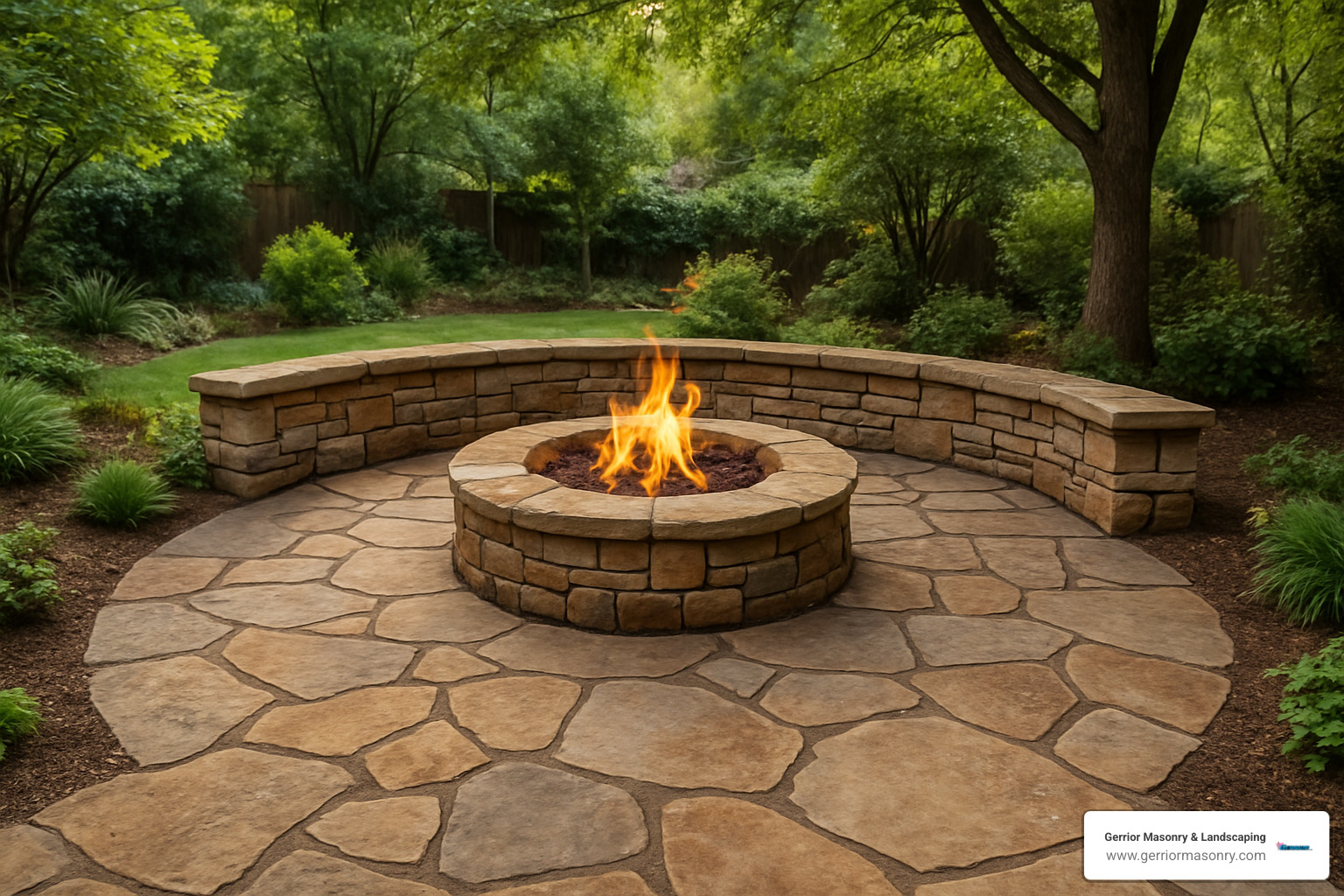
Creating the Perfect Flagstone Retreat
Flagstone really shines when you pair it with the right features. A fire pit is a natural choice—there’s just something about the combination of stone and fire that makes people want to gather ‘round. We recently built a circular flagstone patio with a custom stone fire pit in Winchester, and the homeowners tell us it’s now their favorite spot for cool New England evenings.
Low stone seating walls are another great addition. Not only do they give you extra places to sit, but they also help define the space, making your patio feel like an outdoor living room. We often top these with flat stones for comfort—add some cushions and you might not want to go back inside!
Don’t forget about the edges. Instead of a harsh border, we love to soften flagstone patios with ground covers or ornamental grasses. This helps the patio feel like it’s a natural part of the yard, not just an add-on.
Installing flagstone in Massachusetts means planning for our wild weather. Joe recommends a mortared installation to stand up to freeze-thaw cycles and keep your patio looking great for many years. While dry-laid patios look lovely, they can shift over time with our seasons—a proper mortar base keeps everything in place.
Flagstone Pricing Considerations
The cost for a flagstone patio can range from $15 to $30 per square foot installed (these are internet averages, not actual Gerrior Masonry pricing). Pricing depends on several things: the type of stone (Pennsylvania bluestone is on the higher end, while local fieldstone is more affordable), how it’s installed (mortared patios last longer but cost more), the complexity of the design, and the thickness of the stone itself.
One thing we love about flagstone is that it lets us follow your yard’s natural shape. If your backyard isn’t perfectly flat, no problem—we can work with gentle slopes or add steps, making your patios designs feel truly custom and part of the landscape.
If you’re dreaming of a patio that’s warm, inviting, and feels like a timeless retreat, flagstone is a choice you’ll never regret. And with careful installation and a few personal touches, your new outdoor space will welcome friends and family for years to come.
3. Paver Power: Pattern Play for Any Size Yard
If you’re dreaming of a patio that’s as unique as your home, paver patios designs are tough to beat. Interlocking pavers come in a rainbow of shapes, sizes, and colors—think of them as the LEGO blocks of landscaping. With pavers, we can create anything from classic charm to modern magic, all while making sure your patio stands up to New England’s wild weather.
“Pavers are a designer’s playground,” says Joe Gerrior. “We can lay them in traditional brickwork patterns or go bold with geometric layouts—whatever fits your home’s style and your imagination. And when it comes to durability, they’re built for tough Massachusetts winters and summers alike.”
When picking a pattern, you’ve got plenty of options. Herringbone patterns add movement and suit traditional homes beautifully, while basket weave has a timeless, colonial feel. Looking for something sleek and simple? Running bond mimics a classic brick wall, and random or ashlar layouts break up paver sizes to mimic natural stone. Want your patio to be the talk of the block? Circular or fan patterns make a real statement, perfect for a dramatic focal point or even the whole patio.
Recently, we wrapped up a project in Burlington with a herringbone pattern in three different shades. The result was stunning and actually made the modest patio look bigger—proof that pattern play really works.
Paver patios designs also adapt nicely to every yard size. Small urban yards in places like Arlington or Melrose can feel larger with large-format pavers and diagonal layouts that trick the eye. We often add a border in a contrasting color to create a neat frame—think of it as the patio version of a picture frame. In medium-sized suburban spaces (hello, Reading and Tewksbury!), mixing paver sizes and creating defined zones for dining, lounging, or grilling makes the patio feel organized and welcoming. For large backyards in towns like Sudbury or Weston, we can pull out all the stops—complex patterns, connected living areas, and bold edging that anchors your outdoor space.
One of the best things about modern pavers is the option to go permeable. These special pavers allow rainwater to seep through, reducing runoff and helping groundwater recharge—not to mention helping you meet local requirements about impervious surfaces. While permeable systems can cost more up front (internet averages show $10-35 per square foot installed, not Gerrior Masonry pricing), they’re a smart, sustainable choice, especially for yards with drainage challenges or towns with strict water rules.
“Permeable pavers are a smart investment, especially if your property has drainage trouble or if you’re looking to be environmentally friendly,” adds Joe. “We’re seeing more homeowners ask about them every year.”
Ready to explore paver possibilities? Our team at Gerrior Masonry & Landscape Construction has 34 years of experience building beautiful, lasting paver patios for families throughout Middlesex and Essex County, Massachusetts.
More info about Patio Installations
4. Mediterranean Mood: Tile & Terra Cotta Patios
If you’re dreaming of a backyard that feels like a sun-soaked escape, Mediterranean-style patios designs might be your perfect match. Tile and terra cotta patios instantly evoke the charm of European courtyards, bringing a sense of warmth, color, and timeless elegance—right to your Massachusetts home.
“Terra cotta tile has a personality all its own,” says Joe Gerrior. “It adds warmth and character that you just can’t get from any other material. Plus, it gives your patio that ‘on vacation’ vibe every day, no passport required!”
Mediterranean-inspired patios designs are all about capturing that Old World spirit. Think earthy terra cotta tiles in rich oranges and reds underfoot, with decorative ceramic tiles as playful accents. Layer in bold, saturated colors—deep blues, sunny yellows, or lush greens—in your furniture, pots, and pillows. Wrought iron touches, like a classic bistro table or a whimsical lantern, wrap up the look.
One of our favorite projects brought a taste of the Amalfi Coast to Winchester. We installed rustic terra cotta tiles in a classic herringbone pattern, set off by whitewashed walls and cobalt blue accessories. The family told us it instantly transported them to their favorite Italian hideaway—without ever leaving home.
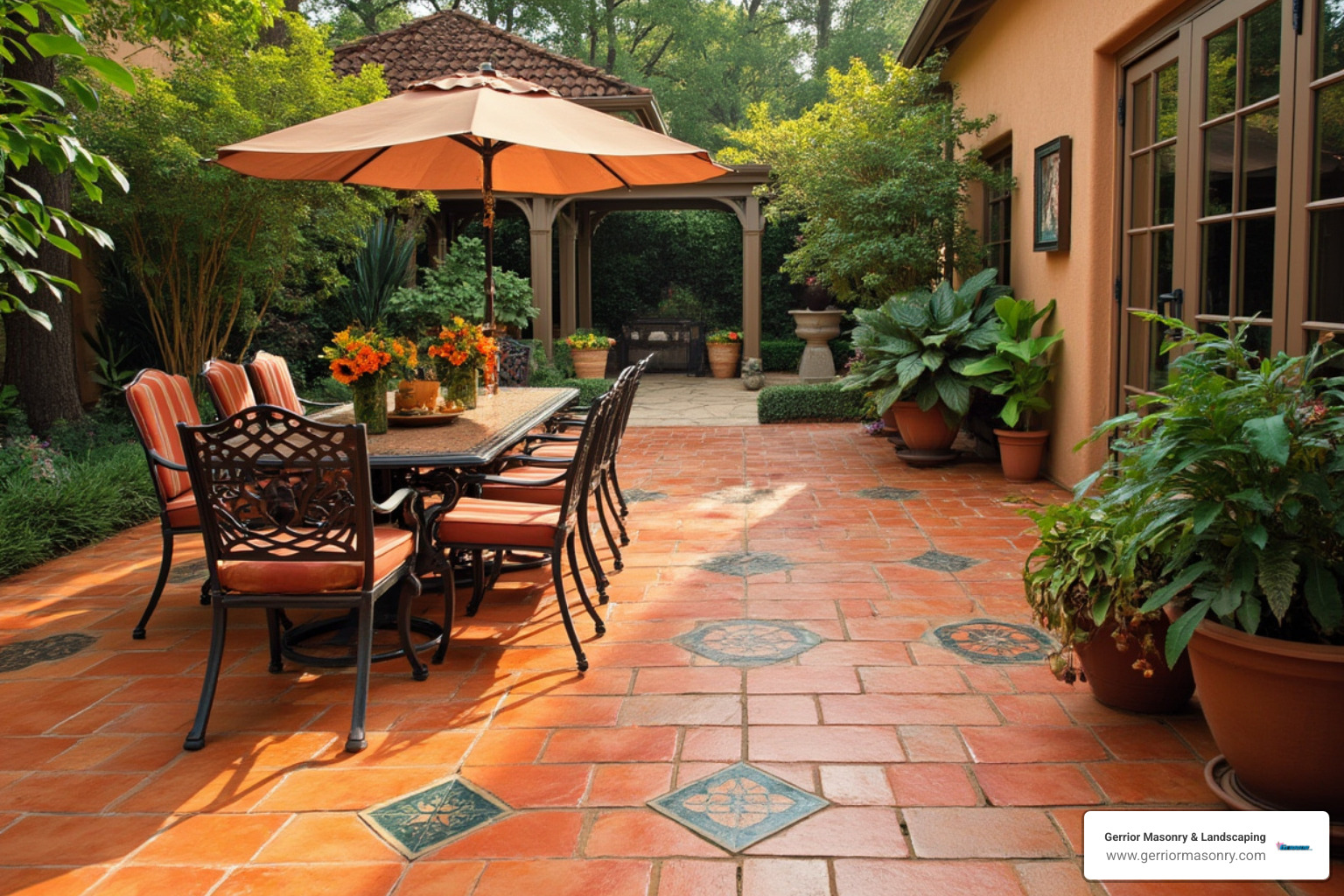
Of course, Massachusetts weather isn’t quite like the Mediterranean! Tile patios here need a little extra TLC. Porcelain tiles are usually your best bet—they mimic the look of clay or terra cotta, but they’re tough enough to handle our freeze-thaw cycles without cracking. (Traditional clay tiles can struggle with New England winters, so we steer clients toward porcelain for long-term durability.)
If you’re thinking about a poolside patio, safety first—choose tiles with a textured, slip-resistant surface. Many porcelain tiles are made just for this purpose, so everyone can stay on their feet, even when things get splashy.
Sealing is an important detail too. Natural terra cotta is beautiful, but it’s porous—it needs regular sealing to keep out stains and moisture. Porcelain, on the other hand, is much lower maintenance and usually doesn’t need sealing at all.
Technical details matter in our climate. At Gerrior Masonry, we always install tile patios with a proper drainage slope and use frost-resistant materials. It’s not the most glamorous part of patios designs—but it’s how you get a patio that’s as durable as it is beautiful, even through Massachusetts winters.
Design-wise, there’s a world of ways to capture that Mediterranean essence. Create “outdoor rooms” by using different tiles or steps to define areas for dining or lounging. Plantings like potted citrus, lavender, or olive trees bring the look to life. Water features—like a classic tiered fountain—add cooling sound and movement, while a pergola draped in vines gives just the right amount of dappled shade.
The real beauty of Mediterranean-style patios designs is how they never go out of style. They feel timeless, rooted in centuries of outdoor living, and always inviting. As Joe puts it, “These patios don’t just look good for a season—they get better as they age, just like a good bottle of Chianti.”
For more on patio materials and inspiration, check out our Creative Ways to Use Pavers in Your Landscaping Design.
Gerrior Masonry & Landscape Construction is based in Woburn, MA, proudly serving homeowners throughout Middlesex and Essex County, Massachusetts.
5. Budget Bliss: Gravel, Recycled Materials & Up-cycled Decor
Who says you need a luxury budget to have gorgeous patios designs? With a little creativity and the right materials, you can craft an inviting backyard retreat that looks like a million bucks (even if it only cost the price of a pizza party).
Joe Gerrior often recommends gravel patios for homeowners looking to make the most of their dollars. “Gravel has a relaxed, European feel—and it’s one of the most DIY-friendly choices out there,” he says. Not only is gravel cost-effective (often under $2 per square foot for materials, based on internet averages—not actual Gerrior Masonry pricing), it’s also easy to shape and refresh over time, making it perfect for anyone who likes to tinker or redecorate with the seasons.
Gravel and decomposed granite are standout options for budget-minded patios designs. These materials offer excellent drainage (goodbye, puddles!), a satisfying crunch underfoot, and can be installed without fancy tools or special skills. If you ever want to expand or tweak your patio, gravel lets you do it with minimal fuss and expense.
If you’re hoping for vintage charm, recycled brick might be your new best friend. Salvaged brick brings a warm, lived-in look and a story to tell—plus, it’s an eco-friendly win. Using reclaimed materials can sometimes cost less than buying new, and you’ll enjoy the rich patina and character that only time can produce. One Gerrior Masonry client in Wakefield used bricks from their grandfather’s old factory to make a patio that was both beautiful and deeply meaningful. Who knew a little history could be so stylish?
But you don’t need a big budget to add personality and comfort. Adding string lights overhead turns any space into an instant outdoor bistro—solar-powered ones make things even easier. Second-hand or thrifted outdoor furniture, spruced up with weather-resistant paint and new cushions, can be a fraction of the cost of buying new. Container gardens—even in upcycled buckets or tubs—bring fresh color and texture to the scene. And if you’ve always wanted a fire pit, you can build one with a simple metal ring and a circle of stones—no masonry degree required.
The secret sauce of these affordable patios designs is the personal touch. When you roll up your sleeves and put your own spin on things, your patio becomes a reflection of you—and that’s priceless. Joe says, “Even the simplest patio can feel special when you add your own creativity and a few meaningful touches.”
Thinking of tackling a gravel patio yourself? Here’s Joe’s pro advice for a long-lasting result: excavate 4–6 inches to allow for a solid base, lay down landscape fabric to keep weeds at bay, add 2–3 inches of compacted crushed stone for stability, and use angular gravel (about ⅜” size) so it locks together instead of shifting around. Edging—whether it’s stone, metal, or brick—keeps everything neat and tidy. It might sound simple, but these steps are what make a budget patio last for years instead of just a season.
And don’t forget, even if you want to handle the DIY, the Gerrior team is happy to offer guidance or step in where needed. After all, whether your budget is big or small, you deserve a backyard you love.
For even more inspiration, check out these Creative Ways to Use Pavers in Your Landscaping Design.
Gerrior Masonry & Landscape Construction is based in Woburn, MA, and proudly serves homeowners throughout Middlesex and Essex County, Massachusetts. If you’re dreaming up a patio—DIY or pro-built—reach out to see how we can help bring it to life!
6. Covered Comfort: Shade Structures, Privacy & Year-Round Use
The best patios designs are not just about looking good—they’re about making your outdoor space comfortable and usable all year long. In Massachusetts, where the weather can swing from steamy to downright chilly, a little extra planning in your patio design can make a huge difference.
“At Gerrior Masonry, we’ve seen how adding shade, privacy, or weather protection helps homeowners get so much more out of their patios,” says Joe Gerrior. “A covered space means you can grill in a drizzle or sip cocoa under the stars, even in October!”
Let’s walk through how you can make your patio the go-to spot, no matter the season.
Shade Structure Options
Pergolas are a favorite in many patios designs. These open-beam structures filter sunlight, create a focal point, and add charm. We love building cedar pergolas—wood brings warmth and ages beautifully, but we also install aluminum pergolas for homeowners who want zero maintenance. Want the best of both worlds? Add a retractable canopy for adjustable shade, letting you chase or escape the sun as you please.
If you’re looking for full weather protection, a patio cover is a game-changer. It can be attached to your home for a seamless look, or built free-standing for a pavilion effect. We’ve worked with everything from traditional wood to modern polycarbonate panels, depending on the look and feel you want.
Retractable awnings are also a smart addition for many yards. With today’s motorized options, you can create instant shade or let the sunshine in, all with the push of a button. Plus, the variety of fabrics means you can match your home’s style—no boring beige unless that’s your vibe!
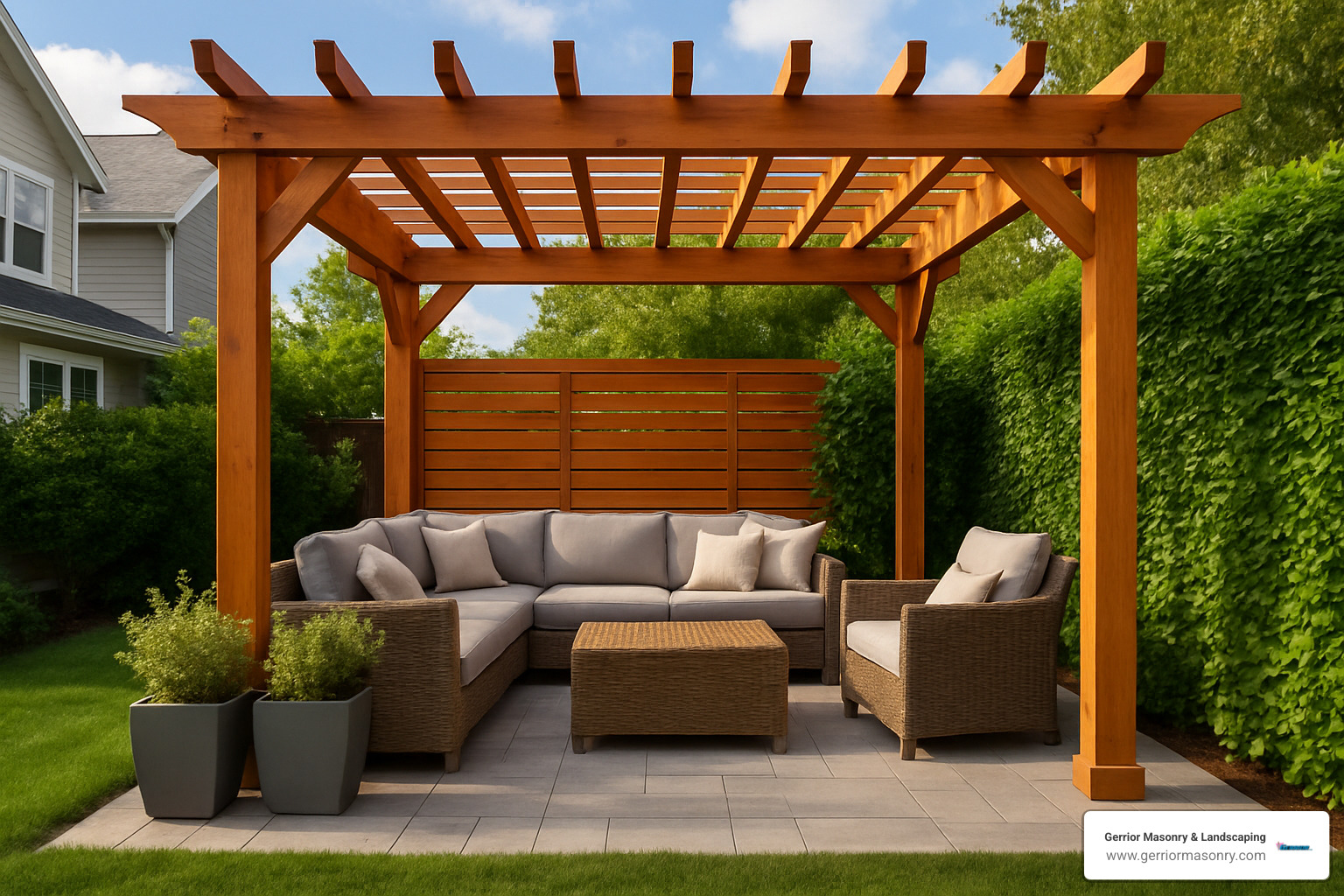
Creating Privacy in Your Outdoor Space
Even the most beautiful patio can lose its charm if you feel like you’re on display. Thoughtful patios designs address privacy without making the space feel boxed in.
Living walls are one of our favorite solutions. These vertical gardens use trellises and climbing plants—think clematis or honeysuckle—to create a natural screen. Not only do living walls block unwanted views, but they also offer cooling shade, give birds a place to visit, and even help lower noise.
Prefer something with less maintenance? Privacy screens made from wood, metal, or composite provide a stylish buffer from neighbors or busy streets. We’ve built everything from classic lattice to sleek, modern horizontal slats, sometimes with decorative patterns or pops of colored glass. One memorable patio in Stoneham featured a custom cedar pergola with retractable shade cloth and privacy screens—the homeowners now enjoy their outdoor space well into the fall, shielded from both sun and curious eyes.
Extending Patio Season with Comfort Features
Massachusetts weather doesn’t have to chase you indoors. With the right features, your patio can be a true three—or even four—season retreat. Heating elements like freestanding propane heaters, built-in gas fireplaces, or mounted electric infrared heaters keep the chill at bay.
Don’t forget about lighting! Mix ambient string lights with task lighting over your grill or dining area, and use accent lights to showcase your garden or stonework. Good lighting keeps the party going even after the sun sets.
Weather in New England can be unpredictable. That’s why we often recommend outdoor curtains or retractable screens. They add coziness, cut down on wind, and give you control over privacy. Some high-tech pergola covers even sense rain and close automatically, so you never have to dash inside when a summer shower rolls through.
And here’s a fun fact: EPA research shows that living walls and green roofs can actually lower the temperature of your patio area by 7–10 degrees. That’s not just great for comfort—it’s a win for the planet, too.
Latest Trends in Patios Designs
The world of outdoor living is always changing. Lately, we’re seeing more smart technology—like lighting and speakers you control from your phone, or weather-responsive shades that move on their own. Homeowners are blending different paving materials to create zones and mixing in metal or wood for texture and warmth.
Sustainability is also top of mind. Permeable pavers help with drainage, native plants mean less maintenance and water use, and solar-powered lights keep energy bills low.
“More than ever, people want patios designs that fit their lifestyle and values,” Joe observes. “Whether that means a tech-savvy entertainment zone or a quiet, eco-friendly retreat, our team at Gerrior Masonry can make it a reality.”
No matter your vision, a well-designed covered patio lets you enjoy the outdoors longer—rain or shine, day or night, through every New England season. If you’re ready to create a patio that feels like home, Gerrior Masonry & Landscape Construction is here to help. Based in Woburn, MA, we proudly serve homeowners across Middlesex and Essex County, Massachusetts.
Patios Designs 101: Materials, Costs & Climate
Building your dream patio is about more than picking a pretty stone. In Massachusetts, it’s a balance of style, budget, and real-world toughness. Let’s break down how to choose the best materials for your patios designs—and what to expect in terms of cost, care, and climate.
Material Comparison
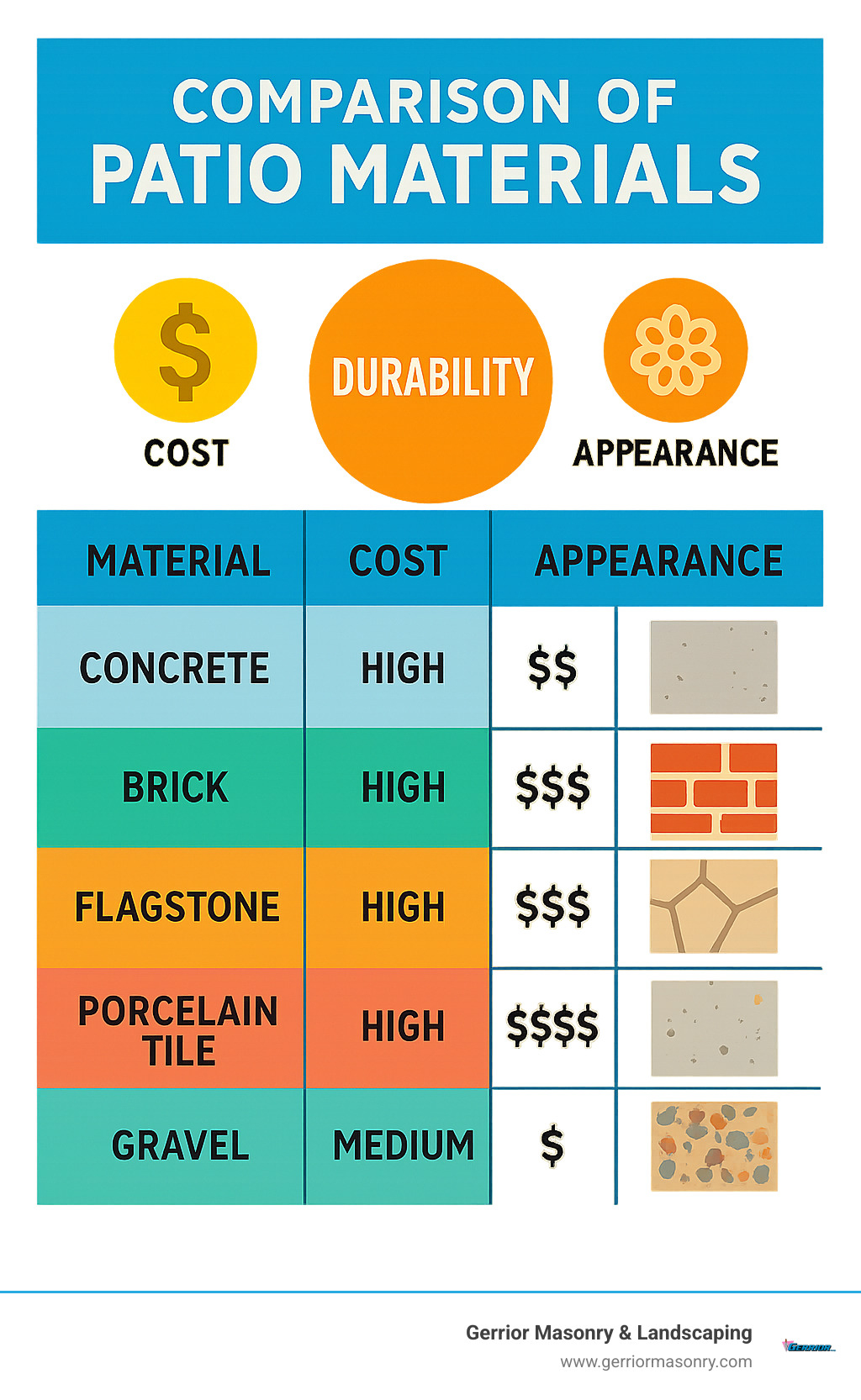
Take a look at how the most popular materials stack up:
| Material | Cost Range (per sq ft)* | Durability | Maintenance | Climate Suitability |
|---|---|---|---|---|
| Concrete | $8–25 | High | Low | Good (with proper installation) |
| Brick | $12–30 | High | Medium | Excellent |
| Flagstone | $15–30 | High | Medium | Good (if mortared) |
| Porcelain Tile | $18–40 | High | Low | Good (with proper installation) |
| Gravel | $2–8 | Medium | Medium–High | Excellent |
*These are average internet estimates, not Gerrior Masonry’s actual prices. Your final cost will depend on your site, project size, and the materials you choose.
Regional Considerations for Massachusetts
Patios in Massachusetts need to do more than look good. Mother Nature here is—let’s be honest—a bit testy. According to Joe Gerrior, “Our freeze-thaw cycles are no joke. We use special installation techniques to help your patio last for decades.”
Freeze-Thaw Resistance is key. If water gets into cracks and freezes, you can end up with heaving or broken stones. That’s why materials like concrete, flagstone (installed with mortar), and brick do well here—when installed correctly.
Drainage is another make-or-break factor. Your patio should gently slope away from the house (about 1/4 inch per foot) so that rain and melted snow don’t pool where you don’t want them.
Winter Maintenance matters too. We recommend patios with simple layouts and sturdy edges so snow removal is quick and pain-free. Nobody wants to spend all day shoveling around uneven stones!
Material Availability can affect your choices and your wallet. We often suggest locally quarried or manufactured materials—they’re usually more affordable, eco-friendly, and look “right at home” in New England landscapes.
Pros & Cons of Top Patios Designs Materials
Every material has its perks and quirks. Here’s what to keep in mind for your patios designs:
Concrete gives you tons of design options at a good price, and it’s easy to keep clean. Just remember, it can crack over time if not installed right, and can look a bit plain unless you jazz it up with color or texture.
Brick is classic and durable, with a rich, timeless look. It’s slip-resistant (a big plus with our winter weather), but you’ll want to keep an eye out for moss in shady spots and plan on occasional maintenance like repointing.
Flagstone offers natural beauty and unique charm—no two stones are ever quite alike. It works beautifully with gardens, but it costs more and the surface can be uneven for furniture unless you pick the right pieces.
Porcelain Tile is low-fuss and stylish, with a modern, consistent finish and very little upkeep. It does need expert installation and can get slippery if wet, so always choose slip-resistant varieties for outdoor spaces.
Gravel is the most budget-friendly of the bunch, drains well, and is a great choice for DIYers. On the downside, it can shift, needs edging, and isn’t the best pick under heavy tables and chairs unless you use a stabilizer.
Joe puts it simply: “Pick a material that fits your lifestyle. If you have kids or love outdoor parties, you’ll want something smooth and sturdy. Nature lovers might prefer the wild look of stone or the eco-friendly benefits of gravel.”
No matter your style or budget, there’s a patio material that’s just right for you. If you’d like help weighing your options or want the job done right the first time, Gerrior Masonry & Landscape Construction is here for you. We’re based in Woburn, MA, proudly serving Middlesex and Essex County, Massachusetts. Let’s build something beautiful together!
DIY vs Hiring a Pro: What to Know
When it comes to bringing your patios designs dreams to life, one big question always comes up: Should you roll up your sleeves and do it yourself, or call in the pros? Let’s walk through what you need to know so you can make the right choice for your yard—and your sanity.
For some homeowners, the DIY route can be a rewarding trip. If your yard is relatively flat and you’re working with straightforward materials like gravel or interlocking pavers, a DIY patio is definitely within reach—especially if you’re comfortable getting your hands dirty. If you have a knack for outdoor projects, access to the right tools, and plenty of patience, you might enjoy the process as much as the finished product. Budget is a big factor too; building your own patio can help keep costs down if professional installation just isn’t in the cards.
Joe Gerrior puts it this way: “We’ve seen some great DIY patios—especially when homeowners do their research and take the time to prep the site properly. We even offer consultations for folks who want a little expert advice before they get started.”
But there are times when hiring a professional is the smart move. If your yard has tricky slopes, drainage problems, or you want higher-end features like flagstone, porcelain tile, or built-in fire pits, bringing in experts ensures your patio will last. Professional installers also know their way around local building codes and permits—which can save you from headaches (and fines) down the line. And if your timeline is tight or you want a warranty on your investment, going pro is the way to go. As Joe says, “With over 30 years of experience, our team can spot problems before they start, so your patio project goes smoothly from start to finish.”
If you do decide to tackle your patios designs on your own, there are a few common pitfalls to watch for. The most important (and most often skipped) step is a solid base. A patio is only as good as what’s underneath it. Skimping on the base—or not compacting it enough—means your patio could shift, settle, or sink in no time. Drainage is another biggie; your patio needs a gentle slope away from the house to keep water from sneaking into your basement. And don’t forget about Massachusetts winters! If you don’t dig your base deep enough below the frost line, winter’s freeze-thaw cycles can leave you with a lumpy mess by spring.
And while it’s tempting to rush, remember: Each step takes time to do right. From proper excavation, to laying geotextile fabric (trust us, it’s worth it to keep weeds at bay), to making sure every layer is compacted—patience here pays off with a patio that lasts years, not months.
So, what about timelines? For a DIYer, planning and design can take a week or two, and even a simple build usually stretches to several weekends—three to six weeks isn’t unusual for a modest project. A professional crew, on the other hand, can usually knock out even a complex patio in about 3 to 10 days (not counting design and permits), thanks to experience and all the right equipment. Plus, the pros leave you with a warranty and peace of mind.
If you’re leaning toward pro help, Patio Contractors and Patio Paver Installers Near Me can make the process easy and stress-free. And remember, even DIYers can benefit from a little expert advice—don’t be shy about reaching out for a consultation.
At the end of the day, whether you go DIY or hire a seasoned team, making informed choices is key. The right prep and planning mean you’ll enjoy your new outdoor space for years to come. And if you ever need a little help—or just want it done right from the start—know that Gerrior Masonry & Landscape Construction, based in Woburn, proudly serves homeowners throughout Middlesex and Essex County, Massachusetts.
Frequently Asked Questions about Patio Design
How much does a patio cost on average?
If you’re wondering what a new patio might set you back, the answer is—it depends! Costs can swing quite a bit depending on the patios designs you choose, your yard’s layout, the materials, and the little details that make it yours. Based on internet averages (and just to be clear, not actual Gerrior Masonry pricing), Massachusetts homeowners may see these ballpark figures:
- Basic concrete patios run from $8–$15 per square foot.
- Stamped concrete steps it up a notch at $15–$25 per square foot.
- Brick pavers can range from $12–$30 per square foot.
- Flagstone is usually $15–$30 per square foot.
- Porcelain tile starts around $18 and can go up to $40 per square foot.
- Gravel patios are the most affordable, from $2–$8 per square foot.
What does that mean for a typical 300 square foot patio? Depending on your choices, you might spend anywhere from about $2,400 to $12,000. Custom patios with built-ins, premium materials, or unique layouts (think multi-level or curved edges) can go up to $20,000–$30,000. These numbers are rough averages and actual costs can vary, so it’s always a good idea to get a personalized estimate.
Joe Gerrior likes to remind folks, “It’s not just about the upfront number. A well-built patio becomes an extension of your home for decades, and it can boost your property value by 8–10%. When you spread the investment over all those years of use—and memories—it starts to look pretty reasonable!”
What is the best low-maintenance surface?
If low maintenance is your dream, you’re in luck. Some patios designs are almost “set it and forget it.” Joe’s favorites for easy living are porcelain tile and concrete pavers.
Porcelain tile is especially hassle-free. It shrugs off stains, doesn’t need sealing, and keeps its color for years. Usually, a simple sweep and the occasional rinse are all it takes.
Concrete pavers are another strong pick for minimal upkeep—especially the modern versions with built-in color and sealants. You won’t see fading or stains easily, and repairs are a breeze if anything does shift (which is rare with proper installation).
Stamped concrete also makes the low-maintenance list. As long as you reseal it every few years, it’s resistant to weeds and stains, so sweeping and a quick power wash are usually all that’s needed.
Joe’s pro tip: “No matter which material you choose, a good installation is key. Even the toughest surfaces can become high-maintenance headaches if drainage or base prep gets skipped.”
Can I add an outdoor kitchen later?
Absolutely—you can add an outdoor kitchen to your patio after the fact. But if you’re even thinking about grilling outside someday, planning ahead is the smartest move.
Joe explains, “Even if you’re not ready for a full outdoor kitchen now, we suggest roughing in things like electric, gas, or water lines during the initial build. It saves a ton of time, money, and mess down the road.”
When you plan for future upgrades, you’ll want to make sure utilities (gas, water, electric) are accounted for. The patio base may also need extra reinforcement to hold the weight of kitchen equipment. And don’t forget to leave enough space for prep areas, traffic flow, and seating.
It’s totally possible to retrofit an outdoor kitchen onto an existing patio, but Joe cautions that it can cost 25–40% more than if you’d built with it in mind. “A little advance planning can spare you a lot of headaches and extra costs. Even if you just want to leave your options open, we’re happy to talk through the possibilities.”
Still have questions about patios designs or ready to explore ideas for your own backyard retreat? Reach out to Gerrior Masonry & Landscape Construction. We’re based in Woburn, MA, and proudly serve Middlesex and Essex County, Massachusetts. Let’s make your outdoor space work for you—now and for years to come!
Conclusion
At the end of the day, the best patios designs are all about creating a space where you want to spend time—whether that’s grilling with neighbors, reading in the morning sun, or stretching out under the stars. Your perfect patio should strike a balance between beauty, durability, and everyday function. Maybe you love the crisp, modern look of concrete. Maybe the relaxed feel of flagstone or the playful patterns of pavers call your name. Perhaps a Mediterranean tile brings back memories of vacation, or a simple gravel patio shows off your DIY spirit. There’s a style for every homeowner—and every budget.
At Gerrior Masonry & Landscape Construction, we know that a patio is more than just stone or concrete in your backyard. It’s an extension of your home and where some of life’s best moments happen. Our approach is simple: use decades of experience and hands-on owner oversight to deliver quality craftsmanship that lasts year after year. When you work with us, you get Joe Gerrior’s personal attention—a little bit of New England humor included at no extra charge.
We believe a well-designed patio becomes the heart of your outdoor living. It’s where the kids’ birthday cake is cut, where laughter bounces off the walls during family barbecues, and where you sneak your morning coffee before anyone else wakes up. These are the moments we love helping you create.
If you’re ready to turn your dreams into a backyard reality, we’d be honored to help. Reach out for a consultation—we’ll listen to your ideas, walk your site, and help you find the patios designs that fit your home and your lifestyle best. For more details on patio design and installation, check out our patio design & installation page.
Gerrior Masonry & Landscape Construction is based in Woburn, MA, and proudly serves homeowners throughout Middlesex and Essex County, Massachusetts. We look forward to helping you build the outdoor space you’ve always wanted!
