
Why Backyard Patio Ideas Transform Your Outdoor Space
Backyard patio ideas can turn an underused yard into your favorite gathering spot. Whether you’re looking for a cozy fire pit area, an outdoor kitchen for entertaining, or a simple retreat with comfortable seating, the right patio design adds both beauty and function to your property. From the historic streets of Concord to the modern suburban yards of Burlington, a well-designed patio serves as the heart of the home during the warmer months.
Quick Inspiration for Your Backyard Patio:
- Materials: Natural stone pavers, brick, concrete pavers, or flagstone
- Popular Features: Fire pits, outdoor kitchens, pergolas, water features
- Design Elements: Multi-level layouts, contrasting textures, integrated lighting
- Functional Additions: Built-in seating, shade structures, weatherproof furniture
- Budget Considerations: Material costs typically represent only 20% of total project budget
Creating the perfect outdoor area takes more than just choosing pavers and furniture. Research shows that over 154,000 patio designs on Houzz focus specifically on backyard spaces, making it the most popular location for outdoor living projects. Homeowners are extending their living space outdoors with features like outdoor kitchens (39,000+ designs), fire pits (41,000+ designs), and covered structures (42,000+ designs with roof extensions).
The right patio design considers your lifestyle, climate, and property characteristics. Small spaces benefit from defined zones and vertical elements, while larger yards can accommodate multiple seating areas and amenities. Material selection matters too—natural stone appears in over 49,000 patio designs, valued for both durability and timeless appeal.
I’m Joe Gerrior, owner of Gerrior Masonry & Landscape Construction Corp., and over 34 years our team has helped Massachusetts homeowners bring their backyard patio ideas to life through expert hardscaping and landscape design. We understand the unique challenges of New England weather and how to build patios that last through freeze-thaw cycles while creating beautiful outdoor spaces for year-round enjoyment.
Backyard patio ideas terms to remember:
- Paver Patio Contractor
- brick paver companies near me
- paver stone contractors
Inspiring Backyard Patio Ideas for Every Home
When you begin looking for backyard patio ideas, it is easy to get overwhelmed by the sheer number of options. The key is to think of your patio as an extension of your indoor living space. Just as you have different rooms for cooking, relaxing, and socializing inside, your backyard can be partitioned into functional “outdoor rooms.”
Layout and Visual Appeal
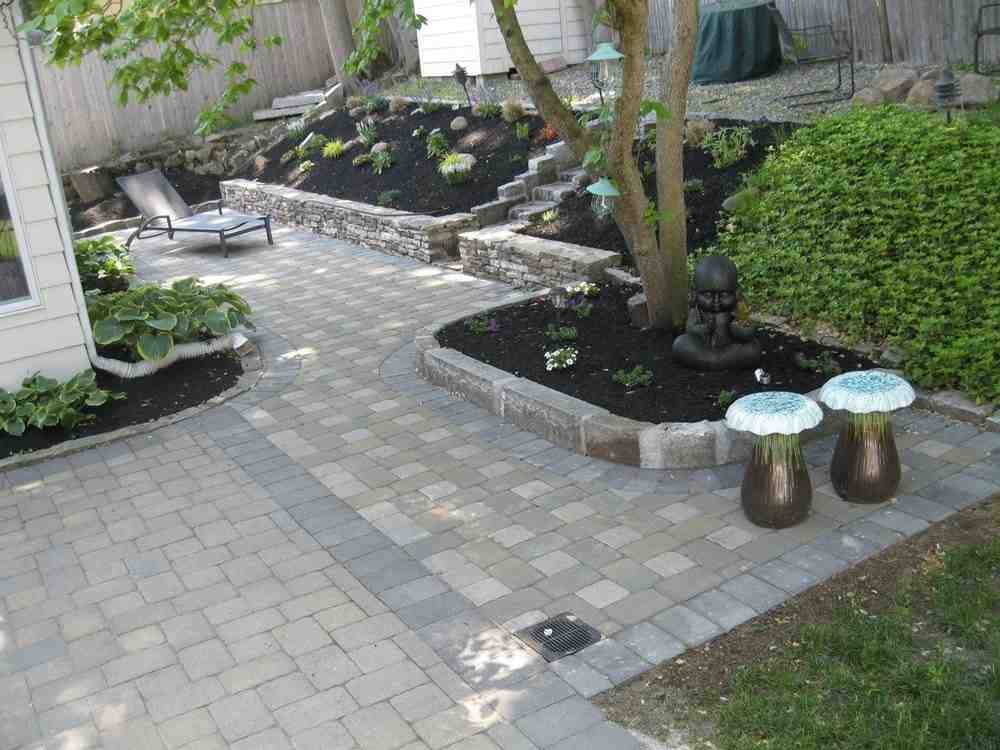
For homeowners in towns like Lexington or Winchester where yards may have varying elevations, a multi-level patio is a fantastic solution. Building “up” with retaining walls and step treads allows you to create distinct zones. You might have a high-level dining area that leads down to a cozy fire pit lounge. This not only solves slope issues but also adds incredible architectural interest.
Color palettes also play a major role in the vibe of your space. While gray and beige remain classics, earth-inspired palettes are currently trending for their ability to create a serene, grounded atmosphere. Interestingly, green is a dominant color in patio designs, appearing in over 91,000 ideas on Houzz, often through the integration of lush landscaping and biophilic design. Biophilic design—the practice of connecting human spaces to the natural world—can be achieved by using natural stone pavers and surrounding the area with native Massachusetts plants like wild geraniums.
Material Selection for Backyard Patio Ideas
The foundation of any great patio is the material. In New England, your choice needs to be as tough as it is beautiful to survive our harsh winters.
- Natural Stone: Materials like bluestone and slate are highly favored in the Northeast. They offer a timeless, high-end look and are incredibly sturdy.
- Concrete Pavers: These are a modern favorite because they come in an endless variety of colors, textures, and sizes. They are engineered to withstand freeze-thaw cycles and often feature non-slip surfaces, which is a major safety plus.
- Brick: For a traditional home in Concord or Andover, nothing beats the classic look of brick. Whether laid in a herringbone pattern or a simple running bond, brick adds warmth and historical charm.
| Material | Durability | Maintenance | Relative Cost |
|---|---|---|---|
| Poured Concrete | Medium | Low | Low |
| Concrete Pavers | High | Medium (Sealing) | Medium |
| Natural Stone | Very High | Low | High |
| Brick | High | Medium | Medium |
Choosing the right material involves balancing your budget with your long-term goals. While it might be tempting to go for the cheapest option, the cost of the pavers themselves typically only accounts for about 20% of the total project budget. Investing in higher-quality materials now can save you from costly repairs later. For more detailed guidance, check out our guide on choosing the perfect flooring material for your outdoor patio.
Popular Amenities for Backyard Patio Ideas
Once the foundation is set, it’s time to add the features that make your patio a destination.
Fire Pits and Fireplaces
A fire pit is one of the most popular backyard patio ideas, appearing in over 41,000 designs on Houzz. It creates a natural focal point and extends the usability of your patio into the chilly Massachusetts autumn. Whether you prefer a rustic stone ring or a sleek, modern gas fire table, the warmth of a fire invites long conversations. For those looking for something more substantial, a chimney fireplace adds a touch of luxury and can even feature a built-in TV for outdoor movie nights. You can find more info about fire pits here.
Outdoor Kitchens and Grilling Stations
If you love to host, an outdoor kitchen is a game-changer. This can range from a simple built-in grill island to a full culinary setup with a sink, refrigerator, and bar seating. Using modular systems like U-Cara allows for custom features that match your pavers perfectly.
Water Features and Privacy
A backyard waterfall or a small pond can add a sense of tranquility to your space. The sound of running water helps mask neighborhood noise, turning your patio into a private sanctuary. To further enhance this feeling of seclusion, consider vertical elements. Incorporating natural privacy screens, such as a row of Arborvitae or a custom-built trellis with climbing vines, can make your patio feel like a hidden oasis. Vertical elements like stone “seat walls” provide both extra seating and a clear boundary for your outdoor room.
Adding Shade and Stylish Decor
In the height of summer, shade is essential. Over 42,000 patio ideas on Houzz include a roof extension, but there are many other ways to find cover:
- Pergolas: These structures offer an elegant way to provide shade without blocking airflow. They are perfect for defining a dining area or a poolside lounge.
- Awnings and Umbrellas: For a more flexible solution, retractable awnings or high-quality patio umbrellas provide shade exactly where you need it.
- Outdoor Rugs: Don’t underestimate the power of a rug to “tie the room together.” A bold print or a natural jute rug defines the space and adds warmth underfoot.
- Seating Arrangements: Follow the “eight-foot rule”—keep seats facing each other and no more than eight feet apart to facilitate easy conversation. Natural materials like teak, rattan, and wicker are not only stylish but also durable enough to handle the elements.
- Lighting: Outdoor lighting is crucial for both safety and ambiance. Layer your lighting by combining string lights for a festive feel, lanterns for a soft glow, and low-voltage landscape lighting to highlight pathways and stonework.
Planning, Installation, and Maintenance
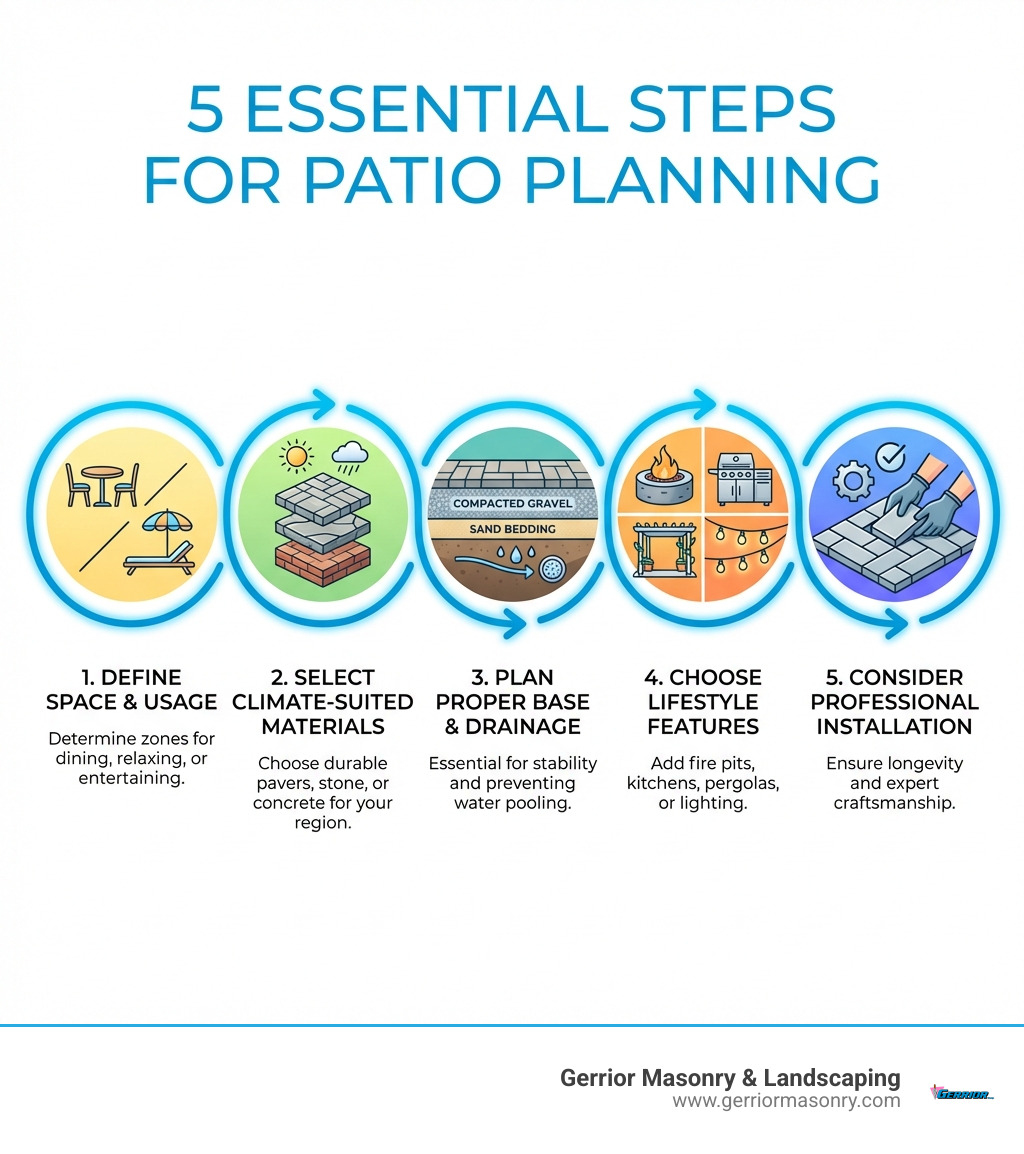
A beautiful patio starts with a solid plan. Before you dig, you need to consider the technical aspects that ensure your investment lasts for decades.
Site Preparation and Drainage
One of the biggest mistakes in DIY patio projects is laying pavers directly on dirt. Don’t do it! A professional installation requires a carefully excavated site, a compacted gravel base, and a layer of bedding sand. The excavation process is the most labor-intensive part; we typically excavate between 7 to 12 inches to allow for a proper sub-base that distributes weight evenly.
In Massachusetts, drainage is paramount. Our heavy rains and snowmelt can cause water to pool or pavers to shift if the ground isn’t properly graded. We often recommend permeable pavers for flood-prone areas. These allow rainwater to drain directly into the subsoil, reducing runoff and preventing ice patches from forming in the winter.
Edge Restraints and Sub-Base
To keep your pavers from “creeping” or shifting outward over time, edge restraints are essential. These are typically hidden borders made of plastic, metal, or concrete that secure the perimeter of your patio floor. Furthermore, the longevity of your patio depends on the sub-base. We use a crushed stone aggregate that packs into a dense layer, providing the structural strength needed to support heavy pavers and appliances without settling over time. This foundation is what prevents the “dipping” often seen in amateur installations.
Professional Installation and Cost Considerations
While there are many DIY backyard patio ideas, professional installation ensures that the structural integrity of your patio matches its beauty. A skilled masonry team handles the heavy lifting—literally and figuratively—from excavation to the final sweep of joint sand.
When planning your budget, it helps to know the general market trends. Based on internet data, here is a breakdown of average costs for patio projects (note that high-end custom work can often exceed 3x the base average):
- Basic Poured Concrete: $10 – $45 per square foot.
- Standard Pavers or Brick: $20 – $90 per square foot.
- Natural Stone or Complex Multi-Level Designs: $40 – $180+ per square foot.
Note: These are average costs based on general internet sources and do not reflect actual Gerrior Masonry pricing. Every project is unique based on site conditions and material choices.
For a more accurate look at what your dream space might cost, you can explore patio installation services and request a personalized estimate.
Long-Term Care and Seasonal Upkeep
Once your patio is installed, a little maintenance goes a long way in preserving its beauty.
- Sealing: We generally recommend applying a sealer every three to five years. This protects the stone from acid erosion, salt damage, and pesky algae growth. It also makes cleaning up spills (like that dropped burger at your BBQ) much easier.
- Joint Sand: Over time, the sand between your pavers may wash away. Re-filling these joints with polymeric sand helps prevent weed growth and keeps the pavers locked in place.
- Efflorescence: You might notice a white, powdery substance on new pavers. This is called efflorescence—a natural occurrence where salt migrates to the surface. It usually fades on its own, but can be cleaned with a specialized remover.
- Winter Protection: Avoid using harsh rock salt on your pavers, as it can pit and damage the surface. Opt for calcium chloride or sand for traction instead. For commercial properties, professional snow removal is the best way to ensure your hardscaping stays protected throughout the season.
You can find more detailed tips in our paver patio care handbook.
Conclusion and Next Steps
Your backyard has the potential to be so much more than just a patch of grass. With the right backyard patio ideas, you can create a sanctuary that adds significant value to your home and your quality of life. Whether it’s a simple stone path leading to a hidden bench or a grand multi-level entertaining space with a full kitchen, the possibilities are limited only by your imagination.
At Gerrior Masonry & Landscaping, we bring over 30 years of experience to every project. Our skilled team, overseen directly by the owner, is dedicated to providing the high-quality craftsmanship that Massachusetts homeowners expect. From the initial design to the final stone, we ensure your patio is built to last.
If you’re ready to stop dreaming and start building, our patio contractors are here to help. We can walk you through material selection, layout options, and all the finishing touches that will make your backyard the envy of the neighborhood. Contact us today to bring your backyard patio ideas to life!
