On this page
- Identify the surface and the product
- An order of operations for each storm
- Keep salt away from plants, metal and drains
- Sand gives traction, not melting
- Do not blame every winter problem on salt
- Protect drainage through the freeze-thaw cycle
- Do a spring check before cleaning or sealing
- When to call a mason
- Common questions
Ice melt on pavers is safe only when the product suits the paver. There is no deicer that is right for every patio, walkway or driveway. The safe choice depends on who made the pavers or stone, what the deicer contains, the condition of the surface and how much you put down.
The practical plan for a Massachusetts winter is short: know your surface, read the paver maker's care guidance and the deicer label, clear snow early, use as little product as the job needs, and inspect the surface after the thaw. The rest of this guide explains each step.
Identify the surface and the product
Start with your installation paperwork, a leftover paver or the installer's invoice. Find out whether the surface is a concrete paver, clay brick, natural stone such as bluestone or granite, or poured concrete, and who made it. Then read the deicer bag for its active ingredients and application rate. Color alone does not tell you what a paver is made of.
Manufacturer guidance differs. Unilock's winter paver maintenance guidance says to avoid magnesium-based deicers on its pavers, allows sodium chloride (rock salt) used sparingly, notes that rock salt stops melting ice below about 16°F, and recommends a plastic shovel or plastic blade covers because metal blades can scratch pavers and leave rust marks. Unilock also cautions that rock salt can damage nearby grass, plants and metal. Those are Unilock's instructions for Unilock pavers. If your pavers came from Techo-Bloc or another maker, follow that maker's care guide.
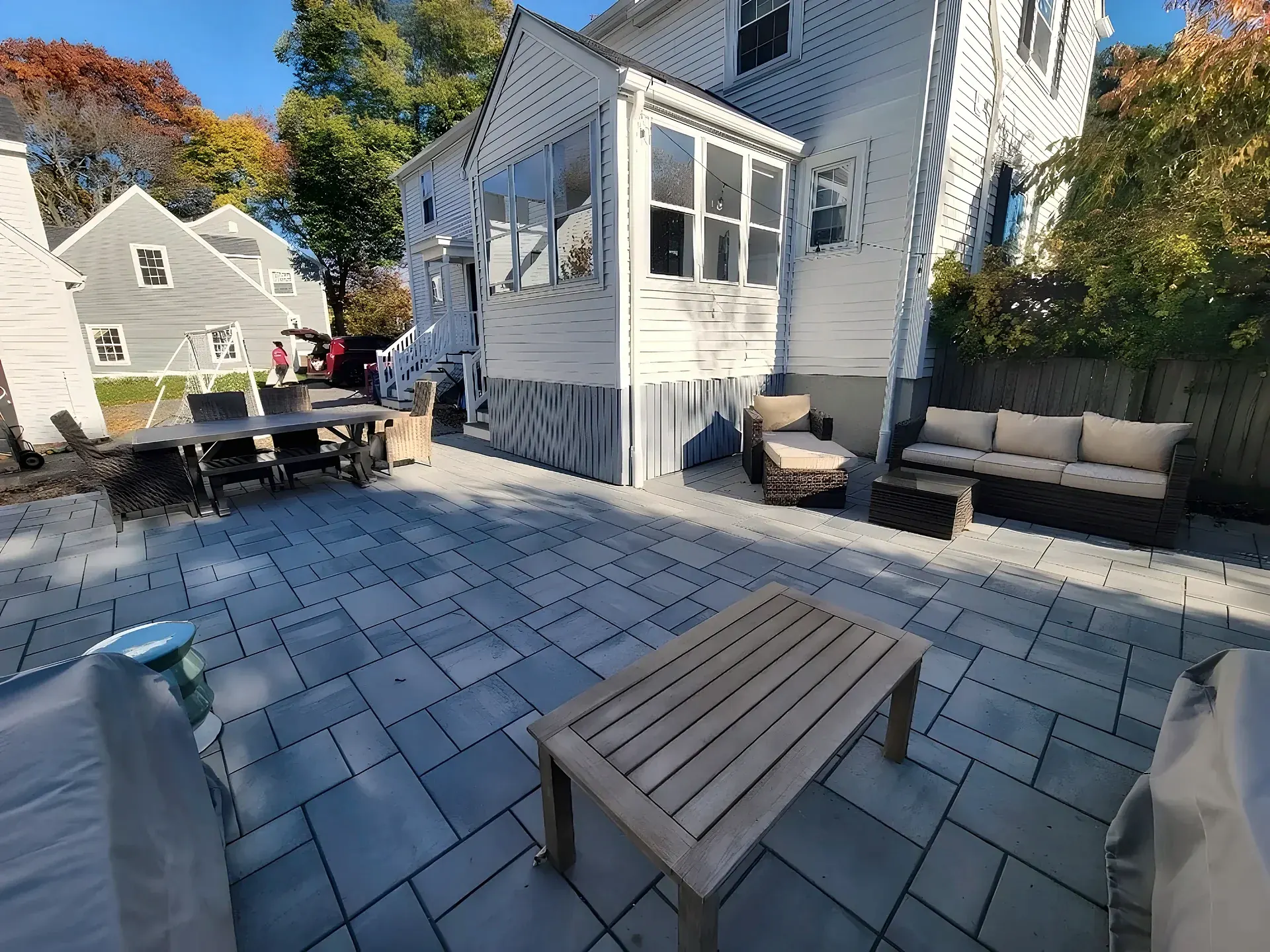
Gerrior installs Unilock and Techo-Bloc pavers, so when we build a patio or walkway we can tell you exactly which product is on the ground and where to find its care guidance.

An order of operations for each storm
- Clear snow before it gets packed down. A thin layer comes off easily and needs less chemical help.
- Use surface-friendly tools. A plastic shovel or a covered blade reduces scratching. Do not force a blade across a raised paver edge.
- Treat only what is still slippery. Spread the smallest amount the label allows on the icy spots, not the whole patio.
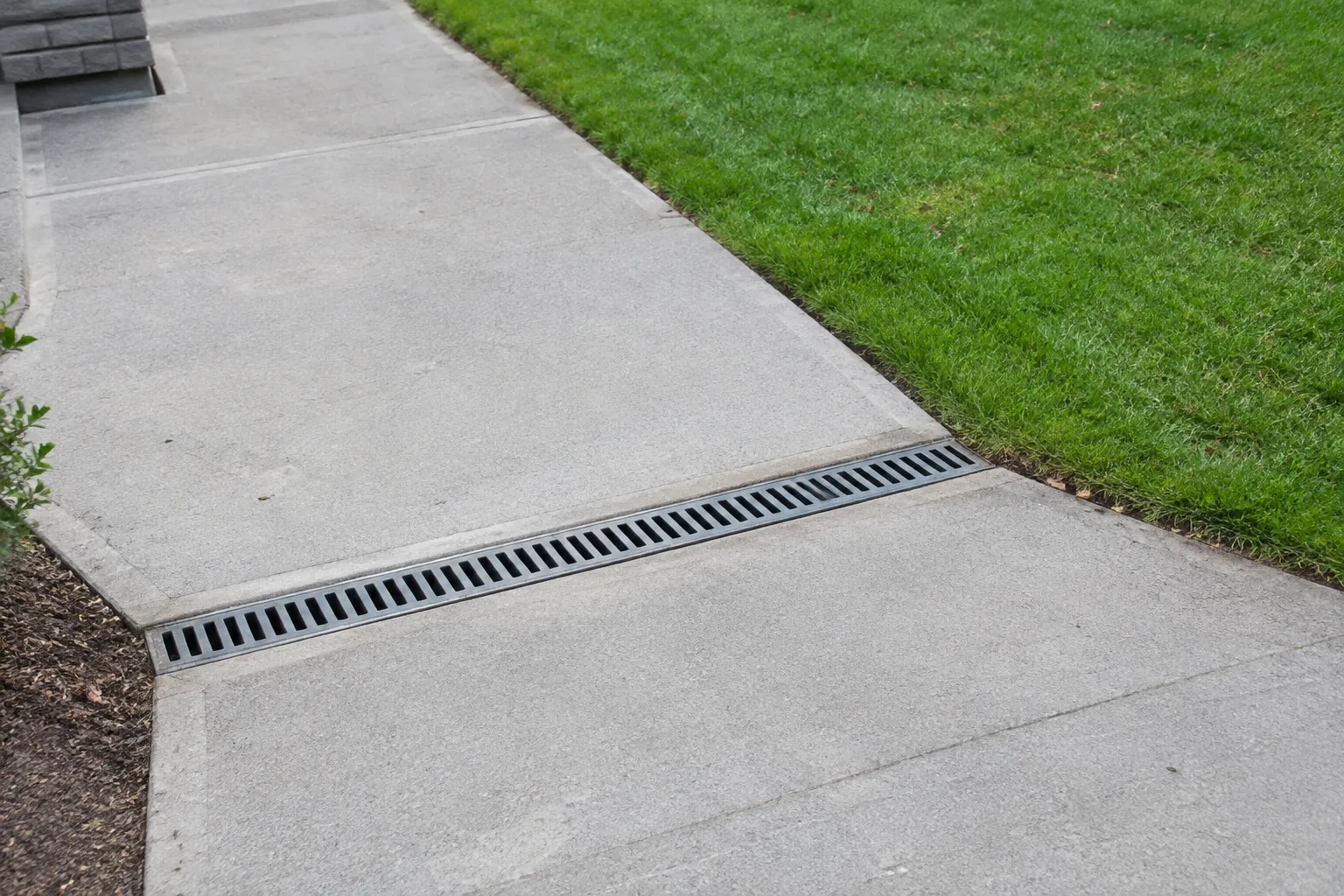
- Keep meltwater moving. Clear drains, outlets and the low edge of the surface so water does not pool and refreeze.
- Sweep up leftovers. When conditions allow, sweep up excess granules and sand instead of washing them into beds or drains.
More product does not melt ice faster, and mixing products is a bad idea. The label lists temperature limits and surface warnings for a reason.
Keep salt away from plants, metal and drains
A deicer that is fine on your pavers can still hurt the planting bed or the metal railing beside them. The Massachusetts Office of Coastal Zone Management recommends shoveling promptly and keeping removed snow off storm drains to reduce ice buildup and polluted runoff. Pile snow where meltwater drains away from the house foundation, neighbors, the street and walking routes, and keep salty snow off shrubs and metal fixtures.
Sand gives traction, not melting
The Minnesota Pollution Control Agency points out that sand provides traction but does not melt ice. It is a reasonable choice on a step or walk where you are unsure what deicer the surface can take. Check that a salt-and-sand blend is not mostly salt, and sweep sand up after the thaw so it does not wash into drains.
Do not blame every winter problem on salt
A white film can be leftover deicer or efflorescence, the natural salts that come out of concrete and masonry as water moves through them. Surface flaking can come from the paver, from saturation, or from an incompatible product. A paver that rocks or sinks almost always points to the base, drainage, edge restraint or joints, not to cleaning.
Take photos before you clean anything, note where snow was piled, and watch the surface during a thaw. If joint sand washes out or a low spot stays wet, our guide to paver joint sand failure explains when re-sanding is enough and when the base or drainage needs work.
Protect drainage through the freeze-thaw cycle
Snow piles change where water goes. A pile across a drain or along the low edge of a patio sends meltwater back over the pavers, and it refreezes there night after night. Before the first storm, find your drains and outlets, clear leaves, and mark edges that will disappear under snow. Keep downspouts from discharging onto walks. After a big thaw, look for moved joint sand, rocking pavers, new dips and edges that have shifted.
Do a spring check before cleaning or sealing
When the surface is thawed and dry, walk it in both directions and look for:
- Pavers that move, tilt or hold water
- Open joints, or joint sand spread across the surface
- New chips, flaking, stains or white deposits that keep coming back
- Loose edge restraints
- Drains or outlets that stay slow after you clear them
Sort out the cause before pressure washing, adding joint sand or sealing. Cleaning a low or loose area does not fix the base under it.

When to call a mason
Recurring puddles, pavers that rock, sunken sections, heaved steps and edges that keep moving are repair jobs, not winter care. Gerrior Masonry & Landscape Construction, a family-owned company in Woburn with over 30 years in masonry and hardscaping, repairs and rebuilds paver patios, walkways, driveways and steps. See our hardscaping services. If you manage a commercial property, our commercial snow removal team has handled snow and ice on commercial lots for over 30 years.
Common questions
Can I use rock salt on pavers?
Some manufacturers allow it. Unilock, for example, permits sodium chloride on its pavers used sparingly, and says to avoid magnesium-based products. Check the guidance for your brand of paver.
Is calcium chloride safe for pavers?
It depends on the paver maker. Look for calcium chloride in your manufacturer's care guide and on the deicer label before using it. If the guide does not mention it, ask the manufacturer or your installer.
What ice melt is pet-safe on pavers?
"Pet-safe" on a bag is a marketing claim about animals, not a promise about your pavers. Check the active ingredients against your paver maker's guidance, and use sand for traction where you are unsure.
Should I seal pavers to protect them from salt?
Not every paver needs sealing. Follow the manufacturer's care guide, and fix any base or drainage problems before you seal.
If winter left your pavers loose, sunken or holding water, call Gerrior at (781) 933-4157 or request a free estimate. Photos of the problem areas help us see what is going on before we visit.

A family-owned masonry and hardscape company at 245 Salem St, Woburn, MA, in business for over 30 years. See our hardscaping work.