
Why Putting in a Brick Walkway Is One of the Best Weekend Projects You Can Do
Putting in a brick walkway is a straightforward DIY project that can transform a muddy yard trail into a durable, attractive path in a single weekend.
Here’s a quick overview of the core steps:
- Plan your path – Choose width, shape, and brick pattern
- Call 811 – Check for underground utility lines before digging
- Excavate – Dig 6-8 inches deep along the path
- Lay the base – Add 4 inches of compacted gravel, then 1 inch of sand
- Lay the bricks – Set bricks in your chosen pattern, tap level with a mallet
- Add edging and polymeric sand – Lock everything in place
- Compact and finish – Use a plate compactor, mist the sand to activate it
A typical 20-foot walkway costs $200-$900 in materials and takes 8-10 hours to complete. You’ll need roughly 4.5 to 5 bricks per square foot.
Brick is a popular choice because it’s durable, ages beautifully, and won’t crack the way poured concrete can. Unlike gravel, it stays put underfoot and handles heavy foot traffic with ease.
I’m Joe Gerrior, owner of Gerrior Masonry & Landscape Construction Corp., with over 34 years of experience in masonry and hardscaping in Massachusetts — including putting in a brick walkway for dozens of residential and commercial properties. In this guide, I’ll walk you through everything you need to know to get it done right the first time.

Putting in a brick walkway terms you need:
Planning and Preparing for Putting in a Brick Walkway
Before you ever pick up a shovel, you need a solid plan. In our three decades of working across Middlesex and Essex County, we’ve seen that the best walkways are the ones that were visualized before they were built. A well-thought-out path doesn’t just look better; it functions better and lasts longer against the elements.
Start by considering the purpose of the path. Is this a main entrance walkway? If so, it should be at least 3 to 4 feet wide to allow two people to walk side-by-side comfortably. For a simple garden path that meanders through your flower beds in Lexington or Winchester, 2 to 3 feet is usually sufficient. You should also consider the soil type in your yard. In many parts of Massachusetts, we deal with heavy clay or rocky ‘glacial till.’ Clay holds onto moisture, which means you might need a slightly deeper gravel base—up to 6 inches—to ensure proper drainage and prevent the bricks from shifting during the winter freeze-thaw cycles.
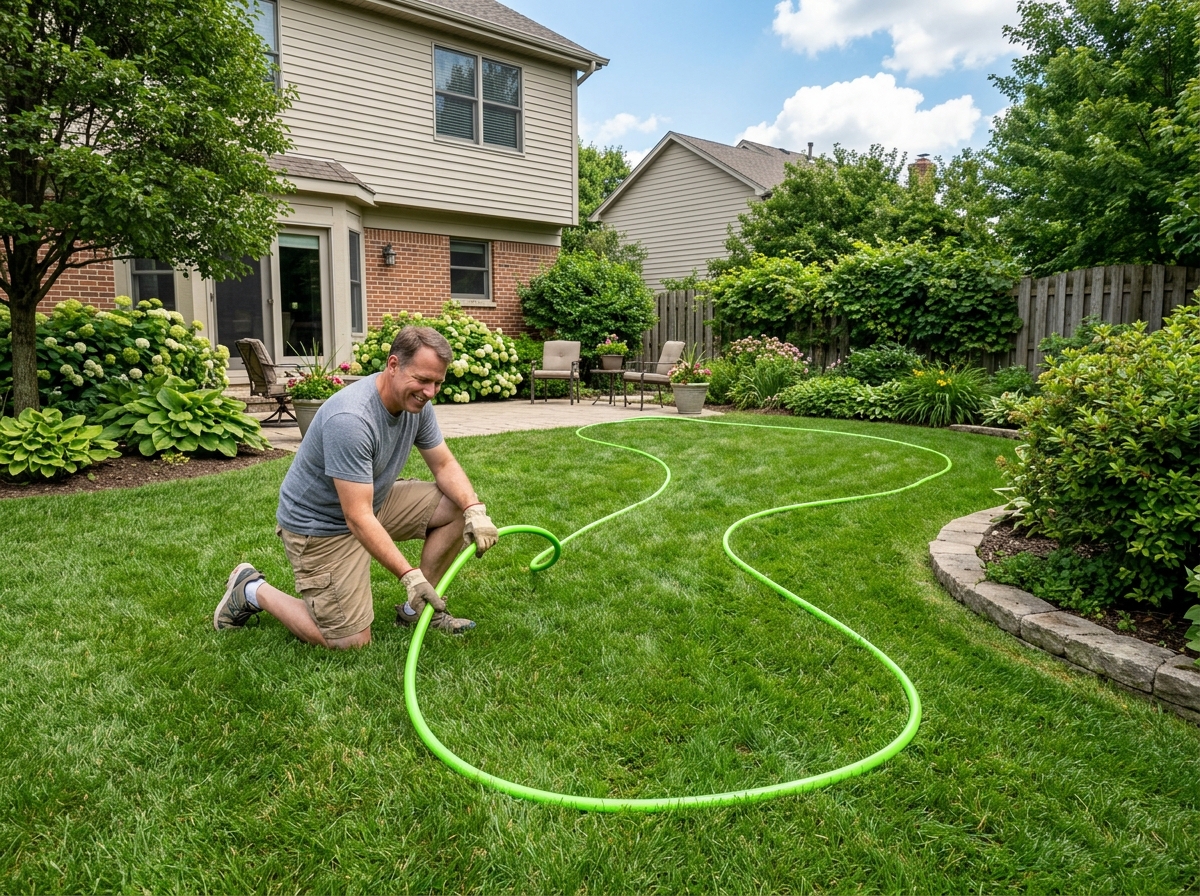
To visualize the shape, we recommend using garden hoses or long ropes. Lay them out on the ground to define the edges. This allows you to adjust the curves until they look “just right” to your eye. If you prefer a straight path, use wooden stakes and mason’s string to keep your lines perfectly parallel. Take the time to walk the proposed route several times to ensure the flow feels natural and doesn’t cut off important access points to your lawn or driveway.
The Golden Rule: Call 811
In Massachusetts, you must call 811 before you dig. Whether you are in Woburn or Beverly, there could be shallow utility lines, irrigation pipes, or cable wires right where you plan to excavate. It’s a free service, and it prevents a “weekend project” from turning into a “neighborhood power outage.” When you call, technicians will mark your yard with color-coded paint: red for electric, yellow for gas, and blue for water. Never dig within 24 inches of these marks without extreme caution.
| Material | Durability | Maintenance | DIY Friendliness | Cost |
|---|---|---|---|---|
| Brick | High | Low | High | Moderate |
| Concrete | Medium | Moderate (Cracks) | Low | High |
| Gravel | Low | High (Shifts) | Very High | Low |
Essential Materials and Tools for Putting in a Brick Walkway
To ensure your walkway lasts through New England’s harsh freeze-thaw cycles, you cannot cut corners on materials.
- Paver Bricks: Do not use regular “wall bricks.” Wall bricks are porous and will crack when the ground freezes. You need paving bricks or brick pavers. Look for “Severe Weather” (SW) rated bricks. You’ll need about 5 bricks per square foot.
- Crushed Gravel: This is your foundation. We recommend “3/4-inch minus” crushed stone. You’ll need roughly 1 ton per 100 square feet. This material packs down into a solid, stable base while still allowing water to percolate through.
- Coarse Sand: This provides the “bed” for the bricks. Plan on 1 cubic yard for every 80 square feet. Use concrete sand rather than play sand, as the sharper edges of concrete sand lock together better.
- Polymeric Sand: This is a special sand that contains a binding agent. Once misted with water, it hardens like mortar but stays flexible enough to prevent weeds and shifting.
- Landscape Fabric: A heavy-duty stabilization fabric prevents the gravel from sinking into the soil over time.
- Plate Compactor: You can rent this at most hardware stores in places like Burlington or Danvers. It is essential for a professional finish.
- Masonry Saw or Angle Grinder: If your path has curves, you will need to cut bricks. A wet saw is the cleanest and safest option.
For more inspiration on the artistry of path building, check out this guide on How to Build a Brick Path – Fine Gardening.
Budget, Timeline, and Design Patterns
Estimated Budget: Based on internet data, homeowners can expect to spend between $200 and $2,700 for a 20-foot walkway. The lower end reflects a basic DIY sand-set path, while the higher end accounts for high-end pavers, professional tool rentals, and potentially a mortared base. Please note that these are average costs based on internet data and not actual costs for Gerrior Masonry services.
Timeline: Plan for 8-10 hours of active labor for a 20-foot path. This is a perfect project to start on a Saturday morning and finish by Sunday afternoon. If you have a helper, you can significantly speed up the brick-laying phase.
Design Patterns: The pattern you choose dictates the “feel” of the walkway and the difficulty of the installation.
- Running Bond: Bricks are laid end-to-end in rows, with the joints offset by half a brick. This is the easiest for beginners and looks very professional.
- Herringbone: Bricks are laid at 45 or 90-degree angles to each other. It’s incredibly strong and handles heavy loads well, but it requires more cutting at the edges. This is the preferred pattern for driveways or high-traffic areas.
- Basketweave: Bricks are laid in pairs (two horizontal, two vertical). It’s a classic look that requires very little cutting if your path width is an exact multiple of your brick length.
Step-by-Step Guide to Installing Your Path
Now it’s time to get to work. The longevity of your path depends entirely on the base preparation. If the base is weak, the bricks will eventually dip and heave, creating a tripping hazard.
Step 1: Excavation Dig out the area defined by your hoses or strings. For a standard walkway in Middlesex County, you should excavate 6 to 8 inches deep. This allows for 4 inches of gravel, 1 inch of sand, and the thickness of the brick itself. Make sure the trench is about 6 inches wider than the path on both sides to provide room for your edging. During excavation, you may encounter large tree roots. Never cut a root larger than 2 inches in diameter without consulting an arborist, as it could destabilize the tree. Instead, try to gently curve your path around the root system.
Step 2: Drainage Slope Water is the enemy of masonry. Your walkway must slope away from your house or any permanent structures. A good rule of thumb is a 1/4-inch drop for every foot of width. This ensures that heavy rain runs off the surface rather than pooling and seeping into your foundation. If your yard has major drainage issues, you might want to look into drainage systems and dry wells to prevent washouts.
Step 3: The Gravel Base Lay down your landscape fabric first. This prevents the stone from mixing with the dirt. Add your crushed gravel in 2-inch increments. After each layer, use the plate compactor. It helps to lightly spray the stone with water during this process; the moisture ‘lubricates’ the particles, allowing them to slide into a tighter configuration. You’ll know the base is ready when the sound of the compactor changes from a dull thud to a sharp “rap,” indicating the stone is fully seated.
Step 4: The Sand Bed Once the gravel is rock-hard and level, lay down two 1-inch thick pipes parallel to each other. Pour sand between them and use a straight board (a “screed”) to slide across the pipes. This creates a perfectly flat 1-inch sand bed. Do not walk on the sand once it is leveled! If you accidentally step in it, you must re-screed that section to ensure the bricks sit perfectly flat.
Laying the Bricks and Cutting Edges
Start laying your bricks at a straight edge, such as a driveway or a doorstep. If you are doing a running bond pattern, simply place the bricks side-by-side, keeping the joints as tight as possible. Use a rubber mallet to gently tap each brick into the sand. Use a level frequently to ensure you aren’t creating any “trippers” (bricks that stick up higher than the others).
If your path curves, you will eventually reach a point where a full brick won’t fit.
- Safety First: When using a masonry saw, always wear safety goggles and ear protection. If using a wet saw, ensure the water flow is consistent to keep dust down.
- The Cut: Mark the brick with a pencil, place it on the saw, and make a slow, steady cut. Take your time; a clean cut makes the difference between a DIY look and a professional finish.
For more professional tips on patterns and alignment, see our detailed guide on brick-paver-installation.
Finishing Touches: Edging and Polymeric Sand
Without edging, your walkway will eventually “spread” and the bricks will shift. We recommend using professional-grade plastic or aluminum paver edging. Place it tightly against the bricks and drive 10-inch landscape spikes into the ground every 12 inches. This creates a rigid frame that holds the entire assembly together.
The Magic of Polymeric Sand: Once the edging is secure, it’s time to fill the joints. Timing is everything here; check the forecast to ensure you have at least 24 hours of dry weather ahead.
- Ensure the bricks are completely dry. If they are damp, the sand will stick to the surface and stain.
- Pour polymeric sand over the walkway.
- Use a push broom to sweep the sand into the joints. Sweep diagonally to ensure the cracks are filled to the top.
- Run the plate compactor over the bricks one last time (with a protective mat or piece of carpet underneath to prevent scratching the bricks). This vibrates the sand deep into the joints, eliminating air pockets.
- Sweep off all excess sand from the surface. This is critical—any sand left on top will stick to the bricks forever once wet.
- Set your hose to a light “mist” and dampen the walkway. Do not soak it, as you don’t want to wash the sand out. The water activates the polymers, turning the sand into a flexible “glue.”
For a deeper dive into the nuances of this process, read our article on how to build a paver walkway.
Long-Term Maintenance and Cold Climate Tips for Putting in a Brick Walkway
In Massachusetts towns like Andover, North Reading, and Lynnfield, the winter weather is the ultimate test for any walkway. The constant expansion and contraction of the ground can ruin a poorly built path in a single season.
Frost Heave Prevention: The reason we insist on a 4-to-6-inch compacted gravel base is to prevent “frost heave.” When the water in the soil freezes, it expands. A thick gravel base allows that water to drain away before it can freeze and push your bricks out of alignment. This is why the quality of your base material is more important than the bricks themselves.
Maintenance Checklist:
- Weed Prevention: If you used polymeric sand, weeds shouldn’t be an issue for several years. If you see a weed, pull it immediately to prevent the roots from breaking the polymer bond.
- Resealing: Every 2-3 years, you may want to apply a paver sealer. This protects the color of the bricks from UV fading and adds another layer of protection against salt and ice-melt chemicals.
- Settling: If a specific area settles over time (common in very soft soils), you can simply pry up the bricks in that section, add a bit more sand, level it, and replace the bricks. That’s the beauty of a sand-set walkway!
If putting in a brick walkway feels like more heavy lifting than you bargained for, we are here to help. Our team has the equipment and experience to handle everything from excavation to the final sweep. You can learn more about our walkway installation services to see how we can bring your vision to life.
Whether you choose the DIY route or decide to hire a professional, a brick walkway is a timeless addition that adds value and charm to any home.
Gerrior Masonry & Landscape Construction is based in Woburn, MA, and services Middlesex and Essex County, Massachusetts.
