
Brick Patio Installation: 5 Easy Steps for Stunning Results
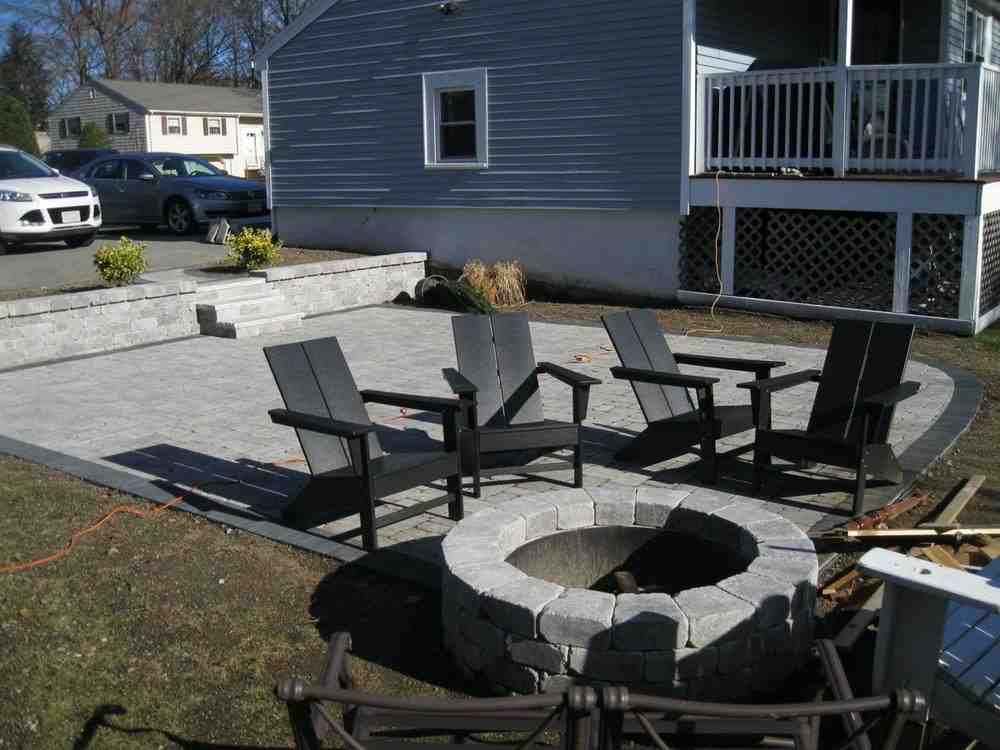
Brick patio installation is a fantastic way to improve your home’s outdoor space, turning it into a haven for relaxation and entertainment. If you’re considering a DIY approach, here’s a quick overview to get you started:
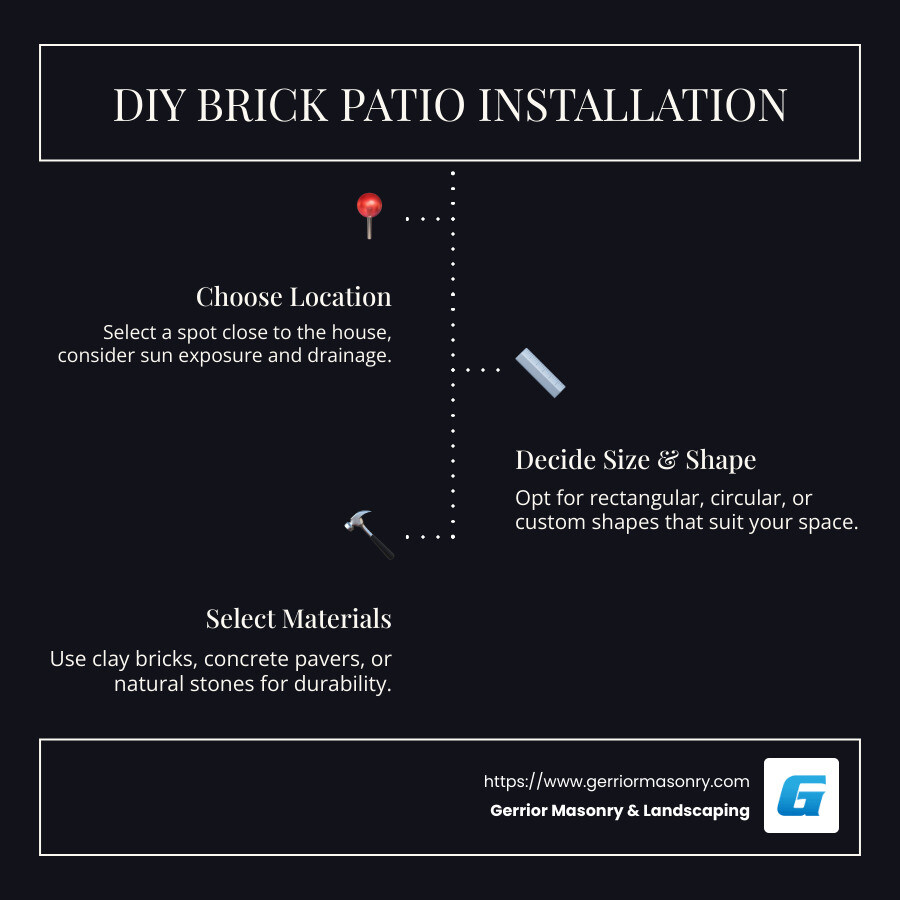
- Choose the location: Close to your house, considering sun exposure and drainage.
- Decide on size and shape: Rectangular, circular, or any shape you prefer.
- Select materials: Clay, concrete, or natural stone pavers.
- Prepare the site: Remove old materials and level the ground.
- Lay the bricks in a pattern: Running bond, herringbone, or basketweave.
A DIY brick patio offers a cost-effective solution for creating a personalized outdoor entertainment area. With the right materials and a bit of effort, you can craft a stunning patio that increases your home’s value and usability.
As Joe Gerrior, owner of Gerrior Masonry & Landscaping, I’ve overseen countless brick patio installation projects across Massachusetts. Our team is dedicated to delivering high-quality, aesthetic solutions for homeowners just like you.
Simple guide to brick patio installation:
– concrete patio installation contractors
– find contractors to install patio doors
– patio installation contractors
Planning Your Brick Patio Installation
When you’re planning a brick patio installation, it’s important to think about how the space will be used and what will work best for your home and lifestyle. Here’s how to get started:
Choosing the Right Location
First, pick the perfect spot for your patio. Ideally, this should be close to your house for easy access. But don’t just stop there. Consider these factors:
- Sun Exposure: Think about how much sun the area gets during the day. Do you want a sun-drenched spot or a shady retreat?
- Drainage Patterns: Pay attention to where water naturally flows in your yard. You want to avoid areas where water tends to pool.
- Privacy: Consider how visible the spot is from your neighbors’ yards. You might want some natural barriers for a more private setting.
Determining Size and Shape
Once you’ve chosen the location, decide on the size and shape of your patio. This is your chance to get creative:
- Rectangular: Simple and classic, a rectangular patio is easy to plan and build.
- Circular: A circular shape can create a cozy, intimate feel.
- Freeform: If you’re feeling adventurous, a freeform shape can add a unique touch to your backyard.
Selecting Materials and Patterns
The choice of materials and patterns will define the look and durability of your patio. Here are some options:
- Clay Bricks: These offer a traditional appearance and are known for their durability.
- Concrete Pavers: Versatile and available in many styles, these are a popular choice for modern patios.
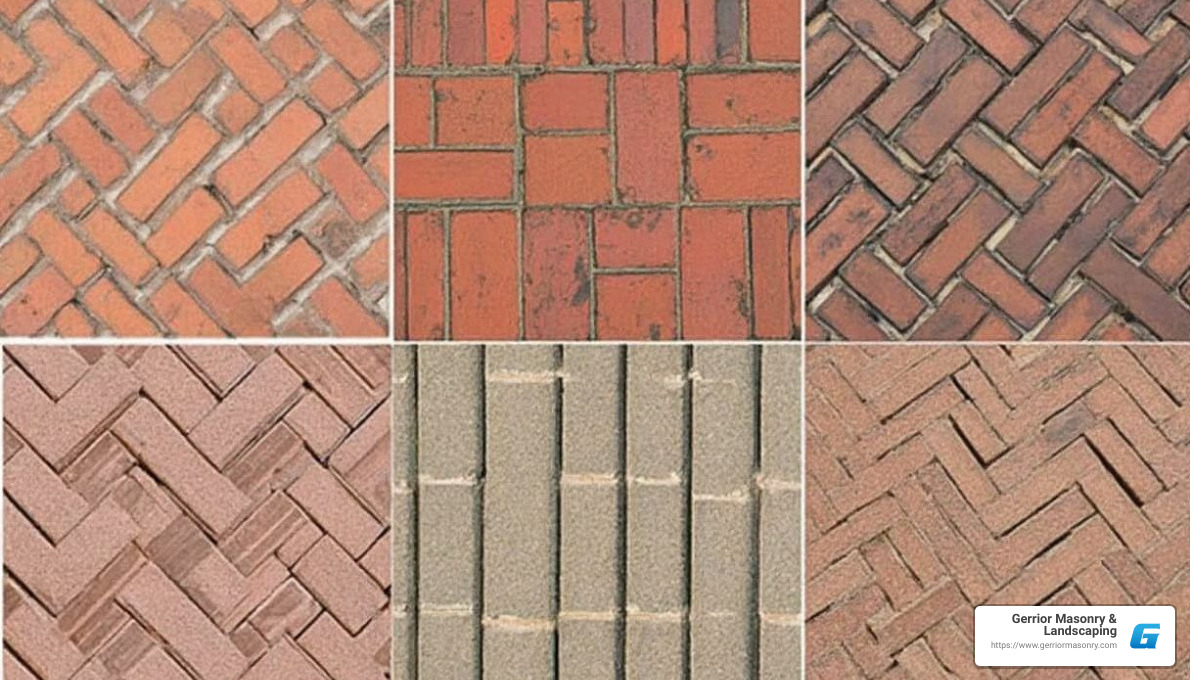
- Herringbone Pattern: This pattern is not only visually appealing but also great for stability, as the bricks lock together.
The pattern you choose can affect the amount of cutting and fitting required, which can impact both time and cost.
Planning your brick patio carefully ensures that it becomes a beautiful and functional part of your home, providing enjoyment for years to come.
Preparing the Ground for Brick Patio Installation
Before you start laying bricks, the groundwork must be solid. Proper site preparation is crucial to ensure your patio remains level and stable over time. Here’s how to get it right:
Removing Existing Materials
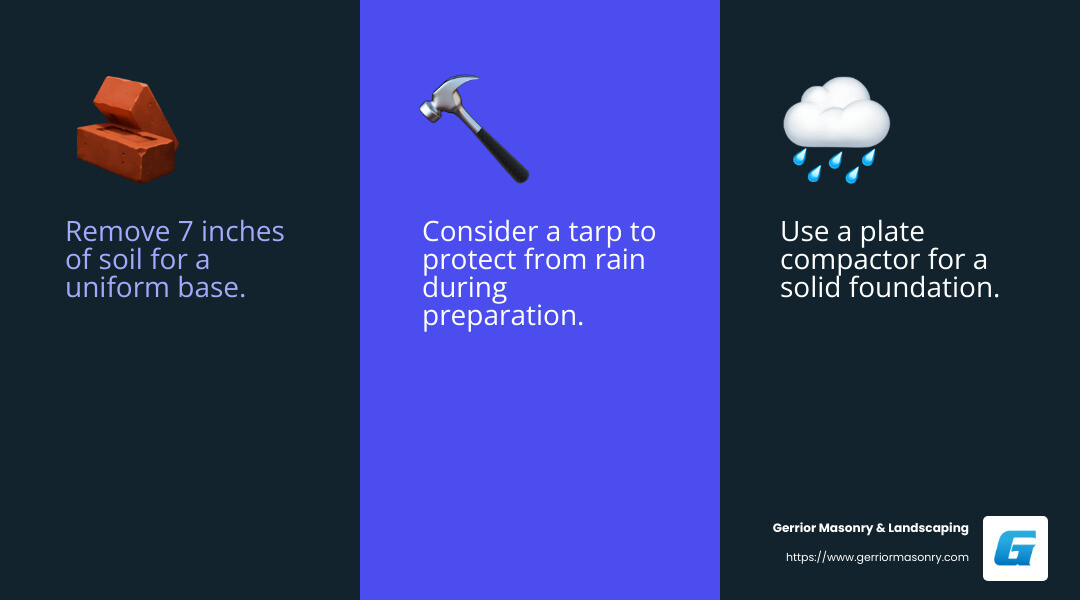
Begin by clearing the area where your patio will go. Remove any old structures, paving stones, or vegetation. You’ll also need to dig out about 7 inches of soil to create a uniform base. This step is essential because a consistent base prevents bricks from shifting or cracking.
Grading and Compacting the Soil
Once the area is cleared, it’s time to focus on creating a level surface. Use a gas-powered plate compactor to tamp down the soil. This machine is crucial for achieving a solid foundation. A compacted base helps prevent future settling and keeps your patio even. If rain is forecasted, consider setting up a tarp overhead to keep the area dry.
Installing a Base Layer
With the soil compacted, you can now install the base layer, which is vital for drainage and stability. Start by spreading a 2-inch layer of gravel over the compacted soil. This gravel layer acts as a drainage system, allowing water to flow away from the patio.
Next, lay down landscape fabric over the gravel. This fabric prevents weeds from growing through the patio and keeps the gravel separate from the sand layer.
Finally, add a 2-inch layer of sand on top of the fabric. Use a straight board to screed the sand, ensuring it is smooth and level. The sand layer provides a bed for the bricks, allowing for easy adjustments as you lay them.
By following these steps, you will create a robust and level foundation for your brick patio installation. This groundwork is key to a successful patio that will stand the test of time.
Next, we’ll dive into how to lay the brick pavers, starting with choosing the right pattern and ensuring each brick is perfectly placed.
Laying the Brick Pavers
Once your base is ready, it’s time to lay the bricks. This step is all about precision and pattern. Here’s how to do it right:
Starting the Pattern
Begin in one corner of your patio. This helps maintain a consistent pattern as you work across the area. Corner placement is crucial for keeping everything aligned.
For beginners, a running bond pattern is a great choice. It’s simple yet effective, with bricks laid in staggered joints. This pattern not only looks good but also adds strength to the patio.
Cutting Pavers to Fit
As you lay the bricks, you’ll likely encounter areas where full bricks don’t fit. This is where cutting comes in. Use a masonry saw to make precise cuts. Always wear safety gear like goggles and gloves to protect yourself.
Clean cuts are essential for a neat finish. Measure twice, cut once, and ensure each piece fits snugly.
Adjusting Pavers
As you lay each brick, check the level and alignment. Use a spirit level to ensure the surface is even. Adjust as needed to maintain a consistent pattern.
Regularly check the surface for any high or low spots. This will help you make adjustments on the go, ensuring your patio looks professional and polished.
By following these steps, you’ll create a beautiful and durable brick patio. Next, we’ll cover the finishing touches and how to maintain your new outdoor space.
Finishing Touches and Maintenance
Once your bricks are laid, it’s time to focus on the finishing touches and how to keep your patio looking great for years to come.
Installing Edging
Edging is crucial for keeping your brick patio intact. It prevents the bricks from shifting and maintains the shape of your patio. For this, use plastic edging. It’s durable and easy to install.
- Place the edging along the perimeter of the patio.
- Secure it with non-galvanized spikes. These spikes should be driven into the ground, ensuring the edging stays in place.
- This setup provides perimeter containment, keeping your bricks snug and secure.
Filling Joints with Sand
Next, you’ll need to fill the joints between the bricks. Polymeric sand is ideal for this task. It helps lock the pavers in place and prevents weed growth.
- Use a push broom to sweep the sand into the gaps.
- Make sure to fill all the spaces between the bricks. This step is essential for locking the pavers together.
- After sweeping, gently mist the patio with water to activate the sand. This process will harden the sand, securing the bricks even more.
Patio Maintenance and Care
To keep your patio in top shape, regular maintenance is key. Here’s how you can care for your new outdoor space:
Cleaning:
– Sweep the patio regularly to remove debris.
– For a deeper clean, use a garden hose or a pressure washer on a low setting.
Repairing:
– If any bricks become loose or sunken, fix them promptly. Lift the affected bricks, adjust the sand base, and reset them.
Sealing:
– To protect your bricks from the elements, apply a sealer every few years. This helps maintain their color and integrity.
By following these steps, your brick patio will remain a beautiful and functional part of your home for years to come. Now, let’s address some common questions about brick patio installation.
Frequently Asked Questions about Brick Patio Installation
Can I lay my own brick patio?
Absolutely! Building a DIY brick patio is a popular project for many homeowners. The sandset method is particularly beginner-friendly. This method involves laying bricks on a sand base without using mortar, making it simpler and more adaptable.
To ensure your patio stays in place, use polymeric sand. This special sand goes between the bricks and hardens when moistened, locking the pavers in place and preventing weed growth.
Is it cheaper to lay a brick or concrete patio?
When considering costs, a brick patio is often more budget-friendly for DIY enthusiasts. While concrete patios might initially seem cheaper due to lower material costs, they typically require professional installation. This drives up the overall expense.
In terms of beauty and design, brick patios offer a classic and timeless look. They allow for creative patterns and styles, which can improve your outdoor space. Brick patios also require less maintenance over time compared to concrete, as individual bricks can be easily replaced if damaged.
What is the best base for a brick patio?
A solid base is crucial for the longevity of your patio. The ideal base combines concrete sand and crushed stone. This combination provides excellent drainage and a stable foundation.
Following ICPI standards (Interlocking Concrete Pavement Institute) ensures your patio is built to last. These standards recommend a level base that is well-compacted. A properly prepared base prevents shifting and settling, keeping your patio looking great for years.
With these insights, you’re well-equipped to tackle your own brick patio installation. Whether you’re doing it yourself or hiring professionals, understanding these basics will help you make informed decisions.
Conclusion
At Gerrior Masonry & Landscaping, we pride ourselves on delivering high-quality results with our skilled team. With over 30 years of experience, we know how to turn your outdoor space into a stunning and functional area.
Our team specializes in brick patio installation, ensuring that every project is completed with precision and care. We understand the importance of a well-prepared base and the right materials to create a patio that stands the test of time. Our experts guide you through every step, from selecting the best location and materials to laying the final brick.
What sets us apart is our commitment to excellence. Our owner oversees each project, ensuring that the highest standards are met. We offer a robust satisfaction guarantee and comprehensive follow-up services, so your patio remains beautiful and functional for years.
Ready to transform your outdoor space with a new patio? Let us help you create a beautiful and durable patio that you’ll love. Visit our Patio Installation Services page to learn more about how we can make your dream patio a reality.
