
Build a Paver Patio: Top 3 Easy Steps for 2025
Transform Your Outdoor Space with a Paver Patio
If you want to build a paver patio, here’s what you need to know:
- Excavate 8-10 inches below your desired patio height
- Install landscape fabric to prevent weed growth
- Add 4-6 inches of gravel base and compact thoroughly
- Spread 1 inch of sand and level it using screeding pipes
- Lay pavers in your desired pattern, maintaining 1/8-1/4 inch gaps
- Install edge restraints to prevent shifting
- Sweep polymeric sand into joints and lightly mist with water
- Wait 24 hours before using your new patio
A DIY paver patio project typically costs $8-$20 per square foot, while professional installation ranges from $15-$30 per square foot. With proper installation, your paver patio can last 30-50 years with minimal maintenance.
Building a paver patio is one of the most rewarding outdoor projects you can tackle. It creates a durable, low-maintenance outdoor living space that adds both functionality and value to your property. Whether you’re looking to create a cozy corner for morning coffee or a spacious area for entertaining guests, a well-built paver patio provides the perfect foundation.
A properly installed paver patio can increase your home’s value by 8-10%, making it one of the most cost-effective outdoor home improvement projects you can undertake. The key to success lies in proper preparation and following a systematic approach to ensure your patio remains beautiful and functional for decades.
I’m Joe Gerrior, owner of Gerrior Masonry & Landscape Construction Corp., and I’ve been helping homeowners build a paver patio that stands the test of time for over 34 years in Massachusetts. My team and I bring extensive experience to every project, ensuring exceptional results that transform outdoor spaces into beautiful, functional extensions of your home.
Gerrior Masonry & Landscape Construction is based in Woburn, MA, and services Middlesex and Essex County, Massachusetts.
Build a paver patio terminology:
Planning Your Paver Patio Project
When it comes to creating the perfect paver patio, a little planning goes a long way. Here at Gerrior Masonry & Landscaping, we’ve seen how important proper planning is. Trust us, a well-thought-out plan can save you from many a DIY disaster.
Design Considerations
Before you grab a shovel, think about how you want to use your patio. Is it going to be your go-to spot for family dinners, a relaxing lounge area, or the ultimate entertainment space? The purpose will guide the size, shape, and features of your patio. Planning on a fire pit or outdoor kitchen? Make sure to include these in your design from the start.
Your patio should also complement your home’s style. For example, colonial homes often look stunning with traditional brick pavers, while a contemporary home might shine with sleek, large-format concrete pavers. Your patio is an extension of your home, deserving the same attention to detail.
Measuring the Area
Accurate measurement is the backbone of a successful paver patio. Grab some stakes and string to outline your space. Measure the length and width at several points, as yards can be tricky and not always perfectly rectangular. If your design is more geometric or irregular, break it down into smaller sections like rectangles and triangles to calculate each area. And don’t forget to add an extra 5-10% to account for any surprise cuts and waste.
For instance, if you’re planning a 20×20 foot patio, get ready to manage about 10 tons of material. That’s no small task, so prepare for some serious physical labor—or consider calling in the professionals to lend a hand.
Calculating Materials
With your measurements in hand, it’s time to crunch some numbers:
- Pavers: For a 400 sq ft patio using 1 sq ft pavers, you’d need about 400 pavers, plus an extra 10-15% for cuts.
- Gravel base: To establish a solid foundation, plan for about 133 cubic feet (or 5 cubic yards) of gravel.
- Sand: You’ll need around 1.7 cubic yards of sand to create that perfect base layer.
- Edge restraints: Measure your patio’s perimeter to figure out how much edging you’ll need.
- Polymeric sand: A 50-pound bag generally covers 75-100 square feet, depending on your paver and joint size.
Base materials compact by 15-20% during installation, so order a bit extra to keep everything snug.
For more tips on designing outdoor spaces, take a peek at our guide on How to Design a Paver Walkway.
In the end, a well-planned patio not only improves your home’s appeal but also makes the building process smoother and more enjoyable. If you’re in the Woburn, MA area, Gerrior Masonry & Landscape Construction is here to help with your paver patio dreams in Middlesex and Essex County, Massachusetts.
Essential Tools and Materials Needed
Building a paver patio is no small feat, but with the right tools and materials, you can achieve a professional result that you’ll be proud of. So, roll up those sleeves and let’s dive into what’s needed for this rewarding project.
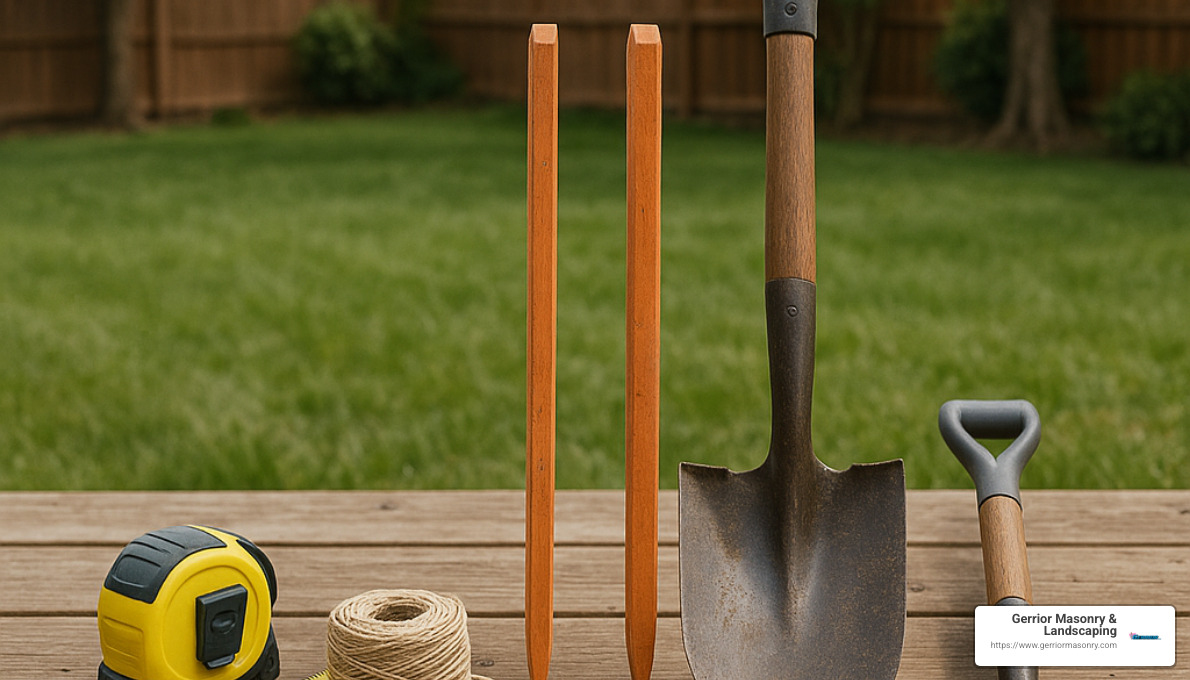
Essential Tools:
To start off, a tape measure will be your best friend for getting those perfect measurements. You’ll also need string and stakes to mark the perimeter of your future patio. A shovel and spade are essential for the excavation process, and a wheelbarrow will come in handy for transporting materials.
When it comes to the base layers, a plate compactor is what you’ll need for proper compaction, though a hand tamper might be necessary for those hard-to-reach spots the compactor can’t tackle. For leveling, both a 4-foot level and a line level are crucial. As you lay your pavers, a rubber mallet will help adjust them without causing damage.
Cutting pavers to fit your design might sound daunting, but a masonry saw or concrete saw, which you can easily rent, will make this task much simpler. Keep a garden hose or sprayer handy for wetting materials during compaction. Finally, a sturdy broom is essential for sweeping joint sand into the gaps.
And let’s not forget about safety! Gloves, eye protection, ear protection, and a dust mask are non-negotiable when you’re out there working hard. Someone once said, “It’s an incredible amount of physical labor,” and they weren’t kidding! The right tools make this labor-intensive job much more manageable.
Essential Materials:
Now, let’s talk materials. The stars of the show are your paver stones, which come in a delightful variety of materials, sizes, and colors. Beneath them, you’ll need a gravel base, typically made up of 3/4-inch crushed stone or limestone with fines. Landscape fabric is crucial for preventing bothersome weeds from sneaking in.
For the bedding layer, use leveling sand—clean and coarse is the way to go. To keep everything in place, sturdy edge restraints are a must. These can be plastic, metal, or concrete, and they work wonders to secure your patio’s perimeter.
Once your pavers are in place, polymeric sand fills in the joints, locking everything together. PVC pipes (1-inch diameter) will serve as your guides for screeding the sand. And don’t forget a 2×4 board is perfect for smoothing out that sand layer. Lastly, 10-inch galvanized spikes are essential for securing those plastic edgings.
For a typical 400 sq ft patio, the cost of materials alone can range from $3,200 to $8,000, depending on the quality and type of pavers you choose. These are average costs based on internet data and not actual costs for Gerrior Masonry services. Investing in quality materials, especially for the pavers, is a wise decision. One happy client shared, “I saved money on the base materials but splurged on beautiful travertine pavers—it was the best decision I made!”
At Gerrior Masonry & Landscaping, we believe in making your patio project as smooth as possible. We’re based in Woburn, MA, proudly serving Middlesex and Essex County, Massachusetts. So, if you’re ready to tackle your build a paver patio project, we’re here to support you every step of the way.
Preparing the Ground for Your Paver Patio
The foundation of your paver patio starts long before the first stone is set. At Gerrior Masonry & Landscaping, we’ve learned that proper ground preparation is crucial to the longevity and beauty of your patio. It’s where the magic begins, ensuring that all your hard work pays off in a solid, stunning outdoor space.
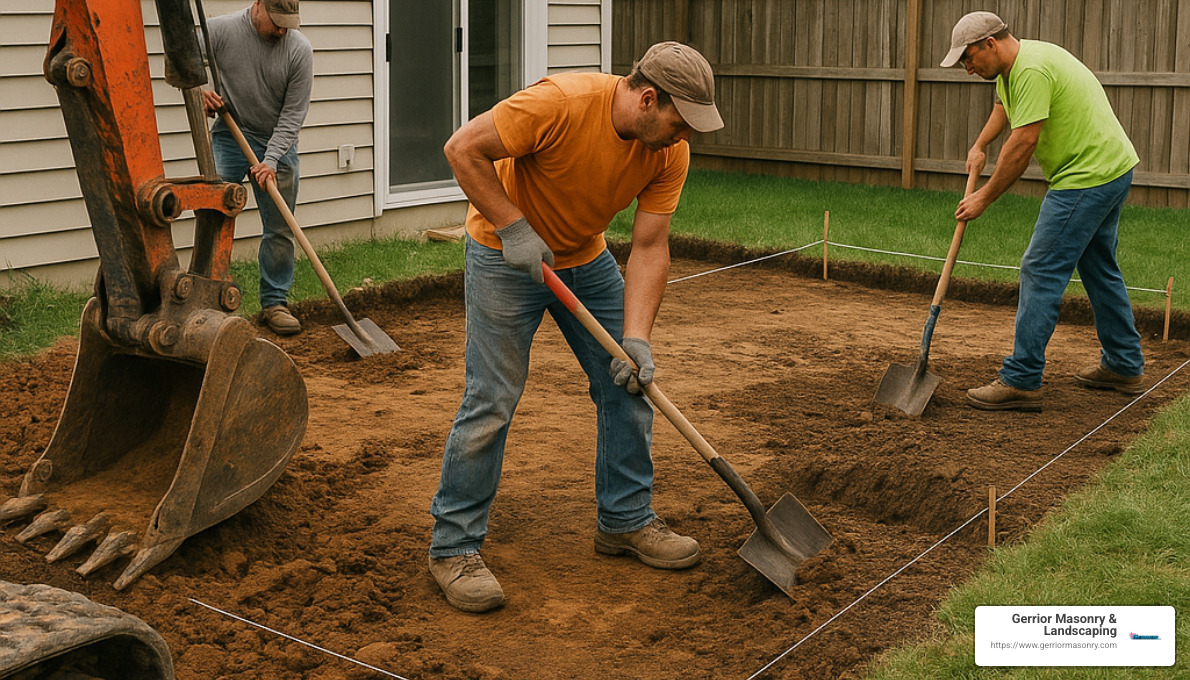
Excavation Depth
Before you dig, safety first! Dial 811 to check for hidden utilities. This step might not be glamorous, but it’s essential. Once cleared, it’s time to mark your territory with stakes and string. The goal? Excavate 8-10 inches below your planned patio height. This depth includes 4-6 inches of gravel, 1 inch of sand, and 2-3 inches of pavers.
Think of excavation as the heavy lifting part of the process. For a patio measuring 400 square feet, prepare to haul out about 10-12 cubic yards of soil. Renting a mini skid steer or enlisting some muscle can make this mountain-moving task a tad easier. This is one of the most challenging phases, but patience and perseverance are your best tools here.
Establishing the Proper Slope
Water, water, everywhere is not what you want for your patio! Ensuring the right slope is key to good drainage. Aim for a slope of 1/4 inch per foot away from structures to prevent pooling and puddles. To visualize this, for every 4 feet, the drop should be an inch. Use a 4-foot level with a 1-inch block to check your work as you go. Precision now saves headaches later.
Compacting the Soil
With excavation behind you, it’s time to compact the soil. This step is critical to avoid future settling and shifting of your paver patio.
- Clear the area of loose soil, roots, and debris.
- Compact the soil with a plate compactor, making several passes in different directions.
- Check for soft spots and fill them with compacted gravel.
As Joe Gerrior wisely puts it, “The prep work is 90% of the job. Get this right, and everything else will fall into place.”
Laying Landscape Fabric
Finally, to keep pesky weeds at bay and ensure stability, lay down landscape fabric. This essential layer separates the soil from the gravel base, allowing water to drain while keeping everything in its place.
Here’s how to get it right:
- Overlap seams by 6-8 inches.
- Extend fabric a few inches up the sides of the excavation.
- Secure with pins if needed, especially on slopes.
With the ground properly prepped, you’re now ready to start building the base for your paver patio. With patience and care in these initial steps, you’re setting the stage for a beautiful patio that will last for years to come.
Gerrior Masonry & Landscape Construction, based in Woburn, MA, proudly serves Middlesex and Essex County, Massachusetts, ensuring your outdoor spaces are built to lift your lifestyle.
Step-by-Step Guide to Building a Paver Patio
Now that you’ve prepared the ground, it’s time to build a paver patio step by step. This is where your preparation pays off and your vision starts to take shape.
Steps to Build the Paver Patio Base
The base is the foundation of your patio and directly affects its longevity and stability. A properly constructed base prevents settling, shifting, and other common patio problems.
First, you’ll want to add gravel in layers. Start by pouring 2-3 inches of gravel base material, usually 3/4-inch crushed stone with fines, across the excavated area. Rake it evenly to ensure an even spread. Lightly spray the gravel with water to help it compact more effectively. Then, compact the gravel thoroughly using a plate compactor, going over it multiple times in different directions. Repeat this layering process until you achieve the desired 4-6 inches thickness.
Next, ensure the base has the proper slope for drainage. Use a long straight board with a level on top to check the slope. For every 4-foot stretch, the downhill end should sit 1 inch lower than the uphill end. Adjust the gravel as needed to maintain this slope.
Finish with a final base compaction. Make several passes with the plate compactor in various directions to firm up the base. If you find any low spots, add more gravel and recompact.
“I did a 16×16 by myself with 12×24 blocks that were 55lbs each. Between those and the sandbags, it was over 10,000 pounds moved in 24 hours,” shared one brave DIYer. Quite the workout, right? So, take your time and maybe recruit some help.
Steps to Build and Lay the Pavers
With a solid base in place, you’re ready to move on to the sand layer and begin laying your pavers.
First, add the sand layer. Lay 1-inch diameter PVC pipes parallel to each other on the base to serve as depth guides. Pour clean, coarse sand between the pipes and use a straight 2×4 board to screed, or level, the sand by pulling it across the pipes. As one experienced paver installer advises, “When you get to the end of your pipes, slide them down and do it again until you have completed the whole patio.” Avoid walking on or disturbing the screeded sand.
Next, it’s time to start laying the pavers. Begin in a corner or along a straight edge of your patio. A running-bond pattern is both efficient and recommended for DIYers. Place each paver directly onto the sand bed, setting them down rather than sliding them. Keep the gaps between pavers consistent, typically between 1/8 to 1/4 inch. Use a string line or the house edge as a guide to keep your rows straight. Occasionally check that your pattern remains square by measuring diagonals.
Continue this process by working in small sections to avoid disturbing the sand. Place pavers snugly, maintaining those consistent joint spaces. A gentle tap with a rubber mallet can help set pavers to the proper height, but never stomp them into place, as that could disrupt the sand bed.
“Building a patio is much like putting together a puzzle,” says Marty Baldwin. Just take your time and enjoy the process.
Cutting and Fitting Pavers
Most patio installations require some pavers to be cut to fit around edges, corners, or obstacles.
Start by marking the cuts. Place the paver in its intended position and mark where you need to cut with a pencil or chalk. For any curved cuts, consider using cardboard templates to trace the shape.
When it comes to cutting techniques, straight cuts can be made with a masonry saw fitted with a diamond blade. For simpler cuts, a masonry chisel and hammer might suffice. Always remember to wear proper safety gear, including eye protection, hearing protection, and a dust mask. You might also wet the blade or paver to minimize dust.
For added safety precautions, set up a stable cutting station away from the patio area. Secure the paver before cutting and keep your hands well clear of the blade. If you’re using power equipment, follow all the safety guidelines. “A masonry saw is the quickest way to get a clean cut on pavers,” advises Joe Gerrior. But if you’re only making a few cuts, renting one might be the economical choice.
Best Practices for Compacting and Edging
The final steps in building your paver patio involve securing the edges and compacting the surface.
First, install edge restraints. Place plastic or metal edge restraints along all unrestrained edges of the patio and secure them with 10-inch galvanized spikes every 12 inches. These restraints help prevent the pavers from shifting outward over time.
Then, proceed with final compaction. Spread a thin layer of sand over the paver surface to protect it during this step. Use a plate compactor with a rubber mat attachment to avoid damaging the pavers. Make several passes in various directions. This process helps settle the pavers into the sand bed, providing a level surface.
Finally, fill the joints. Spread polymeric sand over the entire patio and sweep it into the joints using a push broom. Ensure the joints are fully filled and excess sand is removed from the paver surface. Lightly mist the patio with water to activate the polymeric sand, following the manufacturer’s instructions, and allow it to cure—typically 24 hours—before enjoying your new patio.
“The sand is just spread and screeded off (uncompacted) and it’s called a ‘setting bed’. The intent is to use clean sand, which will be pulled up and the surface sand worked into the tight joints as the surface is run over with a vibratory plate compactor,” explains a professional paver installer.
By following these detailed steps, you’ll build a paver patio that’s not only beautiful but also structurally sound and long-lasting.
Ensuring Proper Drainage and Slope for Your Paver Patio
When you build a paver patio, one of the most crucial elements is ensuring proper drainage. Without it, water can cause all sorts of trouble—think pooling on the surface, sneaking under the pavers, eroding the base, or even damaging nearby structures. At Gerrior Masonry & Landscaping, we’ve learned that drainage isn’t just important—it’s essential.
Understanding Slope Requirements
The magic formula for patio slope is pretty straightforward: you need a 1/4 inch drop per foot away from any structures. This ensures water flows away naturally without making your patio feel like a ski slope. For instance, if your patio is 20 feet long, the edge farthest from the house should be 5 inches lower than the side closest to it.
As Joe Gerrior wisely points out, “For proper drainage, paver patios should have a slope of 1/4 inch per foot away from structures to prevent water accumulation.” In other words, this isn’t just a suggestion—it’s a must if you want your patio to last.
Checking and Maintaining Proper Slope
Keeping that slope in check is a bit like keeping your garden weeds at bay—constant vigilance is key! Here’s how to maintain the slope throughout the build a paver patio process:
- During Excavation: Use a long, straight board with a level. Place a small block of wood under one end of a 4-foot board. When your level reads “level,” then congrats—you’ve nailed the slope!
- During Base Installation: Be sure to check the slope in multiple directions. Adjust the gravel as needed, and compact it down. Then, give it another check.
- During Sand Screeding: Adjust the height of your screed pipes to ensure the right drop. A quick check with your level will confirm you’re staying on track.
Advanced Drainage Solutions
Sometimes, a little extra help is needed, especially in areas with poor drainage or heavy rainfall. Here are some advanced solutions you might consider:
- French Drains: These can be installed in gravel-filled trenches around or under your patio. They help direct water away from the area, keeping everything nice and dry.
- Permeable Pavers: These special pavers allow water to pass through them, making them great for areas with strict stormwater management rules.
- Drain Grates: Installing linear or point drains at the lowest points of your patio can connect to existing drainage systems or dry wells, giving water a clear path away.
In areas with notoriously tricky drainage, we might install thicker base layers or other drainage measures. After all, it’s much easier to prevent water damage than fix it later.
Gerrior Masonry & Landscaping is your go-to team for ensuring your patio is done right the first time. We’re based in Woburn, MA, and proudly serve Middlesex and Essex County, Massachusetts.
Common Mistakes to Avoid When Building a Paver Patio
After over three decades in the masonry business, we’ve seen plenty of DIY paver patio projects that needed a bit of rescuing. Let’s talk about some common pitfalls to avoid when you build a paver patio. These insights might just save you a lot of time, effort, and maybe even a few gray hairs!
Inadequate Base Preparation
The foundation of any great patio starts with a solid base. Many DIYers make the mistake of skimping here. Insufficient excavation depth—digging only 4-5 inches instead of the necessary 8-10 inches—can lead to a wobbly patio. Similarly, poor soil compaction is a frequent culprit, as failing to compact the native soil before adding base materials can spell disaster down the line. You also want to ensure that you’re using enough gravel—about 4-6 inches, not just 2-3 inches. Oh, and don’t substitute with the wrong stuff! Angular crushed stone, not rounded gravel or sand, is your best bet.
Joe Gerrior puts it simply: “The base material for a paver patio typically compacts by 15-20% during installation, requiring additional material calculations during the planning phase.” Many folks overlook this and end up with a thin, unstable base.
Improper Slope and Drainage
Water should be your patio’s best friend, not its worst enemy. Insufficient slope can create drainage problems, turning your patio into a mini lake. You want a gentle slope that directs water away from your home. Incorrect slope direction is another common flaw—if water’s flowing toward your house, it’s time for a U-turn. Watch out for inconsistent slopes that can cause water to pool, and be mindful of the overall drainage patterns around your yard. One of our clients once shared, “I built my first patio perfectly level, thinking that was ideal. After the first heavy rain, I had standing water for days. I had to tear it up and rebuild with proper slope.”
Poor Edge Restraint Installation
Edge restraints are like the unsung heroes of patios. You need them to keep everything in place. Skipping them entirely? That’s a recipe for disaster. And if you do install them, make sure they’re properly secured with enough spikes. Improper placement or using weak materials can lead to edges that shift or crack over time.
Sand and Joint Filling Issues
Sand might seem like the least of your worries, but it’s important. Walking on screeded sand can disturb that carefully leveled layer. And don’t grab the wrong sand. You want coarse, angular sand, not the fine play sand. Make sure those joints are completely filled with polymeric sand, and follow the manufacturer’s instructions for installation to the letter. It’s not just a suggestion!
Paver Layout and Pattern Mistakes
When it comes to laying pavers, some mistakes are all too common. Starting in the wrong location, like in the middle instead of from a fixed edge, can throw off your whole pattern. Keep checking for square to avoid drifting out of alignment, and strive for consistent joint spacing. If you’re ambitious with your pattern, make sure you have the experience to back it up. One expert suggests, “For DIYers, I recommend the running-bond pattern. It requires the fewest cuts, so it goes down the fastest.”
Time and Labor Miscalculations
Lastly, don’t underestimate the sheer amount of work involved. Material weight can be surprising—pavers, sand, and gravel are heavy! Ensure you have the right tools and enough help. Rushing the process or trying to go solo can lead to mistakes. One DIYer recalled, “I did a 16×16 by myself with 12×24 blocks that were 55lbs each. Between those and the sand bags it was >10,000 lbs moved over 24 hours.” That’s a workout! Plan ahead to make the project manageable and successful.
By being aware of these common mistakes, you can plan accordingly and create a beautiful, durable paver patio that will improve your outdoor living space for decades.
Gerrior Masonry & Landscaping is based in Woburn, MA, and serves Middlesex and Essex County, Massachusetts. We’d love to help you avoid these pitfalls and achieve the patio of your dreams.
Maintaining and Cleaning Your Paver Patio
A properly installed paver patio can be your loyal companion for 30 to 50 years with just a sprinkle of maintenance. At Gerrior Masonry & Landscaping, we believe in giving our clients the tools and tips to keep their patios looking fresh and fabulous.
Regular Cleaning Routine
To keep your paver patio looking its best, a little bit of routine love goes a long way. Weekly maintenance is as simple as using a leaf blower or broom to chase away debris and giving the surface a quick rinse with a garden hose. Spills should be dealt with immediately to avoid staining.
As the seasons change, so should your cleaning habits. In spring, clear away winter’s leftovers and check for frost heave damage. Summer is the time to be a weed warrior, removing any unwelcome guests as they appear. Come fall, keep the leaves at bay to prevent staining, and when winter arrives, opt for plastic snow shovels over metal ones to avoid scratching the pavers.
For a more in-depth cleaning, an annual scrub is recommended. Use a paver-specific cleaner or a mix of mild dish soap and water. Apply this with a stiff brush (but steer clear of wire brushes, which could damage the pavers). For those pesky stubborn stains, seek out specialized cleaners suited to your paver material. A gentle pressure wash can do wonders too—just remember, less is more, so keep the setting under 1500 PSI.
As one industry expert cheerfully notes, “Dedicated cleaning products make it quick and easy to remove stains, so there’s no need to treat the surface of pavers to prevent weathering or damage.”
Sealing Your Paver Patio
While not a must, sealing your patio can offer several perks. Sealing helps preserve that lovely paver color, fends off stains, stabilizes joint sand to prevent erosion, and can even keep weeds and ants at bay. If your patio is poolside, sealing is especially valuable for keeping grit out of those pool pumps.
Wondering when to seal? Be patient—wait at least 60 days after installation for new patios. After that, it’s a good idea to reseal every 3 to 5 years, depending on foot traffic and weather conditions. Always give your patio a thorough clean before you seal.
The sealing process itself is straightforward. Start by choosing the right sealer for your paver type, whether water-based or solvent-based. Apply it when the temperatures are just right—between 50-80°F. Ensure the pavers are dry as a bone before you begin, and follow the manufacturer’s instructions closely, typically applying with a roller or sprayer. After sealing, allow the proper curing time before inviting guests to enjoy your outdoor haven.
As Joe Gerrior wisely advises, “Pavers will survive fine without a sealer, but applying one helps prevent staining, mold, ant colonies, weeds, or loose joint sand, and it is especially important around pools to keep grit out of pumps.”
Repairing and Maintaining Joints
The joints between your pavers might sometimes feel like the unsung heroes of your patio. Joint maintenance is crucial for keeping everything in tip-top shape. Check annually for areas where polymeric sand has eroded and refill joints as needed. Follow the manufacturer’s instructions for wetting and curing the sand.
If you spot any weeds, pull them out as soon as possible and consider using eco-friendly weed preventatives. Ensuring the joints remain filled with polymeric sand can help discourage new growth. If you notice any pavers playing the uneven game, simply pry them up, adjust the sand bed beneath, reinstall them, and compact as needed. Don’t forget to refill the joints with polymeric sand afterward.
Seasonal Considerations
Each season brings its own set of challenges for your paver patio. In winter, use plastic snow shovels and opt for pet-friendly, paver-safe ice melt products. Avoid rock salt, as it can damage concrete pavers. Spring is a great time to check for pavers that may have shifted during freeze-thaw cycles and address any drainage issues brought to light by spring rains.
During summer, keep an eye out for ant activity and ensure all furniture feet have protectors to prevent scratching. Rinse off chlorine or pool chemicals immediately.
“After your DIY paver patio is hosed down and complete, allow at least 24 hours for the sand, pavers, and gravel to settle before putting heavy furniture or significant foot traffic on it,” a patio installation expert wisely recommends.
For more handy tips on creating and maintaining your outdoor living space, check out Add Outdoor Living Space With a DIY Paver Patio.
Gerrior Masonry & Landscape Construction is based in Woburn, MA, and serves Middlesex and Essex County, Massachusetts. We’re here to help you every step of the way!
Frequently Asked Questions about Building a Paver Patio
After over three decades of experience at Gerrior Masonry & Landscaping, we’ve fielded all sorts of questions about how to build a paver patio. Let’s explore the most common ones and offer some expert advice.
Can I build a paver patio myself?
Absolutely, you can! Building a paver patio is a great DIY project, but be prepared—it’s not for the faint of heart. It requires a hefty amount of physical labor and a good eye for detail. As one experienced contractor put it, “You will be moving tons, literal tons of material.” Sounds like a workout, right?
Before you pull out your shovel, consider a few things. Physical demands are significant; you’ll be doing a lot of digging, lifting, and intricate layout work. Time-wise, experienced DIYers might spend 2-3 weeks on this project, and beginners might need even longer. You’ll also need special tools, like a plate compactor and perhaps a masonry saw. Lastly, if your design involves complexity or tricky terrain, it might be wise to call in the pros. If you decide to go it alone, think about hiring help for the heavy lifting or renting equipment like a mini skid steer to make things easier.
How deep should the base layers be?
Getting the base layer depth right is crucial for a patio that stands the test of time. You should dig 8-10 inches below the finished surface. This includes a 4-6 inch gravel base (going deeper if you have clay soil or are in a freeze-prone area), 1 inch for sand, plus the paver thickness, typically 2-3 inches. Joe Gerrior advises, “A proper patio should be built with a 6-inch layer of gravel base topped by a 1-inch layer of sand.” Make sure to adjust the depth based on your specific soil type, climate, and how heavily you plan to use the patio because the base material will compact by 15-20% during installation.
Do I need to seal my paver patio?
Sealing isn’t mandatory, but it’s definitely worth considering for a variety of benefits. Sealing can improve your patio’s color and appearance, provide stain resistance, help stabilize joint sand, and reduce both weed growth and erosion. Joe Gerrior adds, “Pavers will survive fine without a sealer, but applying one helps prevent staining and other issues.” If you decide to seal, wait a few months after installation, clean the patio thoroughly, and apply in good weather conditions. Plan to reapply every 3-5 years.
How long does a paver patio last?
With the right installation and a touch of maintenance, your paver patio can last anywhere from 30 to 50 years—or even longer! It’s a solid investment. The key factors influencing longevity are how well it’s installed, the quality of materials, and the level of maintenance you provide. While climate and usage can also play a role, a well-built paver patio usually stands the test of time. Plus, if a paver gets damaged, it’s easy to replace just that one piece without a fuss.
Is it cheaper to pour concrete or use pavers?
When it comes to initial costs, concrete is typically cheaper, ranging from $6-$12 per square foot. Pavers, on the other hand, cost $8-$20 per square foot for DIY and $15-$30 for professional installation. However, when considering long-term value, pavers often win. They tend to last longer, are easy to repair, and generally offer better curb appeal, potentially increasing your home’s value by 8-10%. Joe Gerrior puts it simply: “Pouring concrete is usually cheaper initially than installing pavers, but pavers will offer more value in the long-run.”
Can I build a fire pit on my paver patio?
Yes, incorporating a fire pit into your paver patio is a fantastic idea, but safety first! Use fire-resistant pavers and ensure you keep a safe distance from any structures or trees. Check local regulations about outdoor fires and consider wind directions when placing your fire pit. You have several options: a built-in masonry fire pit for a permanent solution, a fire pit kit for easy installation, or a portable fire pit that can be moved as needed. Just remember, safety always comes first.
Gerrior Masonry & Landscape Construction is based in Woburn, MA, and proudly serves Middlesex and Essex County, Massachusetts.
Conclusion
Building a paver patio is a significant undertaking that requires careful planning, proper materials, and attention to detail. When done correctly, it creates a beautiful, durable outdoor living space that improves your property and provides decades of enjoyment.
At Gerrior Masonry & Landscaping, we’ve installed countless paver patios throughout Middlesex and Essex Counties over our 34 years in business. While many homeowners successfully tackle this as a DIY project, others prefer to leave it to the professionals to ensure optimal results.
Key takeaways from this guide:
- Proper preparation is essential: The excavation and base preparation phases are critical to the long-term success of your patio.
- Don’t rush the process: Take your time with each step, especially leveling and compacting the base layers.
- Invest in quality materials: Higher-quality pavers and base materials may cost more initially but provide greater durability and aesthetic appeal.
- Ensure proper drainage: A slope of 1/4 inch per foot away from structures is necessary to prevent water damage.
- Maintain your investment: Regular cleaning and periodic maintenance will keep your patio looking beautiful for decades.
Whether you choose to DIY or hire professionals, a paver patio is one of the most rewarding outdoor projects you can undertake. It creates a versatile space for relaxation, entertainment, and outdoor living while adding significant value to your property.
For those in Middlesex and Essex Counties who prefer professional installation, our team at Gerrior Masonry & Landscape Construction brings decades of experience and craftsmanship to every project. We handle everything from design to installation, ensuring a seamless process and exceptional results.
A properly installed paver patio can increase your home’s value by 8-10%, making it one of the most cost-effective outdoor home improvement projects available. With proper care, your patio will provide a beautiful outdoor living space for generations to come.
Gerrior Masonry & Landscape Construction is based in Woburn, MA, and services Middlesex and Essex County, Massachusetts.
