
Build a Retaining Wall on a Slope: Top 5 Easy Tips
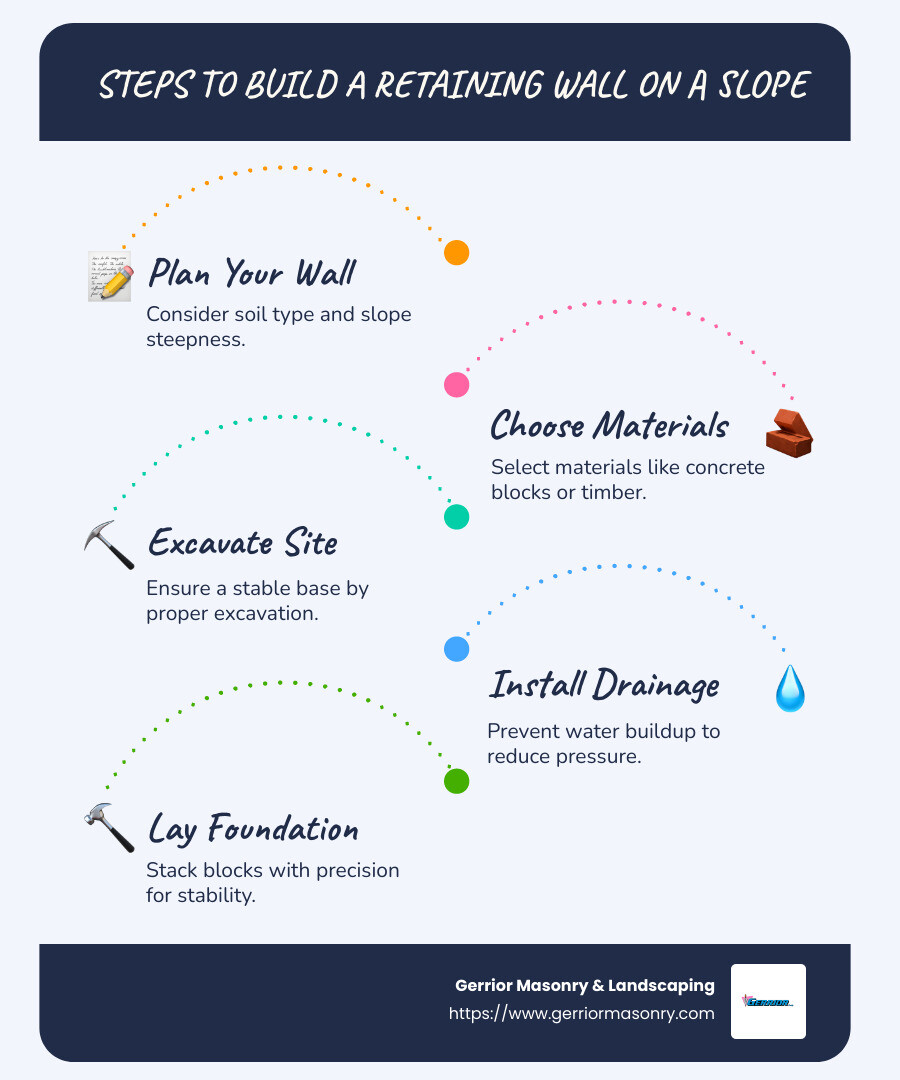
Build a retaining wall on a slope to transform unusable land into functional space while combating soil erosion. Here’s a quick look at what you need to do:
- Plan your wall, considering soil type and slope steepness.
- Choose materials like concrete blocks or timber.
- Excavate the site to ensure a stable base.
- Install drainage to prevent water buildup and reduce pressure.
- Lay the foundation and stack blocks with precision.
These steps will help stabilize your landscape and optimize the usage of sloped areas.
Building a retaining wall on a slope involves critical considerations such as soil pressure and water management. Improperly built walls can lead to costly repairs, land instability, or worse, complete failure. With careful planning and quality materials, you can secure your property and improve its aesthetic appeal.
My name is Joe Gerrior, owner of Gerrior Masonry & Landscape Construction Corp. With over 34 years of experience, I’ve helped countless clients successfully build a retaining wall on a slope. Our company has been the trusted choice across Massachusetts for turning challenging terrains into beautiful, functional spaces.
Explore more about build a retaining wall on a slope:
– Custom retaining walls
– Hardscape retaining walls
– Rock wall landscaping
Understanding Retaining Walls
When you build a retaining wall on a slope, understanding the elements that affect its stability is crucial. Here, we’ll break down the important factors: soil composition, water management, and climate considerations.
Soil Composition
The type of soil behind your retaining wall is a major factor in its design and durability. Different soils exert different pressures:
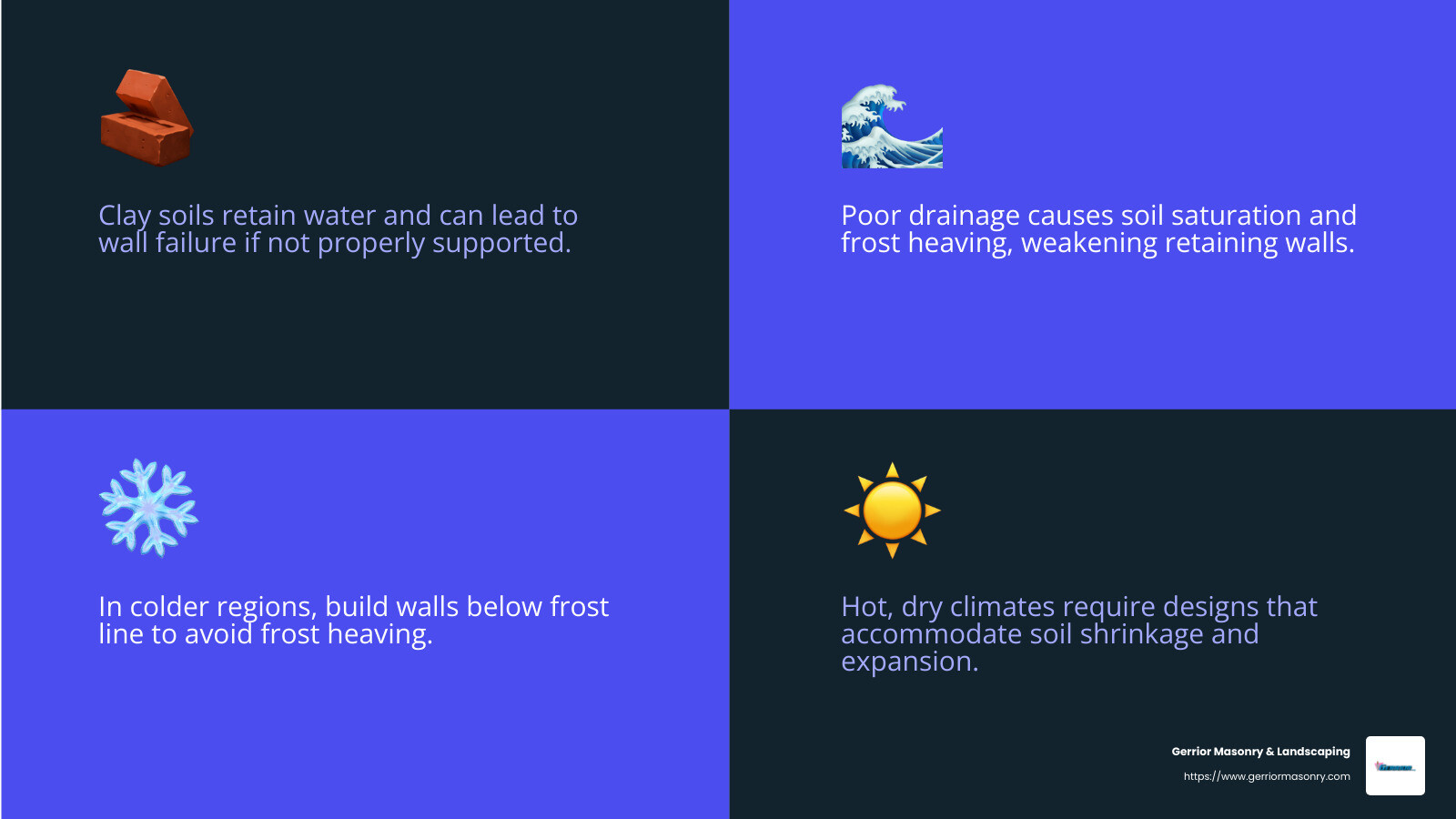
- Clay Soils: These retain water and can exert substantial pressure on the wall. Without proper support, clay can lead to wall failure.
- Sandy Soils: Sandy soils drain well, reducing pressure but may require reinforcement to ensure stability.
- Rocky Soils: These can be unpredictable. Special design considerations may be needed to accommodate irregularities.
Fact: A four-foot-high, 15-foot-long wall could hold back as much as 20 tons of saturated soil. Soil analysis is essential to determine the right wall design and reinforcement.
Water Management
Water is the enemy of retaining walls. Poor drainage can cause wall failure due to soil saturation and frost heaving. Here’s how to manage water effectively:
- Install a gravel layer behind the wall to aid drainage.
- Use landscape fabric to keep soil from clogging the gravel.
- Add a perforated drainpipe at the wall’s base to direct water away.
- Ensure the ground is graded to prevent water accumulation behind the wall.
These steps help relieve hydrostatic pressure and protect your wall from structural damage.
Climate Considerations
Climate affects how you should design your retaining wall:
- Freeze-Thaw Cycles: In colder regions, build walls below the frost line or on well-drained gravel to avoid frost heaving.
- Heavy Rainfall: Robust drainage systems are necessary to handle excess water.
- Hot, Dry Climates: Account for soil shrinkage and expansion to prevent cracking.
Engineers must consider these climate-specific challenges to ensure long-term stability. With awareness of local conditions, you can design a wall that stands the test of time, regardless of weather changes.
Understanding these factors will guide you in planning and constructing a resilient retaining wall. Next, we’ll dig into choosing the right materials for your project.
Build a Retaining Wall on a Slope
Building a retaining wall on a slope can transform your outdoor space, providing both functionality and beauty. Let’s break down the process into two key parts: Choosing the Right Materials and the Step-by-Step Construction Process.
Choosing the Right Materials
Selecting the right materials is crucial for the success of your retaining wall. Here are some options to consider:
- Concrete Blocks: These are popular for their durability and ease of use. They come in various sizes and shapes, making them ideal for DIY projects. For walls up to three feet high, 6″ x 16″ x 10.5″ concrete blocks are recommended.
- Timber: Timber walls offer a natural look and are suitable for less demanding applications. However, they may require more maintenance over time compared to concrete or stone.
- Stone: Natural stone provides an neat and timeless appearance. It is very durable but can be more challenging to work with due to its weight and irregular shapes.
- Interlocking Systems: These blocks have a lip or groove that locks them in place, providing stability and allowing for easy installation. They are especially useful for curved walls or those on a slope.
Step-by-Step Construction Process
Planning and Design
Before you start digging, careful planning and design are essential. Mark the wall’s location using stakes and string or spray paint. This provides a clear guide for excavation.
Excavation and Foundation Preparation
- Trench Digging: Dig a trench approximately twice as wide as the depth of your blocks. This extra space allows for drainage gravel and workspace. For a 10.5″ block, a 20″ wide trench is ideal.
- Depth: The trench should be deep enough for at least six inches of gravel base and half the block height. For 6″ blocks, dig about 9″ deep.
Gravel Base
A solid foundation begins with a well-compacted gravel base. Use a hand tamper or plate compactor to pack the gravel tightly. This step is crucial for preventing wall movement and ensuring longevity.
Block Installation
- Start with the Base Course: Lay the first row of blocks, ensuring they are level. A torpedo level is handy for this. Use a rubber mallet to adjust the blocks as needed.
- Stacking: Continue stacking the blocks, offsetting each row by half a block for stability. Only the top layer needs construction adhesive; gravity will hold the rest.
Drainage
Proper drainage prevents water buildup, which can cause wall failure. Include a perforated drainpipe at the base and cover it with gravel. Ensure the wall is slightly sloped to direct water away.
By following these steps, you can create a strong and attractive retaining wall that improves your landscape. Up next, we’ll discuss the essential tools and safety equipment needed for this project.

Essential Tools and Safety Equipment
When you’re ready to build a retaining wall on a slope, having the right tools and safety gear is essential. This ensures not only a smooth construction process but also your safety and the longevity of the wall. Here’s a breakdown of what you’ll need:
Tools
- Metal Rake: Ideal for leveling and smoothing the ground.
- Spade and Flat Nose Shovels: Useful for digging and moving soil.
- Digging Bar: Helps with breaking up hard-packed or rocky soil.
- Wheelbarrow: Essential for transporting materials like soil and gravel.
- Torpedo Level and Standard Level: Ensure your wall is perfectly level. A longer level offers more accuracy.
- Mason Line and Stakes: These help mark the wall’s layout before digging.
- Caulking Gun: Used for applying construction adhesive to the top layer of blocks.
- Rubber Mallet and Mini Sledgehammer: For adjusting and securing blocks in place.
- Masons Chisel: Handy for cutting blocks to fit.
- Hand Tamper or Plate Compactor: Compacts the gravel base, ensuring a solid foundation.
Safety Gear
- Gloves: Protect your hands from rough materials and sharp tools.
- Eye Protection: Prevents debris from entering your eyes during digging and cutting.
- Earplugs: Used when operating loud equipment like a plate compactor.
- Knee Pads: Offer comfort and protection when working on hard surfaces.
Equipment
- Retaining Wall Blocks: Choose the right size and type based on your wall’s height and design needs.
- Construction Adhesive: A few tubes should suffice for most projects, particularly for securing the top layer.
- Paver Base and 3/4″ Rough Gravel: These materials form the foundation and drainage system, critical for stability.
- Leveling Sand: Helps in achieving a perfectly level first row of blocks.
With these tools and safety gear, you’ll be well-prepared to tackle your retaining wall project. Up next, we’ll answer some frequently asked questions about building retaining walls to address common concerns and misconceptions.
Frequently Asked Questions about Building Retaining Walls
Can I build a retaining wall on a slope?
Yes, you can build a retaining wall on a slope. These walls are specifically designed to hold back soil and prevent erosion on sloped properties. A retaining wall provides essential soil support and foundation protection, making sloped areas more usable and safe. However, building on a slope requires careful planning and design to ensure stability and longevity. For walls over four feet tall or in challenging conditions, consider consulting a professional to avoid common pitfalls.
Does a 3-foot retaining wall need drainage?
Absolutely. Even a 3-foot retaining wall needs a proper drainage system. Without drainage, water can accumulate behind the wall, especially in clay soil, increasing pressure and potentially leading to wall failure. Installing a drainage pipe at the base of the wall, along with a layer of gravel, helps manage water sources and relieve hydrostatic pressure. This is crucial for the wall’s durability and effectiveness in preventing erosion.
What is the best retaining wall for a steep slope?
For steep slopes, modular block walls are often the best choice. These walls offer excellent durability and are relatively easy to install. They interlock, providing a strong barrier against soil movement. Additionally, modular block walls can be aesthetically pleasing and come in various styles to fit your landscape design. For steep slopes, ensure proper installation and drainage to maintain the wall’s integrity over time.
Conclusion
Building a retaining wall on a slope is no small feat, but with careful planning and the right expertise, it can transform your outdoor space into something both functional and beautiful. At Gerrior Masonry & Landscaping, we pride ourselves on delivering high-quality results for such projects. With over 30 years of experience, our skilled team ensures each project is executed with precision and care, providing you with a retaining wall that stands the test of time.
Our professional help can make a world of difference in your retaining wall project. While DIY efforts can be fulfilling, the complexity involved in ensuring proper drainage, soil support, and structural integrity often requires expert oversight. Whether you’re dealing with a steep slope or challenging soil conditions, our team is equipped to handle it all, ensuring that your project is a success from start to finish.
If you’re considering enhancing your landscape with a retaining wall, we invite you to explore our landscape design and installation services. Our expertise in masonry and hardscaping, coupled with our commitment to customer satisfaction, guarantees a seamless experience and a stunning outcome. Let us help you conquer the incline and create the outdoor space of your dreams.
