
The Commercial Snow Plowing Playbook for Pros
Why Commercial Snow Plowing Matters for Your Business
Commercial Snow Plowing is the professional service that keeps parking lots, loading docks, and access roads clear during winter storms. It’s essential for business continuity, customer safety, and legal liability protection. Here’s what you need to know:
Core Commercial Snow Plowing Services:
- Snow Plowing – Pushing snow to designated areas using plow trucks and loaders
- Snow Removal – Hauling snow off-site when storage space runs out
- De-icing – Applying salt, brine, or calcium chloride to prevent ice formation
- Sidewalk Clearing – Hand shoveling and machine sweeping for pedestrian areas
- 24/7 Monitoring – Weather tracking and rapid response during storm events
Common Pricing Models:
- Per-push (charged each time equipment is deployed)
- Per-event (flat fee per storm regardless of plowing frequency)
- Seasonal contracts (fixed price for the entire winter)
- Time and materials (hourly rates plus supplies)
Key Contract Triggers:
- Zero-tolerance policies for medical facilities
- 1-inch accumulation for retail and office properties
- 2-inch thresholds for industrial sites
- Depth-based pricing tiers (2-4″, 4-6″, 6-8″+)
Winter weather creates serious risks for commercial property owners. A single slip-and-fall lawsuit can cost more than years of professional snow management. Minneapolis receives over 50 inches of snow annually, while properties in the Northeast face heavy, wet snow and frequent freeze-thaw cycles that create dangerous ice patches. Businesses need reliable snow removal to avoid municipal fines, prevent customer injuries, and maintain operational access.
I’m Joe Gerrior, and I’ve managed Commercial Snow Plowing operations for Gerrior Masonry & Landscape Construction for over three decades across Massachusetts. Our team handles everything from small office complexes to large retail centers throughout Middlesex and Essex Counties.
Commercial Snow Plowing vocab explained:
Mastering Commercial Snow Plowing Operations
Managing a commercial property during a New England winter is a bit like conducting an orchestra—except the instruments are 10-ton trucks and the music is a blizzard forecast that changes every twenty minutes. To keep your operations humming, you need a strategy that matches your specific property type.
Retail complexes, for instance, often require “zero-tolerance” policies. This means we are on-site before the first flake hits the pavement to apply chemical de-icers and ensure customers can park safely the moment you open your doors. Medical facilities and hospitals are even more critical; they require 24/7 emergency access, meaning drive lanes must remain clear throughout the duration of the storm.
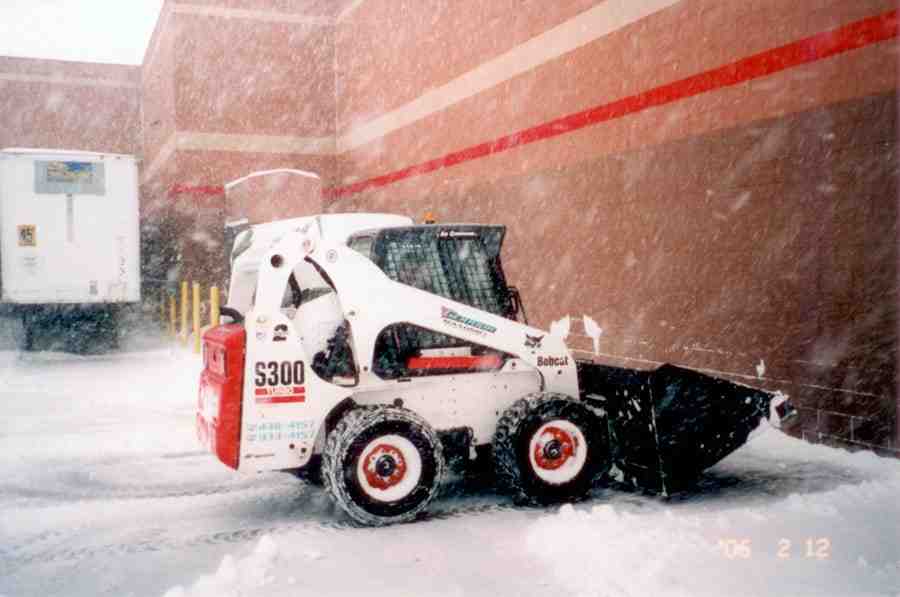
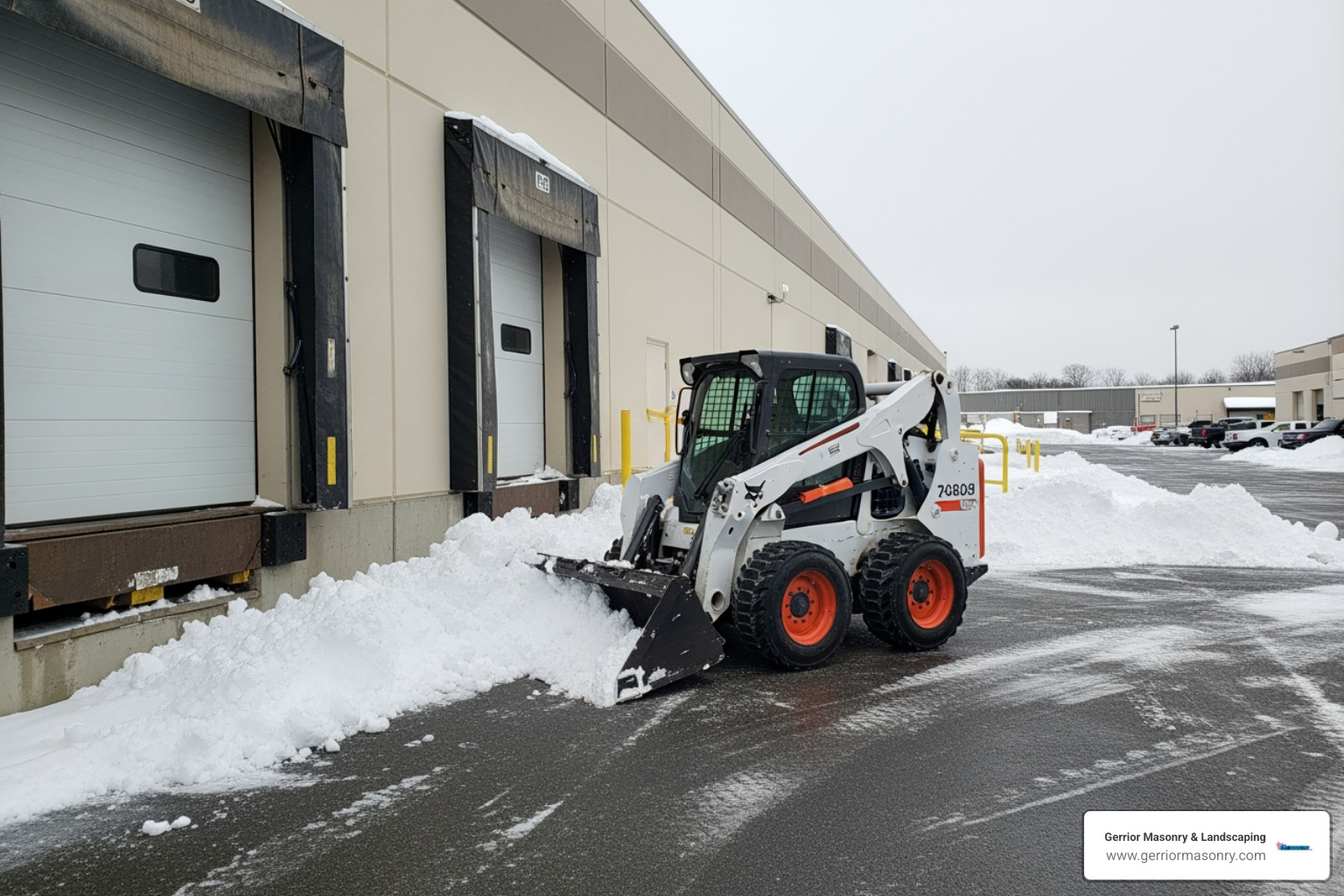
Industrial parks and office campuses have different rhythms. An industrial site might have massive open acreage but tight loading docks that require surgical precision with a skid-steer. Office parks typically want the lot “black and wet” by 7:00 AM so employees aren’t trudging through slush.
To manage these operations effectively, it is vital to understand the distinction between the three pillars of winter maintenance:
| Service Type | Primary Goal | Typical Equipment |
|---|---|---|
| Snow Plowing | Moving snow from driving/parking areas to on-site storage. | Plow trucks, skid-steers, loaders. |
| Snow Removal | Physically hauling snow off-site to regain parking spaces. | Dump trucks, front-end loaders. |
| Ice Management | Preventing and melting ice to ensure safe traction. | Salt spreaders, brine sprayers. |
Essential Equipment for Commercial Snow Plowing
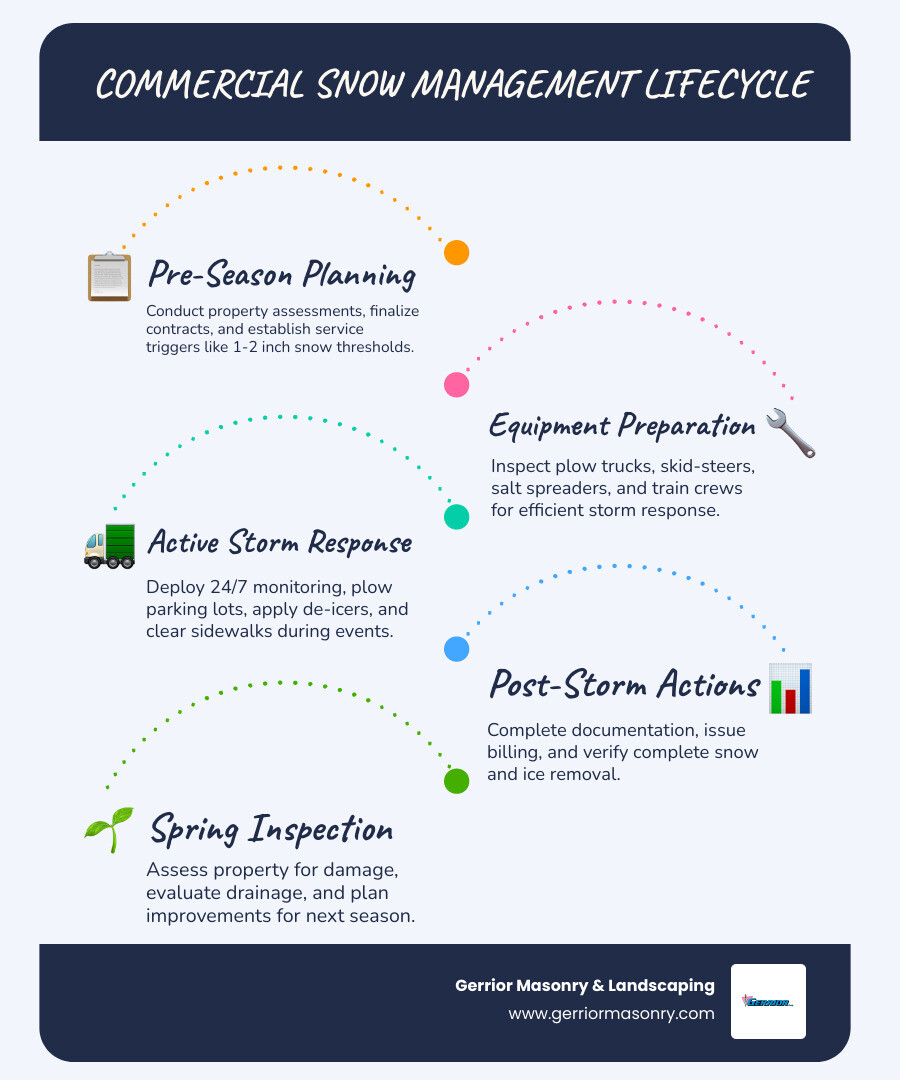
In Commercial Snow Plowing, your equipment is your lifeline. We don’t just use standard pickup trucks; commercial-grade operations require heavy-duty machinery. A single commercial plow truck can cost upwards of $90,000, and skid-steer loaders often run north of $50,000. For massive lots, we deploy front-end loaders that can cost between $120,000 and $180,000.
Modern commercial snow plowing also relies heavily on technology. We utilize advanced GPS tracking on all our vehicles to provide clients with real-time data on when their property was serviced. This level of transparency is crucial for property managers who need to verify service completion across multiple locations without being physically present at each site during a storm.
But it’s not just about the big steel. The science of melting ice is equally important. We use a variety of chemical de-icers, but the most common is rock salt. However, a crucial industry fact is that Salt doesn’t work below 15 degrees. When the temperature drops into the single digits, we switch to liquid brine or calcium chloride to keep the ground safe. Brine is often preferred for pre-treatment because it sticks to the pavement and prevents the initial bond of snow and ice, making the subsequent plowing process much more efficient and reducing the total amount of salt needed over the course of the season.
Sidewalk machines, like Ventrac tractors or dedicated snow blowers, are essential for clearing pedestrian walkways. These machines allow us to clear narrow paths that a truck could never reach, ensuring that your front entrance is just as safe as your parking lot.
Strategic Pricing Models and Contract Structures
Choosing how you pay for snow services is a major part of your winter budget planning. There isn’t a one-size-fits-all approach, so we offer several options:
- Per-Push Rates: You are billed every time we clear the lot. This is popular for retail managers who want itemized tabs. Many Commercial Snow Plowing Contracts structure this by depth: a lower rate for 2-4 inches and a higher rate for 6-8 inches because of the increased time and fuel required. This model is ideal for businesses that want to pay only for the work performed during lighter winters.
- Seasonal Fixed-Fee: Think of this as “snow insurance.” You pay one flat fee for the entire season (typically November 15 to April 1). Whether we get 20 inches or 100 inches of snow, your bill stays the same. This provides excellent budget predictability and is the preferred choice for large corporations with strict annual budgets.
- Per-Event Pricing: You pay a flat fee per storm. If it snows for 24 hours and we have to plow three times, you still only pay the one event fee. This balances the risk between the contractor and the client.
- Time and Materials: This is the most transparent model, where you are billed for the actual hours worked and the exact amount of salt applied. It is often used for complex sites where the scope of work can vary significantly depending on the type of snow.
For more details on choosing the right path, check out Your Guide To Commercial Snow Removal Contracts Types And Strategies.
Understanding the Costs of Commercial Snow Plowing
When budgeting for the season, it helps to look at internet data averages. That these are general estimates based on national data and not actual Gerrior Masonry service costs.
Commercial snow removal costs are influenced by property size, complexity, and the average snowfall by city. For example, a city averaging 70 inches of snow will have a much higher pricing structure than one averaging 20 inches.
- Hourly Rates: Internet data suggests rates range from $50 to $500 per hour. Basic plowing might be on the lower end, while specialized heavy equipment like front-end loaders hits the higher end.
- Per-Event Costs: For a standard commercial lot, you might see prices ranging from $75 to $950+ per snowfall. A 20,000 sq. ft. lot might average $450 per event, while a complex 100,000 sq. ft. area could easily exceed $2,000.
- Seasonal Contracts: For small commercial properties, seasonal contracts might start around $2,000, but for large complexes or shopping centers, they can range from $10,000 to $60,000+.
- De-icing: Rock salt can cost up to $90 per ton, with applications for large areas averaging $100 to $1,000 per visit.
Again, these figures are based on broad internet research. Your actual quote will depend on a detailed site inspection and your specific service triggers.
Selecting a Partner for Winter Safety and Liability
When you hire a snow contractor, you aren’t just paying for someone to move white stuff; you are hiring a risk management partner. In Massachusetts, property owners have a legal duty to maintain a safe environment under Premises Liability Law.
A professional crew does more than plow; they monitor the weather 24/7 using professional meteorologists to predict ice before it forms. They ensure Commercial Snow Removal Best Practices are followed, such as documenting every visit with photos and logs. This “paper trail” is your best defense if a slip-and-fall claim ever arises.
Post-storm documentation is another critical area where professional partners shine. We maintain detailed logs that include the time of arrival, the specific equipment used, the amount of de-icing material applied, and the weather conditions at the time of service. This data is archived and made available to our clients, providing a robust defense against potential liability claims and helping with long-term budget forecasting.
Key Components of a Professional Service Agreement
A handshake might work for mowing a lawn, but for Commercial Snow Plowing, you need a detailed written agreement. This protects both us and you. A solid contract should include:
- Service Triggers: Does plowing start at 1 inch or 2 inches? This is the most important variable in your contract.
- Response Times: How soon will we be on-site after the storm starts? We typically aim for arrival within two hours of the trigger depth being reached.
- Liability Waivers: Clear language on who is responsible for what, ensuring both parties are protected.
- Site Maps: A visual guide showing exactly where snow should be piled and which areas are off-limits (like near fire hydrants or handicapped spots). We also conduct a ‘dry run’ with our drivers before the first snowfall to identify tight corners or specific areas where snow cannot be piled.
- Documentation Protocols: How we will prove the work was done (logs, GPS tracking, or photos).
For property managers looking to stay ahead of the curve, we recommend you Subscribe Loss Control Insights to stay informed on safety trends.
Optimizing Your Property for Efficient Snow Clearing
Preparation is the secret to a smooth winter. Before the first frost, we perform pre-season inspections to identify potential hazards. This includes:
- Marking Obstacles: We use stakes to identify curbs, speed bumps, and fire hydrants that will be hidden under snow.
- Utility Marking: Ensuring drains and electrical boxes are visible to prevent damage to your infrastructure.
- Drainage Management: Checking that catch basins are clear so melting snow doesn’t puddle and refreeze into “black ice.”
- Snow Storage Areas: Deciding where the “mountain” of snow will go so it doesn’t block sightlines or take up valuable parking spots. Proper placement prevents melt-water from running across driving lanes.
By focusing on Commercial Snow Clearing efficiency now, we save you time and money when the blizzards arrive. If your property is in the local area, you should look into Snow Management Woburn MA to see how we tailor our approach to our neighbors.
Conclusion: Your Local Expert in Massachusetts
Winter in Massachusetts is unpredictable, but your snow removal shouldn’t be. At Gerrior Masonry & Landscaping, we bring over 30 years of experience to every parking lot we clear. Our skilled team, backed by owner oversight on every project, ensures that your property remains safe, accessible, and open for business no matter how much snow falls. We understand the unique challenges of the local climate, from the heavy Nor’easters to the dangerous ice storms that follow.
Whether you need a zero-tolerance plan for a medical facility or a reliable seasonal contract for a retail center, we have the heavy equipment and the expertise to handle it. Don’t wait until the first storm warning to find a partner. Our commitment to quality and safety has made us a trusted name in the industry for decades.
Gerrior Masonry & Landscape Construction is based in Woburn, MA, and services Middlesex and Essex County, Massachusetts. We provide expert Snow Removal Commercial services to businesses in Acton, Andover, Burlington, Concord, Lexington, Reading, and beyond. Let us handle the winter weather so you can focus on running your business.

