
Commercial Snow Plowing Contracts: 2024 Essential Guide

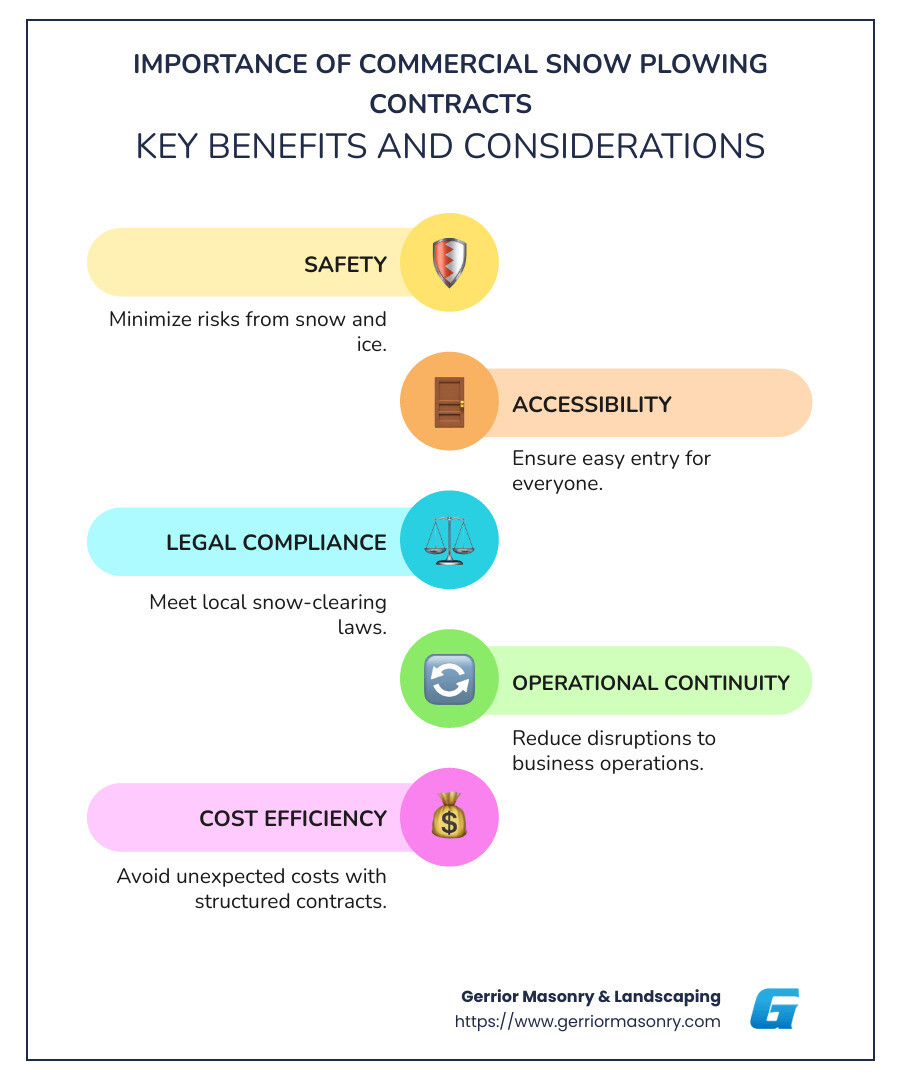
Commercial snow plowing contracts are essential agreements for businesses to maintain safe and accessible properties during winter. These contracts ensure that snow and ice are efficiently removed from areas like parking lots and walkways, safeguarding employees and customers from accidents. Key aspects include:
- Safety: Minimizing risks from snow and ice.
- Accessibility: Ensuring easy entry for everyone.
- Legal Compliance: Meeting local snow-clearing laws.
For businesses, neglecting snow removal can lead to safety hazards and operational disruptions. Hiring a professional service ensures that areas remain clear and compliant with regulations.
I’m Joe Gerrior, owner of Gerrior Masonry & Landscape Construction Corp. With over 34 years of experience, my team excels in crafting contracts that prioritize efficiency and safety. My approach ensures your commercial snow plowing contracts deliver maximum value and reliability.
Must-know commercial snow plowing contracts terms:
– commercial snow plow contract
– commercial snow plow services
– how much to charge for commercial snow plowing
Types of Commercial Snow Plowing Contracts
When it comes to commercial snow plowing contracts, businesses have several options to choose from. Each type of contract offers different benefits, depending on the needs and budget of the client. Let’s explore the three primary types: Per Push Contracts, Seasonal Contracts, and Full-Service Seasonal Contracts.
Per Push Contracts
Per Push Contracts are ideal for businesses that prefer to pay only when snow removal is necessary. With this type of contract, you pay for each snow event, which means you get billed every time the snow reaches a specific depth and requires clearing.
- Snow Depth Pricing: Charges are typically based on snow accumulation levels. For example, clearing 2-4 inches of snow might cost less than 6-8 inches.
- Retail Properties: This option is popular with retail property managers who appreciate detailed billing for each snow event. This way, they only pay for services when needed, which can be advantageous during mild winters.
This contract structure provides flexibility but can lead to unpredictable costs during heavy snowfall seasons.
Seasonal Contracts
For businesses looking for a predictable expense, Seasonal Contracts offer a fixed price for snow removal services over a set period, typically covering the entire winter season.
- Fixed Price: Clients pay a set fee regardless of the number of snow events, offering budget stability.
- Multi-Year Agreements: These contracts often span multiple years, providing peace of mind and often better rates for long-term commitments.
- Budget-Conscious Clients: Ideal for businesses that want to avoid the financial uncertainty of per-push pricing, especially in areas with unpredictable snowfall.
Seasonal contracts ensure that your property is maintained throughout the winter without worrying about fluctuating costs.
Full-Service Seasonal Contracts
Full-Service Seasonal Contracts cater to high-risk properties requiring comprehensive snow and ice management.
- Pre-Treatment: Includes pre-treating surfaces before snowfalls to prevent ice buildup.
- Zero-Tolerance: Ensures that snow and ice are removed promptly and thoroughly, minimizing risks.
- High-Risk Properties: Best suited for places like hospitals or large commercial complexes where safety and accessibility are critical.
These contracts provide the highest level of service, ensuring that properties remain safe and operational regardless of weather conditions.
Choosing the right commercial snow plowing contract depends on your property’s specific needs and your budget preferences. Whether you opt for the flexibility of per push, the predictability of seasonal, or the comprehensive coverage of full-service, each contract type has its unique advantages.
Key Components of a Snow Plowing Contract
When setting up commercial snow plowing contracts, it’s important to include several key elements. These components ensure clarity and protect both the service provider and the client. Let’s explore three critical areas: Work Performance and Standards, Insurance Coverage, and Payment Structure.
Work Performance and Standards
A clear outline of work performance and standards is crucial. This section of the contract should specify:
- Scope of Work: Detail what areas will be cleared, including parking lots, driveways, and sidewalks.
- Sanding and Salting: Describe how and when sanding and salting will occur to manage ice and improve safety.
- Equipment and Crew Size: List the types of equipment used (like plows and salt spreaders) and the number of personnel involved. This ensures the client knows what resources are allocated to their property.
Including these details helps set expectations and provides a benchmark for service quality.
Insurance Coverage
Insurance is non-negotiable in snow removal contracts due to the high risk of accidents and property damage.
- General Liability: This protects against claims of property damage or injury that could occur during snow removal. For instance, if a plow accidentally damages a parked car, general liability insurance would cover the costs.
- Property Damage: Ensure the contract specifies coverage for any potential damage to the client’s property. This builds trust and reassures clients that they are protected.
Documenting insurance coverage in the contract not only safeguards your business but also improves client confidence in your services.

Payment Structure
A well-defined payment structure is essential for smooth financial transactions.
- Billing Terms: Specify when and how often invoices will be sent. Whether billing occurs after each event or monthly, clarity prevents misunderstandings.
- Delayed Payments: Outline any penalties or interest for late payments to encourage timely transactions.
- Fixed vs. Variable Costs: Explain if costs are fixed (as in seasonal contracts) or variable (such as per push contracts). This transparency helps clients budget accordingly.
By detailing these elements, you ensure that both parties understand the financial expectations and responsibilities involved.
Including these key components in your commercial snow plowing contracts provides a solid foundation for a successful business relationship. Each section plays a crucial role in clarifying expectations and protecting both your business and your clients.
How to Write a Snow Plowing Contract
Creating a well-structured snow plowing contract is essential for clear communication and smooth operations. Here’s how to ensure your contract covers all the necessary details:
Business Information
Start by including basic information about your business. This should cover:
- Business Name: Clearly state your company’s name.
- Contact Details: Provide a phone number, email address, and physical location if applicable.
- Licensing and Certifications: Mention any relevant licenses or certifications your business holds, as this can build trust with potential clients.
Property Address
Identify the specific property or properties covered by the contract. This includes:
- Exact Location: List the full address of each property.
- Property Boundaries: Clearly define the areas that will receive snow removal services. This avoids confusion about which parts of the property are included.
Customer Information
Gather and include information about the client:
- Client Name: Record the name of the individual or business.
- Contact Information: Provide their phone number, email, and mailing address for communication and billing purposes.
Terms of Agreement
Outline the overall terms of your agreement:
- Contract Duration: Specify the start and end dates of the contract.
- Renewal Options: Include any options for renewing the contract at the end of the term.
Payment Schedule
Detail the payment structure to ensure clarity:
- Payment Frequency: State whether payments are due after each snow event, monthly, or on another schedule.
- Payment Methods: List acceptable payment methods (e.g., credit card, check, bank transfer).
Scope of Services
Be explicit about the services you will provide:
- Services Included: Describe all services, such as snow plowing, sanding, and salting.
- Response Time: Specify how quickly you will respond to snow events, which is crucial for client satisfaction.
Terms and Conditions
Finally, include any terms and conditions that apply:
- Cancellation Policy: Explain the process and any fees for canceling the contract.
- Liability Clauses: Detail your liability limits and the client’s responsibilities.
- Breach of Contract: Outline consequences if either party fails to meet their obligations.
By covering these elements, your snow plowing contract will be comprehensive and clear, setting the stage for a successful partnership with your clients.
Pricing Strategies for Commercial Snow Removal
When it comes to commercial snow plowing contracts, pricing can make or break the deal. Understanding the different pricing strategies will help you set competitive and fair rates. Here are the key methods to consider:
Rate Per Square Foot
Charging by the square foot is a straightforward approach, especially for large commercial properties. This method ensures that clients are charged based on the actual area that needs snow removal. It’s ideal for properties with consistent layouts, like parking lots or large open spaces.
Rate Per Hour
An hourly rate can be advantageous when dealing with unpredictable snow events or varying conditions. This strategy allows for flexibility, as the cost can adjust based on how long the job takes. However, it’s crucial to clearly communicate expected durations to avoid surprises.
Rate Per Inch
Some contracts use a rate per inch of snowfall. This method aligns payment with the amount of work required, as more snow means more time and effort. It’s a fair way to address fluctuating snowfall levels, but it requires precise measurement and tracking.
Pay Per Push
In a per push contract, clients pay each time snow is cleared, regardless of the amount. This is often favored by retail properties that need frequent, reliable service. It’s essential to define what constitutes a “push” and the conditions that trigger it.
Labor Costs
Labor is a significant component of snow removal pricing. Consider the number of crew members, their experience level, and the time required for each job. Efficient use of labor can reduce costs and increase profitability.
Each of these strategies has its pros and cons, and the best choice depends on the specific needs of the client and the nature of the property. By offering a variety of pricing options, you can cater to different budgets and preferences, ensuring client satisfaction and business success.
Market Insights and Trends
Understanding the market landscape for commercial snow plowing contracts is crucial for staying competitive and profitable. Let’s explore some key insights and trends shaping the industry.
Market Size and Growth Rate
The snow removal industry is a significant part of the broader landscaping and maintenance market. It has been growing steadily, driven by the increasing frequency of extreme weather events. As businesses become more aware of the need for reliable snow management, the demand for commercial snow plowing services is expected to rise.
This growth is not just a winter phenomenon. Many companies are securing multi-year contracts to ensure they have reliable service when the snow hits. This trend is contributing to a healthy growth rate in the industry.
Profitability
Snow removal can be a lucrative business, especially with well-structured contracts. Per push contracts and seasonal contracts are popular because they offer predictable revenue streams. However, profitability can fluctuate based on several factors, including weather unpredictability, labor costs, and equipment maintenance.
Investing in efficient equipment and technology, like GPS tracking systems, can improve profitability by optimizing routes and reducing fuel costs. Moreover, offering comprehensive services, such as pre-treatment and zero-tolerance options, can increase contract value and client satisfaction.
Industry Challenges
Despite the growth prospects, the snow removal industry faces several challenges. One major issue is labor availability. Finding skilled workers willing to operate in harsh winter conditions can be tough. Additionally, the rising costs of equipment and fuel can eat into profit margins.
Another challenge is the unpredictability of snowfall. While some years may bring heavy snow, others may have mild winters, affecting revenue for per inch or per event contracts. This uncertainty necessitates flexible business strategies and robust risk management.
Furthermore, maintaining compliance with local regulations and ensuring adequate insurance coverage is essential to mitigate liability risks. Offering competitive pricing while covering these costs is a delicate balance that companies must manage.
By understanding these market dynamics and preparing for challenges, businesses can position themselves for long-term success in the commercial snow plowing sector.
Frequently Asked Questions about Commercial Snow Plowing Contracts
How to write up a snow plowing contract?
Creating a snow plowing contract involves several key elements to ensure clarity and protection for both parties. Start with business information, including your company name, contact details, and any relevant licenses or certifications.
Next, specify the property address where services will be performed. Include customer information like the client’s name and contact details. Clearly outline the terms of agreement, such as start and end dates, and any special conditions.
The payment schedule is crucial. Decide whether to charge per push, per inch, or with a flat seasonal rate. Be transparent about billing terms and any penalties for late payments.
Define the scope of services—what exactly will be done each time you visit? This might include plowing, sanding, and salting. Also, detail the terms and conditions, covering liability, cancellations, and breach of contract clauses.
Is there money in snow plowing?
Snow plowing can indeed be profitable, but it requires strategic planning. It’s often a seasonal business, meaning income is concentrated during winter months. However, this can be offset by securing multi-year contracts that provide stability.
While the potential for revenue is high, the job demands long hours, especially during heavy snowfalls. Labor costs, fuel, and equipment maintenance are significant expenses but can be managed with efficient operations.
Incorporating technology like GPS tracking and optimizing routes can reduce costs and increase profitability. Offering diverse services, such as full-service seasonal contracts, can also improve earnings.
How do I price a snow removal commercial near me?
Pricing for commercial snow removal involves several factors. You might charge per square foot, which is common for large properties. Alternatively, you could price per hour or per inch of snow removed, depending on local norms and client preferences.
Labor costs are a major consideration. Ensure your pricing covers wages, especially if you’re operating during off-hours. Equipment costs, including maintenance and fuel, should also be factored into your rates.
It’s wise to research local competitors to ensure your rates are competitive while still covering your costs. Offering flexible pricing models, such as per push contracts, can attract different types of clients and accommodate varying snowfall levels.
Conclusion
In summary, understanding commercial snow plowing contracts is key to ensuring both safety and accessibility during the winter months. Whether you choose a per push, seasonal, or full-service contract, each option offers unique benefits custom to different needs and budgets. For businesses, having a clear contract helps manage risks and maintain operational efficiency.
At Gerrior Masonry & Landscaping, we have over 30 years of experience in delivering high-quality snow removal services. Our skilled team, overseen by our owner, ensures that your property remains safe and accessible throughout the winter. We are dedicated to providing reliable and efficient services custom to your specific needs.
If you’re looking for a trusted partner for your commercial snow removal needs, contact us today. Our team is ready to help you find the best contract option to keep your property safe and operational all winter long. Reach out to us at Gerrior Masonry & Landscaping for more information or to schedule a consultation.
For more details, visit our Commercial Snow Removal page.
