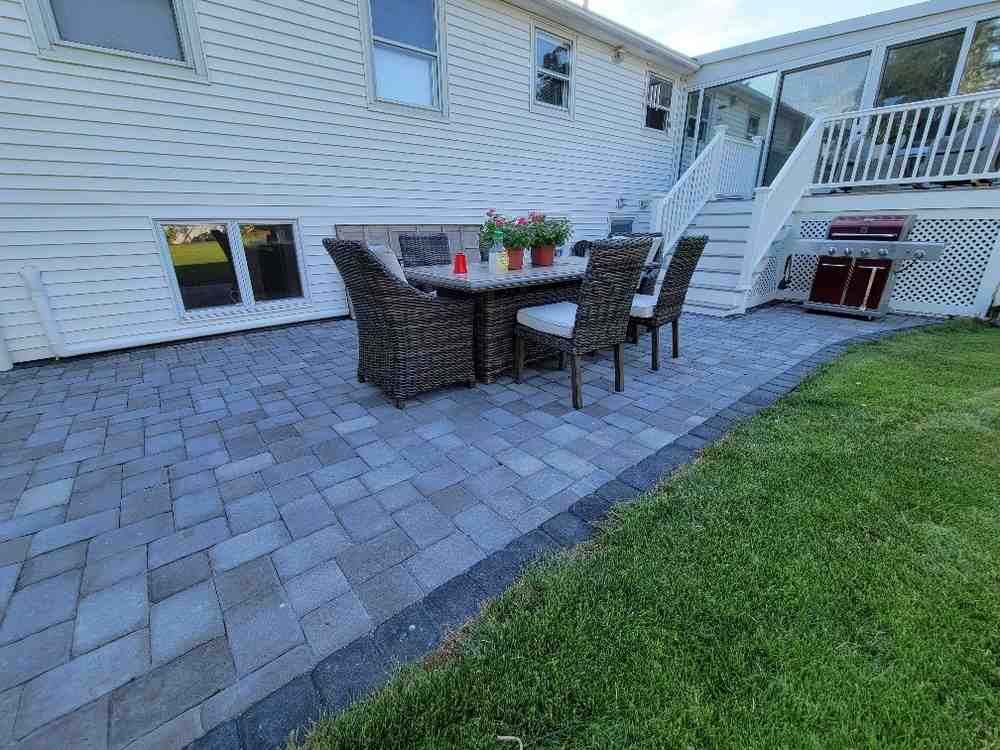
Your Quick Guide to Deck Patio Construction in Massachusetts
Deck patio construction combines two of the most valuable outdoor living upgrades for Massachusetts residential and commercial properties — and coordinating both scopes together is often more efficient than handling each one separately.
Here’s what you need to know at a glance:
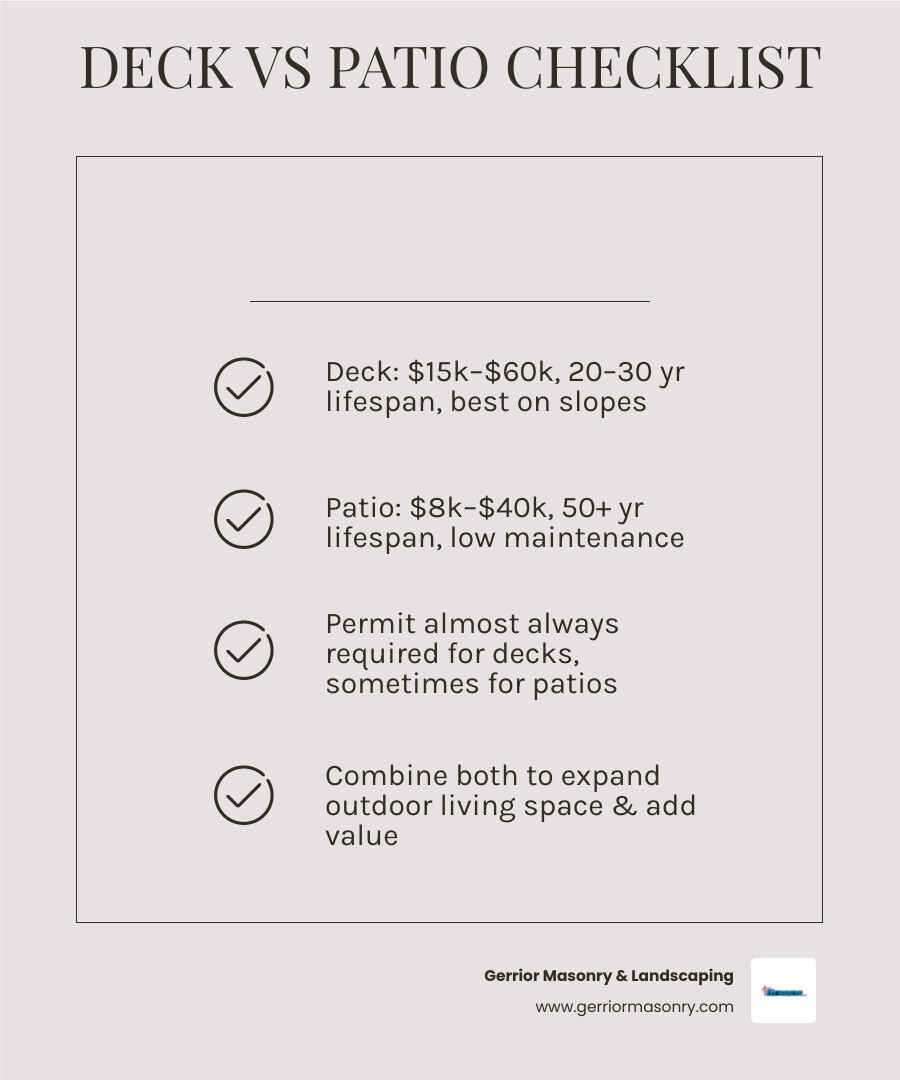
| Feature | Deck | Patio |
|---|---|---|
| Best for | Sloped or uneven terrain | Flat or gently graded sites |
| Primary materials | Pressure-treated wood, composite | Pavers, natural stone, concrete |
| Typical average industry cost range (MA) | $60,000–$250,000+ installed | $32,000–$160,000+ installed |
| Lifespan | 20–30 years | 50+ years |
| Maintenance | Seal every 1–2 years | Low maintenance |
| Permit required? | Almost always | Sometimes, varies by town |
Note: Cost ranges above reflect average costs sourced from publicly available online industry data and are not the actual prices of Gerrior Masonry & Landscaping. Individual project costs vary widely based on size, materials, access, engineering, drainage, and site conditions across Massachusetts.
Whether you’re in Woburn, Winchester, Lexington, Burlington, or Belmont, Massachusetts, the right combination of deck and patio construction can dramatically expand usable outdoor space, improve circulation, and increase long-term property value.
The challenge? Most projects involve multiple technical decisions: materials, layouts, permits, drainage, grading, and structural components. If any one of these is handled incorrectly, the result can be expensive repairs and reduced performance over time.
This guide walks through the essentials — from choosing between a deck and a patio, to materials, structural planning, permits, and the most common mistakes to avoid.
I’m Joe Gerrior, owner of Gerrior Masonry & Landscape Construction Corp., with over 34 years of experience in deck patio construction, hardscaping, masonry, landscaping, and site improvements for residential and commercial clients across Massachusetts. I’ll share what we’ve learned building outdoor living spaces in this region so you can make informed project decisions.
Simple deck patio construction glossary:
- brick patio installation
- concrete patio construction
- flagstone patio construction
- patio installations
- patio installation services
- Request a Free Estimate
Master the Art of Deck Patio Construction

Integrating a deck and a patio into one cohesive design is an effective way to maximize outdoor living space on Massachusetts properties. In Massachusetts communities such as Lexington, Winchester, Burlington, Belmont, and Woburn, where sites often include rolling grades or elevation changes, multi-level designs can solve terrain challenges while improving usability and appearance. By combining the elevated vantage point of a deck with the grounded, natural feel of a stone patio, property owners can create distinct zones for dining, circulation, and gathering.
Before construction begins, legal and structural planning must come first. Zoning laws and building permits are not optional in Massachusetts. Most local municipalities require a building permit for any deck attached to a building, or for freestanding structures over 200 square feet or elevated more than 30 inches above grade. Navigating these local building codes requires a clear understanding of structural loads, railing heights, and stair configurations.
When planning your layout, account for setbacks from property lines, drainage patterns, septic system locations, and underground utility lines. To avoid delays, consult the local building department early in the planning phase. For a deeper look at layouts, sizing, and choosing between freestanding or attached frames, check out these helpful How to Design a Deck: Tips for Design & Layout guidelines.
Deciding Between a Deck and a Patio
Choosing the right structure depends heavily on topography, budget, intended use, and long-term maintenance goals. Often, the best solution is a hybrid approach that utilizes both elements to create a seamless transition from the building to the surrounding site improvements.
- Terrain and Slope: On steeply sloped sites, a deck is often the practical option because it can be elevated on posts to create a level platform. Patios require a stable, properly graded base; installing one on a slope usually means excavation, grading, and retaining wall construction. However, combining a small deck that steps down onto a spacious paver patio can minimize excavation costs while maximizing usable square footage.
- Cost Comparison: Patios generally require fewer structural support elements than elevated decks, so average industry pricing is often lower for comparable square footage. However, site preparation, excavation, and the choice of premium natural stone can influence the final investment.
- Commercial Benefits: For commercial properties in Massachusetts, hardscaping features such as walkways, retaining walls, patios, and integrated landscape areas provide highly functional outdoor gathering spaces while helping improve circulation, drainage control, and property value.
To explore how a custom-designed stone or paver patio can improve your property, read more on our patio installation services page.
Essential Materials for Deck Patio Construction
Selecting the right materials affects initial investment, maintenance requirements, and long-term performance. In Massachusetts, materials must be durable enough to withstand hot, humid summers and freezing, snowy winters.
Decking Materials
- Pressure-Treated Wood: A cost-conscious option that resists rot, decay, and insects, but typically requires regular sealing or staining to prevent warping and cracking over time.
- Composite Decking: A durable, low-maintenance material made from wood fibers and recycled plastics. It resists splintering, fading, and mold growth, and does not require routine staining or painting.
- Hardwoods (e.g., Ipe): Premium natural wood options that offer exceptional density, natural fire resistance, and durability, typically at a higher installed cost but with a lifespan that can exceed 40 years.
Patio Materials
- Concrete Pavers: Durable, versatile, and easy to repair if individual units are damaged. They are available in a wide variety of colors, shapes, and textures to complement any architectural style.
- Natural Stone (Slate, Flagstone, Granite): A premium material selection with long service life and strong visual appeal in Massachusetts landscapes. Granite is particularly prized for its exceptional strength and resistance to freeze-thaw cycles.
- Stamped Concrete: A decorative option, though it may be more vulnerable to cracking in freeze-thaw conditions if not properly jointed and sealed.
For additional design inspiration and material ideas, check out this guide on backyard patio pavers.
Structural Planning and Professional Installation Steps
Whether the project includes an elevated deck, a ground-level patio, or a combined outdoor living layout, precise structural work is essential for safety and longevity. While some online resources discuss basic construction methods, deck patio construction in Massachusetts should be handled by experienced professionals to address code compliance, frost protection, drainage, and load requirements.
Structural Components of a Deck
A safe deck relies on a continuous load path that transfers weight from the deck surface to the ground:
- Footings: Concrete piers installed below the local frost line (typically 48 inches deep in Massachusetts) to reduce frost heaving risk.
- Posts: Vertical supports, usually heavy-duty pressure-treated timber, that transfer loads to the footings.
- Beams: Horizontal structural members supporting the joists and distributing the weight to the posts.
- Joists: Framing members spaced at regular intervals that support the deck boards.
- Ledger Board: The structural connection fastening the deck frame to the building when applicable. Proper flashing here is critical to prevent water from leaking into the building framing.
For a general overview of framing layouts and fastening methods, refer to this How to Build a Deck — Step-by-Step DIY Guide (2026) resource, but for Massachusetts code compliance and structural reliability, professional installation is strongly recommended.
Patio Installation Steps
A long-lasting patio depends on proper subsurface preparation to prevent shifting and settling over time:
- Excavation: Removing turf, roots, and unsuitable organic soils to the required depth.
- Subgrade Compaction: Compacting the underlying soil to create a stable, unyielding base.
- Base Preparation: Installing and compacting crushed aggregate (usually 4 to 6 inches of processed gravel) and a thin layer of bedding sand.
- Drainage and Slope: Grading the base and surface away from structures (at least 1/4 inch per foot) to manage water properly.
- Paver Placement & Joint Sand: Installing pavers, edge restraints, and joint material to lock the system together.
Avoiding Costly Mistakes in Deck Patio Construction
Without proper planning and qualified installation, outdoor construction projects can develop serious structural, drainage, and compliance issues. Common problems across Massachusetts include:
- Zoning and Setback Violations: Building too close to property lines or easements can create permit complications and enforcement issues.
- Improper Drainage: Inadequate grading can direct runoff toward foundations or create surface pooling, which can damage both the patio and the building.
- Shallow Footings: In Massachusetts towns such as Belmont, Burlington, Winchester, Lexington, and Woburn, winter freeze conditions can lift and damage structures if footings are not properly designed and installed below the frost line.
- Underestimating Costs: Online calculators often understate actual project variation. Based on publicly available online industry data, average deck projects in Massachusetts may range from $60,000 to $250,000+, while patio projects may range from $32,000 to $160,000+ depending on size, site access, materials, drainage requirements, and structural complexity. These figures are average industry estimates only and are not the actual prices of Gerrior Masonry & Landscaping.
In addition to deck and patio construction, many successful exterior improvement plans also include broader patio installations and related sitework that support landscaping, hardscaping, and masonry performance across Massachusetts.
Conclusion: Elevate Your Massachusetts Property
An integrated deck and patio is a strong long-term investment for Massachusetts properties. When properly designed and installed, these systems improve usability, appearance, and property performance while standing up to Massachusetts weather conditions.
At Gerrior Masonry & Landscaping, we bring over 34 years of hands-on experience to every project. Based near Woburn, our skilled team provides direct owner oversight on every job, delivering masonry, hardscaping, landscaping, and structural framing solutions built to high professional standards. From custom paver patios in Winchester and Lexington to integrated deck projects in Burlington, Belmont, and Woburn, Massachusetts, we handle the process from excavation through final walkthrough.
We also support broader exterior improvement goals with related site services across Massachusetts, including hardscaping, masonry, landscaping, and seasonal property support.
If you’re planning a residential or commercial outdoor improvement project in Massachusetts, we’re ready to help.
Ready to get started?
- Online: Request a Free Estimate
- Learn More: Read more about our custom patio installations and hardscaping services.