
Why Your Downspout and Gutter Drainage System Protects Everything Below It
A well-designed downspout and gutter drainage system is one of the most important — and most overlooked — parts of any home. It controls where rainwater goes after it hits your roof. Get it right, and your foundation stays dry, your lawn stays intact, and your basement stays clean. Get it wrong, and the damage adds up fast.
Here’s what a complete gutter drainage system does:
- Collects rainwater from the roof via gutters
- Channels it down through downspouts
- Directs it away from the foundation — either above ground or through buried underground pipes
- Releases it safely into the yard, a dry well, or a storm drain
This matters especially in Massachusetts, where heavy spring rains, summer storms, and freeze-thaw cycles in winter put real stress on drainage systems. Towns like Woburn, Burlington, and Winchester regularly see conditions that can overwhelm a poorly designed system — leading to wet basements, eroded landscaping, and costly foundation repairs.
The stakes are real. Water pooling near a foundation doesn’t just cause dampness. Over time, it can cause soil erosion, mold growth, structural settlement, and serious damage to your home’s footings.
This guide walks you through everything you need to know — from choosing the right components, to proper installation pitch, to cold-weather engineering — so your drainage system works hard every season.
I’m Joe Gerrior, owner of Gerrior Masonry & Landscape Construction Corp., with over 34 years of experience designing and installing downspout and gutter drainage systems for residential and commercial clients across Massachusetts. In that time, I’ve seen how the right drainage setup can save homeowners from thousands of dollars in preventable water damage.
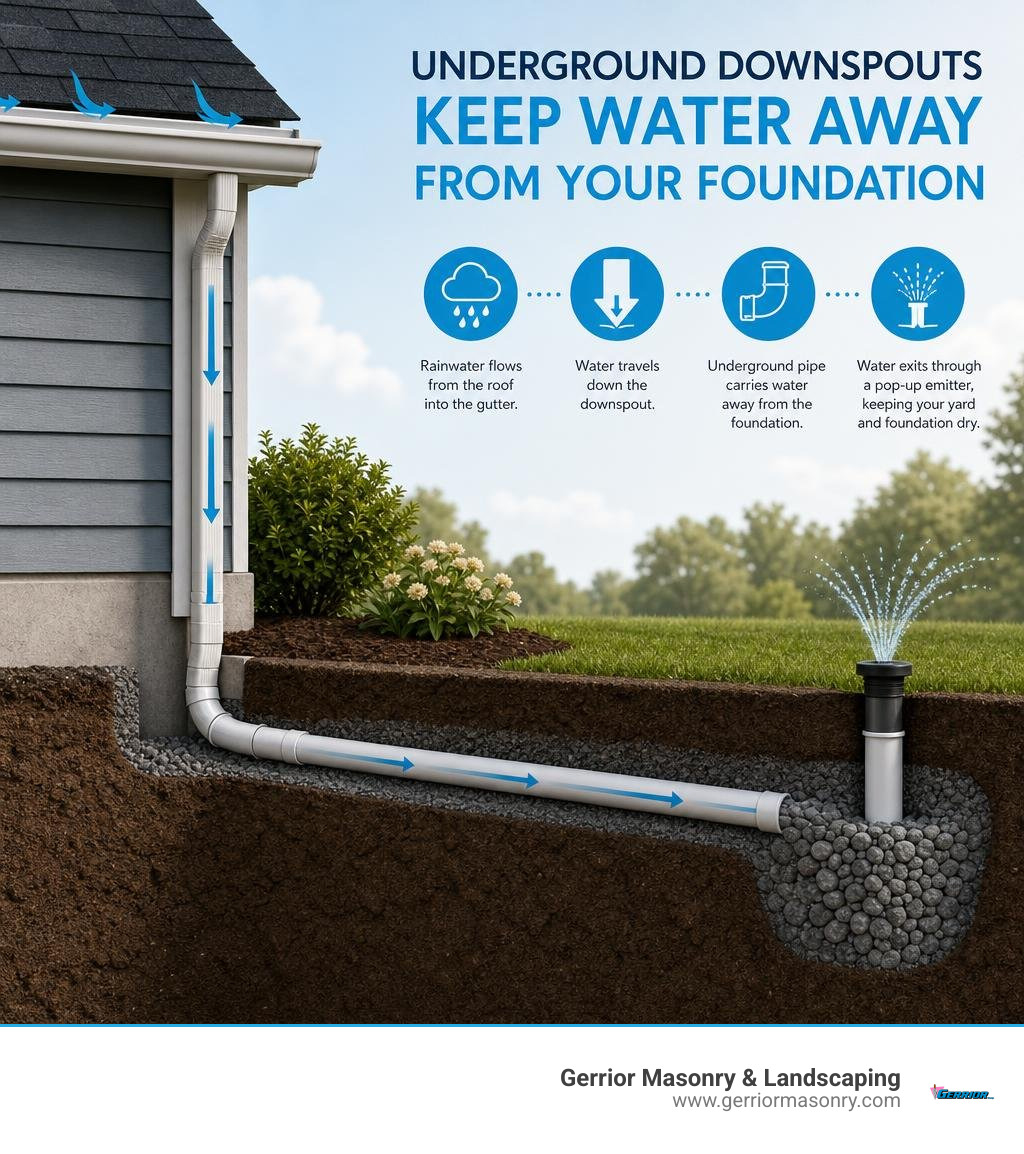
Downspout and gutter drainage system basics:
Designing a High-Performance Downspout and Gutter Drainage System
When designing an underground downspout and gutter drainage system, the goal is simple: move roof runoff away from your foundation quickly and cleanly. In Massachusetts, local soils can reach complete soil saturation during heavy storms, leaving water nowhere to go except against the foundation wall or into the basement.
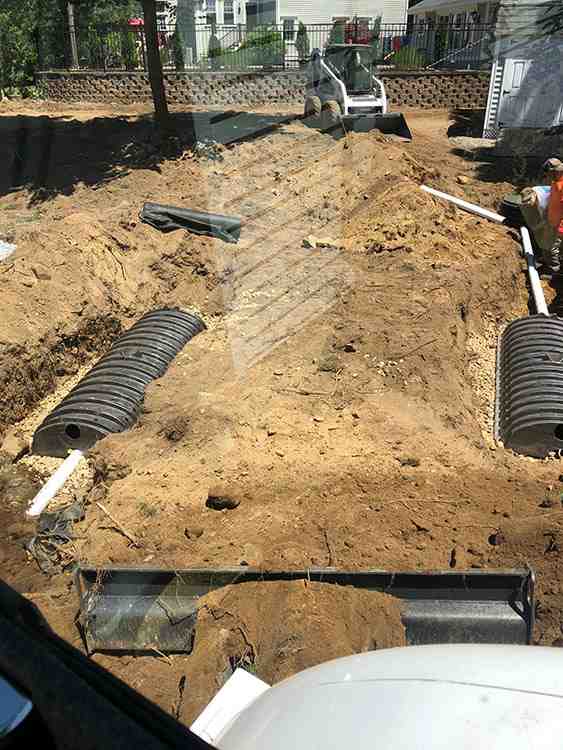
Proper stormwater management starts with the right materials. While big-box stores often sell flexible corrugated pipe, we strongly advise against it for buried systems. Corrugated pipe has ridges that catch leaves, roof grit, and silt, which can create clogs that are difficult to clear. Instead, we use solid, smooth-walled PVC pipe.
| Feature | Solid PVC Pipe (SDR 35 / Schedule 40) | Thin Corrugated Pipe |
|---|---|---|
| Flow Efficiency | Excellent smooth interior | Poor ridges slow water flow |
| Clog Resistance | High debris slides through | Low debris catches in ridges |
| Durability | High crush resistance | Low easily crushed or deformed |
| Maintenance | Easier to snake or flush | Difficult to clear without excavation |
By running solid PVC pipe from your downspouts, water flows at higher velocity, helping the line stay cleaner and function properly for years.
Components of an Underground Downspout and Gutter Drainage System
A professional underground system is more than a pipe in the ground. It is an integrated network of components designed to capture, filter, and discharge water:
- Debris Filters and Cleanouts: Installed where the downspout meets the underground pipe to catch leaves and twigs before they enter the buried line.
- Catch Basins: Placed at key low points or under downspouts to collect runoff and trap heavier sediment.
- Bubbler Pots and Pop-Up Emitters: Installed at the discharge end so water can release onto the lawn, then retract or sit flush for mowing.
For better debris control, specialized grates like those detailed in the NDS Downspout Defender Guide can reduce splashing and deflection. Integrating these components correctly is a key part of effective drainage around foundation planning.
Optimizing Your Downspout and Gutter Drainage System for Heavy Rainfall
To handle intense Massachusetts downpours, your system must be sized for peak flow capacity. The volume of water coming off a roof can be significant:
- A single 2×3 inch downspout can drain up to 186 gallons of water per minute.
- A single 3×4 inch downspout can drain up to 464 gallons of water per minute.
If underground pipes are too small, water can back up and overflow at the downspout connection. For standard residential properties, we recommend a minimum of 4-inch solid PVC piping. For larger homes or commercial properties, sizing calculations should align with recognized standards, such as those outlined in the ABCB Gutter and Downpipe Provisions, so the gutter and pipe system can handle local rainfall intensity. Properly engineered residential drainage systems account for these flow rates to help prevent pooling near the foundation.
Cold Climate Engineering: Preventing Freezing and Clogs
In Massachusetts, winter freeze-thaw cycles can create serious drainage problems. If water sits inside underground pipes and freezes, it can block the system and force water to back up toward the gutters.
To help prevent this, our systems in Woburn, Winchester, and Burlington use two important freeze-protection features:
- Ice Guards / Debris Filters: These include an open-air escape path. If an underground pipe freezes, water can spill out at the grate instead of backing up into the gutter system.
- Weep Holes: We drill small drainage holes in the bottom of catch basins and bubbler pots, surrounded by washed stone. This lets standing water slowly drain into the subsoil between storms, helping the pipes stay empty before the next freeze.
Proper Pitch and Placement for Emitters
An underground drainage line depends on gravity. To move water away from the home, the trench must have a consistent downward slope. We maintain a minimum pitch of 1% — roughly 1/8 inch of drop per foot of pipe run.
The discharge point, whether a bubbler pot or pop-up emitter, should be installed at least 8 feet away from the foundation. For homes with full basements, extending the run to 10 or 15 feet is even safer.
When the emitter is flush with the turf, it remains safe from lawnmowers. If the yard has heavy clay soil or poor drainage, we may connect these lines into underground dry well systems to disperse runoff safely below grade.
Professional Installation and Maintenance of Gutter Drainage Systems
While burying a pipe may seem like a simple weekend project, it requires precise grading, excavation, and awareness of buried utility lines. One mistake in pitch can cause standing water, pipe collapse, or localized yard flooding.
For commercial properties and large residential estates in Woburn, Winchester, Burlington, Lexington, and Arlington, professional installation helps the work comply with local environmental requirements and protects existing hardscaping, walkways, patios, and lawns.
Average Costs and Investment Expectations
Because every property has different slopes, soil conditions, pipe lengths, and restoration needs, the cost of installing a professional underground downspout and gutter drainage system can vary.
Based on publicly available internet data and general industry averages, homeowners in Massachusetts can expect estimated costs to fall within these ranges:
- Simple, Single-Downspout Run: $1,500 to $3,500, depending on length and landscape restoration.
- Comprehensive Whole-House Drainage System: $4,500 to $15,000+ for multiple downspouts, catch basins, and possible dry well integration.
Disclaimer: These figures are average costs sourced from publicly available online data and do not represent the actual pricing or guarantees of Gerrior Corp. Every project requires a site assessment for an accurate custom quote.
Why Choose Gerrior Masonry & Landscaping for Your Drainage Needs
At Gerrior Masonry & Landscaping, we have spent over 30 years resolving challenging drainage and foundation issues across Woburn, Winchester, Burlington, Lexington, and Arlington. Our experience in masonry, excavation, and hardscaping means we do not just solve water problems — we also restore affected lawns, walkways, and patios afterward.
With owner oversight on every project, our team ensures your system is pitched correctly, built with premium solid PVC, and designed for Massachusetts weather.
Let us protect your foundation and help keep your basement dry. Explore our specialized Gerrior Masonry Residential Drainage Solutions to see how we can transform your yard.
Ready to secure your home’s drainage?
- Call us today at +781-713-1225
- Or request a custom, on-site consultation online: Request an Estimate
