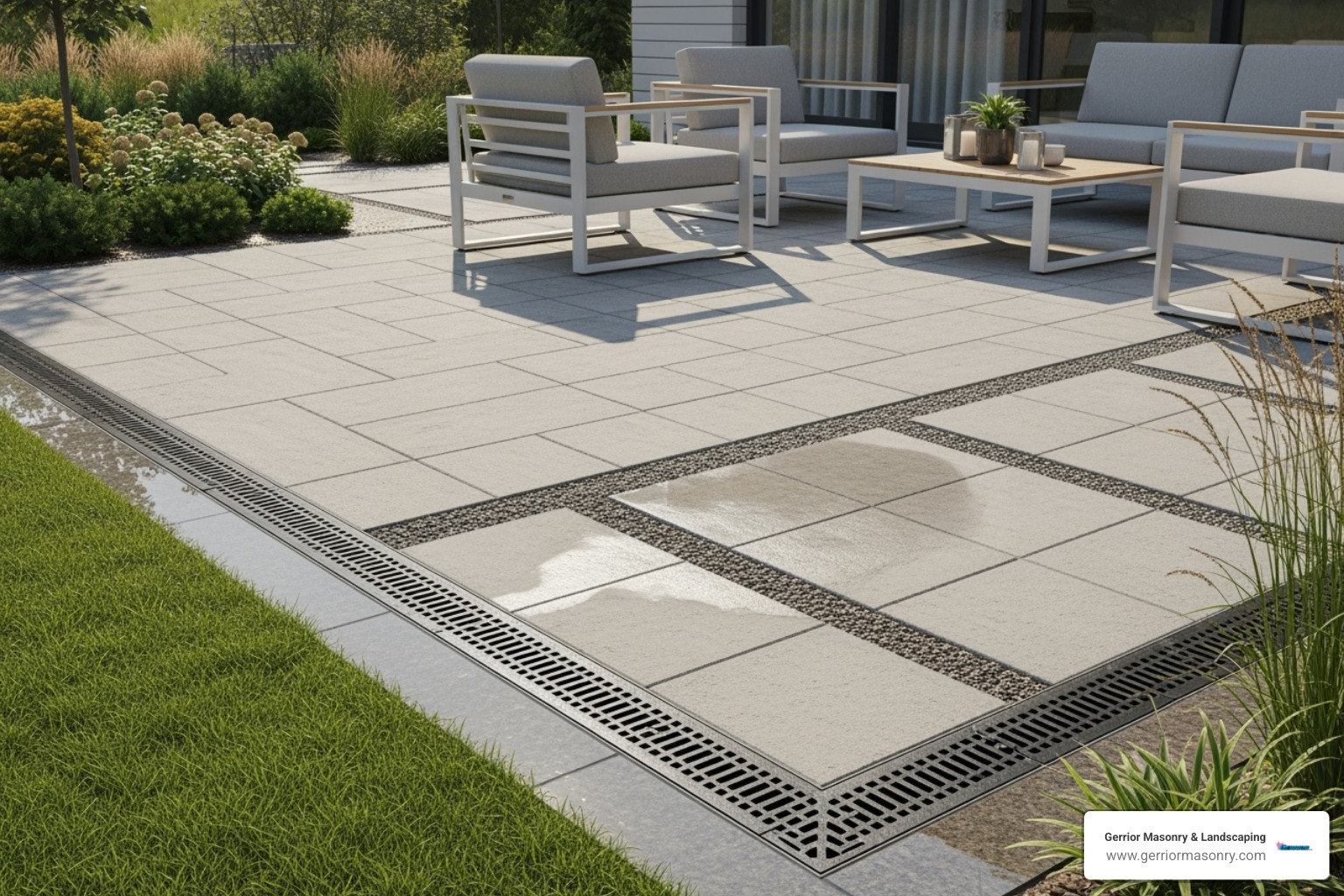
Why Commercial Properties Need Stormwater Drainage Solutions
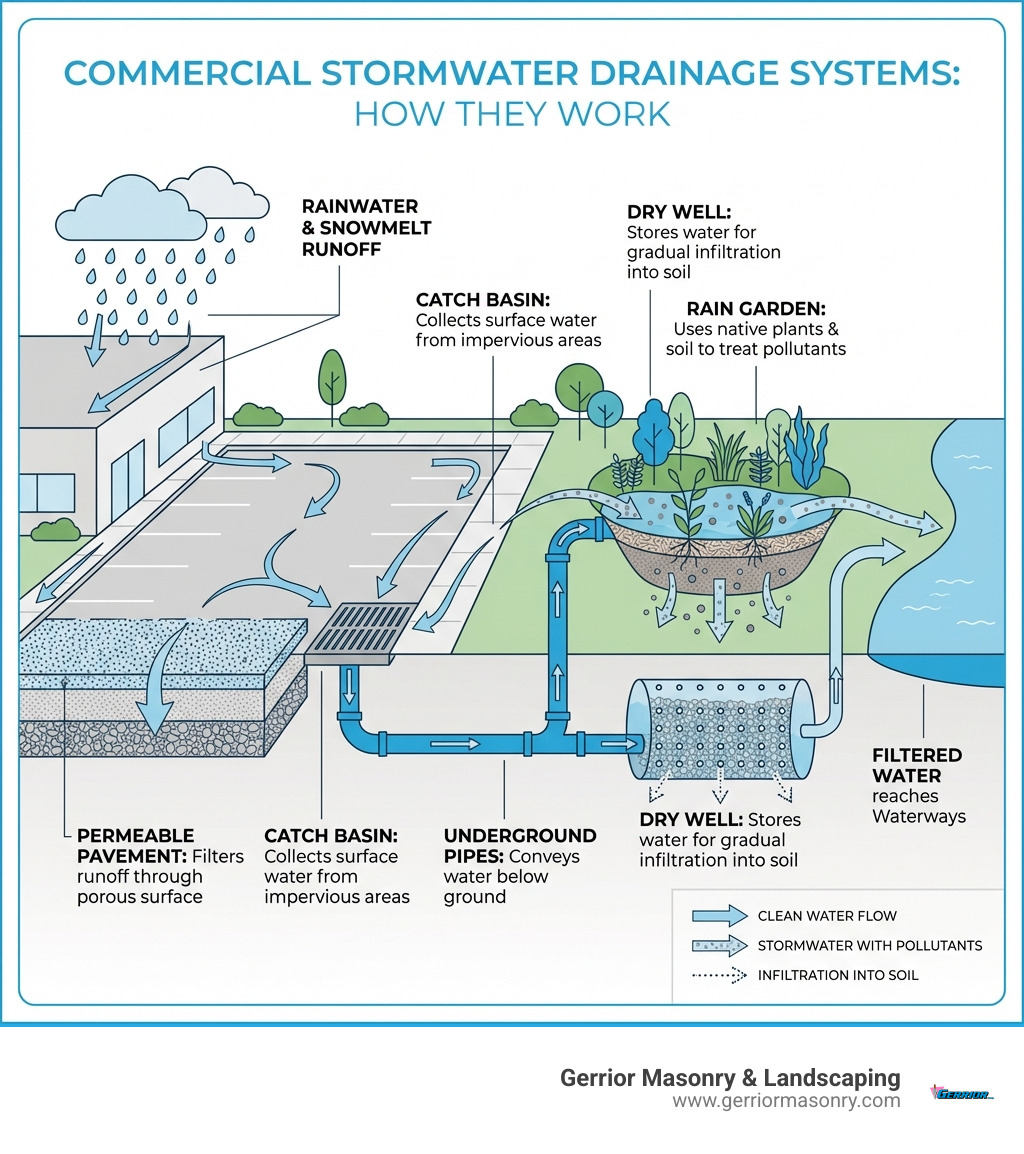
Stormwater drainage solutions are essential systems designed to manage rainwater and snowmelt runoff on commercial properties. In the unique climate of Massachusetts, where heavy spring rains follow significant winter snow accumulation, these systems are the first line of defense for your business infrastructure. Here are the most effective options for your business:
Catch Basins & Trench Drains – Collect surface water from parking lots and walkways.
Permeable Pavement Systems – Allow water to filter through surfaces into underground storage.
Bioretention Basins & Rain Gardens – Use native plants and soil to naturally filter stormwater.
Dry Wells & Underground Infiltration – Store water underground for gradual absorption.
French Drains – Redirect water away from foundations and structures.
Green Infrastructure – Combine multiple natural systems for comprehensive management.
Without proper stormwater management, commercial properties face serious risks. Runoff carrying oils, chemicals, and debris from impervious surfaces like parking lots can cause flooding, foundation damage, and eroded landscapes. In urban and suburban environments, the sheer volume of water generated by a single storm can overwhelm local municipal systems if not managed on-site. Stormwater is a leading source of pollution for local estuaries and rivers, making proper drainage both an environmental responsibility and a regulatory requirement for modern businesses.
The primary goals of commercial stormwater drainage systems include:
Preventing flooding of buildings and parking areas: Ensuring that customers and employees have safe access to your facility regardless of weather conditions.
Protecting infrastructure from water damage: Preventing the costly degradation of asphalt, concrete, and building foundations caused by standing water and freeze-thaw cycles.
Managing runoff volume and velocity: Slowing down water to prevent soil erosion and downstream flooding.
Filtering pollutants before water reaches natural waterways: Removing hydrocarbons, heavy metals, and sediment through natural or mechanical filtration.
Complying with local and EPA stormwater regulations: Avoiding fines and legal complications by adhering to the Clean Water Act and local Massachusetts bylaws.
Reducing liability from slip hazards: Eliminating ice patches in winter and deep puddles in summer that can lead to accidents.
I’m Joe Gerrior, owner of Gerrior Masonry & Landscape Construction Corp. Over our 34 years serving Massachusetts commercial properties, I’ve seen how proper stormwater drainage solutions protect investments. From simple catch basin installations to complex bioretention systems, choosing the right approach requires understanding your property’s unique challenges, including soil composition and topography.
Top Commercial Stormwater Drainage Solutions for Modern Properties
Effective stormwater management is critical for commercial properties in Middlesex and Essex County, Massachusetts. The goal is to manage water responsibly to prevent flooding and protect infrastructure through a combination of “gray” and “green” infrastructure. Gray infrastructure refers to engineered systems like pipes and concrete channels, while green infrastructure (GI) mimics natural processes using vegetation and permeable surfaces to capture and filter stormwater. This dual approach protects properties from heavy rainfall and snowmelt, which are increasingly common in the Northeast. These systems are vital for preventing the flooding of streets and parking lots, which can otherwise disrupt business operations and cause significant property damage.
The “Lifecycle of a Raindrop” approach involves four critical stages: Capture, Convey, Store, and Treat.
Capture: This is the initial collection of water from roofs, parking lots, and sidewalks.
Convey: Moving the water safely through pipes or swales to a management area.
Store: Holding the water temporarily in basins or underground tanks to prevent overwhelming the system.
Treat: Removing pollutants through filtration or biological processes before the water is released.
This holistic view ensures stormwater is managed for both quality and quantity. For more information, you can explore options for treating stormwater.
Efficient Catch Basins and Trench Drain Stormwater Drainage Solutions
Traditional gray infrastructure like catch basins and trench drains remains highly effective for managing surface runoff. These systems are the workhorses of commercial drainage, specifically designed to collect water from large impervious areas like parking lots, loading docks, and driveways.
A catch basin is a grated opening that directs surface water into underground pipes. The grates block large debris like leaves, branches, and trash from clogging the system. Below the grate, a sump area allows sediment to settle before the water flows to a designated outlet. We provide various drainage systems for commercial needs. Trench drains, or channel drains, are linear systems used in large paved areas or along building foundations to intercept sheet flow. By capturing water across a wide path, they are exceptionally effective at reducing slip hazards and preventing erosion on sloped landscapes.
These systems require regular maintenance to remain functional. Accumulated debris can block inlets, leading to localized flooding. We recommend regular clearing of grates and periodic vacuuming of the sumps. For stubborn blockages within the piping, a high-pressure washer is an effective tool. Keeping these elements free of obstructions is a key best practice for commercial property managers looking to avoid emergency repairs.
Permeable Pavement and Green Infrastructure Stormwater Drainage Solutions
Green infrastructure offers environmentally friendly solutions like permeable pavement and bioretention systems. Unlike traditional asphalt, permeable pavement allows water to pass through its surface into an underlying stone reservoir. From there, it is slowly absorbed into the ground, which recharges groundwater and filters out pollutants naturally. We offer various hardscaping services including grass pavers, porous concrete, and open-joint bricks that provide structural integrity while maintaining permeability.
Rain gardens and bioswales are functional green components that add aesthetic value to a property. Rain gardens are shallow depressions planted with native vegetation that capture and filter runoff from roofs or small paved areas. Bioswales are larger, linear vegetated channels often integrated into parking lot islands or along roadways. You can find more details on planted stormwater management practices. These practices improve air quality, increase biodiversity, and enhance property aesthetics while managing runoff volume effectively.
Dry Wells and Subsurface Infiltration Systems
Dry wells and subsurface infiltration systems work underground to manage excess water, making them ideal for sites with limited surface space. A dry well is essentially an underground chamber that collects and slowly releases stormwater into the surrounding soil. We are experts in installing dry wells to handle standing water issues in areas where surface basins are not feasible.
Larger underground systems, often consisting of perforated pipes or modular plastic crates, can be engineered beneath parking lots to store massive volumes of water. However, these systems must comply with strict regulations, such as the EPA’s Class V injection well guidelines. Challenges include ensuring proper groundwater separation and maintaining access for periodic inspections. When properly designed and installed, these systems provide significant runoff reduction and contribute to long-term groundwater sustainability.
Implementing and Maintaining Your Stormwater Strategy
Developing effective stormwater drainage solutions in Massachusetts requires site-specific planning and strict adherence to state and local regulations. Proper design considers soil type (determined through perc tests), slopes, and the total impervious surface area to handle both current weather patterns and future extreme weather events. In Massachusetts, the Department of Environmental Protection (DEP) provides a Stormwater Handbook that serves as the gold standard for these installations.
Maintenance is essential for system longevity and performance. Requirements vary significantly by system type:
Feature
Permeable Pavement
Traditional Pavement (with Drains)
Water Management
Infiltrates water into ground
Directs water to drains
Pollutant Treatment
Filters through soil layers
Minimal treatment
Maintenance
Regular vacuuming/sweeping
Debris removal from grates
Environmental Impact
Positive, supports ecosystems
Can contribute to pollution
Ditches and Swales: Require regular mowing to maintain flow and debris removal to prevent blockages.
Catch Basins and Trench Drains: Need regular clearing of inlets; pressure washing for clogs and vacuuming of sumps every 1-2 years.
Rain Gardens: Involve weeding, mulching, and plant care, similar to traditional landscaping but with a focus on sediment removal.
Permeable Pavements: Should be vacuumed 1-2 times annually with a regenerative air sweeper to prevent fine sediments from clogging the pores.
Compliance with local ordinances and the EPA’s National Pollutant Discharge Elimination System (NPDES) permits is mandatory for many commercial sites. Frameworks like the Unified Stormwater Rule (USWR) provide guidelines that mirror many Massachusetts requirements regarding runoff rates and water quality. Our approach ensures all solutions meet or exceed these environmental standards, protecting you from potential litigation or municipal fines.
Design Best Practices and Cost Considerations
Effective design requires a thorough site assessment by experienced professionals. Bioretention systems need specific engineered soil mixes to ensure proper drainage and plant health, while infiltration systems require flat bottoms to ensure uniform absorption into the subsoil. Consulting with professionals prevents unintended consequences like flooded basements, overwhelmed public systems, or “piping” where water carves dangerous channels underground.
Costs vary based on complexity, scale, and the specific needs of the site. Based on industry data, the average cost for commercial stormwater drainage solutions is approximately $12,000. However, prices can range widely from $4,000 for simple catch basin repairs or small French drain installations to upwards of $45,000 for large-scale green infrastructure projects involving extensive excavation and specialized materials. Please note these are average industry costs and not actual quotes for Gerrior Masonry services. We provide customized, detailed quotes after a comprehensive site evaluation.
Professional Installation and Maintenance Services
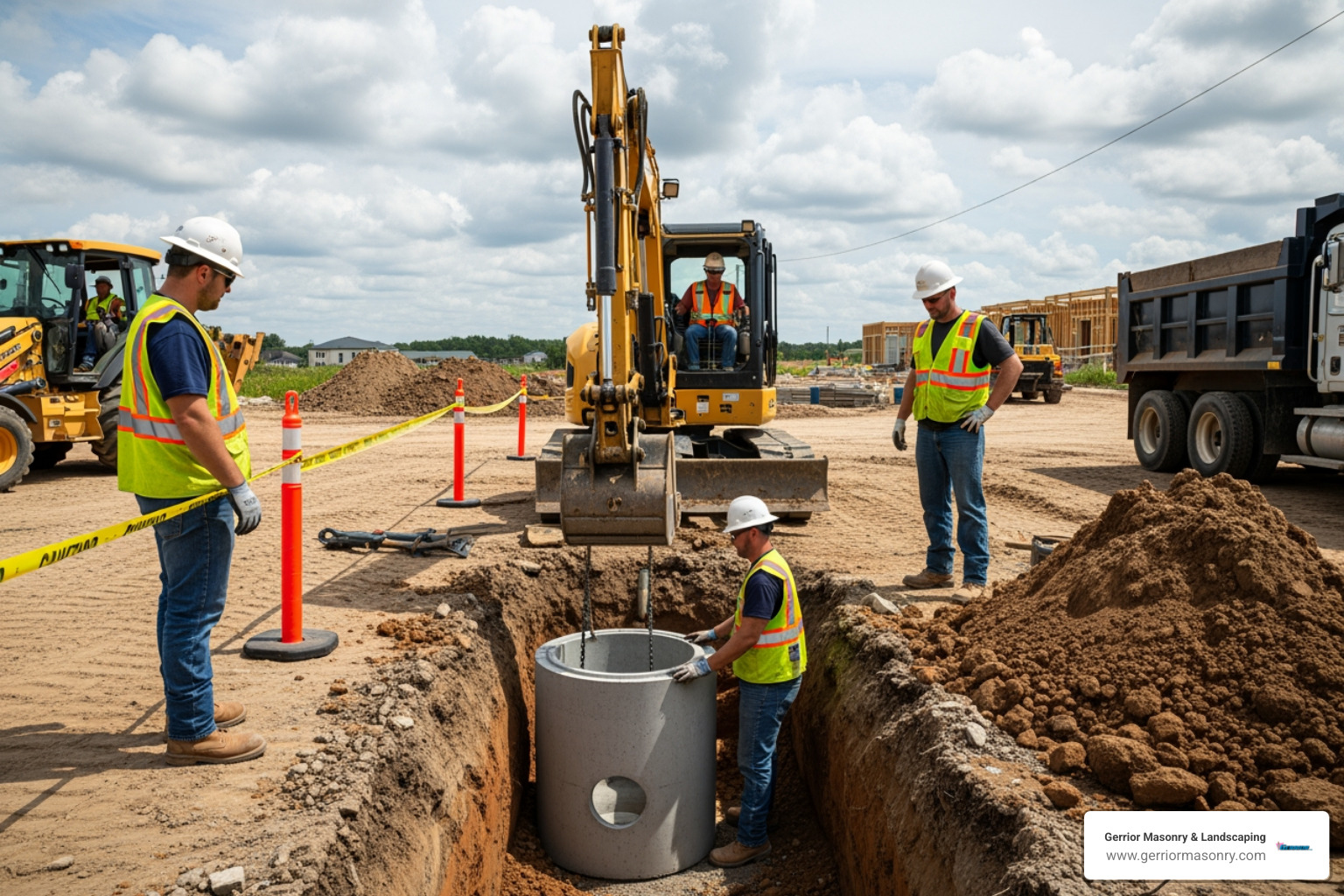
Professional installation ensures your system performs as intended for decades. At Gerrior Masonry & Landscaping, we have over 30 years of experience handling the unique commercial drainage challenges found in Middlesex and Essex County. Our team manages everything from precise grading for trench drains to the complex layering of permeable pavements. We provide owner oversight on every project to ensure the highest quality of workmanship.
Proper installation prevents standing water and foundation damage, which are the leading causes of commercial property depreciation. For example, a French drain must be installed at the correct depth and slope with the right aggregate to be effective over the long term. You can learn more about our drainage systems services. We also offer maintenance and commercial snow removal to ensure melting snow does not overwhelm your systems during the volatile New England winters. We only provide commercial snow services and do not offer residential snow removal.
Partnering with experienced professionals is an investment in your property’s future and its environmental footprint. Gerrior Masonry & Landscape Construction is based in Woburn, MA, and proudly services Middlesex and Essex County, Massachusetts.
Yard Drainage Company Near Me: 5 Proven Solutions!
Why Your Yard’s Drainage Problems Won’t Fix Themselves
A soggy, waterlogged yard is more than just an inconvenience; it’s a potential threat to your property’s foundation and value. If you’re searching for a “yard drainage company near me,” you’re already on the right track to finding a permanent solution. Here’s what to look for:
Quick Guide to Choosing a Drainage Contractor:
Experience: Seek out companies with decades of proven local experience.
Credentials: Ensure they are fully licensed and insured for your protection.
Reputation: Check online reviews and ask to see a portfolio of their past work.
Transparency: Get a detailed, written estimate outlining the scope and cost.
Warranties: Ask about guarantees on both materials and workmanship.
Ignoring drainage issues can lead to costly problems, from foundation damage and basement flooding to landscape erosion and pest infestations. Professional solutions like French drains, catch basins, and proper grading are essential for protecting your home.
At Gerrior Masonry & Landscape Construction, we’ve spent over 34 years helping Massachusetts homeowners solve these exact problems. We integrate effective drainage systems with beautiful hardscaping to create functional, lasting solutions. We understand the stress of dealing with water issues, and we’re here to provide a permanent fix, not just a temporary patch.
Understanding Yard Drainage: Problems, Solutions, and Costs
When water doesn’t drain properly, it can lead to significant damage. Understanding the signs and solutions is the first step toward a healthy, dry yard.
Is Your Yard Crying for Help? Common Drainage Red Flags
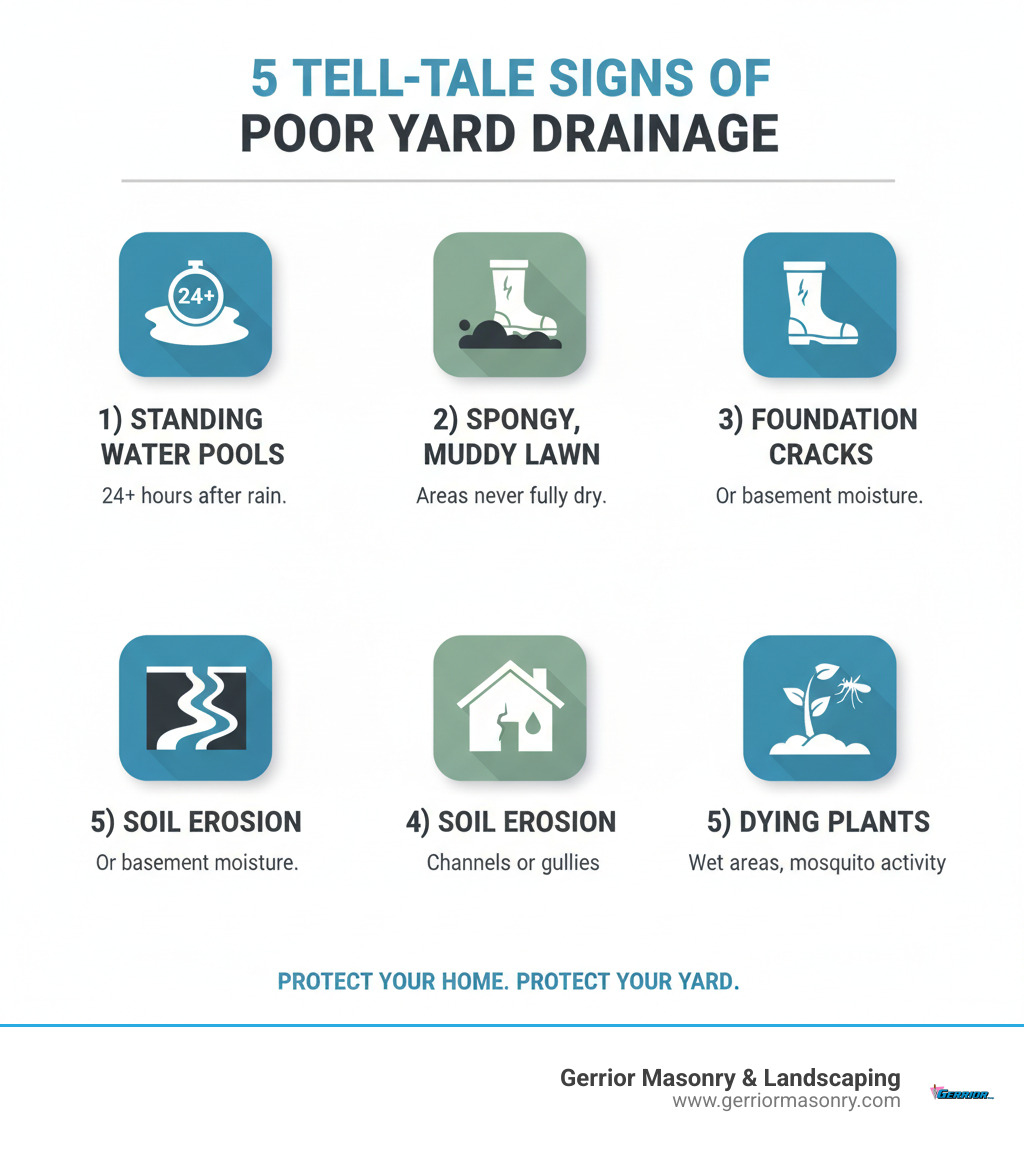
Don’t ignore these warning signs, as they can lead to major, costly repairs:
Standing Water: Puddles that linger for more than a day after rain.
Spongy or Marshy Lawn: Ground that feels squishy long after a storm.
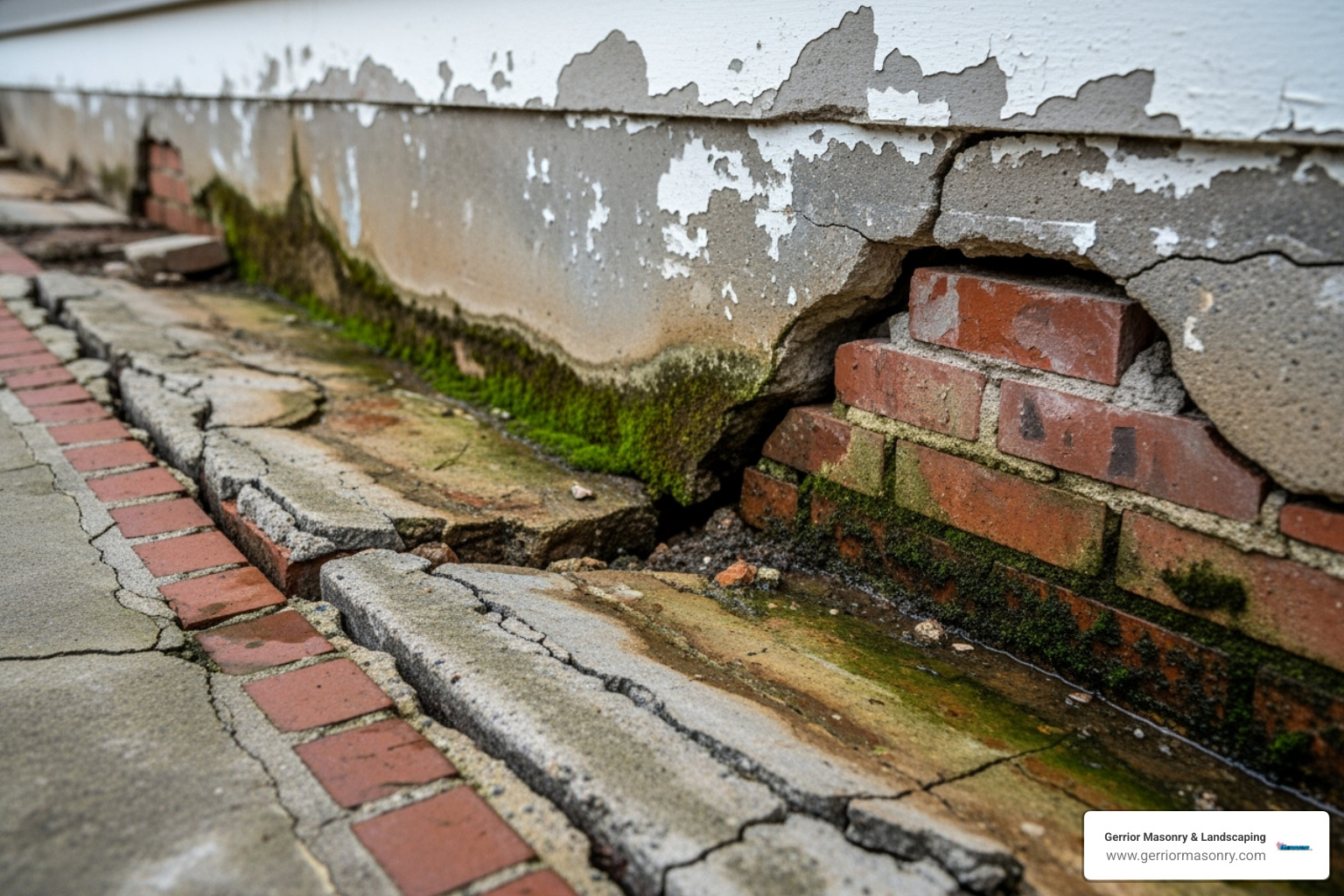
Foundation Issues: Water pooling near your home can cause foundation cracks and lead to basement leaks or musty smells. This can compromise your home’s structural integrity. Learn more about our foundation repair services.
Soil Erosion: Visible channels or gullies forming in your yard.
Gutter Overflow: Gutters overflowing during normal rainfall, directing water to your foundation.
The Most Effective Yard Drainage Solutions
The best approach depends on your specific issues, soil type, and property layout. A professional yard drainage company near me will assess these factors to recommend the most effective system. Common solutions include:
French Drains: A trench with a perforated pipe and gravel that collects and redirects groundwater. Ideal for soggy lawns and protecting foundations.
Catch Basins: Grated inlets in low-lying areas that capture surface water and channel it into an underground pipe system.
Dry Wells: Underground chambers that collect and slowly release stormwater into the surrounding soil.
Landscape Re-grading: Reshaping the land to ensure water flows away from your home’s foundation.
Permeable Hardscapes: Using materials for patios and walkways that allow water to pass through, reducing runoff. We can integrate these into our hardscaping services.
Swales: Shallow, vegetated channels that guide and filter stormwater.
How Soil Type Affects Drainage
Clay Soils: Dense and slow to drain, often causing surface pooling. French drains and re-grading are effective solutions.
Sandy Soils: Drain quickly but can lead to subsurface water flow issues. Curtain drains can intercept this underground water.
The Role of Downspouts and Gutters
Your gutters and downspouts are your first line of defense. A single inch of rain on a 1,000 sq. ft. roof produces over 700 gallons of water. Ensure this water is directed far from your foundation, often by connecting downspouts to an underground drainage system.
The Installation Process Overview
Assessment: A professional evaluates your property’s slope, soil, and problem areas.
Design: A custom drainage plan is created.
Excavation: Trenches are dug for pipes and other components.
Installation: The system is installed using quality materials.
Restoration: The area is backfilled and your landscape is restored.
Budgeting for a Dry Yard: Drainage System Costs
The price of a drainage system can vary widely depending on several factors, including the type of system, property size, and complexity. While simple fixes might cost a few hundred dollars, comprehensive systems are a more significant investment.
Important: The costs mentioned are national averages for general guidance and do not reflect a quote. For a precise estimate, a professional site evaluation is necessary. Simple fixes can range from $500-$2,500, while comprehensive systems can cost $8,000 to $25,000+.
Let’s look at a comparison of two common solutions:
Pros: Excellent for surface water in low spots, easy to maintain. Cons: Only addresses surface water, may be visible.
How to Hire the Right Yard Drainage Company Near Me
Choosing the right yard drainage company near me is crucial for a lasting solution. You want a team that understands the unique challenges of your property and local environment.
Your Checklist for Choosing a Drainage Contractor
Experience: Look for a company with decades of proven experience in local soil and weather conditions.
Licensing and Insurance: Always verify that the contractor is fully licensed and insured. This protects you from liability.
Reputation and Portfolio: Check online reviews and ask to see photos of their previous work.
Detailed, Written Estimates: A professional company will provide a clear, itemized quote. Avoid vague, verbal agreements.
Warranties: Inquire about warranties on both materials and labor. This shows the company stands behind its work.
Local Knowledge: A good contractor understands local soil types, weather patterns, and building codes. For more tips on hiring service professionals, you can refer to general advice on reputable companies and their networks, such as those that are part of larger organizations that uphold high standards, like Neighborly companies.
Key Questions to Ask Your Potential Yard Drainage Company
When you get an estimate, be prepared with these questions:
What is causing my drainage problem?
What is your recommended solution and why?
Can you provide an itemized quote detailing all costs?
What kind of warranty do you offer?
How will you protect my landscape during the project?
What is the estimated timeline for completion?
Your Expert Drainage & Masonry Solution in Massachusetts
For over 30 years, Gerrior Masonry & Landscape Construction has provided Massachusetts homeowners with effective, long-term drainage solutions. Our owner, Joe Gerrior, personally oversees every project to ensure the highest standards of quality and craftsmanship.
We don’t just install pipes; we design and build integrated systems that solve water problems while enhancing your property’s beauty and value. From French drains and catch basins to landscape re-grading and permeable patios, we create solutions that last. A properly drained yard protects your home’s foundation, prevents basement flooding, and improves your property’s curb appeal and value.
If you’re tired of soggy lawns, basement leaks, or worrying about water damage, it’s time to call the experts. We’re here to transform your drainage problems into a distant memory.
Gerrior Masonry & Landscape Construction is based in Woburn, MA, and proudly serves communities throughout Middlesex and Essex County, Massachusetts.
How to Hire the Right Yard Drainage Company Near Me
Choosing the right yard drainage company near me is crucial for ensuring your investment pays off. You want a team that understands not just the mechanics of drainage, but also the unique challenges of your property and local environment.
Your Checklist for Choosing a Yard Drainage Company Near Me
Here’s what we recommend looking for when vetting potential contractors:
Experience: Look for companies with a proven track record. Those with 20-30+ years of experience in drainage and landscaping, like our own team, have encountered a wide range of problems and know how to solve them effectively. This depth of experience means they’re less likely to be stumped by an unusual situation and more likely to provide a durable solution.
Proper Licensing and Insurance: This is non-negotiable. Ensure any company you consider is fully licensed and insured. Licensing demonstrates their competence and adherence to industry standards, while insurance protects you from liability in case of accidents or damage during the project. It’s a sign of a reputable business.
Positive Local Reviews and Portfolio: Check online reviews on platforms like HomeAdvisor or Google. Look for consistent positive feedback about professionalism, responsiveness, quality of work, and customer service. A strong portfolio of past work, ideally with before-and-after photos, can give you confidence in their capabilities. Some companies even boast an impressive number of positive reviews, with many recommending their services.
Detailed, Written Contracts: A trustworthy company will provide a clear, itemized quote and a comprehensive written contract. This document should detail the scope of work, materials used, timeline, payment schedule, and any warranties. Avoid companies that offer vague verbal estimates.
Warranties: Ask about warranties on both materials and workmanship. A company that stands behind its work offers peace of mind. This shows confidence in their solutions and craftsmanship.
Understanding of Local Conditions: Your chosen contractor should be familiar with local soil types, climate patterns, and any relevant building codes or environmental regulations. For tips on hiring home service professionals, you can refer to general advice on reputable companies and their networks, such as those that are part of larger organizations that uphold high standards, like Neighborly companies. While the following links are for general terms and privacy, they represent the kind of professional framework a strong company operates within: Terms of Use and Privacy Policy.
Key Questions to Ask Your Potential Yard Drainage Company Near Me
Once you’ve narrowed down your choices, prepare a list of questions to ask during your consultations. These questions will help you assess their expertise, approach, and suitability for your project.
What is your assessment of my specific drainage problem? A good contractor won’t just offer a solution; they’ll explain the why behind the problem, whether it’s soil compaction, improper grading, or issues with your downspouts.
Which solution do you recommend and why? They should be able to articulate the benefits of their proposed solution (e.g., French drain, catch basin, re-grading) and how it specifically addresses your property’s unique challenges. They should also explain how different solutions address specific problems like standing water or foundation issues.
Can you provide a detailed, itemized quote? This ensures transparency. The quote should break down labor, materials, equipment, and any other costs.
What is your warranty policy on parts and labor? Understanding their warranty provides assurance that they stand behind their work.
How will you protect my existing landscape during installation? Drainage work often involves excavation. A responsible contractor will outline steps to minimize disruption to your lawn, plants, and other hardscapes. This might include using plywood walkways for equipment access.
What is the estimated timeline for the project? Knowing the project duration helps you plan and manage expectations.
Your Expert Drainage & Masonry Solution in Massachusetts
When it comes to protecting your property and enhancing its beauty, a well-designed drainage system is paramount. This is where Gerrior Masonry & Landscape Construction Corp. steps in. With over 30 years of expertise, we’ve dedicated ourselves to providing lasting solutions for homeowners facing drainage challenges.
Our unique selling proposition lies in our skilled team and owner oversight on every project. Joe Gerrior personally ensures that each job is completed to the highest standards, guaranteeing quality results and peace of mind. We understand that proper yard drainage can increase property value and improve outdoor usability, and we integrate these benefits into our designs.
We don’t just fix drainage problems; we provide holistic solutions that seamlessly blend with your outdoor living spaces. We specialize in integrating effective drainage systems with beautiful hardscape designs, ensuring that your property is not only dry but also aesthetically pleasing. From expertly installed French drains and catch basins to strategic landscape re-grading, we tailor solutions to your specific needs.
The long-term benefits of a well-designed drainage system for a property are immense. It protects your home’s foundation from costly water damage, prevents basement flooding, eliminates unsightly and unhealthy standing water, reduces soil erosion, and promotes healthier plant growth. A properly drained yard improves your property’s curb appeal and significantly increases its value, ensuring your outdoor space remains a source of enjoyment, not worry.
If you’re tired of soggy lawns, basement leaks, or worrying about water damage, it’s time to call the experts. We’re here to transform your drainage problems into a distant memory.
Why Proper Yard Drainage Matters More Than You Think
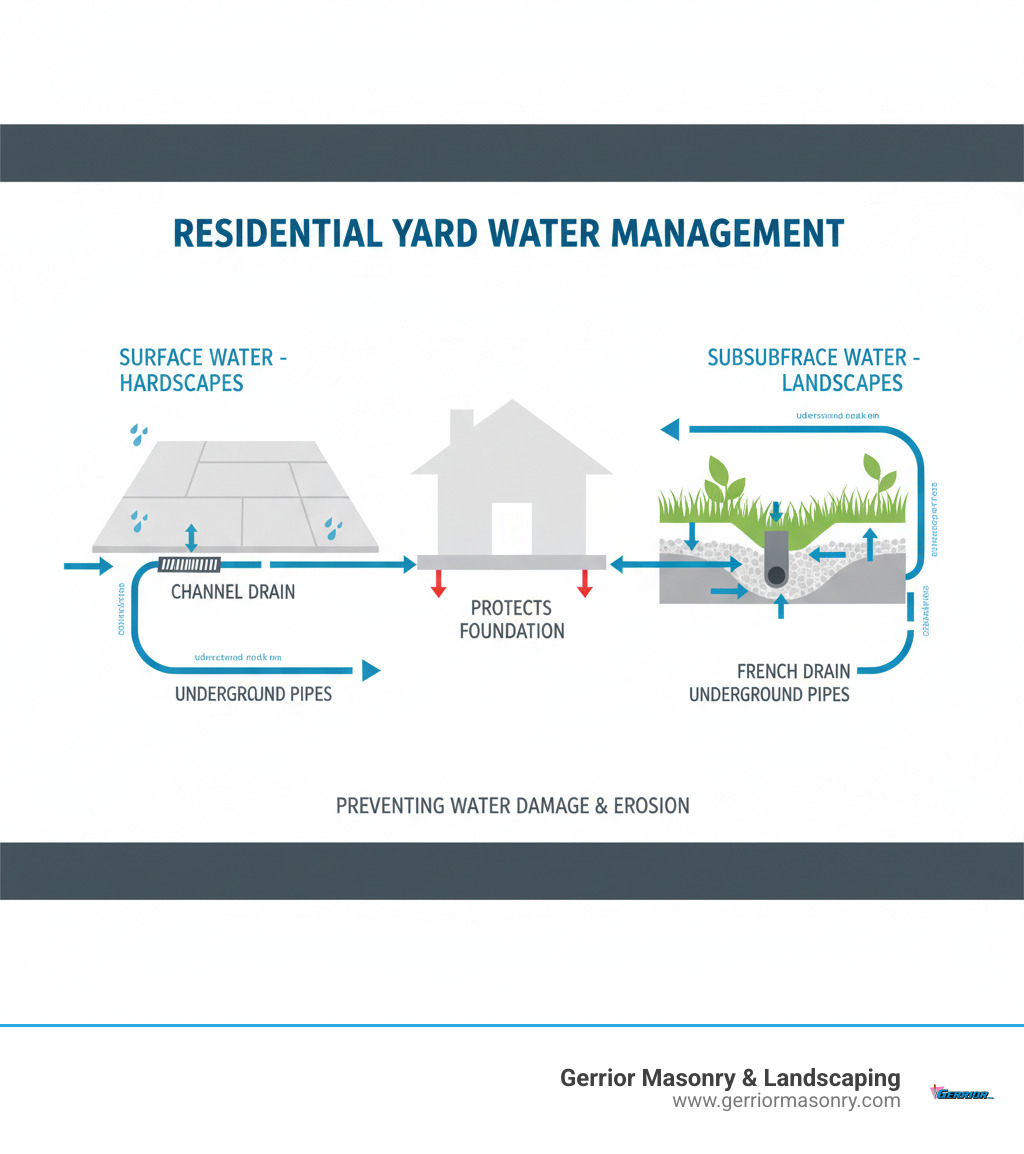
Channel drains for yards are linear systems that capture and redirect surface water from hardscapes like driveways and patios. If you’ve noticed stagnant water, puddles near your foundation, or soggy patches of lawn, your property is at risk. Uncontrolled water can lead to costly damage, including foundation issues, concrete staining, and mildew growth.
Key Benefits:
Prevents water pooling on paved surfaces
Protects foundations from water damage
Reduces concrete staining and mildew growth
Ideal for hardscapes where water moves across large surface areas
Best Applications:
Driveways and garage aprons
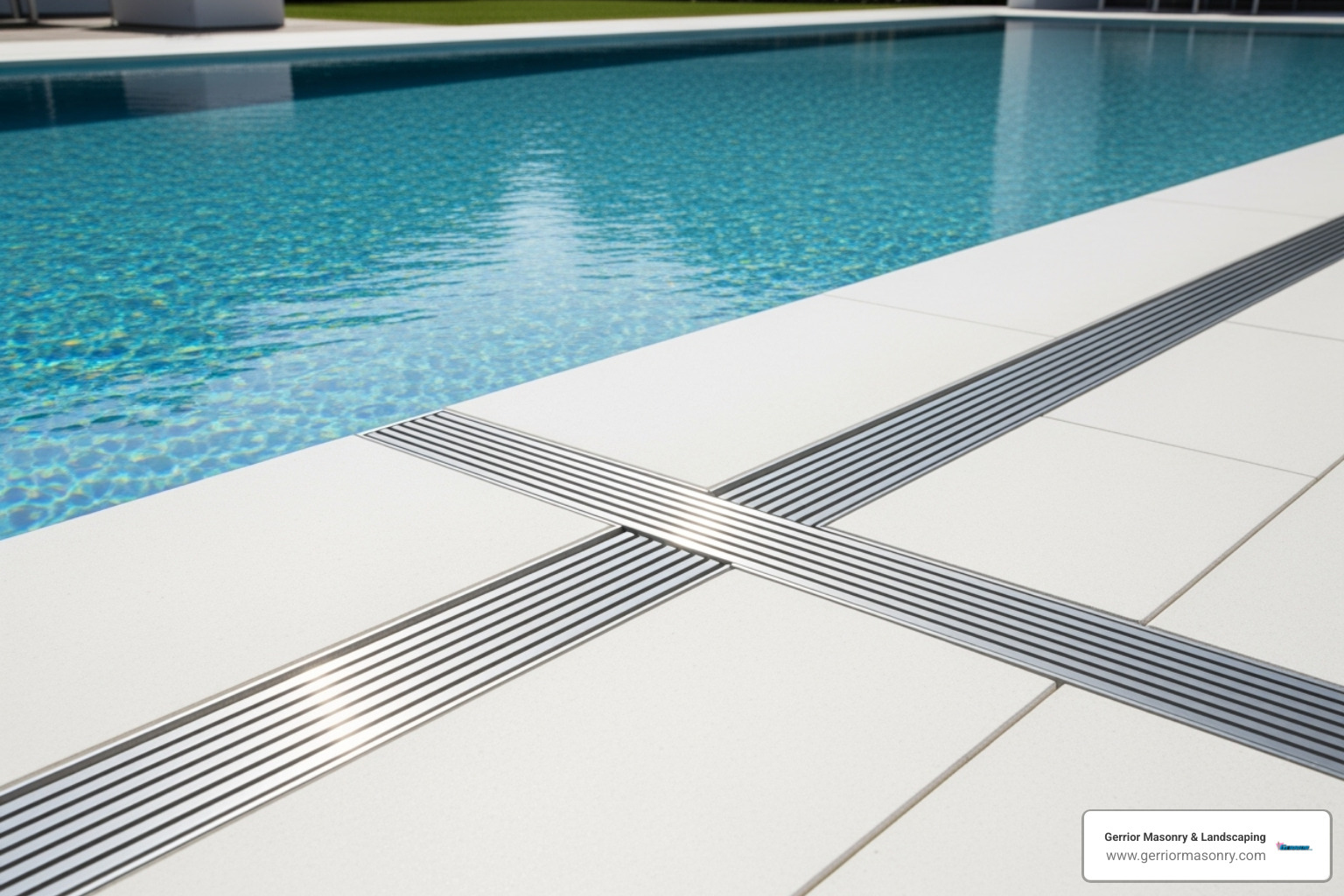
Pool decks and patios
Walkways and courtyards
Areas where hardscapes slope toward structures
The solution often lies in combining two proven methods: channel drains for hardscapes and French drains for landscape areas. Channel drains excel at capturing surface water from paved areas, while French drains handle subsurface water in planted areas.
I’m Joe Gerrior, owner of Gerrior Masonry & Landscape Construction Corp., and I’ve been installing channel drains for yards and comprehensive drainage systems throughout Massachusetts for over 34 years. My team specializes in creating effective drainage solutions that protect your property while maintaining its beauty.
Picture this: you’ve invested thousands in a beautiful patio, only to watch helplessly as water pools and stains your concrete after every storm. That’s exactly the kind of heartbreak we prevent with proper drainage planning. At Gerrior Masonry & Landscaping, we’ve been protecting properties across Massachusetts for over 34 years, and we understand that channel drains for yards are often the unsung heroes of successful hardscaping projects.
What Are Channel Drains and Why Do You Need Them?
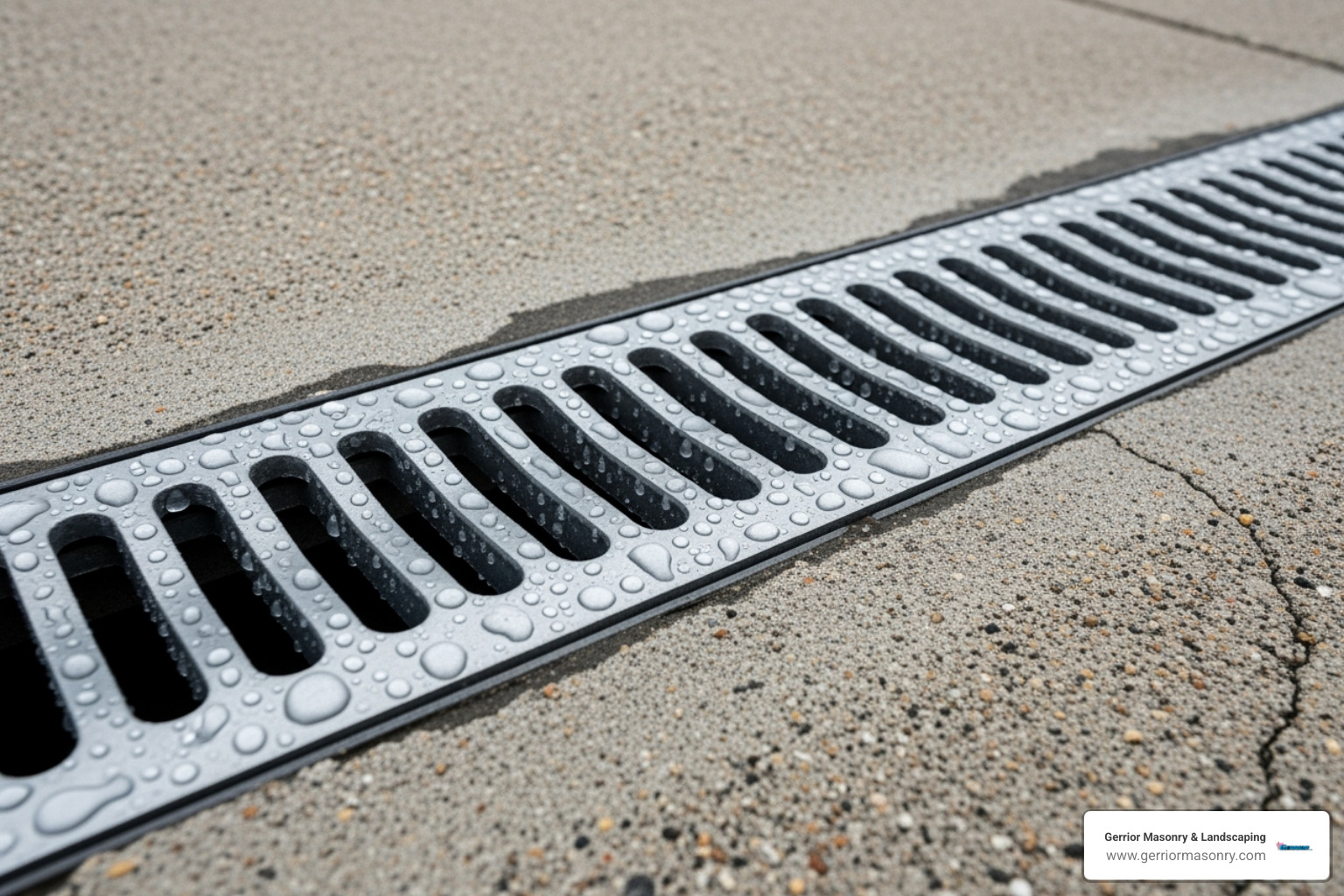
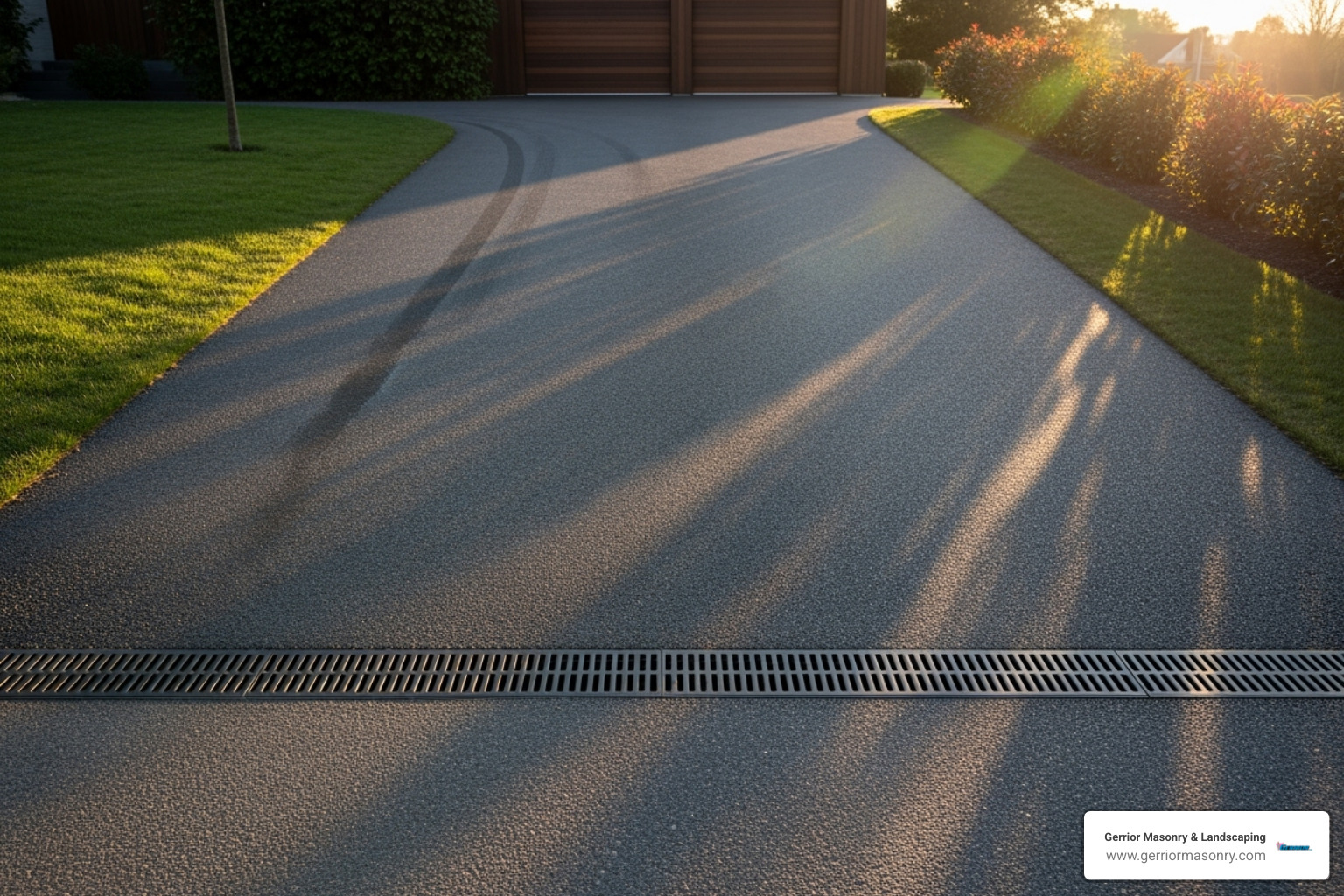
A channel drain, also known as a trench or strip drain, is a linear system designed to catch surface water from hardscapes before it causes problems. As water flows across a driveway or patio, it enters the channel through a grate and is carried away by underground pipes. This simple, effective system offers significant benefits:
Prevents Water Damage: By intercepting water before it reaches your home, channel drains protect your foundation from costly cracks and leaks. They also prevent soil erosion by controlling runoff.
Preserves Hardscapes: They eliminate pooling water, which prevents ugly concrete stains and mildew growth, protecting your hardscaping investments.
Increases Usability: Keeping patios, walkways, and driveways dry makes your outdoor spaces safer and more enjoyable, even after heavy rain.
Choosing the Right Channel Drains for Your Yard
Selecting the perfect channel drain isn’t a one-size-fits-all decision. It requires matching the system to your specific needs.
Water volume is your starting point. How much water will flow into the drain during a heavy storm? Professionals use The Rational Method (Q=CiA) to calculate this, considering surface type, rainfall intensity, and drainage area size. Our experienced team handles these calculations to ensure your system won’t get overwhelmed.
Traffic loads are also critical. Your drain must handle whatever passes over it.
Light-duty drains (1″-3″ wide) work for pedestrian areas like patios and walkways.
Medium-duty systems (4″-6″ wide) are ideal for most residential driveways, handling cars and light trucks.
Heavy-duty drains (4″-12″ wide) are for high-traffic areas or where heavy vehicles might pass.
Material choice affects performance and longevity:
Plastic: The most budget-friendly and lightweight option, available in various colors. Best for pedestrian areas due to lower load capacity and potential for UV damage.
Galvanized Steel: Offers excellent strength and corrosion resistance, making it a durable choice for driveways. It costs more than plastic but handles vehicle traffic well.
Cast Iron: A premium, heavy-duty option known for its extreme strength and classic look. It’s the most expensive but built to last for decades under heavy traffic.
Stainless Steel: Provides superior corrosion resistance and a modern aesthetic. It’s typically used for high-end architectural projects rather than standard residential jobs.
Grate design also matters. Narrow slots prevent heels from catching, while wider openings allow more flow. Color options in plastic grates let you match your hardscape.
Best Applications and Key System Components
Channel drains for yards truly shine where you have large paved surfaces that collect and direct water flow. Ideal applications include:
Driveways, especially sloped ones that funnel water toward garages or foundations.
Walkways and garage aprons to keep high-traffic areas safe and dry.
Landings and transition areas that sit lower than surrounding grades.
Building a complete system requires several key components working together: channel sections, grates, end caps, outlets, sealant, fasteners, drain pipes, and couplings. The flexibility of modern systems allows for configurations with bends, tees, and crosses to handle complex layouts.
Channel Drains vs. Other Drainage Solutions
Understanding different drainage solutions is key, as each has a perfect application.
Channel drains excel at surface water interception on hardscapes like driveways and patios, capturing sheet flow across wide areas.
French drains handle subsurface water management. These gravel-filled trenches with perforated pipes are ideal for soggy lawns and relieving pressure against basement walls.
Catch basins serve as point drainage solutions, collecting water from specific spots like downspouts or isolated low areas.
The real magic happens when these systems work together. Using channel drains for hardscapes and French drains for lawns creates comprehensive protection. Water from all systems can be routed into a single main line, creating an integrated solution that handles both surface and subsurface water effectively. This complementary approach maximizes efficiency while minimizing costs.
Installation and Maintenance Essentials
Installing channel drains for yards requires precision. While DIY is possible, professional installation ensures correct slope, connections, and stability. The process involves excavating a trench, laying a compacted gravel base, and setting the drain sections with at least ¼” of slope per foot toward the outlet. Sections are connected with waterproof sealant, and the system is encased in concrete or set with pavers to lock it in place. The top of the grate should sit just below the hardscape surface to effectively capture water.
Maintenance is simple: annually remove the grates and clear out any accumulated leaves, dirt, or debris to prevent clogs. A quick flush with a garden hose can help clear smaller particles.
Channel drains are not suitable for lawn areas, as freeze-thaw cycles can cause them to shift. For softscapes, French drains are a better solution.
Understanding the Costs of Channel Drains for Yards
Understanding channel drain costs helps you make informed decisions. These are average costs based on internet data and not actual costs for Gerrior Masonry services, since every project has unique requirements.
Key cost factors include material type (plastic is cheapest, cast iron is premium), system length, and installation complexity.
DIY material costs might range from $10 to $50 per linear foot for basic plastic systems, not including accessories. However, improper installation can lead to costly failures.
Professional installation ensures long-term performance. Industry averages suggest costs typically range from $30 to over $150 per linear foot, depending on materials and project complexity. For broader drainage system cost information, resources like How Much Does It Cost to Install a Drain System In Your Yard? provide helpful context.
At Gerrior Masonry & Landscaping, we provide detailed, transparent quotes customized to your specific project needs. We believe in delivering solutions that represent sound investments in your home’s protection and value.
Transform Your Yard with Professional Drainage Solutions
When you invest in a proper drainage system like channel drains for yards, you’re doing much more than just solving a water problem – you’re protecting one of your biggest investments: your home. Think about it this way: a few hundred or thousand dollars spent on drainage today can save you tens of thousands in foundation repairs, basement flooding, or hardscape replacement down the road.
The change goes beyond just protection, though. There’s something deeply satisfying about walking out to your patio after a heavy rainstorm and seeing it completely dry and ready to use. No more waiting hours for puddles to evaporate. No more slippery, dangerous surfaces. No more ugly water stains creeping across your beautiful concrete or pavers.
Long-term property protection is perhaps the most important benefit you’ll gain. Water damage doesn’t happen overnight – it’s a slow, steady process that can undermine your foundation, create structural issues, and lead to costly repairs. A well-designed drainage system stops this process before it starts.
But let’s not forget about the improved aesthetics and increased home value that come with proper water management. A yard that drains well looks better, functions better, and appeals more to potential buyers if you ever decide to sell. Clean, dry hardscapes maintain their appearance longer, and your landscaping stays healthier when it’s not constantly waterlogged.
At Gerrior Masonry & Landscaping, we’ve been solving drainage problems for over 34 years, and honestly, some of the most rewarding projects we complete are the ones where homeowners call us a few months later just to say thank you. They’re amazed at how much more they use and enjoy their outdoor spaces once the water issues are resolved.
Our owner, Joe Gerrior, personally oversees every project because we understand that drainage isn’t just about moving water – it’s about understanding how water flows, how different soil types behave, and how to integrate solutions seamlessly with your existing landscape. We don’t just install drains; we solve problems.
For expert assessment and installation of drainage systems, trust the experienced team at Gerrior Masonry & Landscaping. We’re ready to help you protect your home and transform those problem areas into spaces you’ll actually want to use. Contact us for a consultation on your drainage needs and let us show you how the right drainage solution can make all the difference.
Gerrior Masonry & Landscaping is based in Woburn, MA, and proudly serves the communities of Middlesex and Essex County, Massachusetts.
Why Understanding French Drain Channels Can Save Your Property
When homeowners search for french drain channel solutions, they’re often dealing with water pooling around their foundation, soggy lawns, or flooding driveways. Understanding the key differences between drainage systems can prevent costly water damage and protect your property investment.
Quick Answer: French Drain vs. Channel Drain Systems
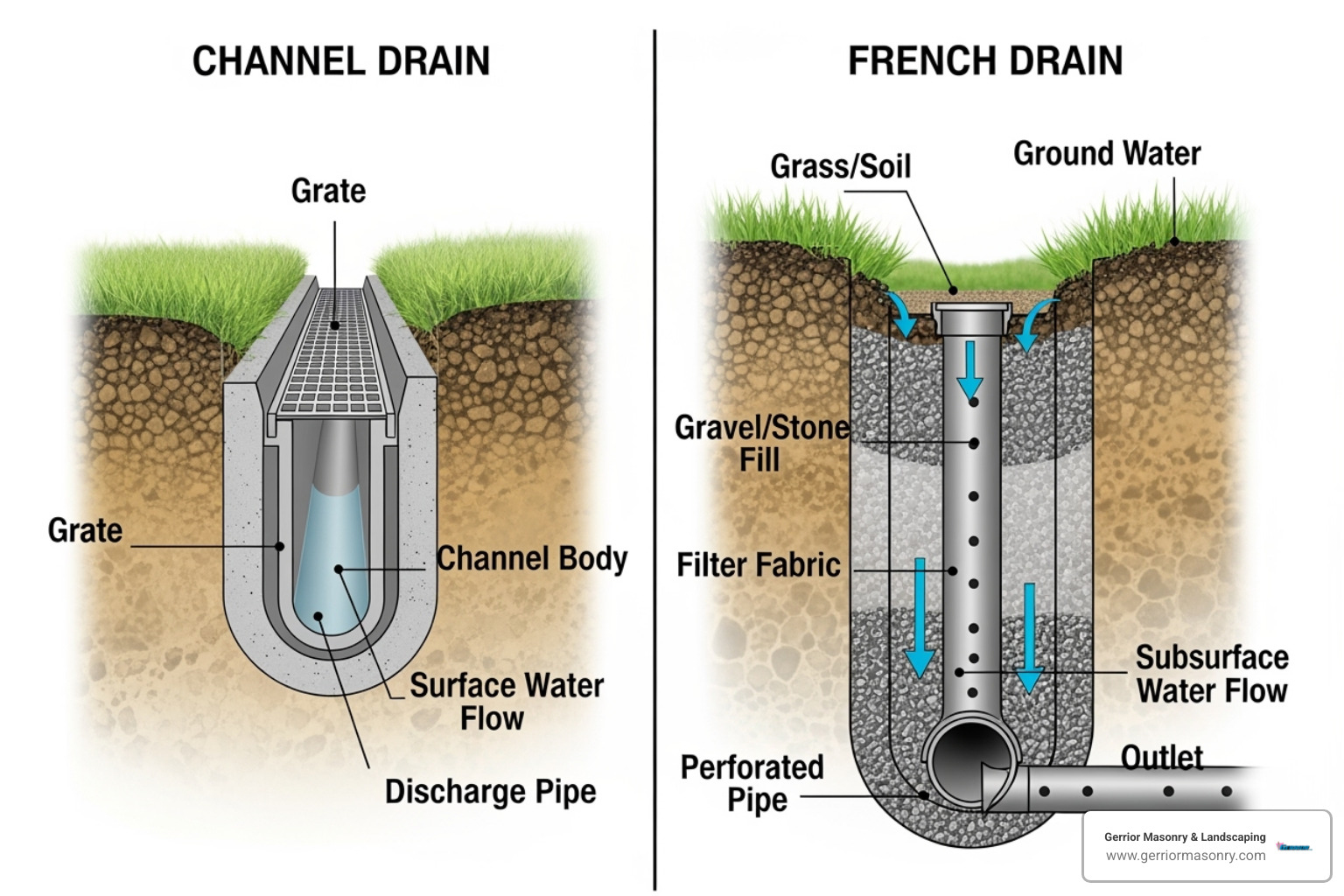
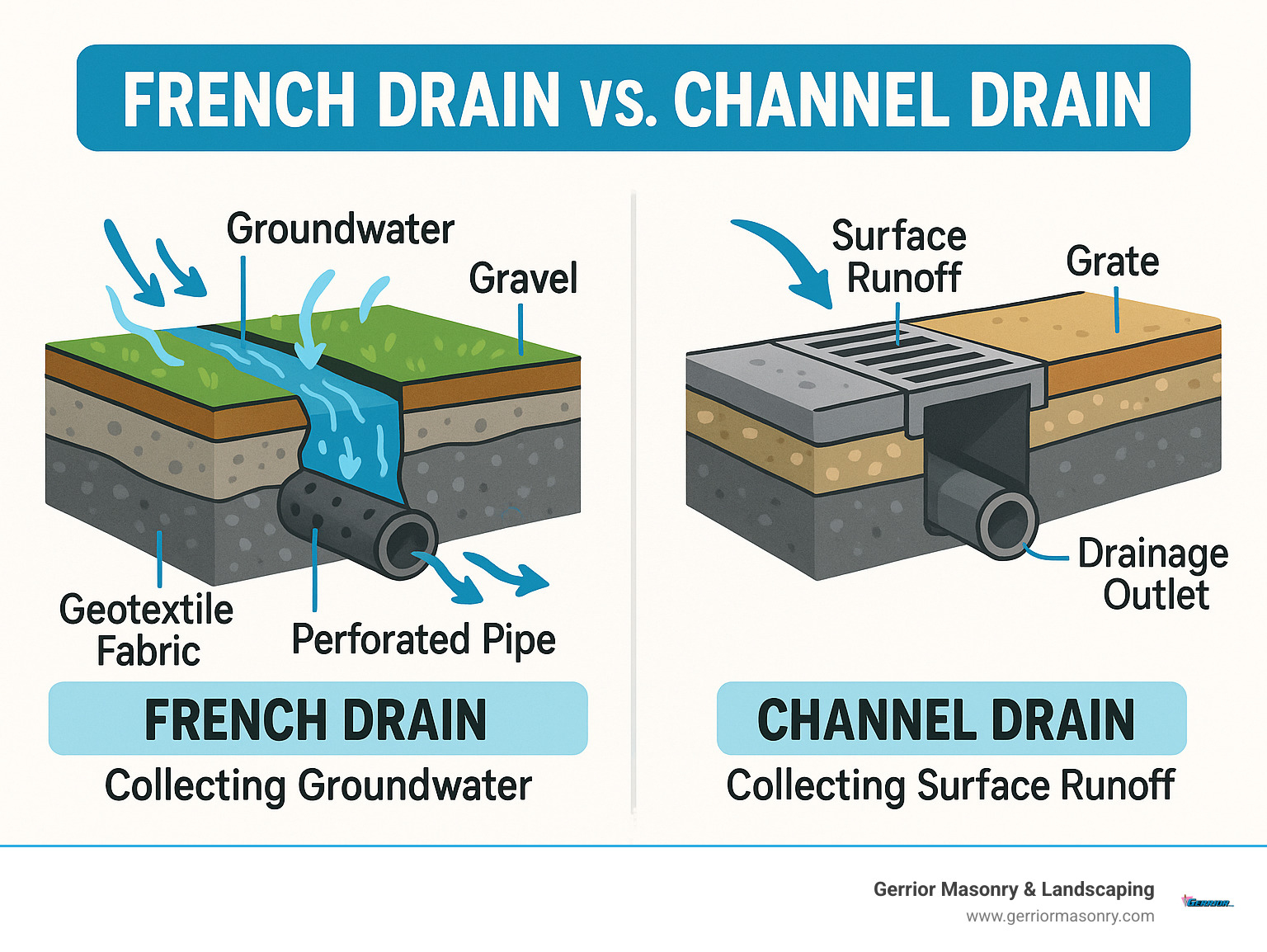
French Drains: Underground perforated pipes surrounded by gravel that collect subsurface groundwater
Channel/Trench Drains: Surface-level linear drains with grates that collect surface water runoff
Best for French Drains: Saturated soil, foundation protection, lawn drainage
Best for Channel Drains: Driveways, patios, pool decks, paved surfaces
The confusion often stems from terminology. As one drainage expert noted: “French drains are essentially a trench drain that is not supported by a channel drain system or covered by a grating.” The core difference is simple: French drains handle water under the ground, while channel drains handle water on top of surfaces. Choosing the wrong one can lead to expensive repairs.
I’m Joe Gerrior, owner of Gerrior Masonry & Landscape Construction, and over 34 years I’ve installed hundreds of french drain channel systems throughout Massachusetts. My team has seen how proper drainage system selection prevents foundation damage and protects property values.
Choosing Your Solution: French Drain vs. Trench (Channel) Drain
When faced with water problems, the first step is identifying the source. Is water pooling on paved surfaces, or is your lawn always soggy? The answer determines whether a French drain or a trench drain is the right solution.
What’s the Difference? Core Functions and Applications
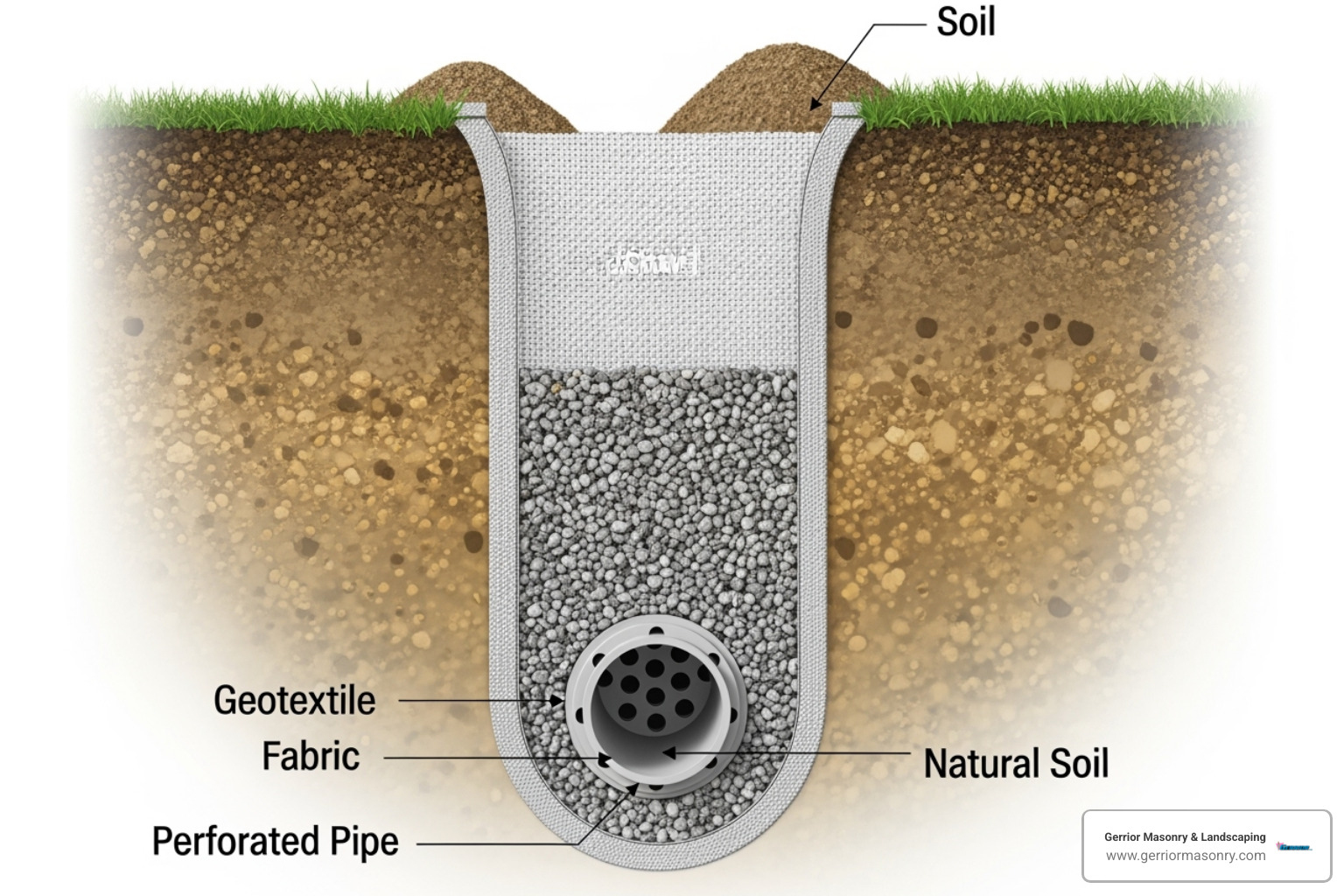
The primary distinction lies in their purpose. A French drain manages subsurface groundwater. It’s an underground system with a perforated pipe and gravel that collects water from saturated soil, directing it away from foundations to prevent soggy lawns and basement moisture. Its main components are a trench, a perforated pipe, and gravel, often wrapped in landscape fabric to prevent clogging.
A trench drain (or channel drain) tackles surface water runoff. It’s a grated channel installed on hardscapes like driveways, patios, and pool decks to quickly capture and divert flowing water, preventing pooling, erosion, and slip hazards. For more information, visit our drainage system services page or read the scientific research on French Drains.
Installation and Materials: What to Expect
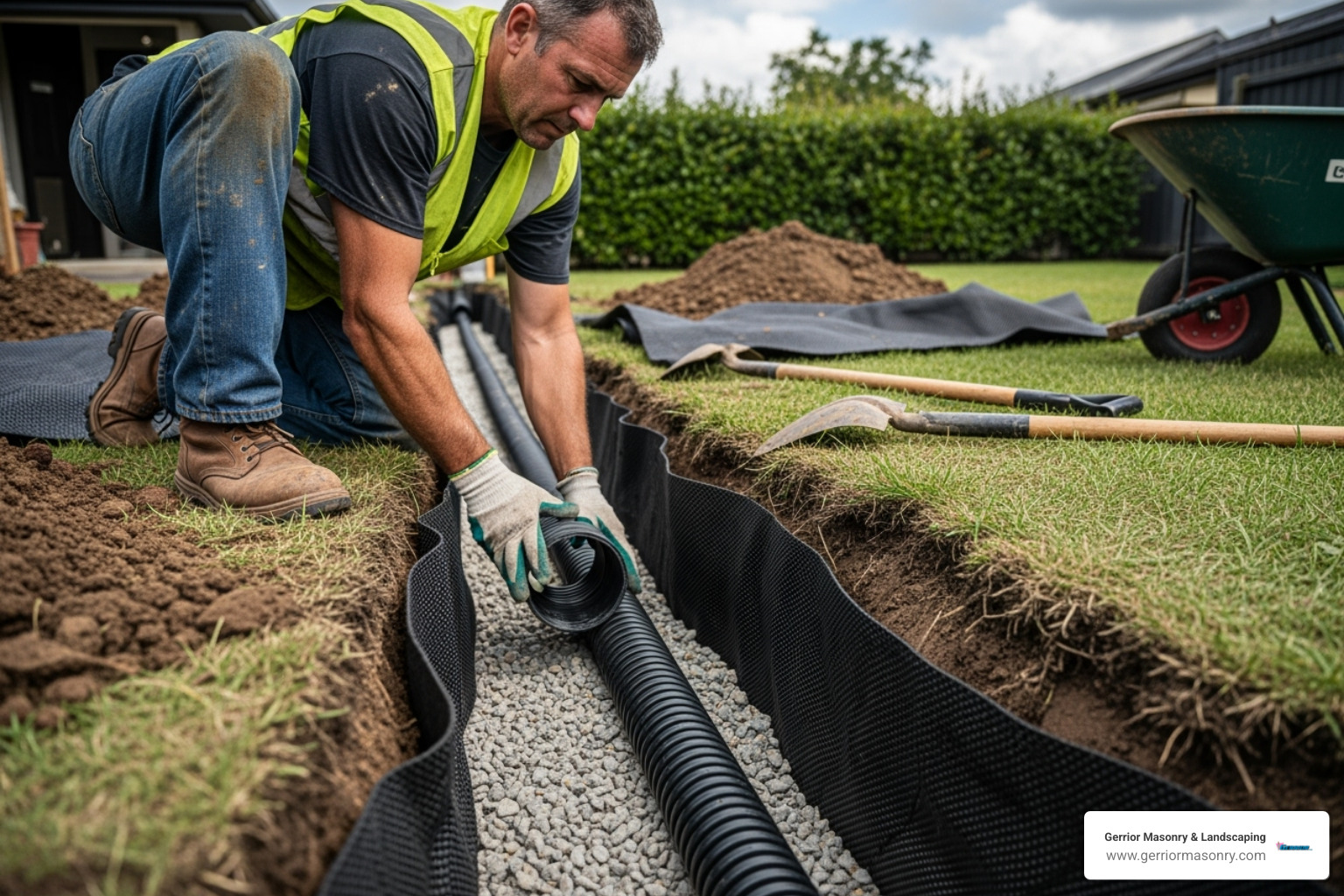
French drain installation involves digging a trench, lining it with geotextile fabric, laying a perforated pipe, and backfilling with gravel. The system is then covered with soil, making it invisible. Trench drain installation involves setting pre-formed channels into a shallow trench—often encased in concrete for stability—and topping them with a removable grate.
Materials for French drains include perforated pipe, gravel, and geotextile fabric. Trench drains use more robust materials like PVC or polymer channels and grates made of plastic, steel, or cast iron, chosen for durability and load-bearing needs. Our hardscaping services seamlessly integrate these solutions into your landscape.
Pros, Cons, and Common Failure Points
Each system has its strengths and weaknesses.
Feature
French Drain
Trench (Channel) Drain
Primary Function
Collects subsurface groundwater
Collects surface water runoff
Visibility
Mostly invisible once installed (underground)
Visible, with a grate on the surface
Aesthetic Impact
Minimal, can be covered with landscaping
Can be decorative, but is a prominent feature
Installation Depth
Typically deeper (18-36 inches)
Shallower, often just below surface level
Maintenance Access
Difficult to access for repairs or deep cleaning
Easy to access by removing grates
Clogging Risk
High if fabric/sock is not used or fails; roots
Lower, but debris can accumulate if not cleaned
Best for
Soggy lawns, foundation protection, high water table
Driveways, patios, pool decks, high-traffic areas
Water Volume
Manages steady groundwater seepage
Handles high volumes of rapid surface runoff
French drains are excellent for discreetly protecting foundations but are difficult to access and can clog with silt or roots if not installed properly. Trench drains are durable, handle high water volume, and are easy to clean, but they are a visible element on your hardscape.
Common failure points for both systems include clogging from debris or silt, an improper slope that impedes water flow, and inadequate capacity for the water volume. Professional installation is key to avoiding these issues, which can compromise your foundation. Learn more about our foundation repair services.
Making the Right Choice for Your Property
Deciding between systems requires a site assessment.
A French drain is suitable for:
Soggy lawns or gardens with poor soil drainage.
Protecting foundations from groundwater seepage.
Preventing basement or crawl space flooding.
A trench drain is suitable for:
Driveways, especially those sloping toward a garage.
Patios, pool decks, and walkways to keep them dry and safe.
High-traffic areas needing rapid water removal.
Factors like property slope, soil type, and expected water volume are critical. High-volume surface runoff points to a trench drain, while consistently saturated soil suggests a French drain. We can help integrate these into your patio design and installation.
Sizing, Customization, and Load Class for Your Trench Drain Channel
Proper sizing and customization are key for trench drains.
Sizing: Channel width and depth are chosen based on the anticipated flow rate to prevent overflows.
Customization: Systems are modular and can be cut to any length. Radius drains are available for curved applications like pools and walkways.
Load Classes: The grate’s load class must match the traffic it will bear. Class A is for pedestrians, Class B for cars (driveways), and Class C and higher for heavy commercial vehicles. Choosing the correct class is vital for safety and durability on your walkways and stairs.
Long-Term Care for Your French Drain Channel System
Proper maintenance ensures longevity.
Trench Drains: Clean them at least twice a year by removing the grates and sweeping out debris. This prevents clogs and ensures water flows freely.
French Drains: These are lower maintenance, but their outlet should be checked regularly for clear flow. Reduced flow may indicate an internal clog that requires professional flushing.
Both systems protect your property. French drains prevent long-term foundation damage from groundwater, while trench drains stop immediate surface flooding on hardscapes. This proactive approach is part of our commitment to property protection, which includes services like foundation repointing.
Protect Your Property with the Right Drainage System
After reviewing both systems, the choice is simple: a French drain is your underground solution for soggy lawns and foundation protection, while a trench drain is your surface-level savior for pooled water on driveways and patios. Both are highly effective when correctly matched to the problem.
We can’t stress this enough: professional installation makes all the difference. We’ve seen many DIY drainage projects fail due to incorrect slope, poor design, or choosing the wrong system, leading to costlier repairs. Even some general contractors miss the nuances of proper drainage.
That’s where our experience shows. With owner oversight on every project and a skilled team that’s tackled hundreds of drainage challenges throughout Massachusetts, we know how to diagnose your specific water problem and implement a solution that will last for decades.
Investing in proper drainage isn’t just about fixing a puddle—it’s about protecting your property’s value for years to come by avoiding the high cost of water damage. Whether it’s a French drain to safeguard your foundation or a trench drain for your patio, we ensure your water flows in the right direction.
DIY Catch Basin for French Drain: Easy 4-Step Guide
Why Your Yard Needs a French Drain and Catch Basin
Standing water in your yard isn’t just an unsightly, muddy mess—it’s a serious threat that can lead to basement flooding, foundation cracks, soil erosion, and other expensive structural damage. Beyond your home, it kills lawns, creates breeding grounds for mosquitoes, and can even cause retaining walls to fail. As one homeowner found, “Every time it rains, the water that collects in front of the garage actually runs into the garage.” A DIY catch basin for french drain installation is a powerful solution that actively captures and redirects this problem water, protecting your home’s foundation and reclaiming your outdoor space.
A properly installed system captures surface water before it causes problems and directs it safely away from your home. With the right tools and knowledge, most homeowners can tackle this project in a weekend. The typical cost for a DIY installation ranges from $100-$500 for materials, while professional installation can cost several thousand dollars.
I’m Joe Gerrior, and I’ve been helping Massachusetts homeowners solve drainage problems for over 34 years through Gerrior Masonry & Landscape Construction. My experience has shown me the key techniques that ensure long-lasting, effective water management.
What is a Drainage Catch Basin?
A drainage catch basin is an underground collection box designed to rapidly capture surface water from a specific area. Think of it as the storm drain for your yard. It’s a crucial component for managing heavy rain and precipitation and eliminating puddles before they can cause damage.
It’s important to understand how a catch basin differs from a French drain. A French drain is a perforated pipe in a gravel-filled trench designed to collect subsurface water over a large area, like a soggy lawn. A catch basin, on the other hand, tackles surface water in concentrated low spots—like at the bottom of a slope, under a downspout, or in a persistently puddled part of your driveway. It acts as an intake point and a pre-filter, protecting the entire drainage system from getting clogged with debris.
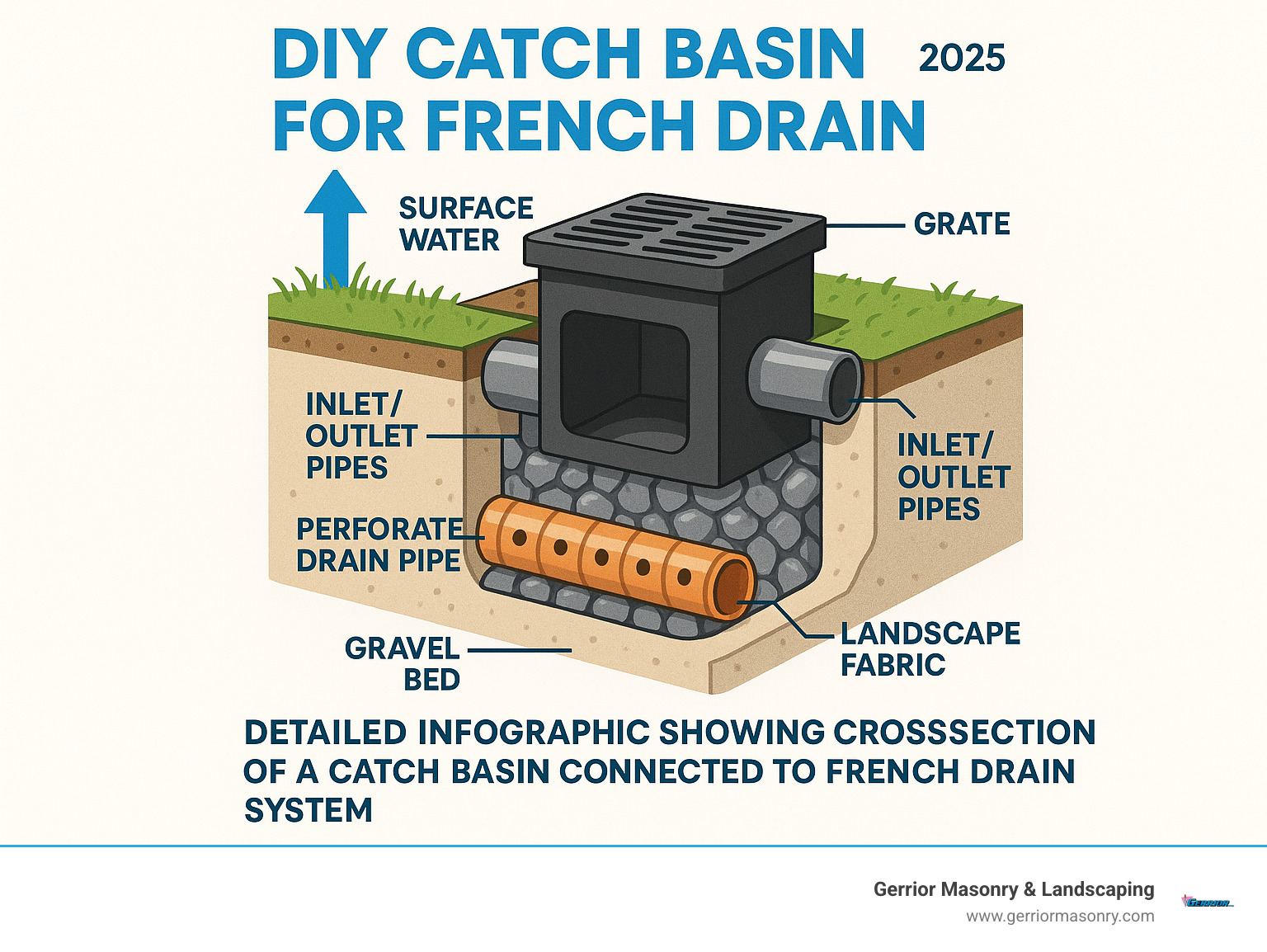
Key components include:
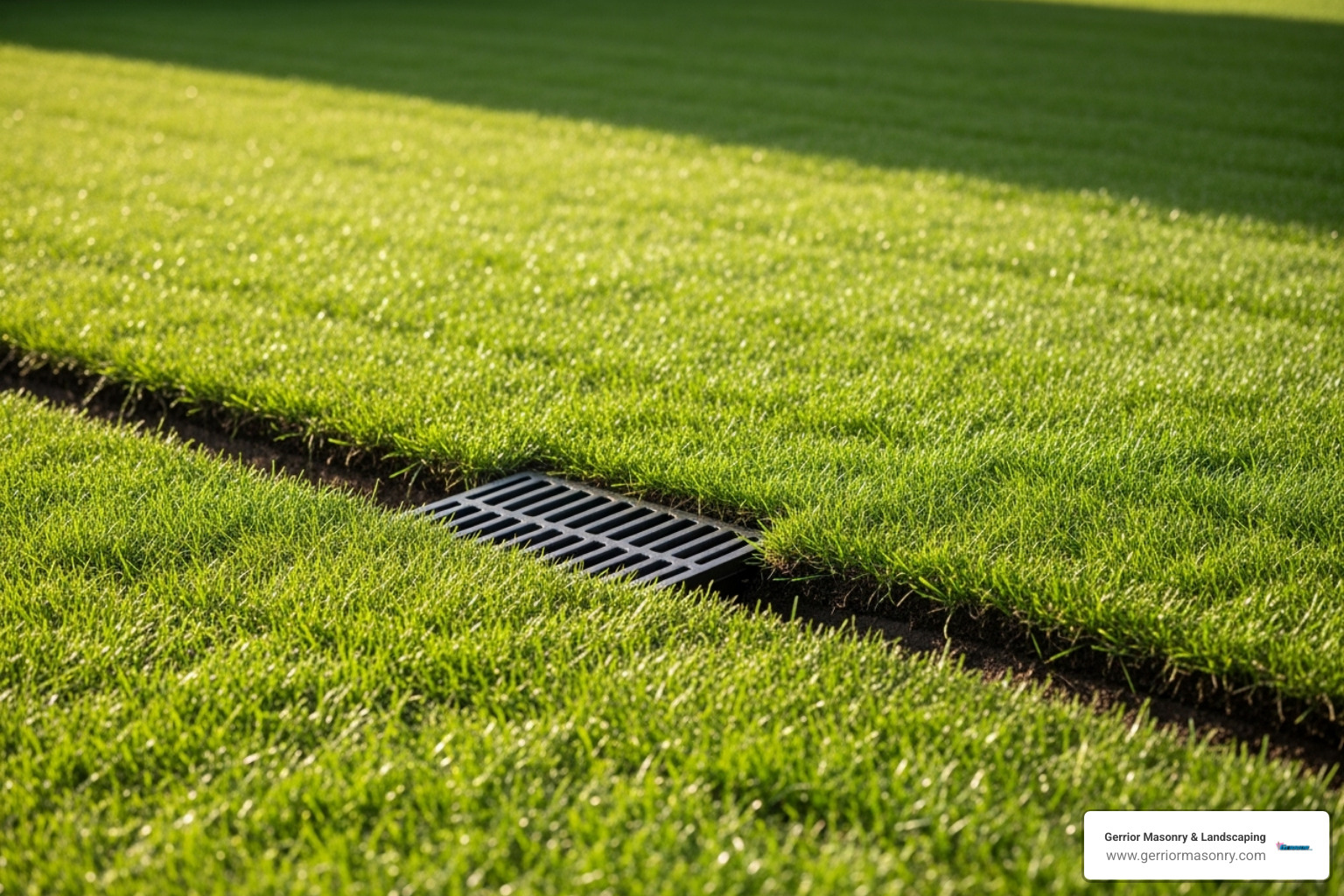
The Grate: The visible top that allows water in while blocking large debris like leaves and twigs.
The Sump Area: The bottom of the basin that traps smaller sediment and silt, preventing it from clogging the connected drain pipes.
Inlet/Outlet Pipes: Openings that connect the basin to the French drain system, allowing water to flow away.
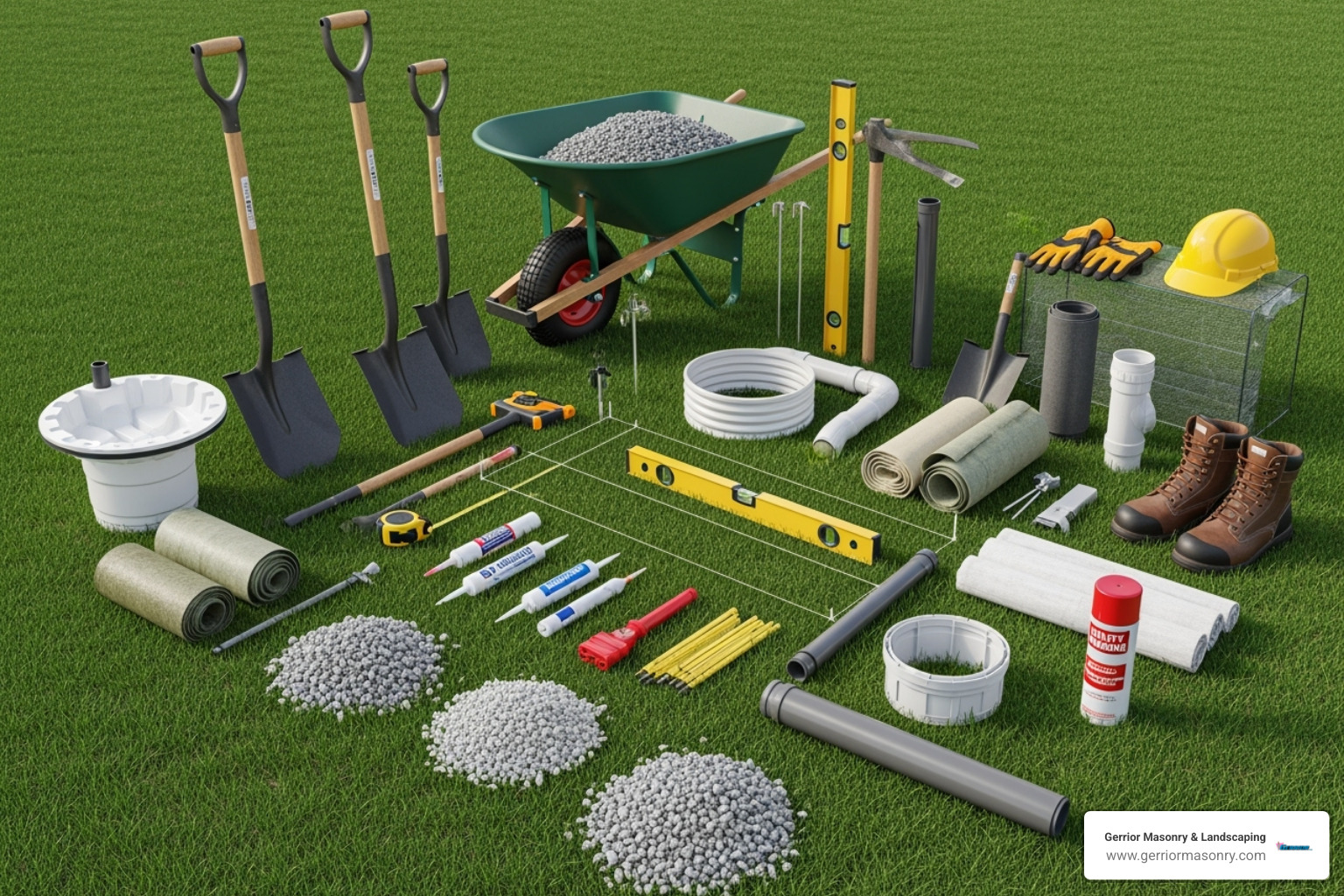
Gathering your tools and materials beforehand will make the installation process much smoother. Here’s what you’ll need for a DIY catch basin for French drain project:
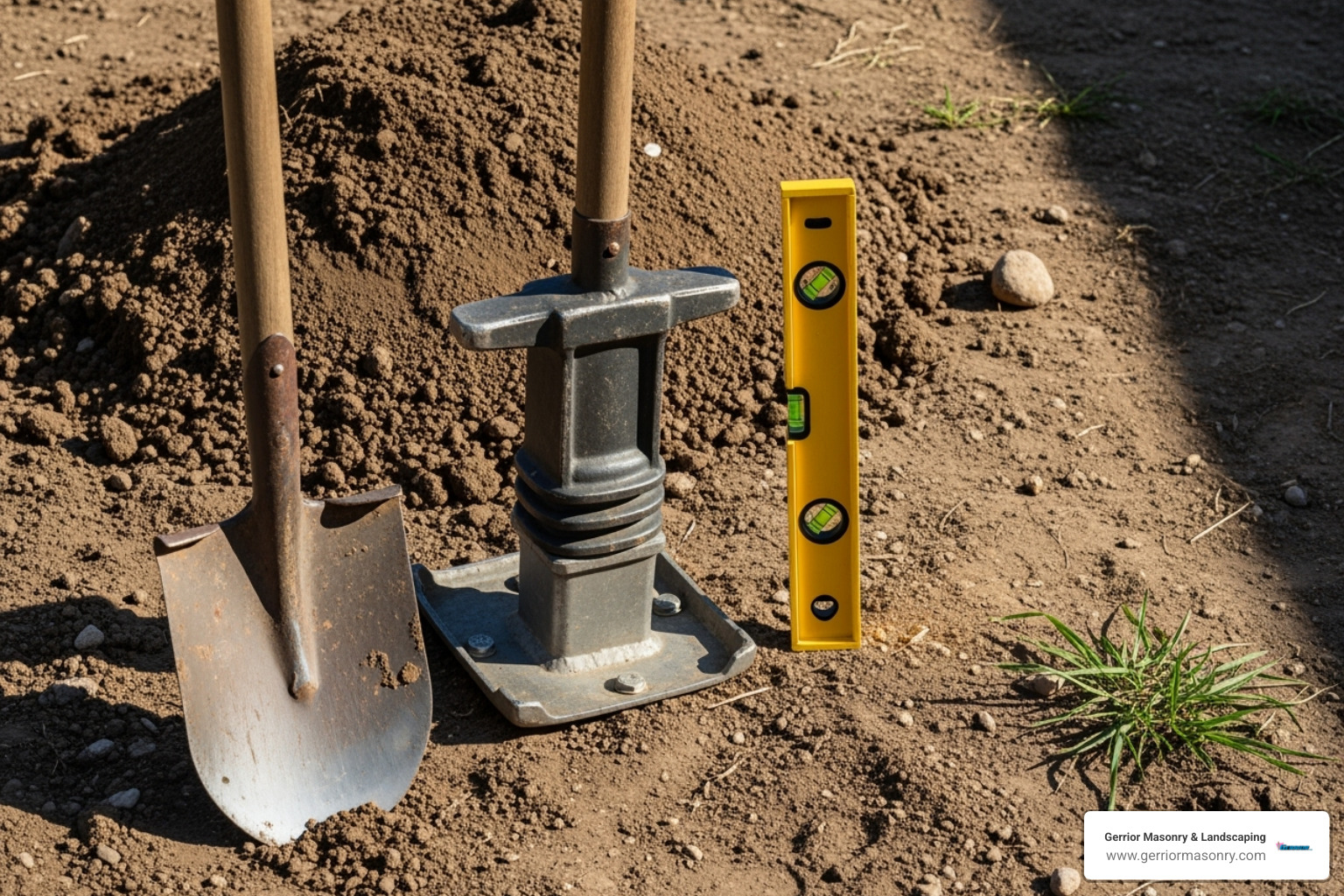
Digging Tools: Shovel, trenching spade, pickaxe (for hard soil), and a wheelbarrow.
Measuring & Leveling: Tape measure, stakes, string line, and a line level or rotary laser level.
Drainage Components:
Catch Basin Kit: Available in various sizes (e.g., 6-inch, 9-inch, 12-inch). Choose a size based on the volume of water you need to manage.
Perforated Drain Pipe: Typically 4-inch diameter. Flexible corrugated pipe is easier to work with on curves, while rigid PVC (Schedule 40) is more durable and crush-resistant.
Solid Drain Pipe: Use this non-perforated pipe to carry water from the catch basin to the discharge point without letting it seep out along the way.
Drainage Gravel: Use clean 3/4-inch drainage gravel (#57 stone). Avoid pea gravel, which is too small and will clog the system.
Landscape Fabric: Use non-woven geotextile fabric. This is crucial for longevity, as it lets water pass through while blocking clog-causing silt and soil.
Connection Materials: PVC primer and cement for rigid pipe connections, waterproof silicone caulk for sealing the pipe entry into the basin, and any necessary pipe fittings (couplers, wyes, elbows).
Optional: Pop-up emitter for a clean discharge point, hardware cloth (1/4-inch mesh) to cover the pipe outlet and keep critters out, and essential safety gear (gloves, safety glasses, steel-toed boots).
A Step-by-Step Guide to Installing a DIY Catch Basin for French Drain
Installing a DIY catch basin for French drain is a manageable project that creates an underground highway for water, protecting your home for years. Careful planning and execution are the keys to success.
Step 1: Planning and Preparation
Proper planning is the most critical phase. Before digging, take these essential steps:
Site Assessment: Identify the low spots in your yard where water consistently pools. This is the ideal location for your catch basin.
Call 811: This is a non-negotiable safety step. A few days before you plan to dig, call 811 to have underground utility lines marked. This service is free and required by law.
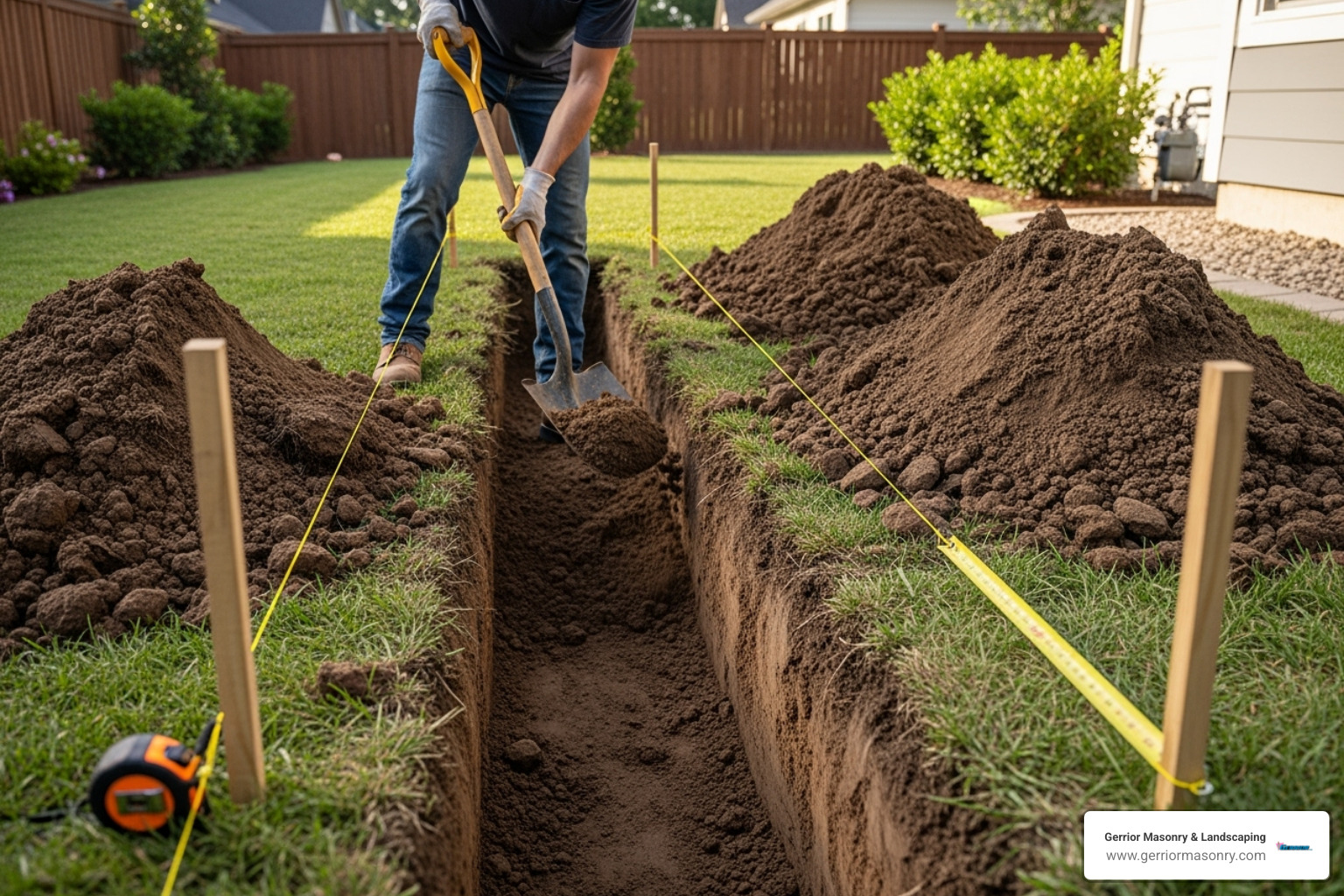
Map Your Trench Path: Plan a path for your French drain that has a continuous downward slope away from the house. The gold standard is a 1% grade, which equals a 1-inch drop for every 8 feet of pipe. Use stakes and a string line tied to a line level or a rotary laser level to precisely map this slope before you dig. An incorrect slope is the number one reason DIY drainage systems fail.
Choose a Discharge Point: All that water needs a safe place to go, at least 10 feet away from any foundation. Common options include:
Daylighting: The simplest option, where the pipe ends on a natural downward slope, allowing water to drain onto the surface.
Pop-up Emitter: A discreet option that sits flush with the lawn and pops up to discharge water when pressure builds.
Dry Well: An underground pit filled with gravel that allows water to collect and slowly percolate into the surrounding soil. Ideal for properties without a natural slope.
Storm Drain Connection: This may be an option, but you must check with your local municipality for regulations and permit requirements first.
To learn more about protecting your home, see our foundation repair page.
Step 2: Excavation and Installation
With your plan in place, it’s time to start digging.
Dig the Basin Hole: At your designated low spot, excavate a hole that is wide enough to work around the basin and 6-12 inches deeper than the basin’s height. This extra depth is for the crucial gravel base. A pro tip: drill several 1/2-inch weep holes in the bottom of the basin itself. This prevents a small amount of stagnant water from sitting in the sump, which can attract mosquitoes.
Excavate the Trench: Following your string line guide, dig a trench that is at least 9 inches wide and 18-24 inches deep. As you dig, separate the topsoil from the subsoil into different piles. This will make backfilling much cleaner. Use your level frequently to confirm you are maintaining the proper downward slope along the entire length of the trench.
Install the Base and Liner: Pour and compact a 3-6 inch layer of drainage gravel into the bottom of the trench and the basin hole. This creates a stable, level base. Next, line the trench with non-woven landscape fabric, pressing it into the corners and leaving at least 12 inches of excess fabric on both sides to fold over later.
Set the Basin: Place the catch basin firmly onto the gravel base in the hole. Use a level to ensure the top of the grate will sit level with or just slightly below the surrounding ground. This ensures water flows into it, not around it. Backfill around the outside of the basin with gravel to hold it securely in place.
Step 3: Connecting Pipes and Backfilling
Now it’s time to connect the system components.
Connect Pipes to Basin: Securely attach the outlet pipe to the catch basin’s port. For a truly watertight seal, apply a bead of waterproof silicone caulk around the outside of the pipe before inserting it. The pipe should extend 3-4 inches into the basin. If using rigid PVC, be sure to use PVC primer and cement on all fittings for a permanent, leak-proof bond.
Lay the Pipe: Place the perforated pipe in the trench with the perforation holes facing down (at the 5 and 7 o’clock positions). Water rises from the saturated gravel bed into the pipe, and this orientation prevents silt from clogging the holes from above. Ensure the pipe is fully supported by the gravel base to prevent sags or “bellies” where water can pool.
Backfill with Gravel: Carefully surround and cover the pipe with another 3-5 inches of drainage gravel. The pipe should be completely encased in gravel. This gravel zone is the “French drain” portion of the system, creating a highly permeable channel for water to move freely into the pipe.
Wrap with Fabric: Fold the excess landscape fabric over the top of the gravel, overlapping the edges by at least 6 inches. This “burrito wrap” is the most important step for ensuring a long-lasting, clog-free system. It prevents soil, silt, and roots from migrating into your gravel and pipe. Proper drainage is a key part of our hardscaping services, ensuring long-lasting results.
Step 4: Finishing Touches and Project Costs
Complete the project by concealing your work.
Final Backfill: Cover the fabric-wrapped trench with the topsoil you excavated earlier. You can then replace the original sod or use seed to grow new grass.
Discharge Point: Consider installing a pop-up emitter at the end of your drain line. It stays closed to keep debris and critters out, then opens automatically when water flows through.
Project Costs:DIY material costs for a typical project can range from $150 to over $500. In contrast, professional installation costs can range from a few thousand dollars to $10,000 or more, depending on the project’s complexity and scale.
Note on pricing: These are national averages based on internet data and not a direct quote for Gerrior Masonry services. Costs vary based on project scope and local pricing.
Gerrior Masonry & Landscape Construction is based in Woburn, MA, and proudly services Middlesex and Essex County, Massachusetts.
Troubleshooting and When to Call the Professionals
Even a well-installed DIY catch basin for French drain can encounter issues. Most are fixable with routine maintenance, but it’s important to know what to look for and when it’s time to call for expert help.
Common Problems and How to Avoid Them
Being proactive is the best way to ensure your drainage system has a long, effective life. Watch out for these common issues:
Clogged Grates: Leaves, grass clippings, mulch, and other debris can quickly block the grate, preventing water from entering. Solution: Make it a habit to inspect and clear the grate before and after heavy rain, and especially during the fall when leaves are abundant. Consider a grate with smaller openings if fine debris is a constant issue.
Silt Buildup: The sump is designed to trap sediment, but it will eventually fill up and reduce the basin’s capacity, potentially clogging the outlet pipe. Solution: Clean out the basin’s sump at least twice a year (spring and fall). Use a small trowel, a scoop, or a wet/dry shop vac to remove all the accumulated silt and debris.
Improper Slope: If water isn’t draining away, it’s likely due to an incorrect or non-existent slope in the pipe. Solution: This major installation error is difficult to fix. Prevention is key: use a level carefully during installation. If the problem exists, the only real solution is to re-excavate the trench and re-lay the pipe at the correct grade.
Incorrect Pipe Connections: Leaks at the basin or installing perforated pipe with the holes facing up will severely reduce effectiveness. Solution: During installation, double-check that all connections are sealed with caulk or PVC cement and that perforated pipe holes face down.
Crushed Pipes: Driving heavy equipment, or even cars, over the drain line can crush the pipe, especially if it’s flexible corrugated pipe. Solution: Use durable, rigid Schedule 40 PVC pipe in any areas that might see traffic. Mark the location of your drain line to avoid accidentally driving over it in the future.
Root Intrusion: Tree and shrub roots are naturally drawn to the water source in your drain and can infiltrate the pipe, causing complete blockages. Solution: Plan your drain path at least 10-15 feet away from large trees. If this is unavoidable, use solid, non-perforated pipe in those sections or install a dedicated root barrier alongside the trench.
Maintenance and Professional Help
Your drainage system requires minimal but crucial maintenance to function correctly for decades.
Routine Maintenance (Monthly/After Storms):
Visually inspect the catch basin grate and clear any surface debris.
Check the discharge point to ensure it’s not blocked by grass, leaves, or soil.
Semi-Annual Maintenance (Spring & Fall):
Remove the grate and thoroughly clean out the sump area to remove accumulated silt.
Use a garden hose to flush water through the system from the catch basin. This helps clear out minor sediment buildup in the pipe and confirms the system is flowing freely.
Annual Inspection:
Check the area around the trench for any signs of sinking or settling, which could indicate a problem below.
While a DIY approach is rewarding, some situations demand professional expertise.
When to Call a Pro:
Persistent Water Issues: If your yard is still soggy after installation and maintenance, there may be a more complex issue like a high water table or widespread soil compaction that a simple system can’t solve.
Large-Scale or Complex Projects: If you need to drain a very large area, deal with multiple water sources, or integrate the system with retaining walls and patios, a professional design is critical.
Difficult Site Conditions: Extremely steep slopes, heavy clay or rocky soil, and navigating a dense network of underground utilities can make DIY installation risky and ineffective.
Signs of Foundation Damage: If you see foundation cracks, basement dampness, or sticking doors and windows, call an expert immediately. Water issues may have already caused damage that needs professional assessment and repair.
At Gerrior Masonry & Landscape Construction, we bring over 30 years of experience to every drainage challenge. Our skilled team and owner oversight ensure high-quality, lasting solutions for your property. For professional drainage systems custom to your needs, contact us for expert drainage solutions.
Gerrior Masonry & Landscape Construction is based in Woburn, MA, and proudly services Middlesex and Essex County, Massachusetts.
Why Standing Water Threatens Your Property Investment
Does your backyard turn into a swamp after every rainstorm? A dry well for lawn drainage system is a proven solution for managing the excess water that can damage your landscape and home foundation.
Quick Answer: Dry Well for Lawn Drainage
Purpose: Underground water collection system that stores and slowly releases stormwater
Best for: Sandy to loamy soils that drain 0.5+ inches per hour
Cost: $1,500-$4,500 DIY systems, $3,000-$9,000+ professional installation
Lifespan: Up to 30 years with proper maintenance
Placement: Minimum 10 feet from foundation, 2+ feet above water table
Standing water is more than an eyesore; it breeds mosquitoes, kills your grass, and can lead to expensive foundation damage. When grading isn’t enough, a dry well acts as a hidden reservoir, collecting stormwater and releasing it safely into the ground.
Success depends on your soil. Sandy and loamy soils that drain at least 0.5 inches per hour are ideal. Heavy clay soils that drain slower may require a different solution or professional modifications.
I’m Joe Gerrior, owner of Gerrior Masonry & Landscape Construction Corp. For over 34 years, my team has installed countless dry well for lawn drainage systems across Middlesex and Essex Counties, changing soggy yards into beautiful, functional outdoor spaces.
Understanding Dry Well for Lawn Drainage: Installation, Costs, and Alternatives
What is a Dry Well and How Does It Work?
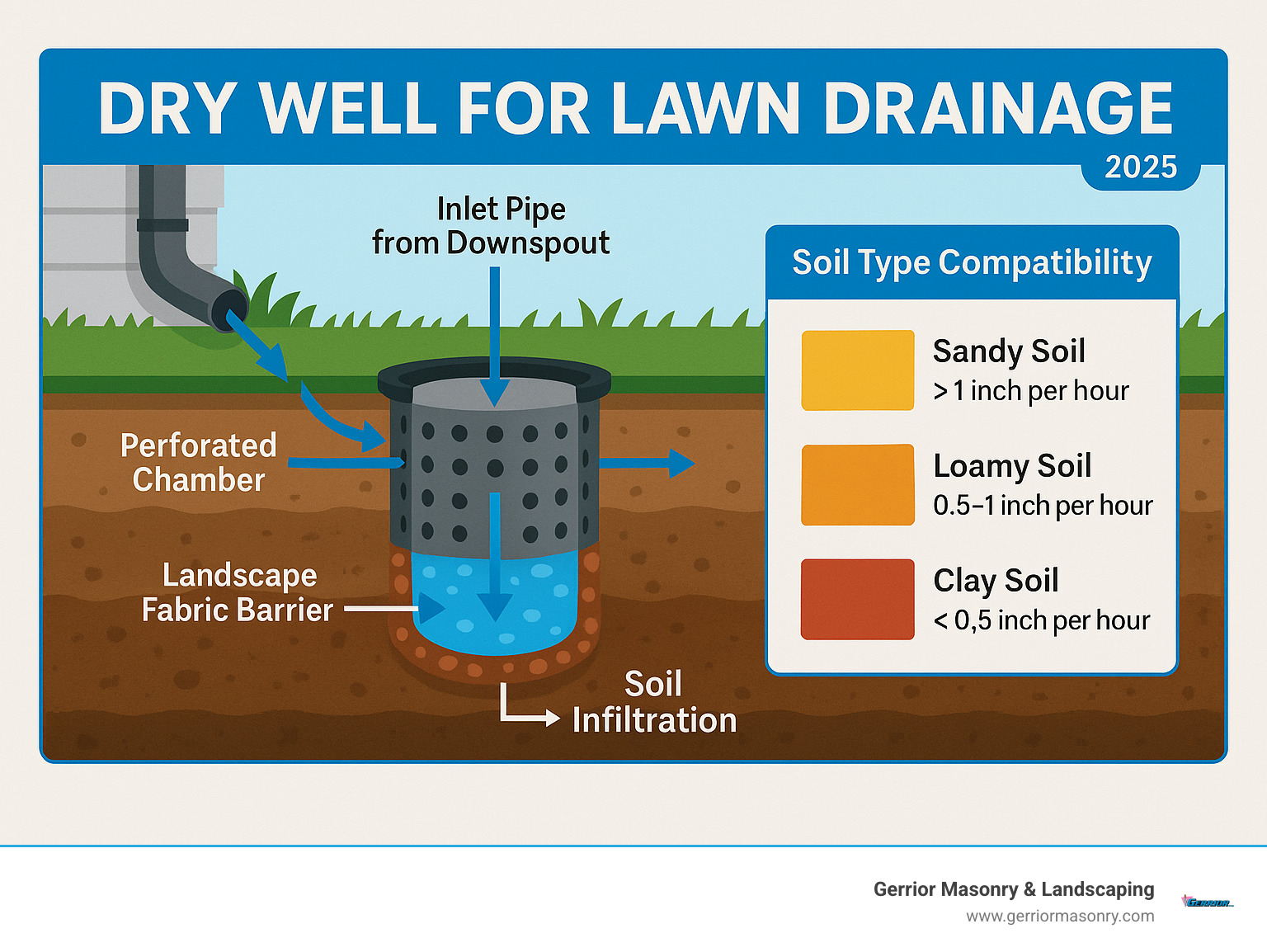
A dry well for lawn drainage is a passive, underground water storage system designed to manage excess stormwater. It functions like a buried reservoir, collecting runoff from your lawn, roof downspouts, and other impervious surfaces. Instead of letting water pool on the surface or run off into municipal storm drains, the dry well holds the water and allows it to slowly seep, or percolate, into the surrounding subsoil. This natural process not only resolves drainage issues but also helps recharge local groundwater, which is an environmentally beneficial practice.
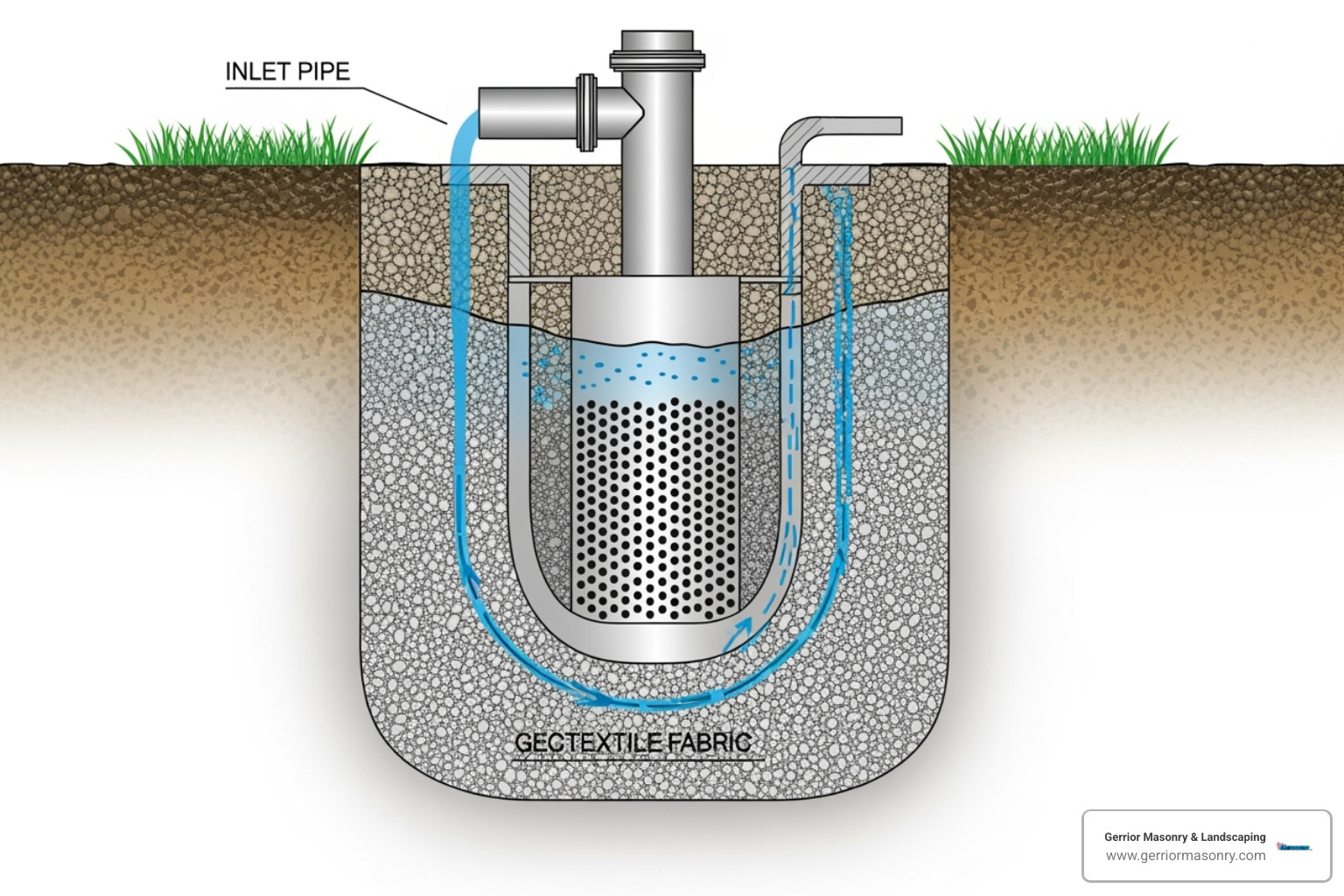
The core components of a dry well work in harmony. An inlet pipe, typically connected to a downspout or a series of catch basins, channels water into a large, perforated container. This container can be a prefabricated plastic chamber, a modular stackable unit, or a precast concrete galley.
To maximize storage capacity and aid infiltration, this container is surrounded by a layer of gravel or crushed stone backfill. The entire assembly—container and gravel—is then wrapped in a durable geotextile fabric. This non-woven fabric is crucial; it acts as a filter, allowing water to pass through while preventing soil, silt, and fine debris from clogging the system, which ensures its long-term effectiveness.
The success of a dry well is entirely dependent on the soil’s ability to absorb water, a property known as its percolation rate. Soil type is therefore a critical factor. Sandy soils, which can drain more than one inch per hour, and loamy soils (0.5-1 inch per hour) are ideal, as they allow water to dissipate efficiently. Conversely, heavy clay soils with a percolation rate of less than 0.5 inches per hour are problematic.
Clay particles are so fine and tightly packed that they can create an impermeable barrier, leading to a “bathtub effect” where the dry well fills with water but cannot drain. In these challenging soil conditions, a professional may need to design a modified system, such as digging deeper to reach a more permeable soil layer or incorporating an overflow outlet.
Modern systems like modular stackable units offer flexibility for various site constraints, while large concrete galley units can hold over 300 gallons each, making them ideal for managing significant runoff from large roofs or paved driveways.
While some simple dry wells can be a DIY project, professional installation is recommended for complex situations to ensure proper sizing and long-term function.
Getting the Size Right
Proper sizing is not a guessing game; it’s a critical calculation to ensure your dry well doesn’t get overwhelmed during a heavy downpour. A professional will calculate the required capacity based on several factors: the square footage of the impervious surfaces draining into it (like roofs and driveways), the local rainfall intensity (e.g., designing for a 10-year storm event), and the soil’s percolation rate.
As a general rule, a dry well should be sized to handle at least one inch of rainfall from the connected surfaces. For example, a 500 sq. ft. roof section would generate approximately 311 gallons of runoff from one inch of rain. In a climate like Massachusetts, where intense storms are common, we often design systems with additional capacity to provide a buffer and prevent overflow.
The Installation Journey
A professional installation follows key steps:
Site Evaluation & Perk Test to measure soil drainage.
Calling DigSafe (811) to mark all underground utilities.
Excavation of the hole and a sloped trench.
Lining with fabric and adding a gravel base.
Installing pipes and placing the dry well unit.
Backfilling with crushed stone and covering with fabric and soil.
Investment and Cost Considerations
Please note: The following are average costs based on internet data and not actual costs for Gerrior Masonry & Landscaping services. Prices can vary significantly based on specific project requirements, site conditions, and material choices.
DIY Gravel Pit: $500 to $1,500 for materials.
Prefabricated Plastic System: $1,500 to $4,500 for materials.
Professional Installation: $3,000 to $9,000+, with labor being a significant factor.
Large Concrete System: $6,000 to $25,000+, depending on scale and complexity.
While DIY saves on labor, professional installation ensures the system is sized correctly, complies with regulations, and offers a lasting solution.
A dry well is a powerful tool, but it’s not the only one. Understanding the alternatives helps in choosing the best approach for your property. Sometimes, the best solution is a combination of systems.
Feature
Dry Well for Lawn Drainage
French Drain
Rain Garden
Purpose
Underground water storage that slowly releases into deeper soil; perfect for localized pooling and runoff management
Redirects water away using perforated pipes in gravel trenches; excellent for foundation protection
Shallow planted areas that absorb and filter runoff while adding natural beauty
Varies widely; can be cost-effective for smaller areas
Maintenance
Seasonal inspections and inlet cleaning; relatively low maintenance
Moderate maintenance including inlet cleaning and flow checks
Higher ongoing maintenance with regular plant care and weeding
Ideal Use
Localized soggy spots, downspout runoff, areas where gravity drainage is challenging
Foundation protection, intercepting subsurface water, sloped area management
Managing roof and driveway runoff while enhancing landscape beauty
Visibility
Completely invisible once installed and covered
Can be hidden under turf or visible as decorative gravel
Visible as attractive landscaped garden feature
Creating Powerful Combinations
The most effective solutions often combine systems. A French drain can direct water to a dry well, managing both foundation moisture and surface pooling. For low-lying areas, a sump pump can lift water to a dry well. For patios, catch basins can channel runoff into the system. Pairing a rain garden with a dry well offers both a beautiful landscape feature and an overflow solution for heavy storms.
Maximizing Your System: Maintenance, Safety, and Professional Help
Maintenance Requirements for a Dry Well for Lawn Drainage
A well-maintained dry well for lawn drainage can last up to 30 years. Regular care focuses on preventing the clogs that can shorten its lifespan and reduce its effectiveness.
Preventing Clogs at the Source
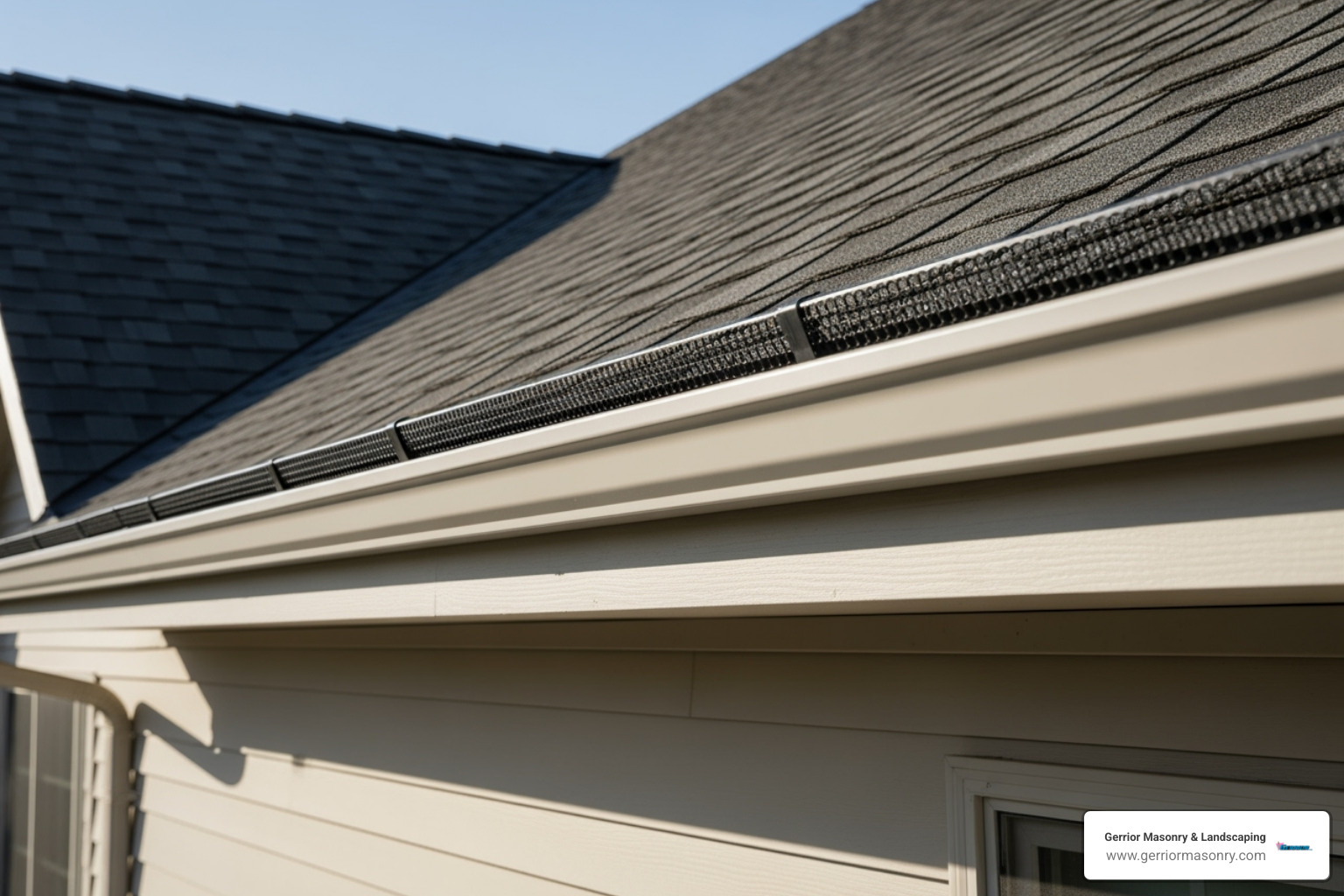
Gutters and Downspouts: If your dry well is connected to your roof, keep gutters clean, especially in the fall. Installing gutter guards is a highly effective way to reduce debris entering the system.
Inlets and Drains: Regularly clear leaves, grass clippings, and other debris from surface drains and catch basins to ensure water can flow freely.
Ongoing and Long-Term Care
Throughout the year, inspect your system for damage and watch for standing water, which can signal a clog. Be mindful of aggressive tree roots, which can seek out the water in your system and cause damage.
Over many years, fine silt may accumulate and slow drainage, eventually requiring a professional inspection and clean-out. Proper installation with quality geotextile fabric minimizes this issue.
Key Considerations for a Dry Well for Lawn Drainage
Before starting your dry well for lawn drainage project, it’s crucial to address safety, placement, and local rules.
Safety and Location
Call 811 Before You Dig: This is non-negotiable. This free service marks all underground utilities, preventing a costly and potentially deadly accident.
Proper Placement: Locate the dry well at least 10 feet from your foundation and property lines, and 50 feet from any septic system components. You are trying to move water away from your home, not toward it.
Water Table Depth: The bottom of the dry well must sit at least 2 feet above the seasonal high water table. If the water table is too high, the well cannot drain effectively.
Permits and Regulations
Local rules for drainage systems vary significantly across Massachusetts. Some towns require a permit, which can range from $50 to $250. It is essential to check with your local building department. A dry well is designed for clean stormwater runoff only—never direct chemicals, oils, or other pollutants into it.
When to Call the Professionals
While the DIY spirit is admirable, certain situations demand professional expertise:
Persistent flooding, soil erosion, or ground instability.
Challenging site conditions like heavy clay soil, a high water table, or steep slopes.
Sizing a system for heavy runoff from large roofs or extensive hardscaping.
Integrating a dry well with a sump pump system.
An expert assessment prevents costly mistakes and ensures your investment solves your water problem for good.
Your Expert Drainage Solution in Massachusetts
For over three decades, Gerrior Masonry & Landscaping has provided expert drainage solutions across Massachusetts. We don’t just install systems; we solve water problems with a comprehensive, hands-on approach.
Our process begins with a thorough site assessment, analyzing your soil, water table, and landscape. This allows us to design a custom solution, whether it’s a standalone dry well or a system integrated with French drains, retaining walls, or a new patio. Joe Gerrior personally oversees every project, ensuring the high-quality results our company is known for.
This holistic approach means you get a solution that not only works effectively but also improves your property’s value and your enjoyment of your outdoor spaces.
Don’t let standing water rob you of the beautiful, functional yard you deserve. Contact us today and let’s talk about how we can transform your soggy lawn into the outdoor space you’ve always wanted.