Why Hiring a Professional Masonry Contractor in Reading, MA is a Smart Investment
For Masonry Contractor in Reading MA homeowners, finding the right professional can make all the difference between a beautiful, lasting outdoor space and a costly DIY mistake. Knowing how to identify qualified professionals is essential.
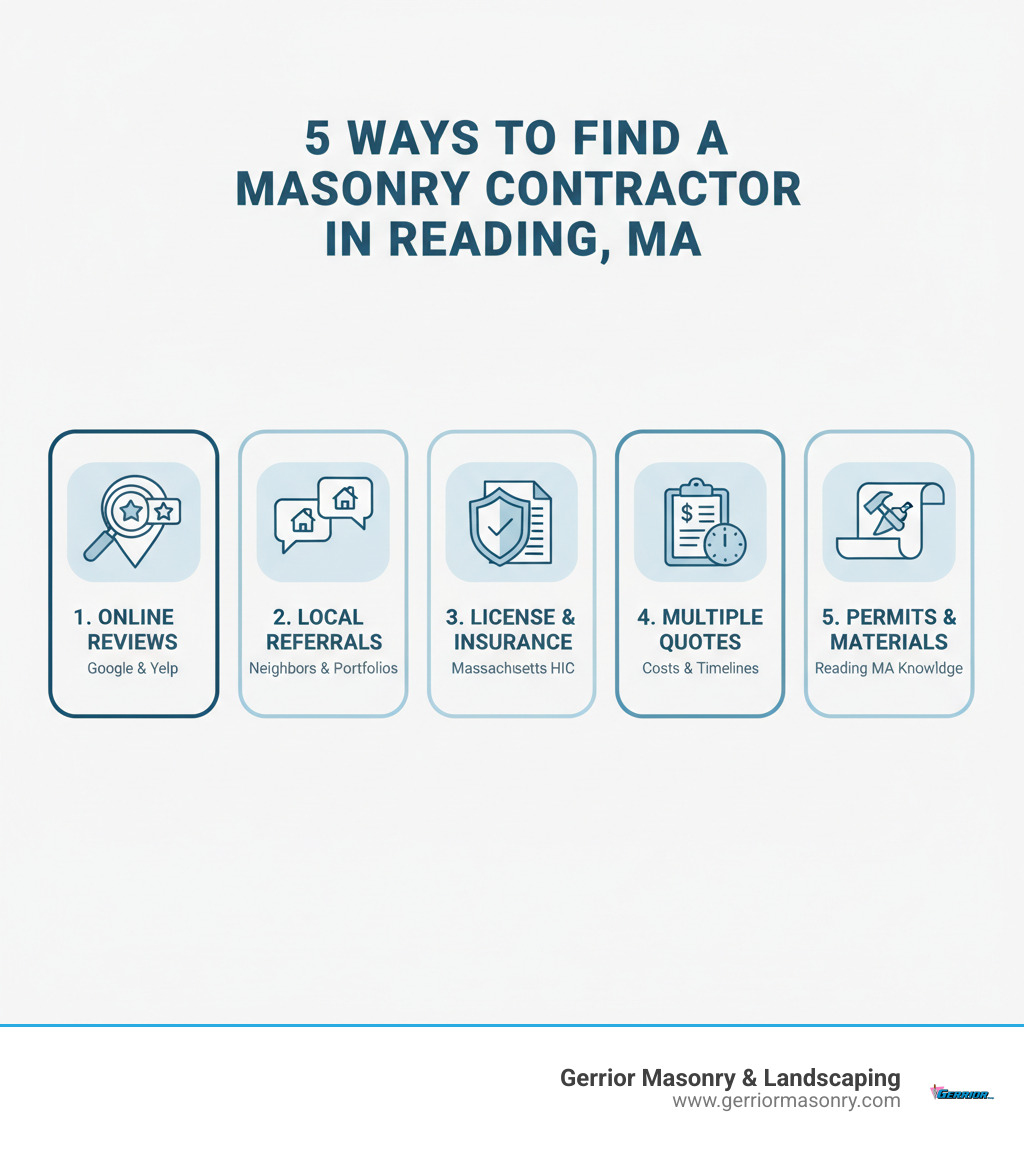
Here are 5 proven ways to find a qualified masonry contractor in Reading, MA:
Search online directories like Google Business and Yelp for verified reviews
Ask neighbors and community groups for local recommendations
Verify licenses and insurance including Massachusetts HIC registration
Get multiple detailed quotes with itemized costs and timelines
Check their knowledge of local permits and material options
Reading’s historic New England architecture and harsh seasonal weather—including freeze-thaw cycles—demand experienced masonry professionals who understand both aesthetics and durability. Whether you’re planning a patio installation, chimney repair, or foundation work, the right contractor will ensure your project adds value to your property for generations.
I’m Joe Gerrior, owner of Gerrior Masonry & Landscape Construction Corp. For over 34 years, I’ve provided masonry and landscaping services throughout Massachusetts, including extensive work with homeowners seeking a reliable Masonry Contractor Reading MA can trust. My team’s owner-supervised approach ensures every project meets the highest standards of craftsmanship.
Choosing a professional Masonry Contractor Reading MA is a smart investment in your property. Here’s why a professional touch is indispensable:
Increased Property Value: High-quality masonry is a proven investment. A beautifully constructed patio or a restored chimney enhances your daily life and significantly boosts your home’s market value. In Reading’s competitive market, these features can be a major selling point, often providing a high return on investment.
Improved Curb Appeal: Professional masonry adds timeless elegance and structural beauty. Imagine a charming brick walkway welcoming guests, a stately stone retaining wall creating a terraced garden, or a custom outdoor fire pit as a focal point. These elements transform a house into a distinguished home.
Durability Against New England Weather: Reading’s climate is tough on building materials, from heavy snow and ice to high humidity. Professionals use the right materials and proven techniques—like proper base preparation and high-quality mortar—to ensure your masonry withstands these harsh conditions for decades.
Expertise with Freeze-Thaw Cycles: This is a major threat to masonry in Massachusetts. Water penetrates small cracks, freezes, expands, and breaks the material apart. An experienced Masonry Contractor Reading MA combats this by implementing proper drainage, using specific mortar mixes, and applying appropriate sealants to protect the surface.
Safety and Code Compliance: Masonry work, especially for structural elements like foundations and chimneys, must be done correctly to be safe. A professional ensures every project adheres to Reading’s local building codes. This isn’t just about avoiding fines; it’s about protecting your family from the risks of structural failure or fire hazards.
Professional Craftsmanship vs. DIY Risks: Masonry is a highly specialized trade. Common DIY mistakes—like an improper patio base or the wrong mortar mix—can lead to premature failure and costly repairs that far exceed initial savings. Professional work guarantees a superior, lasting finish that is done right the first time.
We believe a well-executed masonry project is an investment that pays dividends for years. That’s why we bring our decades of experience and owner-supervised approach to every job.
5 Proven Methods for Finding the Best Masonry Contractor Reading MA
1. Leverage Online Directories and Local Reviews
Start your search for a Masonry Contractor Reading MA on platforms like Google, Yelp, and the Better Business Bureau (BBB). Don’t just glance at the star ratings; dive into reviews to identify patterns in communication, punctuality, and quality. Professional responses to feedback are a good sign. Also, tap into community knowledge on local forums like the Reading Residents Facebook Group for candid recommendations from your neighbors.
2. Ask for Local Recommendations and Check Portfolios
Personal referrals are often the most reliable source. Once you have a shortlist, always ask for a comprehensive portfolio. Look for clean lines, consistent mortar joints, and attention to detail. Before-and-after photos are particularly useful. If possible, ask for addresses of recent local projects to see their work in person. Ensure their portfolio includes projects similar to yours, whether it’s a patio installation, paver walkways, or complex foundation work. At Gerrior Masonry & Landscape Construction, we’re proud to showcase our patio design and installation work.
3. Verify Experience, Qualifications, and Insurance for a Masonry Contractor Reading MA
This step is non-negotiable and protects you from risk. Ensure your contractor has:
Experience: Look for a contractor with a long history of quality work in the Reading area. An established presence indicates stability and an understanding of local conditions. We bring over 30 years of experience to every job. Learn about our company history and values.
Licensing: Always verify their Massachusetts Home Improvement Contractor (HIC) license online. An HIC registration provides access to an arbitration program and a guaranty fund in case of disputes.
Insurance: Confirm they carry both general liability insurance (to cover property damage) and workers’ compensation insurance (to cover employee injuries). Without this, you could be held financially responsible for accidents.
Warranties: A reputable contractor is confident in their work and will offer a warranty covering both materials and labor. Understand the terms before signing.
A professional will readily provide this documentation.
4. Get Detailed Quotes and Understand Project Costs
Obtain at least three itemized quotes to compare. A proper quote should break down all costs, including labor, materials, permit fees, and debris removal. Be wary of vague estimates or unusually low bids, as they may signal subpar materials or hidden costs. The cheapest option is rarely the best value. Clarify the project timeline and payment schedule, and never pay for the entire project upfront.
Masonry costs vary widely. The table below shows general industry estimates, not our specific pricing. Always get a personalized quote.
Masonry Service
Average Cost Range in Reading, MA (Internet Data, not Gerrior Masonry prices)
Chimney Repointing
$500 – $5,000+ (for minor repairs to full chimney repointing/rebuild)
Patio Installation
$1,500 – $30,000+ (for small paver patios to large custom stone patios)
Walkway Construction
$800 – $10,000+ (for small paver paths to extensive stone walkways)
5. Discuss Local Regulations, Materials, and Maintenance
Ensure your contractor understands Reading’s specific requirements.
Permits: A good contractor knows exactly which projects (like new retaining walls over a certain height or large patios) require a building permit in Reading and should be able to manage the application process for you.
Materials: They should provide expert advice on the best materials for our climate. Discuss the pros and cons of classic brick for stairs, the timeless beauty of natural stone, or the design versatility of modern pavers. Their recommendations should balance aesthetics, durability, and your budget.
Maintenance: A great project deserves to be protected. Discuss long-term care requirements. This could include periodic sealing of stone patios, how to properly clean efflorescence (white salt deposits), or the importance of scheduling inspections for services like chimney repointing to protect your investment from New England weather.
Gerrior Masonry & Landscape Construction is based in Woburn, MA, and proudly services Middlesex and Essex County, Massachusetts.
Your Next Steps: Common Services and Finding the Right Partner
Now that you know how to find a qualified Masonry Contractor Reading MA, it’s time to consider your project. Here are some of the most popular services we provide to homeowners and businesses in the Reading area.
Popular Masonry Projects for a Masonry Contractor Reading MA
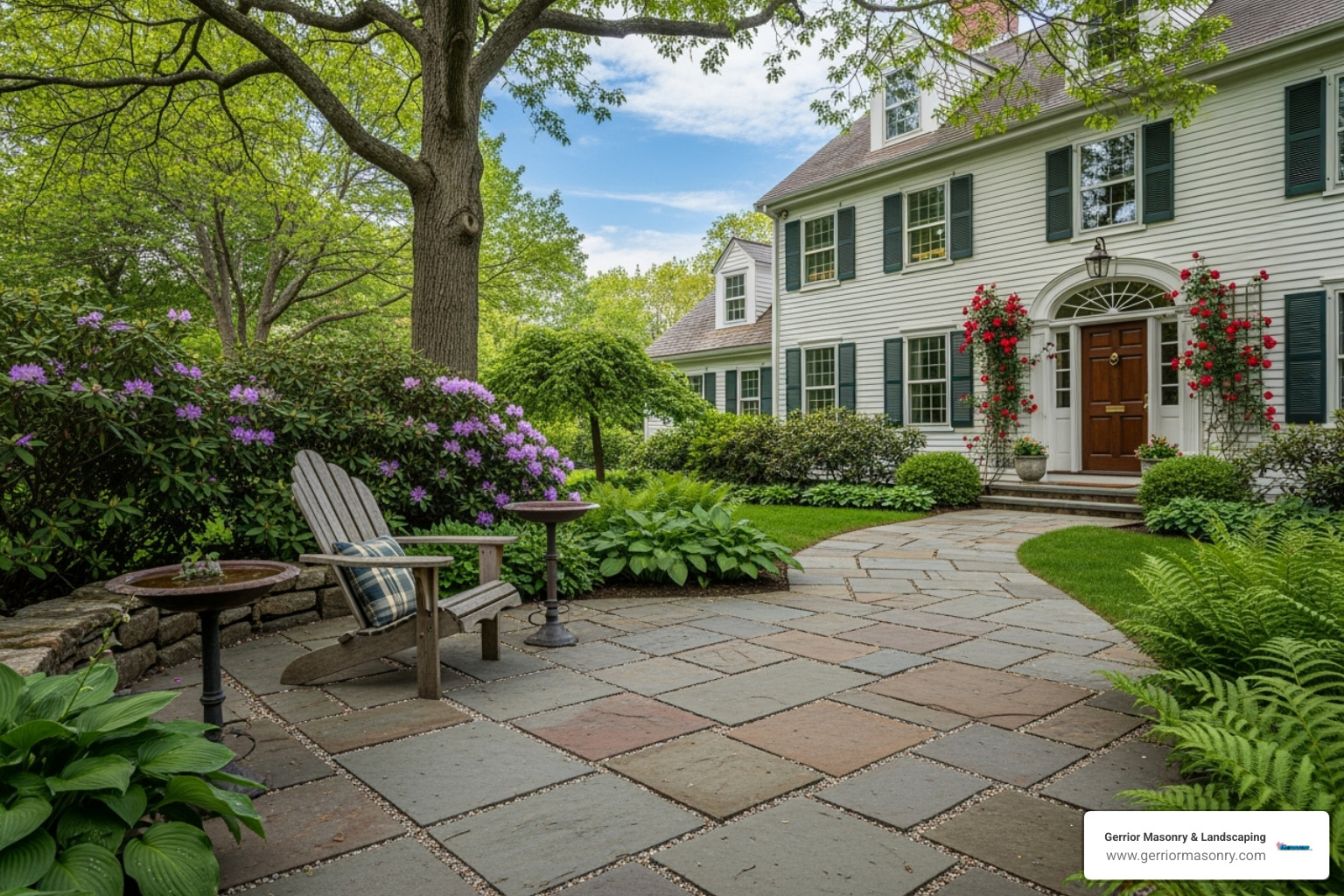
Patios: A well-designed patio installation is more than just a slab of stone; it’s an extension of your home’s living space. We help families create functional and beautiful outdoor rooms, perfect for dining, entertaining, or relaxing. We work with a variety of materials, from classic brick and elegant bluestone to versatile concrete pavers, to create custom patio designs that complement your home’s architecture and lifestyle.
Walkways: Professional paver walkways enhance curb appeal, guide visitors safely to your door, and protect your lawn from foot traffic. We can design walkways in various patterns, such as running bond or herringbone, and finish them with durable edging to ensure a clean, long-lasting look that adds a welcoming and finished touch to your property.
Retaining Walls: In Reading’s varied terrain, retaining walls are both a practical and aesthetic solution. They expertly manage sloped properties, prevent soil erosion, and create level, usable areas for gardens, patios, or play spaces. We engineer and construct walls that are not only beautiful but also structurally sound, incorporating critical drainage systems to ensure longevity.
Fire Pits: An outdoor fire pit or fireplace becomes the natural gathering spot in any backyard, extending your enjoyment of the outdoors well into the cooler New England evenings. We can build a custom fire feature that matches your patio and landscape, ensuring it complies with local safety regulations for a perfect blend of ambiance and peace of mind.
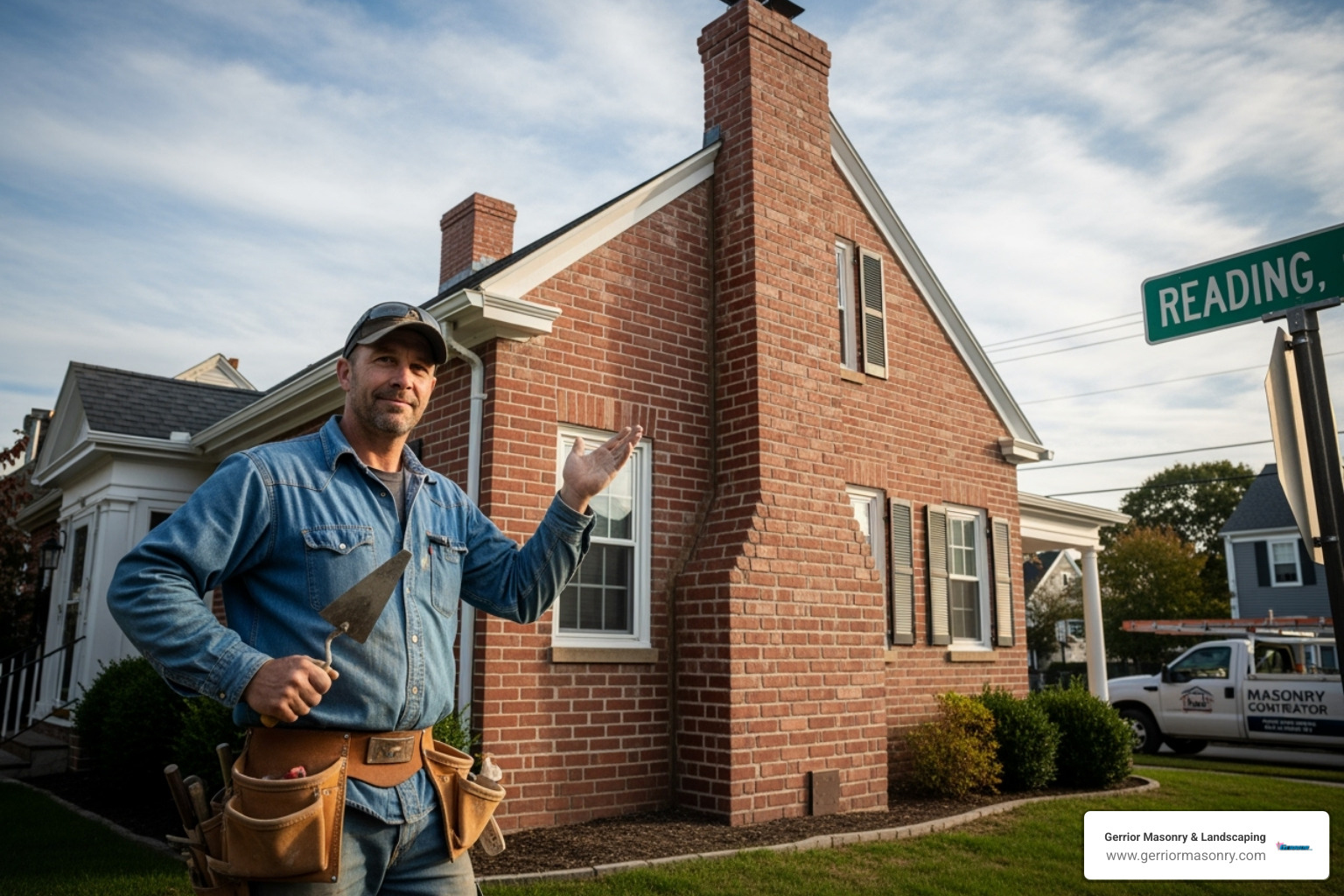
Chimney Work: For Reading’s many historic and older homes, proper chimney maintenance is a critical safety priority. We handle everything from chimney repointing to fix deteriorating mortar joints, to crown repairs and complete rebuilds. A well-maintained chimney not only functions safely but also preserves the architectural character of your home.
Foundation Repair: Addressing foundation cracks or moisture issues at the first sign is essential to protect your home’s structural integrity. Delaying foundation repair can lead to more significant and expensive problems down the road. Our team can diagnose the cause of the issue, whether it’s hydrostatic pressure or settlement, and implement the correct, lasting repair.
Bulkhead Replacements: A leaky, rusted, or poorly fitting bulkhead can be a major source of water in your basement. We install new, watertight bulkhead doors and surrounding masonry that provide secure, easy access to your basement while protecting it from the elements and improving your home’s energy efficiency.
Commercial Snow Plowing: For local businesses, reliable snow and ice management is non-negotiable. Our commercial snow plowing in Reading MA services ensure that your parking lots, walkways, and entryways are clear and safe for employees and customers, minimizing liability and preventing business disruptions during winter storms.
Project timelines vary based on complexity, materials, and weather, but we always provide a clear, realistic schedule with our quotes. At Gerrior Masonry & Landscape Construction, our owner oversees every job to ensure our high standards are met, whether it’s a small set of brick stairs or a complex foundation issue.
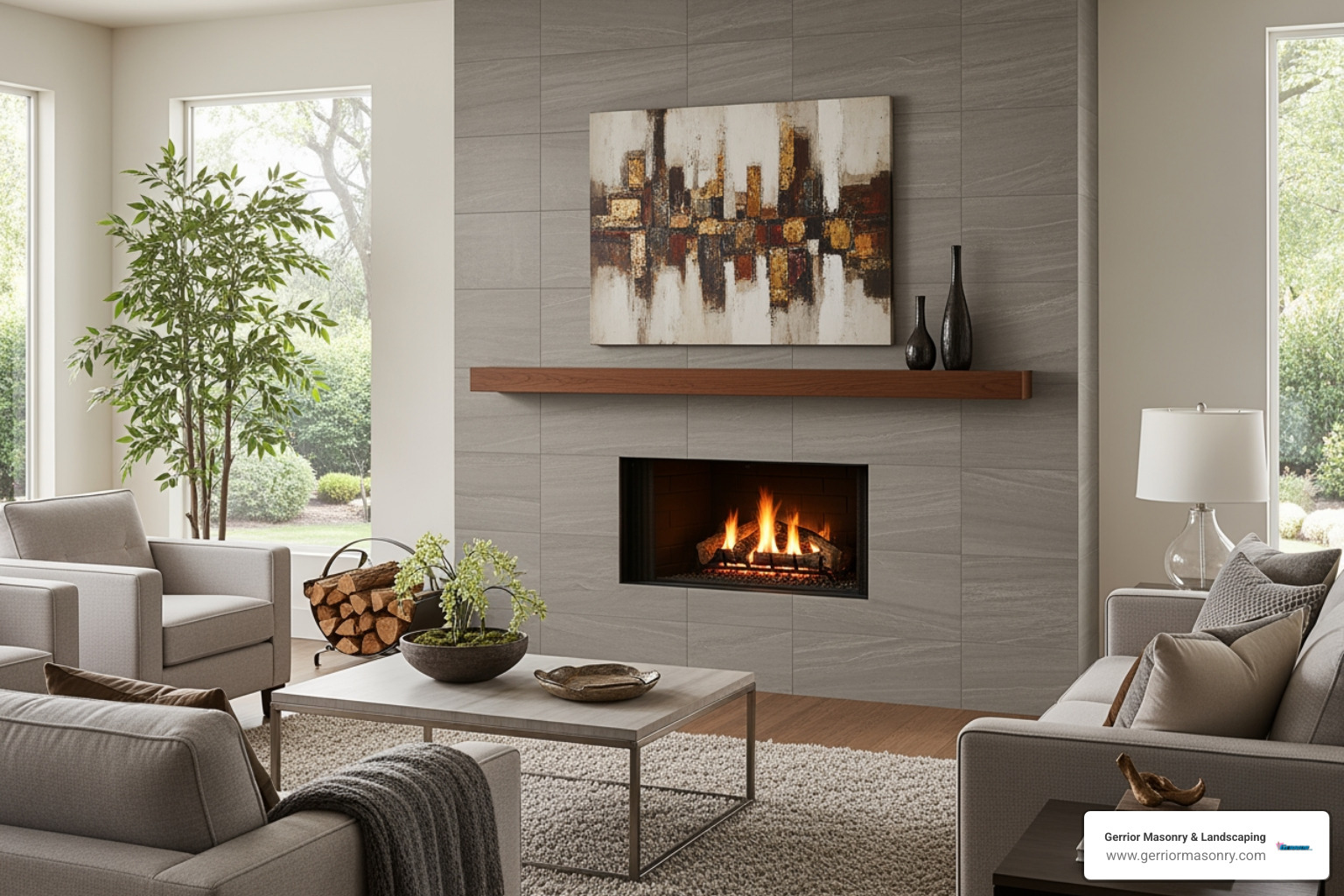
Fireplace refacing ideas can transform your dated hearth into a stunning focal point without the mess and expense of a full renovation. Here are the top options to consider:
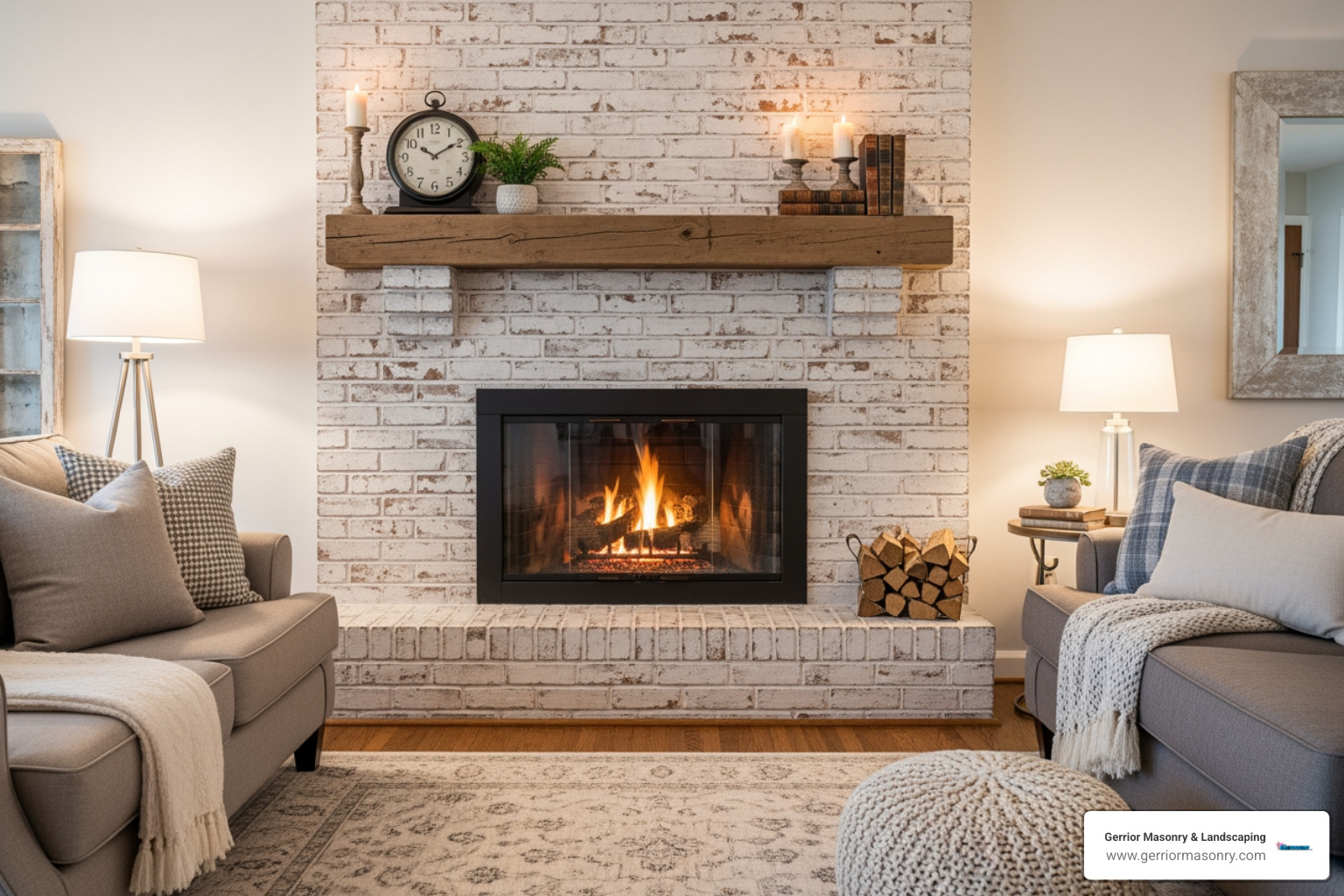
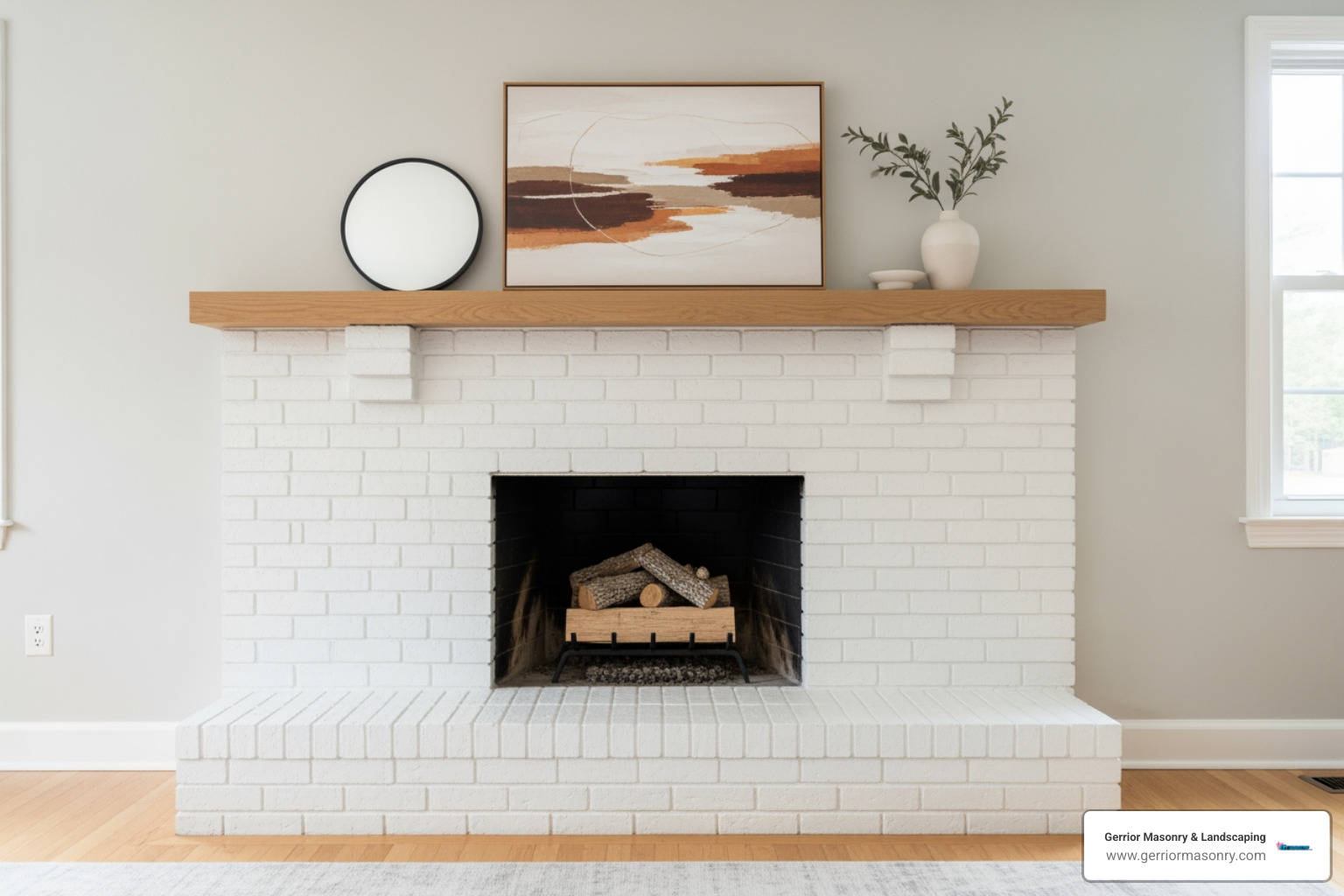
Paint or Whitewash Brick – Budget-friendly update that brightens and modernizes
Stone or Tile Veneer – Adds texture and elegance with materials like stacked stone, marble, or porcelain
Shiplap or Wood Accents – Creates a farmhouse or contemporary look
Concrete Finish – Delivers an industrial, modern aesthetic
German Schmear – Softens harsh brick with a textured, European-inspired treatment
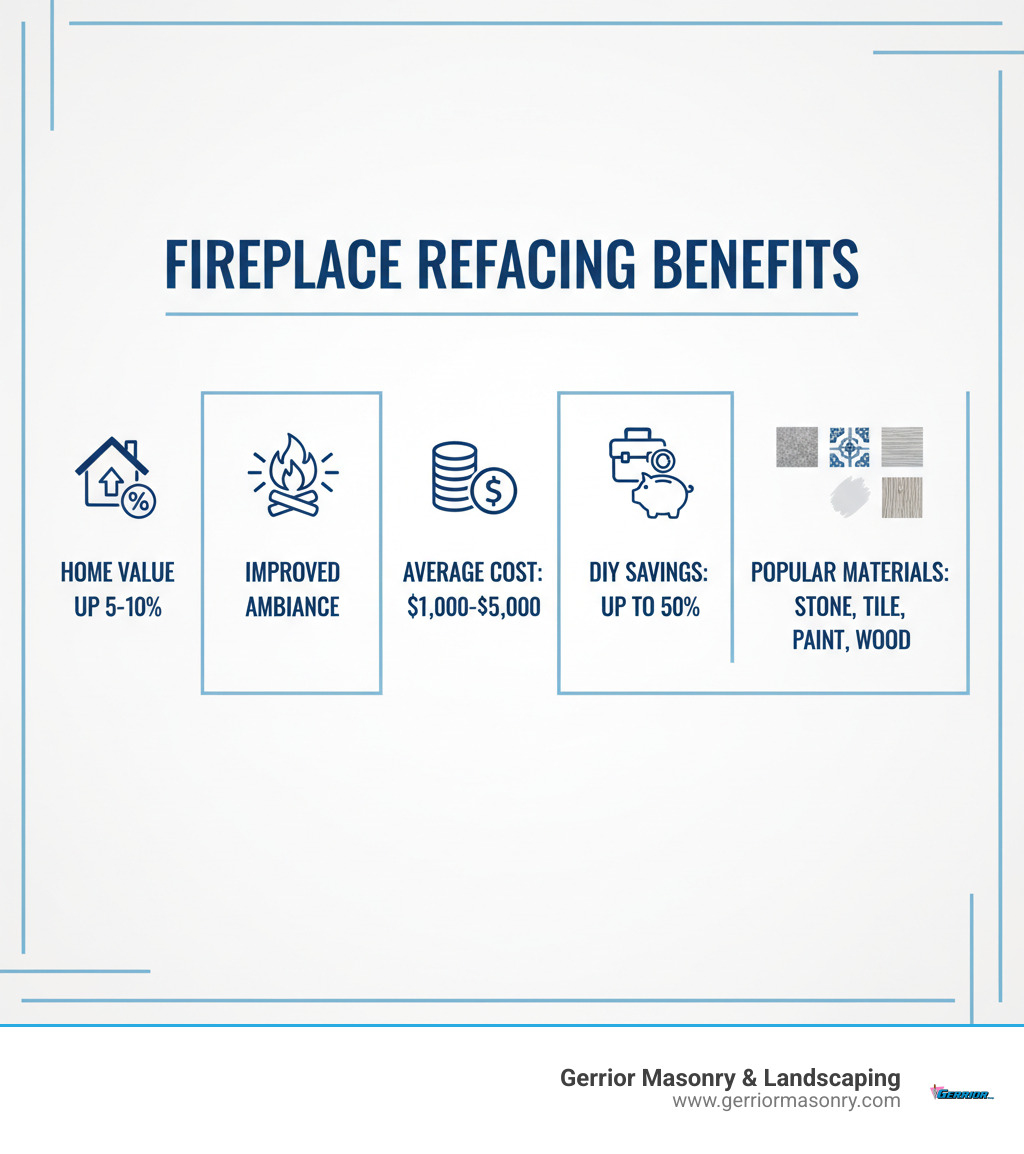
As the centerpiece of your living space, an outdated fireplace can make the entire room feel off. Refacing offers a practical way to update this focal point, often in just a weekend, while potentially increasing your home’s resale value by 5-10%.
The average cost to reface a fireplace is $1,000 to $5,000, depending on materials and complexity. DIY options like painting can save up to 50% on labor, while professional installation ensures a polished finish for complex projects.
I’m Joe Gerrior, owner of Gerrior Masonry & Landscape Construction Corp. For over 34 years, I’ve helped Massachusetts homeowners transform their fireplaces with expert masonry and creative fireplace refacing ideas. From installing stone veneer to repairing brick, I’ve seen how the right update can revitalize a home’s interior.
Gerrior Masonry & Landscape Construction is based in Woburn, MA, and services Middlesex and Essex County, Massachusetts.
Inspiring Fireplace Refacing Ideas: Top Materials and Styles
The right material can completely transform your fireplace. Whether you’re drawn to rustic textures or sleek modern lines, there’s a material that will make your fireplace the star of the room.
Popular Materials for a Fresh Look
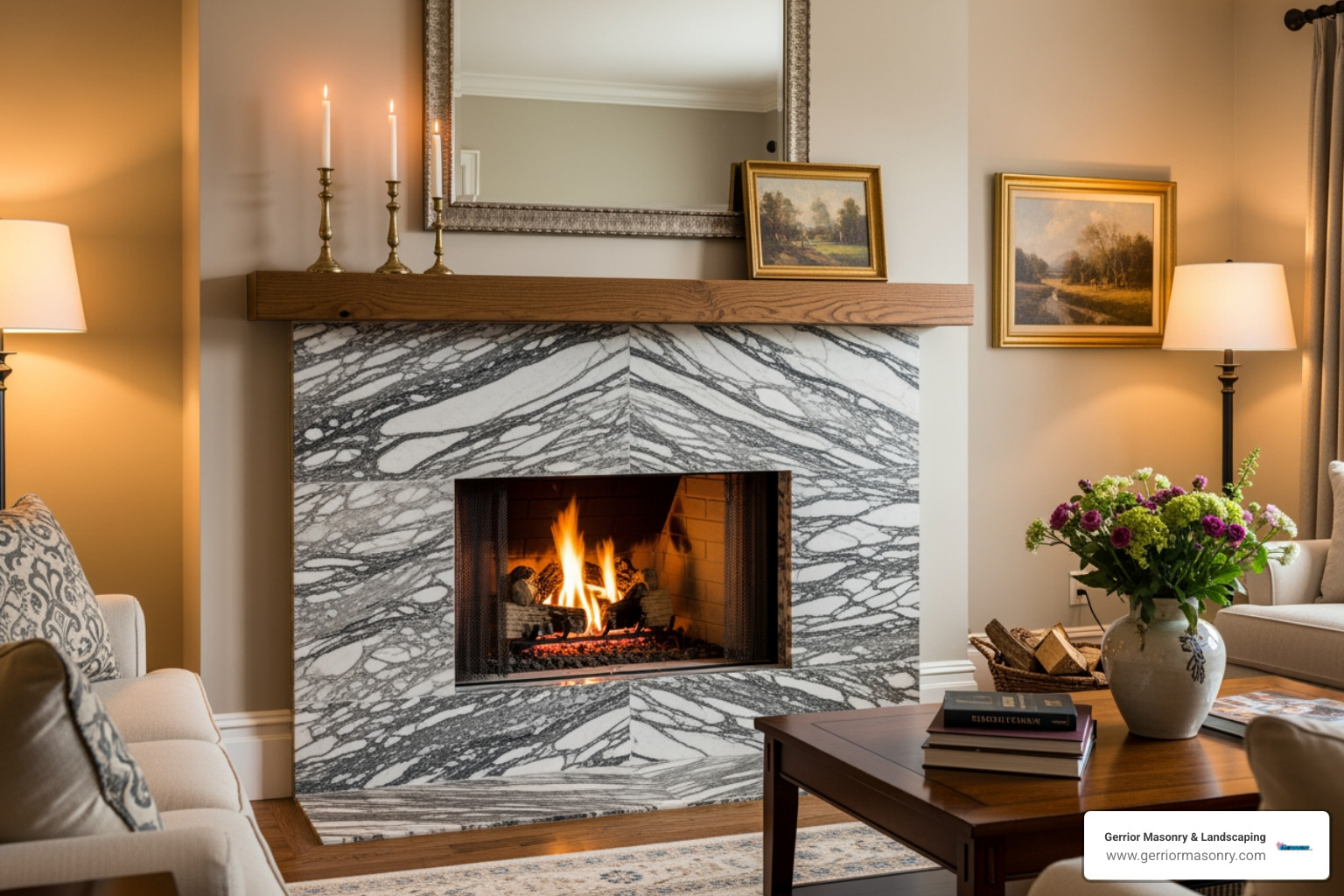
Natural stone like granite or marble brings timeless elegance. A floor-to-ceiling installation creates a dramatic, organic focal point. While an investment, its character and durability are best.
Stone veneer offers the look of natural stone at a fraction of the weight and cost. Stacked stone veneer is one of our most requested materials, delivering authentic appeal without the structural concerns of solid stone.
Tile offers endless possibilities. Ceramic and porcelain come in any color, pattern, or texture. Large format porcelain tiles create a clean, minimalist vibe with fewer grout lines, while intricate mosaic patterns can turn your fireplace into an artistic statement.
For an edgier, industrial feel, concrete finishes or microcement deliver a modern punch. Microcement is practical, as it can be applied over existing brick or tile, creating a smooth, sophisticated surface without demolition.
Wood and shiplap bring a warmth that harder materials can’t match. Shiplap creates clean horizontal lines perfect for farmhouse or coastal styles, while a reclaimed wood mantel adds instant character. For more creative approaches, check out our custom fireplace builders or browse designs by Regan Baker for modern inspiration.
The key is choosing materials that handle the heat and match your home’s personality. The fireplace refacing ideas that work best are authentic to your space. Our fireplace design ideas page has more inspiration.
How to Update a Brick Fireplace
A dated brick fireplace is one of the easiest surfaces to update without messy demolition.
Paint is the quickest, most budget-friendly option. A coat of white paint can brighten a room, while black adds bold sophistication. Just be sure to use heat-resistant paint near the firebox and prep the brick properly for adhesion.
Whitewash or limewash techniques soften the brick without completely covering it, letting the original texture show through. These breathable finishes create a lighter, aged appearance that feels organic and effortless.
German Schmear is my personal favorite. This technique involves spreading wet mortar over the brick and wiping some away to create an old-world, European charm. The tutorial from Craftivity Designs walks you through the process.
For a more dramatic change, you can cover the brick entirely. Tiling over brick with ceramic, porcelain, or natural stone opens up endless design possibilities. A critical warning: if your brick is painted, remove the paint first, or your new tile may peel off with it.
Stone or brick veneer provides a completely new facade without demolition. You can apply it right over existing brick for a fresh start. Our fireplace veneer installation complete guide covers this process. If you have underlying damage, our brick fireplace repair services can fix it before refacing.
Modern and Timeless Fireplace Refacing Ideas
Modern fireplace design creates impact through simplicity. The best fireplace refacing ideas are bold yet uncluttered.
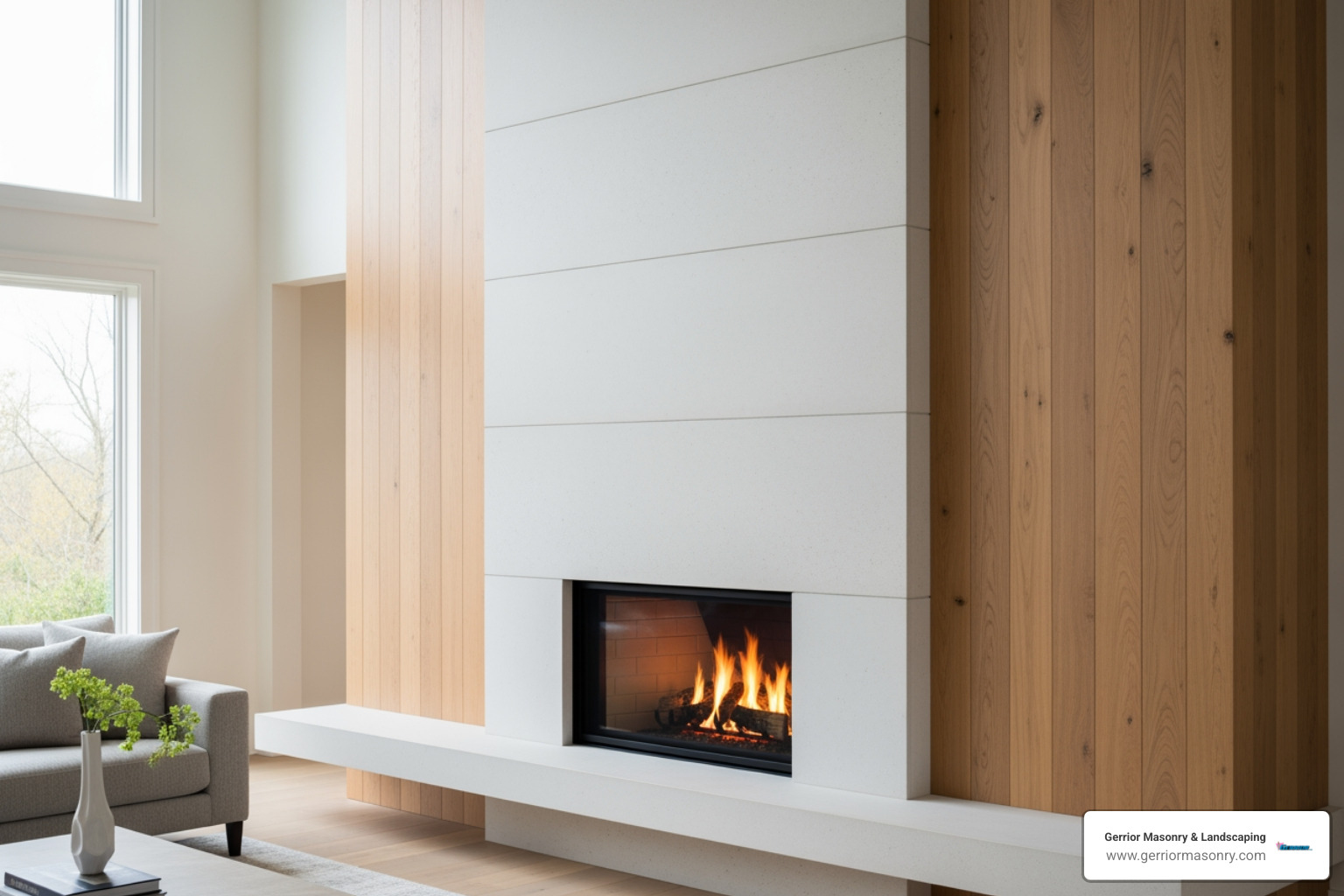
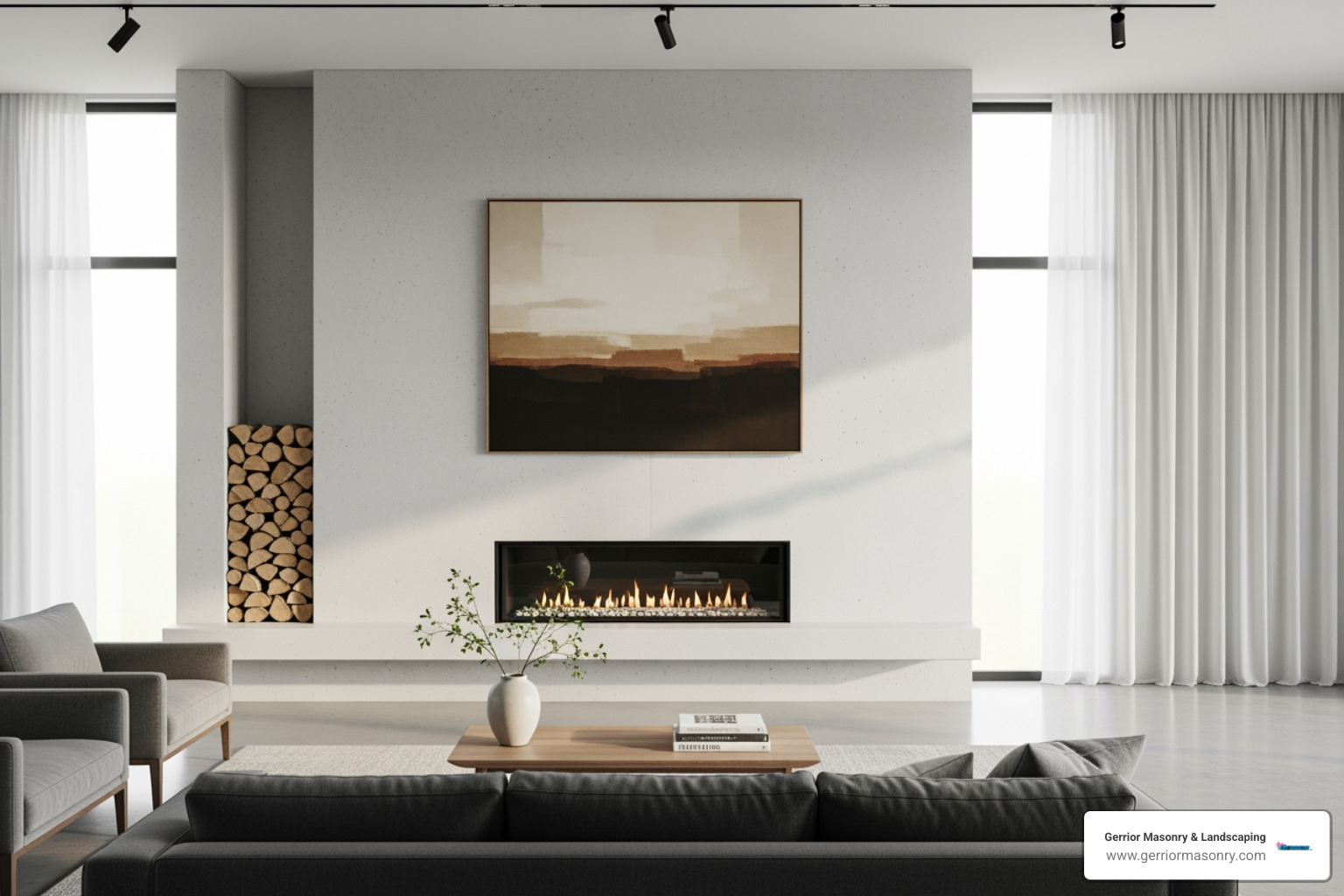
Floor-to-ceiling designs make a big statement, especially with high ceilings. Extending stone veneer or large tiles upward draws the eye and creates an impressive focal point that commands attention.
The minimalist aesthetic lets quality materials speak for themselves. Think smooth plaster, honed marble, or simple concrete surrounds with clean lines and subtle textures for a serene, sophisticated look.
Large format tiles with sleek lines are popular for good reason. They minimize grout lines for a smooth, contemporary surface. In neutral tones, they create a gallery-like quality.
Contrasting materials add visual interest. A dark stone surround against white walls creates drama, while a warm wood mantel balances the coolness of concrete or stone.
Your mantel choice is important. Floating mantels offer a clean, weightless look, while reclaimed wood mantels bring warmth and history. Some modern designs skip the mantel entirely.
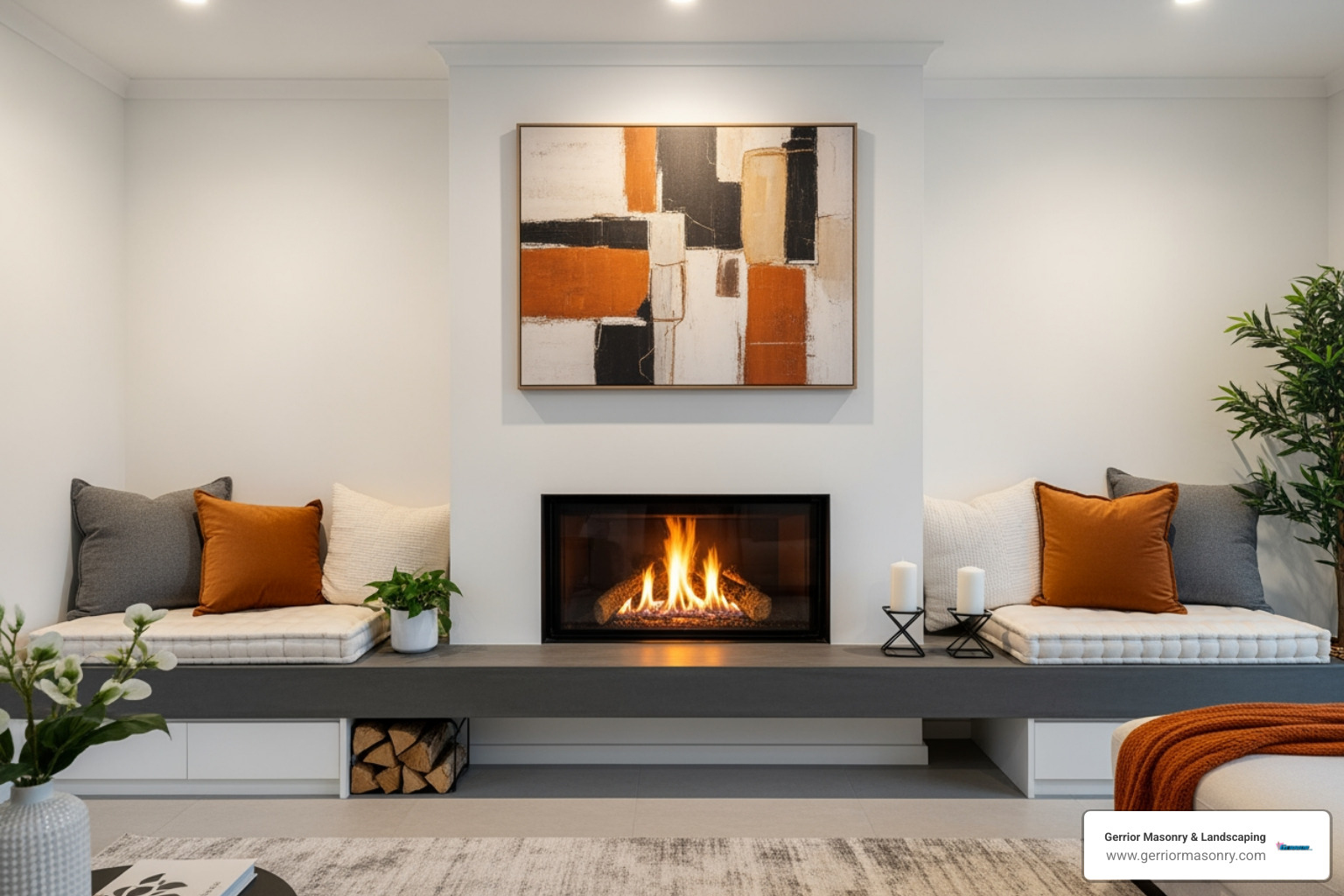
Built-in benches are both practical and beautiful, offering cozy seating and storage. We also help clients add integrated storage, like recessed boxes for media equipment, to keep the area clean and uncluttered.
For more ways to make your fireplace work for your lifestyle, explore our fireplace design ideas for inspiration.
Planning Your Fireplace Makeover
A fireplace refacing project is exciting, offering dramatic results without a full-scale renovation. But before you begin, it’s important to understand the costs, benefits, and process to set yourself up for success.
What to Expect: Cost and Benefits
Fireplace refacing is a smart investment that pays dividends beyond just aesthetics. Updating your fireplace can increase your home’s resale value by an estimated 5-10%. In Middlesex and Essex County, a refreshed fireplace is a major selling point that adds to the cozy New England ambiance buyers love.
Beyond resale value, refacing transforms your living space into a warm, inviting atmosphere that reflects your personal style. It turns a central feature into something you’re proud of.
Regarding the investment, internet data shows the average cost to reface a fireplace is between $1,000 and $5,000. This range can extend from a few hundred dollars for a simple paint job to $15,000 or more for elaborate designs with premium materials. Key cost factors include your material choice, labor costs, and overall project complexity. We always recommend getting a detailed estimate before starting professional work.
DIY-Friendly vs. Professional Installation
Whether to DIY or hire a pro depends on your skill level, budget, and project goals. For the handy homeowner, DIY can be rewarding and save up to 50% on labor. Approachable fireplace refacing ideas include:
Painting or whitewashing brick, which can transform a fireplace in a weekend.
German Schmear techniques, which are surprisingly forgiving.
Peel-and-stick tiles for non-wood-burning fireplaces.
Installing a new wood mantel with basic carpentry skills.
However, professional help is crucial for certain jobs. Structural changes, like altering the firebox, require a masonry professional to ensure safety and code compliance. Complex tiling or stone work also benefits from an expert’s precision and specialized tools, as mistakes can be costly. A professional understands the safety standards required for work involving heat and ventilation. At Gerrior Masonry, our Masonry Service ensures your project is not just beautiful—it’s safe and built to last.
Getting Started: Preparation and Next Steps
Proper preparation is key to a great result, whether you’re going DIY or hiring a pro.
First, thoroughly clean the existing surface to remove all soot, dust, and debris. Use a wire brush and a strong cleaner like TSP. This is critical, as new materials won’t adhere to a dirty surface.
Next, inspect for damage like cracks or crumbling mortar. These structural issues must be fixed first. Our Fireplace Mortar Repair services can restore integrity before you begin.
Remove any loose elements you plan to replace, like old mantels. If you’re tiling over painted brick, remove as much paint as possible to ensure your new tile adheres properly. Finally, protect your space with drop cloths and plastic sheeting to make cleanup easier.
When choosing your materials, let your room’s aesthetic be your guide. A rustic space might call for stone veneer, while a modern room may suit large format porcelain tiles. If you’re in Middlesex or Essex County, Massachusetts, and need expert guidance, we’re here to help. At Gerrior Masonry & Landscape Construction, we’ve spent over three decades perfecting our craft. My team and I deliver high-quality results with hands-on oversight on every project, ensuring your fireplace is both beautiful and built to last.
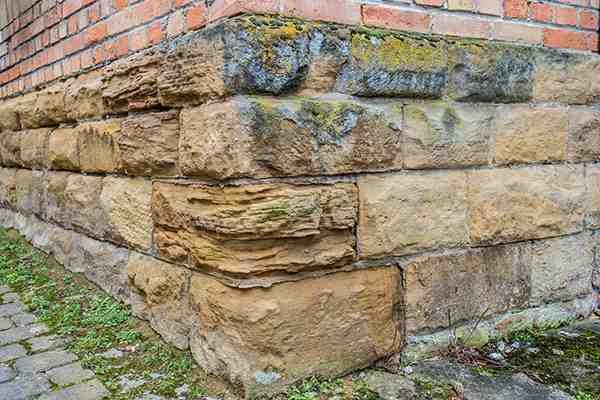
Over time, exposure to the elements can cause brick, stone, and mortar to deteriorate. Professional masonry repair services address this damage, restoring both the structural integrity and aesthetic appeal of your property. Whether you’re dealing with minor cracks or significant structural issues, timely repairs are crucial to prevent further damage.
What You Need to Know About Masonry Repair:
Common repairs include: Repointing/tuckpointing, brick replacement, chimney repairs, and foundation work.
Average project costs (from public internet sources; not actual Gerrior pricing): Reported averages often fall around $1,500–$2,000, with a wide range from roughly $300 on the low end to $6,000–$8,000+ for extensive structural work. Actual costs vary by scope, materials, and site conditions.
Signs you need repair: Look for cracked bricks, crumbling mortar, water leaks, bulging walls, or a white powdery residue (efflorescence).
Timeline: Minor jobs may take a few days, while extensive restoration can take weeks.
Best time to repair: Spring is ideal, after the freeze-thaw cycle has ended.
Ignoring masonry problems allows water infiltration, which can lead to mold, structural instability, and more expensive repairs down the road. Choosing the right contractor is key. Look for licensed, insured professionals with a proven track record. I’m Joe Gerrior, owner of Gerrior Masonry & Landscape Construction, and for over 34 years, my team and I have been providing expert masonry repair services to homeowners and businesses throughout Massachusetts.
Hiring a Masonry Contractor
Choosing the right contractor is paramount for your property’s masonry. You’re entrusting them with the structural integrity, aesthetic appeal, and long-term value of your investment.
Finding a reputable masonry repair services contractor starts with careful vetting. Look for companies with a proven track record. Our 34 years serving Massachusetts speaks to the quality of our work and the trust our clients place in us.
Checking licenses and verifying insurance is a top priority. A legitimate contractor will be licensed and carry both liability insurance and workers’ compensation. We are always ready to provide documentation for your peace of mind.
Reviewing portfolios provides tangible evidence of craftsmanship. Ask to see photos of completed projects similar to yours to ensure they can deliver the quality you expect. We are proud of every project we complete and maintain a full portfolio.
Asking for references is equally important. A reputable contractor will connect you with satisfied customers who can speak to their reliability and professionalism. These conversations reveal how a company operates.
Written estimates are essential. A detailed estimate should clearly outline all costs, materials, labor, and the full scope of work. This prevents misunderstandings and protects both parties. We always provide comprehensive written estimates.
Pay attention to communication. Do they listen, explain their process clearly, and answer questions patiently? These soft skills are just as important as technical expertise for a positive working relationship.
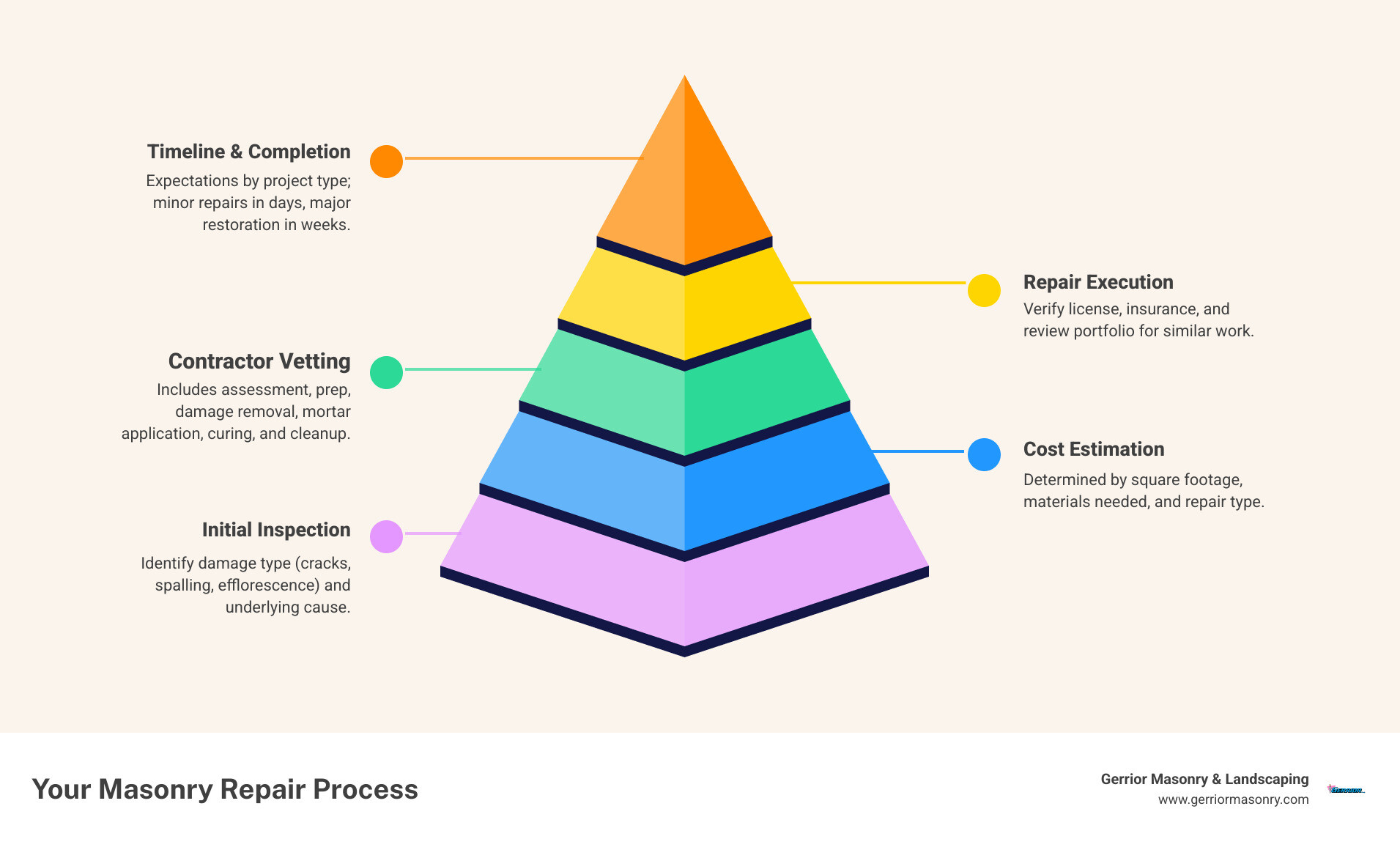
Once you hire a professional for masonry repair services, the process generally follows a clear path to ensure quality results.
Assessment and Planning: The process begins with a thorough assessment to identify not just the visible damage but also its root cause, such as water infiltration or foundation settling. This allows for a comprehensive repair plan. We also focus on sourcing materials—bricks, stone, and mortar—that perfectly match your existing structure for a seamless finish.
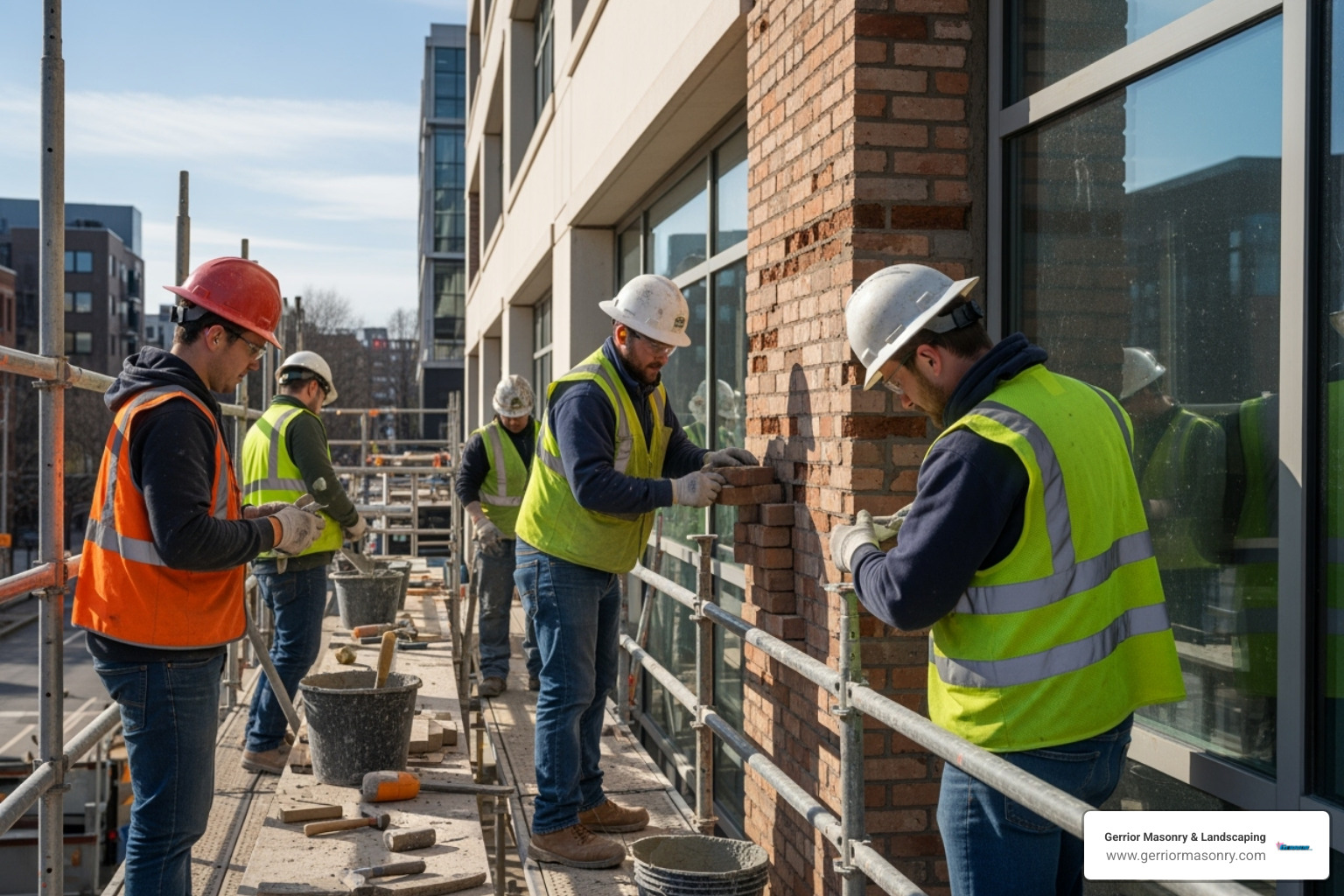
Preparation and Removal: Before repairs begin, we prepare the site by setting up scaffolding and protecting your landscaping and property. Our team then carefully removes only the damaged bricks and deteriorated mortar, preserving the integrity of the surrounding structure.
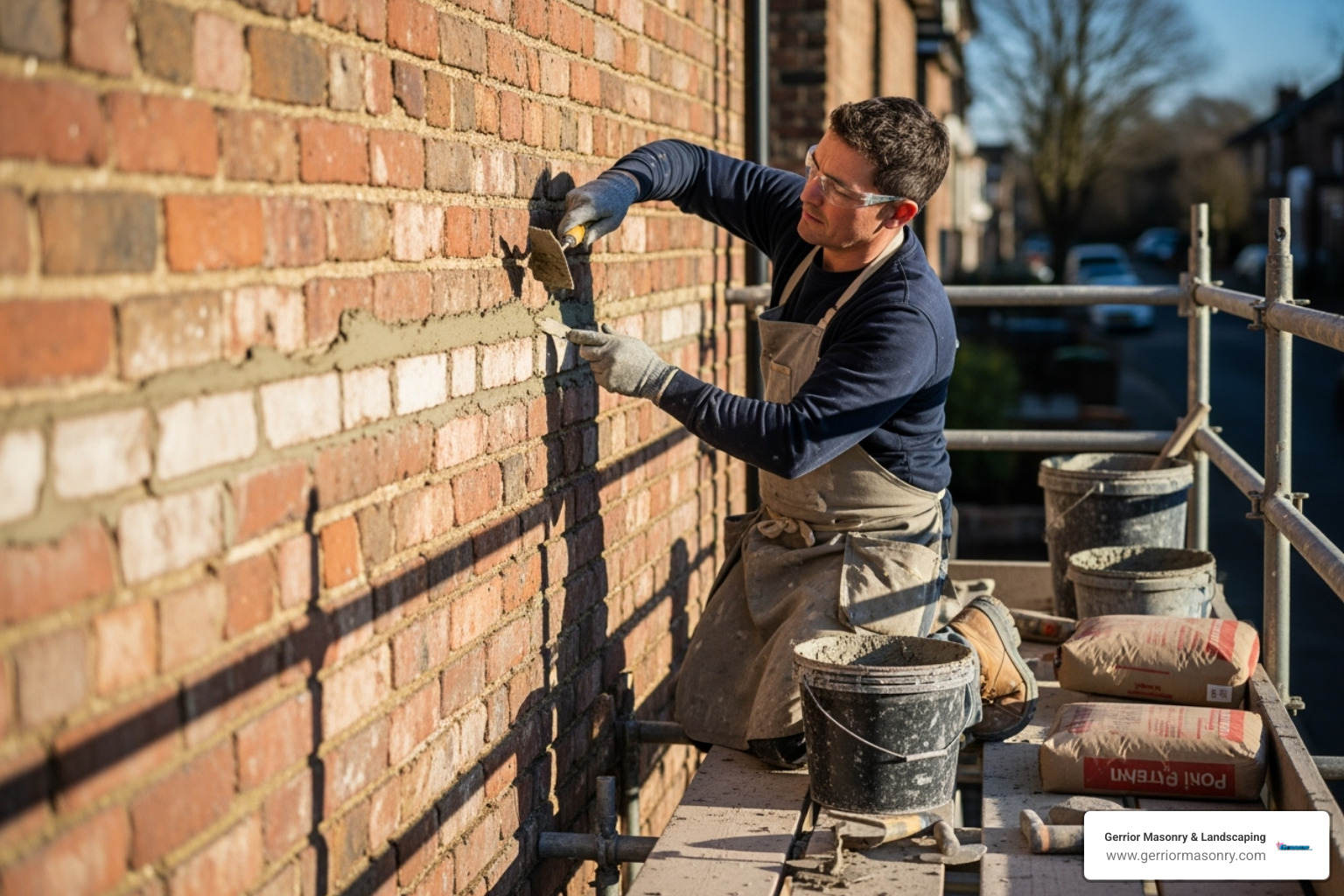
Repair and Application: This is where craftsmanship is key. We mix fresh mortar to the correct consistency and color. New bricks or stones are set, and joints are repointed with precision to ensure structural strength and proper water shedding.
Curing and Cleanup: The new mortar must cure properly to achieve maximum durability; this step cannot be rushed. After the curing period, we conduct a final cleanup, removing all debris and leaving your property pristine. Our goal is to leave your masonry stronger and more beautiful than we found it, as seen in our front stairs and steps projects.
Key Questions to Ask Potential Contractors
Before you commit to any masonry repair services, arm yourself with the right questions to gauge a contractor’s expertise and professionalism.
How long have you been in business, and what’s your experience with projects like mine? A long history suggests stability and expertise with local masonry challenges.
Are you licensed, bonded, and insured? This is non-negotiable. A professional contractor must carry liability insurance and workers’ compensation to protect you, your property, and their team.
Can I see a portfolio and speak with references? Seeing past work and talking to previous clients provides tangible proof of their craftsmanship and reliability.
What is your process for matching mortar color and texture? Proper mortar matching is crucial for seamless repairs that blend with the original work, especially on older or historic properties.
How will you protect my property during the repair? Masonry work can be messy. Ask about their plan for protecting landscaping, windows, and other features from dust and debris.
What is the estimated timeline and what might cause delays? A clear timeline helps manage expectations. Understand that weather or unforeseen issues can cause potential delays.
Do you offer a warranty on your work? A confident contractor stands behind their craftsmanship. Ask what the warranty covers and for how long.
Will you provide a detailed written estimate? Always get a written estimate that outlines all costs, materials, labor, and the full scope of work to prevent misunderstandings.
What is the payment schedule? A standard schedule involves a deposit, progress payments, and a final payment upon completion. Never pay the full amount upfront.
Does the estimate include cleanup and debris removal? Confirm that the quoted price includes complete worksite cleanup and disposal of old materials.
What potential complications do you foresee? An experienced contractor can anticipate challenges and explain how they would resolve them, demonstrating honesty and expertise.
Which specific materials will you use? Ask about the type of brick, stone, and mortar mix. The right materials are critical for a durable and aesthetically pleasing repair.
Asking these questions helps you select a qualified professional who delivers quality results. Our expertise extends beyond repairs to creating beautiful outdoor spaces. Explore our comprehensive hardscaping services for more inspiration on how we can transform your property.
Choose Gerrior for Your Masonry Repair Needs
When your property’s masonry shows signs of distress, you need a team that combines experience, skill, and a deep understanding of local conditions. At Gerrior Masonry & Landscape Construction, we are that team. We’ve built our reputation on providing exceptional masonry repair services that stand the test of time.
For over 30 years, we’ve been helping property owners throughout Middlesex and Essex County tackle their masonry challenges. Our owner, Joe Gerrior, brings over 34 years of hands-on experience to every project. What truly sets us apart is Joe’s personal involvement—he oversees every single job from start to finish. This isn’t just about quality control; it’s about catching potential issues before they become expensive problems. When the owner is on-site, you get craftsmanship that reflects decades of expertise, not just another crew rushing through another job.
We understand that your property represents a significant investment, whether it’s your home or your business. That’s why we approach every masonry repair service with the same level of care and attention to detail. From the moment we assess your damage to the final cleanup, we’re committed to delivering work that improves both the structural integrity and visual appeal of your property.
Our specialties include decorative brickwork and stonework, comprehensive chimney repairs, and foundation repair services. We don’t just patch problems—we identify and address the underlying causes. Water damage, frost heave, settling foundations—we’ve seen it all and know exactly how to fix it for the long term.
Living and working in Massachusetts means dealing with harsh winters, freeze-thaw cycles, and ground movement. We’ve spent three decades learning how local weather patterns and soil conditions affect masonry structures. This regional expertise allows us to tailor our solutions specifically for the challenges your property faces. We use only high-quality materials and proven techniques, all backed by our workmanship guarantee.
Whether you need a few bricks replaced, extensive repointing of your foundation, a complete chimney rebuild, or beautiful new hardscaping services to complement your repairs, we handle it all. We also offer prompt, dependable service with honest, upfront estimates—no hidden fees, no surprises.
If you’re in the Reading area and searching for a trusted partner, you can learn more about our local masonry contractor services in Reading, MA. We’re proud to serve communities throughout our service area with the same commitment to excellence that’s defined our business for over three decades.
Ready to restore your masonry to its former glory? Contact us today for a free consultation. Let us show you why property owners throughout Massachusetts have trusted Gerrior Masonry & Landscape Construction for more than 30 years. We’re here to help you build your dreams, one brick at a time.
Gerrior Masonry & Landscape Construction is based in Woburn, MA, and services Middlesex and Essex County, Massachusetts.
Fireplace remodeling ideas can transform your home’s focal point from outdated to outstanding. Whether you’re on a tight budget or ready for a major overhaul, there are options to completely change how your hearth looks and functions.
Popular approaches include:
Painting brick for a fresh, modern look.
Adding a new mantel.
Updating the surround with tile or stone.
Installing a functional gas or electric insert.
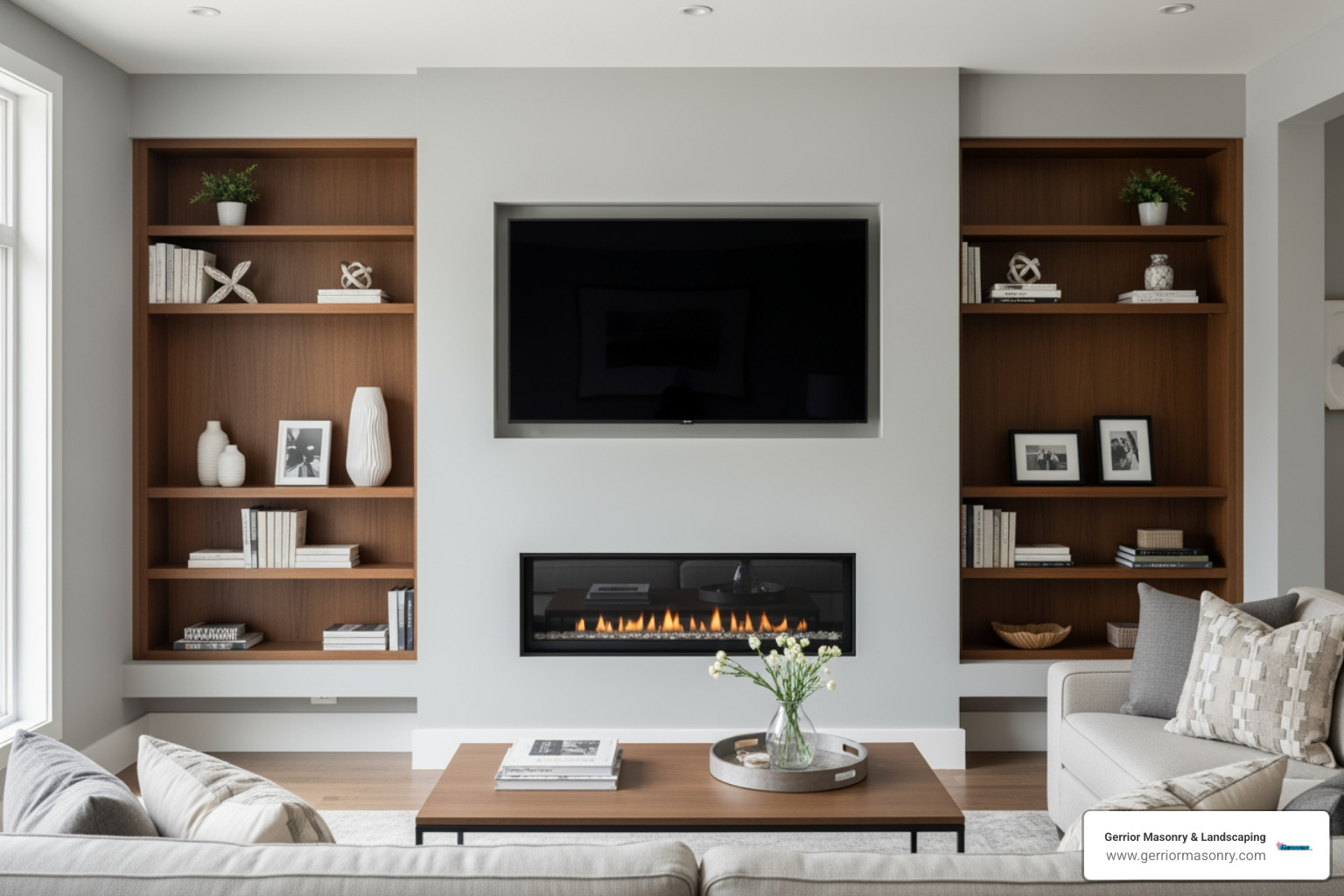
Creating built-in shelving for storage and display.
Extending stone or wood floor-to-ceiling for a dramatic statement.
A fireplace remodel can deliver up to a 100% return on investment when part of a larger living space renovation. The impact goes beyond aesthetics; a well-designed fireplace creates a cozy gathering spot and anchors your room’s design. While average costs can range from $2,000 to $10,000, simple updates like painting can cost less than $200.
I’m Joe Gerrior, owner of Gerrior Masonry & Landscape Construction Corp. For over 34 years, I’ve helped Massachusetts homeowners bring their fireplace remodeling ideas to life with expert masonry. Let me walk you through the best options for your home.
Inspiring Fireplace Remodeling Ideas for Every Style & Budget
Whether you’re drawn to sleek modern lines or cozy rustic charm, the right fireplace remodeling ideas can transform this focal point. The options are more exciting and achievable than most people realize.
Choosing Your Fuel: Wood, Gas, or Electric?
Before choosing materials, you must decide on a fuel source, as this choice affects your budget and routine.
Wood-burning fireplaces offer authentic crackles and smells but require significant maintenance, including wood storage, ash cleanup, and regular chimney repairs.
Gas fireplaces provide instant ambiance with a switch. They require a gas line and professional installation, but maintenance is minimal.
Electric fireplaces are the easiest, often plug-and-play, and require almost no maintenance. However, the flame effect is less authentic, and heat output is lower.
Fireplace Type
Pros
Cons
Average Cost (Unit)
Installation Cost
Maintenance
Heat Output
Aesthetics
Wood-Burning
Authentic crackle and smell, significant heat, traditional feel.
Requires wood storage, takes time to start, temperature fluctuations, requires vigilance, cleaning (soot, ash), potential sparks.
Varies widely, often involves existing masonry.
Can be high if new chimney/venting is needed.
High (cleaning, wood sourcing).
High
Traditional, rustic, authentic flame.
Gas
Instant on/off, consistent heat, minimal maintenance, can be vented or ventless.
Less authentic flame than wood, requires gas line installation/extension.
$1,500 – $4,000 for inserts (based on internet data, not actual Gerrior Masonry costs).
$1,000 – $3,000 (based on internet data, not actual Gerrior Masonry costs).
Low (annual inspection).
Medium to High
Modern to traditional, clean.
Electric
Eco-friendly, no venting, easy plug-and-play installation, versatile placement.
Lacks authentic flame/ambiance, heat output is lower, relies on electricity.
$200 – $1,500 (based on internet data, not actual Gerrior Masonry costs).
Minimal to none (DIY possible).
Very Low.
Low to Medium.
Modern, sleek, LED flame effect.
Materials and Styles to Match Your Home
Now for the fun part: the look. Your fireplace’s personality is defined by its surround (frame), mantel (shelf), and hearth (floor protection). Styles range from modern and minimalist with clean lines to rustic and farmhouse with natural, lived-in textures.
The materials you choose bring these styles to life. Stone is timeless and durable, from rugged stacked stone to polished marble. For more on stone options, see our guide on fireplace veneer installation. Brick is versatile; leave it natural or paint it for a quick update. Tile offers endless patterns and is a budget-friendly way to get a high-end look, according to Remodelaholic. Wood mantels add warmth, while concrete provides a modern, industrial edge. Finally, paint is a powerful tool for an affordable, dramatic change.
Budget-Friendly Fireplace Remodeling Ideas
Not every fireplace update requires a large budget. Some of the most satisfying fireplace remodeling ideas can be done over a weekend.
Painting your brick is one of the most dramatic changes you can make for under $200. Using heat-resistant paint, you can transform a dated brick fireplace into a bright, modern focal point. White is popular for brightening a room, while charcoal or black adds sophistication.
For a softer look, whitewashing lets the brick’s texture show through, creating a rustic, cottage feel. The German schmear technique, which involves applying wet mortar over the brick, creates an aged, Old World appearance.
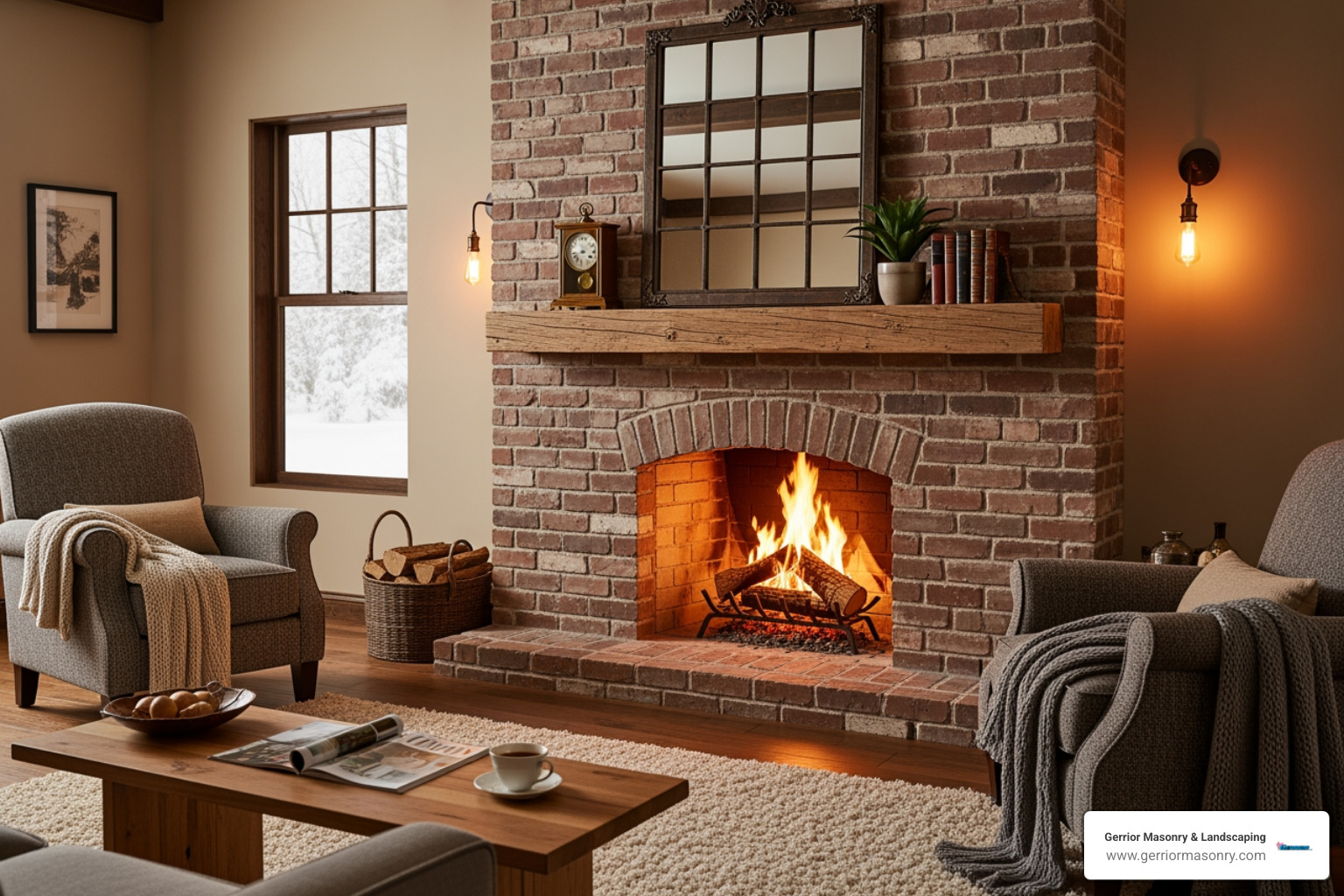
Updating your mantel is another high-impact, low-cost change. A simple reclaimed wood beam can add instant character. Even just restyling your existing mantel with a large mirror, artwork, or curated decor can refresh the entire look.
Don’t overlook the hearth. Tiling the hearth creates a polished look, with project costs generally ranging from $500 to $3,000 based on internet data, depending on the tile. For a quicker fix, some heat-resistant peel-and-stick options are available.
Mid-Range & Splurge-Worthy Upgrades
When you’re ready to invest more, you can explore fireplace remodeling ideas that deliver dramatic visual and functional improvements.
Mid-Range to High-End Remodel Options
These projects offer substantial change and can completely reimagine your fireplace.
Replace the Surround: Swapping dated brick for natural stone veneer, contemporary tile, or sleek concrete panels is highly effective. The cost typically runs between an average of $500 to $3,000 or more, depending on materials (these are average costs based on internet data, not actual Gerrior Masonry costs). Our team specializes in this type of masonry work; learn more on our masonry services page.
Install a Custom Mantel: A hand-carved wood, reclaimed timber, or natural stone mantel is designed for your specific space. While simple mantels start around $200, custom pieces can run up to $2,000 or more (these are average costs based on internet data, not actual Gerrior Masonry costs).
Upgrade to a Gas Insert: A gas insert offers convenience and consistent heat. The unit and professional installation can cost a combined $2,500 to $7,000 or more (these are average costs based on internet data, not actual Gerrior Masonry costs), but it improves your home’s comfort and value.
Go Floor-to-Ceiling: Extending your surround material—whether stacked stone, large-format tile, or wood—from the hearth to the ceiling creates a powerful architectural statement. This approach makes the fireplace the undeniable focal point of the room.
Use Unique Materials: For a one-of-a-kind look, consider unconventional materials. Designers like Aha Interiors have used fluted terrazzo, while others incorporate corten steel or even leather for incredible texture and depth.
Modern & Functional Fireplace Remodeling Ideas
The best fireplace remodeling ideas today blend stunning aesthetics with everyday functionality. Modern designs integrate seamlessly with technology, storage, and the way you live.
Integrated Design and Modern Trends
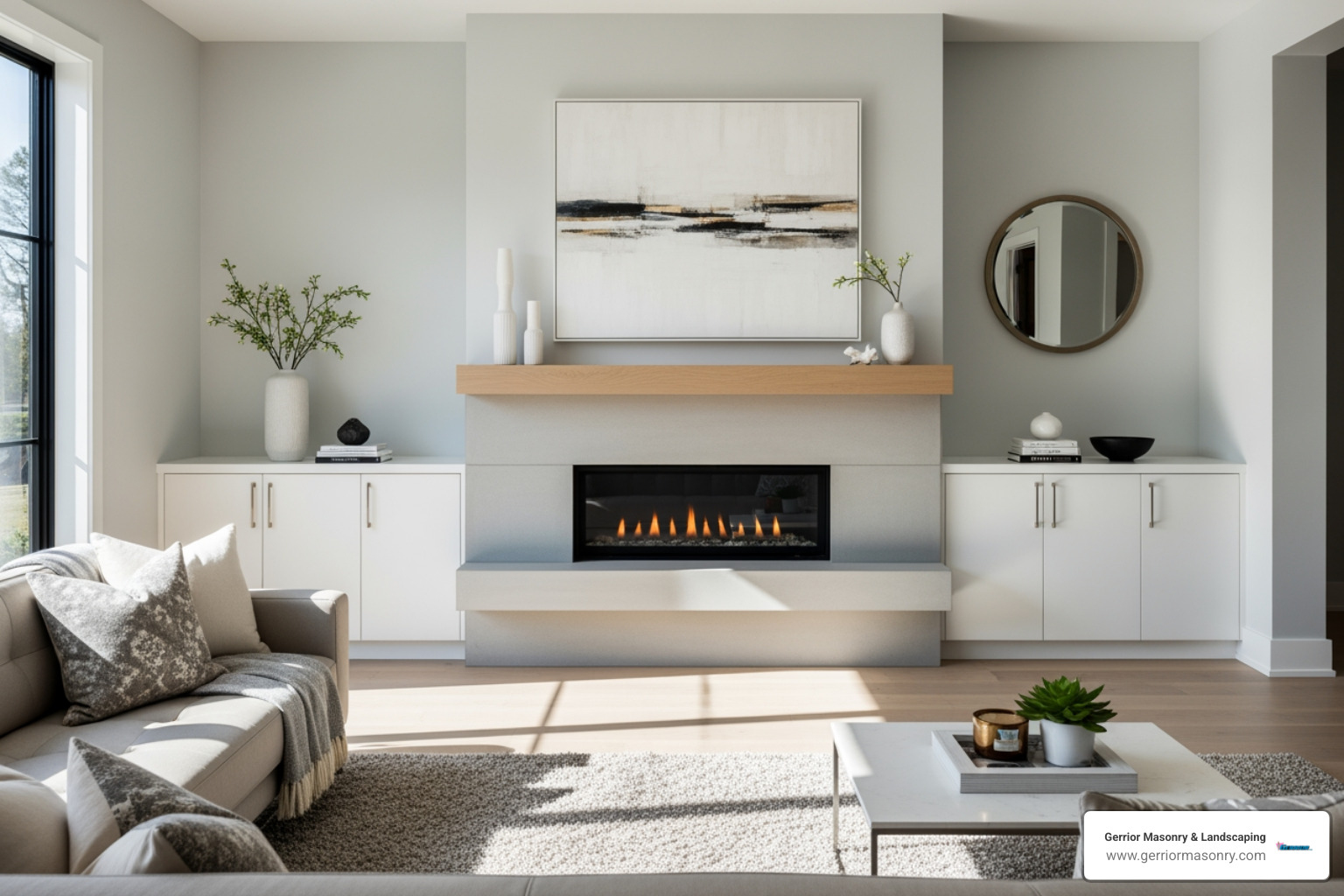
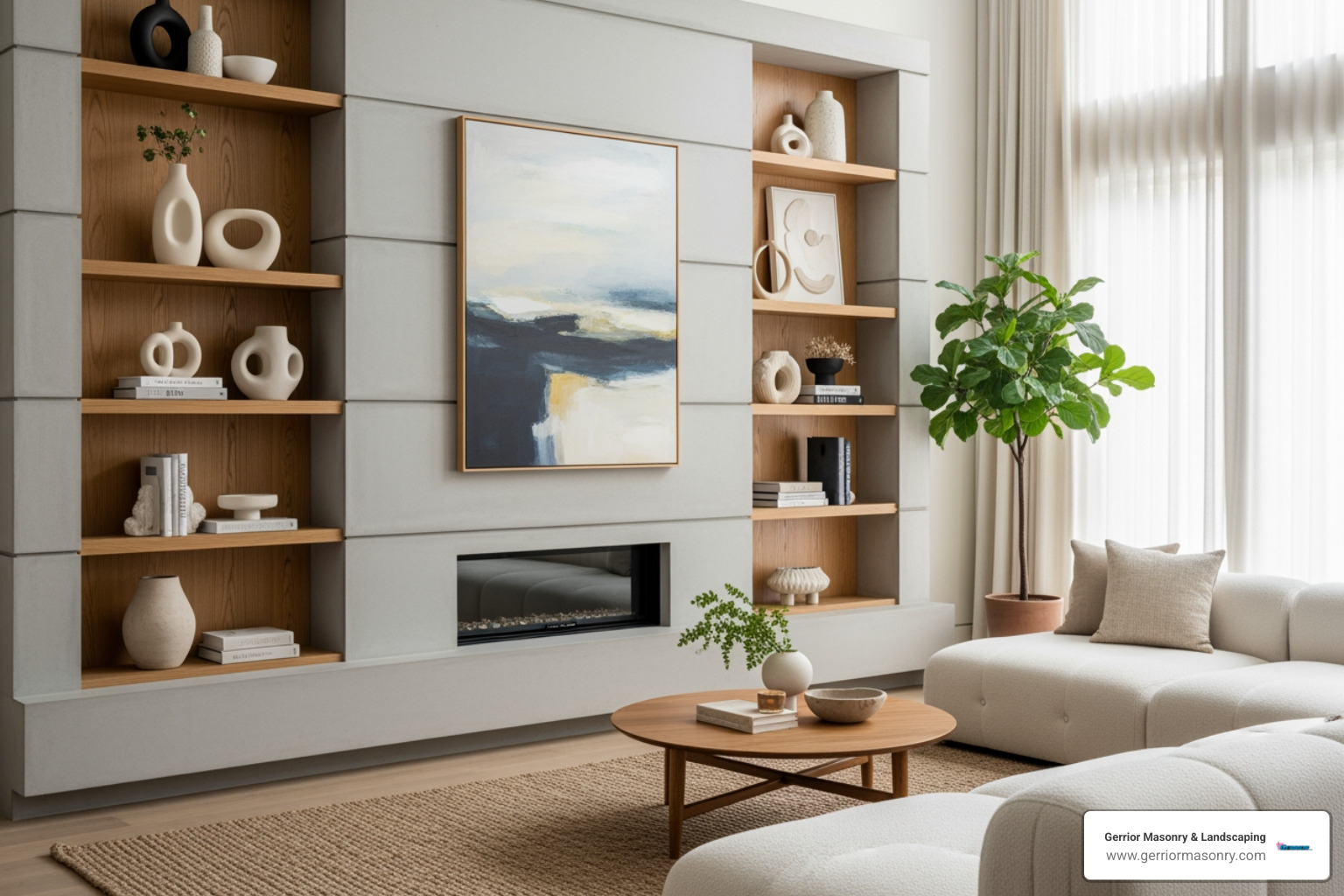
One of the smartest trends is flanking a fireplace with built-in shelving or custom cabinetry. This creates a purposeful feature wall for storage and display. Many homeowners also choose to mount a TV above the fireplace. A recessed box can be built to hide cables and components, maintaining a clean, intentional look.
Fireplaces are also moving beyond the living room. A compact, modern unit can add romance to a primary bedroom, while an efficient gas or electric fireplace can transform a cold basement into a cozy family hangout.
Key trends in modern fireplace design include:
Linear Fireplaces: These sleek, elongated gas or electric units create a contemporary ribbon of flame.
Two-Sided Fireplaces: Also called see-through fireplaces, they provide warmth and views in two adjacent rooms, such as a living and dining area.
Minimalist Surrounds: Using clean plaster, large tiles, or smooth concrete creates a sophisticated backdrop that lets the fire itself be the main attraction.
Essential Planning: Safety, Codes, and Installation
While exploring creative fireplace remodeling ideas, it’s critical to prioritize safety and proper installation. A beautiful fireplace is only as good as its construction.
Safety always comes first. Any remodel, especially one involving fuel type changes or structural alterations, must ensure proper ventilation and adequate clearance from combustible materials.
Building codes are non-negotiable. These local regulations dictate chimney height, hearth dimensions, and material requirements to ensure safety. We know Massachusetts codes inside and out and ensure every project exceeds them.
Venting requirements differ by fuel type. Wood-burning units need a traditional chimney, while gas fireplaces have more flexible venting options. Electric fireplaces require no venting. Getting this right is crucial to prevent hazards like carbon monoxide buildup.
Before any work begins on an existing fireplace, we recommend a thorough chimney inspection. You don’t want to install a beautiful new surround only to find your chimney needs major chimney repairs.
Professional installation is essential for any structural changes, gas line work, or significant masonry. Improper work can lead to house fires or structural failure. Our team has the expertise to handle your remodel safely and correctly, managing all technical details and permits. If your project involves structural concerns, you can learn more on our foundation repair page.
Bring Your Fireplace Vision to Life
We’ve walked through dozens of fireplace remodeling ideas, from a simple paint job to a dramatic floor-to-ceiling stone installation. Whether you envision a cozy farmhouse hearth or a sleek modern centerpiece, you now have a roadmap to get there.
A fireplace remodel is more than an aesthetic upgrade; it’s about creating a gathering place for your family and adding real value to your home. Research shows these projects can return up to 100% of your investment.
While some updates like painting are great for a DIY weekend, bigger projects require professional expertise. Installing a gas insert, building a new stone surround, or creating custom built-ins involves safety codes, proper venting, and structural integrity that must be handled correctly.
At Gerrior Masonry & Landscape Construction, we bring over 30 years of experience to every project. What sets us apart is our skilled team and my personal oversight on each job, ensuring the highest quality. We know how to bring your vision to life safely and beautifully.
Ready to transform your fireplace? Contact us for your custom fireplace project and let’s discuss what’s possible. Gerrior Masonry & Landscape Construction is based in Woburn, MA, and services Middlesex and Essex County, Massachusetts.
A new fireplace surround can completely transform your living space, turning an outdated focal point into a stunning architectural statement. Whether you’re looking to upgrade worn materials, match a remodeled interior, or simply refresh your home’s aesthetic, a new surround offers immediate visual impact and can significantly boost your property value.
Quick Answer: What You Need to Know About New Fireplace Surrounds
Materials: Stone, marble, granite, brick, concrete, and tile each offer unique looks and durability levels
Styles: Traditional, modern, farmhouse, and transitional designs to match any home
Average Costs: $1,500 to $6,000+ (based on internet data, not Gerrior Masonry pricing) depending on material and complexity
Installation: Professional installation recommended for safety, proper clearances, and lasting results
Benefits: Creates a focal point, improves room aesthetics, and increases home resale value
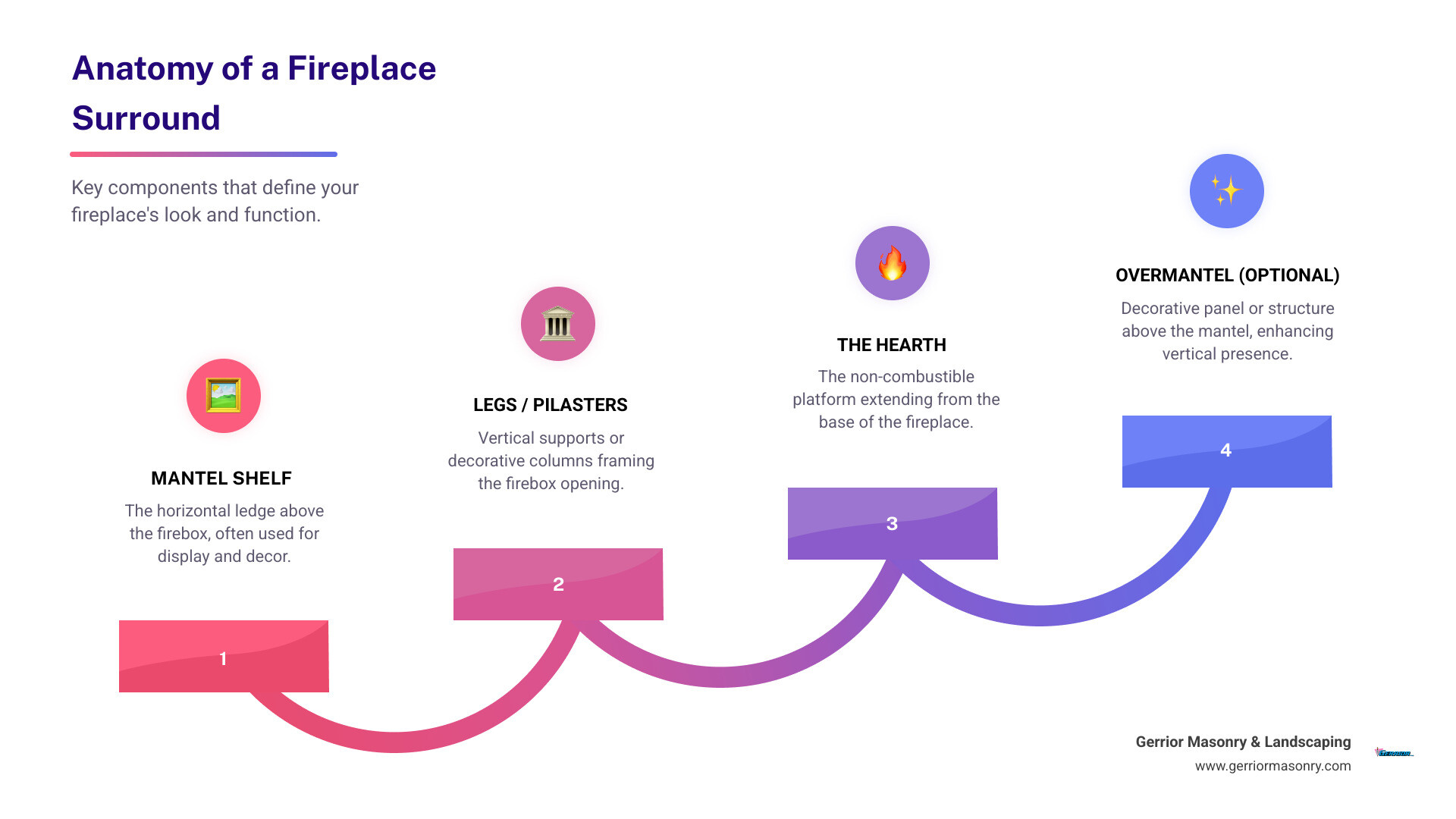
The fireplace surround—including the mantel, legs (pilasters), and hearth—frames your firebox and sets the tone for the entire room. According to industry data, the global fireplace market is projected to reach $2.7 billion by 2032, driven largely by homeowners investing in renovation projects that prioritize both style and functionality. Stone and marble remain especially popular choices due to their timeless appeal and exceptional durability.
I’m Joe Gerrior, owner of Gerrior Masonry & Landscape Construction Corp., and for over 34 years, our team has helped Massachusetts homeowners design and install custom *new fireplace surrounds using stone, brick, and masonry that lift their homes.* We specialize in turning your vision into reality with meticulous craftsmanship and attention to detail.
A Comprehensive Guide to Choosing Your New Fireplace Surround
Choosing a new fireplace surround is more than picking materials and colors—it’s about creating the heart of your home. The right surround brings warmth, character, and architectural beauty to your living space. With so many options for materials, styles, and designs, understanding what works best for your home helps you make a decision you’ll love for decades to come.
Exploring Materials: From Classic Stone to Modern Masonry
The material you select for your new fireplace surround shapes its look, durability, and maintenance. At Gerrior Masonry, we work with high-quality masonry materials that combine lasting beauty with exceptional durability.
Natural stone like marble and granite offers timeless beauty but requires professional installation and sealing. For a similar look at a lower cost, cast stone is an engineered alternative that allows for custom designs. Brick provides classic rustic or traditional charm and is exceptionally durable, while concrete makes a bold, modern statement and can be cast into unique shapes. Tile is a budget-friendly option with endless design possibilities, but ensure it is rated for high-heat use. Each of these materials requires professional masonry work for a safe and lasting installation. For more information on our masonry services, including custom stone and brickwork, we invite you to explore what we offer.
Matching Your Style: Finding the Perfect New Fireplace Surround
Your new fireplace surround sets the tone for your entire living space. It’s often the first thing people notice when they enter the room, so choosing a style that complements your home’s aesthetic makes all the difference.
Your surround’s style should match your home’s decor. Traditional designs feature ornate details in marble or granite, while modern styles prefer the clean lines of polished concrete or limestone. For a cozy feel, farmhouse and rustic styles use natural materials like exposed brick or rough-cut stone. Transitional styles offer a versatile blend of both classic and contemporary elements. A customizable surround ensures a perfect fit and a unique aesthetic that complements your existing decor. For design inspiration, explore resources like Kerrie Kelly’s design portfolio. A well-chosen surround lifts the entire room’s design.
Sizing, Costs, and Your New Fireplace Surround Installation
Understanding the practical side of a new fireplace surround project—dimensions, costs, and installation—helps ensure smooth sailing from start to finish.
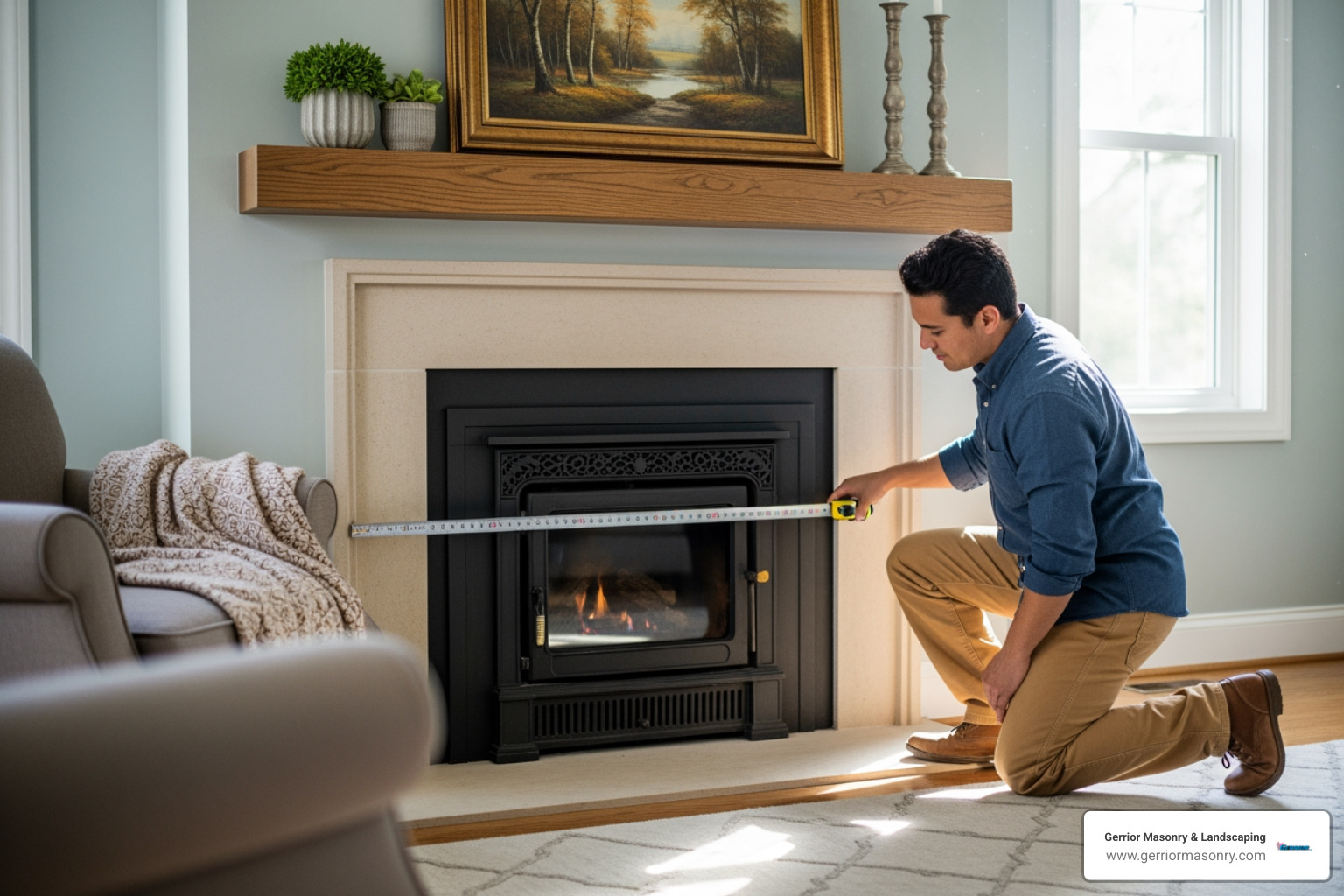
Accurate measurements of the firebox and wall space are critical to ensure the surround fits the room’s scale. Safety is paramount, and building codes mandate minimum clearances between the firebox and combustible materials. Our team is expert in Massachusetts regulations, ensuring every installation is compliant and safe.
Cost varies significantly based on material, size, and design complexity. Please note: The following cost ranges are based on general internet data, not Gerrior Masonry pricing. For a precise quote in Middlesex or Essex County, Massachusetts, please contact us directly. Simpler designs may start around $1,500, while custom work with natural stone or brick can range from $2,000 to $10,000 or more.
While some lightweight kits are marketed for DIY, we strongly recommend professional installation for masonry surrounds. A professional ensures correct measurements, code compliance, structural integrity, and a flawless finish, maximizing your investment’s impact and longevity. For related projects, learn more about fireplace veneer installation.
Design Trends and Long-Term Care
Fireplace design continues to evolve, and staying current with trends helps you select a new fireplace surround that feels both timeless and fresh. Understanding how to care for your chosen material keeps it beautiful for years to come.
Current design trends include dramatic floor-to-ceiling surrounds, minimalist designs with clean lines, mixed materials, and integrated storage. Natural textures from rough-hewn stone or exposed brick also remain popular for adding organic warmth.
Proper maintenance is key. Stone and concrete may need periodic sealing to prevent stains. Brick can be cleaned with a stiff brush, and its mortar joints should be inspected periodically. For tile, clean with a mild detergent and maintain the grout lines. Understanding these simple care needs ensures your surround remains a source of pride.
Gerrior Masonry & Landscape Construction is based in Woburn, MA, and proudly services Middlesex and Essex County, Massachusetts.
Finalizing Your Fireplace Project and Finding an Expert
You’ve explored materials, styles, and costs—now it’s time to bring your vision to life. A new fireplace surround represents more than just a renovation project; it’s an investment that transforms your living space while adding tangible value to your home. The key to success lies in understanding what you’ll gain and partnering with the right professionals who can deliver lasting results.
How a New Fireplace Surround Boosts Home Value
A beautiful fireplace surround acts as a powerful focal point, instantly upgrading a room’s aesthetic and character. It can modernize a dated space and signals quality to potential homebuyers, increasing your home’s marketability and resale value. The global fireplace market’s projected growth to $2.7 billion by 2032 underscores this trend, as homeowners recognize the solid return on investment. Beyond finances, a custom surround allows you to express your personal style, creating a space that is uniquely yours. For endless inspiration, Houzz offers a treasure trove of ideas.
Where to Find Your Perfect Fireplace Surround
Finding the right materials and expertise for your fireplace project doesn’t have to be overwhelming. Different sources serve different needs, and understanding your options helps you make the best choice for your specific situation.
Specialty fireplace stores can be a useful starting point if you’re exploring pre-made options. These retailers typically carry a range of surrounds in various materials and styles, giving you a sense of what’s available at different price points. They work well for straightforward installations with standard dimensions.
However, when your vision calls for something truly special—natural stone, custom brickwork, or unique concrete designs—a custom masonry contractor is essential. This is where Gerrior Masonry & Landscaping’s over 34 years of experience really matters. We specialize in custom stone and brickwork, crafting fireplace surrounds that become the heart of your home.
Our skilled team doesn’t just install surrounds—we craft them with meticulous attention to detail, ensuring every cut and joint meets our exacting standards. We are experts in local building codes and safety requirements, so you can trust that your new surround is both beautiful and structurally sound. Whether you envision a rustic brick hearth or a sophisticated marble facade, we have the expertise to bring your vision to life.
Ready to transform your fireplace from functional to phenomenal? Contact us for a consultation on your fireplace project today, and let’s create a stunning focal point that you’ll love coming home to for years to come.
Gerrior Masonry & Landscape Construction is based in Woburn, MA, and proudly services Middlesex and Essex County, Massachusetts.
A fireplace surround remodel transforms an outdated focal point into a stunning centerpiece that defines your entire living space. Whether you’re painting brick white for a modern farmhouse look or installing dramatic floor-to-ceiling stone, the right upgrade can completely change how a room feels—and significantly boost your home’s value.
Top Fireplace Surround Remodel Ideas:
Budget-Friendly – Paint existing brick, add a striking mantel, or install a chic fireplace screen ($200-$1,000)
Mid-Range – Shiplap walls, natural stone veneer, or statement tile surrounds ($2,000-$5,000)
Popular Materials – Natural stone (marble, granite), brick (painted or whitewashed), tile (subway, mosaic), and wood (reclaimed, shiplap)
Key Considerations – Clearance from combustibles (at least 6″ for wood-burning), cement backerboard for tile, and professional inspection for safety
The average cost for a complete fireplace surround remodel ranges from $2,000 to $10,000, depending on materials and scope. Simple DIY updates like painting can cost as little as a few hundred dollars, while custom stone or marble installations can exceed $10,000.
I’m Joe Gerrior, owner of Gerrior Masonry & Landscape Construction Corp. For over 34 years, our family-owned business has delivered exceptional masonry services to Massachusetts homeowners. We specialize in custom fireplace surround remodels, blending timeless craftsmanship with modern design to bring your vision to life.
Gerrior Masonry & Landscape Construction is based in Woburn, MA, and proudly serves Middlesex and Essex County, Massachusetts.
Choosing Your New Look: Materials, Styles, and Costs for Your Fireplace Surround Remodel
Your fireplace is the heart of your home. A fireplace surround remodel is your chance to transform this focal point, but with so many options, it can be hard to know where to start. Let’s explore the most popular materials, styles, and costs to help you create a fireplace that captures your vision.
Popular Materials: Pros, Cons, and Aesthetics
Choosing the right material is the first step. Each option offers a unique look, feel, and set of practical considerations for your lifestyle and budget.
Natural stone like marble, granite, limestone, and slate is the gold standard for its permanence and luxury. Marble offers stunning patterns, while granite provides exceptional durability. Limestone and ledgestone create a rustic-yet-refined look. Stone is durable, timeless, and heat-resistant, but it’s typically the most expensive option and may require periodic sealing.
Brick brings warmth and character. Traditional red brick is classic, but painted or whitewashed brick offers a fresh, modern farmhouse aesthetic. It’s durable, versatile, and often more affordable than stone. However, unpainted brick can look dated in some homes, and its porous surface can absorb soot.
Tile offers endless customization with various colors, patterns, and textures. Subway tiles provide a clean, contemporary look, while mosaic tiles allow for artistic designs. Porcelain and ceramic can mimic pricier materials affordably. Tile offers unlimited design options and a wide price range, but grout lines require cleaning and intricate patterns can be labor-intensive to install.
Wood brings instant warmth, with reclaimed wood and shiplap being popular for rustic and farmhouse styles. It creates a cozy atmosphere and can be stained or painted. However, combustibility is a critical safety concern. Wood requires strict clearance from the firebox, can be scratched, and is not suitable for direct heat exposure.
For more information on our expert installation of all these materials, visit our masonry services page.
Material
Cost Range (Approx.)
Durability
Maintenance
Aesthetic Appeal
Natural Stone
High
Very High
Moderate (sealing, specific cleaners)
Luxurious, timeless, neat, natural
Tile
Low to Moderate
Moderate
Low (easy to clean, grout may need attention)
Versatile, customizable, modern, artistic
Brick
Low to Moderate
High
Moderate (cleaning, can absorb soot)
Classic, rustic, warm, traditional
Wood
Moderate
Moderate
Moderate (sealing, prone to scratches/dents)
Warm, cozy, natural, rustic, farmhouse
Matching Styles to Your Home’s Interior
Your fireplace surround should flow seamlessly with your home’s overall aesthetic.
Modern spaces favor clean lines, using materials like large-format tiles, concrete, or metal. A simple wood beam mantel can add warmth.
Rustic and farmhouse styles accept natural textures. Think reclaimed wood, shiplap, and natural stone for a cohesive, earthy ambiance.
Traditional homes achieve classic elegance with intricately carved wood mantels, luxurious marble, or traditional brick.
Coastal style uses lighter colors, shiplap, and sometimes blue tile to create a breezy, relaxed feel.
Floor-to-ceiling designs and integrated feature walls with shelving make a dramatic statement and add functionality.
Budgeting Your Fireplace Surround Remodel Project
A fireplace surround remodel can range from a quick refresh to a major overhaul. Based on internet data, the average cost is $2,000 to $10,000, but this varies widely. Please note, these are average costs based on general internet data and not actual quotes from Gerrior Masonry & Landscape Construction.
Budget-friendly options ($200 to $1,000): Small changes make a big impact. Consider painting existing brick, adding a new mantel, or installing a chic fireplace screen.
Mid-range options ($2,000 to $5,000): This range allows for more significant changes like installing shiplap, natural stone veneer, or statement tile.
Splurge-worthy options ($6,000 to $10,000+): For a transformative result, consider full marble slabs, dimensional wall panels, or floor-to-ceiling stone or tile installations.
One homeowner reported a comprehensive DIY upgrade for around $1,500 in materials, demonstrating that significant changes are possible on tighter budgets with careful planning.
Gerrior Masonry & Landscape Construction is based in Woburn, MA, and proudly serves Middlesex and Essex County, Massachusetts.
From Vision to Reality: The Remodel Process & Final Touches
Watching a fireplace transform is an exciting process. Whether you’re doing it yourself or hiring professionals, understanding the steps of a fireplace surround remodel helps you know what to expect.
A Step-by-Step Guide to the Remodeling Process
While every project is unique, the remodel generally follows a reliable path.
Demolition & Framing: The process begins by carefully removing the old surround and mantel. Then, a new frame is built, establishing the dimensions and ensuring proper clearances for safety.
Backerboard & Material Application: Next, cement backerboard is installed to create a stable, heat-resistant foundation for tile or stone. Then, the chosen material is applied, bringing the design to life.
Mantel, Hearth & Built-ins: The mantel is securely installed, followed by an update to the hearth—the non-combustible area in front of the fireplace. If included, built-in shelving or cabinetry is added at this stage.
Finishing Touches: The project concludes with finishing work like filling nail holes, caulking seams, and painting to create a polished, professional look.
A beautiful design is meaningless without safety. We always adhere to local building codes and industry best practices.
Clearance Requirements: Combustible materials like wood must have adequate clearance from the firebox opening—typically at least 6 inches for wood-burning units, per National Fire Safety Commission guidelines. Always verify local codes in your Massachusetts town, whether it’s Woburn, Andover, or Lexington.
Hearth & Backerboard: The hearth must extend a specific distance from the firebox. For tile or stone, using non-combustible cement backerboard is essential to protect the underlying structure from heat.
Sealant & Inspection: Use high-temperature sealant near the firebox where regular caulk would fail. For major changes or gas work, a professional inspection is recommended to ensure safety and code compliance. Our team can help steer these complexities through our chimney repair services.
Design Trends and Customization Ideas
The best part of any fireplace surround remodel is making it your own by blending current trends with personal touches.
Trending Looks:Fluted details, dark colors, and dimensional panels are popular for adding texture and depth. Some designers are even using mixed-media approaches, like leather or metal accents.
Custom Elements:Built-in benches add cozy seating and storage, while a recessed TV box above the fireplace creates a streamlined look.
Unique Touches:Floor-to-ceiling designs make a powerful statement. Don’t be afraid to use unique materials, like pretty blue tile for a coastal vibe or porcelain that expertly mimics high-end stone.
We understand a fireplace remodel is a significant investment. At Gerrior Masonry & Landscape Construction, we’re committed to bringing your vision to life with quality craftsmanship and meticulous attention to detail.
Gerrior Masonry & Landscape Construction is based in Woburn, MA, and proudly serves Middlesex and Essex County, Massachusetts. For expert fireplace surround remodels and custom masonry solutions, contact us today!