
Chimney Brick: 10 Best Picks & Proven Tips for 2025 Success
Why Choosing the Right Chimney Brick Matters for Your Home
Chimney brick selection is crucial for both safety and longevity of your fireplace system. The right bricks protect your home from fire hazards, withstand extreme temperatures, and resist Massachusetts’ harsh freeze-thaw cycles that can cause costly damage.
Quick Answer for Chimney Brick Buyers:
– Fire bricks (refractory bricks) – Best for fireboxes and high-heat areas
– Clay modular bricks – Standard choice for chimney exteriors
– Reclaimed bricks – Perfect for historic home restoration
– Brick veneer – Lightweight, cost-effective option for chases
– Premium glazed bricks – Weather-resistant with improved durability
According to industry research, chimney brick spalling is one of the most common masonry issues found during inspections, especially in regions with frequent freeze-thaw cycles like New England. Small cracks in chimney brickwork can become significantly larger by the next spring if left unattended.
Rebuilding a brick chimney due to severe spalling can cost tens of thousands of dollars, making the right initial brick choice crucial for homeowners.
I’m Joe Gerrior, owner of Gerrior Masonry & Landscape Construction Corp., and I’ve been helping Massachusetts homeowners select and install the perfect chimney brick solutions for over 34 years.
What Makes a Great Chimney Brick?
After three decades of chimney work in Massachusetts, I can tell you that choosing the right chimney brick isn’t just about looks – it’s about keeping your family safe and your wallet happy. We’ve seen too many homeowners learn this lesson the hard way when their “bargain” bricks start crumbling after just one brutal New England winter.
Durability is absolutely everything when it comes to chimney bricks. Here in Massachusetts, your bricks face a real beating – scorching summer heat followed by bone-chilling winters with freeze-thaw cycles that happen dozens of times each season. Poor quality bricks literally explode under these conditions.
The fire rating of your bricks could literally save your home. Quality fire bricks handle temperatures over 2,000°F without breaking a sweat, while regular bricks start failing around 1,200°F. When you’re dealing with chimney fires or intense heat from a roaring fireplace, this difference matters.
Absorption rate is where many homeowners get tripped up. Bricks that soak up too much water become ticking time bombs once winter hits. We always recommend bricks with absorption rates below 17% for exterior chimney work. Water gets in, freezes, expands, and boom – you’ve got spalling bricks and a hefty repair bill.
Compressive strength determines whether your chimney can handle its own weight plus wind loads and settling. Quality chimney brick should have at least 3,000 PSI compressive strength.
According to scientific research on brick safety, proper brick selection is one of the most important factors in chimney safety and longevity.
Chimney Brick vs. Standard Masonry Brick
Here’s where I see homeowners make expensive mistakes all the time. Not all bricks are created equal, and using the wrong type for your chimney is like using a butter knife for brain surgery – technically it’s a tool, but it’s definitely not the right one.
Chimney brick and firebrick are specially engineered to handle what chimneys throw at them. These refractory bricks contain high alumina content and are fired at much higher temperatures during manufacturing. This creates a dense, heat-resistant material that laughs at thermal shock – those rapid temperature changes that make regular bricks crack and fail.
Regular masonry bricks work great for your garden wall or front steps, but they have no business being near your chimney’s high-heat areas.
| Property | Fire Brick | Standard Brick |
|---|---|---|
| Heat Resistance | Up to 3,000°F+ | Up to 1,200°F |
| Thermal Shock Resistance | Excellent | Poor |
| Density | High | Medium |
| Cost | $0.50-$2.00 each | $0.25-$0.75 each |
| Typical Use | Fireboxes, flue liners | Exterior walls, patios |
Yes, fire bricks cost more upfront, but they’ll outlast standard bricks by decades in chimney applications.
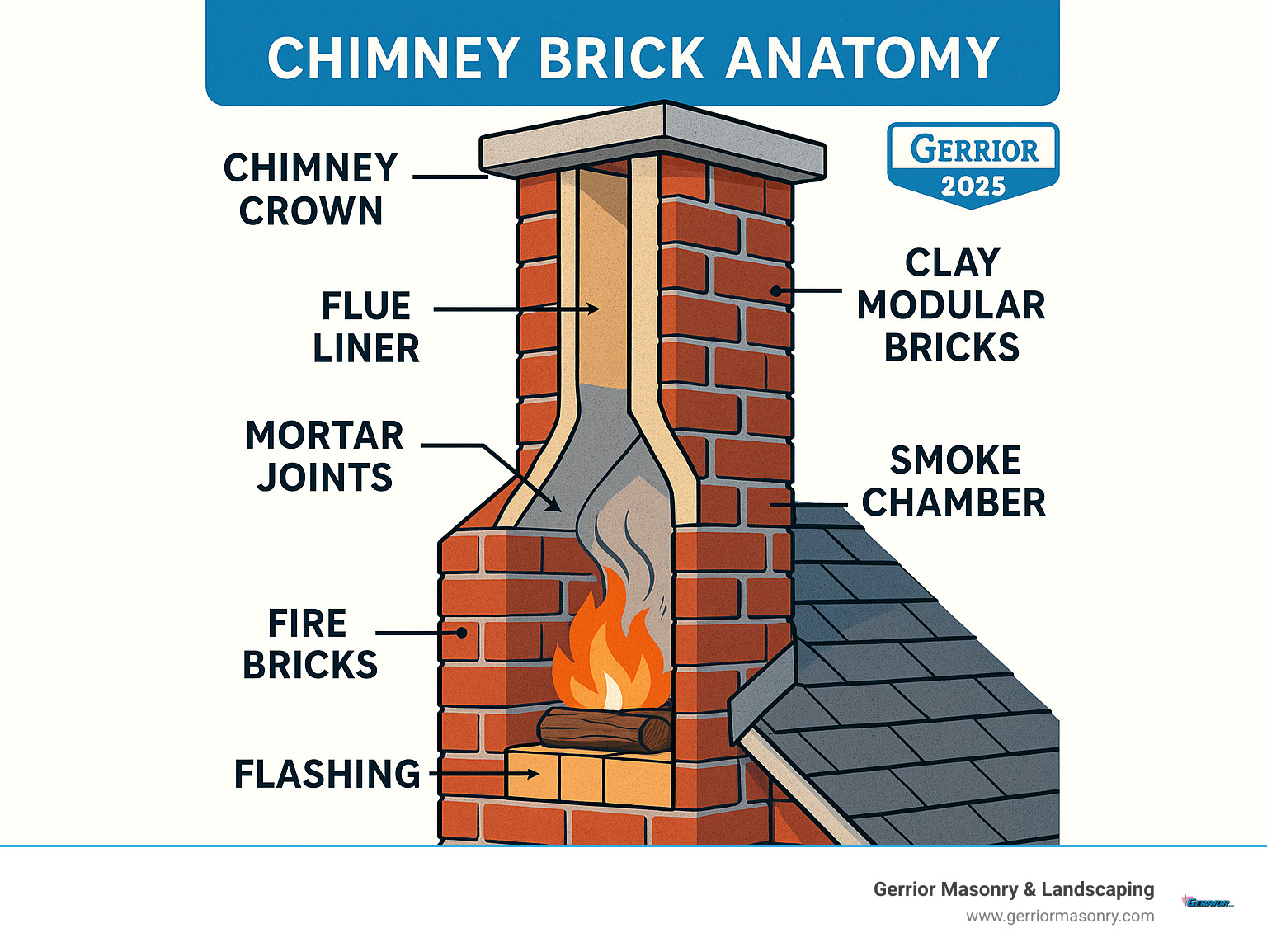
Key Components of a Brick Chimney
Understanding how all the pieces fit together helps you make smart decisions about brick selection for each part of your chimney system.
The crown sits at the very top of your chimney and takes a beating from weather year-round. We build crowns with a proper slope to shed water quickly because standing water is brick’s worst enemy.
Your cap might not be made of brick, but it’s your chimney’s best friend. A quality cap keeps rain, snow, and critters out of your flue, protecting all that expensive brickwork below.
The flue liner protects your chimney structure from heat and corrosive gases. Whether you choose clay, stainless steel, or concrete liner, the surrounding bricks still need to handle serious thermal stress.
Mortar joints between your bricks are often the first thing to fail, and that’s actually by design. Mortar is intentionally softer than brick, so it takes the abuse first and can be repaired more easily.
Flashing creates that crucial watertight seal where your chimney meets the roof. Poor flashing installation can destroy even premium bricks from the inside out by allowing water infiltration.
The smoke chamber area requires your highest-grade fire bricks because this is where temperatures peak and thermal stress is most severe.
Top Chimney Brick Options for Every Fireplace
After three decades of working with chimneys across Massachusetts, I’ve learned that choosing the right chimney brick isn’t just about looks – it’s about finding the perfect match for your specific fireplace needs and budget.
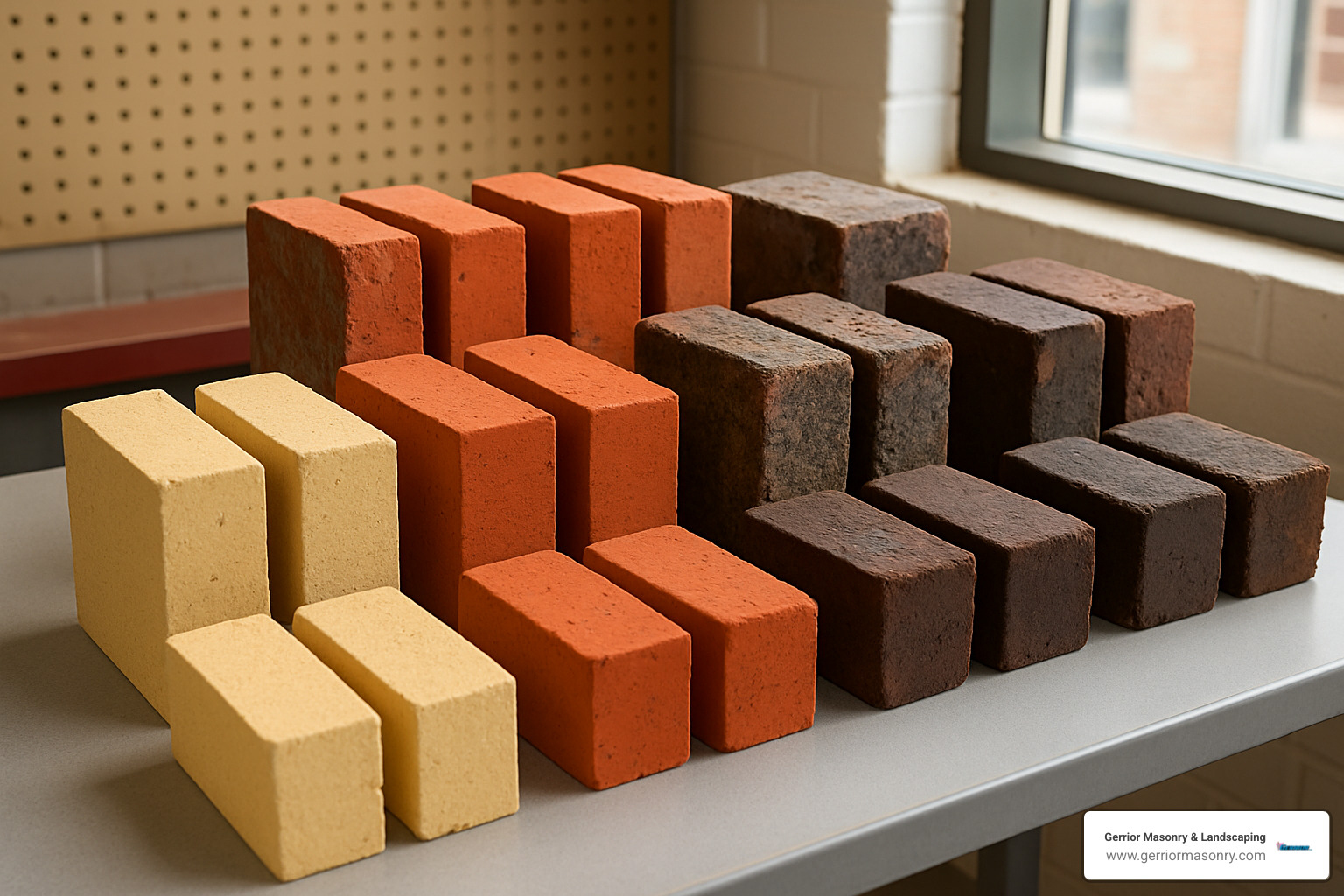
Fire bricks are the champions of high-heat areas, especially your firebox. These tough little workhorses can handle temperatures that would crack regular bricks faster than you can say “chimney fire.” They come in standard sizes and classic buff or red colors.
For the exterior chimney structure, clay modular bricks are our go-to recommendation. They’re like the reliable friend who never lets you down – offering excellent weather resistance, consistent sizing, and a price that won’t make you wince.
Handmade bricks bring personality to your chimney that machine-made versions simply can’t match. Each brick tells its own little story with slight variations in color and texture.
Reclaimed bricks offer a chance to give old materials new life while adding instant character to your chimney. These salvaged beauties carry decades of history in their weathered surfaces. Just remember – we always inspect reclaimed bricks carefully since their past life might have left them more vulnerable to harsh New England winters.
For homeowners looking for the brick look without the full brick investment, brick veneer delivers impressive results. These thin bricks give you all the visual appeal of traditional masonry while being lighter on both your structure and your wallet.
Budget-Friendly Chimney Brick Picks
You don’t need to empty your savings account to get quality chimney brick that’ll protect your home for decades.
Economy clay bricks are the practical choice that gets the job done right. They might not win any beauty contests, but these machine-made bricks offer consistent sizing and reliable weather resistance.
Local sourcing is one of my favorite money-saving strategies. New England has some excellent brick manufacturers right in our backyard, and buying local cuts out those hefty shipping costs. Plus, local bricks are designed to handle our specific climate challenges.
When it comes to fire bricks for your firebox, standard fire bricks provide essential safety protection without breaking the bank. While premium versions offer some improved features, standard fire bricks still give you the heat resistance you absolutely need.
Premium Chimney Brick Choices for Historic Homes
Working on historic homes is like being a detective and an artist rolled into one. You need chimney brick options that respect the past while providing modern performance.
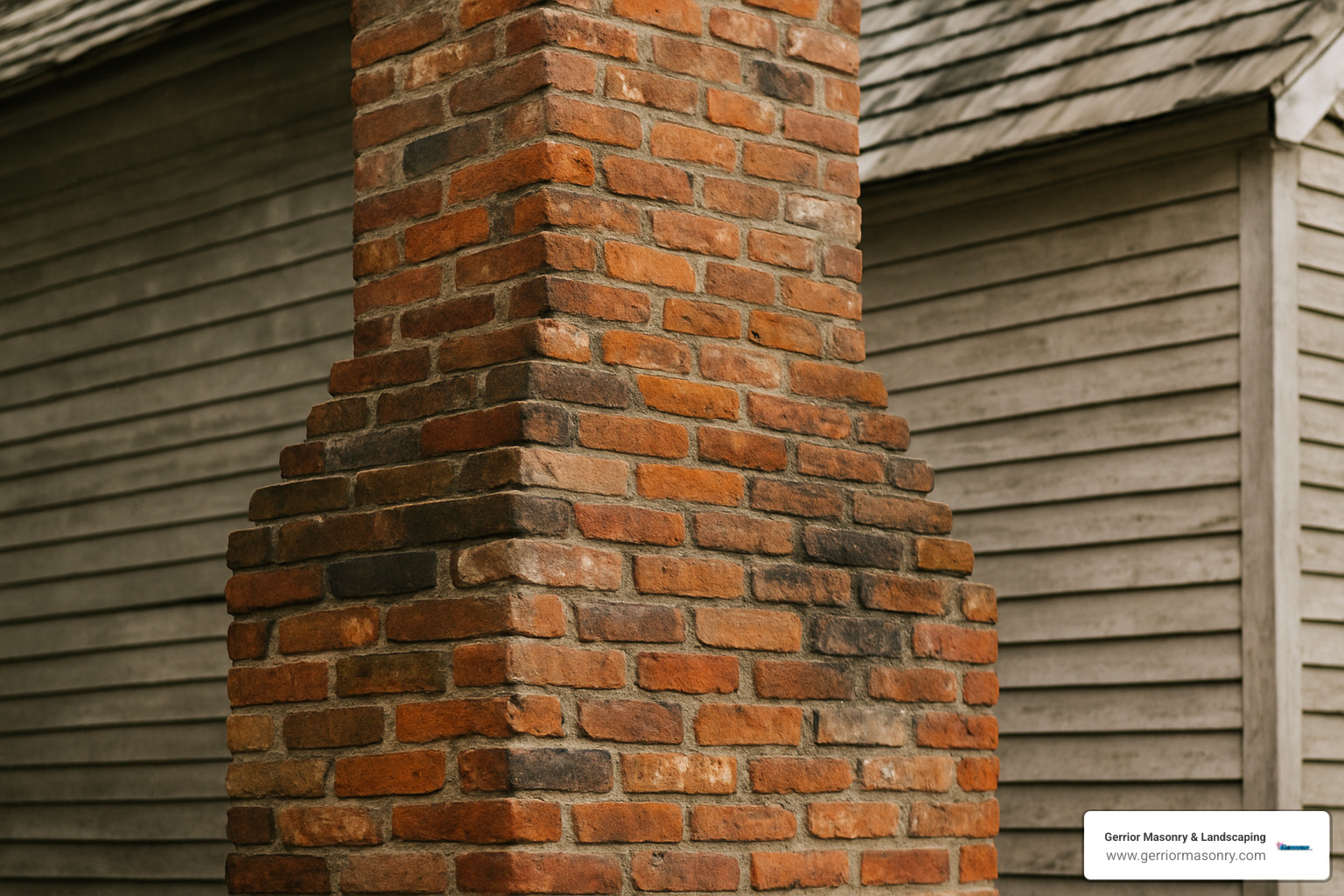
Antique-look bricks are masters of disguise – they’re brand new but look like they’ve been weathering New England storms for generations. Manufacturers use special techniques to create the irregular sizing and weathered appearance that makes these bricks blend seamlessly with centuries-old masonry.
Glazed bricks are particularly smart for coastal areas or homes that face harsh weather exposure. The glazed surface acts like a protective shield against moisture and salt, while still maintaining that classic brick appearance.
Tumbled bricks go through a special process that softens their edges and creates natural-looking wear patterns. It’s like giving new bricks a time machine treatment.
Sometimes historic restoration calls for custom sizes to match the unique dimensions of old brickwork. Yes, they’re expensive, but when you’re working on a home that’s been standing since before the Revolutionary War, authenticity matters.
How to Maintain & Repair Brick Chimneys
Taking care of your chimney brick doesn’t have to be overwhelming, but it does require consistent attention. After 34 years in the masonry business, I’ve seen how a little preventive care can save homeowners thousands of dollars in major repairs.
The key is catching problems while they’re still small. A tiny crack in your mortar joint might seem insignificant in spring, but after a Massachusetts winter of freeze-thaw cycles, that same crack can become a major structural issue.
Regular inspections should happen at least once a year, preferably in late summer before the heating season begins. Look for loose or missing mortar, cracked bricks, white staining (efflorescence), or any signs of water damage around the chimney base.
Tuckpointing is probably the most common repair we perform on brick chimneys. This process involves carefully removing old, deteriorated mortar and replacing it with fresh material. When done properly, tuckpointing restores both the structural integrity and weather resistance of your chimney.
Sealing your chimney brick creates an invisible barrier against moisture while still allowing the masonry to breathe. Quality masonry sealants don’t change the appearance of your bricks but significantly improve their ability to shed water.
Waterproofing goes beyond simple sealing to address the entire chimney system. This includes repairing the chimney crown, maintaining flashing where the chimney meets the roof, and ensuring proper drainage.
For more detailed information about professional chimney services, visit our Chimney Masonry Repair page.
DIY Chimney Brick Repair Basics
Some chimney brick repairs are well within the reach of handy homeowners, but knowing your limits is crucial for both safety and success.
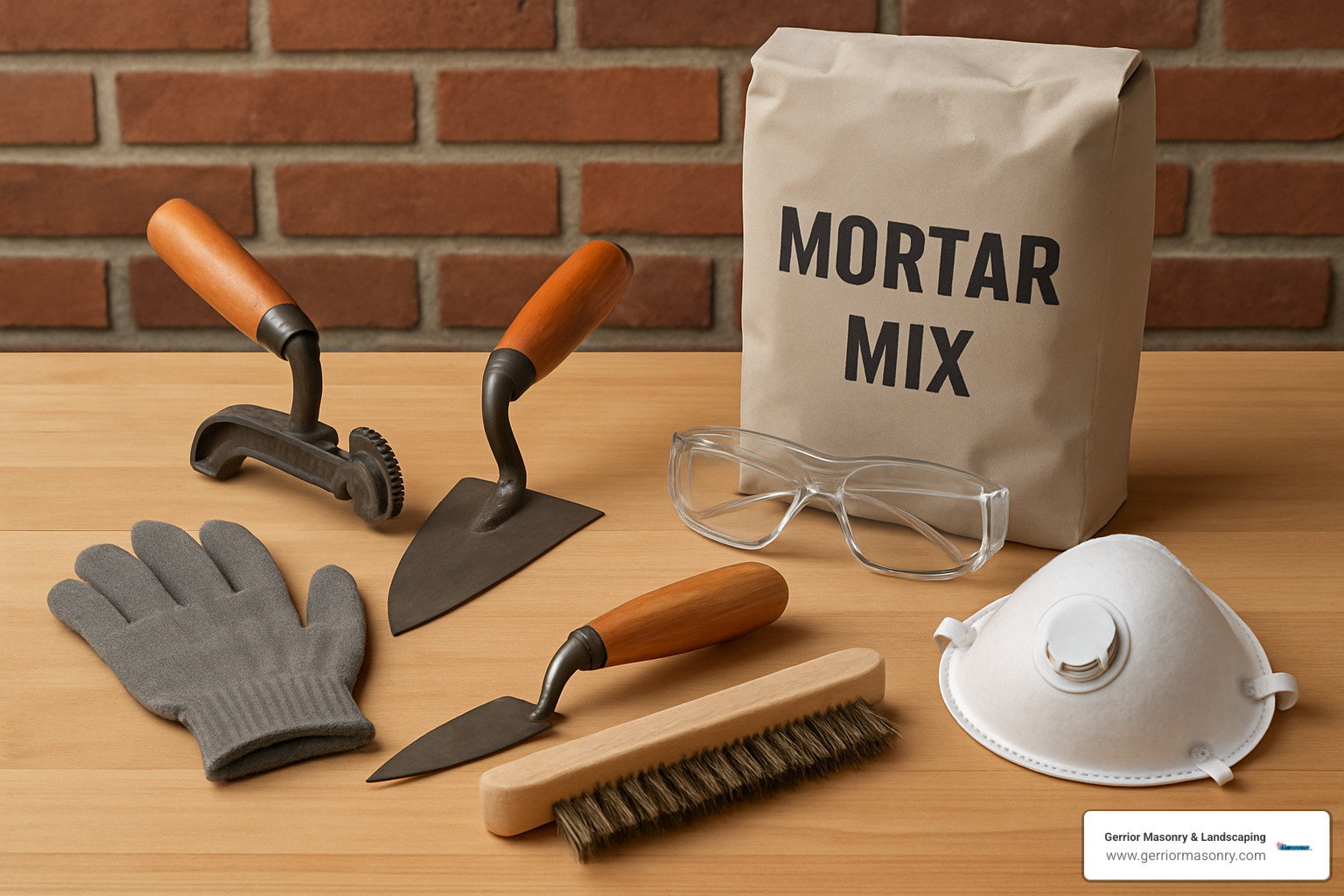
Tuckpointing tools don’t have to break the bank, but quality makes a real difference. A good joint raker removes old mortar cleanly without damaging surrounding bricks. Pointing trowels should feel comfortable in your hand and hold their edge well.
Mortar mix selection is where many DIY projects go wrong. The new mortar must be compatible with your existing masonry – too hard, and it can actually damage your bricks. For most New England chimneys, we recommend a Type N mortar mix, but older homes might need a softer lime-based mortar.
The proper technique starts with completely removing failed mortar to a depth of at least twice the joint width. Clean out all loose debris and dampen the joint before applying fresh mortar.
Weather timing can make or break your tuckpointing project. Avoid working when temperatures drop below 40°F or rise above 90°F. Protect fresh mortar from rain for at least 24 hours.
DIY work should stay at ground level where it’s safe. Anything requiring ladders or roof access is better left to professionals.
When Chimney Brick Damage Requires a Pro
Some chimney brick problems are definitely beyond DIY repair territory. Recognizing these situations early can prevent dangerous conditions and save money in the long run.
Leaning stacks are an immediate red flag that requires professional attention. Any visible lean or movement in your chimney indicates serious structural problems that could threaten your entire home.
Major cracking that extends through multiple brick courses or shows up in a stair-step pattern suggests foundation settlement or structural failure. These cracks often indicate problems that go far deeper than the visible damage.
Fire risk situations demand immediate professional intervention. Damaged flue liners, missing mortar joints near combustible materials, or any condition that could allow heat or flames to escape the chimney system puts your family’s safety at stake.
When water infiltration starts causing interior damage, mold growth, or structural deterioration, the problem has moved beyond simple surface repairs.
For detailed information about professional repair costs and what to expect, check our Chimney Repair Cost Near Me page.
Costs & Climate Considerations
When you’re planning chimney brick work, understanding both the financial investment and how New England weather affects your chimney helps you make smart decisions that protect your home and wallet.
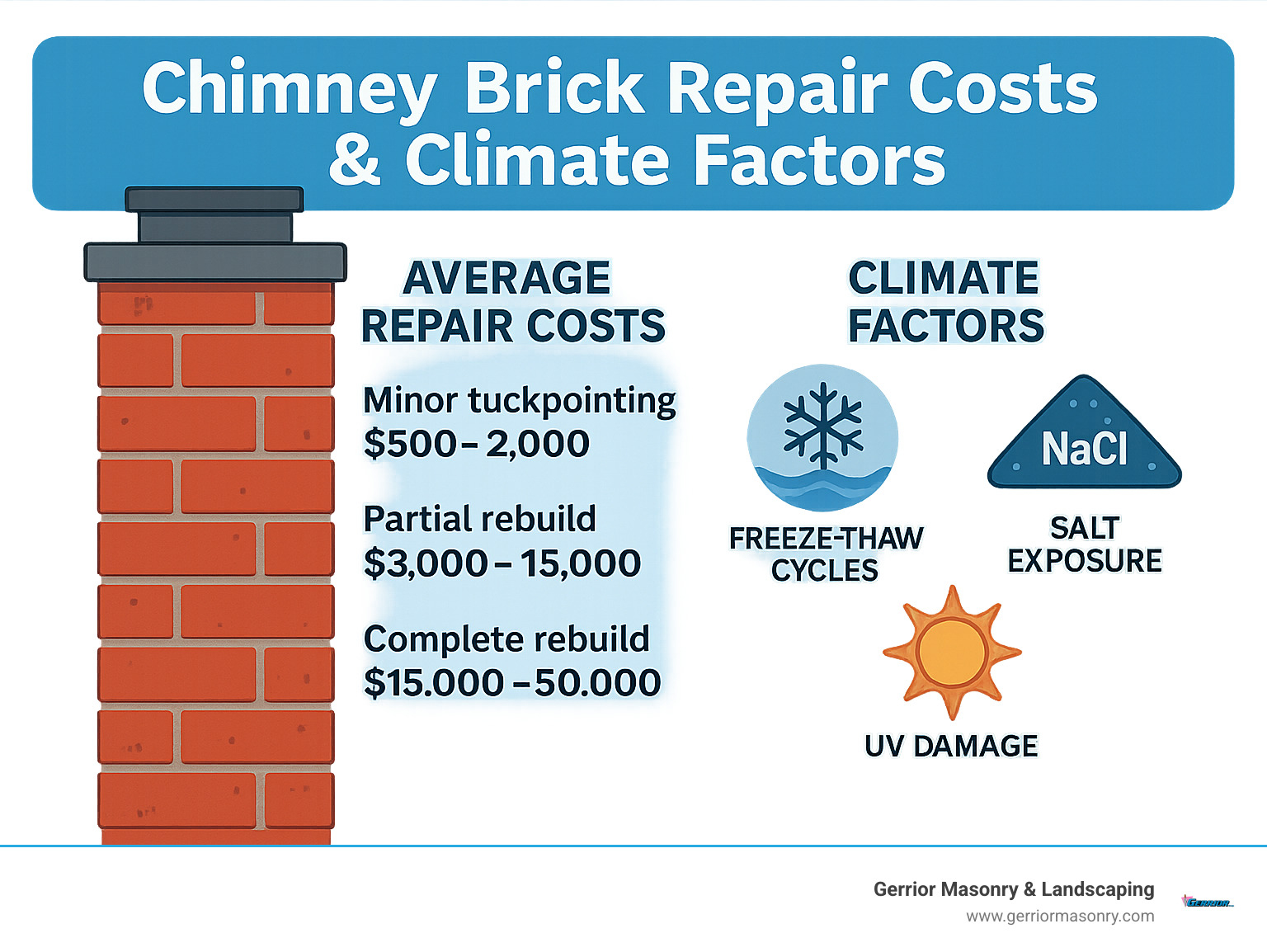
Chimney brick work isn’t cheap, but it’s a lot less expensive than dealing with water damage in your living room or, worse, a house fire. After 34 years in this business, I’ve seen homeowners spend twice as much on emergency repairs because they waited too long to address small problems.
Average cost ranges for chimney work vary widely based on what needs fixing. These costs reflect internet research averages and not specific Gerrior Masonry pricing: minor tuckpointing runs $500-$2,000, partial chimney rebuilds cost $3,000-$15,000, and complete chimney reconstruction ranges from $8,000-$25,000. Emergency repairs can hit anywhere from $1,000-$8,000.
The rebuild versus repair decision often comes down to math and timing. Sometimes extensive repairs cost almost as much as starting fresh, but only give you a few more years of service.
Freeze-thaw cycles are the biggest enemy of chimney bricks in Massachusetts. Water gets into tiny cracks, freezes overnight, expands, and makes those cracks bigger. Salt exposure near the coast makes this worse by attracting more moisture and causing chemical damage to the brick surface.
According to scientific research on freeze-thaw damage, moisture trapped inside bricks freezes and expands, causing brick faces to flake and crumble.
Average Chimney Brick Repair Costs in 2024
Understanding current chimney brick repair pricing helps you budget appropriately and avoid sticker shock. These average costs are based on internet data and not actual Gerrior Masonry pricing, which varies based on your specific project needs.
Labor costs make up the biggest chunk of your bill – usually 60-70% of the total project cost. Skilled masons earn good wages because this work requires specialized knowledge and involves real safety risks.
Material costs depend heavily on what type of brick you choose and how much you need. Premium bricks run $1-$3 each, while standard bricks cost $0.50-$1.50 per piece. Don’t forget about specialty mortars and sealants, which add another $200-$800 to most projects.
Scaffolding rental is often unavoidable for chimney work, adding $500-$2,000 to your project cost. Safety regulations require proper scaffolding for work above certain heights.
Demolition costs for carefully removing damaged brickwork typically run $15-$25 per square foot.
How Weather Affects Chimney Brick Lifespan
Massachusetts weather puts chimney brick through the wringer year after year. Understanding how our climate affects your chimney helps you plan maintenance and catch problems early.
Rain infiltration causes more long-term damage than any other weather factor. Water finds its way into the smallest cracks and starts a cycle of freeze-thaw damage, mortar deterioration, and structural problems.
Snow load puts extra stress on your chimney structure, especially during those heavy February storms we’re famous for. Heavy snow sitting on your chimney crown increases freeze-thaw cycles.
Wind exposure drives rain horizontally into brick surfaces and speeds up normal weathering. Chimneys stick up above everything else on your roof, so they take the full force of our coastal winds and nor’easters.
For comprehensive protection against weather damage, check out our Chimney Waterproofing Near Me services.
Frequently Asked Questions about Chimney Bricks
After three decades of working with homeowners across Massachusetts, we hear the same chimney brick questions repeatedly. Here are the answers to the most common concerns that come up during our consultations.
What causes chimney brick spalling?
Chimney brick spalling happens when water gets trapped inside your bricks and then freezes during our harsh New England winters. As that water expands into ice, it creates tremendous pressure that literally pushes the brick surface apart, causing those telltale flakes and chips you see falling around your chimney base.
The most common culprit is weak mortar that allows water infiltration while simultaneously putting pressure on the bricks during freeze-thaw cycles. We’ve seen this countless times – the mortar acts like a vise, squeezing the bricks until they can’t take the stress anymore.
Moisture infiltration from missing chimney caps, cracked crowns, or failed flashing accelerates the problem. Once water finds its way into your chimney system, it’s only a matter of time before freeze-thaw damage begins.
Other factors include using salvaged bricks that may already be weakened, poor original construction techniques, and normal aging of materials. House settling can also create stress points that make bricks more vulnerable to spalling.
How often should chimney bricks be inspected?
The NFPA guidelines recommend professional chimney inspections annually, and we strongly agree with this schedule. One year can bring significant changes, especially after a harsh winter or severe storm season.
However, don’t wait for your annual inspection to keep an eye on your chimney brick condition. We encourage homeowners to do quick visual checks every few months, particularly after major weather events.
Look for obvious warning signs like loose or missing mortar, white staining on the brick surface, water stains inside your fireplace, or small piles of brick chips around your chimney base. These early indicators can save you thousands in repair costs if addressed promptly.
During your quarterly checks, also notice any musty odors from your fireplace or dampness on walls near the chimney. These symptoms often indicate water infiltration that threatens your brick investment.
Can I use veneer instead of full chimney bricks?
Brick veneer offers an attractive middle ground between full brick construction and other chimney materials, but it’s important to understand where it works and where it doesn’t.
Veneer excels for chimney chases and exterior cladding applications where you want the classic brick appearance without the weight and expense of full brick construction. It’s significantly lighter, easier to install, and costs substantially less than traditional masonry.
However, veneer has important limitations. You still need fire bricks for your firebox and any areas exposed to extreme heat – veneer simply cannot handle those temperatures safely. Think of veneer as the attractive exterior clothing for your chimney, not the structural foundation.
The weight advantage makes veneer particularly useful for retrofitting older homes where structural capacity might be limited. The cost savings can be substantial too, often running 40-60% less than full brick construction while delivering similar visual appeal.
For most homeowners, a combination approach works best – fire bricks where heat resistance is critical, and veneer where appearance and cost-effectiveness matter most.
Conclusion
Choosing the right chimney brick isn’t just about aesthetics—it’s about protecting your family and your biggest investment. After helping Massachusetts homeowners for over three decades, I’ve seen how quality brick selection makes the difference between decades of worry-free fireplace enjoyment and costly emergency repairs.
Preventive care truly is your best friend when it comes to chimney maintenance. Those quarterly visual inspections we mentioned might seem like a hassle, but they’re nothing compared to dealing with water damage in your living room or, worse, a chimney fire. Regular maintenance catches small issues while they’re still small—and affordable to fix.
The truth about early repairs is simple: a $500 tuckpointing job today prevents a $15,000 rebuild tomorrow. We’ve seen too many homeowners postpone minor repairs only to face major reconstruction projects later. Those little cracks and loose mortar joints don’t fix themselves, and Massachusetts weather doesn’t give them a break.
When it comes to smart purchasing decisions, the cheapest option upfront often costs the most in the long run. Fire bricks for your firebox aren’t optional—they’re essential safety equipment. Quality clay bricks for your exterior chimney construction will outlast bargain alternatives by decades. And proper sealants and protective measures pay for themselves many times over through prevented water damage.
Think of your chimney brick investment like buying a good winter coat in New England—you might pay more initially, but you’ll be grateful for that protection when the weather gets rough. Quality materials and professional installation aren’t expenses; they’re insurance policies for your home’s safety and value.
For comprehensive masonry services including chimney repair, visit our Brick and Masonry Repair page.
At Gerrior Masonry & Landscape Construction, we bring over 30 years of experience to every chimney project. Our skilled team and owner oversight ensure quality results that protect your home and family. Based in Woburn, MA, we proudly serve homeowners throughout Middlesex and Essex County, Massachusetts, providing expert chimney brick selection, installation, and repair services.
