
Chimney Cap Installers: 7 Powerful Reasons to Choose the Best
Why Finding the Right Chimney Cap Installers Matters More Than You Think
Chimney cap installers keep water, wildlife and wind out of your flue—saving you thousands in repairs.
Here’s who usually tackles the job:
Pros who install chimney caps
• Roofing contractors (most common)
• CSIA-certified chimney sweeps
• Masonry contractors
• Handymen (simple jobs)
• Full-service chimney companies
Average installation costs: roughly $300 (range $75–$1,000+ depending on roof pitch, cap size and material).*
Time on-site: 1–3 hours for a standard cap.
Installing a cap sounds simple—until you’re 25 ft up with a tape measure, wind in your face, and seven cap styles to pick from. In 34 years of serving Massachusetts, I’ve seen DIY caps blow off in the first nor’easter because of one bad measurement.
The good news? A professionally installed cap lasts 3–25 years (material + climate decide the exact lifespan). This guide will help you choose whether to DIY or call the pros—so you can protect your chimney before the next storm hits.
*Internet averages, not Gerrior Masonry pricing.
What Is a Chimney Cap & Why Your Fireplace Needs One
A chimney cap is a metal “hat” that covers the flue tile. The top plate blocks rain and snow, the mesh screens out sparks and animals, and the mounting system locks everything in place.
Key benefits at a glance
• Weather barrier: Keeps rain out, preventing brick spalling and rusted dampers.
• Spark arrestor: 5⁄8-in mesh stops embers from landing on your roof (per CSIA fire-safety research).
• Wildlife shield: No more raccoons, squirrels or birds setting up shop.
• Energy saver: Reduces heat loss and downdrafts.
• Structural protection: Extends crown and mortar life.
Risks of an Uncapped Chimney
• Water damage: Leads to efflorescence, liner cracks and mold.
• Animal nests: Block draft and create carbon-monoxide hazards.
• Higher repair bills: A $300 cap today beats a $5,000 crown rebuild tomorrow.
After decades in the field I’ve never met a homeowner who regretted adding a cap—but plenty who regretted waiting.
Types, Materials & How to Choose the Best Cap
Cap styles
• Single-flue: Sits on one tile—most common.
• Multi-flue: Covers the whole crown—best for multiple fireplaces.
• Draft-enhancing: Turbine top boosts airflow.
• Top-sealing damper caps: Combine an energy-saving damper with weather protection.
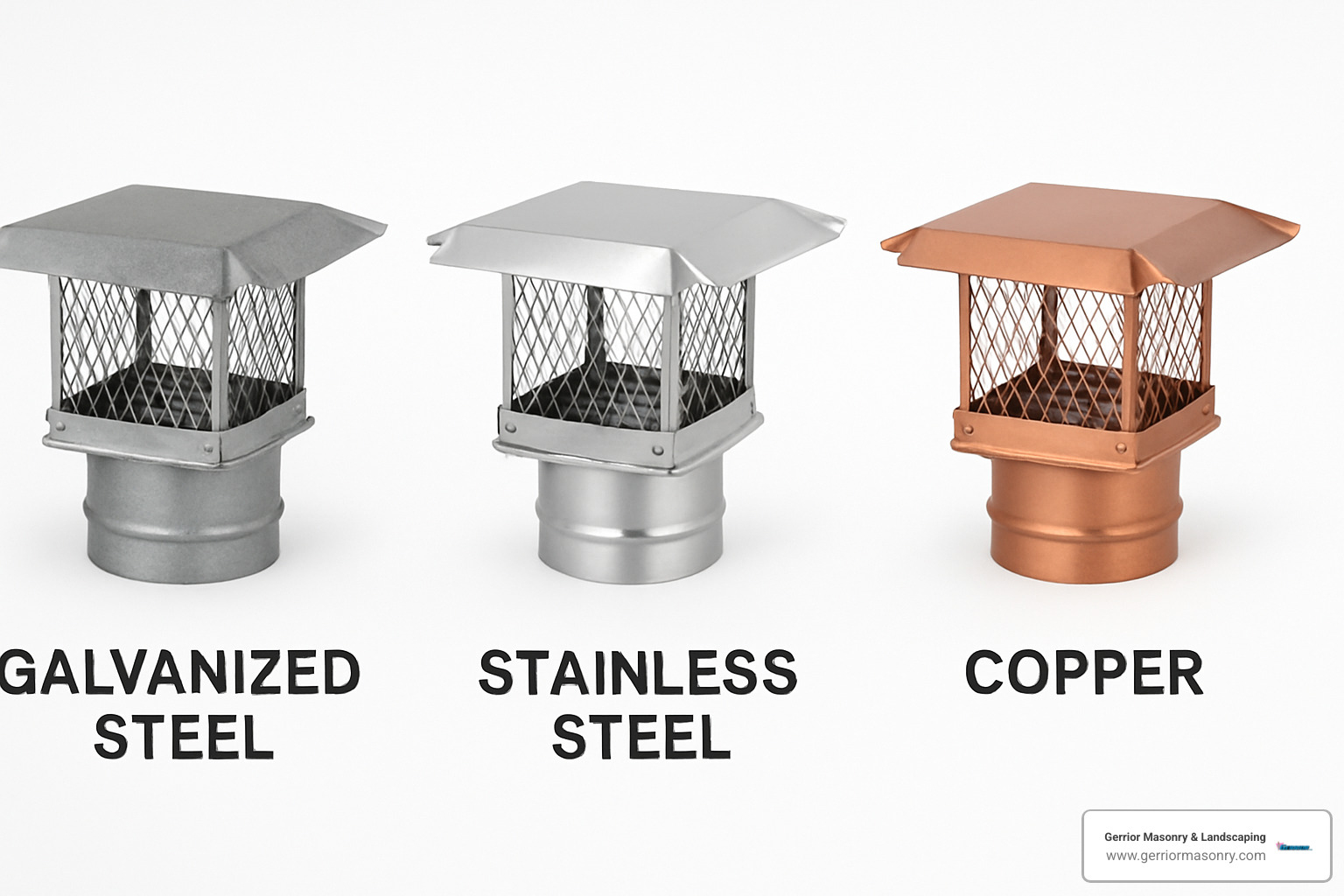
Materials (think good-better-best)
• Galvanized steel: 5–10 yr life, $75–$600.*
• Stainless steel (304/316): 15–25 yrs, $150–$1,500.*
• Copper: 25 yrs–lifetime, $300–$3,000+.*
Sizing Tips
- Measure the outside of the flue tile (not the opening).
- For multi-flue caps, record the crown footprint and flue locations.
- Confirm the liner projects at least 2 in above the crown; if not, you may need chimney flue replacement or an extended-sides cap.
- Meet the 3-2-10 height rule for proper draft.
*Internet averages, not Gerrior Masonry pricing.
Step-by-Step: DIY vs Hiring Chimney Cap Installers
DIY highlights
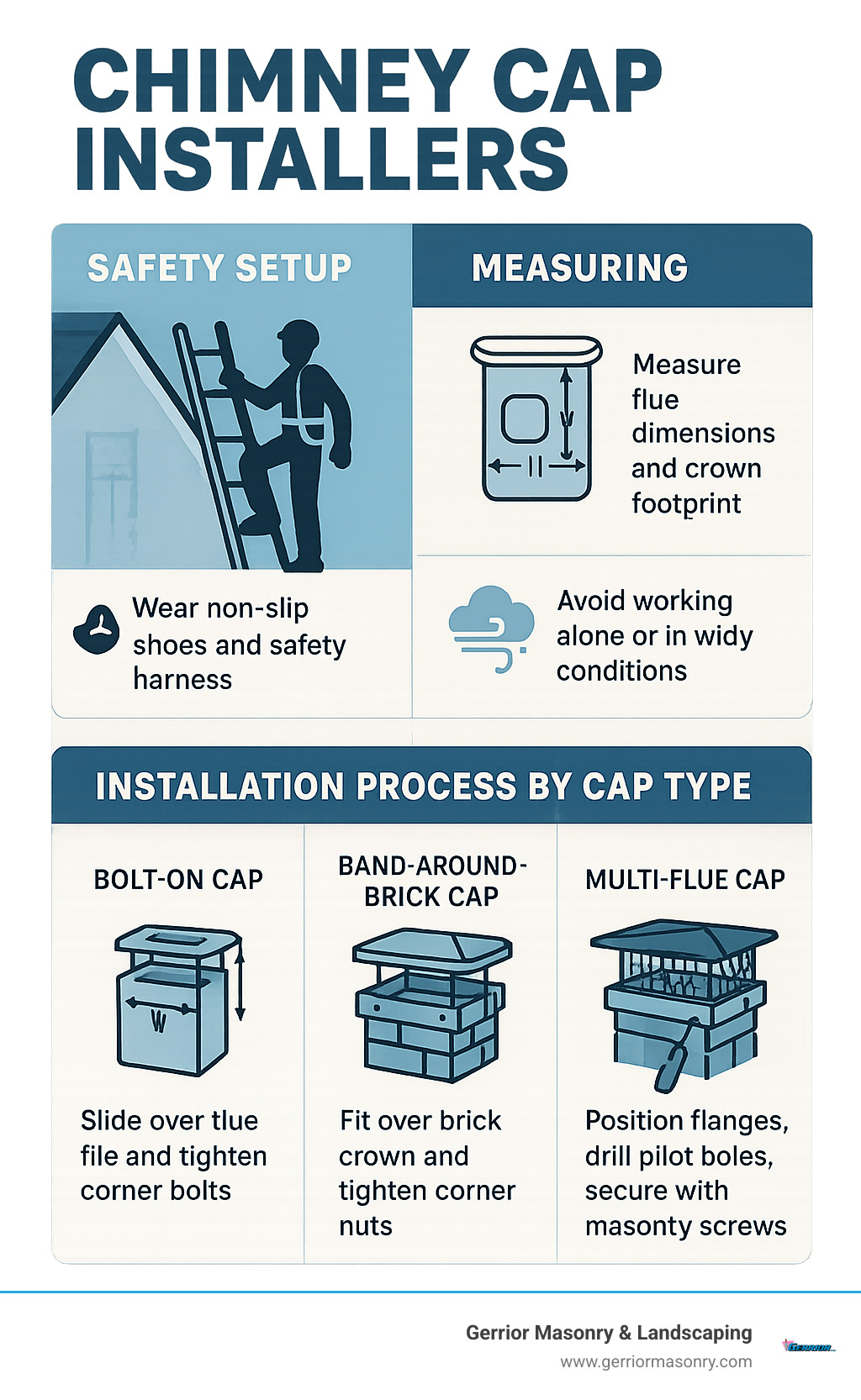
- Ladder at 4:1 ratio, harness, and a helper.
- Dry-fit the cap, then tighten bolts evenly (don’t overtighten clay).
- For multi-flue caps: mark holes, pre-drill, add masonry adhesive, drive screws.
- Verify the mesh is level and secure.
When to Call the Pros
• Roof pitch steeper than 6/12
• Multi-story access
• Damaged crown or custom cap
• Need for code verification or warranty
Quick Pros & Cons
| DIY | Professional | |
|---|---|---|
| Cost | Save $150–$350* | Pay labor |
| Safety | High risk | Insured & equipped |
| Fit accuracy | Depends on you | Guaranteed |
| Warranty | None | Often included |
*Internet averages.
Finding & Vetting Chimney Cap Installers Near Me
Local knowledge matters; Massachusetts roofs face salt air, freeze-thaw and steep pitches. Search “chimney cap installers near me” and then:
- Check credentials: CSIA ID, proof of insurance, license.
- Read reviews on 3 platforms: Google, BBB, Angi.
- Get 3 written estimates detailing materials, labor, cleanup and warranty.
- Ask for photos & references from recent, similar jobs.
Red Flags
• No ladder safety plan
• Cash-only quote
• Missing paperwork
• High-pressure sales
Need more than a cap? See our fireplace and chimney repair near me services.
Costs, Lifespan & Maintenance
• Cap price: $75–$1,000+* (galv. to premium copper)
• Labor: $150–$500* (easy vs steep/custom)
• Extras: crown repair or flue extension can add $300–$1,500.*
In New England weather, expect:
• Galvanized: 3–8 yrs
• Stainless: 15–25 yrs
• Copper: 25 yrs+
Simple Maintenance Checklist (15 min a year)
- Inspect after major storms.
- Clear leaves from mesh.
- Tighten bolts lightly.
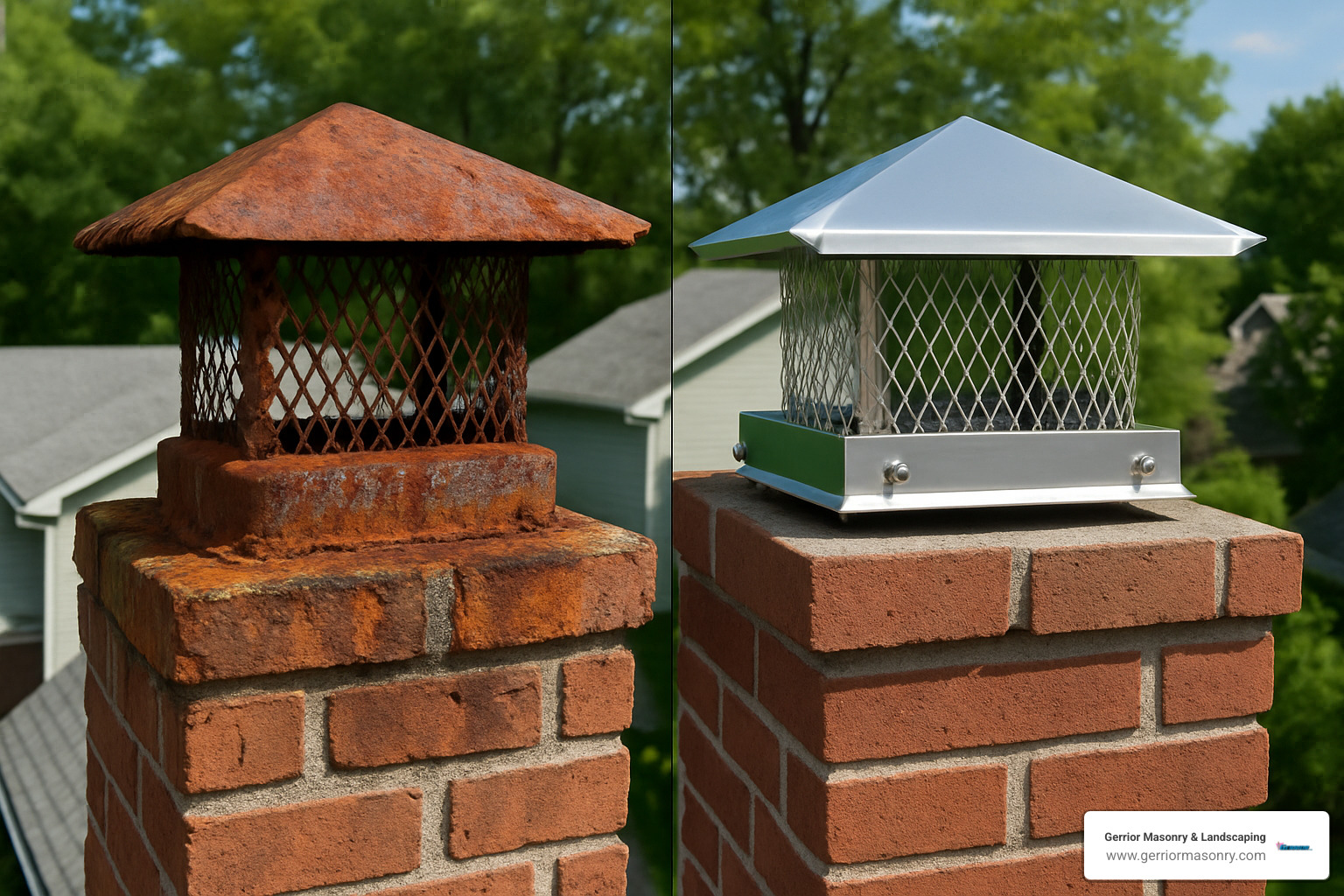
- Touch-up small rust spots.
Professional cleaning every 3–5 yrs keeps warranties intact and extends life.
See detailed pricing in our chimney repair cost guide.
*Internet averages, not Gerrior Masonry pricing.
Frequently Asked Questions about Chimney Cap Installation
How long will my cap last? 3–8 yrs (galv.), 15–25 yrs (stainless), 25 yrs+ (copper) in MA weather.
Can I install a cap in winter? Only if it’s an emergency—ice and cold hinder safe, permanent installation. Pros have the gear; most homeowners should wait for spring.
Will a cap hurt my draft? A correctly sized, clean cap improves draft by blocking downdrafts. Clogged mesh or undersized caps reduce airflow.
Do I need a permit? Usually no, but caps must follow height clearances. Certified installers handle code compliance.
Signs I need a new cap? Visible rust holes, loose hardware, torn mesh, or persistent moisture/odor issues in the fireplace.
Conclusion
Your chimney deserves better than leaving it exposed to the elements, and your family deserves the peace of mind that comes with proper protection. After three decades of helping Massachusetts homeowners, I can tell you that installing a chimney cap is one of those rare home improvements that actually pays for itself – sometimes within the first winter storm.
The choice between DIY installation and hiring professional chimney cap installers really comes down to your comfort level with heights, your available time, and the complexity of your specific chimney. There’s no shame in either choice. I’ve seen skilled DIYers tackle straightforward installations successfully, and I’ve also seen the relief on homeowners’ faces when they hand the job over to experienced professionals.
What matters most is that you don’t wait. Every season without a cap increases your risk of water damage, wildlife invasions, and expensive repairs. We’ve responded to emergency calls where homeowners faced thousands in repair costs – all because they postponed this relatively simple protection measure.
If you’re dealing with damaged crowns, complex multi-flue systems, or need comprehensive chimney restoration beyond just cap installation, that’s where our expertise really shines. Sometimes a chimney cap installation reveals other issues that require the skilled hands of experienced masons.
For complete chimney protection and repair services, explore our comprehensive chimney repairs options.
Your chimney cap is working 24/7 – through blazing summer heat, driving winter storms, and everything Mother Nature throws at it. Investing in quality materials and proper installation, whether DIY or professional, ensures years of reliable protection for one of your home’s most important safety systems.
Gerrior Masonry & Landscape Construction is based in Woburn, MA, and proudly serves Middlesex and Essex County, Massachusetts.
