
Chimney liner installation near me: Top Safe 2025
Why a Quality Chimney Liner is Essential for Your Home
Searching for chimney liner installation near me is the first step toward protecting your home from fire hazards, carbon monoxide, and structural damage. A chimney liner is a vital safety barrier running from your firebox to the top of your chimney, and its condition is critical.
Here’s what you need to know when hiring a local installer:
- Certifications: Look for CSIA-certified (Chimney Safety Institute of America) professionals with proper licensing and insurance.
- Quotes & Cost: Get multiple quotes. Expect costs between $2,500-$5,000, though the range can be $625 to $7,000+ depending on the project.
- Reviews & Warranties: Check reviews and ask about warranties on materials and workmanship.
- Inspections: A proper inspection is mandatory before any installation to ensure correct sizing and assess chimney health.
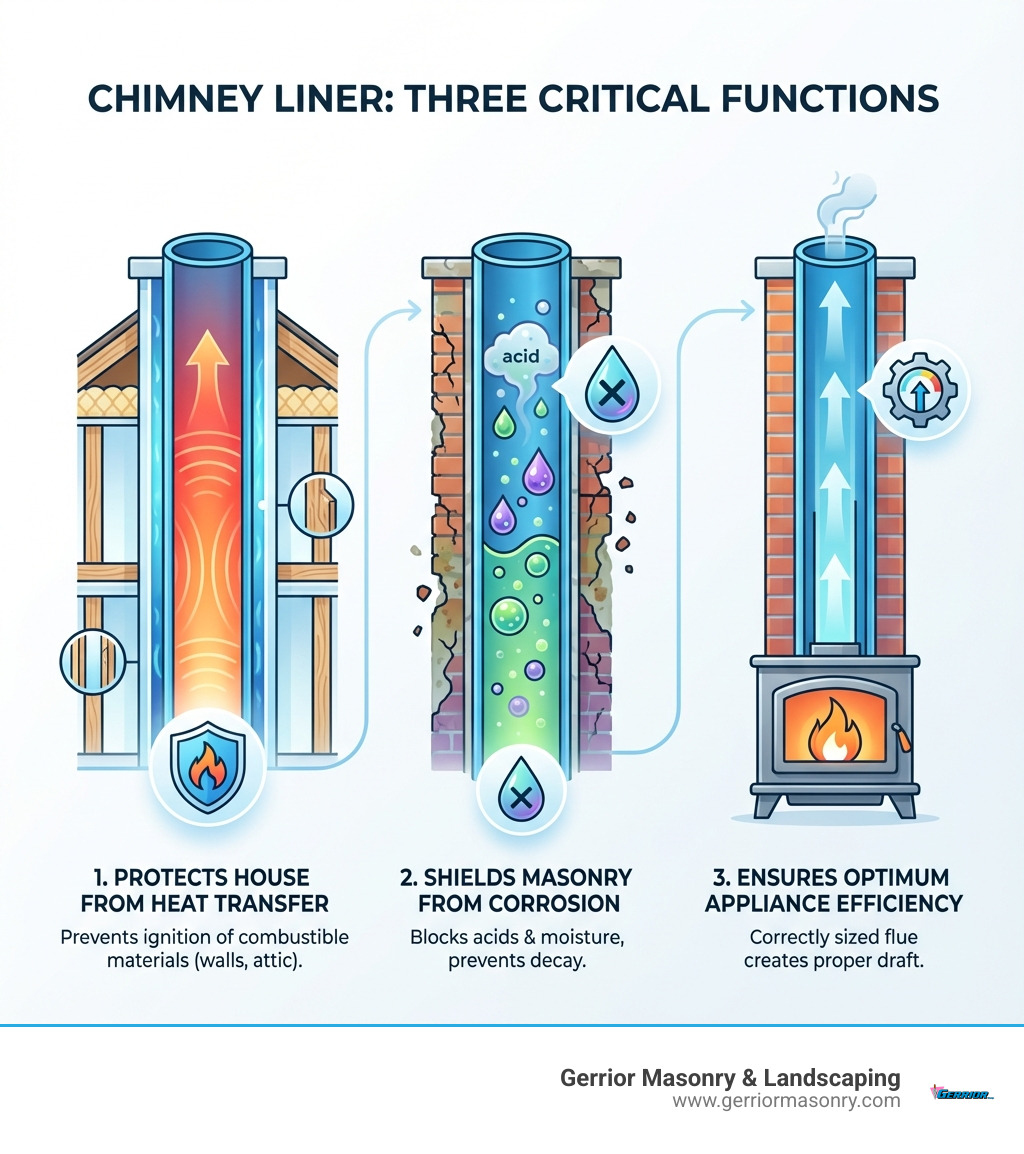
A quality liner performs three critical functions:
- Protects Your Home from Fire: It prevents extreme heat from transferring to combustible materials in your walls and attic.
- Protects Your Chimney Masonry: It shields brick and mortar from corrosive byproducts like acids and moisture, which can cause deterioration and allow dangerous gases to seep into your home.
- Ensures Appliance Efficiency: A correctly sized liner provides the optimal draft for your fireplace or stove, leading to a cleaner, more efficient burn and reducing harmful byproducts like carbon monoxide.
Damaged or missing liners are a leading cause of house fires and carbon monoxide incidents. I’m Joe Gerrior, owner of Gerrior Masonry & Landscape Construction Corp. With over 34 years of experience serving Massachusetts homeowners in Middlesex and Essex County, we’ve seen how a professional liner installation protects families and prevents costly damage.
This guide will cover everything from recognizing warning signs to understanding the installation process.
Your Complete Guide to Chimney Liner Installation Near Me
The chimney liner is an out-of-sight component, but its condition is paramount to your home’s safety. Understanding when to consider chimney liner installation near me is crucial for any homeowner.
If you are new to chimney systems and want a neutral overview of how liners work, the general article on chimney liners provides helpful background information alongside the expert guidance below.
Warning Signs: When to Consider Chimney Relining
A professional inspection is the only definitive way to assess your liner, but these warning signs indicate it’s time to call a specialist:
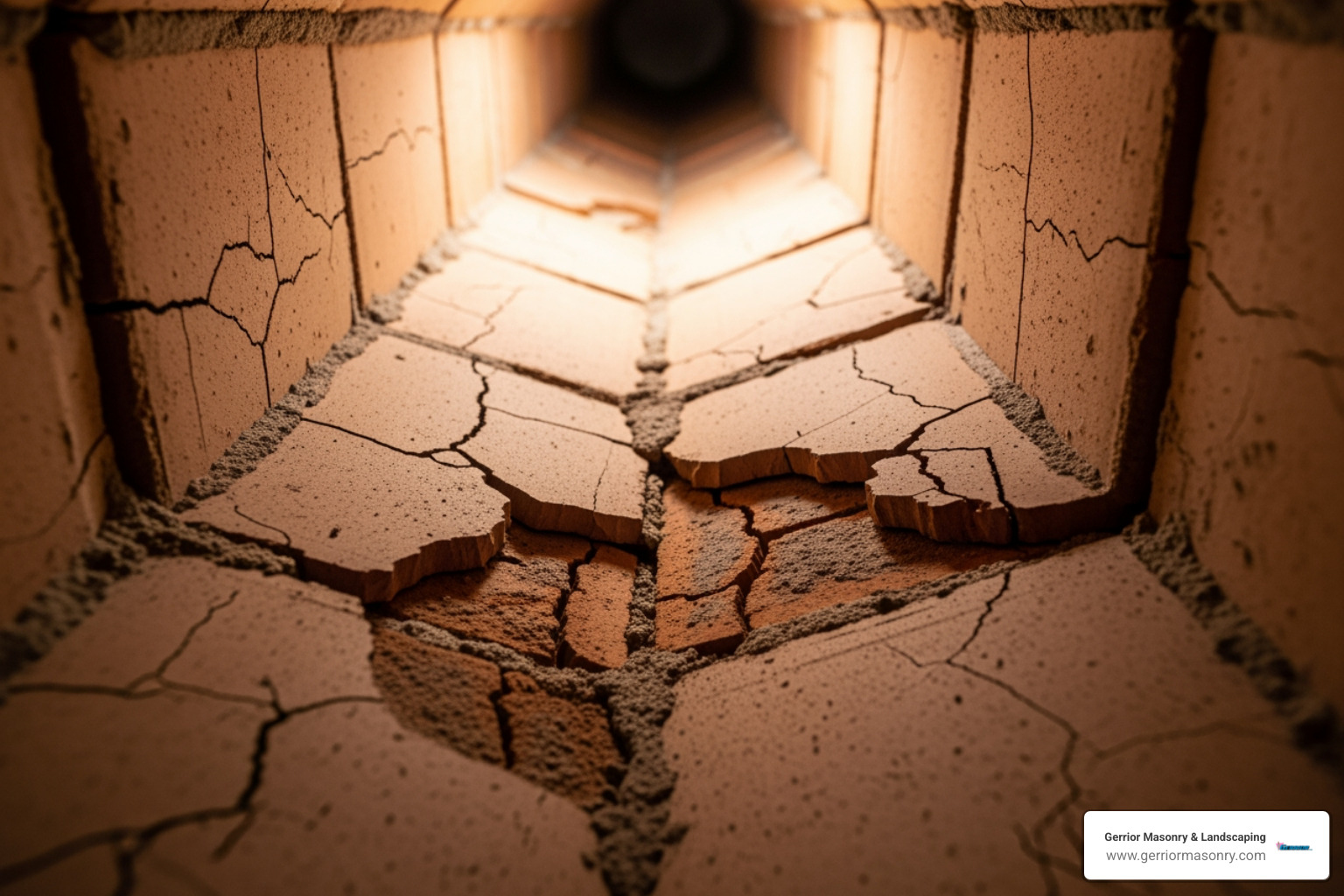
- Damaged Flue Tiles: Look for flakes of tile or mortar in your firebox. Cracks or missing sections in a clay tile liner are a clear sign of failure.
- Poor Drafting: If your room fills with smoke, your liner may be improperly sized, blocked, or damaged.
- Excessive Creosote: Thick, glazed creosote buildup indicates inefficient venting and a serious fire risk.
- Water Damage: Stains on walls near the chimney or condensation in the firebox can point to a compromised liner.
- Carbon Monoxide Alarms: If your CO detector goes off, evacuate immediately and call for help. A faulty liner is a common cause.
- Exterior Masonry Cracks: Deterioration on the outside of the chimney can be a symptom of internal damage caused by a failing liner.
- Age of Home: Homes built before the 1940s may not have a liner at all. If you live in an older home in areas we serve like Acton, Andover, or Arlington, an inspection is a wise investment.
If you notice these signs, it’s time for a professional look. Learn more from our Chimney Liner Repair Complete Guide or about our Chimney Cleaning and Inspection Near Me services.
Comparing Chimney Liner Materials and Longevity
The best material for your chimney depends on your appliance, fuel type, and budget.
| Material | Best For | Pros | Cons | Average Lifespan (with proper care) |
|---|---|---|---|---|
| Clay Tile | Open fireplaces, low-to-medium heat wood fires | Traditional, inexpensive, long-lasting if maintained. | Prone to cracking from thermal shock/freeze-thaw cycles, difficult to clean, not suitable for all fuels. | 50+ years |
| Aluminum | Low-heat gas appliances only | Inexpensive, lightweight, easy to install. | Not suitable for wood or high-efficiency gas, short lifespan, easily corroded. | 5-10 years |
| Stainless Steel | All fuel types (wood, gas, oil), high-efficiency appliances | Durable, corrosion-resistant, flexible or rigid options, excellent for all fuels, long lifespan. | More expensive than aluminum or clay, requires professional installation. | 20+ years |
| Cast-in-Place | Damaged or irregularly shaped masonry chimneys | Creates a seamless, insulated, solid liner; strengthens chimney structure; excellent for all fuels. | Most expensive, complex installation, takes time to cure. | 50+ years |
Stainless Steel Liners: The All-Around Champion
For most homeowners, stainless steel is the top choice. It’s durable, safe for all fuel types, and meets rigorous safety standards. It is widely recommended in industry resources and is a wise long-term investment that can last 20+ years.
Aluminum Liners: A Gas-Only Solution
This budget-friendly option is strictly for low-to-medium heat gas appliances. It cannot handle the high temperatures from wood or oil and has a much shorter lifespan.
Cast-in-Place Liners: A Permanent Solution
This method creates a new, seamless flue inside your chimney, strengthening the entire structure. It’s the most expensive option but is ideal for severely deteriorated chimneys and offers superior longevity.
Clay Tile Liners: The Traditional Choice
Common in older masonry chimneys, clay tiles are inexpensive but prone to cracking from temperature changes. A cracked tile liner is unsafe and requires replacement. For more on masonry, visit our Chimney Masonry.
What Does Chimney Liner Installation Near Me Typically Cost?
Cost is a major consideration. Please note that these are national average cost ranges based on general internet data and are not a direct quote for Gerrior Masonry & Landscaping services. A precise quote for your home in Middlesex or Essex County always requires an on-site inspection.
Nationally, a chimney liner installation typically costs between $2,500 and $5,000, with a full range from about $625 to $7,000+ depending on the project scope and materials.
- Stainless Steel Liners: $900 – $3,800
- Aluminum Liners: $625 – $2,250 (for specific gas appliances only)
- Cast-in-Place Liners: $2,000 – $7,000+
These reference figures are drawn from a mix of online cost guides and homeowner reports and are meant only as a broad planning tool.
Factors That Influence Cost:
- Liner Material: Cast-in-place is the most expensive, followed by stainless steel and then aluminum.
- Chimney Size & Complexity: Taller chimneys or those with bends cost more.
- Existing Condition: Significant damage to the chimney structure requires repairs before relining, such as Chimney Rebuilding, which adds to the cost.
- Insulation: Insulation is almost always required for wood-burning appliances and adds to the material cost.
While the investment may seem substantial, it is a small price for the safety and peace of mind a professional installation provides.
The Professional Installation Process Step-by-Step
Installing a chimney liner is a precise job that requires professional expertise. Here is a general overview of the process:
- Step 1: Inspection and Sizing: A technician inspects the chimney with a camera to assess damage and determine the correct liner size for your appliance.
- Step 2: Chimney Cleaning: The flue is thoroughly cleaned of all creosote and debris.
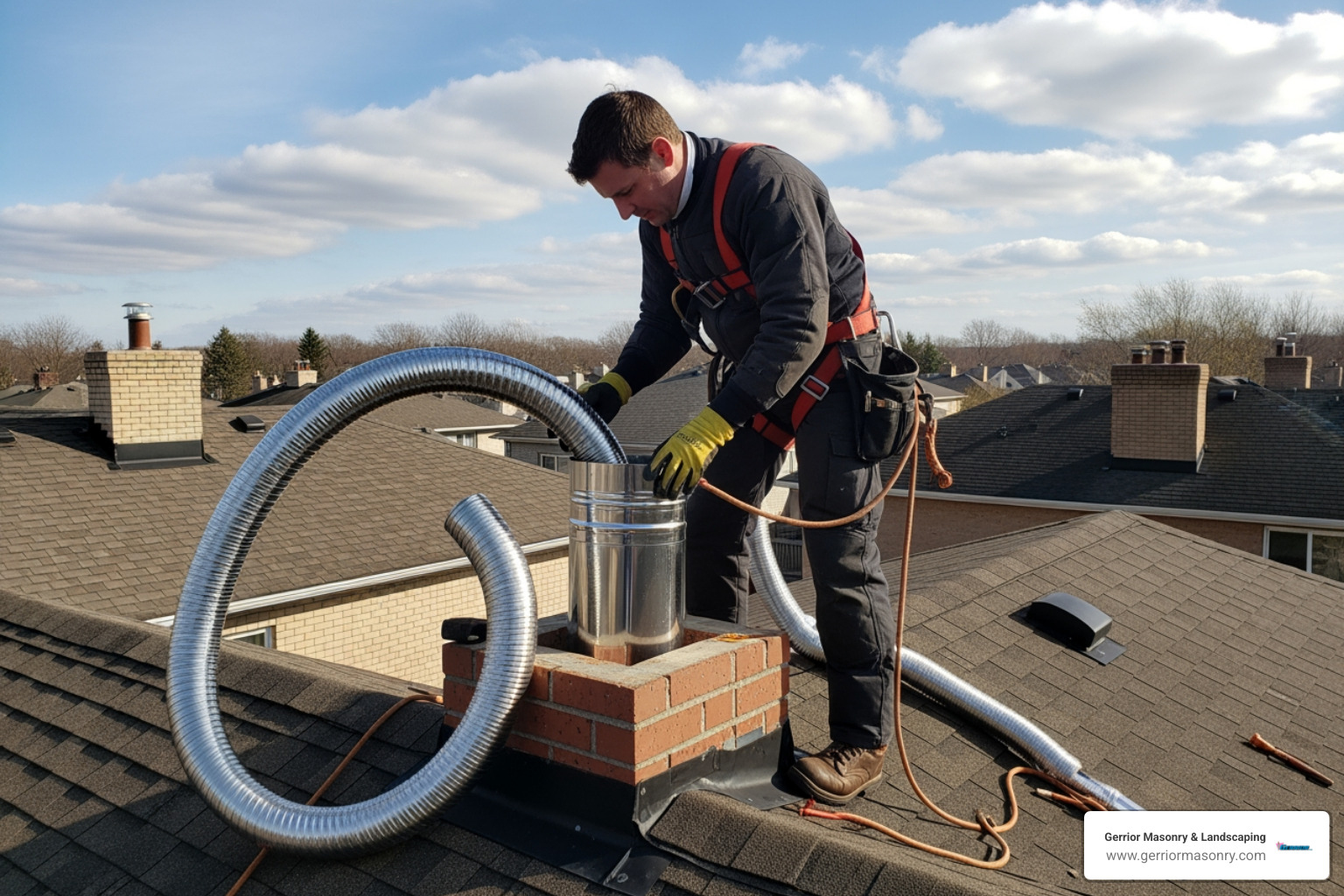
- Step 3: Liner Insertion: The new liner is carefully lowered down the chimney from the roof.
- Step 4: Insulating the Liner: Insulation is wrapped or poured around the liner to improve draft and safety, especially for wood-burning systems.
- Step 5: Connecting Components: The liner is securely connected to the appliance and smoke chamber to create an airtight seal.
- Step 6: Sealing and Capping: A new crown and Chimney Cap Installers are installed to protect the liner and masonry from weather and debris.
DIY vs. Hiring a Professional Chimney Specialist
While a DIY approach may seem tempting to save money, installing a chimney liner is a job for professionals. The risks are too high.
DIY Risks:
- Fire Hazards: Incorrect sizing or improper connections can lead to creosote buildup or allow extreme heat to reach combustible parts of your home.
- Carbon Monoxide Leaks: An improperly sealed liner can leak deadly, odorless carbon monoxide into your living space.
- Code Violations: Professionals understand local building codes and national standards. A DIY job may not pass inspection, costing more to fix.
Professional Benefits:
- Expertise & Certification: Our CSIA-certified technicians have the experience to do the job right.
- Proper Tools & Safety: We use specialized cameras, cleaning equipment, and safety gear.
- Compliance & Warranty: We ensure the installation meets all codes and provide a warranty on work and materials.
- Insurance: A professional company is fully insured, protecting you from liability.
Trust the experts with your family’s safety. Learn more about our Chimney Specialists Near Me and our other masonry services.
Safety Codes, Maintenance, and Energy Efficiency
A proper installation is just the first step. Regular maintenance is essential for continued safety and performance.
Maintenance and Safety Codes
The National Fire Protection Association (NFPA) recommends an annual inspection for all chimneys, fireplaces, and vents. Regular cleaning is also crucial to remove flammable creosote, especially for wood-burning appliances. Neglecting your liner can lead to chimney fires, carbon monoxide poisoning, and structural damage to your home.
Local building codes require chimney liners for safety, often referencing the NFPA 211 Standard for Chimneys, Fireplaces, Vents, and Solid Fuel-Burning Appliances. Adhering to these codes is not just about legality—it is about protecting your home.
Energy Efficiency and Liner Requirements
A properly sized and insulated liner improves your appliance’s draft, ensuring a more complete burn. This means more heat radiates into your home and less is wasted up the chimney.
- Wood-Burning Appliances: Require liners that can withstand high temperatures and resist creosote, like insulated stainless steel or cast-in-place.
- Gas Appliances: Produce corrosive condensation, so liners must resist acid. Stainless steel is an excellent choice, while aluminum is a short-term option for low-heat gas units only.
Regular maintenance includes checking for cracks (clay tile), corrosion (aluminum), or blockages (all types). Also, ensure your chimney’s exterior is protected by checking our Chimney Flashing Repair Guide.
Trust Your Chimney to Woburn’s Masonry Experts
When it comes to your home’s safety, a professional chimney liner installation near me is not a place to cut corners. From selecting the right material to ensuring an airtight fit that meets all safety codes, this is a job for experienced specialists.
At Gerrior Masonry & Landscaping, we bring over 30 years of dedicated experience to every chimney repair and relining project. Our owner, Joe Gerrior, personally oversees each job to ensure our skilled team delivers the high-quality, lasting results your home deserves.
We are proud to serve homeowners and businesses throughout Middlesex and Essex County, Massachusetts, including Woburn, Andover, Lexington, Reading, Winchester, and many more surrounding towns.
Do not compromise on the safety and efficiency of your chimney. Request a professional estimate for your chimney masonry repair or a new liner installation today.
Gerrior Masonry & Landscape Construction is based in Woburn, MA, and services Middlesex and Essex County, Massachusetts.
