
Chimney Masonry Repair: Top 2025 Expert Solutions
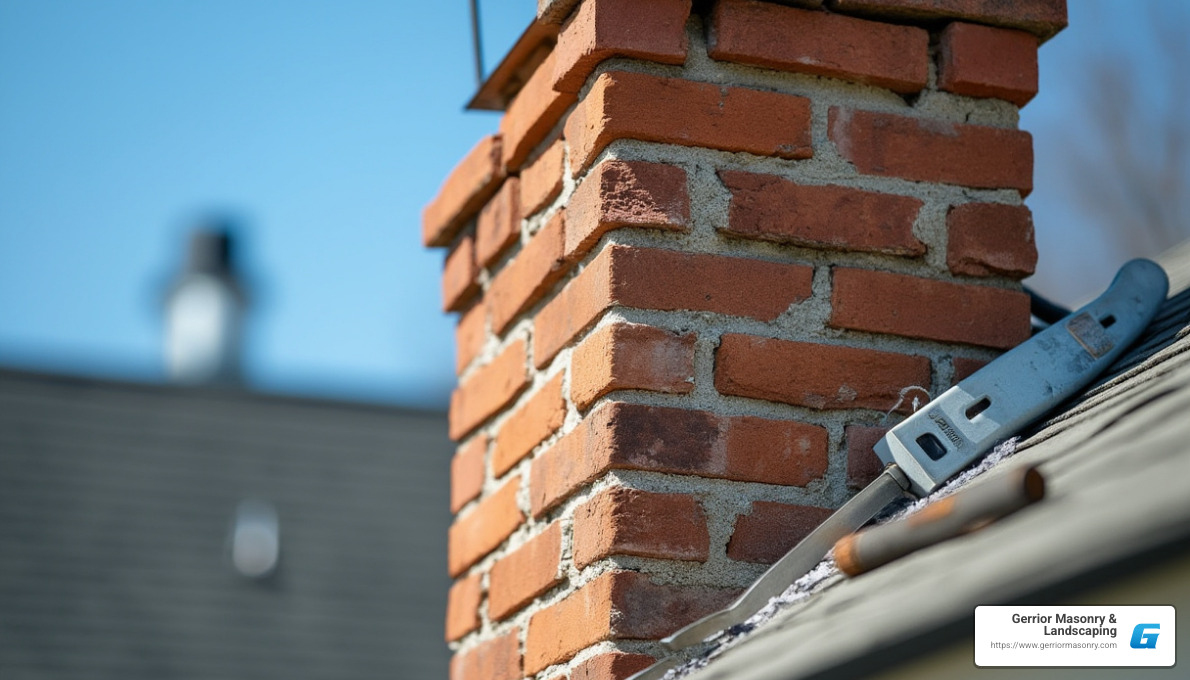
Chimney masonry repair is essential for maintaining the safety and efficiency of your home, especially if you have an older house. For those with masonry fireplaces, common issues like crumbling brick, spalling, or damaged mortar joints can compromise the structure and function of the chimney. Here are quick points to address the need for chimney repairs:
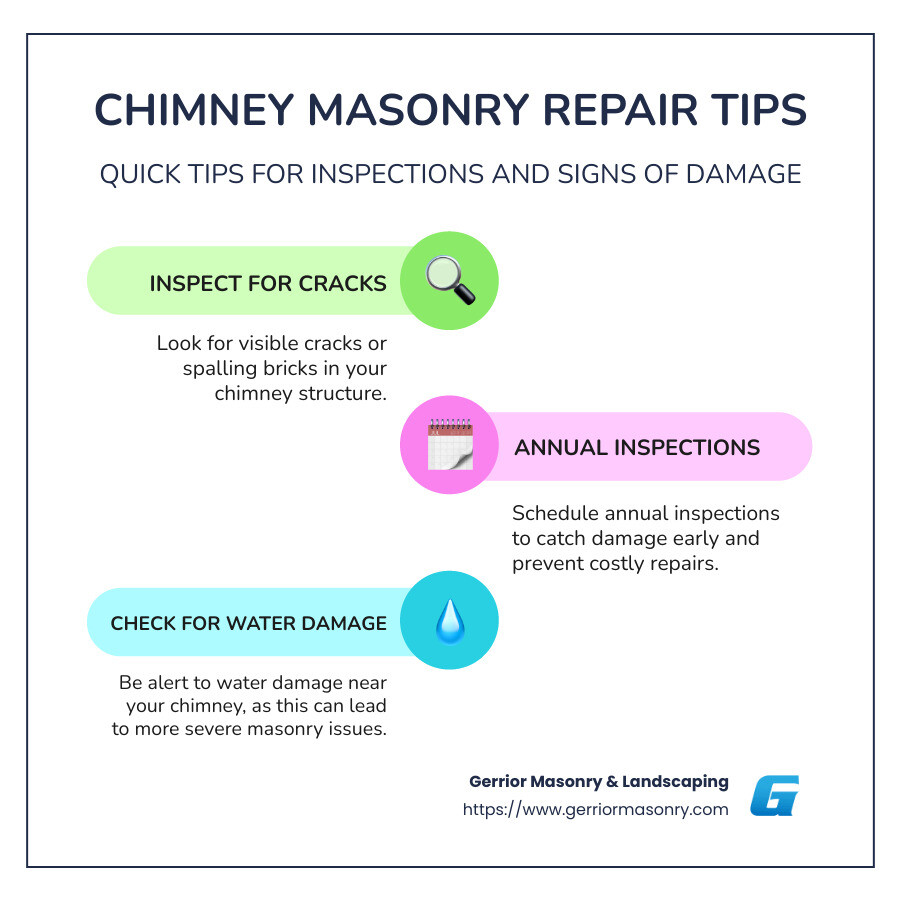
- Check for visible cracks or spalling bricks in your chimney structure.
- Schedule annual inspections to catch damage early and prevent costly repairs.
- Be alert to water damage near your chimney, as this can lead to more severe masonry issues.
Older homes, particularly those over 60 years, often have masonry-based chimneys requiring more frequent attention. Regular maintenance is crucial to prevent fire hazards and ensure your chimney safely vents smoke and gases.
I’m Joe Gerrior, owner of Gerrior Masonry & Landscaping. With over three decades of experience in the industry, I’ve seen the importance of timely chimney masonry repair to maintain a home’s integrity and ensure safety.
Chimney masonry repair further reading:
– chimney rebuild
– chimney pointing
– tuckpointing vs repointing
Understanding Chimney Masonry Repair
Chimney masonry repair is a crucial aspect of maintaining your home’s safety and structural integrity. For many older homes, masonry fireplaces and chimneys are not just aesthetic features but vital components that require regular attention. Here’s what you need to know:
Tuckpointing
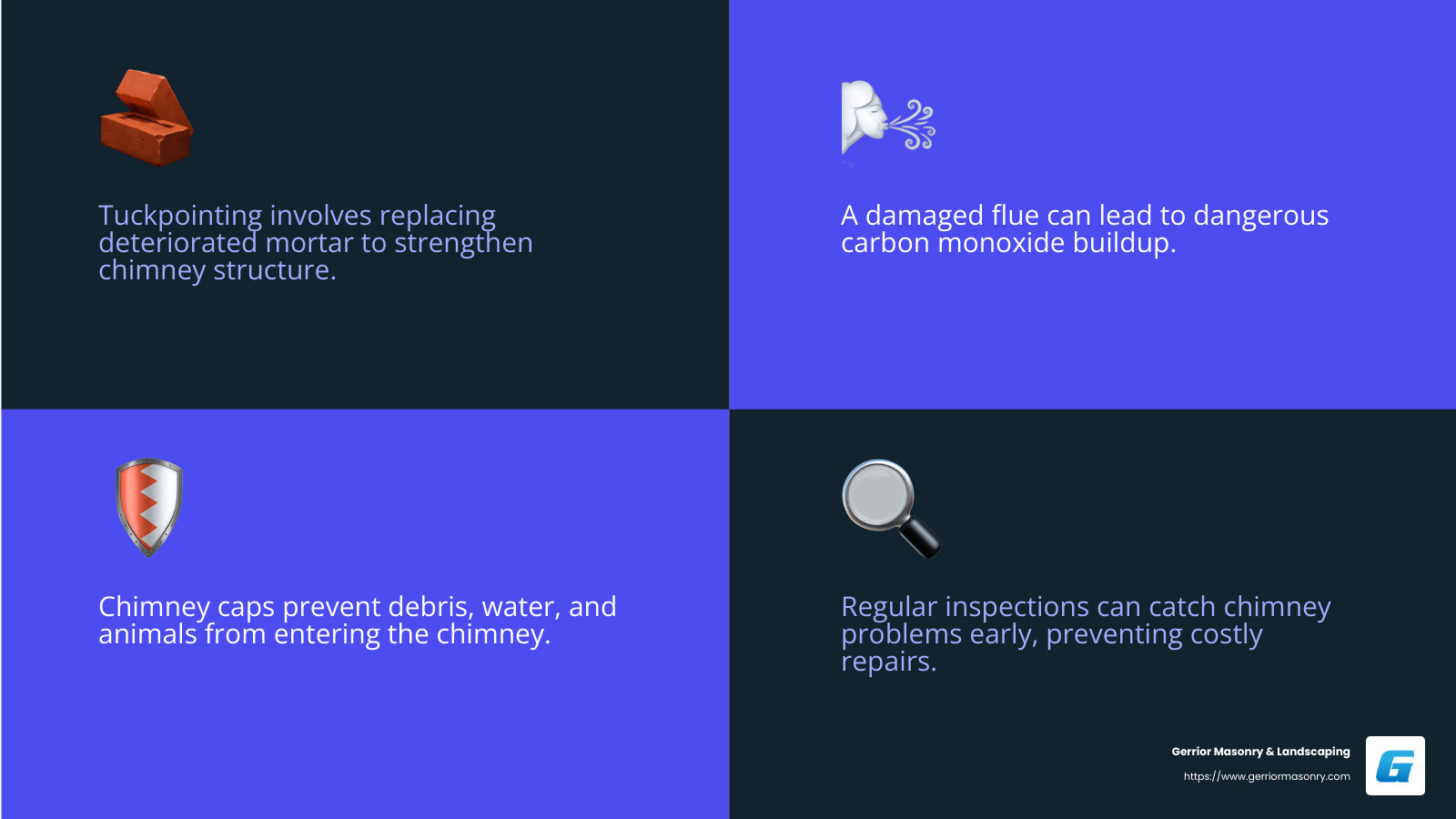
Tuckpointing is the process of repairing mortar joints in masonry. Over time, weather and natural wear can cause these joints to deteriorate, leading to gaps that can compromise the chimney’s stability. By removing old, crumbling mortar and replacing it with new mortar, tuckpointing restores the chimney’s strength and prevents water infiltration. This process not only improves the appearance of the chimney but also extends its lifespan.
Mortar Joints
Mortar joints are the spaces between the bricks filled with mortar. These joints are essential for holding the structure together. However, they are also the most vulnerable to damage from moisture, freeze-thaw cycles, and general aging. Regular inspection of mortar joints can help identify areas needing repair before they lead to more significant structural issues. When mortar joints are compromised, the entire chimney’s stability is at risk.
Structural Integrity
The structural integrity of a chimney is paramount. A well-maintained chimney ensures that harmful gases like carbon monoxide are effectively vented out of your home. Compromised structural integrity can lead to leaning chimneys, cracks, or even collapse, posing serious safety hazards. Regular maintenance, including tuckpointing and replacing damaged bricks, helps maintain the chimney’s structural integrity, ensuring it remains safe and functional.
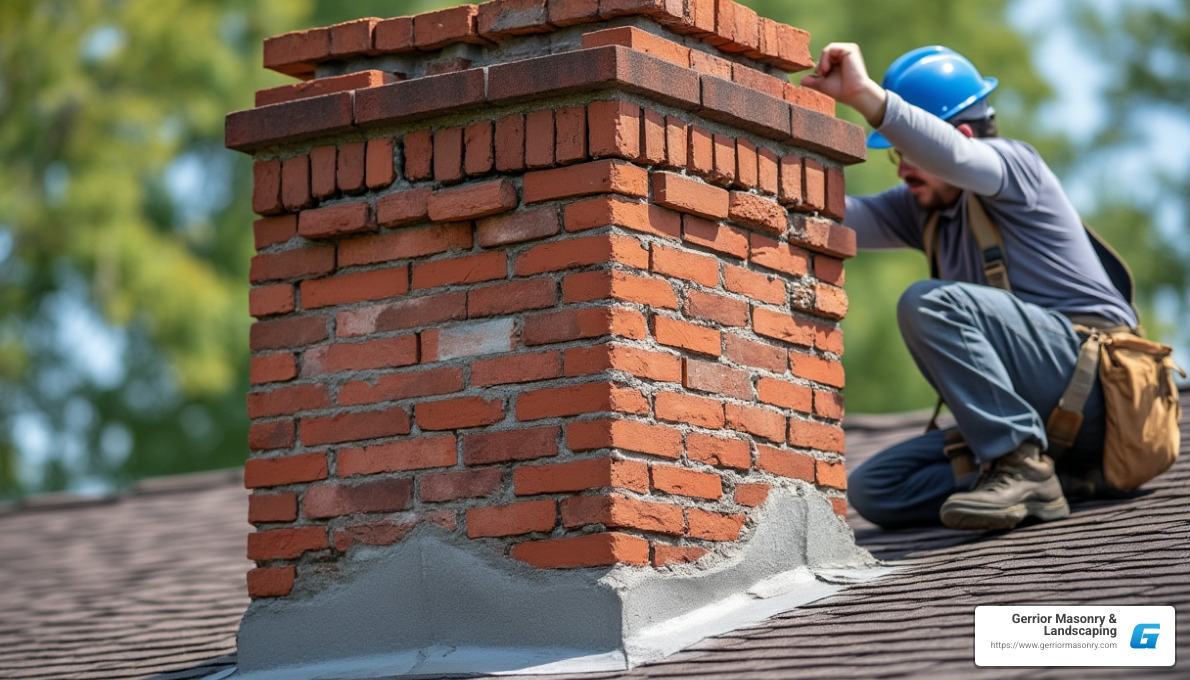
In summary, chimney masonry repair is not just about fixing visible damage. It’s about preserving the structural integrity of your home and ensuring the safety of its occupants. Regular inspections and timely repairs can prevent minor issues from becoming major problems.
Next, we’ll explore common chimney problems and their solutions, helping you understand what to look out for and how to address these issues effectively.
Common Chimney Problems and Solutions
Chimneys, especially in older homes, can face a variety of issues. Knowing what to look for can help you tackle problems before they become serious.
Crumbling Mortar
Crumbling mortar is a common sign of wear and tear in chimneys. Over time, weather conditions and age cause the mortar between bricks to deteriorate. This not only affects the appearance but also weakens the chimney’s structure.
Solution: Tuckpointing is the go-to method for fixing crumbling mortar. This involves removing the damaged mortar and replacing it with fresh mortar. It’s a simple but effective way to restore your chimney’s strength and prevent further damage.
Chimney Flue
The chimney flue is the passage that allows smoke and gases to exit your home. A blocked or damaged flue can lead to dangerous conditions, including carbon monoxide buildup.
Solution: Regular inspections are key. Look for signs of blockages or damage, such as unusual smoke patterns or odors. Professional cleaning and repair can ensure your flue is clear and functioning properly. Chimney liners can also be installed to protect the flue and improve efficiency.
Chimney Caps
Chimney caps are protective covers that sit on top of the chimney. They prevent debris, rain, and animals from entering the chimney. A missing or damaged cap can lead to water damage and blockages.
Solution: Install or replace chimney caps to keep your chimney in good condition. They are a simple and cost-effective way to protect your chimney from external elements. Regular checks will ensure they remain intact and functional.
By addressing these common problems, you can maintain your chimney’s safety and efficiency. Regular maintenance and quick action on repairs will keep your chimney in top shape.
Next, we’ll discuss the importance of regular inspections and how they can help catch problems early.
The Importance of Regular Inspections
Regular inspections are essential for keeping your chimney safe and efficient. Without them, small issues can turn into big problems.
Annual Inspections
Getting your chimney inspected at least once a year is crucial. Many problems, like creosote buildup or minor cracks, are not visible to the untrained eye. An annual inspection helps catch these issues early before they escalate into costly repairs or safety hazards.
Video Cameras
Modern inspections often use video cameras. These tools allow professionals to see deep inside your chimney, reaching areas that are otherwise inaccessible. This technology provides a clear picture of the chimney’s condition, making it easier to spot cracks, blockages, or other hidden problems.
Early Detection
Early detection is key to avoiding major repairs. For example, a small crack can let moisture in, which can freeze and expand, causing more damage. By spotting these issues early, you can address them before they worsen.
Regular inspections save you time, money, and stress in the long run. They ensure your chimney remains safe, efficient, and in good working order. Next, we’ll explore the differences between DIY and professional chimney repair.
DIY vs. Professional Chimney Repair
When it comes to chimney masonry repair, deciding between doing it yourself or hiring a professional is a big choice. Both have their pros and cons, but safety, skill, and cost are key factors to consider.
Safety Considerations
Safety should always come first. Working on a chimney involves heights, heavy materials, and sometimes hazardous conditions. If you’re not used to this kind of work, it can be risky. Falls, injuries, or damage to your home can occur if you’re not careful.
Professional chimney repair experts are trained to handle these risks. They know how to work safely on roofs and with masonry materials. They also have the right tools and equipment, like scaffolding and safety harnesses, to do the job safely.
Qualified Experts
Hiring qualified experts ensures the job is done right. Professionals have the experience to spot issues that might not be obvious. They understand the complexities of chimney systems and can provide high-quality repairs that last.
For example, complex cracks or structural concerns should always be handled by a professional. These issues might indicate deeper problems that require expert assessment and repair. Professionals like those at Gerrior Masonry & Landscaping have the expertise to tackle these challenges safely and efficiently.
Repair Costs
Cost is often a deciding factor. DIY repairs can save money on labor, but they might end up costing more if not done correctly. Mistakes can lead to bigger problems, which can be expensive to fix.
Professional repairs might seem costly upfront, but they often save money in the long run. Experts ensure that repairs meet safety standards and extend the life of your chimney. Plus, many professionals offer free estimates, so you know what to expect before work begins.
In summary, while DIY repairs can be suitable for minor issues, major repairs should be left to professionals. This choice ensures your chimney remains safe and efficient, protecting your home and family. Up next, we’ll answer some common questions about chimney masonry repair.
Frequently Asked Questions about Chimney Masonry Repair
How do you repair a crack in a chimney masonry?
Repairing a crack in chimney masonry often involves using high-heat mortar and a caulk gun. High-heat mortar is essential because it can withstand the intense temperatures that chimneys are exposed to. To repair a crack:
- Clean the Area: Remove any loose debris from the crack using a brush.
- Prepare the Mortar: Mix the high-heat mortar according to the instructions.
- Apply the Mortar: Use a caulk gun to fill the crack with the mortar. Ensure the mortar fills the entire crack.
- Smooth the Surface: Use a trowel to smooth the mortar, ensuring a clean finish.
This method helps prevent further water damage and maintains the chimney’s structural integrity.
How much does it cost to repair mortar joints on a chimney?
The cost of repairing mortar joints, a process known as repointing, can vary. Repointing involves removing damaged mortar and replacing it with new mortar. The price depends on factors such as labor costs, the extent of the damage, and the chimney’s height and location. On average, homeowners might expect to pay between $500 and $2,500 for repointing services.
Labor costs can significantly affect the final bill. Hiring skilled professionals ensures the job is done correctly, which can save money in the long run by preventing future issues.
What is the best mortar for chimney repair?
For chimney repair, Type N mortar is often recommended. This type of mortar is known for its strength and flexibility, making it ideal for withstanding the natural expansion and contraction of masonry materials. It offers a good balance between durability and workability, which is crucial for maintaining the chimney’s structure over time.
Type N mortar is versatile and can be used for both above-grade and exterior applications, making it a reliable choice for various masonry repair projects.
Conclusion
At Gerrior Masonry & Landscaping, we understand that your home is more than just a building—it’s a sanctuary. That’s why we are committed to providing top-notch chimney masonry repair services that prioritize the safety and comfort of your home. With over 30 years of experience, our skilled team delivers high-quality results that stand the test of time.
Our expertise in masonry and hardscaping services is backed by our dedication to craftsmanship and customer satisfaction. Every project is overseen by the owner, ensuring meticulous attention to detail and a personal touch. This hands-on approach has earned us the trust of homeowners throughout the Woburn, MA area and beyond.
Why Choose Us?
- Skilled Team: Our team consists of seasoned professionals who are passionate about delivering exceptional service.
- High-Quality Results: We use the best materials and techniques to ensure your chimney is safe and efficient.
- Comprehensive Services: From routine maintenance to urgent repairs, we handle all aspects of chimney care.
- Customer Satisfaction: We stand by our work and are always ready to address any concerns you might have.
Investing in regular chimney maintenance and repair can prevent costly issues down the line, ensuring your home remains a safe haven for your family. If you’re in need of expert chimney repair services, look no further than Gerrior Masonry & Landscaping.
For more information on how we can help with your chimney needs, visit our Chimney Repair Services page. Let us bring our expertise to your home and experience the Gerrior difference today!
