
Why Building Retaining Walls Transforms Your Massachusetts Yard

Build retaining walls to hold back soil on slopes, prevent erosion, and create usable flat areas in your yard. Here’s a quick-reference guide:
Key Steps to Build Retaining Walls:
- Plan and assess – Check local codes, measure your slope, and choose materials.
- Dig a trench – Excavate for the base and to bury the first course.
- Create a stable base – Add 4-6 inches of compacted crushed stone.
- Lay the first course – Place blocks level, burying part of the wall below ground.
- Stack additional courses – Stagger joints and lean blocks slightly backward.
- Install drainage – Add perforated pipe and gravel backfill.
- Backfill and compact – Fill in layers, compacting thoroughly.
- Add capstones – Secure the top course with construction adhesive.
Critical Success Factors:
- Drainage is #1 – Poor drainage causes most retaining wall failures.
- Compact the base – A solid foundation prevents settling.
- Bury the bottom – The first course must be below ground for stability.
- Get permits – Walls over 4 feet typically require engineering and permits.
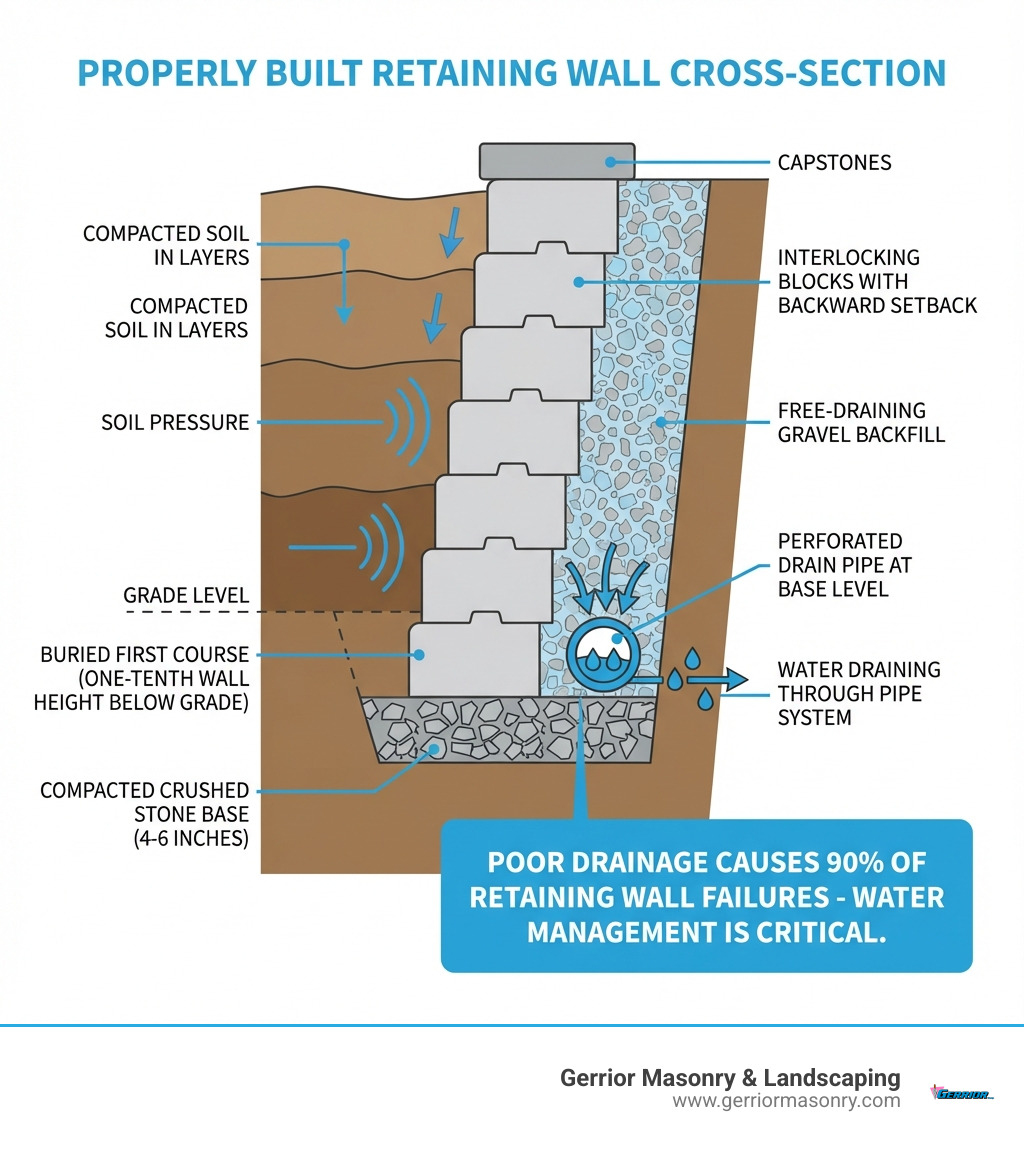
A sloped yard in Massachusetts can feel like wasted space, prone to soil erosion during heavy New England storms and challenging to mow or landscape. A well-built retaining wall is the ultimate solution, transforming that problematic hillside into beautiful, functional, and level terraces perfect for patios, gardens, or play areas. It not only maximizes your usable property but also provides critical structural support and erosion control. While building a low-level retaining wall (under 4 feet) is a manageable DIY project, understanding the forces at play is crucial. The key is knowing how to manage immense soil pressure and why water management is the single most important factor for a long-lasting, successful wall.
I’m Joe Gerrior, owner of Gerrior Masonry & Landscape Construction Corp. With over 34 years of experience serving Massachusetts homeowners, my team and I have built countless retaining walls that combine structural integrity with visual appeal, turning problematic slopes into stunning landscape features.
Explore more about build retaining walls:
Planning and Preparation to Build Retaining Walls
Before digging, careful planning is crucial for a successful retaining wall project. This phase involves assessing your land, choosing the right materials, and understanding local regulations.
Choosing Your Materials: Pros, Cons, and Costs
The material you choose impacts aesthetics, durability, cost, and installation complexity. Here’s a rundown of common options:
- Interlocking Concrete Blocks: A popular choice for DIYers due to their ease of installation and versatility.
- Pros: Durable, many styles/colors, easy to install for low walls.
- Cons: Can look less natural than stone, prone to efflorescence.
- Average Cost: Based on internet data, $25 – $85 per square foot.
- Pressure-Treated Timber: Offers a rustic, natural look.
- Pros: Cost-effective, easy to work with, natural aesthetic.
- Cons: Shorter lifespan (15-20 years), prone to rot and insects, can warp.
- Average Cost: Based on internet data, $20 – $80 per square foot.
- Natural Stone: For a premium, timeless look, natural stone retaining walls offer unparalleled beauty and longevity. Options like New England fieldstone or classic granite create a structure that is both a functional wall and a stunning landscape feature.
- Pros: Extremely durable, lasts a lifetime, beautiful and unique aesthetic that blends seamlessly with the natural environment.
- Cons: Most expensive material, requires skilled masonry work to fit and place irregular stones, difficult for DIYers.
- Average Cost: Based on internet data, $40 – $280+ per square foot, depending on stone type and complexity.
- Poured Concrete: Offers superior strength and durability for demanding situations.
- Pros: Very strong, highly durable, can be customized.
- Cons: Industrial look unless faced, requires professional pouring, not a DIY project.
- Average Cost: Based on internet data, $60 – $210 per square foot.
Here’s a quick comparison of these materials:
| Material | Average Cost (per sq. ft.)* | Lifespan | DIY-Friendliness | Aesthetic |
|---|---|---|---|---|
| Interlocking Concrete Blocks | $25 – $85 | Very Long | High | Modern, structured, varied colors/textures |
| Pressure-Treated Timber | $20 – $80 | 15-20 years | Medium | Rustic, natural, blends with woodsy settings |
| Natural Stone | $40 – $280+ | Lifetime (with proper install) | Low | Timeless, organic, high-end |
| Poured Concrete | $60 – $210 | Very Long | Low | Industrial (can be faced), strong |
*Please note: These are average costs based on internet data and not actual costs for Gerrior Masonry services. Project costs can vary significantly based on design complexity, site accessibility, and specific material choices.
Key Considerations Before You Build Retaining Walls
Before you pick up a shovel, assess your property and understand the rules.
Slope, Layout, and Location
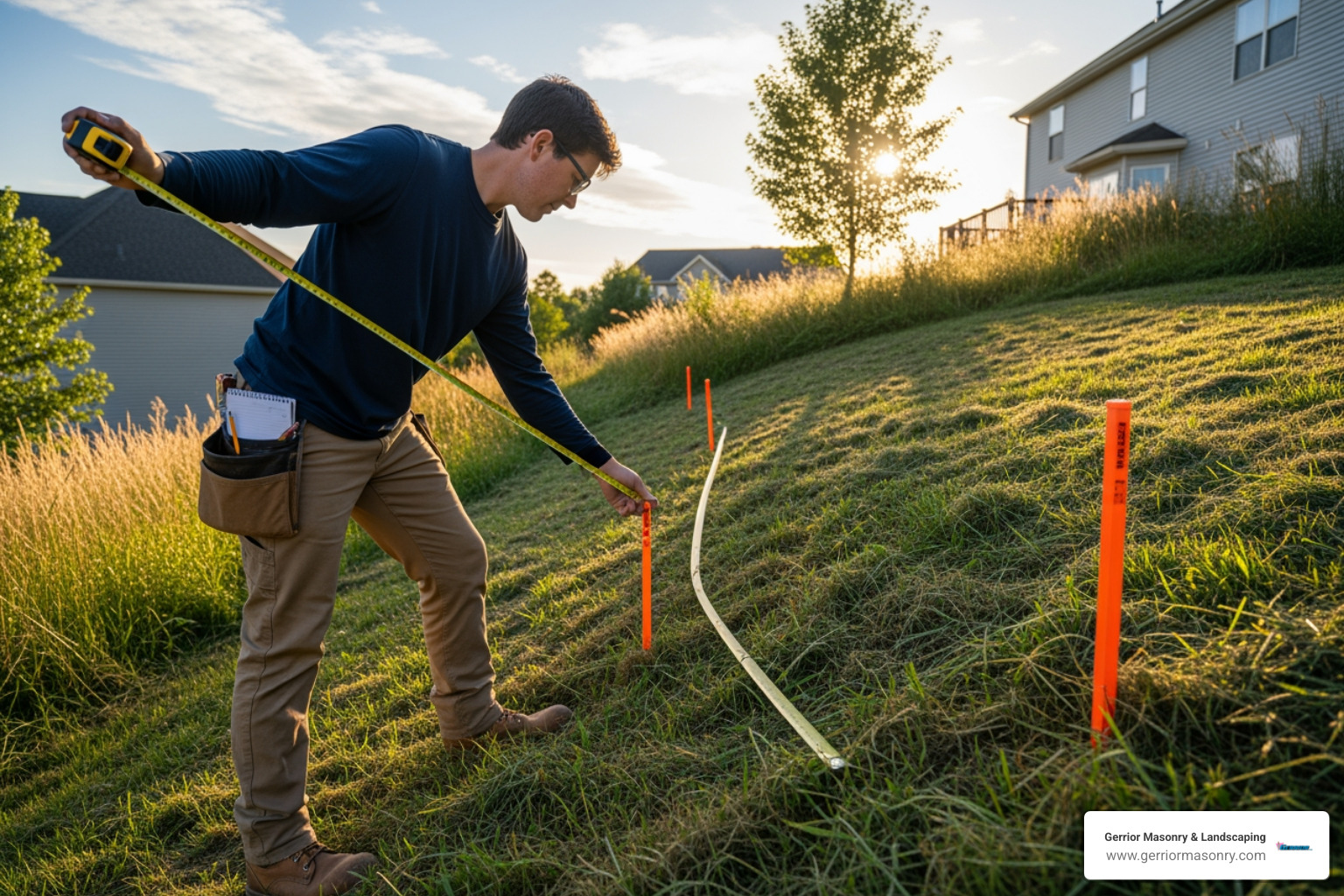
The slope of your land is a critical factor. Steeper slopes exert more pressure, demanding stronger designs. Learn more about how to build a retaining wall on a slope. Plan your layout by placing stakes to mark the front of the wall. Use a string line or garden hose to mark the entire length, ensuring it integrates with your landscape.
Building Codes, Permits, and Frost
In Massachusetts, walls over 4 feet tall or those supporting critical loads (like a driveway or pool) often require professional engineering and permits. Always check with your local municipality, as ignoring regulations can lead to fines or forced removal. You should hire a professional engineer if your wall exceeds 4 feet, supports heavy loads, is on a steep slope, or is part of a tiered system. Also, consider frost heave; your wall’s foundation must extend below the local frost line. You can Find your area’s frost line depth to plan accordingly.
Call Before You Dig
Before any excavation, it is legally required to call 811 (Dig Safe in Massachusetts) a few days in advance. This free service marks the approximate location of underground utility lines on your property, including gas, electric, and communication cables. Digging without this clearance is dangerous and can lead to costly repairs and fines. Plan this into your project timeline.
Gathering Your Tools and Materials
Gather the right tools and materials to make construction smoother. Purchase about 10% more material than your estimates to account for cuts and errors.
- Tools: Shovel, pickaxe, measuring tape, 4-foot level, torpedo level, rubber mallet, plate compactor (rentable), wheelbarrow, mason’s line, stakes, spray paint, trowel, masonry saw, hammer, and chisel.
- Materials: Retaining wall blocks, crushed stone, landscape fabric, perforated drain pipe, construction adhesive, coarse sand, and approved backfill soil.
- Safety Gear: Heavy-duty gloves, safety glasses, sturdy work boots, and a respirator mask (when cutting blocks).
The Step-by-Step Construction Guide
With planning complete and materials ready, it’s time to start building. This is where the vision for your new retaining wall takes shape. You can find more detailed instructions on retaining wall installation.
Preparing the Trench and a Stable Base
The foundation is the most critical part of your wall. A solid, level base ensures longevity and stability.
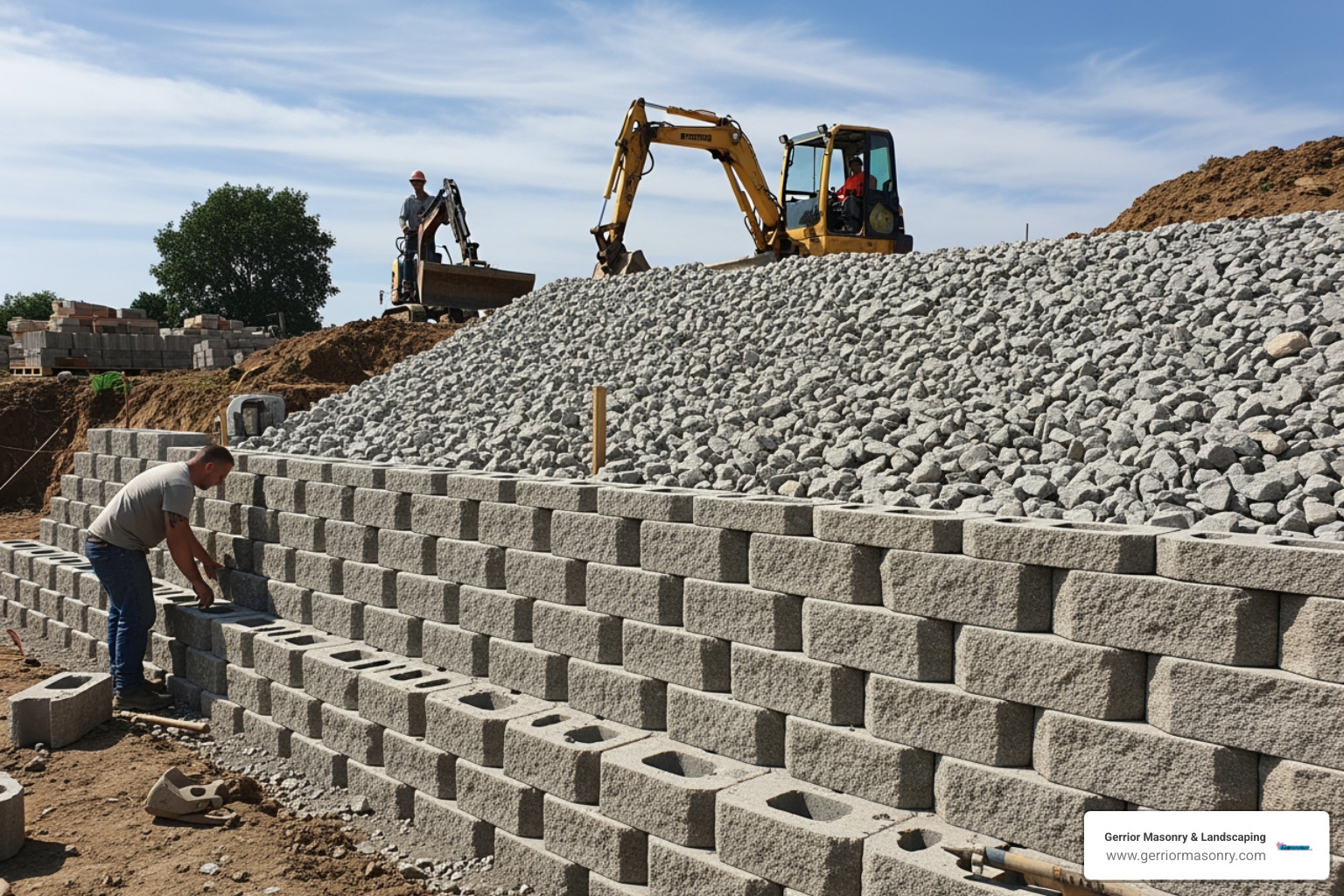
- Excavate the Trench: After marking the wall’s location, dig a trench at least twice as wide as your blocks. For walls under 4 ft., dig the trench 4-6 in. deep, plus additional depth to bury the first course.
- Bury the First Course: To anchor the wall, bury the first course of blocks. A good rule is to bury one-tenth of the total wall height.
- Create a Leveling Pad: Add a minimum of 4 to 6 inches of crushed stone to the trench to create a firm, level base.
- Compact the Base: Use a plate compactor to thoroughly compact the crushed stone. A solid base for retaining wall is essential to prevent shifting and failure.
A Step-by-Step Guide to Build Retaining Walls
With the base ready, you can begin laying the blocks. Precision is key for stability and aesthetics.
- Lay the First Course: Place the first course of blocks on the compacted base, starting at the lowest point. Use a level to ensure each block is perfectly level. This first course is the most critical.
- Stack Subsequent Courses: Stagger the joints of each new course by at least one-quarter of a block’s length for strength. Continuously check for level and alignment.
- Use a Setback (Batter): Build the wall with a slight backward lean into the hillside. Each course should be set back slightly from the one below it to help resist soil pressure.
- Install Drainage and Backfill: Poor drainage is the #1 cause of wall failure. As you build, install a perforated drain pipe (with holes facing down) behind the first course, sloped to drain water away to a safe location. Backfill at least 12 inches directly behind the blocks with free-draining gravel or crushed stone. This creates a drainage zone. Behind the gravel, add your native soil or approved backfill in 3-4 inch layers (lifts). It’s crucial that this soil is not heavy clay, which retains water. Thoroughly compact each lift with a plate compactor before adding the next.
Finishing Touches for a Lasting Wall
Once all courses are laid and backfilled, add the finishing touches to protect your investment.
- Finalize Drainage: Ensure the perforated pipe at the base is completely surrounded by the free-draining gravel. To prevent soil from mixing with and clogging the gravel drainage zone, place a layer of professional-grade landscape fabric over the gravel, separating it from the final topsoil. Finally, grade the ground surface behind the wall to create a gentle slope that directs surface water away from the wall, not towards it.
- Installing Capstones: The capstone is the final touch. Secure these top blocks with construction adhesive, creating a slight overhang for a professional look. This provides a clean, finished appearance and protects the wall from weather.
Building a retaining wall is a significant undertaking. While many smaller walls can be a rewarding DIY project, understanding the critical role of proper drainage, a stable base, and meticulous construction is essential. For walls over 4 feet tall, or for complex projects on challenging slopes, we strongly recommend consulting with a professional.
Here at Gerrior Masonry & Landscaping, we have over 30 years of experience helping homeowners in Middlesex and Essex County, Massachusetts, build retaining walls that are not only beautiful but also built to last. Our skilled team and owner oversight on every project ensure high-quality results from foundation to finish.
For professional landscape design and installation, contact us today!
Gerrior Masonry & Landscape Construction is based in Woburn, MA, and proudly services Middlesex and Essex County, Massachusetts.
