
Designing the Landscape: 5 Dream Steps
Why Designing the Landscape is the Key to Your Dream Outdoor Space
Designing the landscape is the art of arranging your outdoor space to create a beautiful, functional, and sustainable environment. A thoughtful plan is the key to boosting curb appeal, creating outdoor living areas, and increasing your property’s value. It’s the roadmap to changing your yard into the space you’ve always envisioned.
Quick Answer: Essential Steps for Designing the Landscape
- Analyze your site – Study sun, drainage, soil, and existing features.
- Define your needs – List desired activities and functional requirements.
- Create a master plan – Sketch layouts using core design principles.
- Select appropriate plants – Choose species suited to your climate.
- Plan hardscape elements – Design patios, walkways, and walls.
- Implement in phases – Install your design systematically within budget.
A well-designed landscape extends far beyond aesthetics. It can reduce energy costs through strategic plant placement, create comfortable outdoor rooms for entertaining, and significantly boost property value. The key is starting with a solid plan that considers both your lifestyle and your property’s unique characteristics.
I’m Joe Gerrior, owner of Gerrior Masonry & Landscape Construction Corp., and I’ve been designing the landscape dreams of Massachusetts homeowners for over 34 years. My team specializes in creating visually stunning, functional landscapes that blend artistic vision with practical expertise.
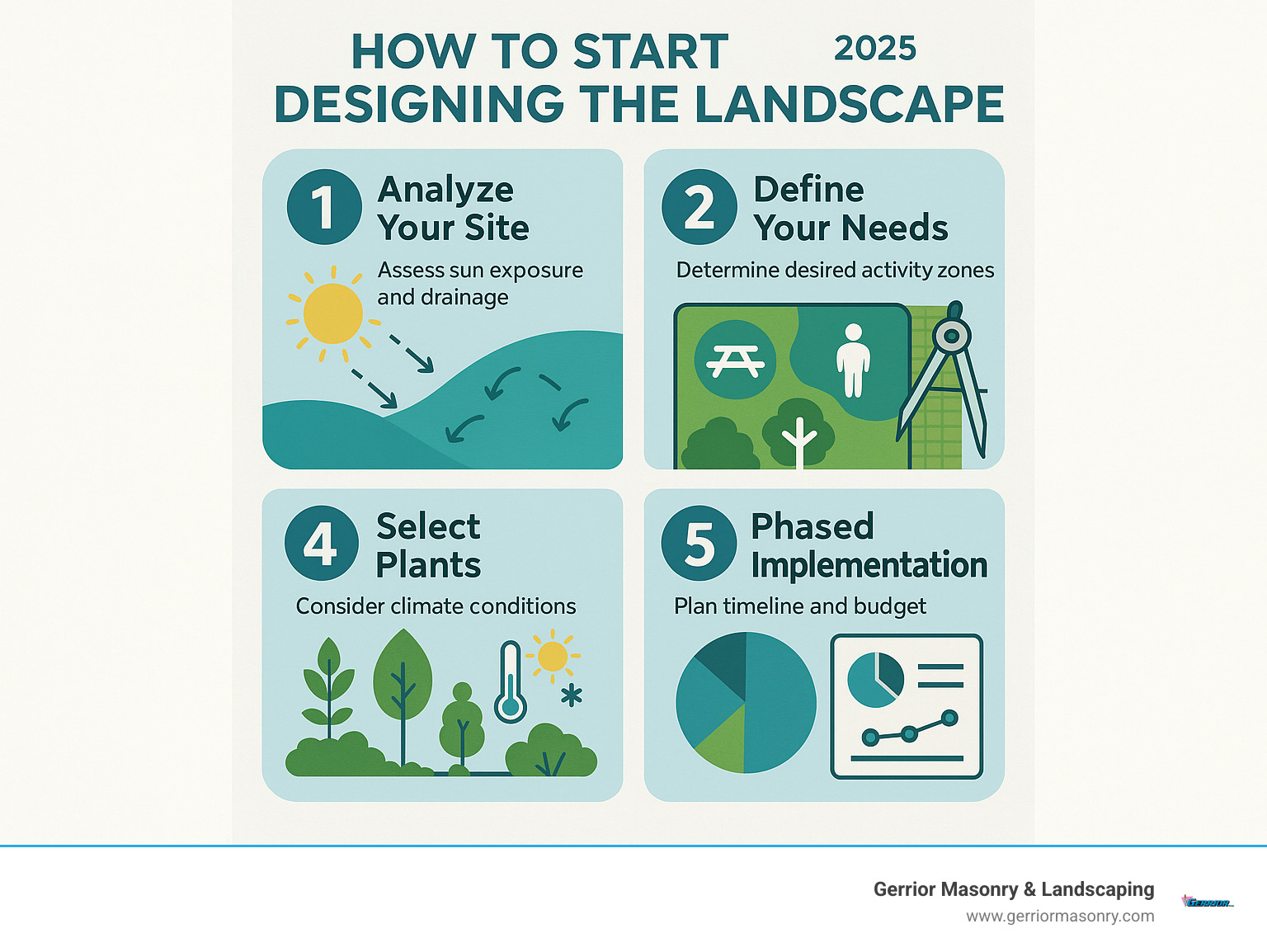
Basic designing the landscape glossary:
The Fundamentals of Designing the Landscape
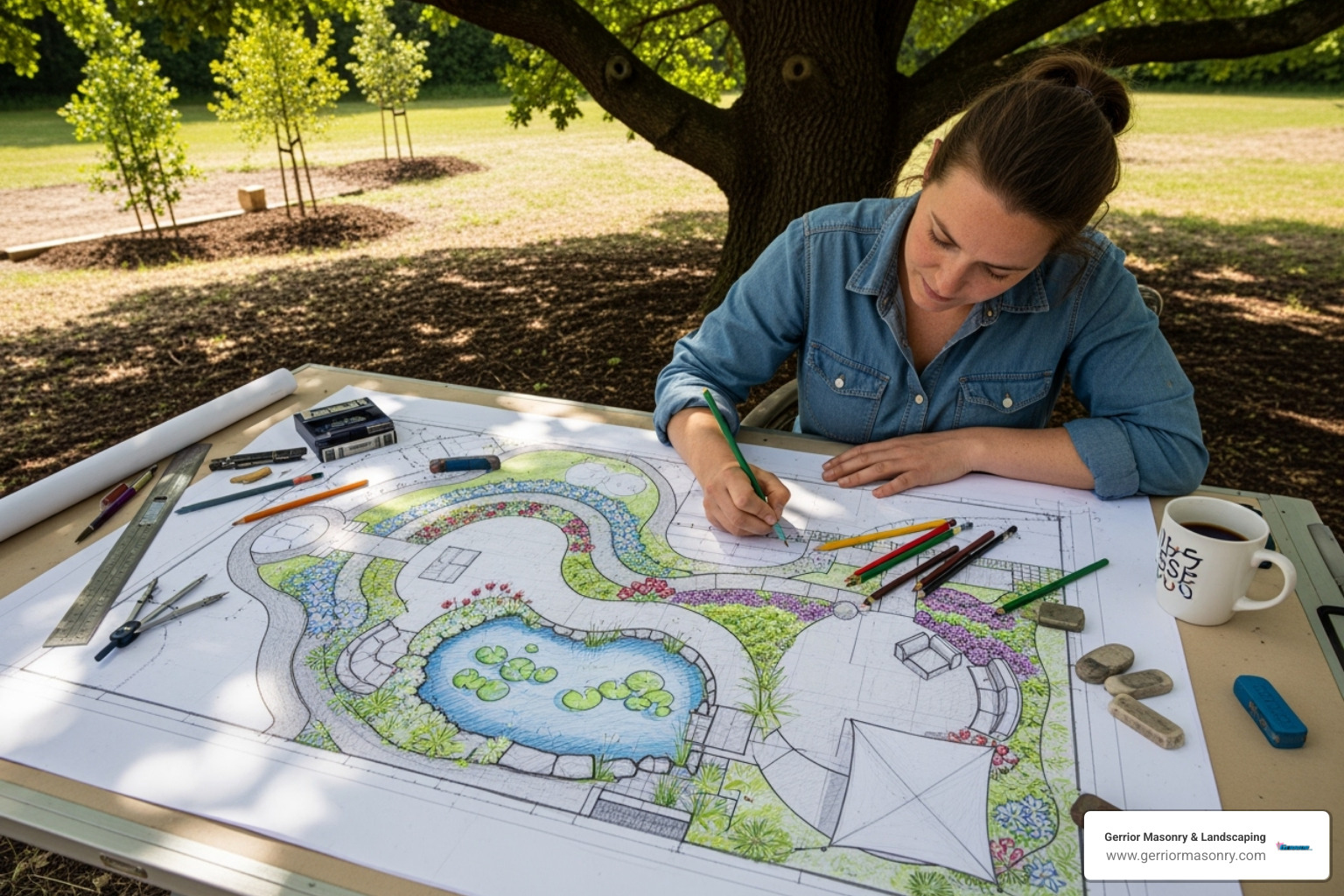
Think of designing the landscape as creating an outdoor room that reflects your lifestyle while working in harmony with nature. The most stunning outdoor spaces start with a solid understanding of the fundamentals.
Before placing a single plant, we get to know your property. This site analysis involves observing:
- Sun and shade patterns: How light moves across your yard throughout the day determines where to place patios and plants.
- Drainage and topography: We identify where water flows to prevent soggy lawns and flooded basements.
- Soil conditions: Working with your existing soil by choosing appropriate plants is more successful and budget-friendly than fighting it.
- Existing features: Mature trees, stone walls, and established shrubs are assets that provide instant character.
Great design is personal. We consider how you want to live outdoors. Do you host large barbecues, need a safe play area for kids, or prefer a quiet corner for morning coffee? Your landscape should be an extension of your home, custom to your activities. We also plan for long-term maintenance, choosing plants suited to our New England climate and hardscaping that ages gracefully.
Key Principles and Elements of Design
Creating a beautiful landscape relies on time-tested design principles. These are the building blocks that ensure every element works together.
- Unity: Achieved by repeating colors, textures, or forms to make the landscape feel cohesive.
- Balance: Can be symmetrical (formal, like matching planters) or asymmetrical (natural, like balancing a large tree with a group of smaller shrubs).
- Proportion: Getting the scale right. Patios, walls, and plants should feel appropriately sized for your home and yard.
- Rhythm: Creates flow and guides the eye, often through the repetition of plants or colors along a path.
- Emphasis: Creates focal points—a specimen tree, water feature, or sculpture—that draw interest.
These principles are applied using the core elements of line (directing movement), form (the 3D shape of plants and objects), texture (coarse or fine surfaces), and color. Using a color wheel for your garden can help create pleasing combinations, from energetic warm tones to calming cool hues.
The Landscape Design Process: A Step-by-Step Guide
Designing the landscape follows a logical sequence to prevent costly mistakes.
- Base Map & Site Inventory: We create a scaled, bird’s-eye view of your property, mapping the house, property lines, utilities, and existing plants. We then list your needs and desired activities.
- Functional Areas & Bubble Diagrams: We divide the space into public (front yard), private (backyard), and service areas. Using tracing paper over the base map, we draw “bubbles” to explore layouts for patios, play areas, and gardens.
- Circulation & Hardscaping: We connect the bubbles with paths and walkways, forming the circulation patterns. This is when we detail the hardscape elements like patios and walls that form the landscape’s backbone. More info about patio design and installation
- The Master Plan: This final, detailed blueprint shows the exact location and specifications for all hardscape, plants, lighting, and other features. It’s the roadmap for installation.
Sustainable and Eco-Friendly Landscape Design
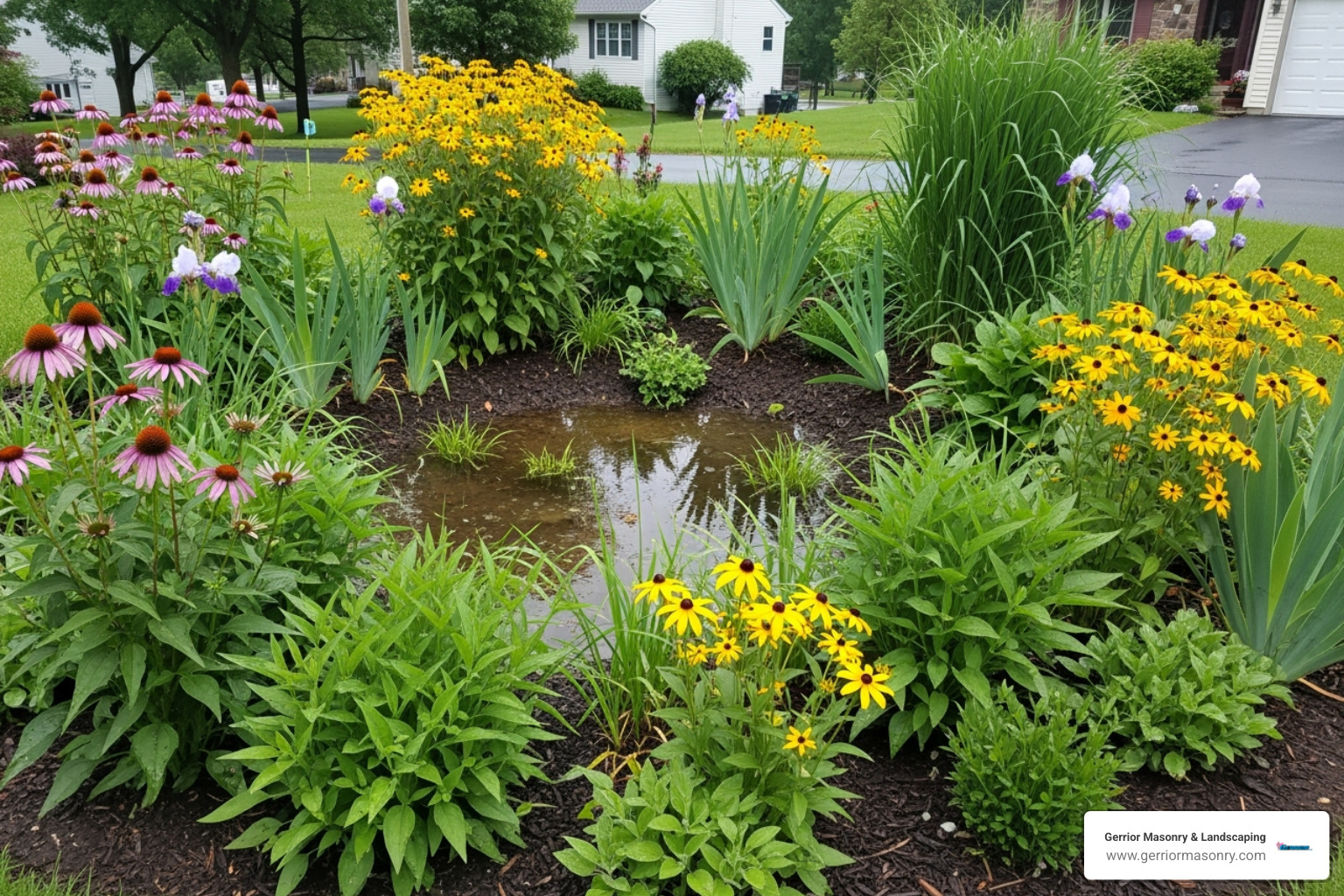
Sustainable design creates beautiful landscapes that are good for the environment and often require less maintenance.
- Water Conservation: We use drought-tolerant plants (xeriscaping), install rain gardens to manage runoff, and use permeable pavers that allow water to soak into the ground. More info about drainage systems
- Native Plants: Species adapted to New England’s climate require less water, fertilizer, and pest control. They are the foundation of a resilient landscape. Find options with this resource on Information on native grasses.
- Habitat Creation: Pollinator gardens with diverse, native flowering plants support bees, butterflies, and birds. Reducing lawn area in favor of garden beds or meadows also boosts biodiversity.
- Energy Savings: Planting deciduous trees on the south and west sides of a house provides summer shade and allows winter sun, while evergreen windbreaks on the north side can reduce heating costs.
For more ideas, check out this Sustainable home landscape guide
Bringing Your Landscape Design to Life
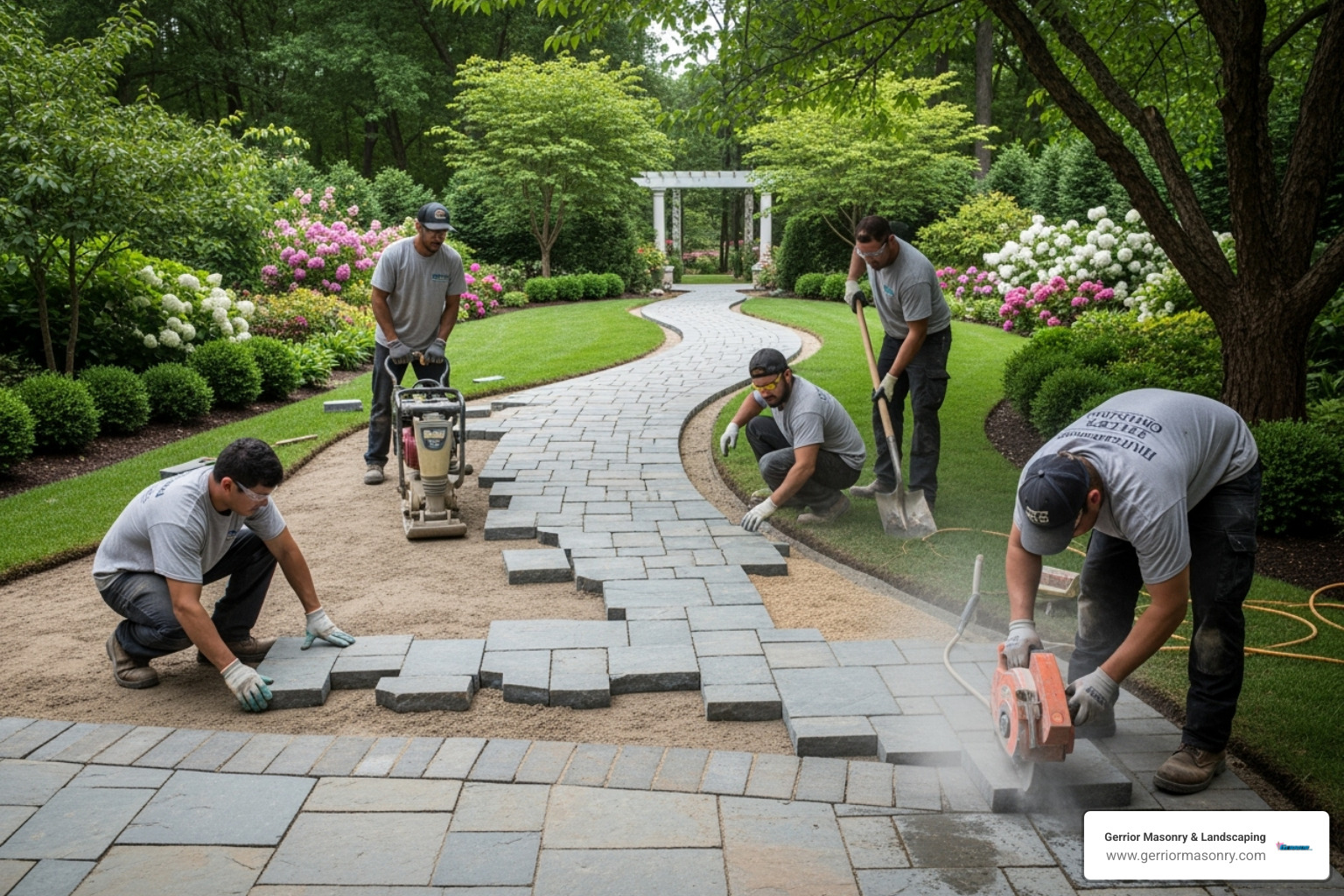
Once your plan is complete, it’s time to turn your vision into reality. You can choose to tackle the project yourself or hire a professional team to handle the installation.
- The DIY Approach: Going DIY can save significant money on labor and provides a deep sense of accomplishment. However, it requires a major investment of time for research, learning, and physical work. It’s best suited for smaller, less complex projects.
- Hiring Professionals: A skilled landscape team brings experience, specialized equipment, and efficiency. They can execute complex designs correctly the first time, ensuring proper drainage and construction for lasting results. This is often the best choice for intricate hardscaping or large-scale projects.
Regardless of the approach, phased installation is a smart strategy. Breaking the project into manageable stages—like building the hardscape first, then adding trees, and finally planting garden beds—helps manage your budget and minimizes disruption.
DIY vs. Professional: Costs and Considerations for Designing the Landscape
The decision to DIY or hire a pro often comes down to a balance of time, budget, and project complexity.
| Feature | DIY Approach | Professional Approach |
|---|---|---|
| Cost | Materials only; lower upfront cost. | Design fees, labor, and materials; higher overall cost. |
| Time | Significant personal time investment. | Faster execution; less personal time required. |
| Expertise | Requires self-education; results may vary. | Access to trained designers and skilled installers. |
| Quality | Dependent on skill and tools. | High and consistent, often with warranties. |
| Scope | Best for smaller, simpler projects. | Ideal for complex designs and large areas. |
Important note about costs: Homeowners often invest around 10% of their home’s value in landscaping. Professional design fees can range from $2,000 to over $8,000, with total project costs varying dramatically based on location, materials, and complexity. The figures mentioned are industry averages for informational purposes and are not actual costs for Gerrior Masonry & Landscaping services.
When hiring help, you might work with a landscape designer for planting and layout or a licensed landscape architect for projects involving complex grading or engineering. Always check portfolios and references. At Gerrior Masonry & Landscaping, our specialty is creating the stunning hardscaping elements that form the foundation of your landscape. More info about hardscaping services
Tools and Technology for Designing the Landscape
Modern tools can help you visualize your project:
- Classic Tools: Graph paper, tracing paper, and measuring tapes are still essential for creating accurate plans.
- Design Apps: Apps like iScape or the Home Outside design app let you experiment with layouts on a photo of your yard.
- Professional Software: Programs like SketchUp or PRO Landscape create detailed 3D renderings.
- Site Analysis Tools: Soil testing kits and sun calculator apps provide valuable data for making smart plant choices.
Common Mistakes to Avoid
Avoiding these common pitfalls will save you time, money, and frustration:
- No Plan: The biggest mistake is starting without a cohesive plan on paper.
- Ignoring Scale: Choosing plants or features that are too large or too small for the space.
- Wrong Plant, Wrong Place: Selecting plants for their looks rather than their needs (sun, water, soil). Always check your Plant Hardiness Zone first.
- Forgetting Hardscaping: Underestimating the importance of patios, walkways, and walls for structure and function. More info about landscape walls
- Underestimating Maintenance: Creating a high-maintenance design that you don’t have the time or energy to care for.
- Ignoring Climate and Drainage: Not planning for local rainfall patterns or ensuring water flows away from your home.
- Forgetting a Focal Point: Lacking a central feature to anchor the design and draw the eye.
- Skipping Safety: Always call 811 before digging to locate underground utility lines.
By avoiding these mistakes, your designing the landscape project will result in an outdoor space you’ll enjoy for years to come.
Gerrior Masonry & Landscape Construction is based near Woburn, MA, and proudly services Middlesex and Essex County, Massachusetts, including towns like Acton, Andover, Arlington, Bedford, Beverly, Burlington, Carlisle, Chelmsford, Concord, Danvers, Georgetown, Hamilton, Ipswich, Lexington, Lincoln, Lowell, Lynnfield, Malden, Manchester-by-the-Sea, Medford, Melrose, Middleton, Natick, Newton, North Andover, North Reading, Peabody, Reading, Rowley, Salem, Saugus, Stoneham, Sudbury, Swampscott, Tewksbury, Topsfield, Wakefield, Waltham, Watertown, Wayland, Wenham, West Newbury, Westford, Weston, Wilmington, Winchester, and Woburn. Contact us today to start your landscape change!
