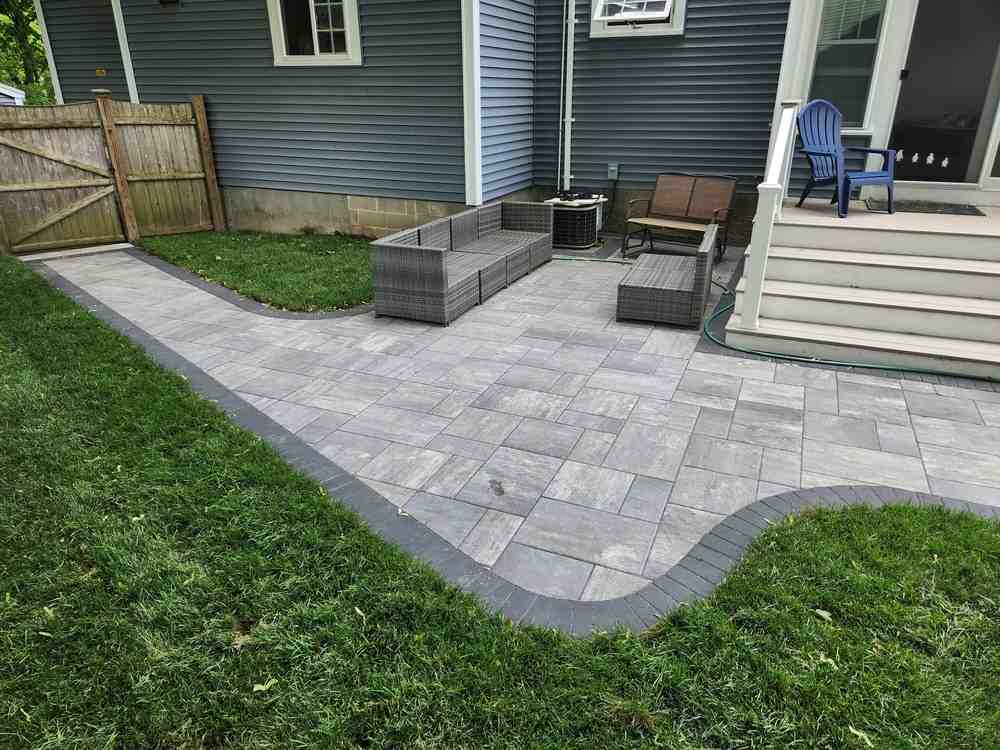
Your Side Yard Deserves Better Than a Dirt Path
The best side yard paver ideas transform one of the most neglected spaces on your property into a clean, functional walkway that adds real curb appeal and everyday usefulness.
Quick answer — popular side yard paver ideas at a glance:
| Idea | Best For | Difficulty |
|---|---|---|
| Large-format slabs (12×12, 18×18) | Modern look, narrow 36–48-inch corridors | Moderate |
| Herringbone pattern | Visual interest, interlocking strength | Moderate–High |
| Running bond | Sleek, classic walkways | Moderate |
| Stepping stones + gravel | Utility paths, low-maintenance routes | Low–Moderate |
| Permeable pavers | Drainage-sensitive yards, wet climates | Moderate |
| Mixed materials (stone + gravel) | Rustic or cottage-style properties | Low–Moderate |
Most Massachusetts property owners and facility managers — from Woburn to Andover — treat their side yard as a pass-through for trash bins, service access, and garden hoses. But that narrow strip alongside your building has real potential. The challenge is that tight spaces, typically 36–48 inches wide, leave little room for error. The wrong paver size, a poor base, or no drainage plan can turn a simple access path into a costly repair.
The good news: with the right materials, pattern, and base preparation, a side yard paver path can last decades and look great doing it.
I’m Joe Gerrior, owner of Gerrior Masonry & Landscape Construction Corp. — a family business based in Woburn, Massachusetts, with over 34 years of experience designing and installing side yard paver ideas for residential and commercial properties across the region. In that time, I’ve seen what works in New England’s tough climate and what fails fast.
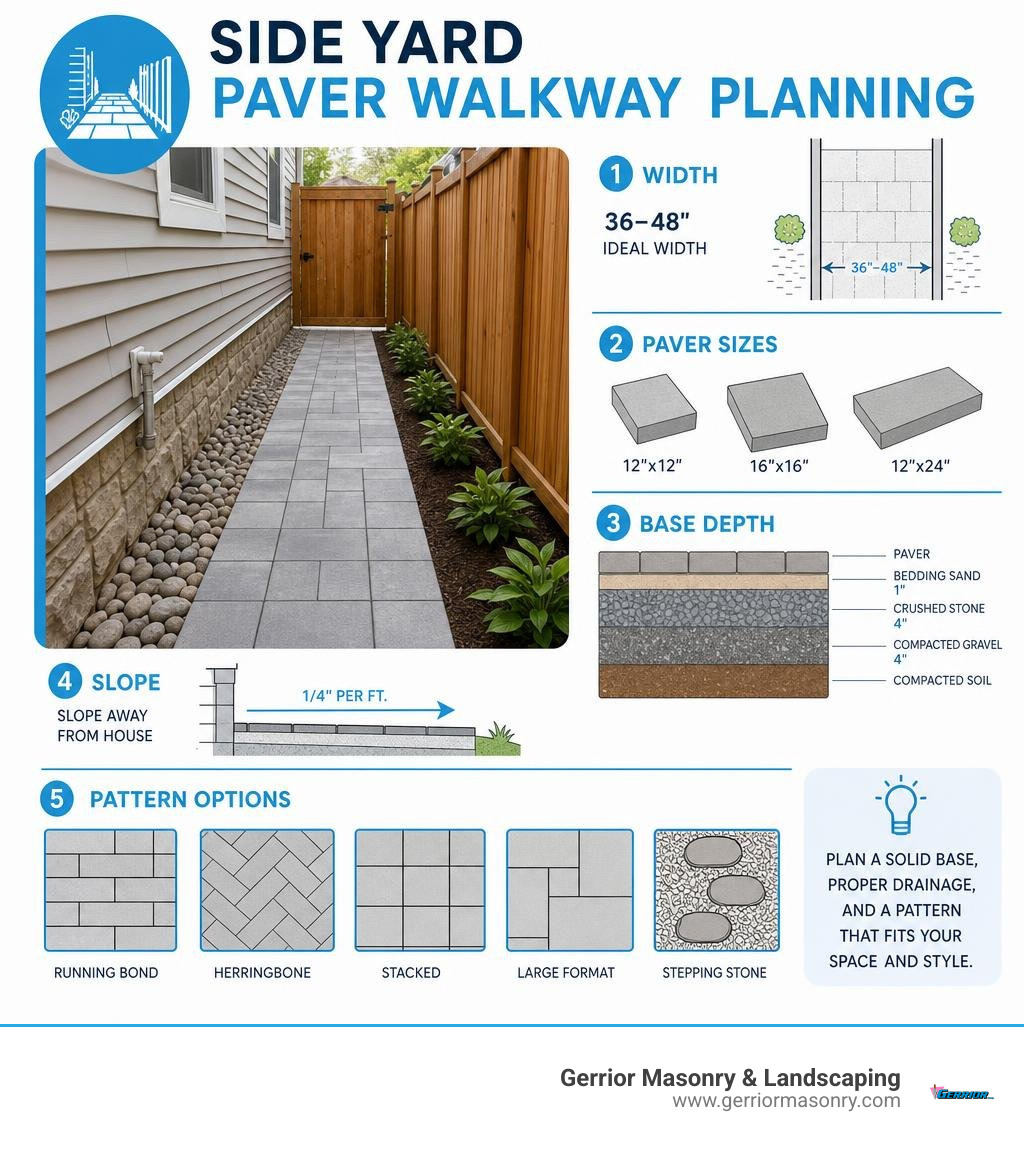
Inspiring Side Yard Paver Ideas for Massachusetts Properties
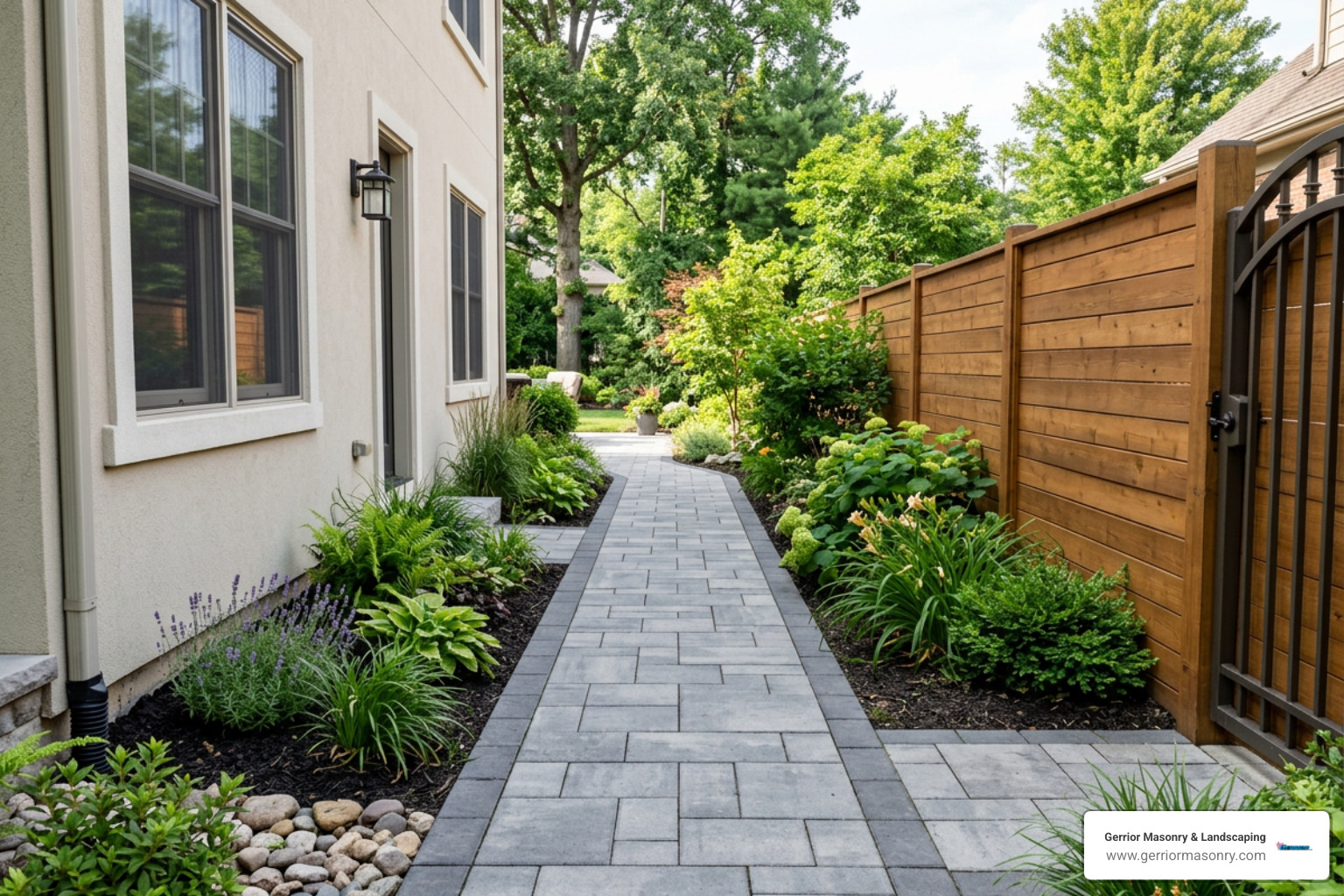
Designing a side yard walkway in Massachusetts towns like Burlington, Winchester, or Lexington requires balancing aesthetics with the realities of New England weather. Freeze-thaw cycles can wreak havoc on poorly planned hardscaping.
To help you choose the right materials for your property, we have compared the most popular options for narrow side yards below:
| Paver Material | Durability | Suitability for Narrow Corridors | Key Benefit |
|---|---|---|---|
| Concrete Pavers | High | Excellent | Uniform shape, highly customizable, budget-friendly |
| Clay Brick | High | Excellent | Classic, timeless look; holds color exceptionally well |
| Natural Stone (Slate/Bluestone) | Very High | Good | Elegant, organic texture; highly durable |
| Permeable Pavers | High | Excellent | Best for drainage-sensitive areas; prevents pooling |
Large-Format Slabs: Modern Side Yard Paver Ideas
When you are working with a narrow side yard, typically 36 to 48 inches wide, scale is everything. Using small, busy pavers can make a tight corridor feel even more cramped and cluttered. That is why large-format slabs — such as 12×12 or 18×18-inch concrete or natural stone pavers — are incredibly popular modern side yard paver ideas.
These larger dimensions maintain a clean, uncluttered scale in tight spaces. Because there are fewer joint lines, the eye moves smoothly along the path, creating the illusion of a wider, more open walkway. This clean, minimalist aesthetic is perfect for contemporary properties in Burlington and Winchester. You can explore more visual layouts of these larger formats in this guide on 20 Inspiring Side Yard Paver Ideas for a Fresh Look – Bliss & Bricks.
Classic Herringbone and Running Bond: Timeless Side Yard Paver Ideas
If you prefer a more traditional look, classic brick or rectangular concrete pavers are an excellent choice. The pattern you choose dictates both the style and the structural strength of your path:
- Running Bond: This pattern features pavers laid in parallel rows with offset joints. It is highly efficient for narrow spaces because it requires very little cutting along the edges, making it a highly practical design.
- Herringbone: Laid at 45 or 90-degree angles, the herringbone pattern offers superior interlocking strength. Because the pavers lock together tightly, they resist shifting under heavy foot traffic or when you roll heavy trash bins down the path.
- Basket Weave: This pattern pairs vertical and horizontal blocks to create a patchwork effect. It adds a charming, historic feel to older properties in Lexington and Andover.
Choosing the right pattern prevents your path from looking awkward. For more design inspiration, you can browse our gallery of professional paver walkways.
Stepping Stones and Gravel: Low-Maintenance Utility Paths
For side yards used primarily to access outdoor HVAC units, utility areas, garden sheds, or water spigots, a combination of stepping stones and gravel is a highly functional, low-maintenance alternative.
For these paths, we recommend using large, flat natural stone slabs, like bluestone or slate, spaced at a comfortable walking stride. Fill the gaps with angular crushed stone rather than rounded pea gravel. Angular gravel locks together when compacted, creating a stable surface that won’t roll under your feet or wash away during heavy rain.
This style is also highly forgiving in areas with mature tree roots or minor drainage issues. Learn more about matching plants and materials for these utility routes in this resource on Best Plants and Materials for Narrow Side Yards That Stay Usable – The Garden Scene.
Proper Base Preparation and Drainage Solutions
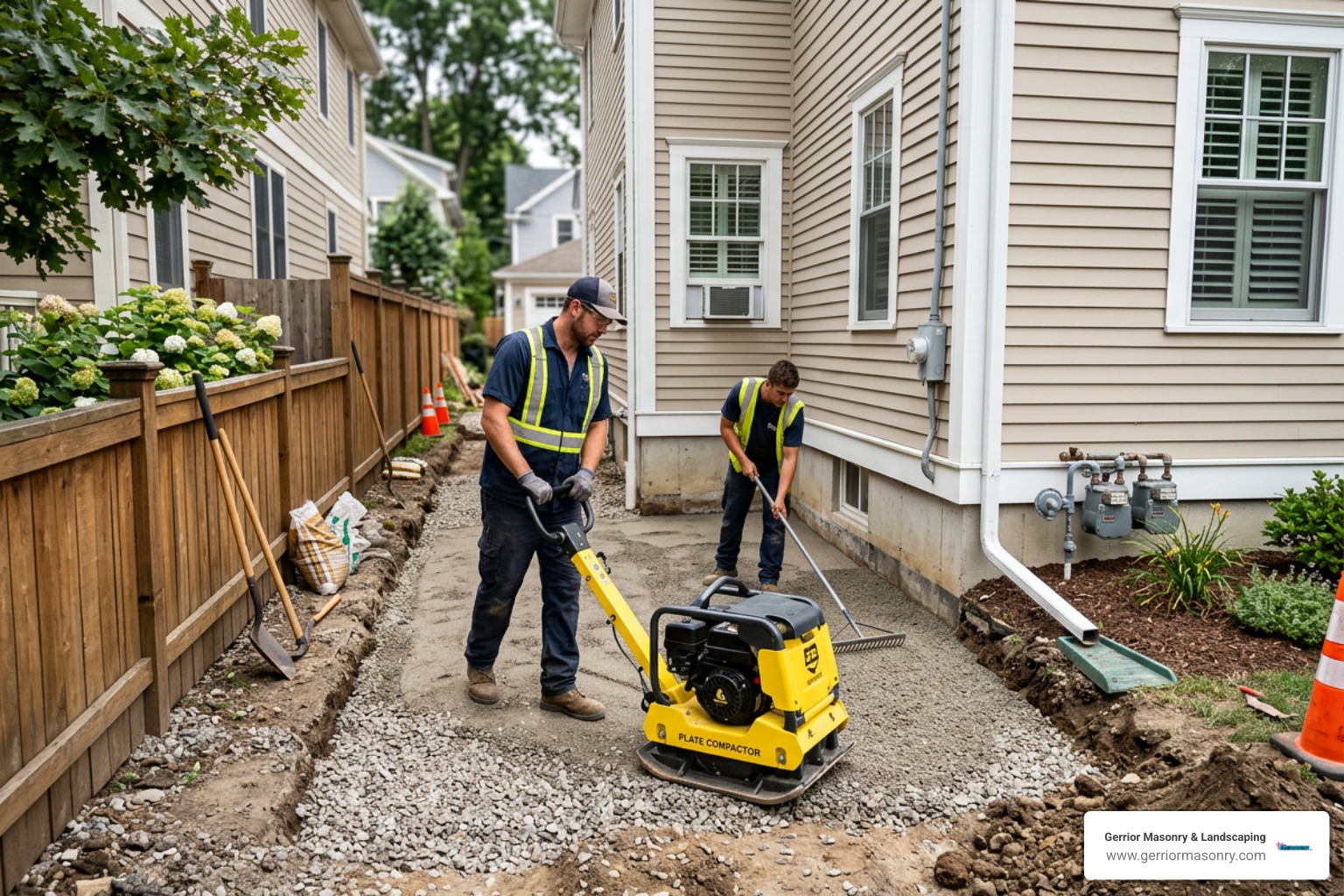
No matter how beautiful your pavers are, they will only look as good as the base underneath them. In Massachusetts, proper base preparation is the single most important step to prevent settling, shifting, and trip hazards caused by winter frost.
To build a walkway that lasts, we follow a strict excavation and preparation process:
- Excavation: We dig down 8 to 10 inches to allow room for the base, bedding sand, and the thickness of the pavers.
- Geotextile Fabric: Laying a commercial-grade weed barrier fabric at the bottom of the trench keeps the soil from mixing with your gravel base.
- The Base: We install 4 to 6 inches of crushed angular stone, not rounded gravel. We compact this base in 2-inch layers using a heavy plate compactor to ensure absolute stability.
- Bedding Sand: A 1-inch layer of washed concrete sand is screeded over the compacted gravel to provide a smooth, level bed for the pavers.
In many parts of Massachusetts, from the rocky soils of Winchester to the clay-heavy ground in parts of Lexington, understanding your local soil profile is essential. Clay soils retain water, which expands significantly when frozen. This makes the 8 to 10-inch excavation depth and the use of geotextile fabric absolutely non-negotiable. Without these elements, the subgrade soil will mix with the gravel base over time, weakening the foundation and causing individual pavers to sink or tilt.
Managing Water and Foundation Drainage
Water must never pool against your building’s foundation. Your side yard walkway must be graded with a 1% to 2% slope, gently directing water away from the structure and toward a safe runoff zone.
If your side yard is naturally wet or sits at the bottom of a slope, we often integrate French drains, catch basins, or dry wells directly into the hardscape design. If you are struggling with standing water, our team of dry well installers can design a system to protect your foundation. You can also read our high-level guide on how to install a paver walkway to understand the technical details of grading, while still relying on a professional installation team for excavation, compaction, drainage, and code-conscious site work.
Professional Edging, Borders, and Long-Term Maintenance
Without secure edging, pavers will inevitably migrate outward over time, opening up wide joints where weeds can take root. We install heavy-duty, commercial-grade plastic or aluminum edging anchored with 10-inch steel spikes driven every 12 to 18 inches.
To lock the pavers in place permanently, we sweep polymeric sand into the joints. Once misted with water, this specialized sand hardens to act like a flexible mortar, keeping the pavers stable while blocking weed growth and ants.
In addition to polymeric sand, applying a high-quality breathable sealer is a smart long-term investment for Massachusetts homeowners. A sealer protects the pavers from oil spills, grease from trash bins, and harsh de-icing salts used during our freezing winters. It also enhances the natural color of the stone or concrete, keeping your side yard looking vibrant and clean year after year. We recommend waiting at least one full season after installation before applying a sealer to allow any natural efflorescence to escape.
The Cost of Cutting Corners
Improperly installed walkways often develop uneven settling or trip hazards within just 2 to 3 years due to poor base prep. Fixing a sunken walkway often requires lifting all the stones, re-excavating, and starting from scratch, which is why professional installation is strongly recommended for Massachusetts hardscaping projects.
When planning your budget, keep in mind that professional hardscaping costs can vary widely depending on site access, pattern complexity, drainage requirements, and material choices. Any prices mentioned here are average costs sourced from publicly available internet data and broad industry averages only and are not the actual prices, rates, estimates, guarantees, or final project costs of Gerrior Corp. To account for industry variability, a conservative planning range may span $40 to $625 per square foot, depending on the scope and conditions. For a deeper look at budget factors, check out our guide on paver walkway cost.
Conclusion
Your side yard doesn’t have to be a forgotten, muddy strip of grass. By choosing the right side yard paver ideas and investing in proper base preparation and drainage, you can turn this narrow space into a beautiful, functional asset to your property.
Whether you are in Woburn, Winchester, Burlington, Lexington, or Andover, our experienced team at Gerrior Masonry & Landscaping is here to bring your vision to life. With over 30 years of hands-on experience and direct owner oversight on every single job, we ensure your new walkway is built to withstand New England’s toughest seasons.
Ready to transform your side yard for residential or commercial use? Call +781-713-1225 or use our quote form button: Request an Estimate to schedule your consultation.